‘President’s Medal’ for best medical graduate 1970-75
Awareded by DMA on Dr. B.C Roy’s birthday’ for outstanding contribution towards
medicine,1999
‘Vikas Ratan Award’ by Nations economic development & growth society 2002
‘Chitsa Ratan Award’ by International Study Circle in 2007
‘Life time Medical excellence award’ Obs & Gyne by Hippocrates foundation 2014
‘Abdul Kalam gold medal’ by Global Economic Prog & Research Association 2015
Rashtriya Gaurav Gold Medal award’, October 2017 by GEPRA
‘Distinguished teacher of excellence award’ for PG medical education by national
board of examinations and ANBAI in 2017
‘Inspiring Gynecologist of India’, by the Economic Times on doctors day 2018
Course director for post doctoral Fellowship in Reproductive Medicine by NBE
since 2007 and by FOGSI for basic & advanced infertility training since 2008.
Member of Editorial board of ‘IVF Worldwide’, peer reviewer for ‘Journal of Human
Reproductive Sciences’, Member of advisory board for ‘Journal of Fertility Science
& Research’ and consultant advisor for queries to NDTV.com
Field of interest: Infertility, ART, Reproductive endocrinology, Endoscopic surgery for
pelvic resurrection. and ART.
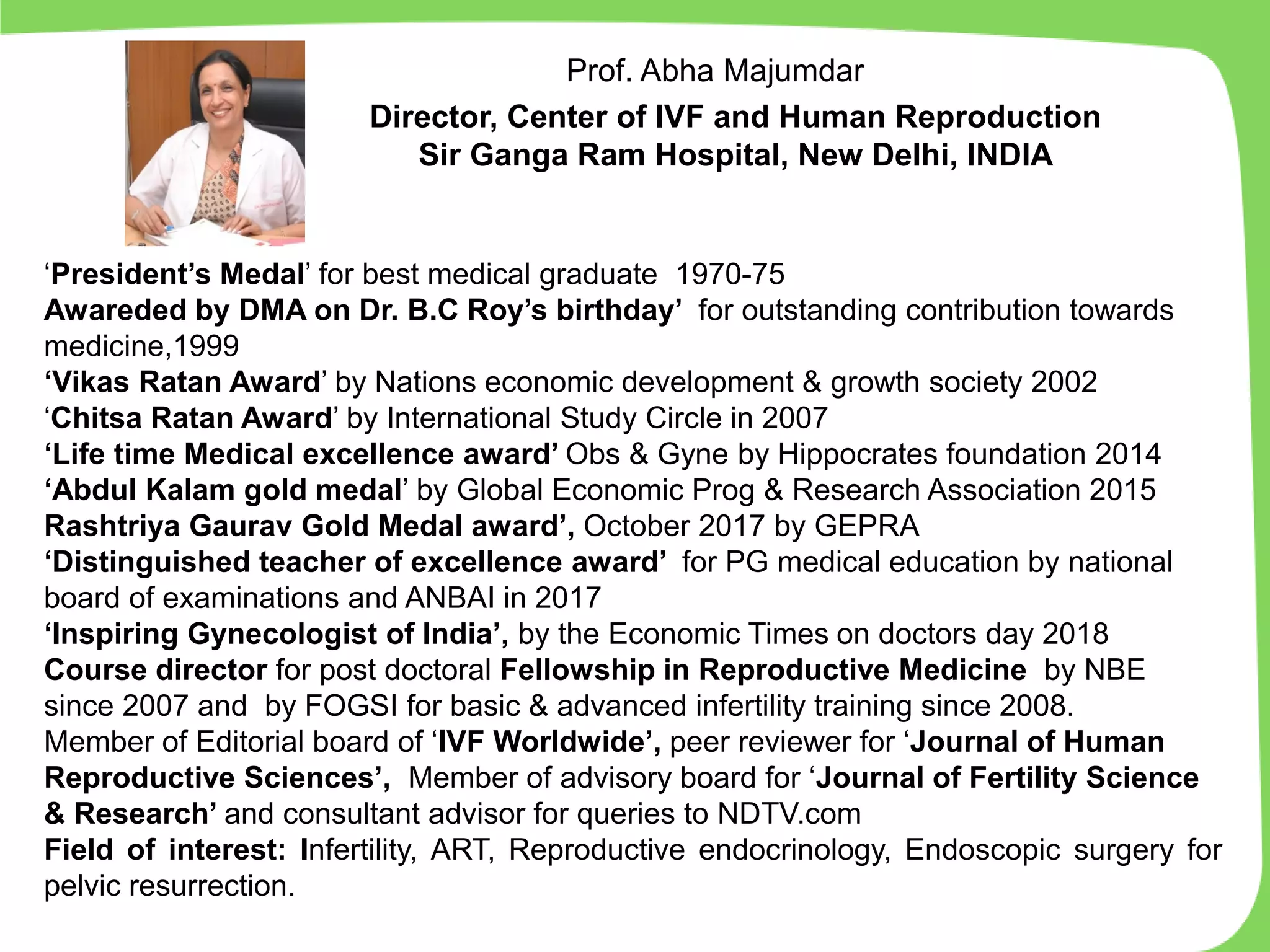
Prof. Abha Majumdar
Director, Center of IVF and Human Reproduction
Sir Ganga Ram Hospital, New Delhi, INDIA
Director
Centre of IVF and Human Reproduction
Endometrial scratch
What is the
?
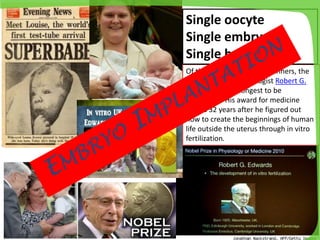
Of this year's Nobel Prize winners, the
work of British physiologist Robert G.
Edwards waited longest to be
recognized. His award for medicine
comes 32 years after he figured out
how to create the beginnings of human
life outside the uterus through in vitro
fertilization.
Single oocyte
Single embryo
Single baby
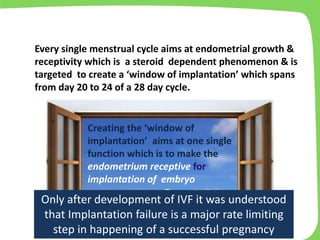
Every single menstrual cycle aims at endometrial growth &
receptivity which is a steroid dependent phenomenon & is
targeted to create a ‘window of implantation’ which spans
from day 20 to 24 of a 28 day cycle.
Creating the ‘window of
implantation’ aims at one single
function which is to make the
endometrium receptive for
implantation of embryo
Only after development of IVF it was understood
that Implantation failure is a major rate limiting
step in happening of a successful pregnancy
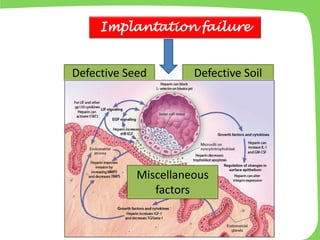
Implantation failure
Defective Seed Defective Soil
Miscellaneous
factors
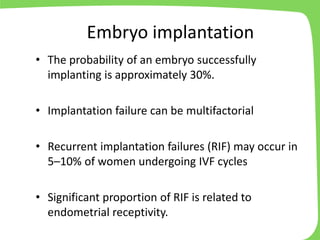
Embryo implantation
• The probability of an embryo successfully
implanting is approximately 30%.
• Implantation failure can be multifactorial
• Recurrent implantation failures (RIF) may occur in
5–10% of women undergoing IVF cycles
• Significant proportion of RIF is related to
endometrial receptivity.
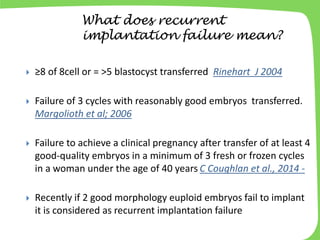
 ≥8 of 8cell or = >5 blastocyst transferred Rinehart J 2004
 Failure of 3 cycles with reasonably good embryos transferred.
Margolioth et al; 2006
 Failure to achieve a clinical pregnancy after transfer of at least 4
good-quality embryos in a minimum of 3 fresh or frozen cycles
in a woman under the age of 40 years C Coughlan et al., 2014 -
 Recently if 2 good morphology euploid embryos fail to implant
it is considered as recurrent implantation failure
What does recurrent
implantation failure mean?
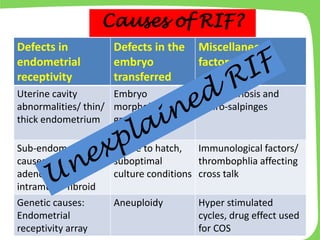
Causes of RIF?
Defects in
endometrial
receptivity
Defects in the
embryo
transferred
Miscellaneous
factors
Uterine cavity
abnormalities/ thin/
thick endometrium
Embryo
morphology and
growth dynamics
Endometriosis and
Hydro-salpinges
Sub-endometrial
causes:
adenomyosis &
intramural fibroid
failure to hatch,
suboptimal
culture conditions
Immunological factors/
thrombophlia affecting
cross talk
Genetic causes:
Endometrial
receptivity array
Aneuploidy Hyper stimulated
cycles, drug effect used
for COS
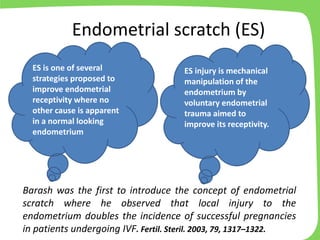
Endometrial scratch (ES)
ES is one of several
strategies proposed to
improve endometrial
receptivity where no
other cause is apparent
in a normal looking
endometrium
ES injury is mechanical
manipulation of the
endometrium by
voluntary endometrial
trauma aimed to
improve its receptivity.
Barash was the first to introduce the concept of endometrial
scratch where he observed that local injury to the
endometrium doubles the incidence of successful pregnancies
in patients undergoing IVF. Fertil. Steril. 2003, 79, 1317–1322.
What is the biological process that may lead
to an increased probability of pregnancy?
One theory is that
endometrial
scratching causes
some sort of
inflammatory
response within the
endometrium,
similar to a scratch
on any other part of
the body.
It is likely that
wound healing
response following
scratch improves
the environment of
the endometrium
and makes it more
likely for an
embryo to implant
and create a
pregnancy.
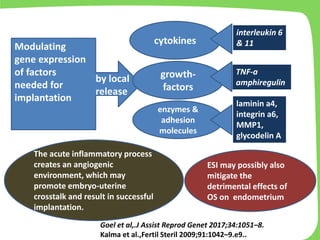
Modulating
gene expression
of factors
needed for
implantation
cytokines
growth-
factors
enzymes &
adhesion
molecules
by local
release
interleukin 6
& 11
TNF-a
amphiregulin
laminin a4,
integrin a6,
MMP1,
glycodelin A
The acute inflammatory process
creates an angiogenic
environment, which may
promote embryo-uterine
crosstalk and result in successful
implantation.
Goel et al,.J Assist Reprod Genet 2017;34:1051–8.
Kalma et al.,Fertil Steril 2009;91:1042–9.e9..
ESI may possibly also
mitigate the
detrimental effects of
OS on endometrium
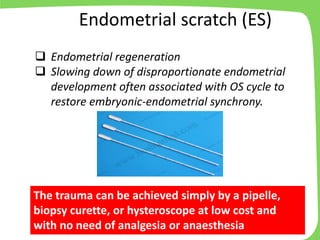
The trauma can be achieved simply by a pipelle,
biopsy curette, or hysteroscope at low cost and
with no need of analgesia or anaesthesia
❑ Endometrial regeneration
❑ Slowing down of disproportionate endometrial
development often associated with OS cycle to
restore embryonic-endometrial synchrony.
Endometrial scratch (ES)
Hysteroscopy is used to treat endometrial pathologies that can
interfere with embryo implantation. Benefits of hysteroscopy are
beyond the possible ‘injury’ effect only:
❑ Correction of unsuspected intrauterine abnormalities in
asymptomatic previously failed IVF patients.
❑ Assessment of cervical conditions to achieve an easier ET.
Therefore, studies based on hysteroscopy should not be
combined with those exclusively based on endometrial biopsy to
analyse the scratching effect.
Carlos and Bellver Hum Rep.2014, Pundir et al., 2014
Hysteroscopy as an
intervention for ES
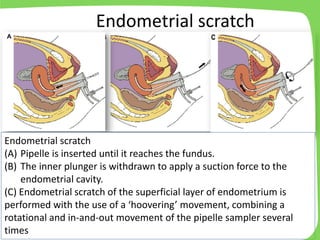
Endometrial scratch
Endometrial scratch
(A) Pipelle is inserted until it reaches the fundus.
(B) The inner plunger is withdrawn to apply a suction force to the
endometrial cavity.
(C) Endometrial scratch of the superficial layer of endometrium is
performed with the use of a ‘hoovering’ movement, combining a
rotational and in-and-out movement of the pipelle sampler several
times
▪ Pain, vasovagal attack, demand of anaesthesia, difficult entry
into uterine cavity, intermittent bleeding are procedural side-
effects.
▪ Possibility of chronic endometrial inflammation, may be
detrimental for embryo implantation and development,
potentially leading to infertility and recurrent pregnancy loss.
▪ Pelvic abscess especially in women with adnexal masses
▪ Solid evidence is needed to draw any conclusions about the
benefits of such iatrogenic inflammation on implantation
before using it routinely as treatment for RIF.
Cicinelli E, Matteo M, Tinelli R, Lepera A, Alfonso R, Indraccolo U, et al.
Prevalence of chronic endometritis in repeated unexplained implantation
failure and the IVF success rate after antibiotic therapy. Hum Reprod 2015;
30:323–30. (49–51).
Endometrial scratch
How safe is it?
Endometrial scratch in IVF
ES has been used in IVF cycles with variability:
❑ First or previous IVF failures (1 or more)
❑ Timing of scratch
luteal or follicular
Once or twice
previous cycle or same cycle
❑ Type of embryo transfer cycles
Fresh embryo transfer in stimulated cycle
FET in artificial cycle using HRT
FET in natural cycle
Fresh embryo transfer cycles (Barash et al., 2003; Baum et al., 2012;
Gibreel et al., 2015; Guven et al., 2014; Inal et al., 2012; Karimzadeh et al.,
2009; Mahran et al., 2016; Narvekar et al., 2010; Nastri et al., 2013; Raziel
et al., 2007; Shohayeb and El-Khayat, 2012; Singh et al., 2015; Yeung et al.,
2014) FET in HRT cycles (Aflatoonian et al., 2016; Dunne and Taylor, 2014)
natural FET cycles (Jennifer Sze Man Mak et al.,2017)
Endometrial scratch (ES)
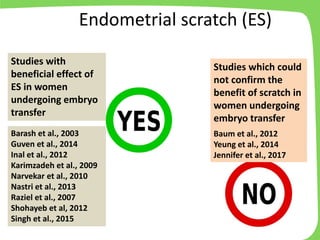
Studies with
beneficial effect of
ES in women
undergoing embryo
transfer
Barash et al., 2003
Guven et al., 2014
Inal et al., 2012
Karimzadeh et al., 2009
Narvekar et al., 2010
Nastri et al., 2013
Raziel et al., 2007
Shohayeb et al, 2012
Singh et al., 2015
Studies which could
not confirm the
benefit of scratch in
women undergoing
embryo transfer
Baum et al., 2012
Yeung et al., 2014
Jennifer et al., 2017
Endometrial scratch (ES)
Meta-analysis and
systematic reviews
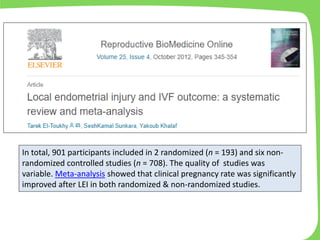
In total, 901 participants included in 2 randomized (n = 193) and six non-
randomized controlled studies (n = 708). The quality of studies was
variable. Meta-analysis showed that clinical pregnancy rate was significantly
improved after LEI in both randomized & non-randomized studies.
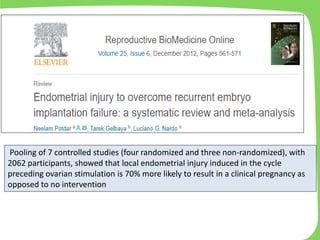
Pooling of 7 controlled studies (four randomized and three non-randomized), with
2062 participants, showed that local endometrial injury induced in the cycle
preceding ovarian stimulation is 70% more likely to result in a clinical pregnancy as
opposed to no intervention
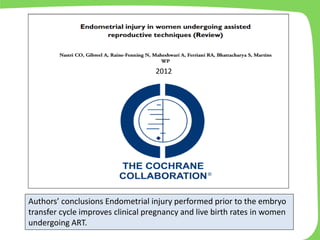
Authors’ conclusions Endometrial injury performed prior to the embryo
transfer cycle improves clinical pregnancy and live birth rates in women
undergoing ART.
2012
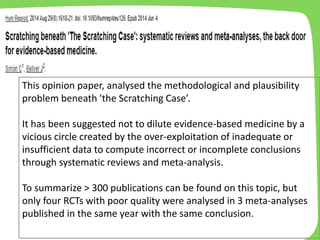
This opinion paper, analysed the methodological and plausibility
problem beneath 'the Scratching Case’.
It has been suggested not to dilute evidence-based medicine by a
vicious circle created by the over-exploitation of inadequate or
insufficient data to compute incorrect or incomplete conclusions
through systematic reviews and meta-analysis.
To summarize > 300 publications can be found on this topic, but
only four RCTs with poor quality were analysed in 3 meta-analyses
published in the same year with the same conclusion.
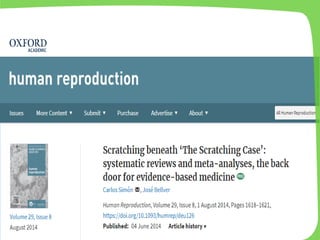
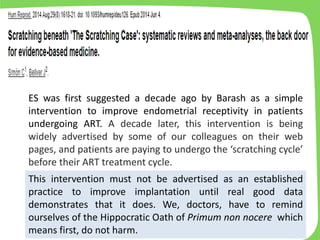
ES was first suggested a decade ago by Barash as a simple
intervention to improve endometrial receptivity in patients
undergoing ART. A decade later, this intervention is being
widely advertised by some of our colleagues on their web
pages, and patients are paying to undergo the ‘scratching cycle’
before their ART treatment cycle.
This intervention must not be advertised as an established
practice to improve implantation until real good data
demonstrates that it does. We, doctors, have to remind
ourselves of the Hippocratic Oath of Primum non nocere which
means first, do not harm.
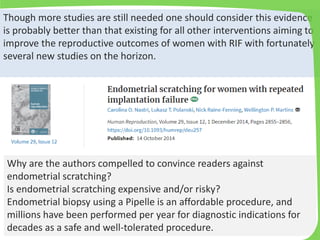
Why are the authors compelled to convince readers against
endometrial scratching?
Is endometrial scratching expensive and/or risky?
Endometrial biopsy using a Pipelle is an affordable procedure, and
millions have been performed per year for diagnostic indications for
decades as a safe and well-tolerated procedure.
Though more studies are still needed one should consider this evidence
is probably better than that existing for all other interventions aiming to
improve the reproductive outcomes of women with RIF with fortunately
several new studies on the horizon.
Review question
To assess the safety and efficacy of performing an endometrial injury
(such as endometrial biopsy) on reproductive outcome in women
undergoing ART.
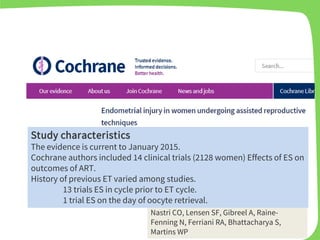
Published 24th march 2015
Authors:
Nastri CO, Lensen SF, Gibreel A, Raine-
Fenning N, Ferriani RA, Bhattacharya S,
Martins WP
Study characteristics
The evidence is current to January 2015.
Cochrane authors included 14 clinical trials (2128 women) Effects of ES on
outcomes of ART.
History of previous ET varied among studies.
13 trials ES in cycle prior to ET cycle.
1 trial ES on the day of oocyte retrieval.
Key results
ES performed sometime during the month before the start of OS
improves chances that a woman will achieve live birth and clinical
pregnancy.
Moderate-quality evidence suggests that if 26% of women achieve live
birth without endometrial injury, between 28% and 48% will achieve live
birth with this intervention.
Contrary to this, endometrial injury performed on the day the eggs are
picked up reduces the chances of pregnancy.
Although current evidence suggests some benefit of ES, we
need evidence from well-designed trials that avoid
instrumentation of the uterus in the preceding three
months, do not cause endometrial damage, stratify the
results for women with and without recurrent implantation
failure (RIF) and report live birth.
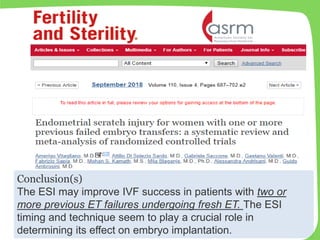
Conclusion(s)
The ESI may improve IVF success in patients with two or
more previous ET failures undergoing fresh ET. The ESI
timing and technique seem to play a crucial role in
determining its effect on embryo implantation.
Result(s):10 studies included (1,468 participants).
Intervention group higher LBR (RR 1.38, 95% CI 1.05–1.80) and
clinical PR (RR 1.34, 95% CI 1.07–1.67)
No difference in multiple PR, miscarriage rate, and EPR.
Double luteal ESI with flexible pipelle had greatest effect
on LBR (RR 1.54, 95% CI 1.10–2.16) and clinical PR (RR 1.30, 95%
CI 1.03–1.65).
ESI was beneficial for patients with two or more previous
ET failure, but not for women with single previous failed ET.
No effect seen in women with frozen-thawed ET cycles.
Endometrial scratch in IUI cycles
and in unexplained infertility
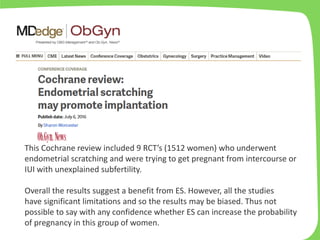
This Cochrane review included 9 RCT’s (1512 women) who underwent
endometrial scratching and were trying to get pregnant from intercourse or
IUI with unexplained subfertility.
Overall the results suggest a benefit from ES. However, all the studies
have significant limitations and so the results may be biased. Thus not
possible to say with any confidence whether ES can increase the probability
of pregnancy in this group of women.
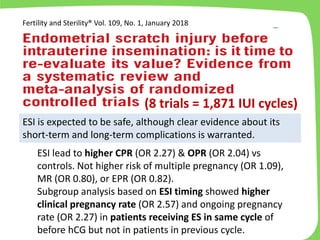
ESI lead to higher CPR (OR 2.27) & OPR (OR 2.04) vs
controls. Not higher risk of multiple pregnancy (OR 1.09),
MR (OR 0.80), or EPR (OR 0.82).
Subgroup analysis based on ESI timing showed higher
clinical pregnancy rate (OR 2.57) and ongoing pregnancy
rate (OR 2.27) in patients receiving ES in same cycle of
before hCG but not in patients in previous cycle.
Fertility and Sterility® Vol. 109, No. 1, January 2018
(8 trials = 1,871 IUI cycles)
ESI is expected to be safe, although clear evidence about its
short-term and long-term complications is warranted.
Poor evidence quality (GRADE of evidence: low) that ESI
improves CPR (OR 2.27, P<00001) and OPR (OR 2.04, P=.004) in
patients undergoing IUI without increasing the risk of multiple
pregnancy, miscarriage, or ectopic pregnancy (GRADE score:
low/very low).
Results support clinicians by providing an updated summary on
ESI use in IUI and advising about the uncertainties in the real
chances of ESI improving CPR and OPR.
Despite the novel evidence provided by our analysis, there is still
a need for further robust, high-quality RCTs to confirm the
effectiveness and safety ESI before routinely recommending its
use in patients undergoing IUI cycles.
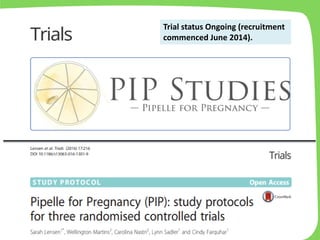
Trial status Ongoing (recruitment
commenced June 2014).
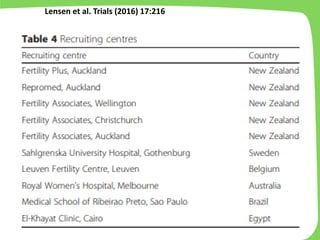
Lensen et al. Trials (2016) 17:216
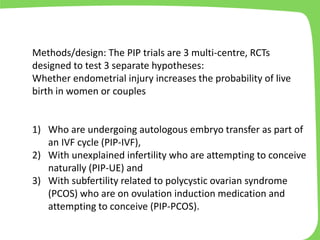
Methods/design: The PIP trials are 3 multi-centre, RCTs
designed to test 3 separate hypotheses:
Whether endometrial injury increases the probability of live
birth in women or couples
1) Who are undergoing autologous embryo transfer as part of
an IVF cycle (PIP-IVF),
2) With unexplained infertility who are attempting to conceive
naturally (PIP-UE) and
3) With subfertility related to polycystic ovarian syndrome
(PCOS) who are on ovulation induction medication and
attempting to conceive (PIP-PCOS).
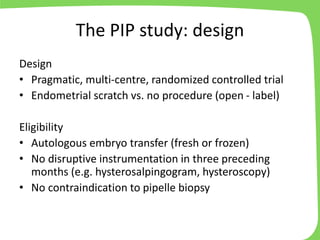
The PIP study: design
Design
• Pragmatic, multi-centre, randomized controlled trial
• Endometrial scratch vs. no procedure (open - label)
Eligibility
• Autologous embryo transfer (fresh or frozen)
• No disruptive instrumentation in three preceding
months (e.g. hysterosalpingogram, hysteroscopy)
• No contraindication to pipelle biopsy
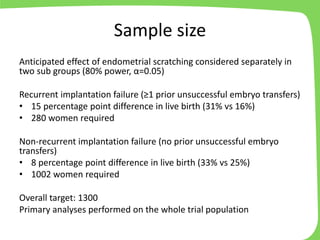
Sample size
Anticipated effect of endometrial scratching considered separately in
two sub groups (80% power, α=0.05)
Recurrent implantation failure (≥1 prior unsuccessful embryo transfers)
• 15 percentage point difference in live birth (31% vs 16%)
• 280 women required
Non-recurrent implantation failure (no prior unsuccessful embryo
transfers)
• 8 percentage point difference in live birth (33% vs 25%)
• 1002 women required
Overall target: 1300
Primary analyses performed on the whole trial population
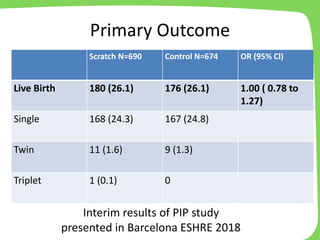
Primary Outcome
Scratch N=690 Control N=674 OR (95% Cl)
Live Birth 180 (26.1) 176 (26.1) 1.00 ( 0.78 to
1.27)
Single 168 (24.3) 167 (24.8)
Twin 11 (1.6) 9 (1.3)
Triplet 1 (0.1) 0
Interim results of PIP study
presented in Barcelona ESHRE 2018
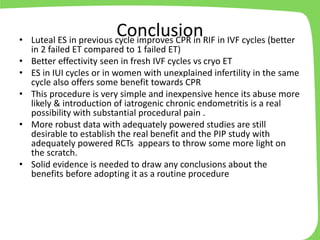
Conclusion• Luteal ES in previous cycle improves CPR in RIF in IVF cycles (better
in 2 failed ET compared to 1 failed ET)
• Better effectivity seen in fresh IVF cycles vs cryo ET
• ES in IUI cycles or in women with unexplained infertility in the same
cycle also offers some benefit towards CPR
• This procedure is very simple and inexpensive hence its abuse more
likely & introduction of iatrogenic chronic endometritis is a real
possibility with substantial procedural pain .
• More robust data with adequately powered studies are still
desirable to establish the real benefit and the PIP study with
adequately powered RCTs appears to throw some more light on
the scratch.
• Solid evidence is needed to draw any conclusions about the
benefits before adopting it as a routine procedure
Thank you

Endometrial scratch final converted

  • 1.
    ‘President’s Medal’ forbest medical graduate 1970-75 Awareded by DMA on Dr. B.C Roy’s birthday’ for outstanding contribution towards medicine,1999 ‘Vikas Ratan Award’ by Nations economic development & growth society 2002 ‘Chitsa Ratan Award’ by International Study Circle in 2007 ‘Life time Medical excellence award’ Obs & Gyne by Hippocrates foundation 2014 ‘Abdul Kalam gold medal’ by Global Economic Prog & Research Association 2015 Rashtriya Gaurav Gold Medal award’, October 2017 by GEPRA ‘Distinguished teacher of excellence award’ for PG medical education by national board of examinations and ANBAI in 2017 ‘Inspiring Gynecologist of India’, by the Economic Times on doctors day 2018 Course director for post doctoral Fellowship in Reproductive Medicine by NBE since 2007 and by FOGSI for basic & advanced infertility training since 2008. Member of Editorial board of ‘IVF Worldwide’, peer reviewer for ‘Journal of Human Reproductive Sciences’, Member of advisory board for ‘Journal of Fertility Science & Research’ and consultant advisor for queries to NDTV.com Field of interest: Infertility, ART, Reproductive endocrinology, Endoscopic surgery for pelvic resurrection. and ART. Prof. Abha Majumdar Director, Center of IVF and Human Reproduction Sir Ganga Ram Hospital, New Delhi, INDIA
  • 2.
    Director Centre of IVFand Human Reproduction
  • 3.
  • 4.
    Of this year'sNobel Prize winners, the work of British physiologist Robert G. Edwards waited longest to be recognized. His award for medicine comes 32 years after he figured out how to create the beginnings of human life outside the uterus through in vitro fertilization. Single oocyte Single embryo Single baby
  • 5.
    Every single menstrualcycle aims at endometrial growth & receptivity which is a steroid dependent phenomenon & is targeted to create a ‘window of implantation’ which spans from day 20 to 24 of a 28 day cycle. Creating the ‘window of implantation’ aims at one single function which is to make the endometrium receptive for implantation of embryo Only after development of IVF it was understood that Implantation failure is a major rate limiting step in happening of a successful pregnancy
  • 6.
    Implantation failure Defective SeedDefective Soil Miscellaneous factors
  • 7.
    Embryo implantation • Theprobability of an embryo successfully implanting is approximately 30%. • Implantation failure can be multifactorial • Recurrent implantation failures (RIF) may occur in 5–10% of women undergoing IVF cycles • Significant proportion of RIF is related to endometrial receptivity.
  • 8.
     ≥8 of8cell or = >5 blastocyst transferred Rinehart J 2004  Failure of 3 cycles with reasonably good embryos transferred. Margolioth et al; 2006  Failure to achieve a clinical pregnancy after transfer of at least 4 good-quality embryos in a minimum of 3 fresh or frozen cycles in a woman under the age of 40 years C Coughlan et al., 2014 -  Recently if 2 good morphology euploid embryos fail to implant it is considered as recurrent implantation failure What does recurrent implantation failure mean?
  • 9.
    Causes of RIF? Defectsin endometrial receptivity Defects in the embryo transferred Miscellaneous factors Uterine cavity abnormalities/ thin/ thick endometrium Embryo morphology and growth dynamics Endometriosis and Hydro-salpinges Sub-endometrial causes: adenomyosis & intramural fibroid failure to hatch, suboptimal culture conditions Immunological factors/ thrombophlia affecting cross talk Genetic causes: Endometrial receptivity array Aneuploidy Hyper stimulated cycles, drug effect used for COS
  • 10.
    Endometrial scratch (ES) ESis one of several strategies proposed to improve endometrial receptivity where no other cause is apparent in a normal looking endometrium ES injury is mechanical manipulation of the endometrium by voluntary endometrial trauma aimed to improve its receptivity. Barash was the first to introduce the concept of endometrial scratch where he observed that local injury to the endometrium doubles the incidence of successful pregnancies in patients undergoing IVF. Fertil. Steril. 2003, 79, 1317–1322.
  • 11.
    What is thebiological process that may lead to an increased probability of pregnancy? One theory is that endometrial scratching causes some sort of inflammatory response within the endometrium, similar to a scratch on any other part of the body. It is likely that wound healing response following scratch improves the environment of the endometrium and makes it more likely for an embryo to implant and create a pregnancy.
  • 12.
    Modulating gene expression of factors neededfor implantation cytokines growth- factors enzymes & adhesion molecules by local release interleukin 6 & 11 TNF-a amphiregulin laminin a4, integrin a6, MMP1, glycodelin A The acute inflammatory process creates an angiogenic environment, which may promote embryo-uterine crosstalk and result in successful implantation. Goel et al,.J Assist Reprod Genet 2017;34:1051–8. Kalma et al.,Fertil Steril 2009;91:1042–9.e9.. ESI may possibly also mitigate the detrimental effects of OS on endometrium
  • 13.
    The trauma canbe achieved simply by a pipelle, biopsy curette, or hysteroscope at low cost and with no need of analgesia or anaesthesia ❑ Endometrial regeneration ❑ Slowing down of disproportionate endometrial development often associated with OS cycle to restore embryonic-endometrial synchrony. Endometrial scratch (ES)
  • 14.
    Hysteroscopy is usedto treat endometrial pathologies that can interfere with embryo implantation. Benefits of hysteroscopy are beyond the possible ‘injury’ effect only: ❑ Correction of unsuspected intrauterine abnormalities in asymptomatic previously failed IVF patients. ❑ Assessment of cervical conditions to achieve an easier ET. Therefore, studies based on hysteroscopy should not be combined with those exclusively based on endometrial biopsy to analyse the scratching effect. Carlos and Bellver Hum Rep.2014, Pundir et al., 2014 Hysteroscopy as an intervention for ES
  • 15.
    Endometrial scratch Endometrial scratch (A)Pipelle is inserted until it reaches the fundus. (B) The inner plunger is withdrawn to apply a suction force to the endometrial cavity. (C) Endometrial scratch of the superficial layer of endometrium is performed with the use of a ‘hoovering’ movement, combining a rotational and in-and-out movement of the pipelle sampler several times
  • 16.
    ▪ Pain, vasovagalattack, demand of anaesthesia, difficult entry into uterine cavity, intermittent bleeding are procedural side- effects. ▪ Possibility of chronic endometrial inflammation, may be detrimental for embryo implantation and development, potentially leading to infertility and recurrent pregnancy loss. ▪ Pelvic abscess especially in women with adnexal masses ▪ Solid evidence is needed to draw any conclusions about the benefits of such iatrogenic inflammation on implantation before using it routinely as treatment for RIF. Cicinelli E, Matteo M, Tinelli R, Lepera A, Alfonso R, Indraccolo U, et al. Prevalence of chronic endometritis in repeated unexplained implantation failure and the IVF success rate after antibiotic therapy. Hum Reprod 2015; 30:323–30. (49–51). Endometrial scratch How safe is it?
  • 17.
  • 18.
    ES has beenused in IVF cycles with variability: ❑ First or previous IVF failures (1 or more) ❑ Timing of scratch luteal or follicular Once or twice previous cycle or same cycle ❑ Type of embryo transfer cycles Fresh embryo transfer in stimulated cycle FET in artificial cycle using HRT FET in natural cycle Fresh embryo transfer cycles (Barash et al., 2003; Baum et al., 2012; Gibreel et al., 2015; Guven et al., 2014; Inal et al., 2012; Karimzadeh et al., 2009; Mahran et al., 2016; Narvekar et al., 2010; Nastri et al., 2013; Raziel et al., 2007; Shohayeb and El-Khayat, 2012; Singh et al., 2015; Yeung et al., 2014) FET in HRT cycles (Aflatoonian et al., 2016; Dunne and Taylor, 2014) natural FET cycles (Jennifer Sze Man Mak et al.,2017) Endometrial scratch (ES)
  • 19.
    Studies with beneficial effectof ES in women undergoing embryo transfer Barash et al., 2003 Guven et al., 2014 Inal et al., 2012 Karimzadeh et al., 2009 Narvekar et al., 2010 Nastri et al., 2013 Raziel et al., 2007 Shohayeb et al, 2012 Singh et al., 2015 Studies which could not confirm the benefit of scratch in women undergoing embryo transfer Baum et al., 2012 Yeung et al., 2014 Jennifer et al., 2017 Endometrial scratch (ES)
  • 20.
  • 21.
    In total, 901participants included in 2 randomized (n = 193) and six non- randomized controlled studies (n = 708). The quality of studies was variable. Meta-analysis showed that clinical pregnancy rate was significantly improved after LEI in both randomized & non-randomized studies.
  • 22.
    Pooling of 7controlled studies (four randomized and three non-randomized), with 2062 participants, showed that local endometrial injury induced in the cycle preceding ovarian stimulation is 70% more likely to result in a clinical pregnancy as opposed to no intervention
  • 23.
    Authors’ conclusions Endometrialinjury performed prior to the embryo transfer cycle improves clinical pregnancy and live birth rates in women undergoing ART. 2012
  • 25.
    This opinion paper,analysed the methodological and plausibility problem beneath 'the Scratching Case’. It has been suggested not to dilute evidence-based medicine by a vicious circle created by the over-exploitation of inadequate or insufficient data to compute incorrect or incomplete conclusions through systematic reviews and meta-analysis. To summarize > 300 publications can be found on this topic, but only four RCTs with poor quality were analysed in 3 meta-analyses published in the same year with the same conclusion.
  • 26.
    ES was firstsuggested a decade ago by Barash as a simple intervention to improve endometrial receptivity in patients undergoing ART. A decade later, this intervention is being widely advertised by some of our colleagues on their web pages, and patients are paying to undergo the ‘scratching cycle’ before their ART treatment cycle. This intervention must not be advertised as an established practice to improve implantation until real good data demonstrates that it does. We, doctors, have to remind ourselves of the Hippocratic Oath of Primum non nocere which means first, do not harm.
  • 27.
    Why are theauthors compelled to convince readers against endometrial scratching? Is endometrial scratching expensive and/or risky? Endometrial biopsy using a Pipelle is an affordable procedure, and millions have been performed per year for diagnostic indications for decades as a safe and well-tolerated procedure. Though more studies are still needed one should consider this evidence is probably better than that existing for all other interventions aiming to improve the reproductive outcomes of women with RIF with fortunately several new studies on the horizon.
  • 28.
    Review question To assessthe safety and efficacy of performing an endometrial injury (such as endometrial biopsy) on reproductive outcome in women undergoing ART. Published 24th march 2015 Authors: Nastri CO, Lensen SF, Gibreel A, Raine- Fenning N, Ferriani RA, Bhattacharya S, Martins WP Study characteristics The evidence is current to January 2015. Cochrane authors included 14 clinical trials (2128 women) Effects of ES on outcomes of ART. History of previous ET varied among studies. 13 trials ES in cycle prior to ET cycle. 1 trial ES on the day of oocyte retrieval.
  • 29.
    Key results ES performedsometime during the month before the start of OS improves chances that a woman will achieve live birth and clinical pregnancy. Moderate-quality evidence suggests that if 26% of women achieve live birth without endometrial injury, between 28% and 48% will achieve live birth with this intervention. Contrary to this, endometrial injury performed on the day the eggs are picked up reduces the chances of pregnancy. Although current evidence suggests some benefit of ES, we need evidence from well-designed trials that avoid instrumentation of the uterus in the preceding three months, do not cause endometrial damage, stratify the results for women with and without recurrent implantation failure (RIF) and report live birth.
  • 30.
    Conclusion(s) The ESI mayimprove IVF success in patients with two or more previous ET failures undergoing fresh ET. The ESI timing and technique seem to play a crucial role in determining its effect on embryo implantation.
  • 31.
    Result(s):10 studies included(1,468 participants). Intervention group higher LBR (RR 1.38, 95% CI 1.05–1.80) and clinical PR (RR 1.34, 95% CI 1.07–1.67) No difference in multiple PR, miscarriage rate, and EPR. Double luteal ESI with flexible pipelle had greatest effect on LBR (RR 1.54, 95% CI 1.10–2.16) and clinical PR (RR 1.30, 95% CI 1.03–1.65). ESI was beneficial for patients with two or more previous ET failure, but not for women with single previous failed ET. No effect seen in women with frozen-thawed ET cycles.
  • 32.
    Endometrial scratch inIUI cycles and in unexplained infertility
  • 33.
    This Cochrane reviewincluded 9 RCT’s (1512 women) who underwent endometrial scratching and were trying to get pregnant from intercourse or IUI with unexplained subfertility. Overall the results suggest a benefit from ES. However, all the studies have significant limitations and so the results may be biased. Thus not possible to say with any confidence whether ES can increase the probability of pregnancy in this group of women.
  • 34.
    ESI lead tohigher CPR (OR 2.27) & OPR (OR 2.04) vs controls. Not higher risk of multiple pregnancy (OR 1.09), MR (OR 0.80), or EPR (OR 0.82). Subgroup analysis based on ESI timing showed higher clinical pregnancy rate (OR 2.57) and ongoing pregnancy rate (OR 2.27) in patients receiving ES in same cycle of before hCG but not in patients in previous cycle. Fertility and Sterility® Vol. 109, No. 1, January 2018 (8 trials = 1,871 IUI cycles) ESI is expected to be safe, although clear evidence about its short-term and long-term complications is warranted.
  • 35.
    Poor evidence quality(GRADE of evidence: low) that ESI improves CPR (OR 2.27, P<00001) and OPR (OR 2.04, P=.004) in patients undergoing IUI without increasing the risk of multiple pregnancy, miscarriage, or ectopic pregnancy (GRADE score: low/very low). Results support clinicians by providing an updated summary on ESI use in IUI and advising about the uncertainties in the real chances of ESI improving CPR and OPR. Despite the novel evidence provided by our analysis, there is still a need for further robust, high-quality RCTs to confirm the effectiveness and safety ESI before routinely recommending its use in patients undergoing IUI cycles.
  • 36.
    Trial status Ongoing(recruitment commenced June 2014).
  • 37.
    Lensen et al.Trials (2016) 17:216
  • 38.
    Methods/design: The PIPtrials are 3 multi-centre, RCTs designed to test 3 separate hypotheses: Whether endometrial injury increases the probability of live birth in women or couples 1) Who are undergoing autologous embryo transfer as part of an IVF cycle (PIP-IVF), 2) With unexplained infertility who are attempting to conceive naturally (PIP-UE) and 3) With subfertility related to polycystic ovarian syndrome (PCOS) who are on ovulation induction medication and attempting to conceive (PIP-PCOS).
  • 39.
    The PIP study:design Design • Pragmatic, multi-centre, randomized controlled trial • Endometrial scratch vs. no procedure (open - label) Eligibility • Autologous embryo transfer (fresh or frozen) • No disruptive instrumentation in three preceding months (e.g. hysterosalpingogram, hysteroscopy) • No contraindication to pipelle biopsy
  • 40.
    Sample size Anticipated effectof endometrial scratching considered separately in two sub groups (80% power, α=0.05) Recurrent implantation failure (≥1 prior unsuccessful embryo transfers) • 15 percentage point difference in live birth (31% vs 16%) • 280 women required Non-recurrent implantation failure (no prior unsuccessful embryo transfers) • 8 percentage point difference in live birth (33% vs 25%) • 1002 women required Overall target: 1300 Primary analyses performed on the whole trial population
  • 41.
    Primary Outcome Scratch N=690Control N=674 OR (95% Cl) Live Birth 180 (26.1) 176 (26.1) 1.00 ( 0.78 to 1.27) Single 168 (24.3) 167 (24.8) Twin 11 (1.6) 9 (1.3) Triplet 1 (0.1) 0 Interim results of PIP study presented in Barcelona ESHRE 2018
  • 42.
    Conclusion• Luteal ESin previous cycle improves CPR in RIF in IVF cycles (better in 2 failed ET compared to 1 failed ET) • Better effectivity seen in fresh IVF cycles vs cryo ET • ES in IUI cycles or in women with unexplained infertility in the same cycle also offers some benefit towards CPR • This procedure is very simple and inexpensive hence its abuse more likely & introduction of iatrogenic chronic endometritis is a real possibility with substantial procedural pain . • More robust data with adequately powered studies are still desirable to establish the real benefit and the PIP study with adequately powered RCTs appears to throw some more light on the scratch. • Solid evidence is needed to draw any conclusions about the benefits before adopting it as a routine procedure
  • 43.