How To
Study For
Encountering
Conflict
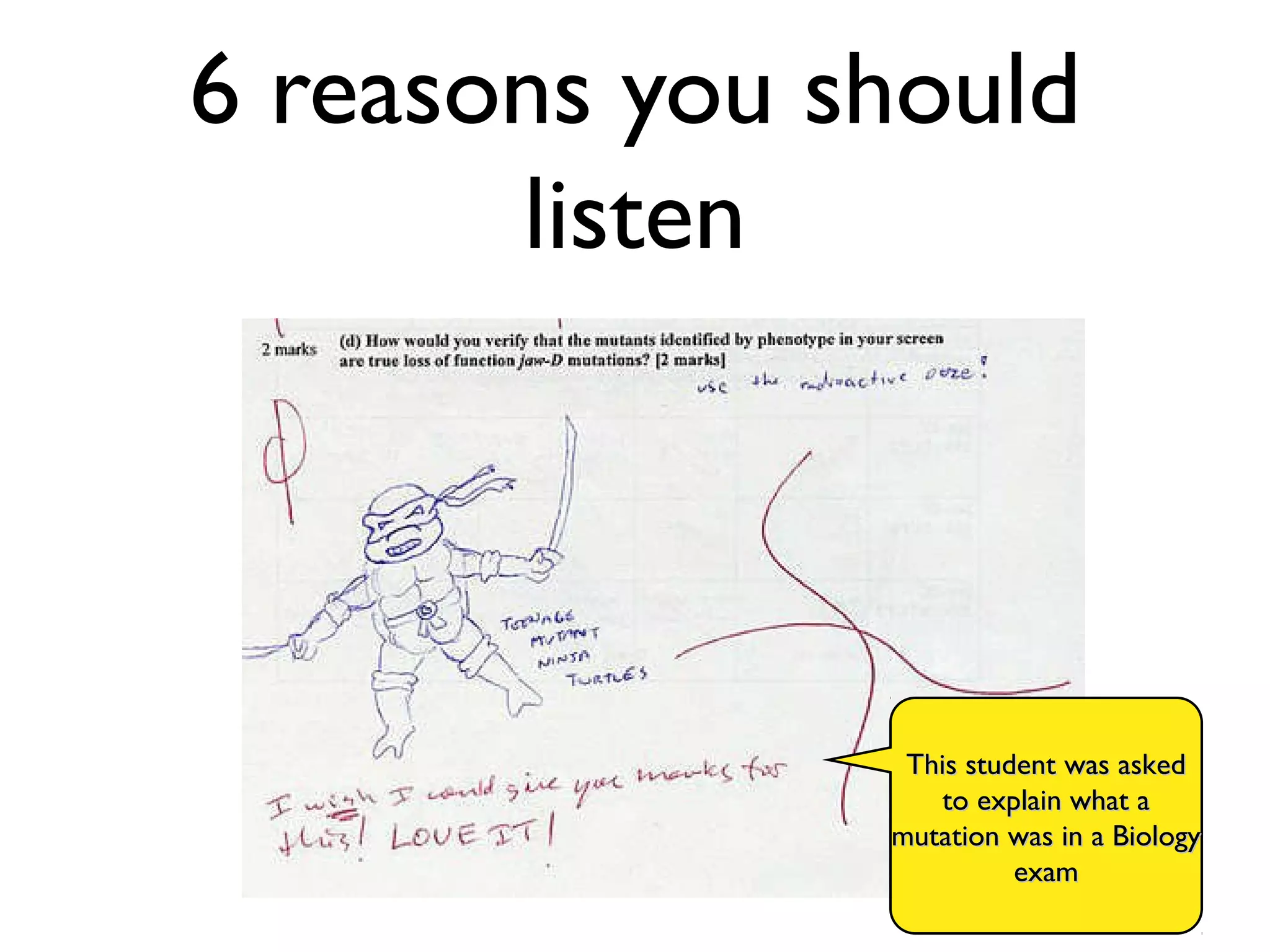
6 reasons you should
listen
This student was askedThis student was asked
to explain what ato explain what a
mutation was in a Biologymutation was in a Biology
examexam
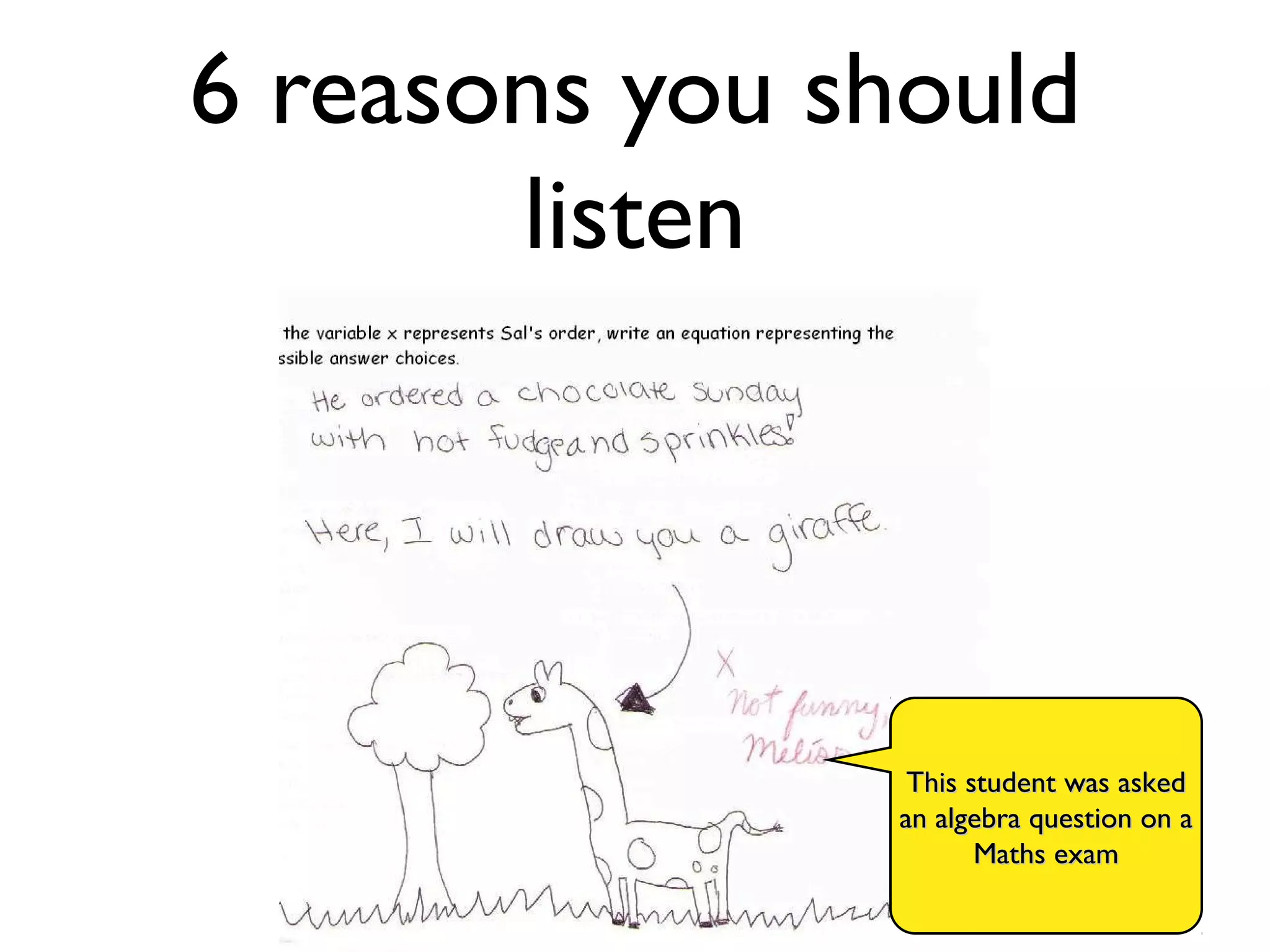
6 reasons you should
listen
This student was askedThis student was asked
an algebra question on aan algebra question on a
Maths examMaths exam
6 reasons you should
listen
This student was askedThis student was asked
to represent expenses onto represent expenses on
a Accounting exama Accounting exam
6 reasons you should
listen
This student was askedThis student was asked
to expand an equation onto expand an equation on
a Maths exama Maths exam
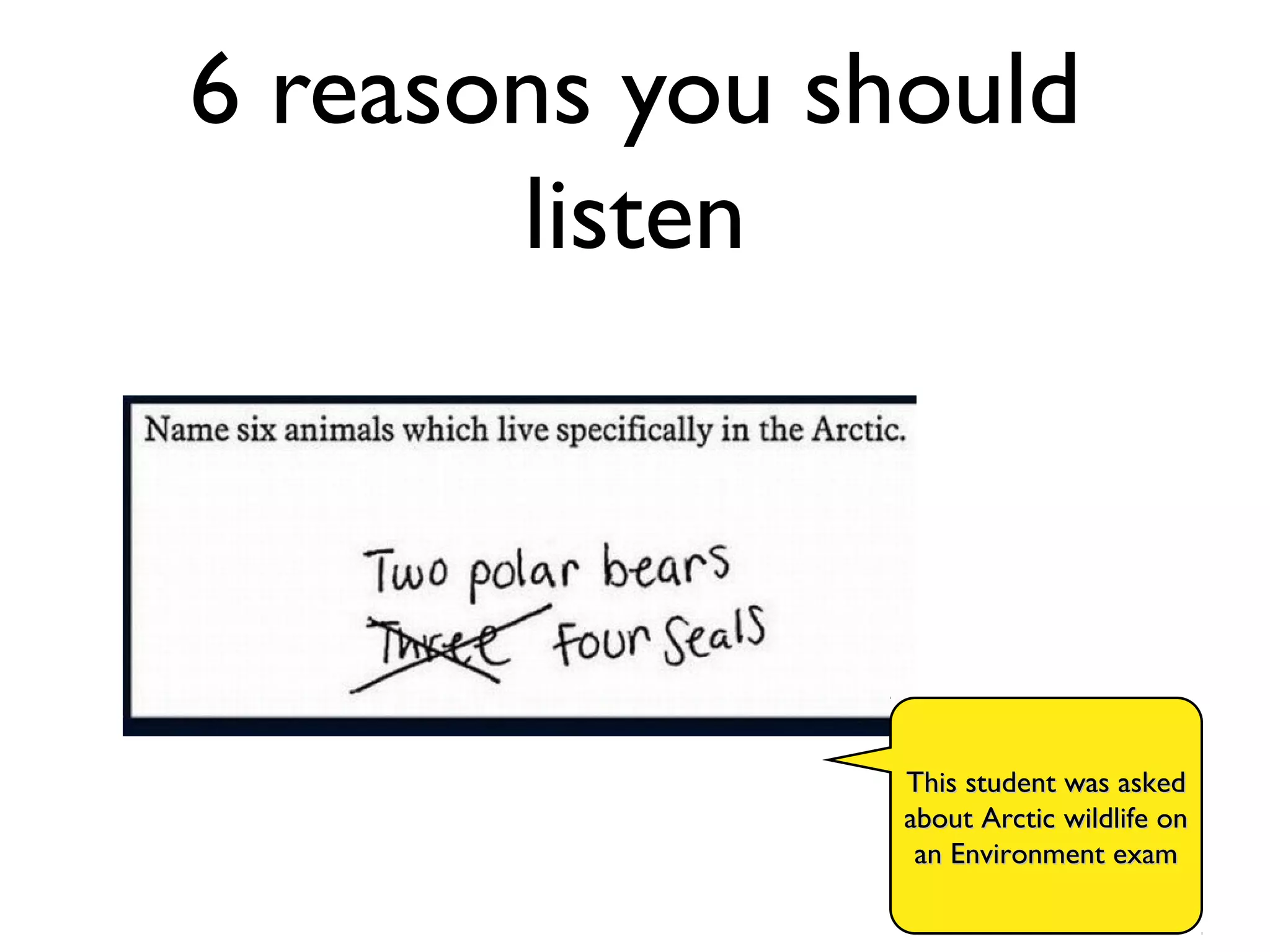
6 reasons you should
listen
This student was askedThis student was asked
about Arctic wildlife onabout Arctic wildlife on
an Environment examan Environment exam
6 reasons you should
listen
This student was askedThis student was asked
an algebra question on aan algebra question on a
Maths examMaths exam
Don’t end up here
And one reason you
need to have a plan
5656
Effective Study
• Don’t measure study by time passed but by
goals achieved
Three ways you can
respond to the context
section
• Expository essay piece
• Persuasive piece
• Creative piece
Expository Essay
Text Response:
*What is one text
about?
*Examples from
that one text.
Expository Essay:
*What is an idea
about?
*Examples from
that one context
text.
*Example from
other places
Understanding the
prompt
•‘The experience of conflict
changes people’s priorities.’
• What is an experience of conflict?
• Which experiences of conflict change people?
• Which people are changed by experiences of conflict?
• What is a priority and how can it be changed?
Understanding the
prompt
Who
What
How
Why
&
Whose
Which
‘The ability to compromise is
important when responding to
conflict.’
‘It is difficult to remain a
bystander in any situation of
conflict.’
‘It is the victims of conflict who
show us what is really
important.’
Introduction
• Which question would you start by
answering in your introduction?
• An experience of conflict is any situation where
a person is confronted by difficulty and has to
chose to go one way or the other. It means we
have to think about what is really important...
Ways To Encounter:
With courage, bravely,
cowardly, practically,
quickly, slowly, with
thought and care, angrily,
resiliently, hesitantly,
instinctively, through
determination, alone,
with others, with dignity,
hopelessly, through
avoidance,
manipulatively,
emotionally, with
principles
Conflict Choices:
Family vs. Me
Survival vs. Giving in
Loyalty vs. Self interest
Values vs. What’s practical
Change vs. Staying the same
Justice vs. Injustice
Prejudice vs. Acceptance
What’s hard vs. What’s easy
Body paragraph
• Some conflict situations require people to
choose between...In....What’s difficult about this
choice is...
Other example
Conflict Choices:
Family vs. Me
Survival vs. Giving in
Loyalty vs. Self interest
Values vs. What’s practical
Change vs. Staying the same
Justice vs. Injustice
Prejudice vs. Acceptance
What’s hard vs. What’s easy
Other examples:
Current events
Historical examples
My own personal
examples
From other novels/films
Using other examples
• In Paradise Road the women face a serious
conflict in terms of survival.They need to
choose between self interest and thinking
about others.Around the world duringWorld
War II thousands of people faced the same
grim decision. Everyone encountered this
conflict in different ways. Many decided to do
just what was good for them. For example...
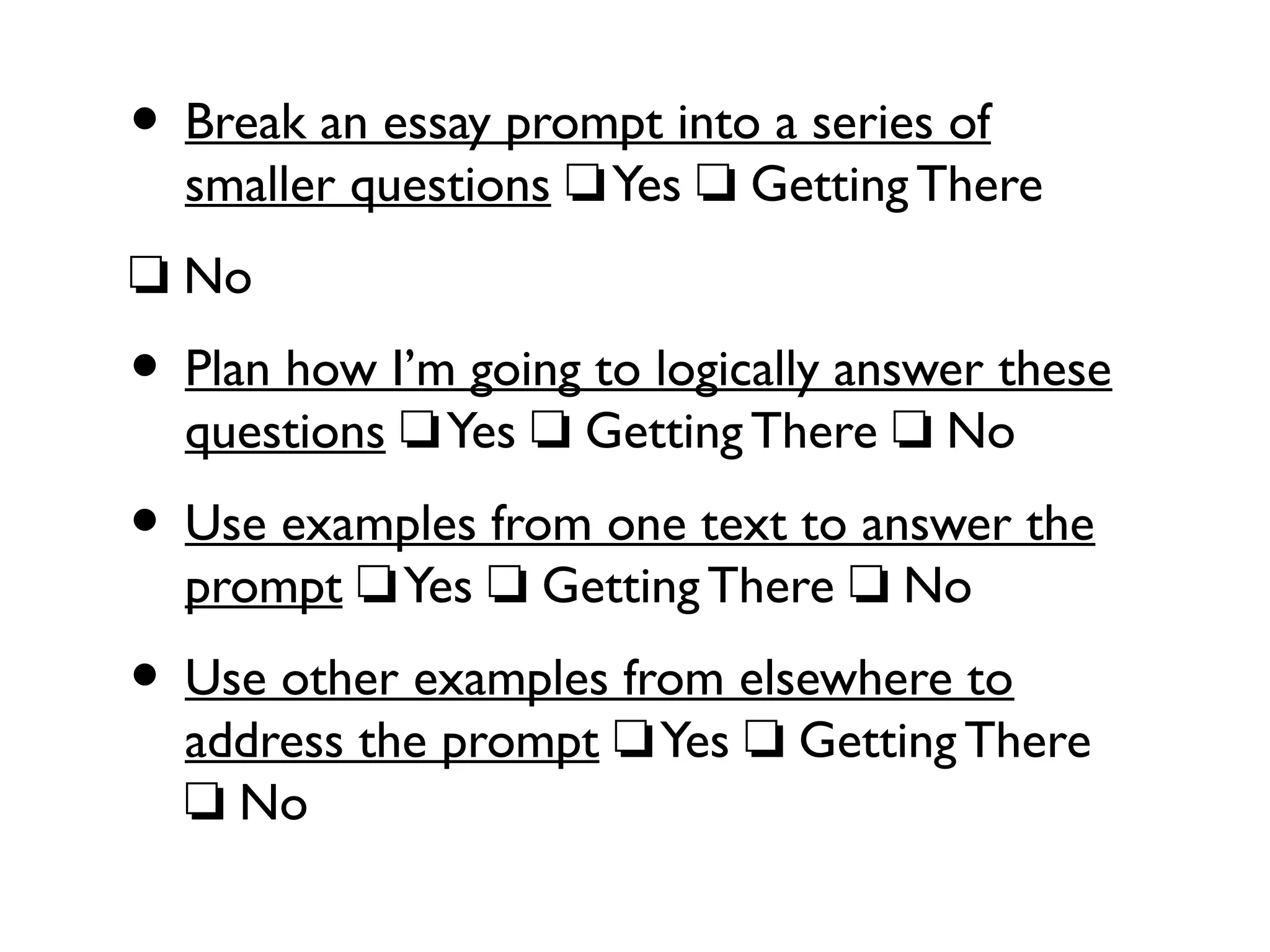
• Break an essay prompt into a series of
smaller questions Yes Getting There❏ ❏
❏ No
• Plan how I’m going to logically answer these
questions Yes Getting There No❏ ❏ ❏
• Use examples from one text to answer the
prompt Yes Getting There No❏ ❏ ❏
• Use other examples from elsewhere to
address the prompt Yes Getting There❏ ❏
No❏
QuickTime™ and a
decompressor
are needed to see this picture.
Writing persuasively
• ‘The ability to compromise is important when
responding to conflict.’
• We must always be able to compromise in
the face of conflict.
Propositions
*We must/must
not...always/never/so
metimes
*We should/should
not...always/never/so
metimes
‘The experience of conflict
changes people’s priorities.’
‘It is difficult to remain a
bystander in any situation
of conflict.’
‘It is the victims of conflict
who show us what is really
important.’
• Turn an essay prompt into something that
can be argued for or against Yes Getting❏ ❏
There No❏
• Start my persuasive piece in a distinctly
persuasive way Yes Getting There No❏ ❏ ❏
• Use persuasive examples from one text ❏
Yes Getting There No❏ ❏
• Use other persuasive examples from
elsewhere Yes Getting There No❏ ❏ ❏
Creative writing
Bad reasons for
choosing the creative
option:
*I think it’s easy
*I don’t want to study
*I’ve got a great idea
for one story
Good reasons for choosing
the creative option
*I’m confident about
creative writing
*I’m prepared to practice
creative writing
*I’ve got a good idea for a
character and setting that’s
relevant to the context
QuickTime™ and a
decompressor
are needed to see this picture.
Characters and
situations
Character types:
*A family member who is both loyal and wants to
do their own thing (The Rugmaker)
*A younger person who is part of a group and
share some values but has different values to the
group (Paradise Road)
*A person who is an advocate of change (The Life
of Galileo)
Character + Scenarios
• ‘The ability to compromise is important when
responding to conflict.’
• A group of people is detained at an overseas
airport by security. One member of the group
needs to decide how to best handle the situation.
• A character and a setting that you can write
confidently about Yes Getting There❏ ❏ ❏
No
• Take an essay prompt and develop a
scenario/problem a character can face which
addresses the key idea in the prompt Yes❏
GettingThere No❏ ❏
Three ways you can
respond to the context
section
• Expository essay piece
• Persuasive piece
• Creative piece
Thank you...
Note: This isNote: This is
an entirelyan entirely
random picturerandom picture

Encountering conflict

  • 1.
  • 2.
    6 reasons youshould listen This student was askedThis student was asked to explain what ato explain what a mutation was in a Biologymutation was in a Biology examexam
  • 3.
    6 reasons youshould listen This student was askedThis student was asked an algebra question on aan algebra question on a Maths examMaths exam
  • 4.
    6 reasons youshould listen This student was askedThis student was asked to represent expenses onto represent expenses on a Accounting exama Accounting exam
  • 5.
    6 reasons youshould listen This student was askedThis student was asked to expand an equation onto expand an equation on a Maths exama Maths exam
  • 6.
    6 reasons youshould listen This student was askedThis student was asked about Arctic wildlife onabout Arctic wildlife on an Environment examan Environment exam
  • 7.
    6 reasons youshould listen This student was askedThis student was asked an algebra question on aan algebra question on a Maths examMaths exam
  • 8.
  • 9.
    And one reasonyou need to have a plan 5656
  • 10.
    Effective Study • Don’tmeasure study by time passed but by goals achieved
  • 11.
    Three ways youcan respond to the context section • Expository essay piece • Persuasive piece • Creative piece
  • 12.
    Expository Essay Text Response: *Whatis one text about? *Examples from that one text. Expository Essay: *What is an idea about? *Examples from that one context text. *Example from other places
  • 13.
    Understanding the prompt •‘The experienceof conflict changes people’s priorities.’ • What is an experience of conflict? • Which experiences of conflict change people? • Which people are changed by experiences of conflict? • What is a priority and how can it be changed?
  • 14.
    Understanding the prompt Who What How Why & Whose Which ‘The abilityto compromise is important when responding to conflict.’ ‘It is difficult to remain a bystander in any situation of conflict.’ ‘It is the victims of conflict who show us what is really important.’
  • 15.
    Introduction • Which questionwould you start by answering in your introduction? • An experience of conflict is any situation where a person is confronted by difficulty and has to chose to go one way or the other. It means we have to think about what is really important...
  • 16.
    Ways To Encounter: Withcourage, bravely, cowardly, practically, quickly, slowly, with thought and care, angrily, resiliently, hesitantly, instinctively, through determination, alone, with others, with dignity, hopelessly, through avoidance, manipulatively, emotionally, with principles Conflict Choices: Family vs. Me Survival vs. Giving in Loyalty vs. Self interest Values vs. What’s practical Change vs. Staying the same Justice vs. Injustice Prejudice vs. Acceptance What’s hard vs. What’s easy
  • 17.
    Body paragraph • Someconflict situations require people to choose between...In....What’s difficult about this choice is...
  • 18.
    Other example Conflict Choices: Familyvs. Me Survival vs. Giving in Loyalty vs. Self interest Values vs. What’s practical Change vs. Staying the same Justice vs. Injustice Prejudice vs. Acceptance What’s hard vs. What’s easy Other examples: Current events Historical examples My own personal examples From other novels/films
  • 19.
    Using other examples •In Paradise Road the women face a serious conflict in terms of survival.They need to choose between self interest and thinking about others.Around the world duringWorld War II thousands of people faced the same grim decision. Everyone encountered this conflict in different ways. Many decided to do just what was good for them. For example...
  • 20.
    • Break anessay prompt into a series of smaller questions Yes Getting There❏ ❏ ❏ No • Plan how I’m going to logically answer these questions Yes Getting There No❏ ❏ ❏ • Use examples from one text to answer the prompt Yes Getting There No❏ ❏ ❏ • Use other examples from elsewhere to address the prompt Yes Getting There❏ ❏ No❏
  • 21.
    QuickTime™ and a decompressor areneeded to see this picture.
  • 22.
    Writing persuasively • ‘Theability to compromise is important when responding to conflict.’ • We must always be able to compromise in the face of conflict.
  • 23.
    Propositions *We must/must not...always/never/so metimes *We should/should not...always/never/so metimes ‘Theexperience of conflict changes people’s priorities.’ ‘It is difficult to remain a bystander in any situation of conflict.’ ‘It is the victims of conflict who show us what is really important.’
  • 24.
    • Turn anessay prompt into something that can be argued for or against Yes Getting❏ ❏ There No❏ • Start my persuasive piece in a distinctly persuasive way Yes Getting There No❏ ❏ ❏ • Use persuasive examples from one text ❏ Yes Getting There No❏ ❏ • Use other persuasive examples from elsewhere Yes Getting There No❏ ❏ ❏
  • 26.
    Creative writing Bad reasonsfor choosing the creative option: *I think it’s easy *I don’t want to study *I’ve got a great idea for one story Good reasons for choosing the creative option *I’m confident about creative writing *I’m prepared to practice creative writing *I’ve got a good idea for a character and setting that’s relevant to the context
  • 27.
    QuickTime™ and a decompressor areneeded to see this picture.
  • 28.
    Characters and situations Character types: *Afamily member who is both loyal and wants to do their own thing (The Rugmaker) *A younger person who is part of a group and share some values but has different values to the group (Paradise Road) *A person who is an advocate of change (The Life of Galileo)
  • 29.
    Character + Scenarios •‘The ability to compromise is important when responding to conflict.’ • A group of people is detained at an overseas airport by security. One member of the group needs to decide how to best handle the situation.
  • 30.
    • A characterand a setting that you can write confidently about Yes Getting There❏ ❏ ❏ No • Take an essay prompt and develop a scenario/problem a character can face which addresses the key idea in the prompt Yes❏ GettingThere No❏ ❏
  • 31.
    Three ways youcan respond to the context section • Expository essay piece • Persuasive piece • Creative piece
  • 32.
    Thank you... Note: ThisisNote: This is an entirelyan entirely random picturerandom picture