SANDFORD FLEMING FORUM
Structural Resilience: How Building
Systems Improve Operational Resilience
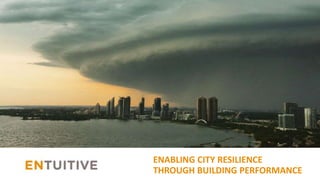
ENABLING CITY RESILIENCE
THROUGH BUILDING PERFORMANCE
The Issues
Enabling City Resilience Through Building Performance
The Issues
• Identify the threats
• Quantify building performance before, during and after
the event
• Who pays?
Takeaways
• Building performance can enable operational resilience
by being tailored to user specific needs and
requirements
• Resilience is fundamentally tied to the user, and
understanding what they need from the building in
terms of performance
Threats
Enabling City Resilience Through Building Performance
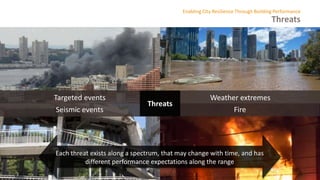
Targeted events Weather extremes
Seismic events Fire
Threats
Each threat exists along a spectrum, that may change with time, and has
different performance expectations along the range
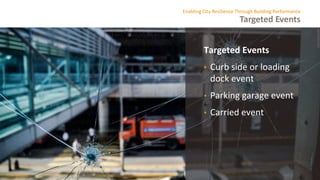
Targeted Events
Enabling City Resilience Through Building Performance
Targeted Events
• Curb side or loading
dock event
• Parking garage event
• Carried event
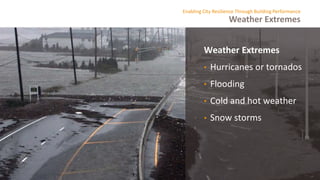
Weather Extremes
Enabling City Resilience Through Building Performance
Weather Extremes
• Hurricanes or tornados
• Flooding
• Cold and hot weather
• Snow storms
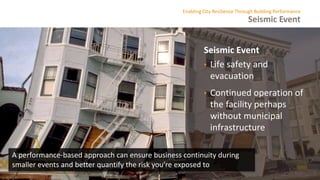
Seismic Event
Enabling City Resilience Through Building Performance
Seismic Event
• Life safety and
evacuation
• Continued operation of
the facility perhaps
without municipal
infrastructure
A performance-based approach can ensure business continuity during
smaller events and better quantify the risk you’re exposed to
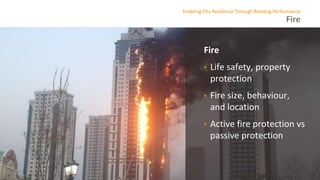
Fire
Enabling City Resilience Through Building Performance
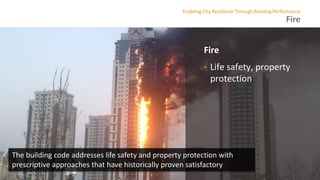
Fire
• Life safety, property
protection
• Fire size, behaviour,
and location
• Active fire protection vs
passive protection
Fire
Enabling City Resilience Through Building Performance
Fire
• Life safety, property
protection
The building code addresses life safety and property protection with
prescriptive approaches that have historically proven satisfactory
Fire
Enabling City Resilience Through Building Performance
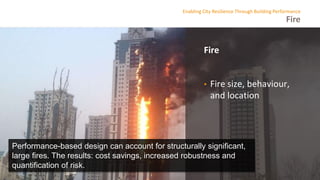
Fire
• Fire size, behaviour,
and location
Performance-based design can account for structurally significant,
large fires. The results: cost savings, increased robustness and
quantification of risk.
Fire
Enabling City Resilience Through Building Performance
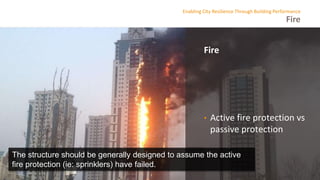
Fire
• Active fire protection vs
passive protection
The structure should be generally designed to assume the active
fire protection (ie: sprinklers) have failed.
Design Event and Location
Enabling City Resilience Through Building Performance
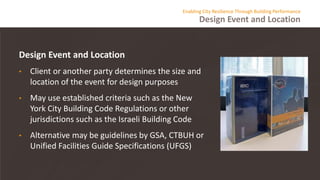
Design Event and Location
• Client or another party determines the size and
location of the event for design purposes
• May use established criteria such as the New
York City Building Code Regulations or other
jurisdictions such as the Israeli Building Code
• Alternative may be guidelines by GSA, CTBUH or
Unified Facilities Guide Specifications (UFGS)
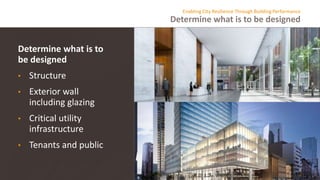
Determine what is to be designed
Enabling City Resilience Through Building Performance
Determine what is to
be designed
• Structure
• Exterior wall
including glazing
• Critical utility
infrastructure
• Tenants and public
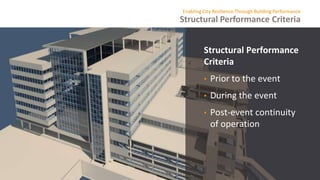
Structural Performance Criteria
Enabling City Resilience Through Building Performance
Structural Performance
Criteria
• Prior to the event
• During the event
• Post-event continuity
of operation
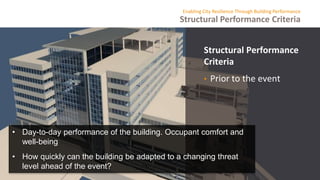
Structural Performance Criteria
Enabling City Resilience Through Building Performance
Structural Performance
Criteria
• Prior to the event
• Day-to-day performance of the building. Occupant comfort and
well-being
• How quickly can the building be adapted to a changing threat
level ahead of the event?
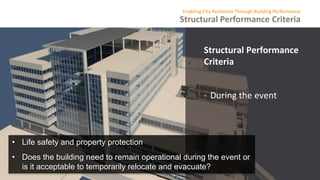
Structural Performance Criteria
Enabling City Resilience Through Building Performance
Structural Performance
Criteria
• During the event
• Life safety and property protection
• Does the building need to remain operational during the event or
is it acceptable to temporarily relocate and evacuate?
Structural Performance Criteria
Enabling City Resilience Through Building Performance
Structural Performance
Criteria
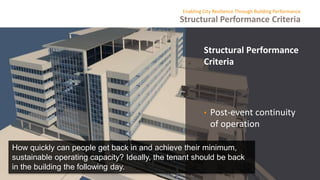
• Post-event continuity
of operation
How quickly can people get back in and achieve their minimum,
sustainable operating capacity? Ideally, the tenant should be back
in the building the following day.
Lobby and Public Areas
Enabling City Resilience Through Building Performance
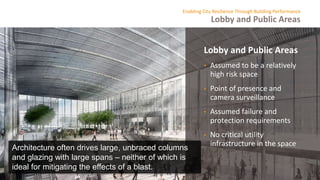
Lobby and Public Areas
• Assumed to be a relatively
high risk space
• Point of presence and
camera surveillance
• Assumed failure and
protection requirements
• No critical utility
infrastructure in the space
Architecture often drives large, unbraced columns
and glazing with large spans – neither of which is
ideal for mitigating the effects of a blast.
Tenant Spaces
Enabling City Resilience Through Building Performance
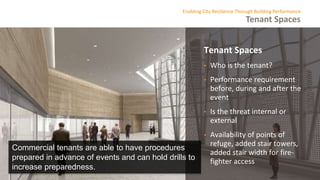
Tenant Spaces
• Who is the tenant?
• Performance requirement
before, during and after the
event
• Is the threat internal or
external
• Availability of points of
refuge, added stair towers,
added stair width for fire-
fighter access
Commercial tenants are able to have procedures
prepared in advance of events and can hold drills to
increase preparedness.
Loading Dock and Building Services areas
Enabling City Resilience Through Building Performance
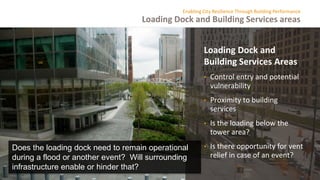
Loading Dock and
Building Services Areas
• Control entry and potential
vulnerability
• Proximity to building
services
• Is the loading below the
tower area?
• Is there opportunity for vent
relief in case of an event?
Does the loading dock need to remain operational
during a flood or another event? Will surrounding
infrastructure enable or hinder that?
Parking Garages
Enabling City Resilience Through Building Performance
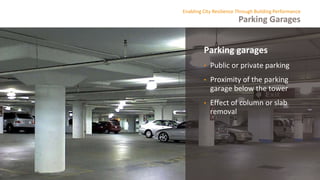
Parking garages
• Public or private parking
• Proximity of the parking
garage below the tower
• Effect of column or slab
removal
Healthcare
Enabling City Resilience Through Building Performance
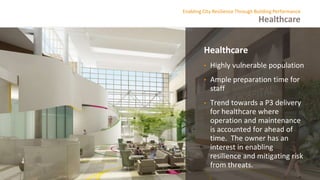
Healthcare
• Highly vulnerable population
• Ample preparation time for
staff
• Trend towards a P3 delivery
for healthcare where
operation and maintenance
is accounted for ahead of
time. The owner has an
interest in enabling
resilience and mitigating risk
from threats.
Residential Towers
Enabling City Resilience Through Building Performance
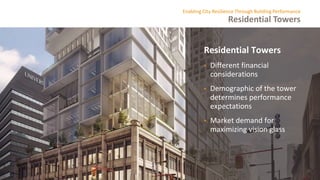
Residential Towers
• Different financial
considerations
• Demographic of the tower
determines performance
expectations
• Market demand for
maximizing vision glass
Residential Towers
Enabling City Resilience Through Building Performance
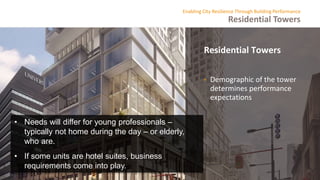
Residential Towers
• Demographic of the tower
determines performance
expectations
• Needs will differ for young professionals –
typically not home during the day – or elderly,
who are.
• If some units are hotel suites, business
requirements come into play.
Data Centres
Enabling City Resilience Through Building Performance
Data Centres
• Zero down time permitted
• Highly visible, high value
target
• May be designed to be
expandable, which needs to
be accounted for in the
initial design
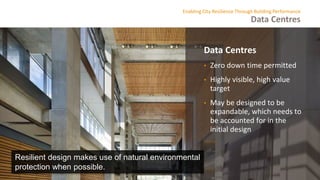
Resilient design makes use of natural environmental
protection when possible.
Who pays?
Enabling City Resilience Through Building Performance
Who pays?
• Public as a taxpayer
• Tenant
• Building Owner
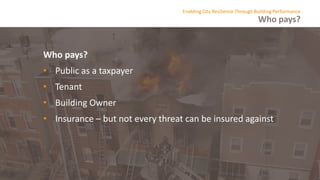
• Insurance – but not every threat can be insured against
Conclusions
Enabling City Resilience Through Building Performance
1) Define the threat
2) Understand your client’s needs
3) Design for performance levels required and for different
threat levels
4) Enable business continuity of the organization
5) Improve the resilience of the organization and surrounding
community
We simplify the complex.
We are Entuitive.

Enabling City Resilience through Building Performance

  • 1.
    SANDFORD FLEMING FORUM StructuralResilience: How Building Systems Improve Operational Resilience
  • 2.
  • 3.
    The Issues Enabling CityResilience Through Building Performance The Issues • Identify the threats • Quantify building performance before, during and after the event • Who pays? Takeaways • Building performance can enable operational resilience by being tailored to user specific needs and requirements • Resilience is fundamentally tied to the user, and understanding what they need from the building in terms of performance
  • 4.
    Threats Enabling City ResilienceThrough Building Performance Targeted events Weather extremes Seismic events Fire Threats Each threat exists along a spectrum, that may change with time, and has different performance expectations along the range
  • 5.
    Targeted Events Enabling CityResilience Through Building Performance Targeted Events • Curb side or loading dock event • Parking garage event • Carried event
  • 6.
    Weather Extremes Enabling CityResilience Through Building Performance Weather Extremes • Hurricanes or tornados • Flooding • Cold and hot weather • Snow storms
  • 7.
    Seismic Event Enabling CityResilience Through Building Performance Seismic Event • Life safety and evacuation • Continued operation of the facility perhaps without municipal infrastructure A performance-based approach can ensure business continuity during smaller events and better quantify the risk you’re exposed to
  • 8.
    Fire Enabling City ResilienceThrough Building Performance Fire • Life safety, property protection • Fire size, behaviour, and location • Active fire protection vs passive protection
  • 9.
    Fire Enabling City ResilienceThrough Building Performance Fire • Life safety, property protection The building code addresses life safety and property protection with prescriptive approaches that have historically proven satisfactory
  • 10.
    Fire Enabling City ResilienceThrough Building Performance Fire • Fire size, behaviour, and location Performance-based design can account for structurally significant, large fires. The results: cost savings, increased robustness and quantification of risk.
  • 11.
    Fire Enabling City ResilienceThrough Building Performance Fire • Active fire protection vs passive protection The structure should be generally designed to assume the active fire protection (ie: sprinklers) have failed.
  • 12.
    Design Event andLocation Enabling City Resilience Through Building Performance Design Event and Location • Client or another party determines the size and location of the event for design purposes • May use established criteria such as the New York City Building Code Regulations or other jurisdictions such as the Israeli Building Code • Alternative may be guidelines by GSA, CTBUH or Unified Facilities Guide Specifications (UFGS)
  • 13.
    Determine what isto be designed Enabling City Resilience Through Building Performance Determine what is to be designed • Structure • Exterior wall including glazing • Critical utility infrastructure • Tenants and public
  • 14.
    Structural Performance Criteria EnablingCity Resilience Through Building Performance Structural Performance Criteria • Prior to the event • During the event • Post-event continuity of operation
  • 15.
    Structural Performance Criteria EnablingCity Resilience Through Building Performance Structural Performance Criteria • Prior to the event • Day-to-day performance of the building. Occupant comfort and well-being • How quickly can the building be adapted to a changing threat level ahead of the event?
  • 16.
    Structural Performance Criteria EnablingCity Resilience Through Building Performance Structural Performance Criteria • During the event • Life safety and property protection • Does the building need to remain operational during the event or is it acceptable to temporarily relocate and evacuate?
  • 17.
    Structural Performance Criteria EnablingCity Resilience Through Building Performance Structural Performance Criteria • Post-event continuity of operation How quickly can people get back in and achieve their minimum, sustainable operating capacity? Ideally, the tenant should be back in the building the following day.
  • 18.
    Lobby and PublicAreas Enabling City Resilience Through Building Performance Lobby and Public Areas • Assumed to be a relatively high risk space • Point of presence and camera surveillance • Assumed failure and protection requirements • No critical utility infrastructure in the space Architecture often drives large, unbraced columns and glazing with large spans – neither of which is ideal for mitigating the effects of a blast.
  • 19.
    Tenant Spaces Enabling CityResilience Through Building Performance Tenant Spaces • Who is the tenant? • Performance requirement before, during and after the event • Is the threat internal or external • Availability of points of refuge, added stair towers, added stair width for fire- fighter access Commercial tenants are able to have procedures prepared in advance of events and can hold drills to increase preparedness.
  • 20.
    Loading Dock andBuilding Services areas Enabling City Resilience Through Building Performance Loading Dock and Building Services Areas • Control entry and potential vulnerability • Proximity to building services • Is the loading below the tower area? • Is there opportunity for vent relief in case of an event? Does the loading dock need to remain operational during a flood or another event? Will surrounding infrastructure enable or hinder that?
  • 21.
    Parking Garages Enabling CityResilience Through Building Performance Parking garages • Public or private parking • Proximity of the parking garage below the tower • Effect of column or slab removal
  • 22.
    Healthcare Enabling City ResilienceThrough Building Performance Healthcare • Highly vulnerable population • Ample preparation time for staff • Trend towards a P3 delivery for healthcare where operation and maintenance is accounted for ahead of time. The owner has an interest in enabling resilience and mitigating risk from threats.
  • 23.
    Residential Towers Enabling CityResilience Through Building Performance Residential Towers • Different financial considerations • Demographic of the tower determines performance expectations • Market demand for maximizing vision glass
  • 24.
    Residential Towers Enabling CityResilience Through Building Performance Residential Towers • Demographic of the tower determines performance expectations • Needs will differ for young professionals – typically not home during the day – or elderly, who are. • If some units are hotel suites, business requirements come into play.
  • 25.
    Data Centres Enabling CityResilience Through Building Performance Data Centres • Zero down time permitted • Highly visible, high value target • May be designed to be expandable, which needs to be accounted for in the initial design Resilient design makes use of natural environmental protection when possible.
  • 26.
    Who pays? Enabling CityResilience Through Building Performance Who pays? • Public as a taxpayer • Tenant • Building Owner • Insurance – but not every threat can be insured against
  • 27.
    Conclusions Enabling City ResilienceThrough Building Performance 1) Define the threat 2) Understand your client’s needs 3) Design for performance levels required and for different threat levels 4) Enable business continuity of the organization 5) Improve the resilience of the organization and surrounding community
  • 28.
    We simplify thecomplex. We are Entuitive.