mergency Medical Services in E A/Prof Marcus Ong Consultant, Senior Medical Scientist & Director of Research Department of Emergency Medicine Singapore General Hospital Adjunct Associate Professor Duke-NUS Graduate Medical School Office of Research INGAPORE S
Country Information Regional Map Showing: Singapore
History of Singapore 14th century: Singapore was a fishing village known as Temasek or Sea Town. End of 14th century, the Sanskrit name, Singapura (Lion City), become commonly used. 1300 2000 1900 1800 1700 1600 1500 1400
History of Singapore 29 January 1819, Stamford Raffles landed on Singapore 6 February 1819,  formal treaty concluded with the Sultan Hussein of Johor and the Temenggong 1300 2000 1900 1800 1700 1600 1500 1400
History of Singapore Malaysia formed on 16 September 1963, and consisted of the Federation of Malaya, Singapore, Sarawak and North Borneo (now Sabah).  Singapore separated from Malaysia on 9 August 1965, and became a sovereign, democratic and independent nation. Admitted to the United Nations on 21 September 1965, member of the Common Wealth of Nations on 15 October 1695. On 22 December 1965, it became a republic. 1300 2000 1900 1800 1700 1600 1500 1400
Area - 648 km 2 Population - 4.1 million Ethnic groups Chinese  76.5% Malay 13.8% Indian 8.1% Others 1.6% www.singstat.gov.sg, June 2002 Facts of Singapore
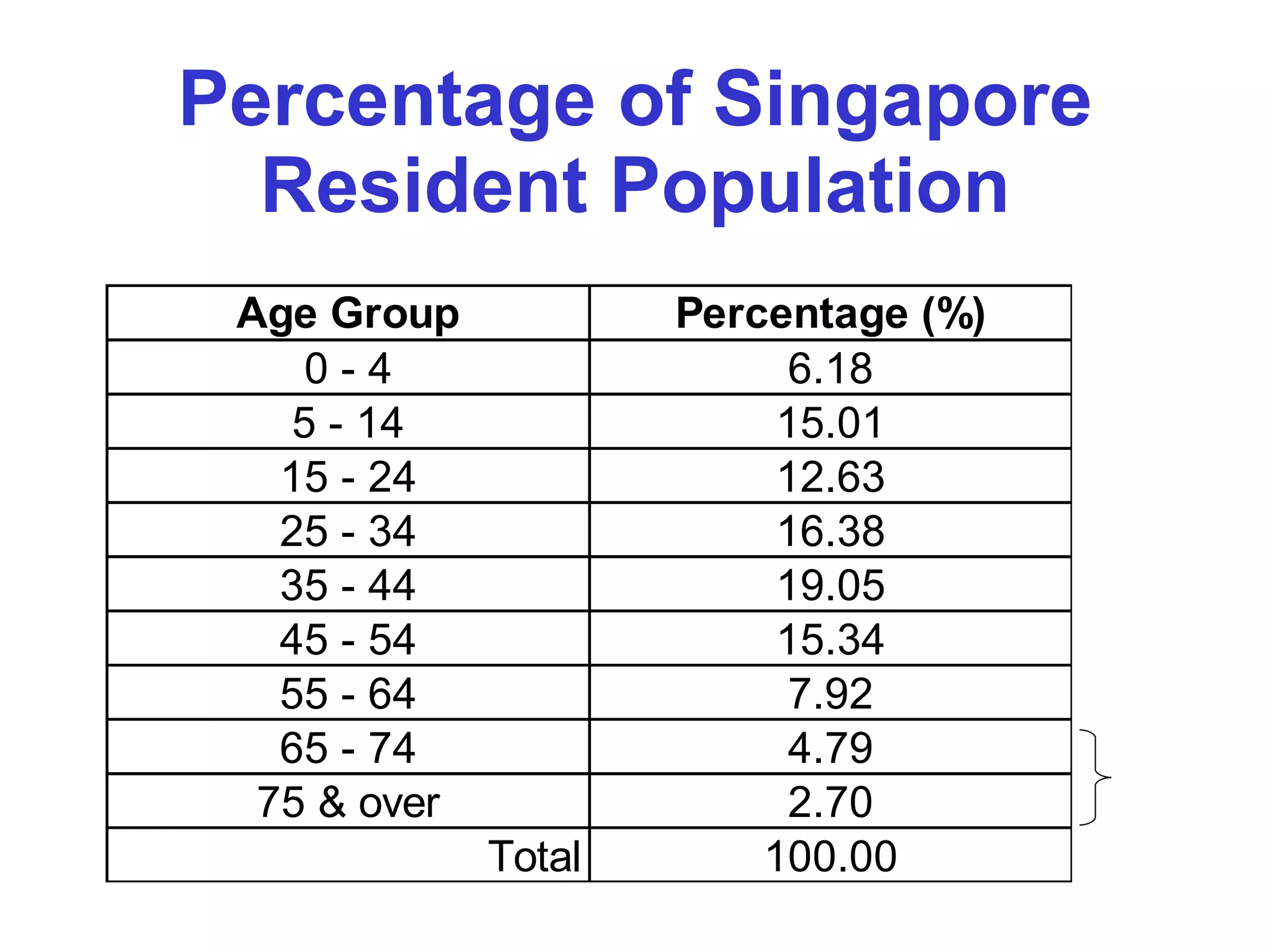
Percentage of Singapore Resident Population www.singstat.gov.sg, June 2002 7.5%
Singapore GDP per capita in comparison with other nations Socio - Economics National Health Care Expenditure (Singapore) - 2.8% of GDP National Health Care Expenditure (US) - 13.9% of GDP in 2001
Life Expectancy 78.7 years Top 5 leading Causes of Residential Death Cancer (28.0%) Ischaemic & Other Heart Diseases (24.2%) Pneumonia (13.1%) Cerebrovascular Disease (8.8%) Injuries (6.7%) MOH Statistics - Health Facts Singapore 2003 Burden of Disease
Health Status of Singapore - good by International Standards Boost Health of Singapore Rising Standards of Living High Standards of Education Good Housing Safe Water Supply and Sanitation High Level of Medical Services Active Promotion of Preventive Medicine http://app.moh.gov.sg/our/our01.asp
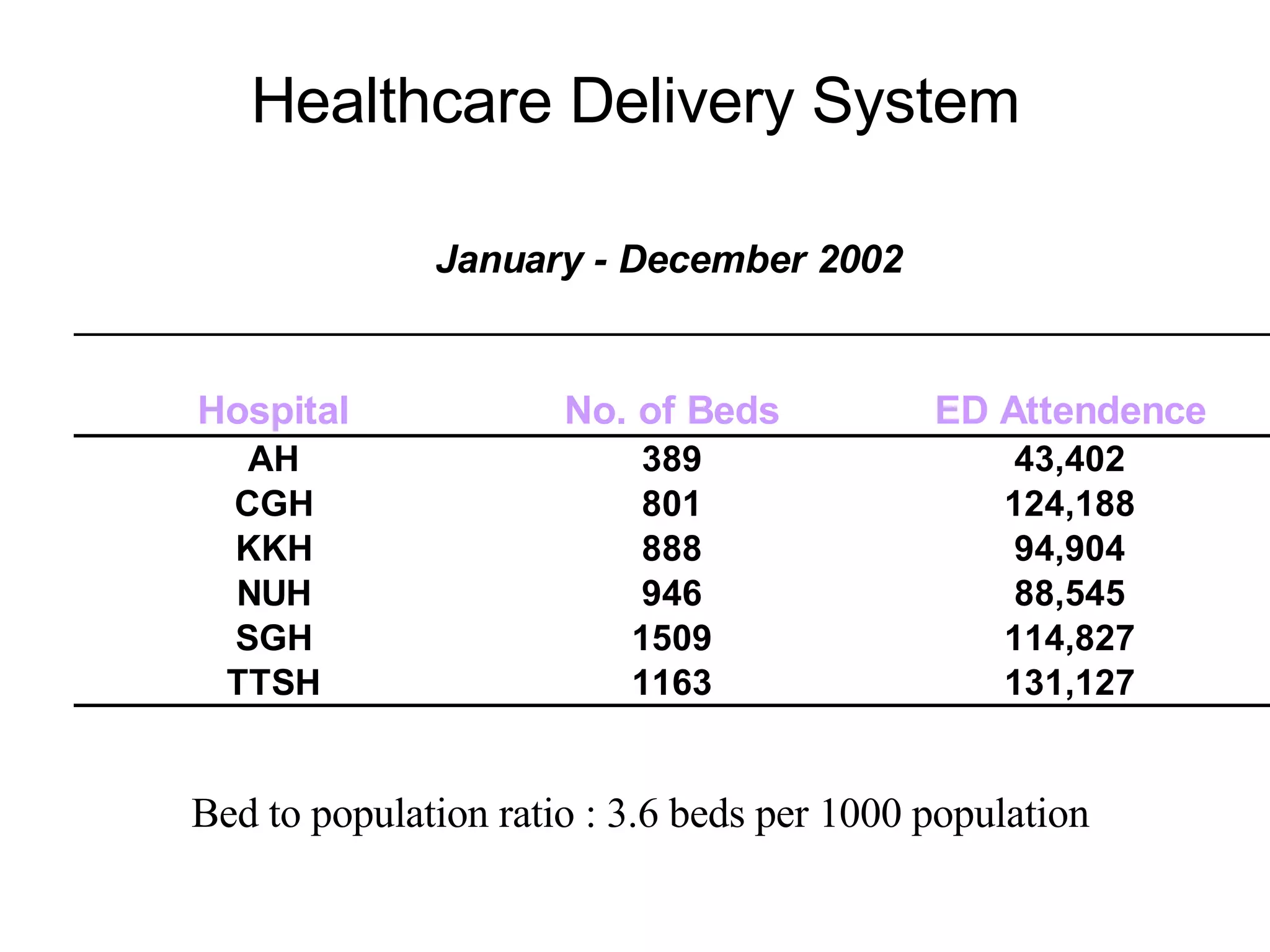
Healthcare Delivery System Dual System of Health Care Public system run by the Government Private system provided by Private Practitioners Subsidised medical care at public hospitals and polyclinics
Healthcare Delivery System US$ 1   = S$1.75 Euro $1  = S$1.96
Healthcare Delivery System Bed to population ratio : 3.6 beds per 1000 population
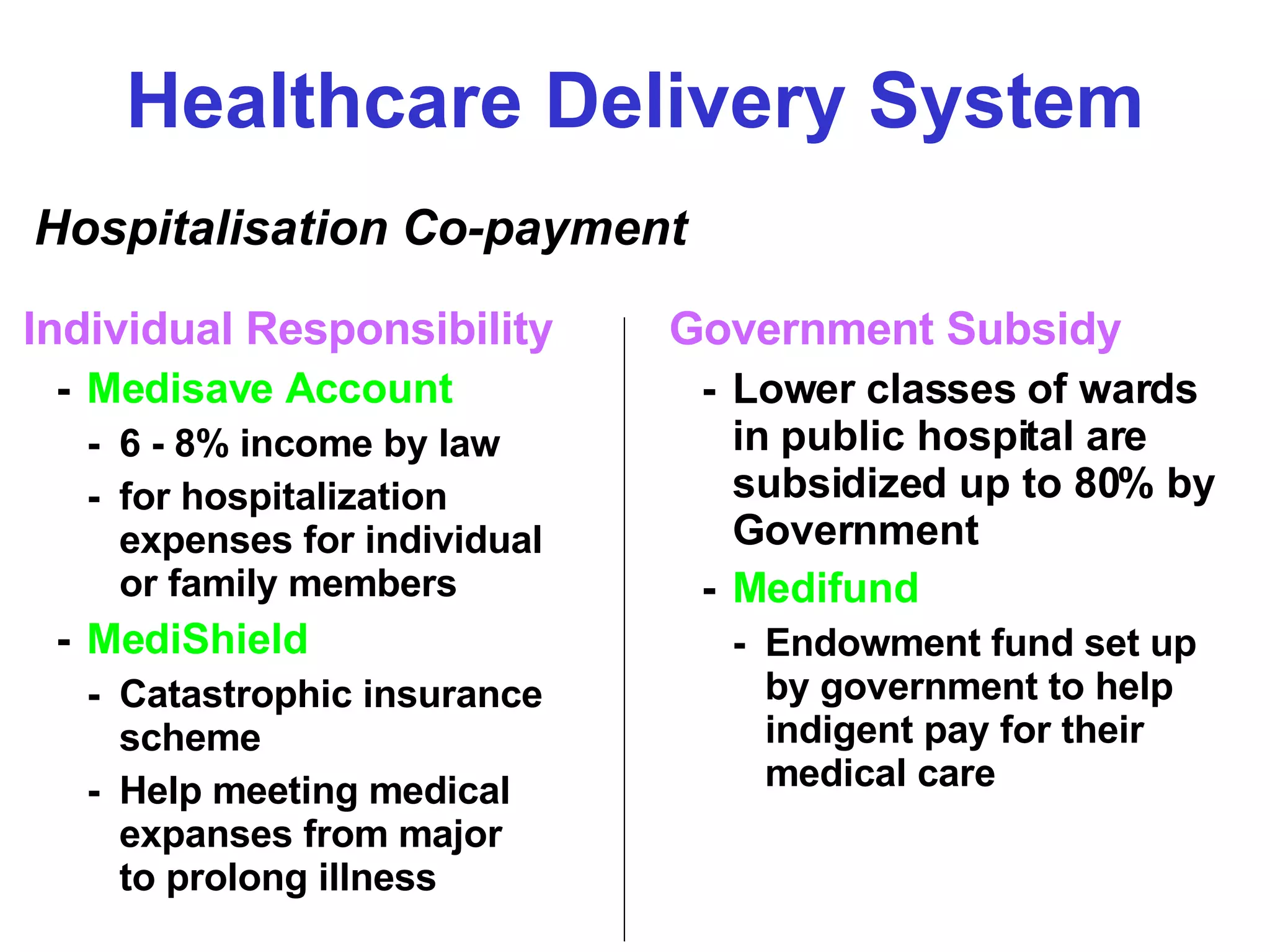
Healthcare Delivery System Individual Responsibility -  Medisave Account -  6 - 8% income by law -  for hospitalization  expenses for individual  or family members - MediShield - Catastrophic insurance  scheme - Help meeting medical  expanses from major  to prolong illness Government Subsidy - Lower classes of wards  in public hospital are  subsidized up to 80% by  Government - Medifund - Endowment fund set up  by government to help  indigent pay for their  medical care Hospitalisation Co-payment
One Medical School  for Undergraduate Program National University of Singapore (NUS) Length of Study 5 years + 1 year of house officer (Intern) In 1984, Emergency Medicine was recognized as a distinct medical specialty by the Ministry of Health  Medical Education
Structured Basic Postgraduate Training Program in Emergency Medicine (Residency) - 3 years 1 year Accident and Emergency Medicine posting 1 year Acute Surgery posting (suggested 6 months general surgery, 3 months orthopaedic) 1 year Acute Medical posting (suggested 6 months general medicine, 3 months cardiology, 3 months paediatrics)    MRCS Edin (A&E)  M Med (Emerg Med) Postgraduate Training Program - 1989
Advance Postgraduate Training Program - 3 years Seven Areas of Sub-Specialization Emergency Cardiac Care Emergency Trauma Care Emergency Toxicology Pre-hospital Emergency Care Paediatric Emergency Medicine Disaster Medicine Observation Medicine    Exit Interview with 3 member board of assessors Postgraduate Training Program - 1991
Ministry of Medicine (MOH) Singapore Medical Council Specialist Accreditation Board Joint Committee or Specialist Training (35 STC) MRCP M MED (Int Med) Cardiology Dermatology Endocinology Gastroenterology Geriatric Medicine Haematology Infectious Diseases Internal Medicine Medical Oncology Neurology Renal Medicine Respiratory Medicine Rheumatology MRCS M MED (Surgery) Cardiothoracic Surgery General Surgery Hand Surgery Neurosurgery Orthopaedic Surgery Paediatric Surgery Plastic Surgery Urology Anaesthesiology Diagnostic Radiology Emergency Medicine Nuclear Medicine Obstetrics Gynaecology Occupational Med Ophthalmology Otorhinolaryngology Paediatric Medicine Pathology Psychiatry Public Health Med Rehabilitation Med Therapeutic Radiology
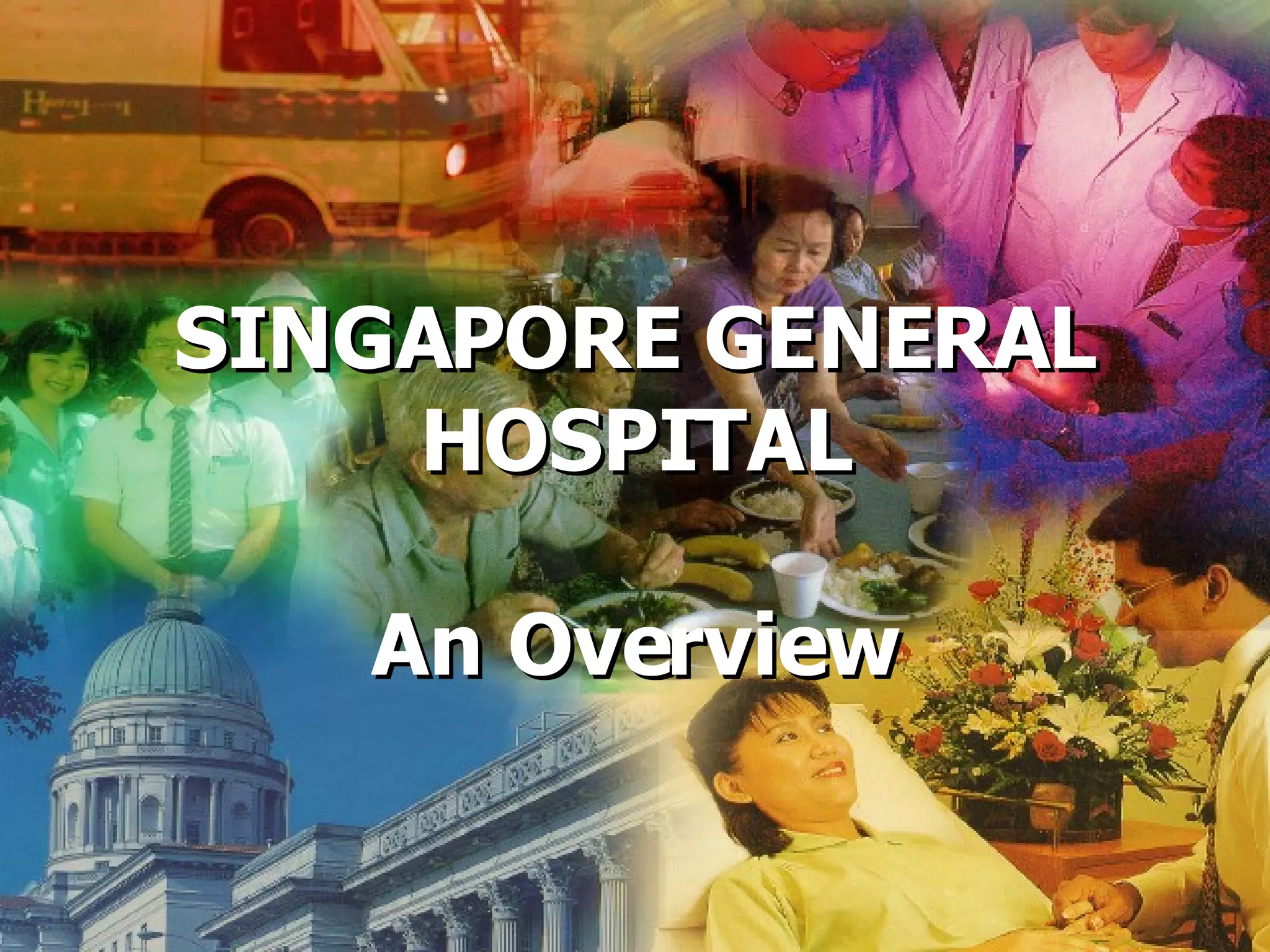
SINGAPORE GENERAL HOSPITAL An Overview
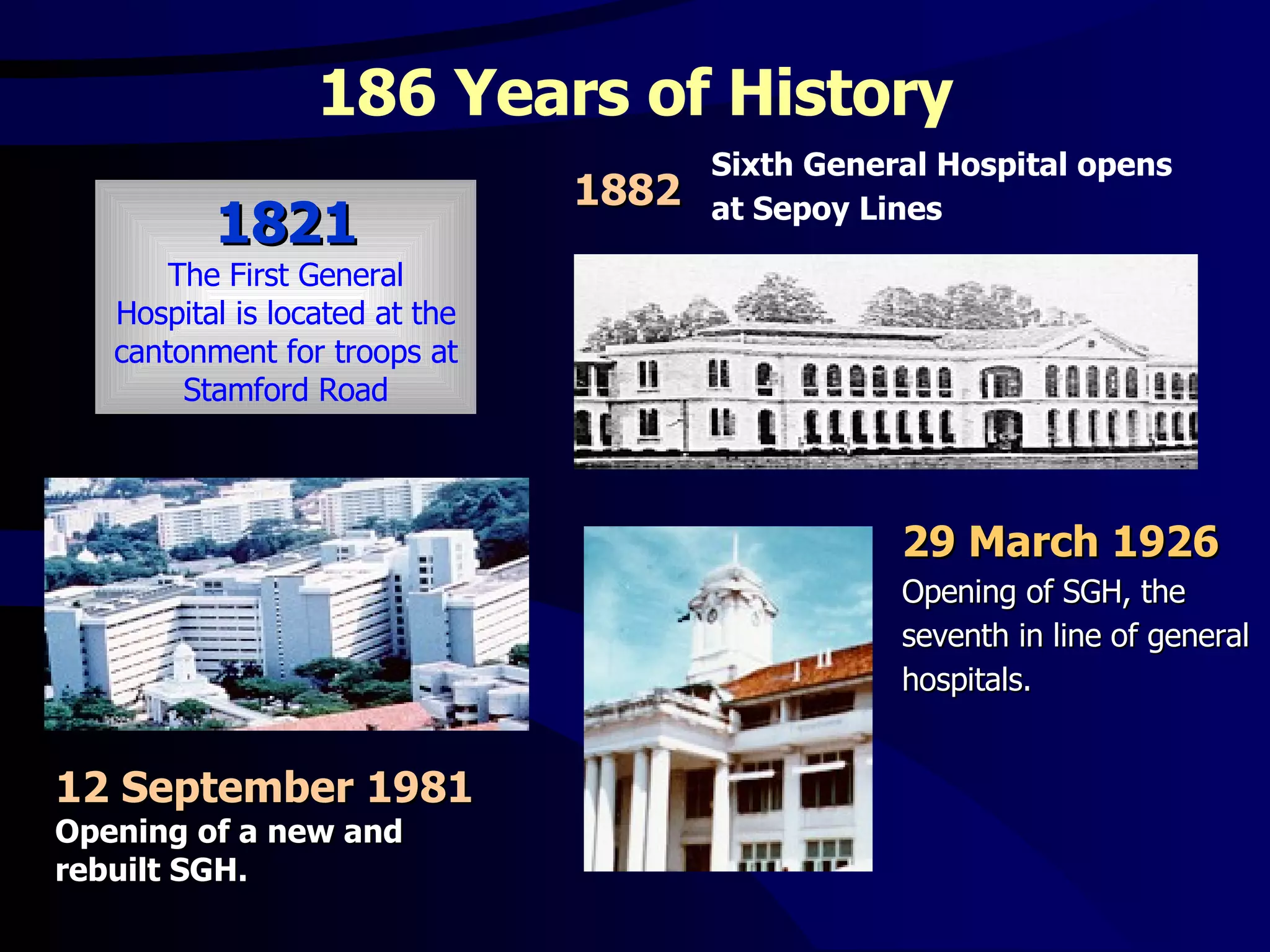
186 Years of History Sixth General Hospital opens at Sepoy Lines 29 March 1926   Opening of SGH, the seventh in line of general hospitals.  12 September 1981   Opening of a new and rebuilt SGH. 1821 The First General Hospital is located at the cantonment for troops at Stamford Road 1882
Facilities Service No. of beds 1,389 No. of clinics 169 No. of procedure rooms 26 Operating theatre suites 47
31 Clinical Specialties Diagnostic Radiology Emergency Medicine Nuclear Medicine  Pathology Therapeutic Radiology  (NCC) Dermatology Endocrinology Gastroenterology Haematology Internal Medicine Neonatology Psychiatry & Behavioural Medicine Rehabilitation Medicine  Renal Medicine Respiratory & Critical  Care Medicine Rheumatology Cardiology  (NHC) Medical Oncology (NCC) Anaesthesia & Surgical  Intensive Care Colorectal Surgery General Surgery Hand Surgery Obstetrics & Gynaecology Orthopaedic Surgery Otolaryngology Plastic Surgery / Burns Urology Ophthalmology (SNEC) Cardiothoracic Surgery  (NHC) Medical Surgical   Ambulatory & Clinical Support Services   Research Neurology  (NNI) Neurosurgery (NNI) Clinical Research Clinical Trials &  Resource Ventures Experimental Surgery
Hospital Statistics  (2001)   SGH  NHC  NCC   Total Admissions   Number 64,405 9,224 3,725   77,354 %   83   11   5   100 Outpatient  Attendance 594,076 73,973 99,735 767,784 %   77   10   13   100 A&E Attendance 112,713   -   - 112,713
Department of Emergency Medicine 24 hour Accident and Emergency center Manage all types of medical, surgical, trauma, obstetric/gynecology, paediatric etc emergencies 24 bedded Emergency Observation Ward
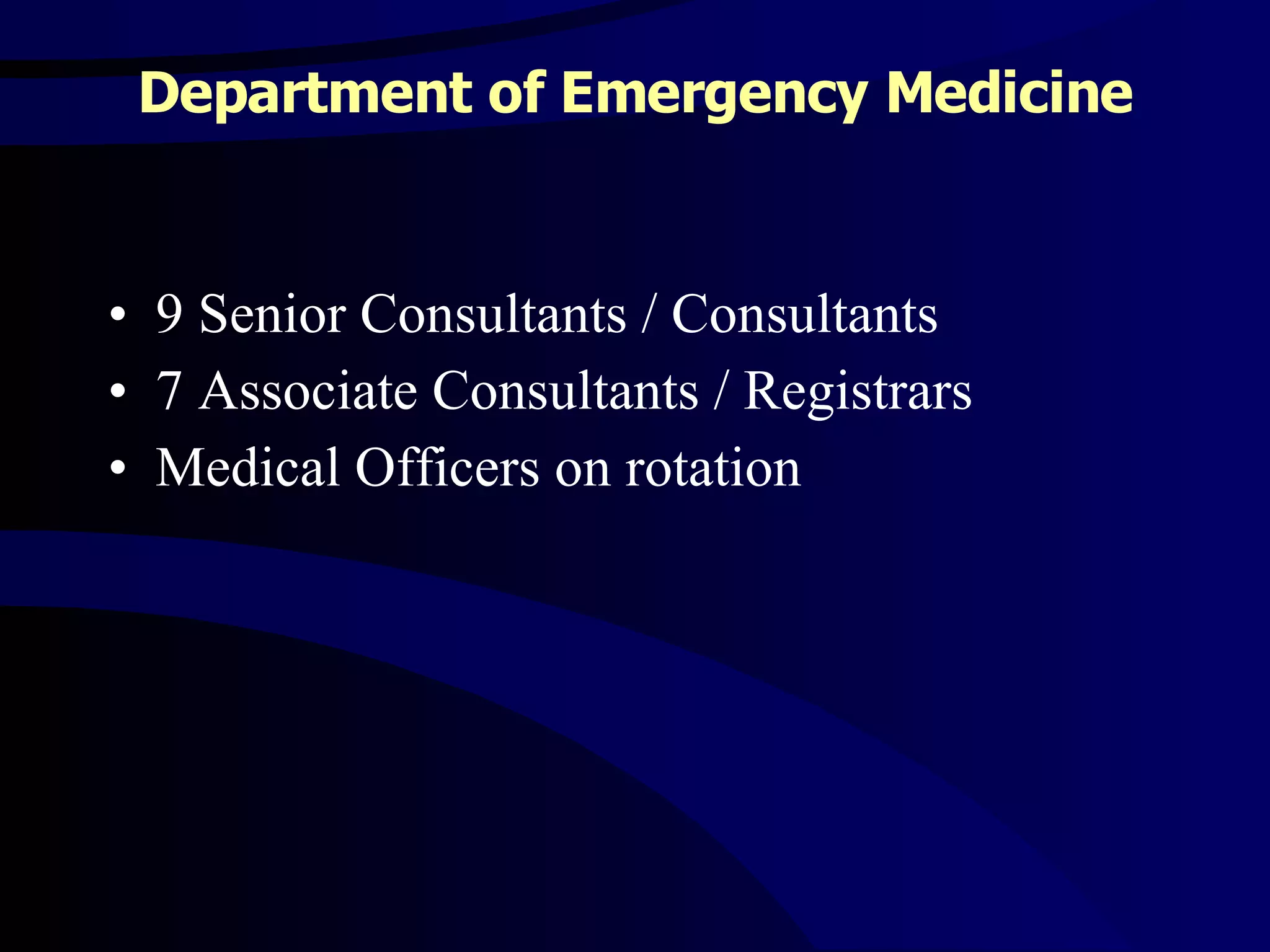
Department of Emergency Medicine 9 Senior Consultants / Consultants 7 Associate Consultants / Registrars Medical Officers on rotation
Department of Emergency Medicine Other services Drug and Poison Information Center Emergency Medicine Research Maritime Radiomedical Service Life Support Training Center Emergency Preparedness
Local Emergency Medical  Services (EMS) System Run by the Singapore Civil Defence Force Currently operating 36 ambulances in 14 stations and 10 satellite stations Single tier system Able to provide BCLS and defibrillation using Automated External Defibrillators (AEDs)
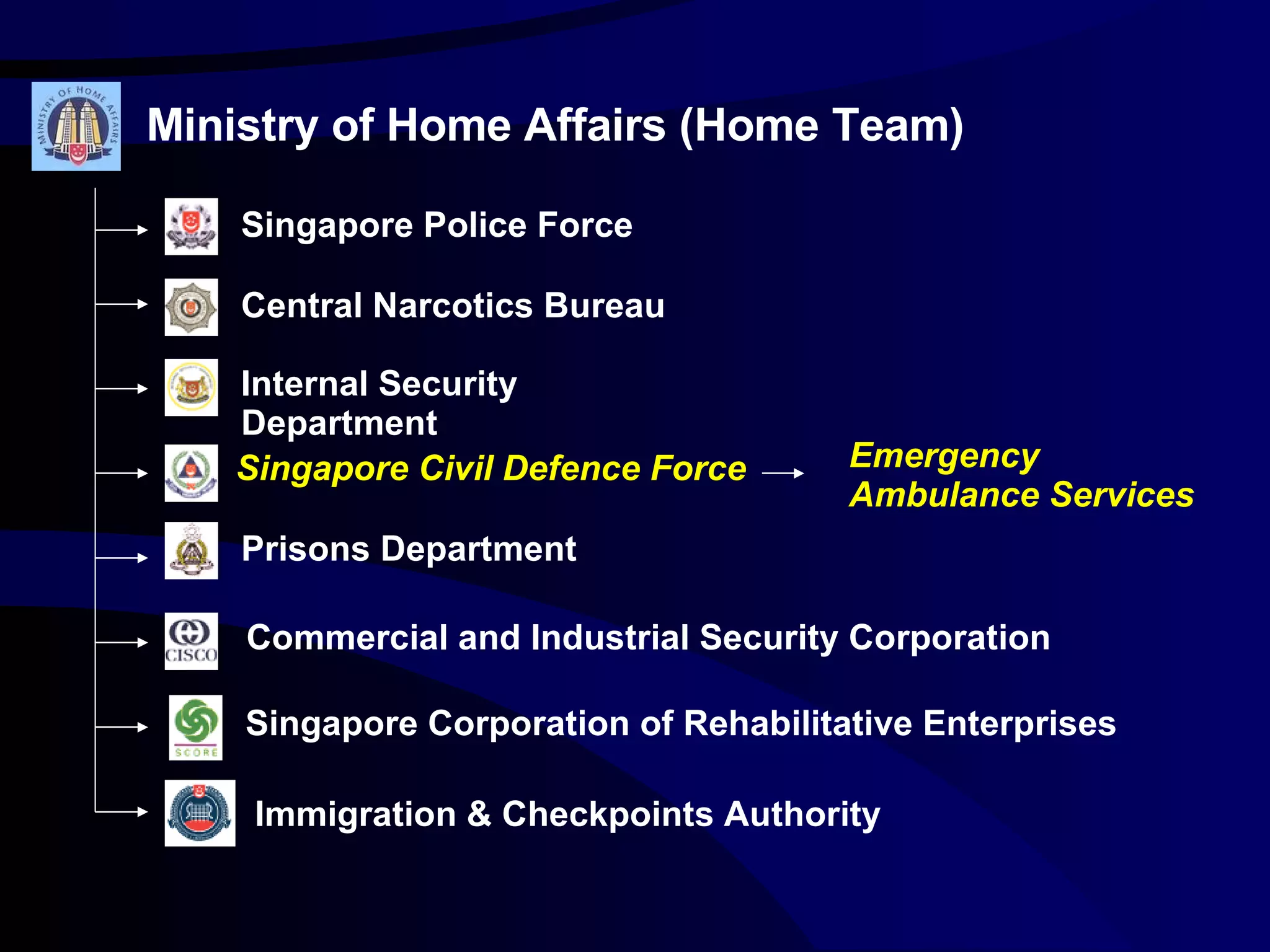
Ministry of Home Affairs (Home Team)   Singapore Police Force Central Narcotics Bureau Internal Security Department Singapore Civil Defence Force Commercial and Industrial Security Corporation  Singapore Corporation of Rehabilitative Enterprises Prisons Department Immigration & Checkpoints Authority Emergency Ambulance Services
SCDF Annual Report 2005 Yearly volume of SCDF Ambulance Calls
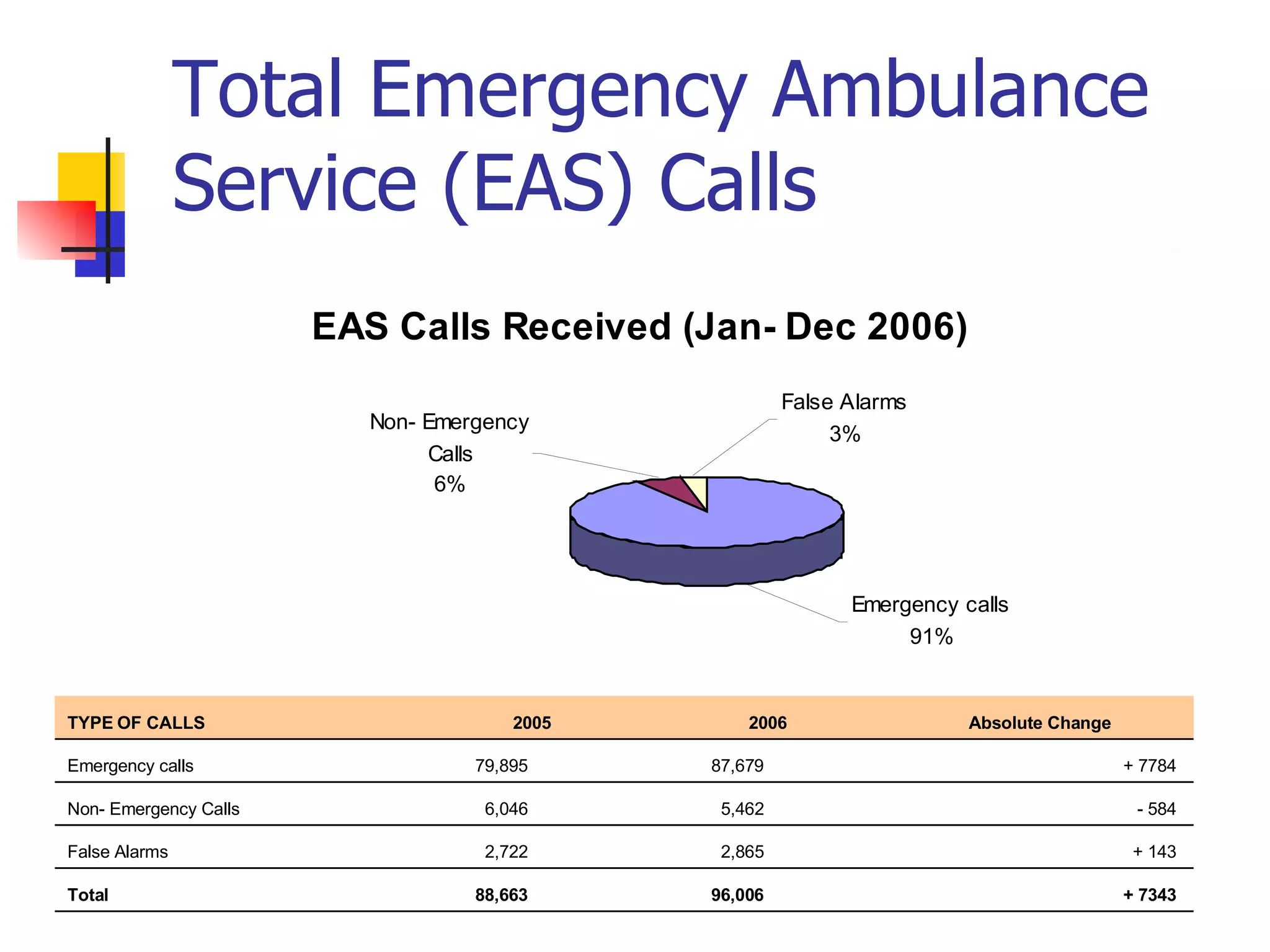
Total Emergency Ambulance Service (EAS) Calls Table 1: Number and Types of Ambulance Calls + 7343  96,006  88,663  Total + 143  2,865  2,722  False Alarms - 584  5,462  6,046  Non- Emergency Calls + 7784  87,679  79,895  Emergency calls Absolute Change 2006 2005 TYPE OF CALLS
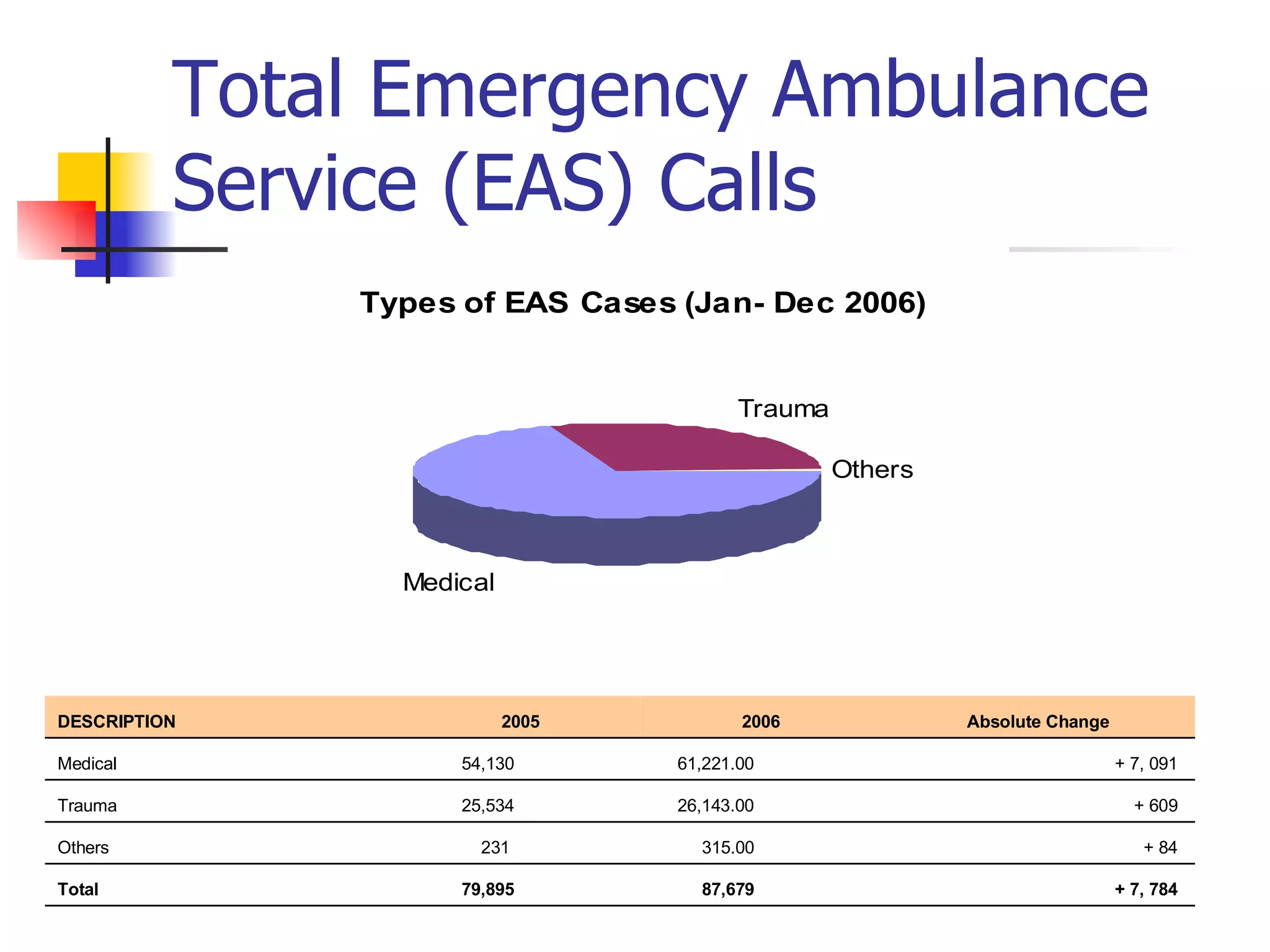
Total Emergency Ambulance Service (EAS) Calls Table 2: Breakdown of Emergency Ambulance Calls 0.4% 29.8% 69.8% + 7, 784  87,679  79,895  Total + 84  315.00  231  Others + 609  26,143.00  25,534  Trauma + 7, 091  61,221.00  54,130  Medical Absolute Change 2006 2005 DESCRIPTION
SCDF Annual Report 2005
Emergency Medical Services
Medical Oversight SCDF Medical Advisory Committee (MAC)  Indirect medical control of paramedics following strict protocols written and approved by  MAC Audit and review of treatment and procedures Training and CME Competency and certification
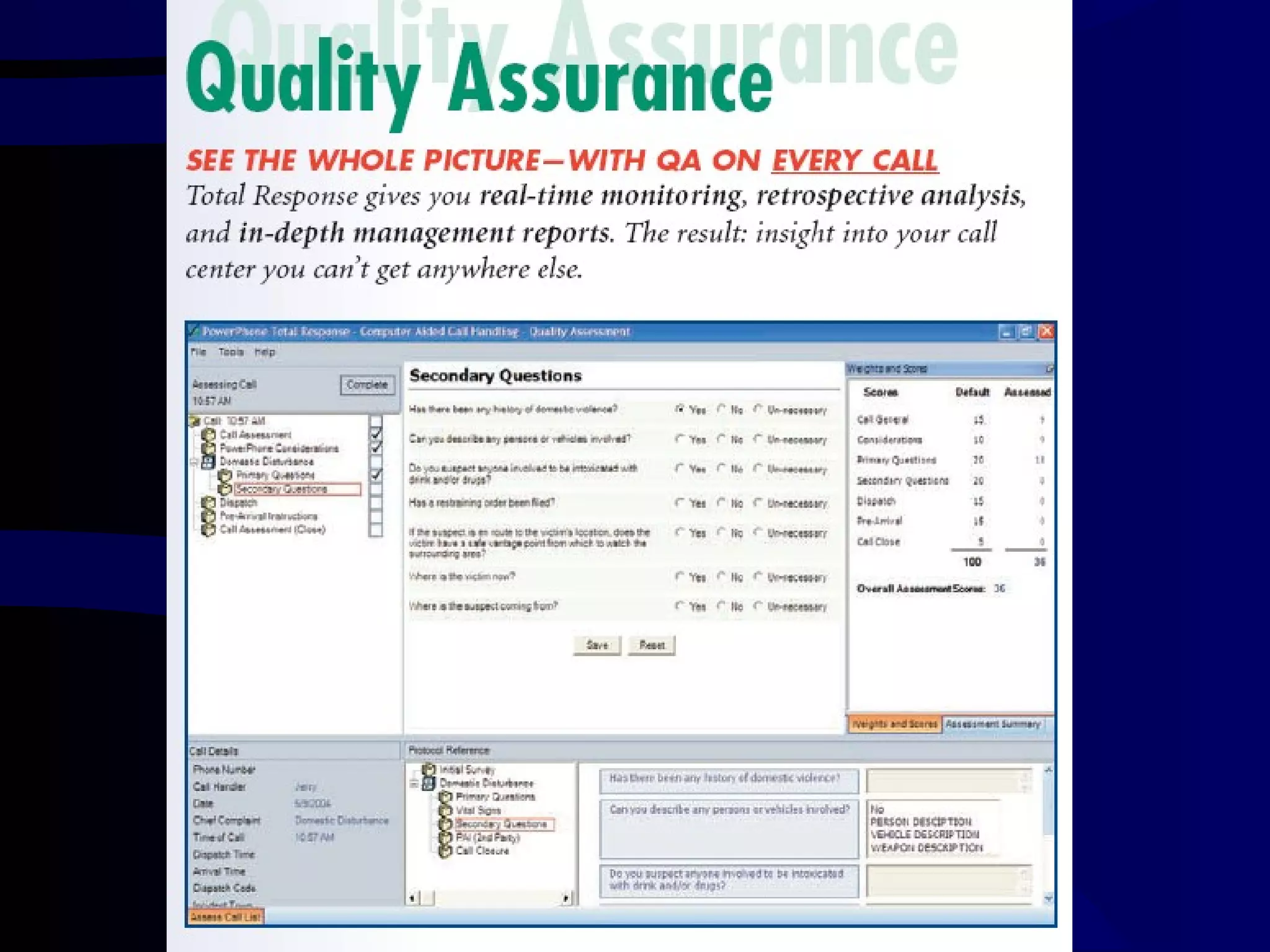
Quality Medical Oversight Patient is the Priority Achieves Response Time Reliability Accomplishes Clinical Excellence Requires Accountability Realizes Stakeholder Satisfaction Medical Oversight Relationship Quality Improvement Research
  No. to Call : EMS + Fire Brigade 995 Police 999 Non Emergency Ambulance 1777 SARS Ambulance 933 Pre-Hospital Emergency Care Dispatch Mechanism
DESPATCH SYSTEM: AMBULANCE Control Room Caller Incident Site Hospital Fire Stn
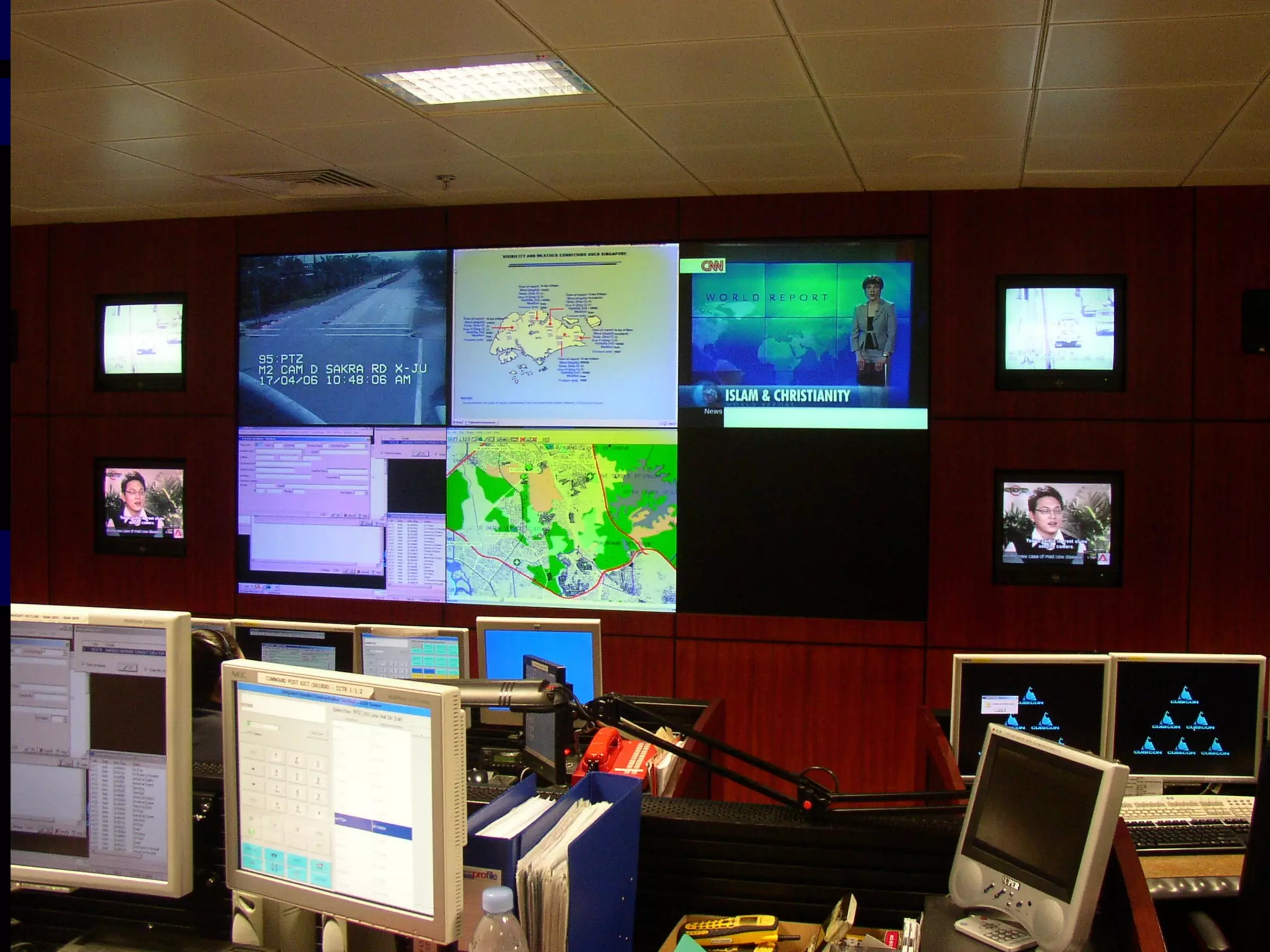
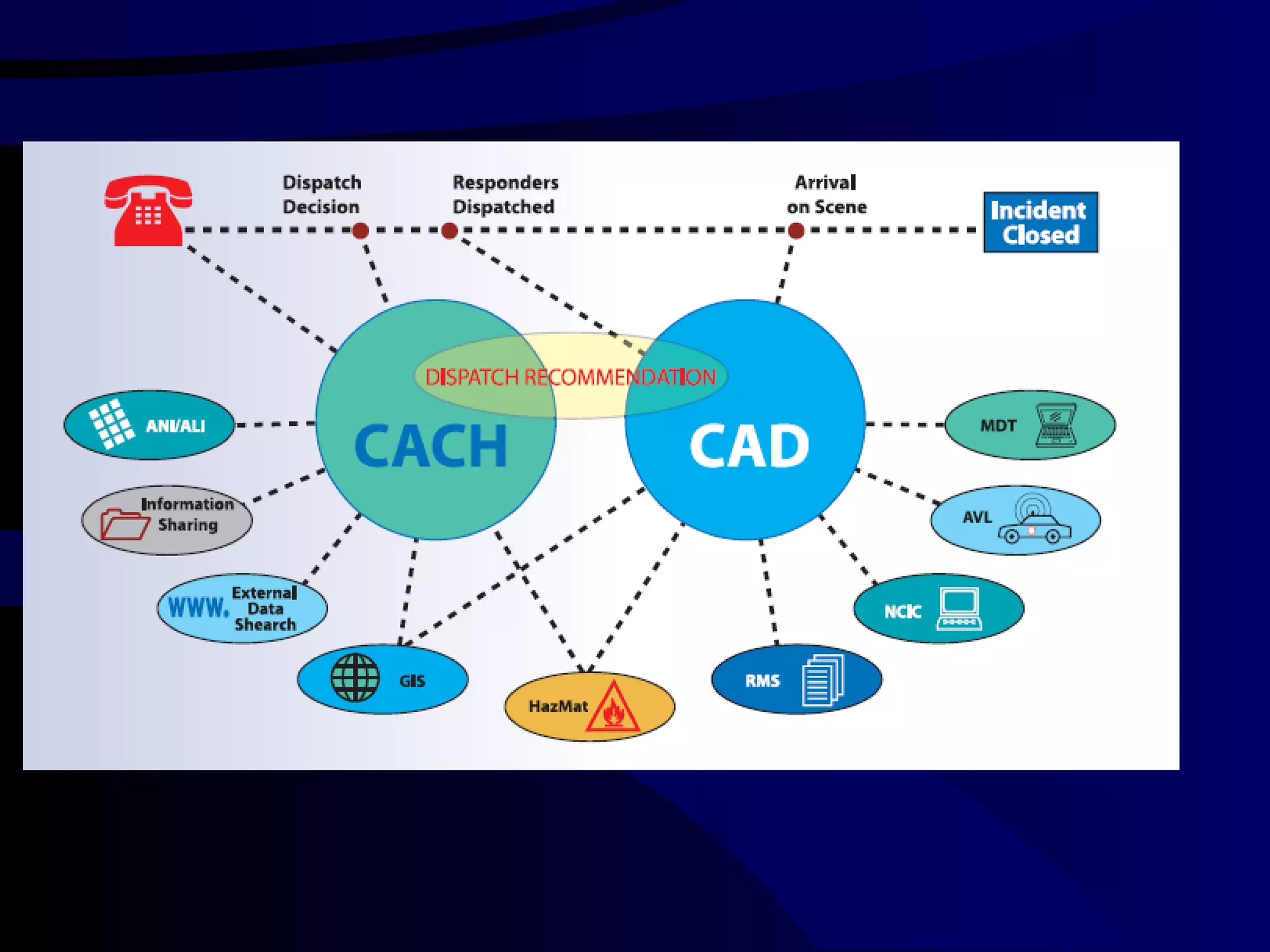
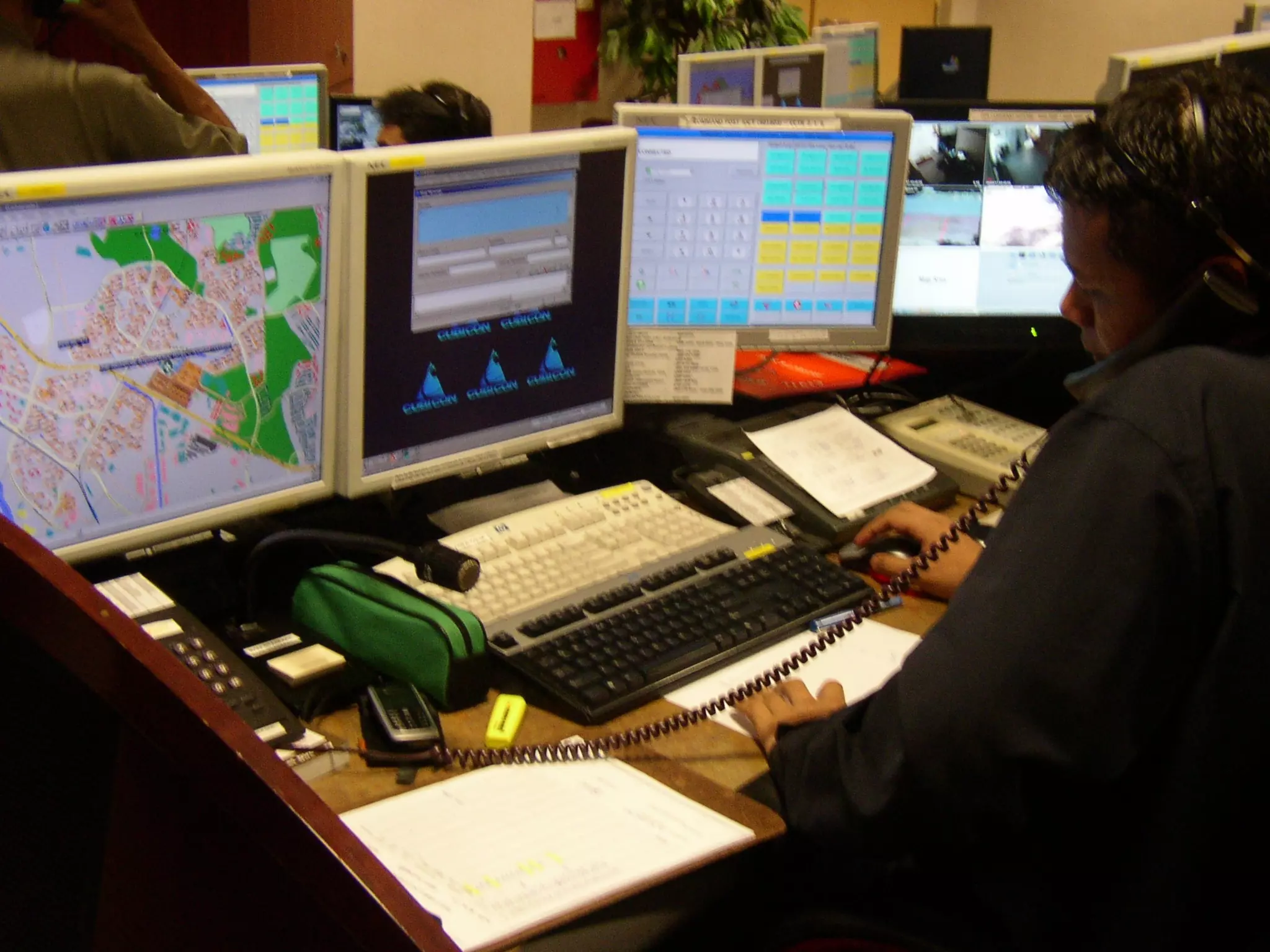
Emergency Medical Dispatch Caller ID Automatic location tracing (address database) Computer assisted dispatch and ambulance monitoring GPS navigation and location tracking Emergency Medical Dispatchers
 
 
Control Room  LAYOUT Fire (Monitoring) Amb 3&4 Div (Monitoring) Amb 1&2 Div (Monitoring) CallTaker CallTaker Police / Trg Console Police / Trg Console DECAM  monitoring r CallTaker CallTaker CallTaker Supervisor CCTV (Monitoring)


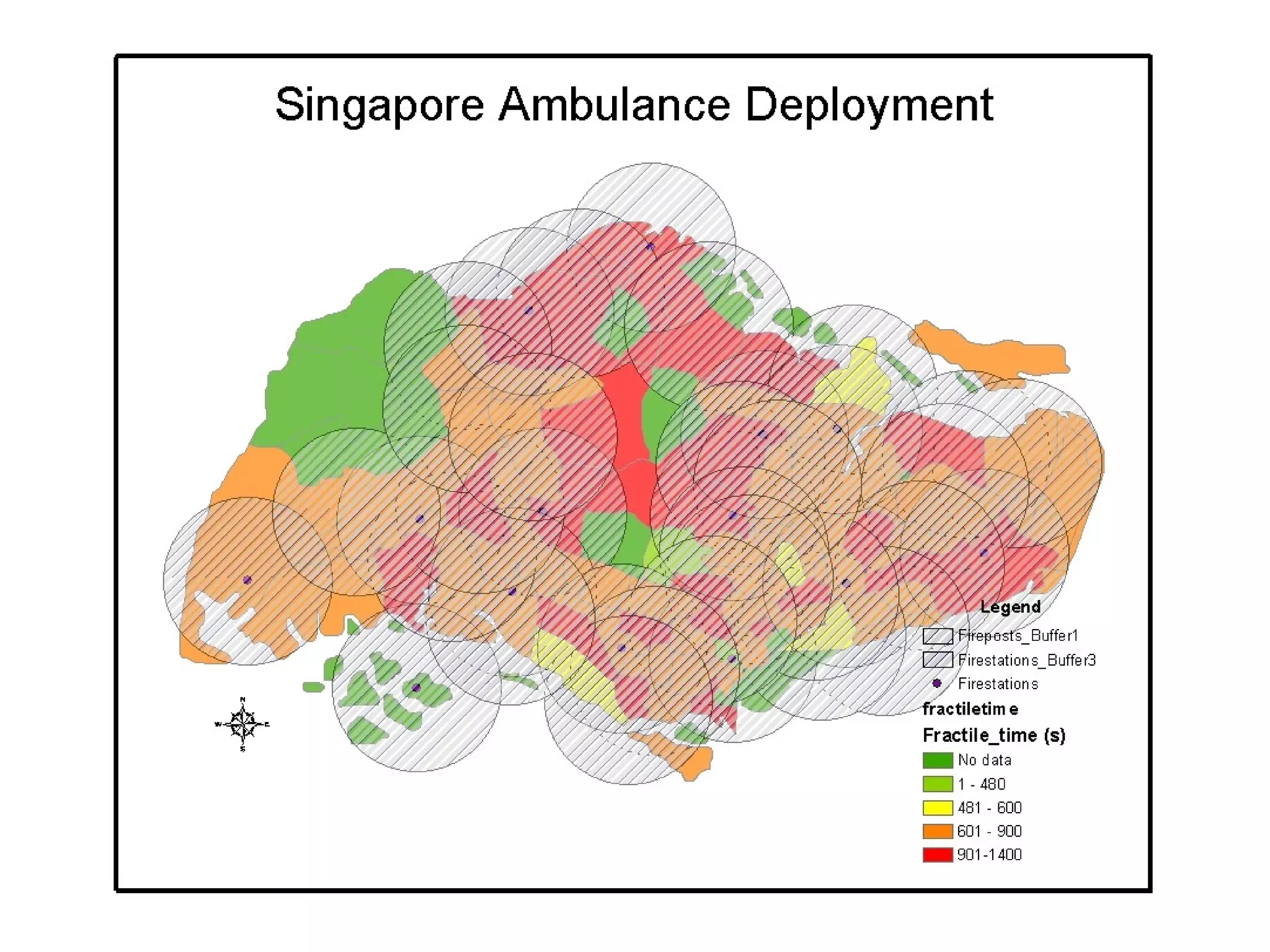
Systems Status Management Response Time Reliability   Unit Hour Costs Productivity Demand Analysis System Status Plan
Demand Analysis Basic Terminology Demand Analysis - A statistical chart showing the historical call volume for each hour of the day and day of the week.
System Status Plan Basic Terminology System Status Plan -  An algorithm for on-line management of system deployment and redeployment of unit hours.


(Numbers correspond with posting points)
SCDF Paramedics Since 1996, ambulances manned by specifically trained paramedics (roughly equivalent to North American EMT-I) Replacing ambulance officers (nurses)  Undergo an 18 month training including theory, hospital and ambulance attachments ITE Higher NITEC paramedic course 2008
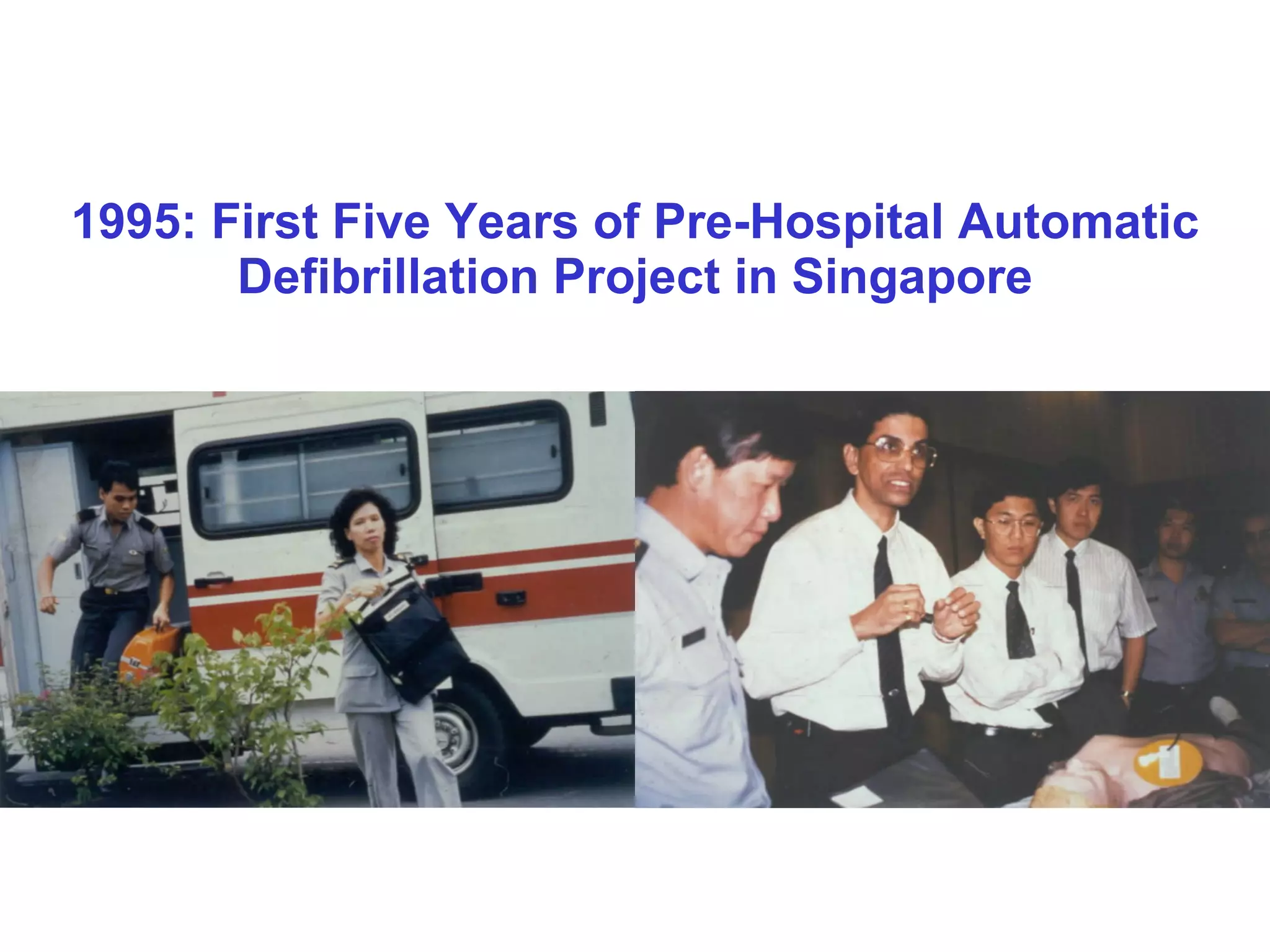
Early defibrillation Most important intervention affecting mortality Advent of the Automated External Defibrillator Easy to use Step by step instructions Voice prompts
1995: First Five Years of Pre-Hospital Automatic Defibrillation Project in Singapore
Fast Response Paramedic (FRP) One-man crew, equipped with AED Currently 9 FRPs in service Shown to reduce response times by an average of almost 5 minutes Plans to position FRPs in more satellite stations
Mean Response Time Fast Response Paramedics: (9 motorcycles based in 9 fire stations) 5.5 min  +  2.0 (SD) Ambulance: 10.4 min  +  5.4 (SD)
Emergency Medical Services (EMS) ‘ Single’ Tier System 36 ambulance based in 14 fire stations and 10 satellite stations Ambulance Unit Paramedic (1) CPR, BTLS Bag Valve Mask Ventilation Limited I/V drug, (10% dextrose) no intubation Medic (1) Driver (1)
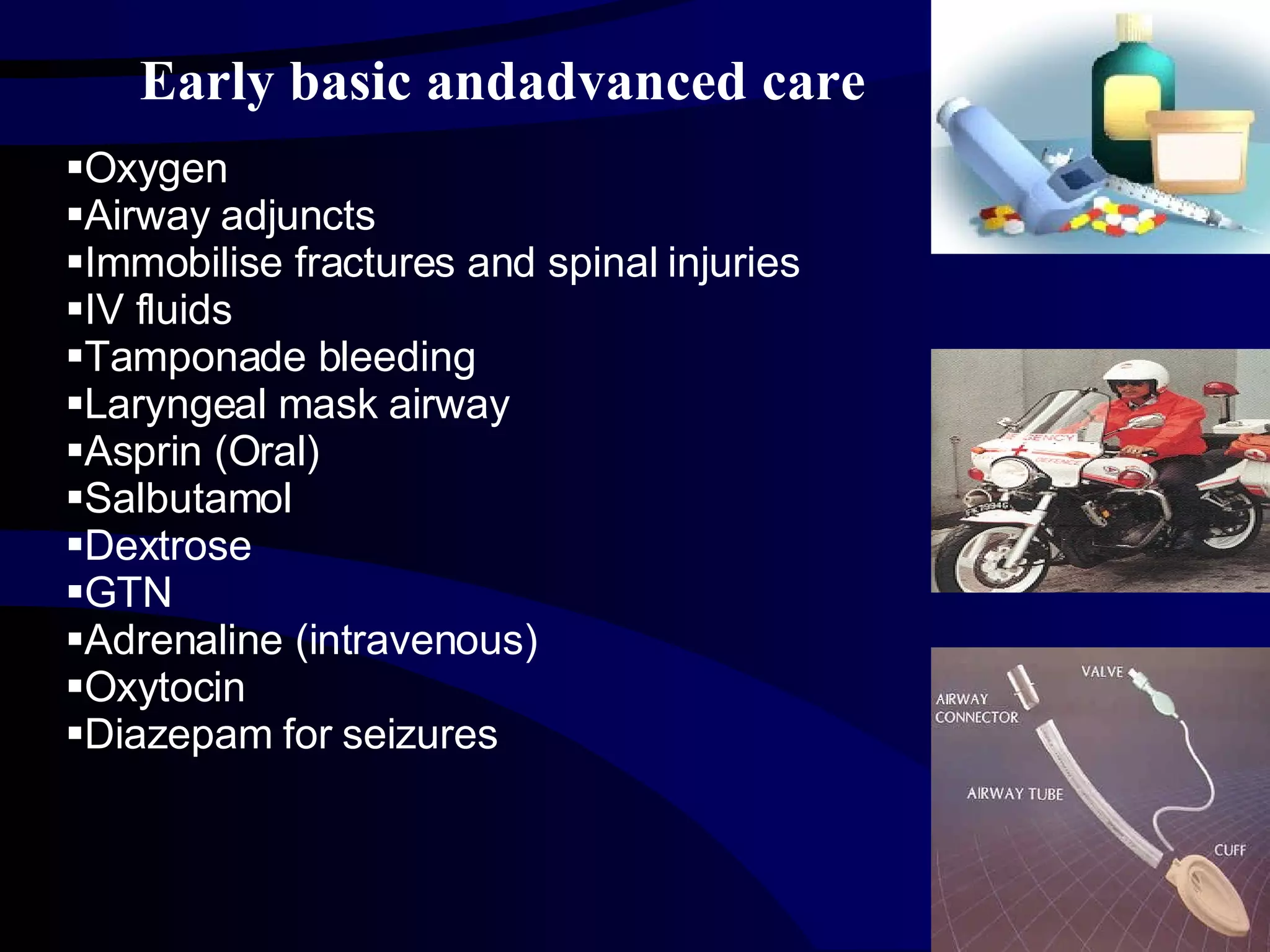
Early basic andadvanced care Oxygen Airway adjuncts Immobilise fractures and spinal injuries IV fluids Tamponade bleeding Laryngeal mask airway Asprin (Oral) Salbutamol Dextrose GTN Adrenaline (intravenous) Oxytocin Diazepam for seizures
 
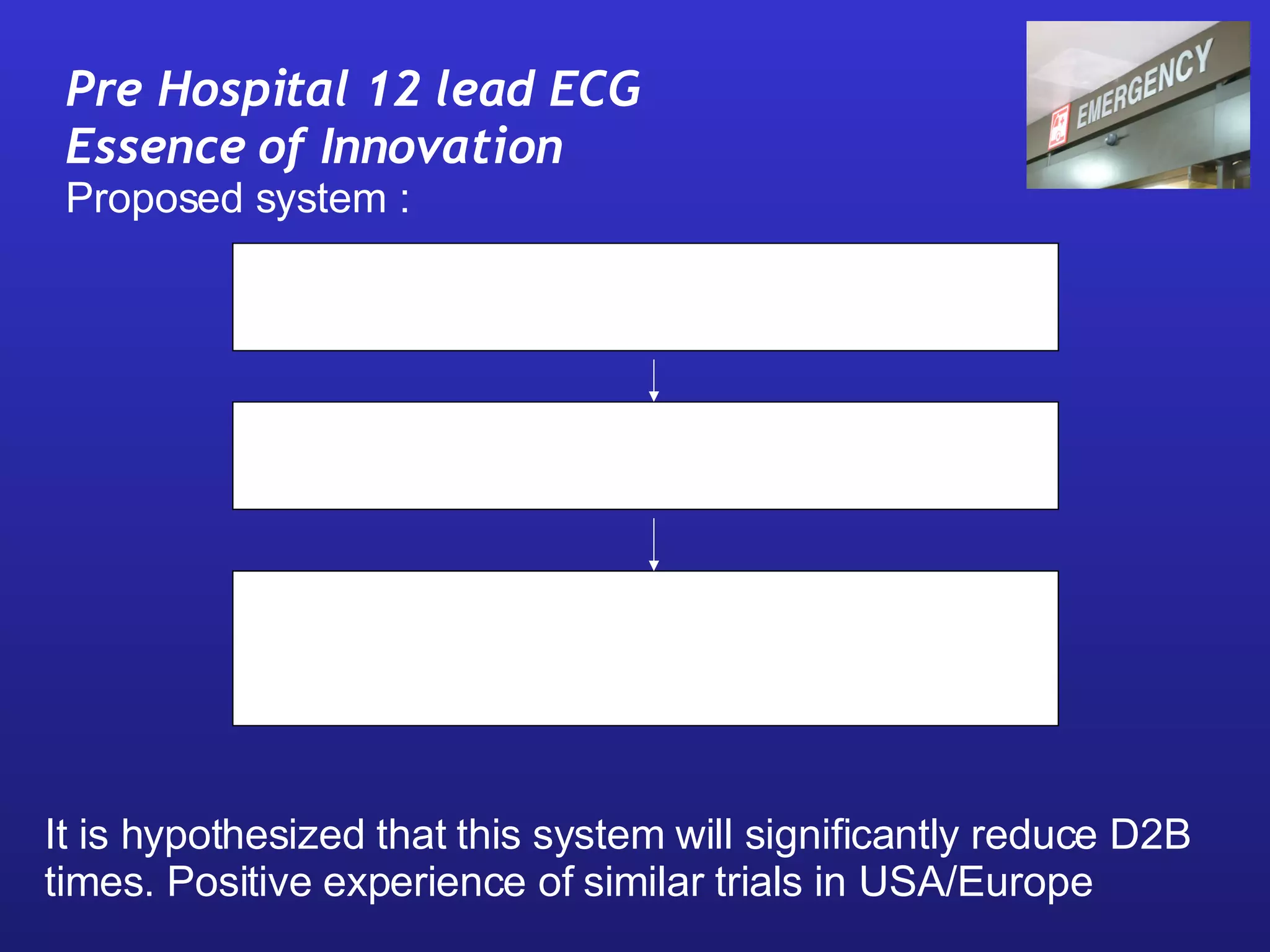
Pre Hospital 12 lead ECG Essence of Innovation Proposed system : It is hypothesized that this system will significantly reduce D2B times. Positive experience of similar trials in USA/Europe SCDF ambulance does 12 lead ECG & transmits to DEM (activate standby) On-duty Emergency Physician reviews ECG Emergency physician activates PCI team and catherisation lab or standby for thrombolytics
Essence of Innovation LifePak 12 defibrillators upgraded with  cellular modem card for wireless ECG transmission  Upon receiving patient’s ECG, the DEM can standby for the ambulance arrival and allow earlier activation of PCI for eligible patients, thus decreasing D2B/D2N time.
LIFEPAK  ®   12 defibrillator/monitor series Technical and Functional Features LifePak 12 defibrillators  - upgraded with the addition of a cellular modem card (GPRS PC card); a wireless data transmission software upgrade will also be performed.
Technical and Functional Features Wireless ECG transmission can be sent to a receiving station (Medtronic Lifenet   RS3.0), which will be hosted at SCDF’s HQ.
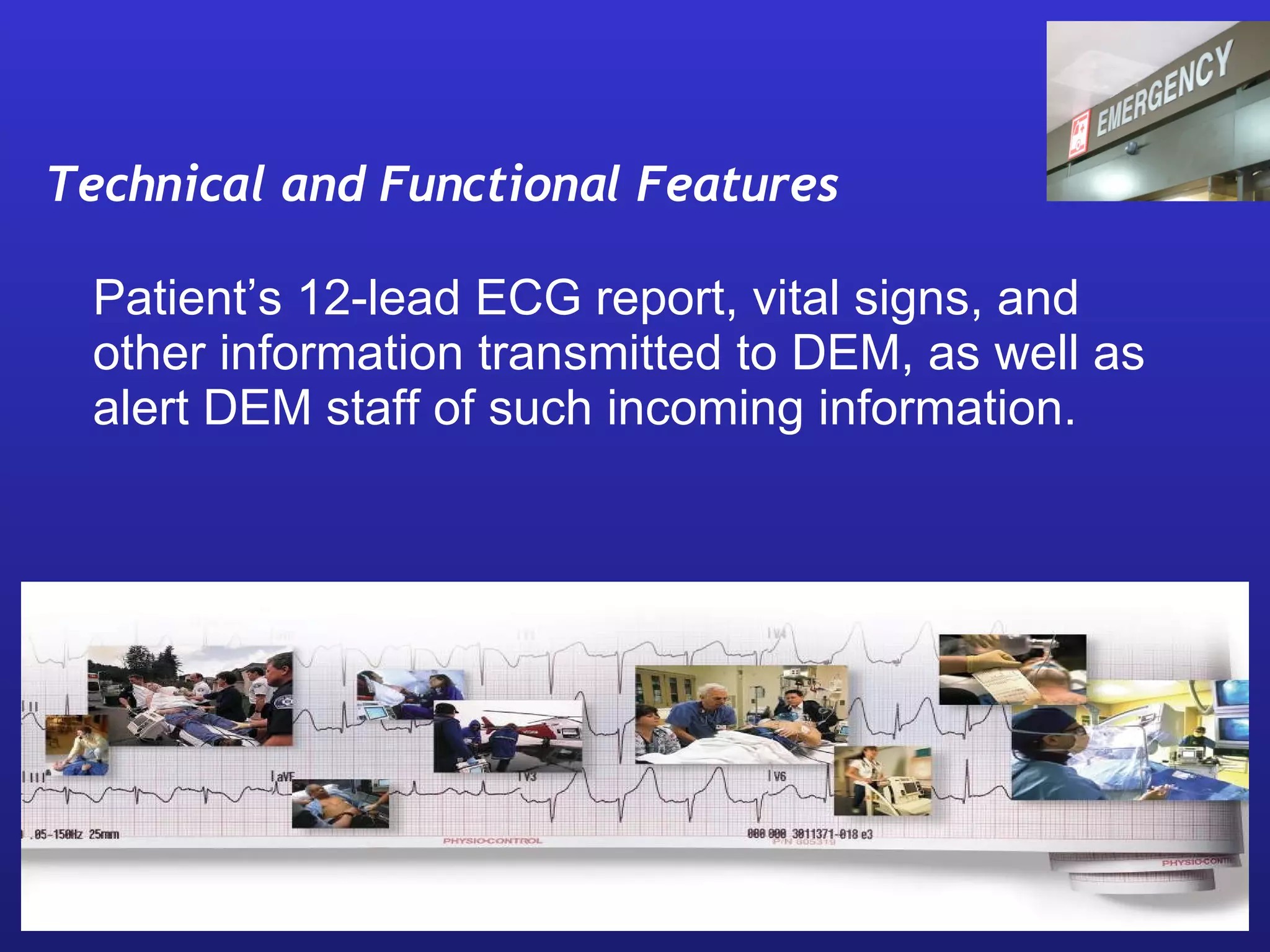
Technical and Functional Features Patient’s 12-lead ECG report, vital signs, and other information transmitted to DEM, as well as alert DEM staff of such incoming information.
What would it take to improve EMS in Asia? Champions and Advocates for EMS!
Organised by:
Conference Secretariat: Tel: (65)  6 379   5261/ 6 379 5259 Fax: (65) 6 475 2077  Email: admin@ icem2010.org
Visit our website :
See You in Singapore!

Ems In Singapore

  • 1.
    mergency Medical Servicesin E A/Prof Marcus Ong Consultant, Senior Medical Scientist & Director of Research Department of Emergency Medicine Singapore General Hospital Adjunct Associate Professor Duke-NUS Graduate Medical School Office of Research INGAPORE S
  • 2.
    Country Information RegionalMap Showing: Singapore
  • 3.
    History of Singapore14th century: Singapore was a fishing village known as Temasek or Sea Town. End of 14th century, the Sanskrit name, Singapura (Lion City), become commonly used. 1300 2000 1900 1800 1700 1600 1500 1400
  • 4.
    History of Singapore29 January 1819, Stamford Raffles landed on Singapore 6 February 1819, formal treaty concluded with the Sultan Hussein of Johor and the Temenggong 1300 2000 1900 1800 1700 1600 1500 1400
  • 5.
    History of SingaporeMalaysia formed on 16 September 1963, and consisted of the Federation of Malaya, Singapore, Sarawak and North Borneo (now Sabah). Singapore separated from Malaysia on 9 August 1965, and became a sovereign, democratic and independent nation. Admitted to the United Nations on 21 September 1965, member of the Common Wealth of Nations on 15 October 1695. On 22 December 1965, it became a republic. 1300 2000 1900 1800 1700 1600 1500 1400
  • 6.
    Area - 648km 2 Population - 4.1 million Ethnic groups Chinese 76.5% Malay 13.8% Indian 8.1% Others 1.6% www.singstat.gov.sg, June 2002 Facts of Singapore
  • 7.
    Percentage of SingaporeResident Population www.singstat.gov.sg, June 2002 7.5%
  • 8.
    Singapore GDP percapita in comparison with other nations Socio - Economics National Health Care Expenditure (Singapore) - 2.8% of GDP National Health Care Expenditure (US) - 13.9% of GDP in 2001
  • 9.
    Life Expectancy 78.7years Top 5 leading Causes of Residential Death Cancer (28.0%) Ischaemic & Other Heart Diseases (24.2%) Pneumonia (13.1%) Cerebrovascular Disease (8.8%) Injuries (6.7%) MOH Statistics - Health Facts Singapore 2003 Burden of Disease
  • 10.
    Health Status ofSingapore - good by International Standards Boost Health of Singapore Rising Standards of Living High Standards of Education Good Housing Safe Water Supply and Sanitation High Level of Medical Services Active Promotion of Preventive Medicine http://app.moh.gov.sg/our/our01.asp
  • 11.
    Healthcare Delivery SystemDual System of Health Care Public system run by the Government Private system provided by Private Practitioners Subsidised medical care at public hospitals and polyclinics
  • 12.
    Healthcare Delivery SystemUS$ 1 = S$1.75 Euro $1 = S$1.96
  • 13.
    Healthcare Delivery SystemBed to population ratio : 3.6 beds per 1000 population
  • 14.
    Healthcare Delivery SystemIndividual Responsibility - Medisave Account - 6 - 8% income by law - for hospitalization expenses for individual or family members - MediShield - Catastrophic insurance scheme - Help meeting medical expanses from major to prolong illness Government Subsidy - Lower classes of wards in public hospital are subsidized up to 80% by Government - Medifund - Endowment fund set up by government to help indigent pay for their medical care Hospitalisation Co-payment
  • 15.
    One Medical School for Undergraduate Program National University of Singapore (NUS) Length of Study 5 years + 1 year of house officer (Intern) In 1984, Emergency Medicine was recognized as a distinct medical specialty by the Ministry of Health Medical Education
  • 16.
    Structured Basic PostgraduateTraining Program in Emergency Medicine (Residency) - 3 years 1 year Accident and Emergency Medicine posting 1 year Acute Surgery posting (suggested 6 months general surgery, 3 months orthopaedic) 1 year Acute Medical posting (suggested 6 months general medicine, 3 months cardiology, 3 months paediatrics)  MRCS Edin (A&E) M Med (Emerg Med) Postgraduate Training Program - 1989
  • 17.
    Advance Postgraduate TrainingProgram - 3 years Seven Areas of Sub-Specialization Emergency Cardiac Care Emergency Trauma Care Emergency Toxicology Pre-hospital Emergency Care Paediatric Emergency Medicine Disaster Medicine Observation Medicine  Exit Interview with 3 member board of assessors Postgraduate Training Program - 1991
  • 18.
    Ministry of Medicine(MOH) Singapore Medical Council Specialist Accreditation Board Joint Committee or Specialist Training (35 STC) MRCP M MED (Int Med) Cardiology Dermatology Endocinology Gastroenterology Geriatric Medicine Haematology Infectious Diseases Internal Medicine Medical Oncology Neurology Renal Medicine Respiratory Medicine Rheumatology MRCS M MED (Surgery) Cardiothoracic Surgery General Surgery Hand Surgery Neurosurgery Orthopaedic Surgery Paediatric Surgery Plastic Surgery Urology Anaesthesiology Diagnostic Radiology Emergency Medicine Nuclear Medicine Obstetrics Gynaecology Occupational Med Ophthalmology Otorhinolaryngology Paediatric Medicine Pathology Psychiatry Public Health Med Rehabilitation Med Therapeutic Radiology
  • 19.
  • 20.
    186 Years ofHistory Sixth General Hospital opens at Sepoy Lines 29 March 1926 Opening of SGH, the seventh in line of general hospitals. 12 September 1981 Opening of a new and rebuilt SGH. 1821 The First General Hospital is located at the cantonment for troops at Stamford Road 1882
  • 21.
    Facilities Service No.of beds 1,389 No. of clinics 169 No. of procedure rooms 26 Operating theatre suites 47
  • 22.
    31 Clinical SpecialtiesDiagnostic Radiology Emergency Medicine Nuclear Medicine Pathology Therapeutic Radiology (NCC) Dermatology Endocrinology Gastroenterology Haematology Internal Medicine Neonatology Psychiatry & Behavioural Medicine Rehabilitation Medicine Renal Medicine Respiratory & Critical Care Medicine Rheumatology Cardiology (NHC) Medical Oncology (NCC) Anaesthesia & Surgical Intensive Care Colorectal Surgery General Surgery Hand Surgery Obstetrics & Gynaecology Orthopaedic Surgery Otolaryngology Plastic Surgery / Burns Urology Ophthalmology (SNEC) Cardiothoracic Surgery (NHC) Medical Surgical Ambulatory & Clinical Support Services Research Neurology (NNI) Neurosurgery (NNI) Clinical Research Clinical Trials & Resource Ventures Experimental Surgery
  • 23.
    Hospital Statistics (2001) SGH NHC NCC Total Admissions Number 64,405 9,224 3,725 77,354 % 83 11 5 100 Outpatient Attendance 594,076 73,973 99,735 767,784 % 77 10 13 100 A&E Attendance 112,713 - - 112,713
  • 24.
    Department of EmergencyMedicine 24 hour Accident and Emergency center Manage all types of medical, surgical, trauma, obstetric/gynecology, paediatric etc emergencies 24 bedded Emergency Observation Ward
  • 25.
    Department of EmergencyMedicine 9 Senior Consultants / Consultants 7 Associate Consultants / Registrars Medical Officers on rotation
  • 26.
    Department of EmergencyMedicine Other services Drug and Poison Information Center Emergency Medicine Research Maritime Radiomedical Service Life Support Training Center Emergency Preparedness
  • 27.
    Local Emergency Medical Services (EMS) System Run by the Singapore Civil Defence Force Currently operating 36 ambulances in 14 stations and 10 satellite stations Single tier system Able to provide BCLS and defibrillation using Automated External Defibrillators (AEDs)
  • 28.
    Ministry of HomeAffairs (Home Team) Singapore Police Force Central Narcotics Bureau Internal Security Department Singapore Civil Defence Force Commercial and Industrial Security Corporation Singapore Corporation of Rehabilitative Enterprises Prisons Department Immigration & Checkpoints Authority Emergency Ambulance Services
  • 29.
    SCDF Annual Report2005 Yearly volume of SCDF Ambulance Calls
  • 30.
    Total Emergency AmbulanceService (EAS) Calls Table 1: Number and Types of Ambulance Calls + 7343 96,006 88,663 Total + 143 2,865 2,722 False Alarms - 584 5,462 6,046 Non- Emergency Calls + 7784 87,679 79,895 Emergency calls Absolute Change 2006 2005 TYPE OF CALLS
  • 31.
    Total Emergency AmbulanceService (EAS) Calls Table 2: Breakdown of Emergency Ambulance Calls 0.4% 29.8% 69.8% + 7, 784 87,679 79,895 Total + 84 315.00 231 Others + 609 26,143.00 25,534 Trauma + 7, 091 61,221.00 54,130 Medical Absolute Change 2006 2005 DESCRIPTION
  • 32.
  • 33.
  • 34.
    Medical Oversight SCDFMedical Advisory Committee (MAC) Indirect medical control of paramedics following strict protocols written and approved by MAC Audit and review of treatment and procedures Training and CME Competency and certification
  • 35.
    Quality Medical OversightPatient is the Priority Achieves Response Time Reliability Accomplishes Clinical Excellence Requires Accountability Realizes Stakeholder Satisfaction Medical Oversight Relationship Quality Improvement Research
  • 36.
    No.to Call : EMS + Fire Brigade 995 Police 999 Non Emergency Ambulance 1777 SARS Ambulance 933 Pre-Hospital Emergency Care Dispatch Mechanism
  • 37.
    DESPATCH SYSTEM: AMBULANCEControl Room Caller Incident Site Hospital Fire Stn
  • 38.
    Emergency Medical DispatchCaller ID Automatic location tracing (address database) Computer assisted dispatch and ambulance monitoring GPS navigation and location tracking Emergency Medical Dispatchers
  • 39.
  • 40.
  • 41.
    Control Room LAYOUT Fire (Monitoring) Amb 3&4 Div (Monitoring) Amb 1&2 Div (Monitoring) CallTaker CallTaker Police / Trg Console Police / Trg Console DECAM monitoring r CallTaker CallTaker CallTaker Supervisor CCTV (Monitoring)
  • 42.
  • 43.
  • 44.
  • 45.
  • 46.
    Systems Status ManagementResponse Time Reliability Unit Hour Costs Productivity Demand Analysis System Status Plan
  • 47.
    Demand Analysis BasicTerminology Demand Analysis - A statistical chart showing the historical call volume for each hour of the day and day of the week.
  • 48.
    System Status PlanBasic Terminology System Status Plan - An algorithm for on-line management of system deployment and redeployment of unit hours.
  • 49.
  • 50.
  • 51.
  • 52.
    (Numbers correspond withposting points)
  • 53.
    SCDF Paramedics Since1996, ambulances manned by specifically trained paramedics (roughly equivalent to North American EMT-I) Replacing ambulance officers (nurses) Undergo an 18 month training including theory, hospital and ambulance attachments ITE Higher NITEC paramedic course 2008
  • 54.
    Early defibrillation Mostimportant intervention affecting mortality Advent of the Automated External Defibrillator Easy to use Step by step instructions Voice prompts
  • 55.
    1995: First FiveYears of Pre-Hospital Automatic Defibrillation Project in Singapore
  • 56.
    Fast Response Paramedic(FRP) One-man crew, equipped with AED Currently 9 FRPs in service Shown to reduce response times by an average of almost 5 minutes Plans to position FRPs in more satellite stations
  • 57.
    Mean Response TimeFast Response Paramedics: (9 motorcycles based in 9 fire stations) 5.5 min + 2.0 (SD) Ambulance: 10.4 min + 5.4 (SD)
  • 58.
    Emergency Medical Services(EMS) ‘ Single’ Tier System 36 ambulance based in 14 fire stations and 10 satellite stations Ambulance Unit Paramedic (1) CPR, BTLS Bag Valve Mask Ventilation Limited I/V drug, (10% dextrose) no intubation Medic (1) Driver (1)
  • 59.
    Early basic andadvancedcare Oxygen Airway adjuncts Immobilise fractures and spinal injuries IV fluids Tamponade bleeding Laryngeal mask airway Asprin (Oral) Salbutamol Dextrose GTN Adrenaline (intravenous) Oxytocin Diazepam for seizures
  • 60.
  • 61.
    Pre Hospital 12lead ECG Essence of Innovation Proposed system : It is hypothesized that this system will significantly reduce D2B times. Positive experience of similar trials in USA/Europe SCDF ambulance does 12 lead ECG & transmits to DEM (activate standby) On-duty Emergency Physician reviews ECG Emergency physician activates PCI team and catherisation lab or standby for thrombolytics
  • 62.
    Essence of InnovationLifePak 12 defibrillators upgraded with cellular modem card for wireless ECG transmission Upon receiving patient’s ECG, the DEM can standby for the ambulance arrival and allow earlier activation of PCI for eligible patients, thus decreasing D2B/D2N time.
  • 63.
    LIFEPAK ® 12 defibrillator/monitor series Technical and Functional Features LifePak 12 defibrillators - upgraded with the addition of a cellular modem card (GPRS PC card); a wireless data transmission software upgrade will also be performed.
  • 64.
    Technical and FunctionalFeatures Wireless ECG transmission can be sent to a receiving station (Medtronic Lifenet  RS3.0), which will be hosted at SCDF’s HQ.
  • 65.
    Technical and FunctionalFeatures Patient’s 12-lead ECG report, vital signs, and other information transmitted to DEM, as well as alert DEM staff of such incoming information.
  • 66.
    What would ittake to improve EMS in Asia? Champions and Advocates for EMS!
  • 67.
  • 68.
    Conference Secretariat: Tel:(65) 6 379 5261/ 6 379 5259 Fax: (65) 6 475 2077 Email: admin@ icem2010.org
  • 69.
  • 70.
    See You inSingapore!