Employee Training
and
Development
Training and Development Practices
within the Integrated HR System
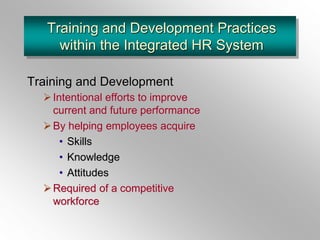
Training and Development
Intentional efforts to improve
current and future performance
By helping employees acquire
• Skills
• Knowledge
• Attitudes
Required of a competitive
workforce
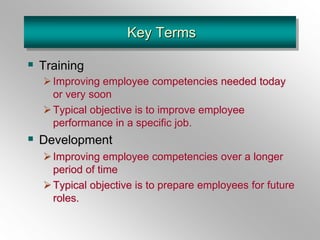
Key Terms
 Training
Improving employee competencies needed today
or very soon
Typical objective is to improve employee
performance in a specific job.
 Development
Improving employee competencies over a longer
period of time
Typical objective is to prepare employees for future
roles.
Key Terms (cont’d)
 Socialization
Learning how things are done in the organization
• Objective is to teach new employees about the
organization’s history, culture and management
practices.
Learning Organizations
 Learning recognized as a source of
competitive advantage
 Use knowledge management:
Make sure knowledge from employees, teams, and
units is captured, remembered, stored and shared
Technologies provide software to
share knowledge electronically
Chief Learning/Knowledge Officer
coordinates activities
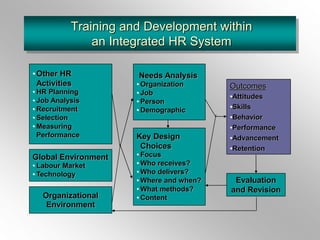
Training and Development within
an Integrated HR System
•Other HR
Activities
• HR Planning
• Job Analysis
• Recruitment
• Selection
• Measuring
Performance
Global Environment
• Labour Market
• Technology
Organizational
Environment
Needs Analysis
• Organization
• Job
• Person
• Demographic
Key Design
Choices
• Focus
• Who receives?
• Who delivers?
• Where and when?
• What methods?
• Content
Evaluation
and Revision
Outcomes
•Attitudes
•Skills
•Behavior
•Performance
•Advancement
•Retention
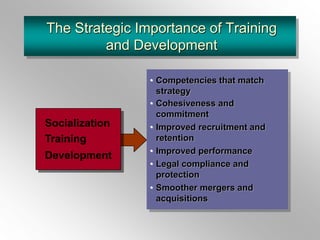
Socialization
Training
Development
• Competencies that match
strategy
• Cohesiveness and
commitment
• Improved recruitment and
retention
• Improved performance
• Legal compliance and
protection
• Smoother mergers and
acquisitions
The Strategic Importance of Training
and Development
Improving Performance
 Improving Service
 Training for Customers
 Productivity
 New Technology
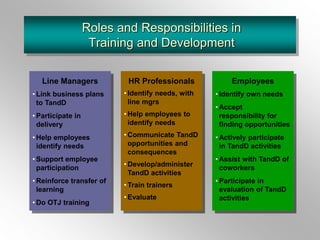
Roles and Responsibilities in
Training and Development
Line Managers
• Link business plans
to TandD
• Participate in
delivery
• Help employees
identify needs
• Support employee
participation
• Reinforce transfer of
learning
• Do OTJ training
HR Professionals
• Identify needs, with
line mgrs
• Help employees to
identify needs
• Communicate TandD
opportunities and
consequences
• Develop/administer
TandD activities
• Train trainers
• Evaluate
Employees
• Identify own needs
• Accept
responsibility for
finding opportunities
• Actively participate
in TandD activities
• Assist with TandD of
coworkers
• Participate in
evaluation of TandD
activities
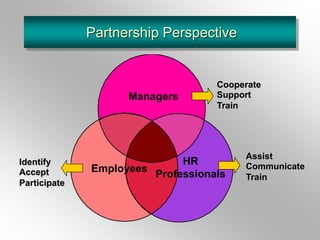
Managers
HR
Professionals
Employees
Cooperate
Support
Train
Assist
Communicate
Train
Identify
Accept
Participate
Partnership Perspective
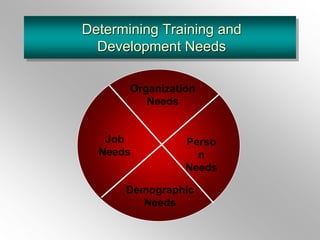
Determining Training and
Development Needs
Organization
Needs
Perso
n
Needs
Demographic
Needs
Job
Needs
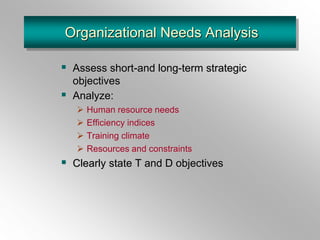
Organizational Needs Analysis
 Assess short-and long-term strategic
objectives
 Analyze:
 Human resource needs
 Efficiency indices
 Training climate
 Resources and constraints
 Clearly state T and D objectives
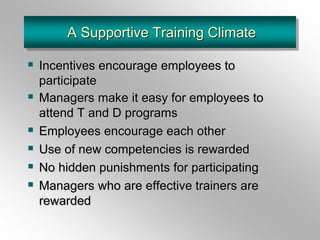
A Supportive Training Climate
 Incentives encourage employees to
participate
 Managers make it easy for employees to
attend T and D programs
 Employees encourage each other
 Use of new competencies is rewarded
 No hidden punishments for participating
 Managers who are effective trainers are
rewarded
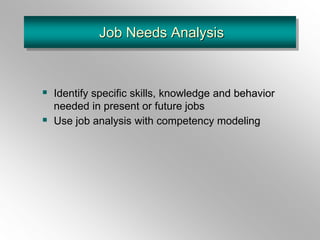
Job Needs Analysis
 Identify specific skills, knowledge and behavior
needed in present or future jobs
 Use job analysis with competency modeling
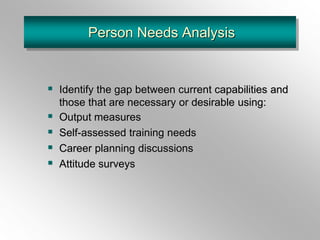
Person Needs Analysis
 Identify the gap between current capabilities and
those that are necessary or desirable using:
 Output measures
 Self-assessed training needs
 Career planning discussions
 Attitude surveys
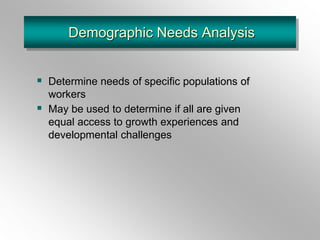
Demographic Needs Analysis
 Determine needs of specific populations of
workers
 May be used to determine if all are given
equal access to growth experiences and
developmental challenges
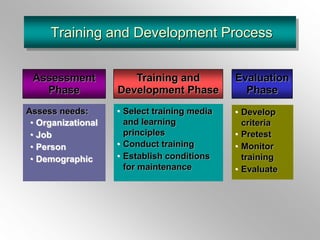
Assessment
Phase
Training and
Development Phase
Evaluation
Phase
• Select training media
and learning
principles
• Conduct training
• Establish conditions
for maintenance
• Develop
criteria
• Pretest
• Monitor
training
• Evaluate
Training and Development Process
Assess needs:
• Organizational
• Job
• Person
• Demographic
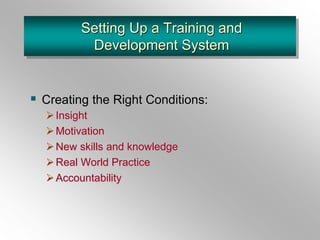
Setting Up a Training and
Development System
 Creating the Right Conditions:
Insight
Motivation
New skills and knowledge
Real World Practice
Accountability
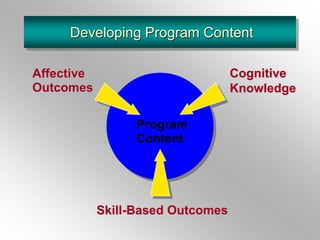
Cognitive
Knowledge
Skill-Based Outcomes
Affective
Outcomes
Developing Program Content
Program
Content
Choosing the Program Format
 Traditional Formats
On-the-job
On-site, but not on-the-job
Off the job
 E-Learning
New technology allows integration
of multiple learning methods
Includes teleconferencing, multimedia, computer-
based learning
Can speed communication and cut costs
On the Job Training
 Job instruction training
 Apprenticeship training
 Internships and
assistantships
 Job rotation and
developmental job
assignments
 Supervisory assistance
and mentoring
 Coaching
Components of a Developmental Job
 Unfamiliar responsibilities
 Responsibility for creating change
 High levels of responsibility
 Boundary-spanning requirements
 Dealing with diversity
On-Site, but Not On the Job Training
 Programmed instruction on intranet or
internet
 Videos and CDs
 Interactive video training: Combines
programmed instruction with video
 Teleconferencing
 Corporate Universities and executive
education
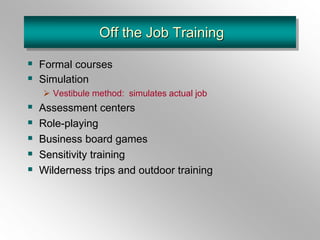
Off the Job Training
 Formal courses
 Simulation
 Vestibule method: simulates actual job
 Assessment centers
 Role-playing
 Business board games
 Sensitivity training
 Wilderness trips and outdoor training
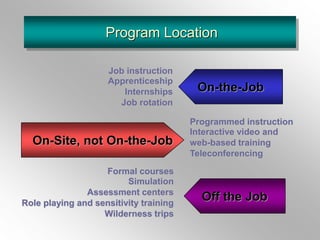
On-the-Job
On-Site, not On-the-Job
Off the Job
Job instruction
Apprenticeship
Internships
Job rotation
Programmed instruction
Interactive video and
web-based training
Teleconferencing
Formal courses
Simulation
Assessment centers
Role playing and sensitivity training
Wilderness trips
Program Location
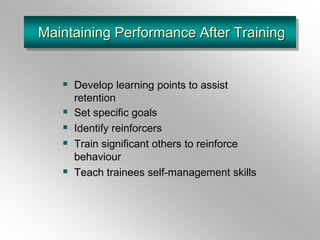
Maintaining Performance After Training
 Develop learning points to assist
retention
 Set specific goals
 Identify reinforcers
 Train significant others to reinforce
behaviour
 Teach trainees self-management skills
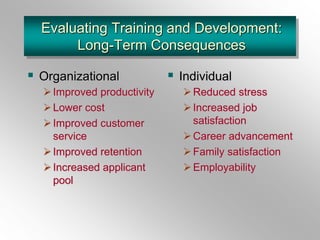
Evaluating Training and Development:
Long-Term Consequences
 Organizational
Improved productivity
Lower cost
Improved customer
service
Improved retention
Increased applicant
pool
 Individual
Reduced stress
Increased job
satisfaction
Career advancement
Family satisfaction
Employability

Employee training & development-ppt-

  • 1.
  • 2.
    Training and DevelopmentPractices within the Integrated HR System Training and Development Intentional efforts to improve current and future performance By helping employees acquire • Skills • Knowledge • Attitudes Required of a competitive workforce
  • 3.
    Key Terms  Training Improvingemployee competencies needed today or very soon Typical objective is to improve employee performance in a specific job.  Development Improving employee competencies over a longer period of time Typical objective is to prepare employees for future roles.
  • 4.
    Key Terms (cont’d) Socialization Learning how things are done in the organization • Objective is to teach new employees about the organization’s history, culture and management practices.
  • 5.
    Learning Organizations  Learningrecognized as a source of competitive advantage  Use knowledge management: Make sure knowledge from employees, teams, and units is captured, remembered, stored and shared Technologies provide software to share knowledge electronically Chief Learning/Knowledge Officer coordinates activities
  • 6.
    Training and Developmentwithin an Integrated HR System •Other HR Activities • HR Planning • Job Analysis • Recruitment • Selection • Measuring Performance Global Environment • Labour Market • Technology Organizational Environment Needs Analysis • Organization • Job • Person • Demographic Key Design Choices • Focus • Who receives? • Who delivers? • Where and when? • What methods? • Content Evaluation and Revision Outcomes •Attitudes •Skills •Behavior •Performance •Advancement •Retention
  • 7.
    Socialization Training Development • Competencies thatmatch strategy • Cohesiveness and commitment • Improved recruitment and retention • Improved performance • Legal compliance and protection • Smoother mergers and acquisitions The Strategic Importance of Training and Development
  • 8.
    Improving Performance  ImprovingService  Training for Customers  Productivity  New Technology
  • 9.
    Roles and Responsibilitiesin Training and Development Line Managers • Link business plans to TandD • Participate in delivery • Help employees identify needs • Support employee participation • Reinforce transfer of learning • Do OTJ training HR Professionals • Identify needs, with line mgrs • Help employees to identify needs • Communicate TandD opportunities and consequences • Develop/administer TandD activities • Train trainers • Evaluate Employees • Identify own needs • Accept responsibility for finding opportunities • Actively participate in TandD activities • Assist with TandD of coworkers • Participate in evaluation of TandD activities
  • 10.
  • 11.
    Determining Training and DevelopmentNeeds Organization Needs Perso n Needs Demographic Needs Job Needs
  • 12.
    Organizational Needs Analysis Assess short-and long-term strategic objectives  Analyze:  Human resource needs  Efficiency indices  Training climate  Resources and constraints  Clearly state T and D objectives
  • 13.
    A Supportive TrainingClimate  Incentives encourage employees to participate  Managers make it easy for employees to attend T and D programs  Employees encourage each other  Use of new competencies is rewarded  No hidden punishments for participating  Managers who are effective trainers are rewarded
  • 14.
    Job Needs Analysis Identify specific skills, knowledge and behavior needed in present or future jobs  Use job analysis with competency modeling
  • 15.
    Person Needs Analysis Identify the gap between current capabilities and those that are necessary or desirable using:  Output measures  Self-assessed training needs  Career planning discussions  Attitude surveys
  • 16.
    Demographic Needs Analysis Determine needs of specific populations of workers  May be used to determine if all are given equal access to growth experiences and developmental challenges
  • 17.
    Assessment Phase Training and Development Phase Evaluation Phase •Select training media and learning principles • Conduct training • Establish conditions for maintenance • Develop criteria • Pretest • Monitor training • Evaluate Training and Development Process Assess needs: • Organizational • Job • Person • Demographic
  • 18.
    Setting Up aTraining and Development System  Creating the Right Conditions: Insight Motivation New skills and knowledge Real World Practice Accountability
  • 19.
  • 20.
    Choosing the ProgramFormat  Traditional Formats On-the-job On-site, but not on-the-job Off the job  E-Learning New technology allows integration of multiple learning methods Includes teleconferencing, multimedia, computer- based learning Can speed communication and cut costs
  • 21.
    On the JobTraining  Job instruction training  Apprenticeship training  Internships and assistantships  Job rotation and developmental job assignments  Supervisory assistance and mentoring  Coaching
  • 22.
    Components of aDevelopmental Job  Unfamiliar responsibilities  Responsibility for creating change  High levels of responsibility  Boundary-spanning requirements  Dealing with diversity
  • 23.
    On-Site, but NotOn the Job Training  Programmed instruction on intranet or internet  Videos and CDs  Interactive video training: Combines programmed instruction with video  Teleconferencing  Corporate Universities and executive education
  • 24.
    Off the JobTraining  Formal courses  Simulation  Vestibule method: simulates actual job  Assessment centers  Role-playing  Business board games  Sensitivity training  Wilderness trips and outdoor training
  • 25.
    On-the-Job On-Site, not On-the-Job Offthe Job Job instruction Apprenticeship Internships Job rotation Programmed instruction Interactive video and web-based training Teleconferencing Formal courses Simulation Assessment centers Role playing and sensitivity training Wilderness trips Program Location
  • 26.
    Maintaining Performance AfterTraining  Develop learning points to assist retention  Set specific goals  Identify reinforcers  Train significant others to reinforce behaviour  Teach trainees self-management skills
  • 27.
    Evaluating Training andDevelopment: Long-Term Consequences  Organizational Improved productivity Lower cost Improved customer service Improved retention Increased applicant pool  Individual Reduced stress Increased job satisfaction Career advancement Family satisfaction Employability