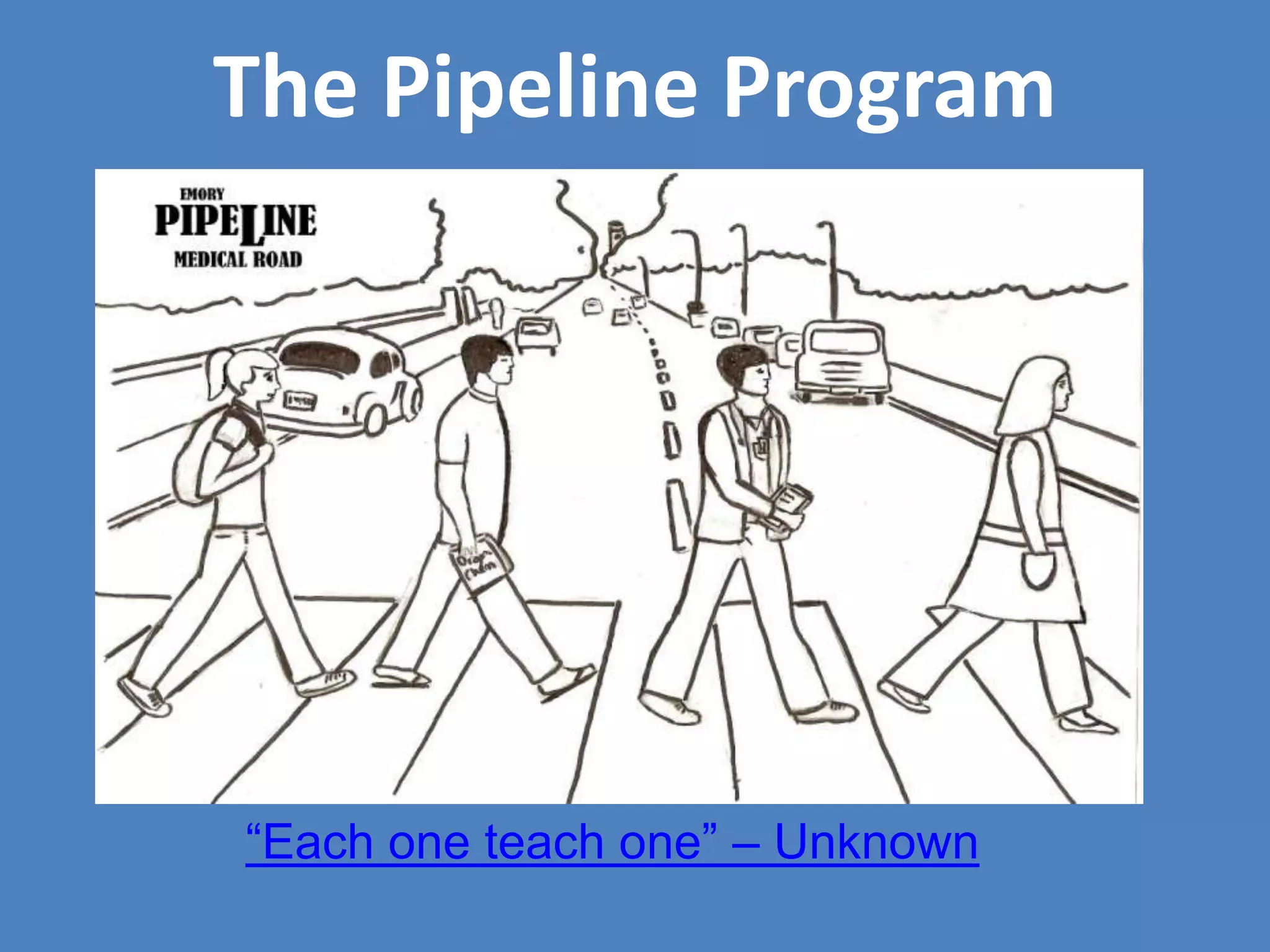
The Pipeline Program “Each one teach one” – Unknown
MissionMulti-tiered mentorship initiative
Positive transformation in students at each level
Engaging budding young scholars in hands-on exploration of medical sciences
Reinforce mastery of health science knowledge and enhance the sense of responsibility to serve the community
Inspire high school students to achieve to their own intellectual strengths and to aspire to collegeProgram Structure Medical Residents and Faculty Provide support, review cases, provide pre- session lecturesAvailable to advise & mentor medical & MPH students Medical & MPH StudentsFacilitate teaching the case studies  mentor undergraduates Undergraduateswork closely with high school students during group exercises, help them build research & presentation skills
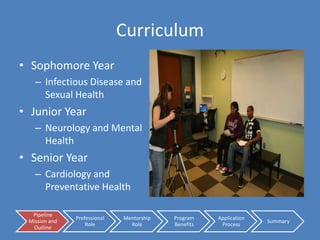
Curriculum Sophomore Year Infectious Disease and Sexual Health Junior YearNeurology and Mental Health Senior Year Cardiology and Preventative Health
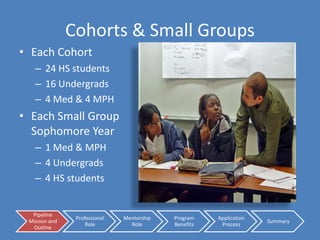
Cohorts & Small Groups Each Cohort 24 HS students16 Undergrads4 Med & 4 MPH Each Small Group Sophomore Year 1 Med & MPH4 Undergrads4 HS students
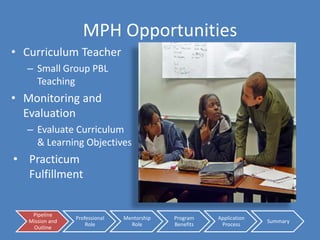
MPH OpportunitiesCurriculum TeacherSmall Group PBL TeachingMonitoring and EvaluationEvaluate Curriculum & Learning ObjectivesPracticum Fulfillment
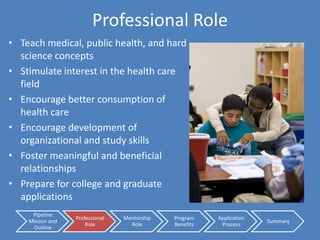
Professional RoleTeach medical, public health, and hard science concepts Stimulate interest in the health care fieldEncourage better consumption of health careEncourage development of organizational and study skills  Foster meaningful and beneficial relationshipsPrepare for college and graduate applications
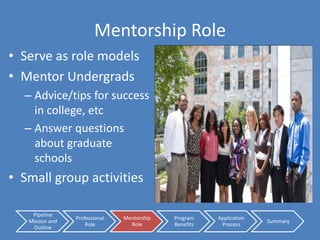
Mentorship RoleServe as role modelsMentor UndergradsAdvice/tips for success  in college, etcAnswer questions about graduate schools Small group activities
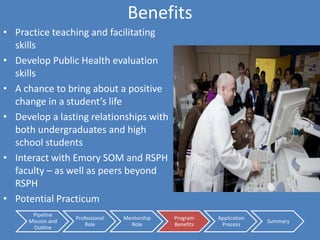
BenefitsPractice teaching and facilitating skillsDevelop Public Health evaluation skills A chance to bring about a positive change in a student’s lifeDevelop a lasting relationships with both undergraduates and high school students Interact with Emory SOM and RSPH faculty – as well as peers beyond RSPHPotential Practicum
Application ProcessAll levels involved apply to be in the programSelecting 12 MD and 12 MPH student teachersOnline application process Not rigorous. Primarily to determine interests &  enthusiasm to teach Applications opens today Sending everyone who signed in an application Email EmoryPipeline@gmail.com for an application
Application ProcessApplications opens: TodayApplication Deadline: Monday 9/12/2011 at NoonSubmit to  grad.applications@emorypipeline.orgInterviews:  Monday Sept 26 – 30, 2011Notifications: October 2011
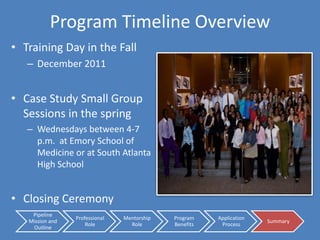
Program Timeline Overview Training Day in the Fall December 2011Case Study Small Group Sessions in the springWednesdays between 4-7 p.m.  at Emory School of Medicine or at South Atlanta High School Closing Ceremony

Emory Pipeline 2011 Information

  • 1.
    The Pipeline Program“Each one teach one” – Unknown
  • 2.
  • 3.
    Positive transformation instudents at each level
  • 4.
    Engaging budding youngscholars in hands-on exploration of medical sciences
  • 5.
    Reinforce mastery ofhealth science knowledge and enhance the sense of responsibility to serve the community
  • 6.
    Inspire high schoolstudents to achieve to their own intellectual strengths and to aspire to collegeProgram Structure Medical Residents and Faculty Provide support, review cases, provide pre- session lecturesAvailable to advise & mentor medical & MPH students Medical & MPH StudentsFacilitate teaching the case studies mentor undergraduates Undergraduateswork closely with high school students during group exercises, help them build research & presentation skills
  • 7.
    Curriculum Sophomore YearInfectious Disease and Sexual Health Junior YearNeurology and Mental Health Senior Year Cardiology and Preventative Health
  • 8.
    Cohorts & SmallGroups Each Cohort 24 HS students16 Undergrads4 Med & 4 MPH Each Small Group Sophomore Year 1 Med & MPH4 Undergrads4 HS students
  • 9.
    MPH OpportunitiesCurriculum TeacherSmallGroup PBL TeachingMonitoring and EvaluationEvaluate Curriculum & Learning ObjectivesPracticum Fulfillment
  • 10.
    Professional RoleTeach medical,public health, and hard science concepts Stimulate interest in the health care fieldEncourage better consumption of health careEncourage development of organizational and study skills Foster meaningful and beneficial relationshipsPrepare for college and graduate applications
  • 11.
    Mentorship RoleServe asrole modelsMentor UndergradsAdvice/tips for success in college, etcAnswer questions about graduate schools Small group activities
  • 12.
    BenefitsPractice teaching andfacilitating skillsDevelop Public Health evaluation skills A chance to bring about a positive change in a student’s lifeDevelop a lasting relationships with both undergraduates and high school students Interact with Emory SOM and RSPH faculty – as well as peers beyond RSPHPotential Practicum
  • 13.
    Application ProcessAll levelsinvolved apply to be in the programSelecting 12 MD and 12 MPH student teachersOnline application process Not rigorous. Primarily to determine interests & enthusiasm to teach Applications opens today Sending everyone who signed in an application Email EmoryPipeline@gmail.com for an application
  • 14.
    Application ProcessApplications opens:TodayApplication Deadline: Monday 9/12/2011 at NoonSubmit to  grad.applications@emorypipeline.orgInterviews: Monday Sept 26 – 30, 2011Notifications: October 2011
  • 15.
    Program Timeline OverviewTraining Day in the Fall December 2011Case Study Small Group Sessions in the springWednesdays between 4-7 p.m. at Emory School of Medicine or at South Atlanta High School Closing Ceremony

Editor's Notes

  • #2 HistoryProgram created by two Emory med graduates Sam Funt and Zwade Marshall in 2007. Beginning our 5 yearQuote (also a hyperlink to pipeline video) A Pipeline motto, not really sure where it originated. Some say was a method slaves who were denied access to education thought each other and their communityPlay video
  • #3 We partner with the Health & Medical Science Academy of South Atlanta High School Reference clips in video-teaching: traumatic brain injury simulationBetter consumers of health: ethics discussion on end of life issues, sophomore module with sexual health moduleMeaningful relationships
  • #4 Pre-session lectures w/ dinnerHIV: Dr. Ira SchwartzSexual Health: Dr. Melissa Kottke (OB-GYN) Mental health: Dr. Malhon DelongCardiology: Preventive Health:
  • #5 Case Studies are in PBL format. - Heart of PBL is not lecturing students but working and guiding them to discover the information.- Ex. Sophomore cohort presented w/ a case of a young teenager. Students first think she has a flu, then maybe she’s pregnant, then maybe an STI and finally learn she has HIV. - Through their thought process and the various sessions they learn something about all those various hypotheses Module HighlightsSophomore: HIV Case & Video project Junior: Traumatic brain injury session in the sim lab Senior: Echo lab, health fair and other new creative activities
  • #6 Cohort4 small groups in each cohort HS student assigned a undergrad mentorMed and mph students mentor the undergrads. In past one med assigned two undergrads but now both med/mph will mentor all the students
  • #7 Cohort4 small groups in each cohort HS student assigned a undergrad mentorMed and mph students mentor the undergrads. In past one med assigned two undergrads but now both med/mph will mentor all the students
  • #8 How we accomplish the mission of the program. Pairing med/mph in the small groups will help address the scientific and social/behavioral goals of the program
  • #9 Role modelsFor some of the HS students in the group, you might be the first med or mph student they know Share experiences and give advice. Ex. Mike my teaching partner met many times with Trung on of the undergrads in my group to give him advice on selecting classes, taking the MCAT,etc. In the past some teachers have even read students’ personal statements
  • #10 Lasting RelationshipsMed students giving advice/helping undergrads decide when to take MCAT, etc
  • #13 Closing Ceremony- Usually in April