Emily Hernandez
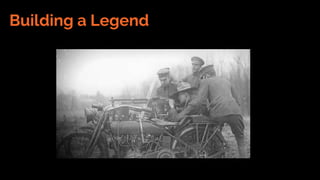
Building a Legend
The Company
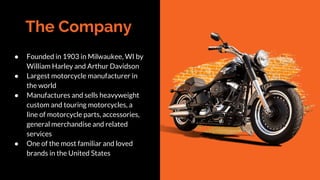
● Founded in 1903 in Milwaukee, WI by
William Harley and Arthur Davidson
● Largest motorcycle manufacturer in
the world
● Manufactures and sells heavyweight
custom and touring motorcycles, a
line of motorcycle parts, accessories,
general merchandise and related
services
● One of the most familiar and loved
brands in the United States
Business Strategy Framework
● “Harley-Davidson's purpose of fulfilling dreams of personal freedom is the foundation
for the Company's core strategies, which include:
○ Delivering high-demand, profitable products and premium retail experiences
○ Strengthening Harley-Davidson through agility and responsiveness to be a leader
in the global marketplace
○ Extending the Harley-Davidson brand's reach beyond core customers and
markets
○ Cultivating great talent, leadership and culture to enable a sustainable future”
Customer Value
Proposition
Perceived benefits to customers:
● Functional
● Emotional
● Social
● Self-Expressive
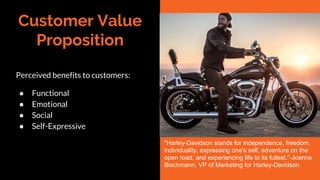
"Harley-Davidson stands for independence, freedom,
individuality, expressing one's self, adventure on the
open road, and experiencing life to its fullest."-Joanne
Bischmann, VP of Marketing for Harley-Davidson
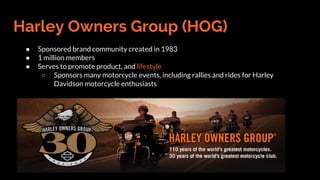
Harley Owners Group (HOG)
● Sponsored brand community created in 1983
● 1 million members
● Serves to promote product, and lifestyle
○ Sponsors many motorcycle events, including rallies and rides for Harley
Davidson motorcycle enthusiasts
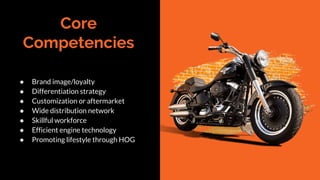
Core
Competencies
● Brand image/loyalty
● Differentiation strategy
● Customization or aftermarket
● Wide distribution network
● Skillful workforce
● Efficient engine technology
● Promoting lifestyle through HOG
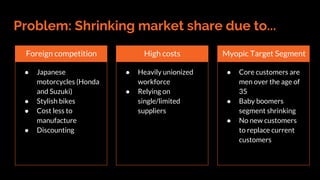
Problem: Shrinking market share due to...
Foreign competition
● Japanese
motorcycles (Honda
and Suzuki)
● Stylish bikes
● Cost less to
manufacture
● Discounting
Ut enim ad minim veniam,
quis nostrud
High costs
● Heavily unionized
workforce
● Relying on
single/limited
suppliers
Myopic Target Segment
● Core customers are
men over the age of
35
● Baby boomers
segment shrinking
● No new customers
to replace current
customers
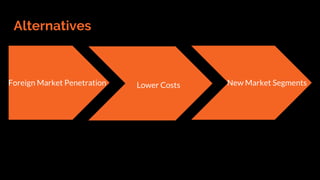
Alternatives
Foreign Market Penetration New Market SegmentsLower Costs
1: Penetrate Foreign Markets
● Stop relying on U.S market
● Form strategic alliances and joint
ventures to enable entry into
foreign markets
● Multidomestic strategy- tailor
product extensions accordingly
to meet tastes of geographic
market
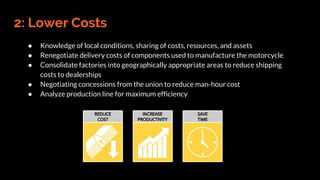
2: Lower Costs
● Knowledge of local conditions, sharing of costs, resources, and assets
● Renegotiate delivery costs of components used to manufacture the motorcycle
● Consolidate factories into geographically appropriate areas to reduce shipping
costs to dealerships
● Negotiating concessions from the union to reduce man-hour cost
● Analyze production line for maximum efficiency
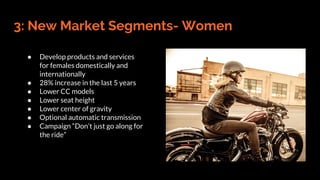
3: New Market Segments- Women
● Develop products and services
for females domestically and
internationally
● 28% increase in the last 5 years
● Lower CC models
● Lower seat height
● Lower center of gravity
● Optional automatic transmission
● Campaign “Don’t just go along for
the ride”
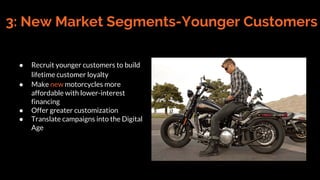
3: New Market Segments-Younger Customers
● Recruit younger customers to build
lifetime customer loyalty
● Make new motorcycles more
affordable with lower-interest
financing
● Offer greater customization
● Translate campaigns into the Digital
Age
Conclusions
In order to remain a leader in the industry, Harley Davidson should:
● Be more responsive to market trends
● Focus on collaboration and strong supplier relationships to deliver cost and
quality improvement in the long-term.
● Sell products and promote the experience of motorcycling to both core
customers and outreach customers such as women and young adults.
Discussion Questions
● Should Harley Davidson lower its prices to appeal to younger
markets? Will this affect their image?
● Do you see any limitations to the viability and growth of HD in the
future?

Emily Hernandez Harley Davidson Presentation

  • 1.
  • 2.
  • 3.
    The Company ● Foundedin 1903 in Milwaukee, WI by William Harley and Arthur Davidson ● Largest motorcycle manufacturer in the world ● Manufactures and sells heavyweight custom and touring motorcycles, a line of motorcycle parts, accessories, general merchandise and related services ● One of the most familiar and loved brands in the United States
  • 4.
    Business Strategy Framework ●“Harley-Davidson's purpose of fulfilling dreams of personal freedom is the foundation for the Company's core strategies, which include: ○ Delivering high-demand, profitable products and premium retail experiences ○ Strengthening Harley-Davidson through agility and responsiveness to be a leader in the global marketplace ○ Extending the Harley-Davidson brand's reach beyond core customers and markets ○ Cultivating great talent, leadership and culture to enable a sustainable future”
  • 5.
    Customer Value Proposition Perceived benefitsto customers: ● Functional ● Emotional ● Social ● Self-Expressive "Harley-Davidson stands for independence, freedom, individuality, expressing one's self, adventure on the open road, and experiencing life to its fullest."-Joanne Bischmann, VP of Marketing for Harley-Davidson
  • 6.
    Harley Owners Group(HOG) ● Sponsored brand community created in 1983 ● 1 million members ● Serves to promote product, and lifestyle ○ Sponsors many motorcycle events, including rallies and rides for Harley Davidson motorcycle enthusiasts
  • 7.
    Core Competencies ● Brand image/loyalty ●Differentiation strategy ● Customization or aftermarket ● Wide distribution network ● Skillful workforce ● Efficient engine technology ● Promoting lifestyle through HOG
  • 8.
    Problem: Shrinking marketshare due to... Foreign competition ● Japanese motorcycles (Honda and Suzuki) ● Stylish bikes ● Cost less to manufacture ● Discounting Ut enim ad minim veniam, quis nostrud High costs ● Heavily unionized workforce ● Relying on single/limited suppliers Myopic Target Segment ● Core customers are men over the age of 35 ● Baby boomers segment shrinking ● No new customers to replace current customers
  • 9.
    Alternatives Foreign Market PenetrationNew Market SegmentsLower Costs
  • 10.
    1: Penetrate ForeignMarkets ● Stop relying on U.S market ● Form strategic alliances and joint ventures to enable entry into foreign markets ● Multidomestic strategy- tailor product extensions accordingly to meet tastes of geographic market
  • 11.
    2: Lower Costs ●Knowledge of local conditions, sharing of costs, resources, and assets ● Renegotiate delivery costs of components used to manufacture the motorcycle ● Consolidate factories into geographically appropriate areas to reduce shipping costs to dealerships ● Negotiating concessions from the union to reduce man-hour cost ● Analyze production line for maximum efficiency
  • 12.
    3: New MarketSegments- Women ● Develop products and services for females domestically and internationally ● 28% increase in the last 5 years ● Lower CC models ● Lower seat height ● Lower center of gravity ● Optional automatic transmission ● Campaign “Don’t just go along for the ride”
  • 13.
    3: New MarketSegments-Younger Customers ● Recruit younger customers to build lifetime customer loyalty ● Make new motorcycles more affordable with lower-interest financing ● Offer greater customization ● Translate campaigns into the Digital Age
  • 14.
    Conclusions In order toremain a leader in the industry, Harley Davidson should: ● Be more responsive to market trends ● Focus on collaboration and strong supplier relationships to deliver cost and quality improvement in the long-term. ● Sell products and promote the experience of motorcycling to both core customers and outreach customers such as women and young adults.
  • 15.
    Discussion Questions ● ShouldHarley Davidson lower its prices to appeal to younger markets? Will this affect their image? ● Do you see any limitations to the viability and growth of HD in the future?