Topic:
EVERYDAY LIFE
INFORMATION SEEKING
Group members:
 Nawal Kashif
 Asma Mehar
 Javeria shafique
OUTLINE:
INTRODUCTION
WHAT IS INFORMATION SEEKING?
QUESTIONS RELATED TO ELIS.
INFORMATION SHARING
INFORMATION SOURCE HORIZONS
APPLICATIONS
CONCLUSION
INTRODUCTION
Best known for the research into the area of
everyday life information seeking. Daily
problem solving is increasingly dependent
on critical selection and use of information
sources. ELIS focuses on how social and
culture factors affect how people acquire
information in daily life.
What is information seeking?
 “A conscious effort to acquire information
in response to a need or gap in your
knowledge. (case 2002)
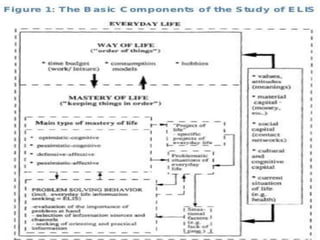
 Two core concepts:
1. Way of life
2. Mastery of life
Questions related to ELIS:
 Why Seek?
 Who Seek?
 How do they Seek?
Why Seek?
There is two context for ELIS
 Seeking orienting
 Seeking problem-specific information
Who Seek?
 Patrons, who are in problematic situations
,seek information. (Belkin)
 A person, who is seen as being locked in a
situation unable to move further, because
of some kind of gap in his knowledge.
(Brenda Dervin)
How do they Seek?
There are two ways of seeking
information:
1. Information sharing
2. Information source horizon
Information sharing:
 It involves giving information to others to
be shared and receiving information for
that purpose.
 Through information, people add to their
knowledge structure and also creates
solidarity.
Information source horizons:
The criteria for source preference are
content of information and availability and
accessibility. Usability is less important.
Applications:
 It is applied in LIS
 It is applied in the internet.
Conclusion:
Information seeking is still the major topic of
interest. Information seeking for many years
took pride of place in research into how
humans interact with information.
Thank you

Elis Model Every life info seeking

  • 1.
  • 2.
    Group members:  NawalKashif  Asma Mehar  Javeria shafique
  • 3.
    OUTLINE: INTRODUCTION WHAT IS INFORMATIONSEEKING? QUESTIONS RELATED TO ELIS. INFORMATION SHARING INFORMATION SOURCE HORIZONS APPLICATIONS CONCLUSION
  • 4.
    INTRODUCTION Best known forthe research into the area of everyday life information seeking. Daily problem solving is increasingly dependent on critical selection and use of information sources. ELIS focuses on how social and culture factors affect how people acquire information in daily life.
  • 5.
    What is informationseeking?  “A conscious effort to acquire information in response to a need or gap in your knowledge. (case 2002)  Two core concepts: 1. Way of life 2. Mastery of life
  • 6.
    Questions related toELIS:  Why Seek?  Who Seek?  How do they Seek?
  • 7.
    Why Seek? There istwo context for ELIS  Seeking orienting  Seeking problem-specific information
  • 8.
    Who Seek?  Patrons,who are in problematic situations ,seek information. (Belkin)  A person, who is seen as being locked in a situation unable to move further, because of some kind of gap in his knowledge. (Brenda Dervin)
  • 9.
    How do theySeek? There are two ways of seeking information: 1. Information sharing 2. Information source horizon
  • 10.
    Information sharing:  Itinvolves giving information to others to be shared and receiving information for that purpose.  Through information, people add to their knowledge structure and also creates solidarity.
  • 11.
    Information source horizons: Thecriteria for source preference are content of information and availability and accessibility. Usability is less important.
  • 12.
    Applications:  It isapplied in LIS  It is applied in the internet.
  • 13.
    Conclusion: Information seeking isstill the major topic of interest. Information seeking for many years took pride of place in research into how humans interact with information.
  • 15.