ELIMINATION
P&A
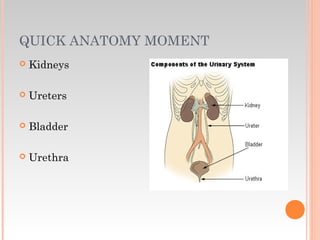
QUICK ANATOMY MOMENT
 Kidneys
 Ureters
 Bladder
 Urethra
NORMAL URINE
 Volume – approx 250ml-400ml per void
 - normal production 30ml/hour
-1200-1500cc for average adult per 24 hours
- 500-600 newborns
 Color
light yellow
 Clarity
clear without sediment
 Odor
no odor
FACTORS AFFECTING URINATION
 Fluid Intake – influences output and frequency
 Hypovolemia- loss of fluid
 Nutrition – food content, salt, ETOH, caffeine
 Body position – work with gravity
 Cognition – dementia/confusion, stroke
FACTORS AFFECTING URINATION
(CONT.)
 Psychological factors – stress, running water,
warm water, privacy
 Obstruction – anatomical, disease process
 Infection – E. coli
 Medications – diuretics
ALTERED URINARY FUNCTION
 Dysuria
 Polyuria
 Oliguria
 Urgency
 Frequency
ALTERED URINARY FUNCTION
(CONT.)
 Nocturia
 Hematuria
 Pyuria
 Urinary retention
INCONTINENCE
 Stress
increased abdominal pressure
 Functional
unable to get to bathroom
 Total
continuous, involuntary
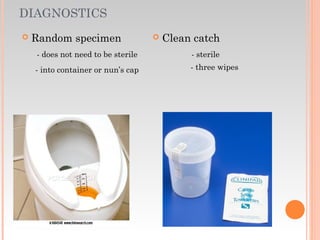
DIAGNOSTICS
 Random specimen
- does not need to be sterile
- into container or nun’s cap
 Clean catch
- sterile
- three wipes
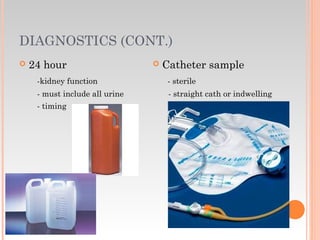
DIAGNOSTICS (CONT.)
 24 hour
-kidney function
- must include all urine
- timing
 Catheter sample
- sterile
- straight cath or indwelling
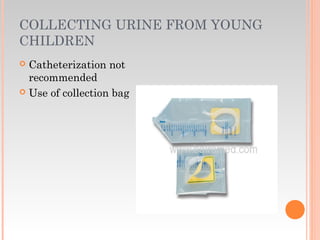
COLLECTING URINE FROM YOUNG
CHILDREN
 Catheterization not
recommended
 Use of collection bag
TESTS
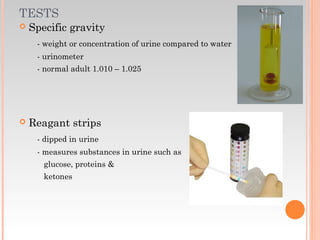
 Specific gravity
- weight or concentration of urine compared to water
- urinometer
- normal adult 1.010 – 1.025
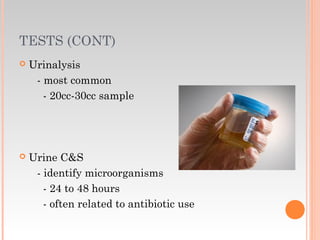
 Reagant strips
- dipped in urine
- measures substances in urine such as
glucose, proteins &
ketones
TESTS (CONT)
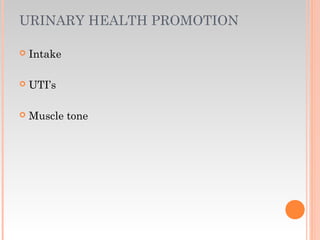
 Urinalysis
- most common
- 20cc-30cc sample
 Urine C&S
- identify microorganisms
- 24 to 48 hours
- often related to antibiotic use
URINARY HEALTH PROMOTION
 Intake
 UTI’s
 Muscle tone
URINARY CATHETERS
 Indications
-inability to void, accurate measurement, irrigation,
comfort
 Types
- straight, indwelling (Foley), triple lumen
 Risks
- infection, trauma
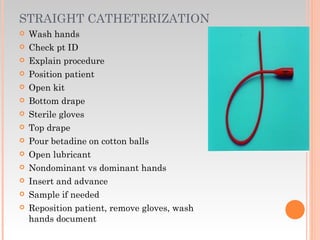
STRAIGHT CATHETERIZATION
 Wash hands
 Check pt ID
 Explain procedure
 Position patient
 Open kit
 Bottom drape
 Sterile gloves
 Top drape
 Pour betadine on cotton balls
 Open lubricant
 Nondominant vs dominant hands
 Insert and advance
 Sample if needed
 Reposition patient, remove gloves, wash
hands document
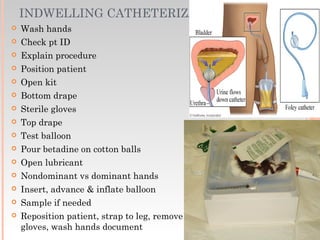
INDWELLING CATHETERIZATION
 Wash hands
 Check pt ID
 Explain procedure
 Position patient
 Open kit
 Bottom drape
 Sterile gloves
 Top drape
 Test balloon
 Pour betadine on cotton balls
 Open lubricant
 Nondominant vs dominant hands
 Insert, advance & inflate balloon
 Sample if needed
 Reposition patient, strap to leg, remove
gloves, wash hands document
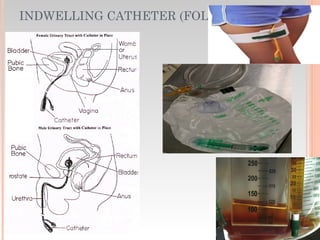
INDWELLING CATHETER (FOLEY)
NURSING RESPONSIBILITIES
 Placement and removal
 Assessment
 Sample collection
 Troubleshoot
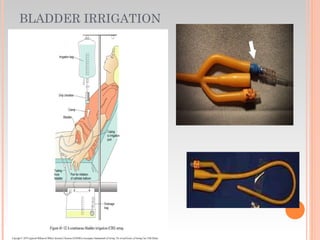
 Irrigate when needed
BLADDER IRRIGATION
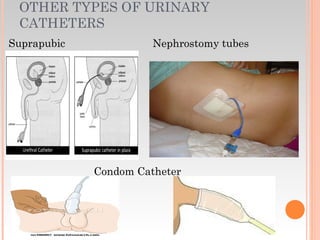
OTHER TYPES OF URINARY
CATHETERS
Suprapubic Nephrostomy tubes
Condom Catheter
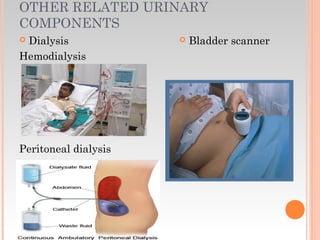
OTHER RELATED URINARY
COMPONENTS
 Dialysis
Hemodialysis
Peritoneal dialysis
 Bladder scanner
BOWEL ELIMINATION
FACTORS AFFECTING BOWEL ELIMINATION
 Nutrition
- fiber
- lactose intolerant
- gluten
 Fluid intake
- 75% water
- ↓fluid intake
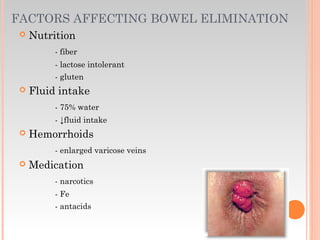
 Hemorrhoids
- enlarged varicose veins
 Medication
- narcotics
- Fe
- antacids
ALTERED BOWEL FUNCTION
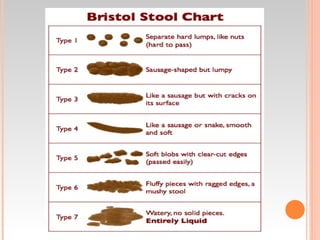
 Constipation
- infrequent, painful, hard, dry
 Fecal impaction
- accumulation in rectum
- digital disimpaction
 Diarrhea
- ↑ motility
- medication
 Incontinence
- involuntary
 Distention
- inactivity
 Disease process
- Crohn’s disease, Cystic Fibrosis
DIAGNOSTIC TESTS
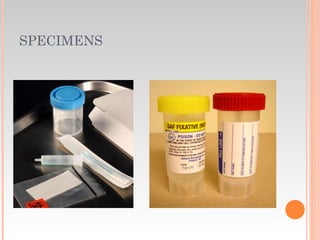
 Specimen
- stool only
- procedure
 Occult blood
- Guaiac or Hemoccult
- procedure
 Culture
- atypical intestinal
organisms
- procedure, O&P
 Radiologic
- x-ray image of opaque substance
- barium, laxatives, enemas,
NPO
 Endoscopy
- visualization of internal
structures
-EGD (esophagogastro
duodenoscopy)
http://www.youtube.com/watch?v=_qrbzpDA98g&feature=related
SPECIMENS
CHECKING FOR OCCULT
BLOOD
 http://www.youtube.com/watch?v=Pc3MtqUwFwE
COLONOSCOPY
 http://www.youtube.com/watch?v=W0fjO0rsCIw
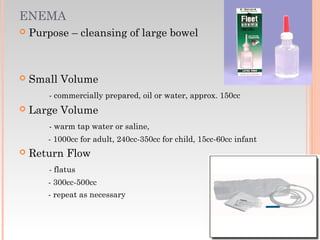
ENEMA
 Purpose – cleansing of large bowel
 Small Volume
- commercially prepared, oil or water, approx. 150cc
 Large Volume
- warm tap water or saline,
- 1000cc for adult, 240cc-350cc for child, 15cc-60cc infant
 Return Flow
- flatus
- 300cc-500cc
- repeat as necessary
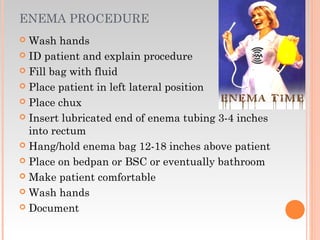
ENEMA PROCEDURE
 Wash hands
 ID patient and explain procedure
 Fill bag with fluid
 Place patient in left lateral position
 Place chux
 Insert lubricated end of enema tubing 3-4 inches
into rectum
 Hang/hold enema bag 12-18 inches above patient
 Place on bedpan or BSC or eventually bathroom
 Make patient comfortable
 Wash hands
 Document
FECAL DIVERSION
 Procedure
 Ostomy
 Ileostomy
 Colostomy
- temporary or permanent
- irrigation
- clothing
- unusual circumstances
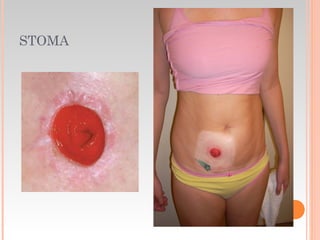
STOMA
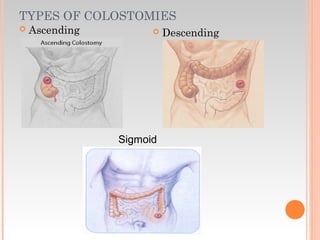
TYPES OF COLOSTOMIES
 Ascending  Descending
Sigmoid
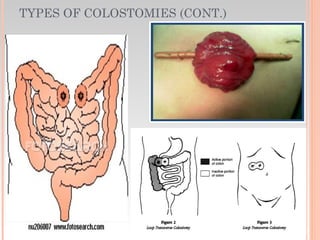
TYPES OF COLOSTOMIES (CONT.)
 Transverse
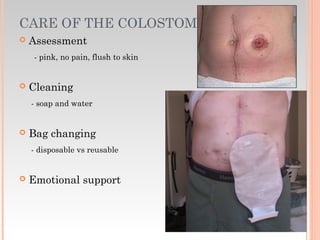
CARE OF THE COLOSTOMY
 Assessment
- pink, no pain, flush to skin
 Cleaning
- soap and water
 Bag changing
- disposable vs reusable
 Emotional support
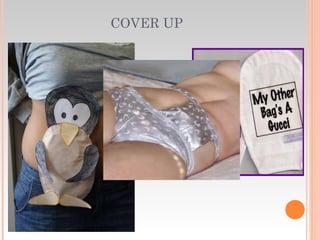
COVER UP

Elimination summer 2013 s

  • 1.
  • 3.
    QUICK ANATOMY MOMENT Kidneys  Ureters  Bladder  Urethra
  • 4.
    NORMAL URINE  Volume– approx 250ml-400ml per void  - normal production 30ml/hour -1200-1500cc for average adult per 24 hours - 500-600 newborns  Color light yellow  Clarity clear without sediment  Odor no odor
  • 5.
    FACTORS AFFECTING URINATION Fluid Intake – influences output and frequency  Hypovolemia- loss of fluid  Nutrition – food content, salt, ETOH, caffeine  Body position – work with gravity  Cognition – dementia/confusion, stroke
  • 6.
    FACTORS AFFECTING URINATION (CONT.) Psychological factors – stress, running water, warm water, privacy  Obstruction – anatomical, disease process  Infection – E. coli  Medications – diuretics
  • 7.
    ALTERED URINARY FUNCTION Dysuria  Polyuria  Oliguria  Urgency  Frequency
  • 8.
    ALTERED URINARY FUNCTION (CONT.) Nocturia  Hematuria  Pyuria  Urinary retention
  • 9.
    INCONTINENCE  Stress increased abdominalpressure  Functional unable to get to bathroom  Total continuous, involuntary
  • 10.
    DIAGNOSTICS  Random specimen -does not need to be sterile - into container or nun’s cap  Clean catch - sterile - three wipes
  • 11.
    DIAGNOSTICS (CONT.)  24hour -kidney function - must include all urine - timing  Catheter sample - sterile - straight cath or indwelling
  • 12.
    COLLECTING URINE FROMYOUNG CHILDREN  Catheterization not recommended  Use of collection bag
  • 13.
    TESTS  Specific gravity -weight or concentration of urine compared to water - urinometer - normal adult 1.010 – 1.025  Reagant strips - dipped in urine - measures substances in urine such as glucose, proteins & ketones
  • 14.
    TESTS (CONT)  Urinalysis -most common - 20cc-30cc sample  Urine C&S - identify microorganisms - 24 to 48 hours - often related to antibiotic use
  • 15.
    URINARY HEALTH PROMOTION Intake  UTI’s  Muscle tone
  • 16.
    URINARY CATHETERS  Indications -inabilityto void, accurate measurement, irrigation, comfort  Types - straight, indwelling (Foley), triple lumen  Risks - infection, trauma
  • 17.
    STRAIGHT CATHETERIZATION  Washhands  Check pt ID  Explain procedure  Position patient  Open kit  Bottom drape  Sterile gloves  Top drape  Pour betadine on cotton balls  Open lubricant  Nondominant vs dominant hands  Insert and advance  Sample if needed  Reposition patient, remove gloves, wash hands document
  • 18.
    INDWELLING CATHETERIZATION  Washhands  Check pt ID  Explain procedure  Position patient  Open kit  Bottom drape  Sterile gloves  Top drape  Test balloon  Pour betadine on cotton balls  Open lubricant  Nondominant vs dominant hands  Insert, advance & inflate balloon  Sample if needed  Reposition patient, strap to leg, remove gloves, wash hands document
  • 19.
  • 20.
    NURSING RESPONSIBILITIES  Placementand removal  Assessment  Sample collection  Troubleshoot  Irrigate when needed
  • 21.
  • 22.
    OTHER TYPES OFURINARY CATHETERS Suprapubic Nephrostomy tubes Condom Catheter
  • 23.
    OTHER RELATED URINARY COMPONENTS Dialysis Hemodialysis Peritoneal dialysis  Bladder scanner
  • 24.
  • 25.
    FACTORS AFFECTING BOWELELIMINATION  Nutrition - fiber - lactose intolerant - gluten  Fluid intake - 75% water - ↓fluid intake  Hemorrhoids - enlarged varicose veins  Medication - narcotics - Fe - antacids
  • 27.
    ALTERED BOWEL FUNCTION Constipation - infrequent, painful, hard, dry  Fecal impaction - accumulation in rectum - digital disimpaction  Diarrhea - ↑ motility - medication  Incontinence - involuntary  Distention - inactivity  Disease process - Crohn’s disease, Cystic Fibrosis
  • 28.
    DIAGNOSTIC TESTS  Specimen -stool only - procedure  Occult blood - Guaiac or Hemoccult - procedure  Culture - atypical intestinal organisms - procedure, O&P  Radiologic - x-ray image of opaque substance - barium, laxatives, enemas, NPO  Endoscopy - visualization of internal structures -EGD (esophagogastro duodenoscopy) http://www.youtube.com/watch?v=_qrbzpDA98g&feature=related
  • 29.
  • 30.
    CHECKING FOR OCCULT BLOOD http://www.youtube.com/watch?v=Pc3MtqUwFwE
  • 31.
  • 32.
    ENEMA  Purpose –cleansing of large bowel  Small Volume - commercially prepared, oil or water, approx. 150cc  Large Volume - warm tap water or saline, - 1000cc for adult, 240cc-350cc for child, 15cc-60cc infant  Return Flow - flatus - 300cc-500cc - repeat as necessary
  • 33.
    ENEMA PROCEDURE  Washhands  ID patient and explain procedure  Fill bag with fluid  Place patient in left lateral position  Place chux  Insert lubricated end of enema tubing 3-4 inches into rectum  Hang/hold enema bag 12-18 inches above patient  Place on bedpan or BSC or eventually bathroom  Make patient comfortable  Wash hands  Document
  • 34.
    FECAL DIVERSION  Procedure Ostomy  Ileostomy  Colostomy - temporary or permanent - irrigation - clothing - unusual circumstances
  • 35.
  • 36.
    TYPES OF COLOSTOMIES Ascending  Descending Sigmoid
  • 37.
    TYPES OF COLOSTOMIES(CONT.)  Transverse
  • 38.
    CARE OF THECOLOSTOMY  Assessment - pink, no pain, flush to skin  Cleaning - soap and water  Bag changing - disposable vs reusable  Emotional support
  • 39.