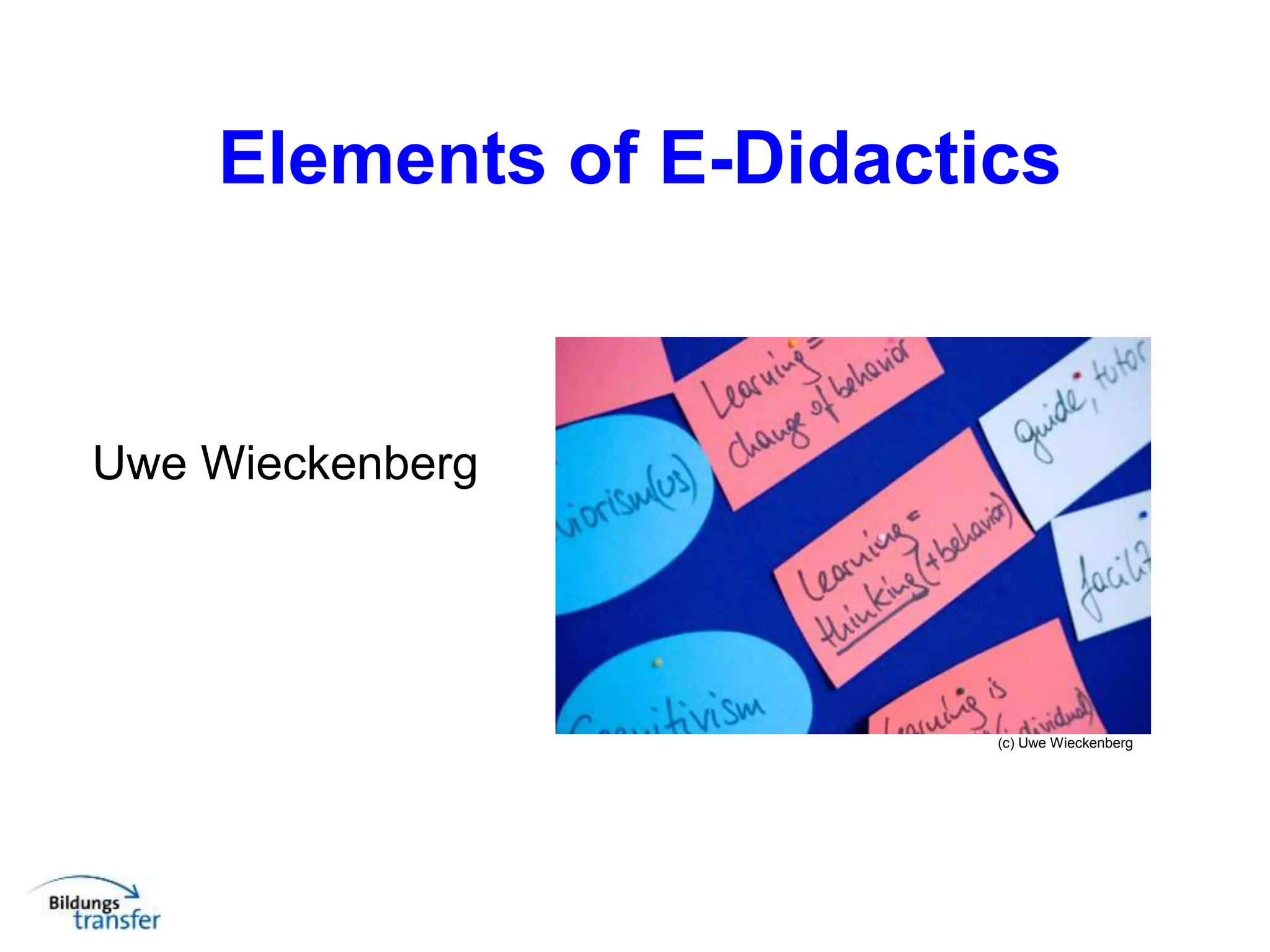
Elements of E-Didactics
Uwe Wieckenberg
(c) Uwe Wieckenberg
Agenda
1. What is Didactics?
2. Main issues of didactics
3. Concepts of Teaching Strategy
4. Basic Types of E-Learning
5. New Paradigm in Teaching and Learning
6. Competences of E-Teachers
7. Blended Learning as a Concepts of a
Teaching Strategy
8. Definition of „Blended Learning“
9. Why Blended Learning?
10. Examples
11. Structure of Blended Learning Courses
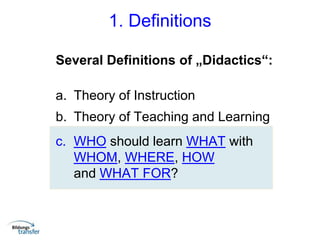
1. Definitions
Several Definitions of „Didactics“:
a. Theory of Instruction
b. Theory of Teaching and Learning
c. WHO should learn WHAT with
WHOM, WHERE, HOW
and WHAT FOR?
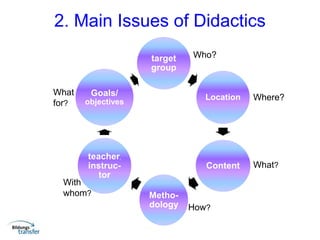
2. Main Issues of Didactics
target
group
Location
Content
Metho-
dology
teacher,
instruc-
tor
Goals/
objectives
Who?
Where?
What?
How?
With
whom?
What
for?
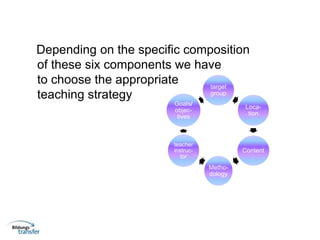
Depending on the specific composition
of these six components we have
to choose the appropriate
teaching strategy
target
group
Loca-
tion
Content
Metho-
dology
teacher
instruc-
tor
Goals/
objec-
tives
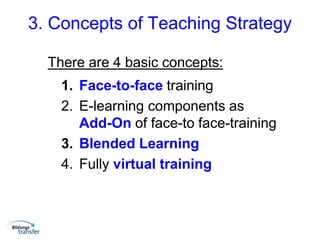
3. Concepts of Teaching Strategy
There are 4 basic concepts:
1. Face-to-face training
2. E-learning components as
Add-On of face-to face-training
3. Blended Learning
4. Fully virtual training
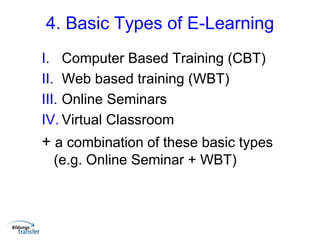
4. Basic Types of E-Learning
I. Computer Based Training (CBT)
II. Web based training (WBT)
III. Online Seminars
IV. Virtual Classroom
+ a combination of these basic types
(e.g. Online Seminar + WBT)
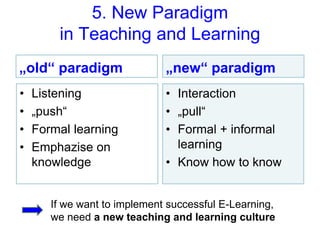
5. New Paradigm
in Teaching and Learning
„old“ paradigm
• Listening
• „push“
• Formal learning
• Emphazise on
knowledge
„new“ paradigm
• Interaction
• „pull“
• Formal + informal
learning
• Know how to know
If we want to implement successful E-Learning,
we need a new teaching and learning culture
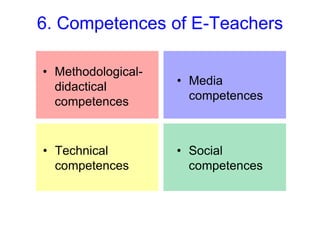
6. Competences of E-Teachers
• Methodological-
didactical
competences
• Media
competences
• Technical
competences
• Social
competences
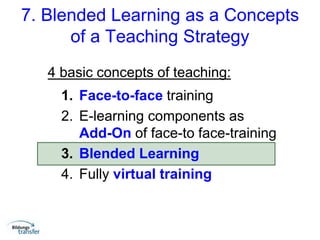
7. Blended Learning as a Concepts
of a Teaching Strategy
4 basic concepts of teaching:
1. Face-to-face training
2. E-learning components as
Add-On of face-to face-training
3. Blended Learning
4. Fully virtual training
8. Blended Learning
Definition:
• Blended Learning is a certain combination
of both traditional ways of learning and
ways of e-learning
9. Why Blended Learning?
• To get the best out of traditional learning
and E-Learning
• To be able to serve
- knowlegde
- skills
- attitudes
• Reduction in physical presence
10. Examples
• InWEnt Long term training
• Short courses
• ...
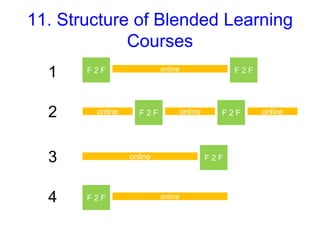
11. Structure of Blended Learning
Courses
F 2 F online F 2 F
online F 2 F online F 2 F online
online F 2 F
F 2 F online
1
2
3
4

Elements of e didactics

  • 1.
    Elements of E-Didactics UweWieckenberg (c) Uwe Wieckenberg
  • 2.
    Agenda 1. What isDidactics? 2. Main issues of didactics 3. Concepts of Teaching Strategy 4. Basic Types of E-Learning 5. New Paradigm in Teaching and Learning 6. Competences of E-Teachers 7. Blended Learning as a Concepts of a Teaching Strategy 8. Definition of „Blended Learning“ 9. Why Blended Learning? 10. Examples 11. Structure of Blended Learning Courses
  • 3.
    1. Definitions Several Definitionsof „Didactics“: a. Theory of Instruction b. Theory of Teaching and Learning c. WHO should learn WHAT with WHOM, WHERE, HOW and WHAT FOR?
  • 4.
    2. Main Issuesof Didactics target group Location Content Metho- dology teacher, instruc- tor Goals/ objectives Who? Where? What? How? With whom? What for?
  • 5.
    Depending on thespecific composition of these six components we have to choose the appropriate teaching strategy target group Loca- tion Content Metho- dology teacher instruc- tor Goals/ objec- tives
  • 6.
    3. Concepts ofTeaching Strategy There are 4 basic concepts: 1. Face-to-face training 2. E-learning components as Add-On of face-to face-training 3. Blended Learning 4. Fully virtual training
  • 7.
    4. Basic Typesof E-Learning I. Computer Based Training (CBT) II. Web based training (WBT) III. Online Seminars IV. Virtual Classroom + a combination of these basic types (e.g. Online Seminar + WBT)
  • 8.
    5. New Paradigm inTeaching and Learning „old“ paradigm • Listening • „push“ • Formal learning • Emphazise on knowledge „new“ paradigm • Interaction • „pull“ • Formal + informal learning • Know how to know If we want to implement successful E-Learning, we need a new teaching and learning culture
  • 9.
    6. Competences ofE-Teachers • Methodological- didactical competences • Media competences • Technical competences • Social competences
  • 10.
    7. Blended Learningas a Concepts of a Teaching Strategy 4 basic concepts of teaching: 1. Face-to-face training 2. E-learning components as Add-On of face-to face-training 3. Blended Learning 4. Fully virtual training
  • 11.
    8. Blended Learning Definition: •Blended Learning is a certain combination of both traditional ways of learning and ways of e-learning
  • 12.
    9. Why BlendedLearning? • To get the best out of traditional learning and E-Learning • To be able to serve - knowlegde - skills - attitudes • Reduction in physical presence
  • 13.
    10. Examples • InWEntLong term training • Short courses • ...
  • 14.
    11. Structure ofBlended Learning Courses F 2 F online F 2 F online F 2 F online F 2 F online online F 2 F F 2 F online 1 2 3 4