Elements and Principles of ArtBy Emily Bergen
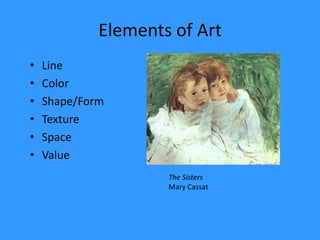
Elements of ArtLineColorShape/FormTextureSpaceValueThe SistersMary Cassat
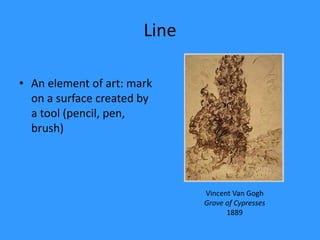
LineAn element of art: mark on a surface created by a tool (pencil, pen, brush)Vincent Van Gogh Grove of Cypresses 1889
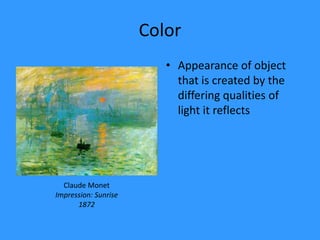
ColorAppearance of object that is created by the differing qualities of light it reflectsClaude MonetImpression: Sunrise1872
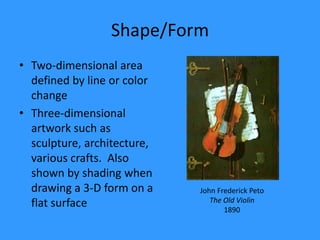
Shape/FormTwo-dimensional area defined by line or color changeThree-dimensional artwork such as sculpture, architecture, various crafts.  Also shown by shading when drawing a 3-D form on a flat surfaceJohn Frederick PetoThe Old Violin1890
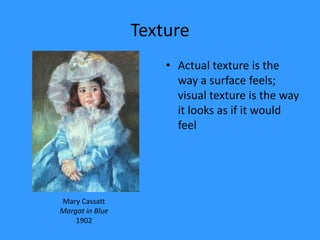
TextureActual texture is the way a surface feels; visual texture is the way it looks as if it would feelMary CassattMargot in Blue1902
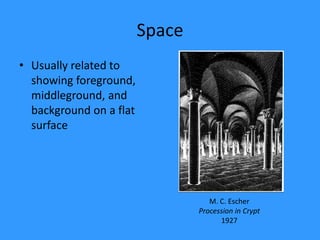
SpaceUsually related to showing foreground, middleground, and background on a flat surfaceM. C. EscherProcession in Crypt1927
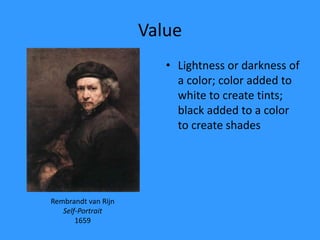
ValueLightness or darkness of a color; color added to white to create tints; black added to a color to create shadesRembrandt van RijnSelf-Portrait1659
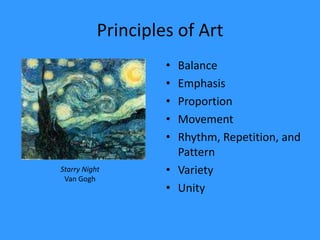
Principles of ArtBalanceEmphasisProportionMovementRhythm, Repetition, and PatternVarietyUnityStarry NightVan Gogh
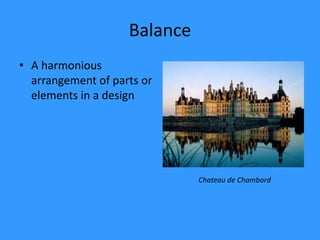
BalanceA harmonious arrangement of parts or elements in a designChateau de Chambord
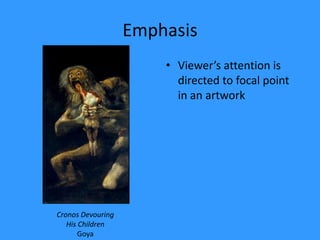
EmphasisViewer’s attention is directed to focal point in an artworkCronos Devouring His ChildrenGoya
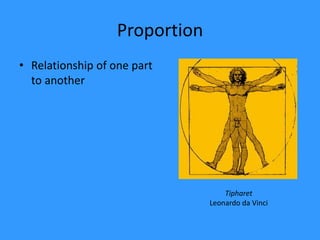
ProportionRelationship of one part to anotherTipharetLeonardo da Vinci
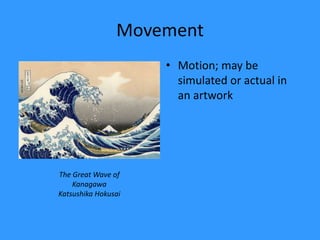
MovementMotion; may be simulated or actual in an artworkThe Great Wave of KanagawaKatsushika Hokusai
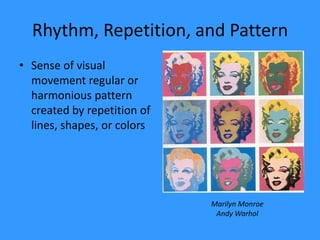
Rhythm, Repetition, and PatternSense of visual movement regular or harmonious pattern created by repetition of lines, shapes, or colorsMarilyn MonroeAndy Warhol
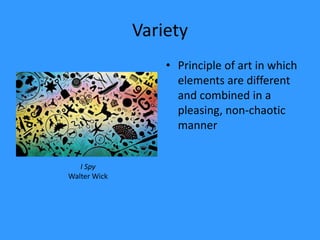
VarietyPrinciple of art in which elements are different and combined in a pleasing, non-chaotic mannerI SpyWalter Wick
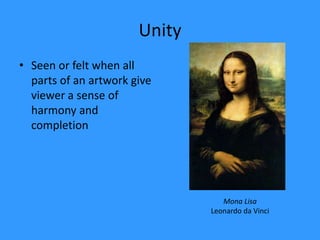
UnitySeen or felt when all parts of an artwork give viewer a sense of harmony and completionMona LisaLeonardo da Vinci

Elements And Principles Of Art