The Artistic Process
Understanding how knowledge of the
Elements and Principles of Design
will help you during the artistic
process.
Basic Steps of the Artistic Process
• Imagining- developing ideas, concepts,
ideas, feelings
• Planning- experimenting, researching and
designing ways of presenting the ideas
through artistic materials
• Making, Evaluating, Refining- applying
understundings and skills/techniques to
bring the ideas to life through artistic work
• Presenting- exhibiting completed work for
others
Elements and Principles of Design
Elements:
Line
Shape
Form
Color
Value
Texture
Space
Principles:
Balance
Emphasis & Focal Point
Contrast
Movement
Variety
Pattern & Repetition
Unity
Harmony/Gestalt
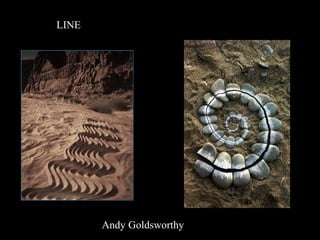
Line
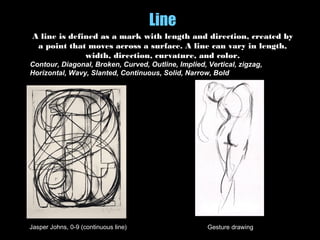
A line is defined as a mark with length and direction, created by
a point that moves across a surface. A line can vary in length,
width, direction, curvature, and color.
Contour, Diagonal, Broken, Curved, Outline, Implied, Vertical, zigzag,
Horizontal, Wavy, Slanted, Continuous, Solid, Narrow, Bold
Jasper Johns, 0-9 (continuous line) Gesture drawing
line
Jackson Pollock, Autumn Rhythm
Andy Goldsworthy
LINE
Keith Haring
Shape
Shape is an enclosed space defined by other
elements of art. Shape is 2-Dimensional
Shape can be:
Geometric: Angular, man-made concept
Organic: curvilinear - found in nature
Fernana Leger, The City Matisse, from the series “Jazz”
Picasso, Three Musicians
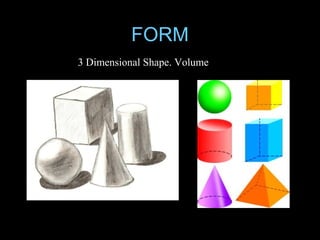
FORM
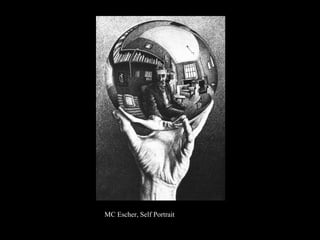
3 Dimensional Shape. Volume
MC Escher, Self Portrait
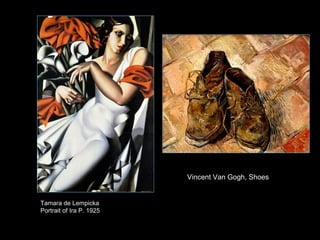
Tamara de Lempicka
Portrait of Ira P. 1925
Vincent Van Gogh, Shoes
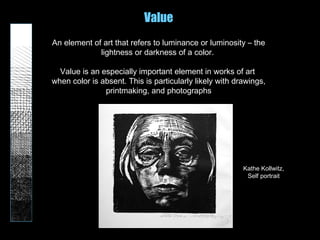
Value
An element of art that refers to luminance or luminosity – the
lightness or darkness of a color.
Value is an especially important element in works of art
when color is absent. This is particularly likely with drawings,
printmaking, and photographs
Kathe Kollwitz,
Self portrait
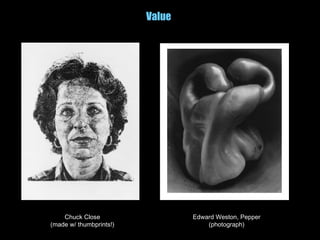
Value
Chuck Close
(made w/ thumbprints!)
Edward Weston, Pepper
(photograph)
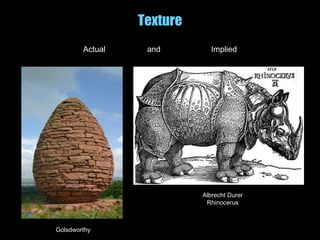
Texture
Texture refers to the surface quality or "feel" of an object, such as
roughness, smoothness, or softness. Actual texture can be felt while
simulated textures are implied by the way the artist renders the surface
area
Oppenheim
Fur-lined cup
Texture
Actual and Implied
Golsdworthy
Albrecht Durer
Rhinocerus
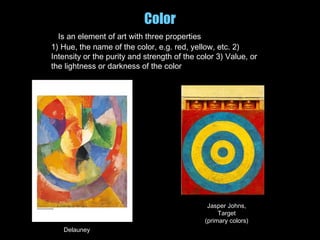
Color
  Is an element of art with three properties
1) Hue, the name of the color, e.g. red, yellow, etc. 2)
Intensity or the purity and strength of the color 3) Value, or
the lightness or darkness of the color
Delauney
Jasper Johns,
Target
(primary colors)
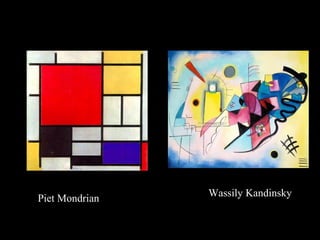
Primary Colors
Piet Mondrian
Wassily Kandinsky
Warm Colors
• Colors that are often described as being
higher in temperature
• Reds, oranges, yellows
• Associated with fire and sun
• Optically, appear to advance
• Stimulating and passionate
Ex. Warm
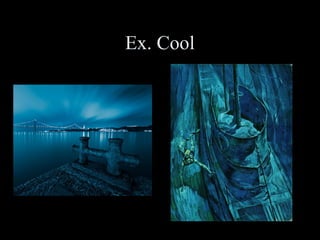
Cool
• Colors that are often described as being
lower in temperature
• Greens, Blues, and Violet
• Associated with water, sky, and spring
• Optically, they appear to recede
• Calming and depressing
Ex. Cool
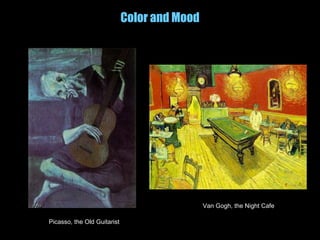
Color and Mood
Picasso, the Old Guitarist
Van Gogh, the Night Cafe
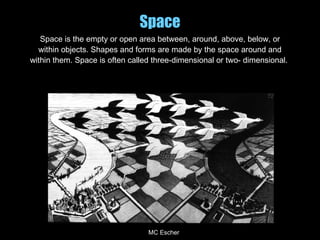
Space
Space is the empty or open area between, around, above, below, or
within objects. Shapes and forms are made by the space around and
within them. Space is often called three-dimensional or two- dimensional.
MC Escher
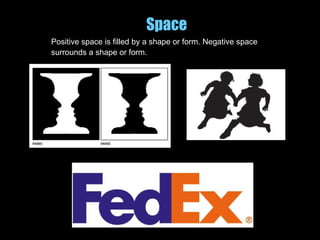
Space
Positive space is filled by a shape or form. Negative space
surrounds a shape or form.
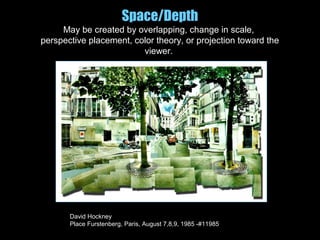
Space/Depth
May be created by overlapping, change in scale,
perspective placement, color theory, or projection toward the
viewer.
David Hockney
Place Furstenberg, Paris, August 7,8,9, 1985 -#11985
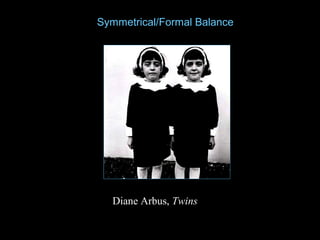
Balance
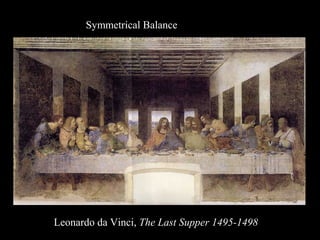
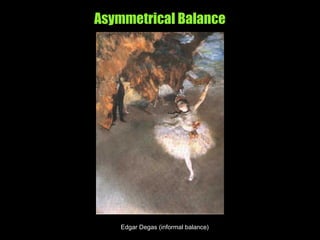
Balance is a sense of stability in the body of work.
Balance can be symmetrical (formal) or assymmetrical (informal)
Wayne Thiebaud, Around the Cake (formal balance)
Diane Arbus, Twins
Symmetrical/Formal Balance
Leonardo da Vinci, The Last Supper 1495-1498
Symmetrical Balance
Asymmetrical Balance
Edgar Degas (informal balance)
Asymmetrical Balance
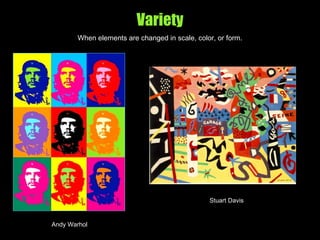
Variety
When elements are changed in scale, color, or form.
Andy Warhol
Stuart Davis
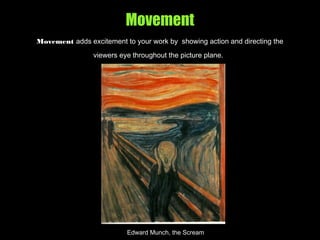
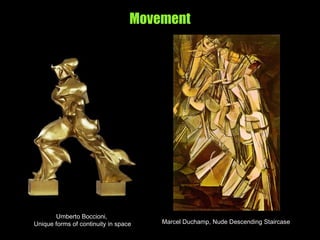
Movement
Movement adds excitement to your work by showing action and directing the
viewers eye throughout the picture plane.
Edward Munch, the Scream
Movement
Marcel Duchamp, Nude Descending Staircase
Umberto Boccioni,
Unique forms of continuity in space
Dominance & Subordination
The part of a composition that is emphasized, has the
greatest visual weight, the most important, powerful, or
has the most influence.
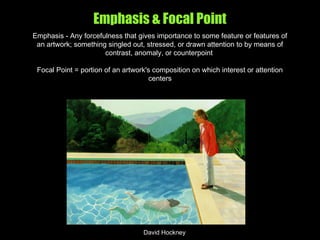
Emphasis & Focal Point
Emphasis - Any forcefulness that gives importance to some feature or features of
an artwork; something singled out, stressed, or drawn attention to by means of
contrast, anomaly, or counterpoint
Focal Point = portion of an artwork's composition on which interest or attention
centers
David Hockney
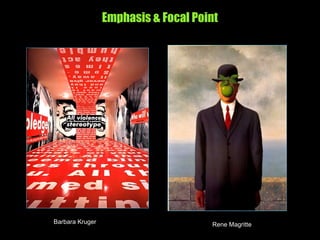
Emphasis & Focal Point
Barbara Kruger Rene Magritte
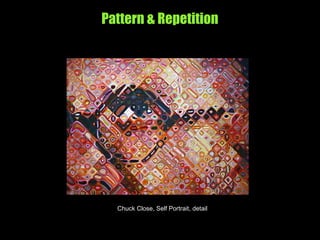
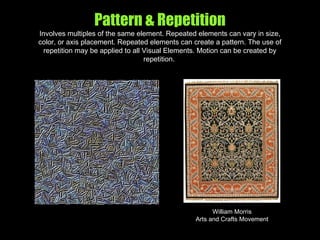
Pattern & Repetition
Involves multiples of the same element. Repeated elements can vary in size,
color, or axis placement. Repeated elements can create a pattern. The use of
repetition may be applied to all Visual Elements. Motion can be created by
repetition.
William Morris
Arts and Crafts Movement
Pattern & Repetition
Chuck Close, Self Portrait, detail
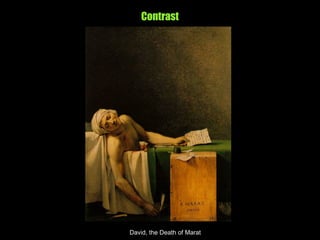
Contrast
A large difference between two things,
such as light and shadow, color and black/white
Andy Warhol
Contrast
David, the Death of Marat
Economy
Unity & Harmony
The quality of wholeness or oneness (Gestalt) that is achieved through the
effective use of the elements and principles of design.
Claude Monet
Haystacks
Unity
Cezanne
Wayne Theibaud
Unity
Van Gogh “Starry Night”
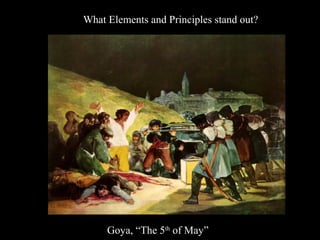
What Elements and Principles stand out?
Goya, “The 5th
of May”
Gauguin
What Elements and Principles stand out?

Elements and principles

  • 1.
    The Artistic Process Understandinghow knowledge of the Elements and Principles of Design will help you during the artistic process.
  • 2.
    Basic Steps ofthe Artistic Process • Imagining- developing ideas, concepts, ideas, feelings • Planning- experimenting, researching and designing ways of presenting the ideas through artistic materials • Making, Evaluating, Refining- applying understundings and skills/techniques to bring the ideas to life through artistic work • Presenting- exhibiting completed work for others
  • 3.
    Elements and Principlesof Design Elements: Line Shape Form Color Value Texture Space Principles: Balance Emphasis & Focal Point Contrast Movement Variety Pattern & Repetition Unity Harmony/Gestalt
  • 4.
    Line A line isdefined as a mark with length and direction, created by a point that moves across a surface. A line can vary in length, width, direction, curvature, and color. Contour, Diagonal, Broken, Curved, Outline, Implied, Vertical, zigzag, Horizontal, Wavy, Slanted, Continuous, Solid, Narrow, Bold Jasper Johns, 0-9 (continuous line) Gesture drawing
  • 5.
  • 6.
  • 7.
  • 8.
    Shape Shape is anenclosed space defined by other elements of art. Shape is 2-Dimensional Shape can be: Geometric: Angular, man-made concept Organic: curvilinear - found in nature Fernana Leger, The City Matisse, from the series “Jazz”
  • 9.
  • 10.
  • 11.
  • 12.
    Tamara de Lempicka Portraitof Ira P. 1925 Vincent Van Gogh, Shoes
  • 13.
    Value An element ofart that refers to luminance or luminosity – the lightness or darkness of a color. Value is an especially important element in works of art when color is absent. This is particularly likely with drawings, printmaking, and photographs Kathe Kollwitz, Self portrait
  • 14.
    Value Chuck Close (made w/thumbprints!) Edward Weston, Pepper (photograph)
  • 15.
    Texture Texture refers tothe surface quality or "feel" of an object, such as roughness, smoothness, or softness. Actual texture can be felt while simulated textures are implied by the way the artist renders the surface area Oppenheim Fur-lined cup
  • 16.
  • 17.
    Color   Is an elementof art with three properties 1) Hue, the name of the color, e.g. red, yellow, etc. 2) Intensity or the purity and strength of the color 3) Value, or the lightness or darkness of the color Delauney Jasper Johns, Target (primary colors)
  • 18.
  • 19.
  • 20.
    Warm Colors • Colorsthat are often described as being higher in temperature • Reds, oranges, yellows • Associated with fire and sun • Optically, appear to advance • Stimulating and passionate
  • 21.
  • 22.
    Cool • Colors thatare often described as being lower in temperature • Greens, Blues, and Violet • Associated with water, sky, and spring • Optically, they appear to recede • Calming and depressing
  • 23.
  • 24.
    Color and Mood Picasso,the Old Guitarist Van Gogh, the Night Cafe
  • 25.
    Space Space is theempty or open area between, around, above, below, or within objects. Shapes and forms are made by the space around and within them. Space is often called three-dimensional or two- dimensional. MC Escher
  • 26.
    Space Positive space isfilled by a shape or form. Negative space surrounds a shape or form.
  • 27.
    Space/Depth May be createdby overlapping, change in scale, perspective placement, color theory, or projection toward the viewer. David Hockney Place Furstenberg, Paris, August 7,8,9, 1985 -#11985
  • 28.
    Balance Balance is asense of stability in the body of work. Balance can be symmetrical (formal) or assymmetrical (informal) Wayne Thiebaud, Around the Cake (formal balance)
  • 29.
  • 30.
    Leonardo da Vinci,The Last Supper 1495-1498 Symmetrical Balance
  • 31.
  • 32.
  • 33.
    Variety When elements arechanged in scale, color, or form. Andy Warhol Stuart Davis
  • 34.
    Movement Movement adds excitementto your work by showing action and directing the viewers eye throughout the picture plane. Edward Munch, the Scream
  • 35.
    Movement Marcel Duchamp, NudeDescending Staircase Umberto Boccioni, Unique forms of continuity in space
  • 36.
    Dominance & Subordination Thepart of a composition that is emphasized, has the greatest visual weight, the most important, powerful, or has the most influence.
  • 37.
    Emphasis & FocalPoint Emphasis - Any forcefulness that gives importance to some feature or features of an artwork; something singled out, stressed, or drawn attention to by means of contrast, anomaly, or counterpoint Focal Point = portion of an artwork's composition on which interest or attention centers David Hockney
  • 38.
    Emphasis & FocalPoint Barbara Kruger Rene Magritte
  • 39.
    Pattern & Repetition Involvesmultiples of the same element. Repeated elements can vary in size, color, or axis placement. Repeated elements can create a pattern. The use of repetition may be applied to all Visual Elements. Motion can be created by repetition. William Morris Arts and Crafts Movement
  • 40.
    Pattern & Repetition ChuckClose, Self Portrait, detail
  • 41.
    Contrast A large differencebetween two things, such as light and shadow, color and black/white Andy Warhol
  • 42.
  • 43.
  • 45.
    Unity & Harmony Thequality of wholeness or oneness (Gestalt) that is achieved through the effective use of the elements and principles of design. Claude Monet Haystacks
  • 46.
  • 47.
  • 48.
    What Elements andPrinciples stand out?
  • 49.
    What Elements andPrinciples stand out? Goya, “The 5th of May”
  • 50.
    Gauguin What Elements andPrinciples stand out?
  • 51.
    What Elements andPrinciples stand out?