ELECTROMYOGRAPHY
GOKULAKRISHNAN.J MPT PhD (sportsphysio)
ASSOCIATE PROFESSOR
THANTHAI ROEVER COLLEGE OF PHYSIOTHERAPY
INTRODUCTION
โ€ข Electromyography is basically the study of
motor unit activity.
โ€ข In electromyography, the study of the
electrical activity of contracting muscle
provides information concerning the
structure and function of the motor units.
โ€ข Electro-electrical activity of
โ€ข Myo-muscles
โ€ข Graphy-in graphical presentation
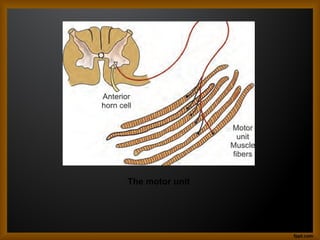
โ€ข Motor units are composed of one anterior
horn cell, one axon, its neuromuscular
junctions and all the muscle fibers
innervated by the axon
โ€ข The nerve cell and the muscle fiber it
supplies are defined as a motor unit.
The motor unit
DEFINITION
โ€ข Electromyography is the extracellular
recording of bioelectrical activity generated
by muscle fibers.(JOSEPH MIZRAHI)
โ€ข Emg is the study of the electrical activity of
muscle.(MARC D.BINDER)
HISTORY
โ€ข In 1771,galvani showed that electrical
stimulation of animal muscle tissue
produced contraction
โ€ข In 1929,adrian devised a method to record
a single motor unitpotential by connecting
concentric needle electrodes to an
amplifier and a loud speaker
โ€ข In 1938,denny-brown described the
fascicullation potentials and separate them
from fibrillations.
โ€ข In 1957,lambert and eaton described the
electrophysiological features of a new
myasthenic syndrome associated with
lung carcinoma.
INDICATION
โ€ข Tingling
โ€ข Numbness
โ€ข Muscle weakness
โ€ข Pain or cramp
โ€ข Brachial plexopathy
โ€ข Cervical sponndylosis
โ€ข Dmd
โ€ข Bmd
โ€ข Myasthenia gravis
โ€ข Carpal tunnel syndrome
โ€ข Peripheral neuropathies
โ€ข Polio
โ€ข Herniated disk
CONTRA-INDICATION
โ€ข Patients on anticoagulation
โ€ข Antiplatelet
โ€ข Skin infection
โ€ข Lymphedema
โ€ข Pacemakers
โ€ข Internal defibrillators
Types of Electromyography
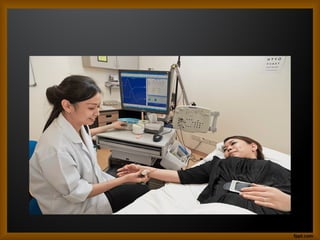
โ€ข Diagnostic or clinical electromyography
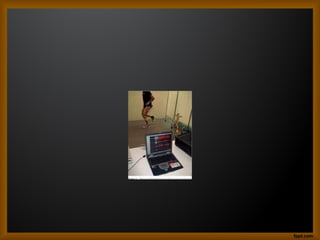
โ€ข Kinesiological electromyography
Diagnostic or clinical
electromyography
โ€ข It is used for the study of diseases of
muscles,neuromuscular junctions and
nerves. It is used for the purpose of
electrodiagnosis. The electric potentials
from the skeletal muscle fibers are
recorded and analysed for the study of
some disease processes.
Kinesiological
electromyography
โ€ข It is used in the study of muscle activity
and to establish the role of various
muscles in specific activities.
Kinesiological EMG is beneficial for
producing the objective means for
documenting the effects of treatment on
muscle impairments.
PHASES OF EMG
RECORDING
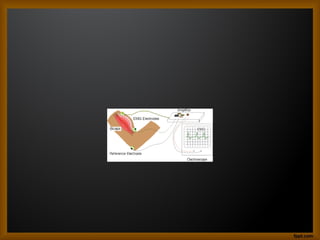
โ€ข Recording the EMG requires a three
phase system:
โ€ข 1. an input phase
โ€ข 2. a processor phase
โ€ข 3. an output phase.
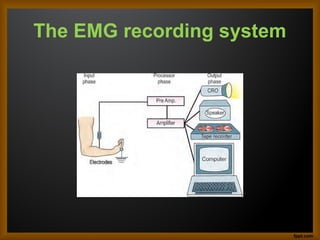
โ€ข An input phase includes electrodes to pick
up electrical potential from contracting
muscle, a processor phase amplifies the
very small electrical potentials and an
output phase includes the display and
analysis of electrical potential by visual
and auditory means.
The EMG recording system
The Components of Electromyography
โ€ข The components of electromyography
apparatus are:
โ€ข 1. Electrodes
โ€ข 2. Amplifier system
โ€ข 3. Display system.
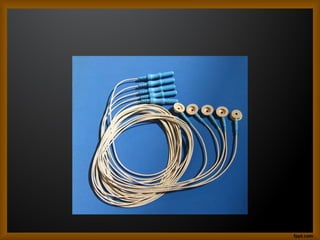
The Electrodes
โ€ข They are used in the input phase for
picking up of electrical potentials from the
contracting muscle fibres. The electrodes
are of following types:
โ€ข a. Surface electrodes
โ€ข b. Needle electrodes
โ€ข Fine wire indwelling electrodes
โ€ข Single fibre needle electrodes
โ€ข Macroelectrode
โ€ข Intra cellular electrode
โ€ข Multi lead electrode
Needle electrodes
โ€ข Needle electrodes are used for clinical
electromyography for recording single
motor unit potential from different parts of
a muscle. The different types of needle
electrodes used are:
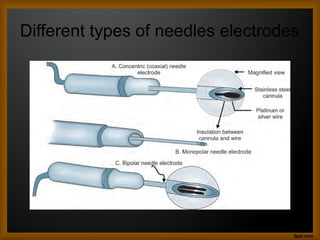
โ€ข Concentric (coaxial) needle electrode
โ€ข Monopolar needle electrode
โ€ข Bipolar needle electrode
โ€ข Concentric (coaxial) needle electrode:
This type of electrode consists of a
stainless steel cannula through which a
single wire of platinum or silver comes out.
The cannula shaft and wire are insulated
from each other and only their tips are
exposed.
โ€ข Monopolar needle electrode: These are
composed of single fine needle which is
insulated except at its tip. A second
surface electrode is placed on the skin
near the site of insertion which serves as a
reference electrode. These electrodes are
less painful than concentric electrodes
because they are much smaller in
diameter
โ€ข Bipolar needle electrode: These consist
of a cannula containing two insulated
wires with their bare tips. The bared tips of
both wires act as the two electrodes and
the needle serves as the ground
Different types of needles electrodes
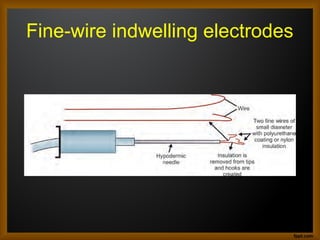
Fine wire indwelling
electrodes
โ€ข These are used for kinesiological study of
small and deep muscle. It is made by
using two fine wires of small diameter with
polyurethane coating or nylon insulation.
Insulation is removed from the tip of the
wires and hooks are created to keep the
wires imbedded while the needle is
removed from the muscle
Fine-wire indwelling electrodes
Single fibre needle electrodes
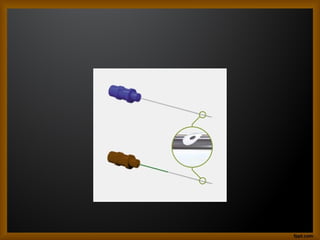
โ€ข These are concentric wires of 25 ฮผm
diameter and contain stainless steel
cannula of 0.5 mm diameter. Single fibre
EMG is employed to study neuromuscular
transmission abnormality and fibre density.
Macroelectrode
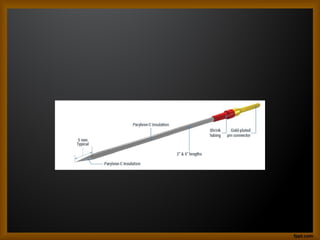
โ€ข Macroelectrode is a concentric needle
electrode of 15 mm shaft. It records from a
large number of motor units along the
shaft of the needle. The recording from
one motor unit is separated by using a
single fibre needle attached to
macroelectrode in the midshaft.
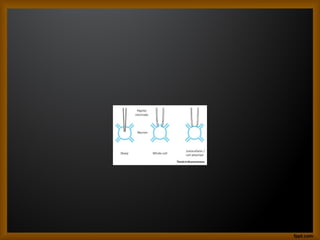
Intra cellular electrode
โ€ข This is an extremely fine electrode of
diameter 0.5 ฮผm and is used to record the
potential changes inside the membrane
across a cell. It is made so fine so as to
penetrate deep inside a cell or intracellular
matrix.
Multi lead electrode
โ€ข This electrode consists of a common steel
cannula which comprises of at least three
insulated electrodes at regular intervals
inside it.
The Amplifier system
โ€ข Before the motor unit potential can be
visualized, it is necessary to amplify the
small myoelectric signals. An amplifier
converts the electric signal large enough
to be displayed.
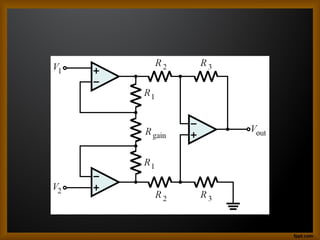
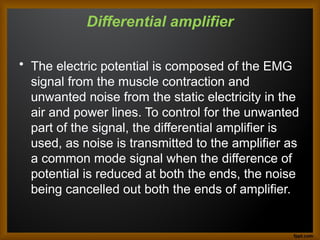
Differential amplifier
โ€ข The electric potential is composed of the EMG
signal from the muscle contraction and
unwanted noise from the static electricity in the
air and power lines. To control for the unwanted
part of the signal, the differential amplifier is
used, as noise is transmitted to the amplifier as
a common mode signal when the difference of
potential is reduced at both the ends, the noise
being cancelled out both the ends of amplifier.
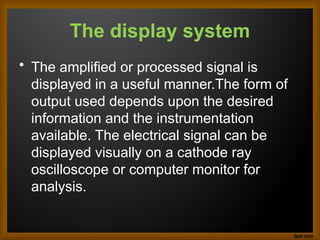
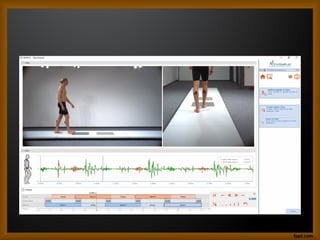
The display system
โ€ข The amplified or processed signal is
displayed in a useful manner.The form of
output used depends upon the desired
information and the instrumentation
available. The electrical signal can be
displayed visually on a cathode ray
oscilloscope or computer monitor for
analysis.
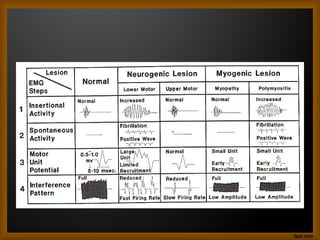
โ€ข In needle electromyography, following
types of activities are recorded:
โ€ข 1. Insertional activity
โ€ข 2. Spontaneous activity
โ€ข 3. Motor unit potential
โ€ข 4. Recruitment pattern.
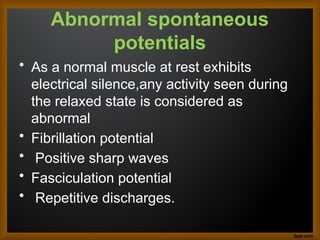
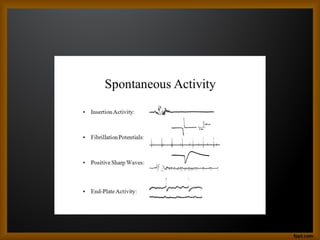
Abnormal spontaneous
potentials
โ€ข As a normal muscle at rest exhibits
electrical silence,any activity seen during
the relaxed state is considered as
abnormal
โ€ข Fibrillation potential
โ€ข Positive sharp waves
โ€ข Fasciculation potential
โ€ข Repetitive discharges.
COMPLICATIONS
โ€ข Complications rare
โ€ข Risk of bleeding
โ€ข Infexction
โ€ข Muscle soreness
โ€ข Nerve injury due to needle electrode
โ€ข Pain,tenderness,swelling at needle
insertion sites

ELECTROMYOGRAPHY.pptX by GOKULAKRISHNAN.

  • 1.
    ELECTROMYOGRAPHY GOKULAKRISHNAN.J MPT PhD(sportsphysio) ASSOCIATE PROFESSOR THANTHAI ROEVER COLLEGE OF PHYSIOTHERAPY
  • 2.
    INTRODUCTION โ€ข Electromyography isbasically the study of motor unit activity. โ€ข In electromyography, the study of the electrical activity of contracting muscle provides information concerning the structure and function of the motor units.
  • 3.
    โ€ข Electro-electrical activityof โ€ข Myo-muscles โ€ข Graphy-in graphical presentation
  • 4.
    โ€ข Motor unitsare composed of one anterior horn cell, one axon, its neuromuscular junctions and all the muscle fibers innervated by the axon โ€ข The nerve cell and the muscle fiber it supplies are defined as a motor unit.
  • 5.
  • 6.
    DEFINITION โ€ข Electromyography isthe extracellular recording of bioelectrical activity generated by muscle fibers.(JOSEPH MIZRAHI) โ€ข Emg is the study of the electrical activity of muscle.(MARC D.BINDER)
  • 7.
    HISTORY โ€ข In 1771,galvanishowed that electrical stimulation of animal muscle tissue produced contraction โ€ข In 1929,adrian devised a method to record a single motor unitpotential by connecting concentric needle electrodes to an amplifier and a loud speaker
  • 8.
    โ€ข In 1938,denny-browndescribed the fascicullation potentials and separate them from fibrillations. โ€ข In 1957,lambert and eaton described the electrophysiological features of a new myasthenic syndrome associated with lung carcinoma.
  • 9.
    INDICATION โ€ข Tingling โ€ข Numbness โ€ขMuscle weakness โ€ข Pain or cramp โ€ข Brachial plexopathy โ€ข Cervical sponndylosis
  • 10.
    โ€ข Dmd โ€ข Bmd โ€ขMyasthenia gravis โ€ข Carpal tunnel syndrome โ€ข Peripheral neuropathies โ€ข Polio โ€ข Herniated disk
  • 11.
    CONTRA-INDICATION โ€ข Patients onanticoagulation โ€ข Antiplatelet โ€ข Skin infection โ€ข Lymphedema โ€ข Pacemakers โ€ข Internal defibrillators
  • 12.
    Types of Electromyography โ€ขDiagnostic or clinical electromyography โ€ข Kinesiological electromyography
  • 13.
    Diagnostic or clinical electromyography โ€ขIt is used for the study of diseases of muscles,neuromuscular junctions and nerves. It is used for the purpose of electrodiagnosis. The electric potentials from the skeletal muscle fibers are recorded and analysed for the study of some disease processes.
  • 15.
    Kinesiological electromyography โ€ข It isused in the study of muscle activity and to establish the role of various muscles in specific activities. Kinesiological EMG is beneficial for producing the objective means for documenting the effects of treatment on muscle impairments.
  • 17.
    PHASES OF EMG RECORDING โ€ขRecording the EMG requires a three phase system: โ€ข 1. an input phase โ€ข 2. a processor phase โ€ข 3. an output phase.
  • 18.
    โ€ข An inputphase includes electrodes to pick up electrical potential from contracting muscle, a processor phase amplifies the very small electrical potentials and an output phase includes the display and analysis of electrical potential by visual and auditory means.
  • 19.
  • 20.
    The Components ofElectromyography โ€ข The components of electromyography apparatus are: โ€ข 1. Electrodes โ€ข 2. Amplifier system โ€ข 3. Display system.
  • 21.
    The Electrodes โ€ข Theyare used in the input phase for picking up of electrical potentials from the contracting muscle fibres. The electrodes are of following types:
  • 22.
    โ€ข a. Surfaceelectrodes โ€ข b. Needle electrodes โ€ข Fine wire indwelling electrodes โ€ข Single fibre needle electrodes โ€ข Macroelectrode โ€ข Intra cellular electrode โ€ข Multi lead electrode
  • 23.
    Needle electrodes โ€ข Needleelectrodes are used for clinical electromyography for recording single motor unit potential from different parts of a muscle. The different types of needle electrodes used are: โ€ข Concentric (coaxial) needle electrode โ€ข Monopolar needle electrode โ€ข Bipolar needle electrode
  • 24.
    โ€ข Concentric (coaxial)needle electrode: This type of electrode consists of a stainless steel cannula through which a single wire of platinum or silver comes out. The cannula shaft and wire are insulated from each other and only their tips are exposed.
  • 25.
    โ€ข Monopolar needleelectrode: These are composed of single fine needle which is insulated except at its tip. A second surface electrode is placed on the skin near the site of insertion which serves as a reference electrode. These electrodes are less painful than concentric electrodes because they are much smaller in diameter
  • 26.
    โ€ข Bipolar needleelectrode: These consist of a cannula containing two insulated wires with their bare tips. The bared tips of both wires act as the two electrodes and the needle serves as the ground
  • 27.
    Different types ofneedles electrodes
  • 28.
    Fine wire indwelling electrodes โ€ขThese are used for kinesiological study of small and deep muscle. It is made by using two fine wires of small diameter with polyurethane coating or nylon insulation. Insulation is removed from the tip of the wires and hooks are created to keep the wires imbedded while the needle is removed from the muscle
  • 29.
  • 30.
    Single fibre needleelectrodes โ€ข These are concentric wires of 25 ฮผm diameter and contain stainless steel cannula of 0.5 mm diameter. Single fibre EMG is employed to study neuromuscular transmission abnormality and fibre density.
  • 32.
    Macroelectrode โ€ข Macroelectrode isa concentric needle electrode of 15 mm shaft. It records from a large number of motor units along the shaft of the needle. The recording from one motor unit is separated by using a single fibre needle attached to macroelectrode in the midshaft.
  • 34.
    Intra cellular electrode โ€ขThis is an extremely fine electrode of diameter 0.5 ฮผm and is used to record the potential changes inside the membrane across a cell. It is made so fine so as to penetrate deep inside a cell or intracellular matrix.
  • 36.
    Multi lead electrode โ€ขThis electrode consists of a common steel cannula which comprises of at least three insulated electrodes at regular intervals inside it.
  • 38.
    The Amplifier system โ€ขBefore the motor unit potential can be visualized, it is necessary to amplify the small myoelectric signals. An amplifier converts the electric signal large enough to be displayed.
  • 41.
    Differential amplifier โ€ข Theelectric potential is composed of the EMG signal from the muscle contraction and unwanted noise from the static electricity in the air and power lines. To control for the unwanted part of the signal, the differential amplifier is used, as noise is transmitted to the amplifier as a common mode signal when the difference of potential is reduced at both the ends, the noise being cancelled out both the ends of amplifier.
  • 42.
    The display system โ€ขThe amplified or processed signal is displayed in a useful manner.The form of output used depends upon the desired information and the instrumentation available. The electrical signal can be displayed visually on a cathode ray oscilloscope or computer monitor for analysis.
  • 44.
    โ€ข In needleelectromyography, following types of activities are recorded: โ€ข 1. Insertional activity โ€ข 2. Spontaneous activity โ€ข 3. Motor unit potential โ€ข 4. Recruitment pattern.
  • 45.
    Abnormal spontaneous potentials โ€ข Asa normal muscle at rest exhibits electrical silence,any activity seen during the relaxed state is considered as abnormal โ€ข Fibrillation potential โ€ข Positive sharp waves โ€ข Fasciculation potential โ€ข Repetitive discharges.
  • 48.
    COMPLICATIONS โ€ข Complications rare โ€ขRisk of bleeding โ€ข Infexction โ€ข Muscle soreness โ€ข Nerve injury due to needle electrode โ€ข Pain,tenderness,swelling at needle insertion sites