 The term ‘measurement’ is used to compare a
parameter of variable value with known or
standard value of the same parameters. This
comparison is finally expressed in some
meaningful numbers, which give in depth
knowledge of the process or parameter under
measurement. Thus, the act of measurement of a
parameter, variable or a process involves the
quantitative comparison between a predefined
standard and the unknown quantity to be
measured.
(A) DIRECT MEASURMENT
 Direct measurement method involves the
comparison of the unknown quantity to be
measured with a standard
 The direct comparison method is quite
common in the measurement of quantities
like ( length, mass )
 The method is not always accurate and may
involve human error.
 The indirect method of measurement is based
upon use of in separately calibrated measuring
system and this method involves the comparison
of measured with a slandered which is obtained
through the separate calibrated system.
 Such a measurement method is used generally
when it is difficult to measure the quantity of
interest due to unavailability of direct axes to
that quantity. But the quantity to be measured
has some correlation with some other parameter
which can be measured.
 When there is a need to determine the quality of
a product then it can be measured directly or
indirectly depending upon the nature of the
qauntity and its accessibility
(A) Fundamental units
 The number of physical quantities is large. An
international organization of which, most of the
advanced and developing countries including India,
are members called the general conference of
weights and measures has been assigned the task for
prescribing definition for fundamental units of
weights and measures which are the basis of science
and technology. It consist of seven fundamental units,
two supplementary units and 27 derived units.
 The quantities are found to be independent of each
other are called as “Fundamental quantities” are
length, mass, time, electric current, are called as the
basic units or fundamental units.
(B) supplementary and derived units
 The supplementary units were: plane angle
and solid angle
 All the other physical quantities' are
dependent on one or more of the
fundamental quantities and are hence called
as derived units e.g. force, speed,
acceleration, velocity, magnetic flux, power,
density etc. the system of units is formed by
the fundamental units along with the
supplementary and the derived units.
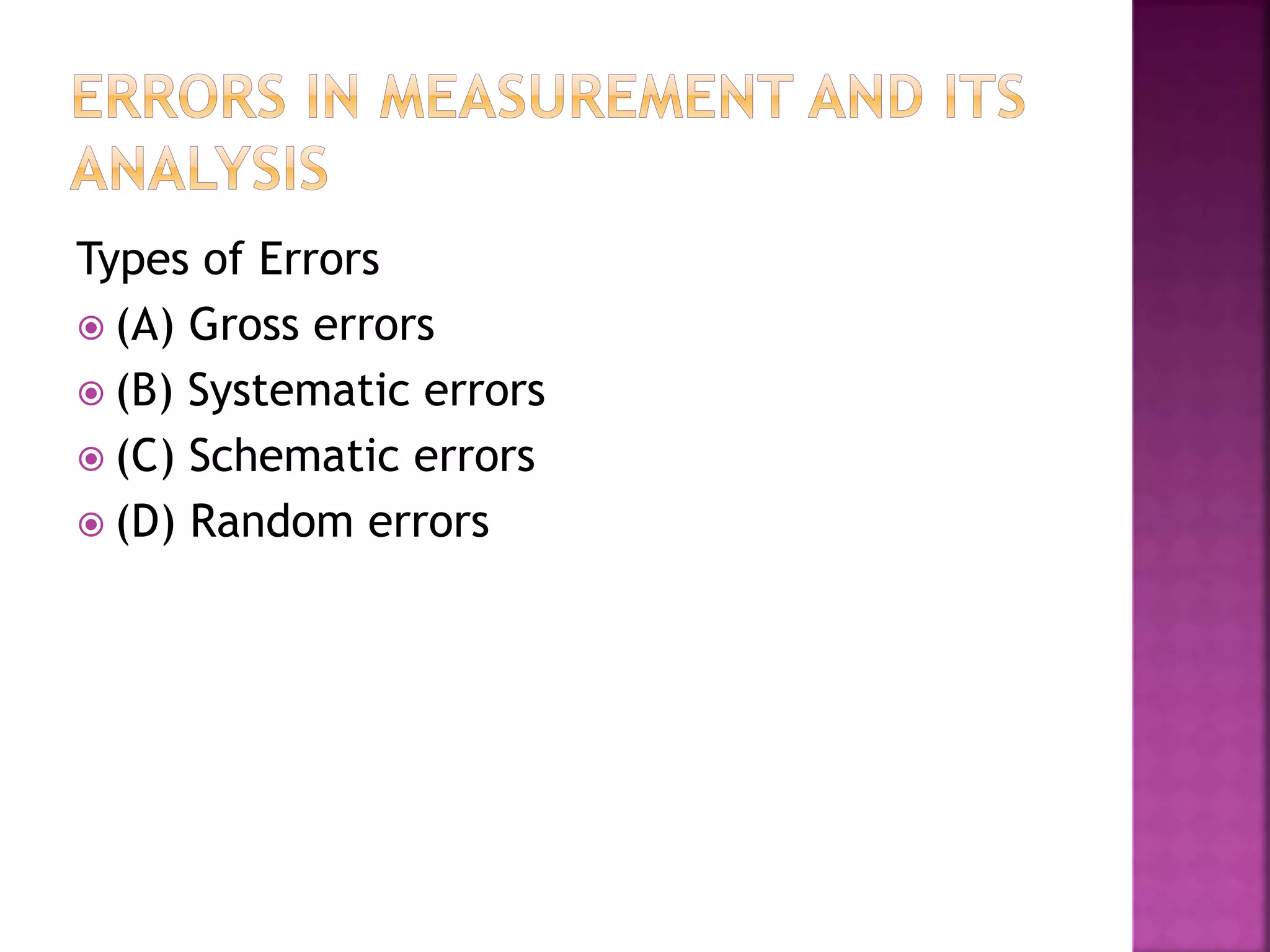
Types of Errors
 (A) Gross errors
 (B) Systematic errors
 (C) Schematic errors
 (D) Random errors
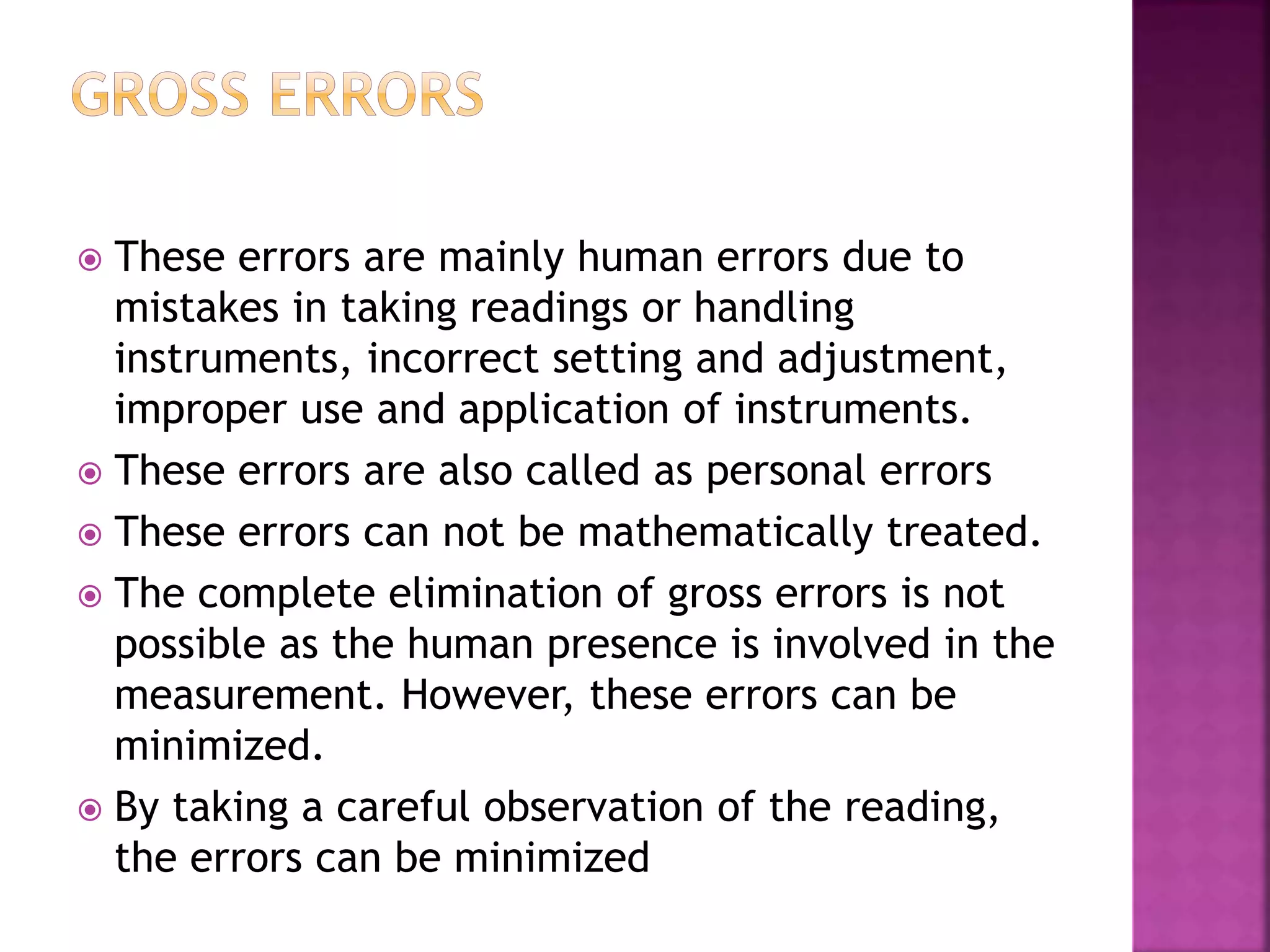
 These errors are mainly human errors due to
mistakes in taking readings or handling
instruments, incorrect setting and adjustment,
improper use and application of instruments.
 These errors are also called as personal errors
 These errors can not be mathematically treated.
 The complete elimination of gross errors is not
possible as the human presence is involved in the
measurement. However, these errors can be
minimized.
 By taking a careful observation of the reading,
the errors can be minimized
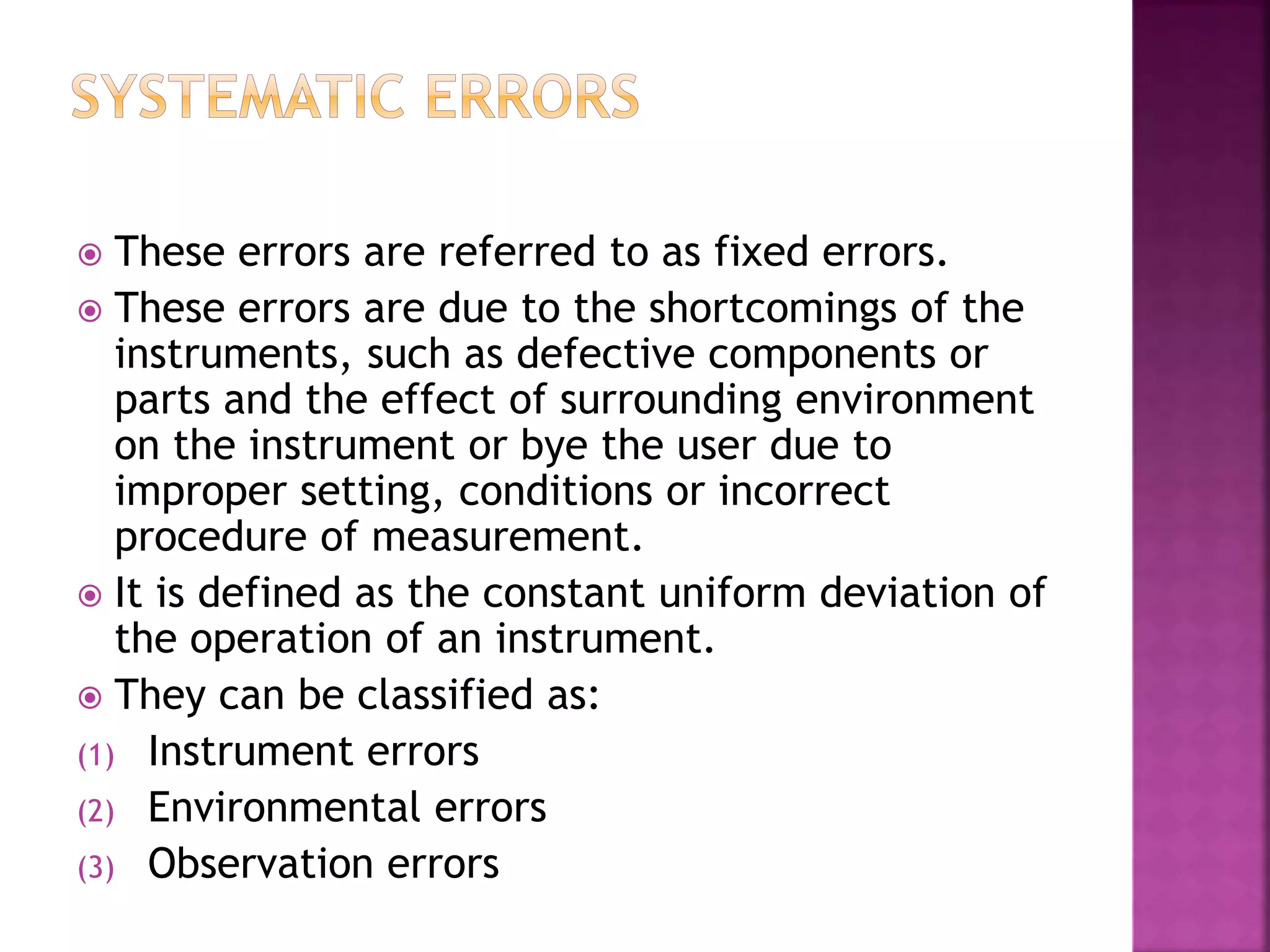
 These errors are referred to as fixed errors.
 These errors are due to the shortcomings of the
instruments, such as defective components or
parts and the effect of surrounding environment
on the instrument or bye the user due to
improper setting, conditions or incorrect
procedure of measurement.
 It is defined as the constant uniform deviation of
the operation of an instrument.
 They can be classified as:
(1) Instrument errors
(2) Environmental errors
(3) Observation errors
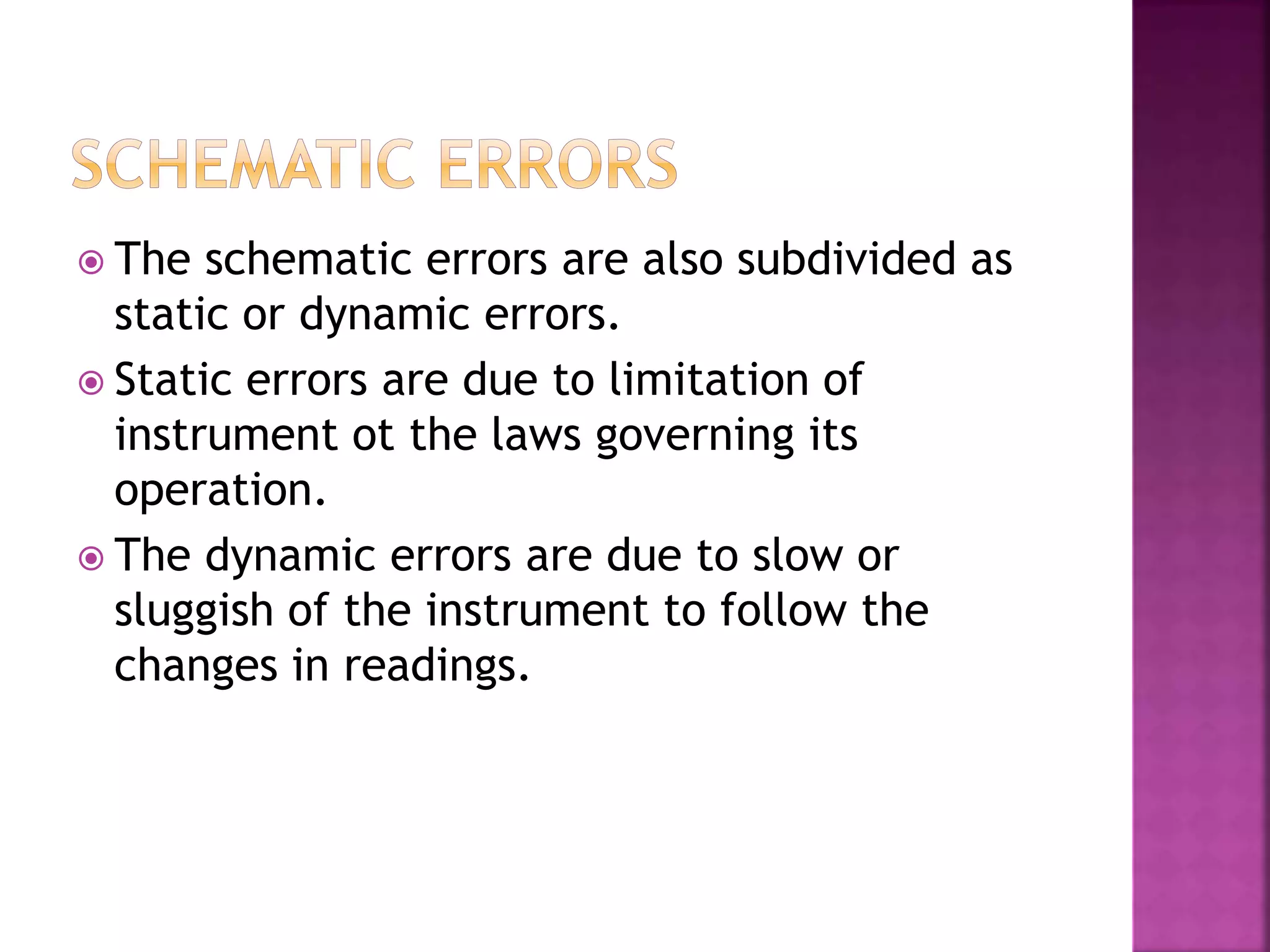
 The schematic errors are also subdivided as
static or dynamic errors.
 Static errors are due to limitation of
instrument ot the laws governing its
operation.
 The dynamic errors are due to slow or
sluggish of the instrument to follow the
changes in readings.
 These errors are due to unknown cause and
occur invariably even after the gross and
systematic errors have been accounted for.
These errors are called as random errors.
 These errors are small and follow the laws of
probability.
 These errors can be treated mathematically.
 These errors differ in values when repeated
measurement of the same variable is made.

Electrical measurements and measuring instruments

  • 1.
     The term‘measurement’ is used to compare a parameter of variable value with known or standard value of the same parameters. This comparison is finally expressed in some meaningful numbers, which give in depth knowledge of the process or parameter under measurement. Thus, the act of measurement of a parameter, variable or a process involves the quantitative comparison between a predefined standard and the unknown quantity to be measured.
  • 2.
    (A) DIRECT MEASURMENT Direct measurement method involves the comparison of the unknown quantity to be measured with a standard  The direct comparison method is quite common in the measurement of quantities like ( length, mass )  The method is not always accurate and may involve human error.
  • 3.
     The indirectmethod of measurement is based upon use of in separately calibrated measuring system and this method involves the comparison of measured with a slandered which is obtained through the separate calibrated system.  Such a measurement method is used generally when it is difficult to measure the quantity of interest due to unavailability of direct axes to that quantity. But the quantity to be measured has some correlation with some other parameter which can be measured.  When there is a need to determine the quality of a product then it can be measured directly or indirectly depending upon the nature of the qauntity and its accessibility
  • 4.
    (A) Fundamental units The number of physical quantities is large. An international organization of which, most of the advanced and developing countries including India, are members called the general conference of weights and measures has been assigned the task for prescribing definition for fundamental units of weights and measures which are the basis of science and technology. It consist of seven fundamental units, two supplementary units and 27 derived units.  The quantities are found to be independent of each other are called as “Fundamental quantities” are length, mass, time, electric current, are called as the basic units or fundamental units.
  • 5.
    (B) supplementary andderived units  The supplementary units were: plane angle and solid angle  All the other physical quantities' are dependent on one or more of the fundamental quantities and are hence called as derived units e.g. force, speed, acceleration, velocity, magnetic flux, power, density etc. the system of units is formed by the fundamental units along with the supplementary and the derived units.
  • 6.
    Types of Errors (A) Gross errors  (B) Systematic errors  (C) Schematic errors  (D) Random errors
  • 7.
     These errorsare mainly human errors due to mistakes in taking readings or handling instruments, incorrect setting and adjustment, improper use and application of instruments.  These errors are also called as personal errors  These errors can not be mathematically treated.  The complete elimination of gross errors is not possible as the human presence is involved in the measurement. However, these errors can be minimized.  By taking a careful observation of the reading, the errors can be minimized
  • 8.
     These errorsare referred to as fixed errors.  These errors are due to the shortcomings of the instruments, such as defective components or parts and the effect of surrounding environment on the instrument or bye the user due to improper setting, conditions or incorrect procedure of measurement.  It is defined as the constant uniform deviation of the operation of an instrument.  They can be classified as: (1) Instrument errors (2) Environmental errors (3) Observation errors
  • 9.
     The schematicerrors are also subdivided as static or dynamic errors.  Static errors are due to limitation of instrument ot the laws governing its operation.  The dynamic errors are due to slow or sluggish of the instrument to follow the changes in readings.
  • 10.
     These errorsare due to unknown cause and occur invariably even after the gross and systematic errors have been accounted for. These errors are called as random errors.  These errors are small and follow the laws of probability.  These errors can be treated mathematically.  These errors differ in values when repeated measurement of the same variable is made.