10/5/2021 1
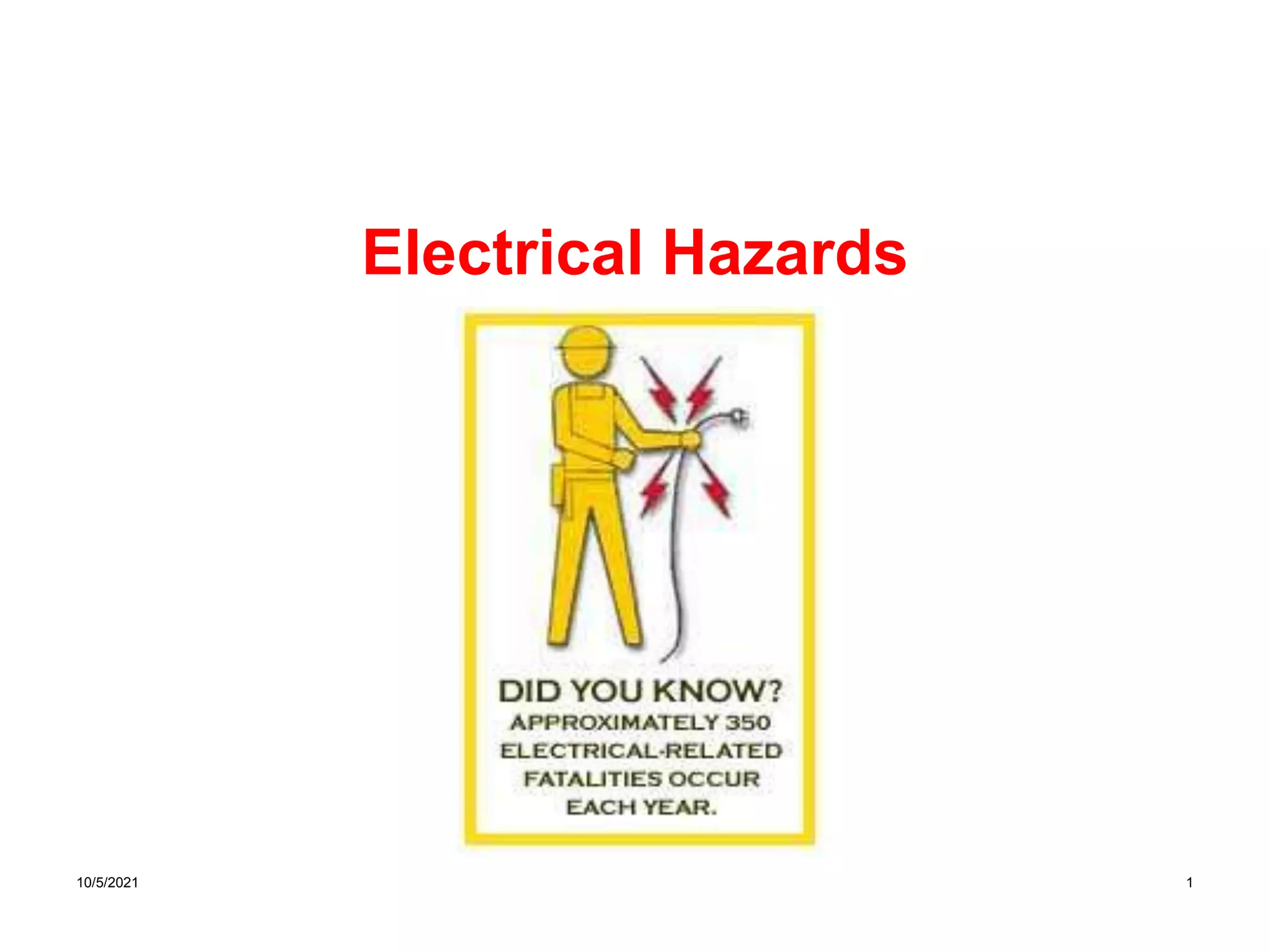
Electrical Hazards
10/5/2021 2
Causes of
Electrocution Fatalities
• Contact with Overhead Power lines
• Contact with Live Circuits
• Not following Lock/Tagout procedures
• Poorly Maintained Extension Cords
• Defective Power Tools
10/5/2021 3
Electrical Injuries
There are three direct and two indirect types of
electrical injuries:
• Direct:
Electrocution or death due to electrical shock
Electrical shock
Burns
• Indirect:
Falls
Fire
10/5/2021 4
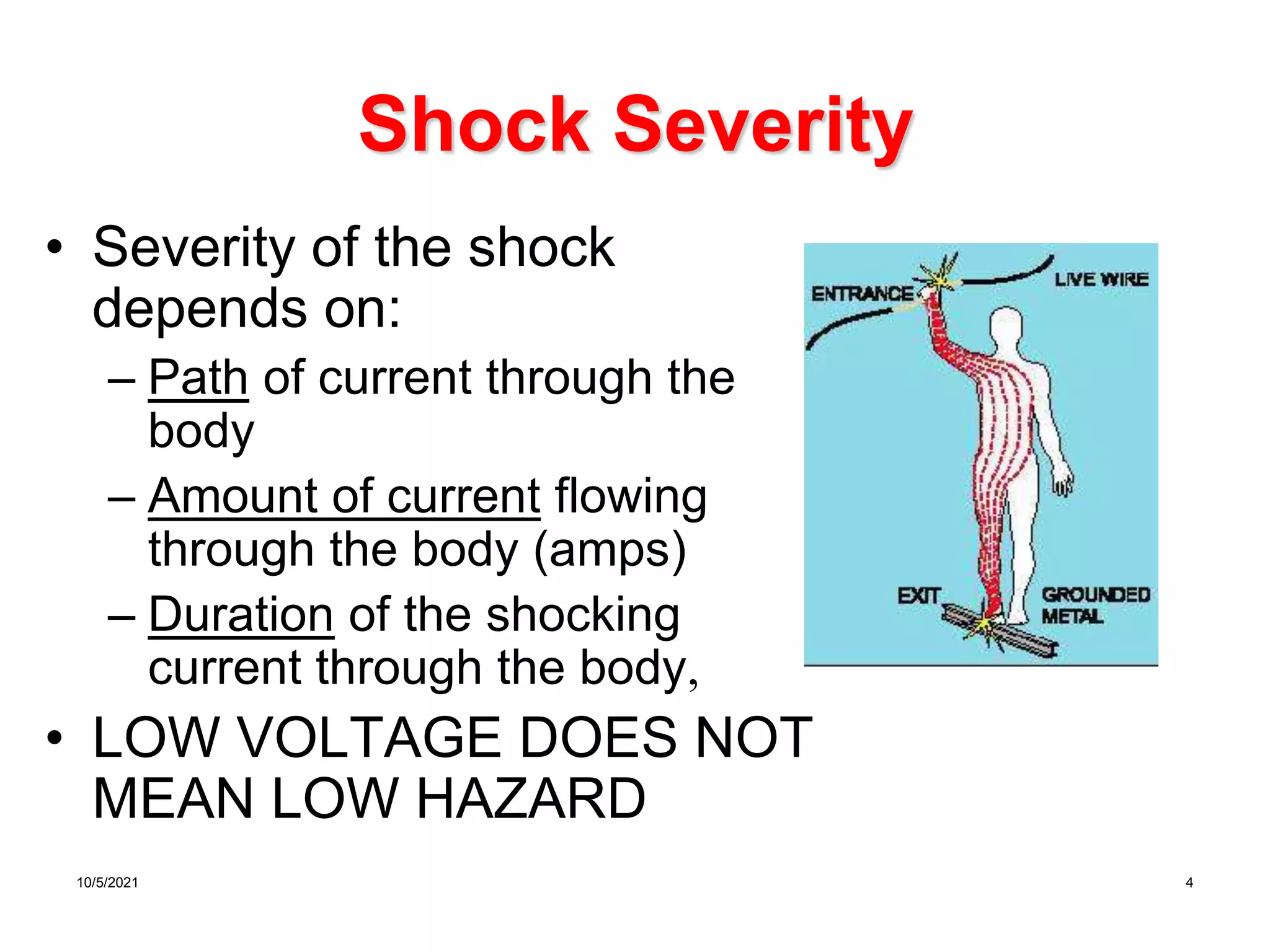
Shock Severity
• Severity of the shock
depends on:
– Path of current through the
body
– Amount of current flowing
through the body (amps)
– Duration of the shocking
current through the body,
• LOW VOLTAGE DOES NOT
MEAN LOW HAZARD
10/5/2021 5
Overhead Power Lines Hazard
• Usually not insulated
• Examples of equipment
that can contact power
lines:
– Crane
– Ladder
– Scaffold
– Backhoe
– Scissors lift
– Raised dump truck bed
– Aluminum paint roller
10/5/2021 6
It’s Your Job to Know!
 Know the hazards of electricity
 Know the equipment
 Use Safe Work Practices
 Inspect your Personal Protective
Equipment (PPE) before each use
 Don’t work on energized circuits
without permission
What are the levels of effect of current?
AC current (mA) Effect on human body
1 Slight tingling sensation
2-9 Small shock
10-24 Muscles contract causing you to freeze
25-74 Respiratory muscles can become
paralysed; pain; exit burns often visible
75-300 Usually fatal; ventricular fibrillation; entry &
exit wounds visible
>300 Death almost certain; if survive will have
badly burnt organs and probably require
amputations
10/5/2021 7
A welding incident…
• Assistant hands welder a metal object.
Resultant current is 35 mA
I = V/R = 67/1900 = 35 mA
Result = Assistant survived but welder died
10/5/2021 8
10/5/2021 9
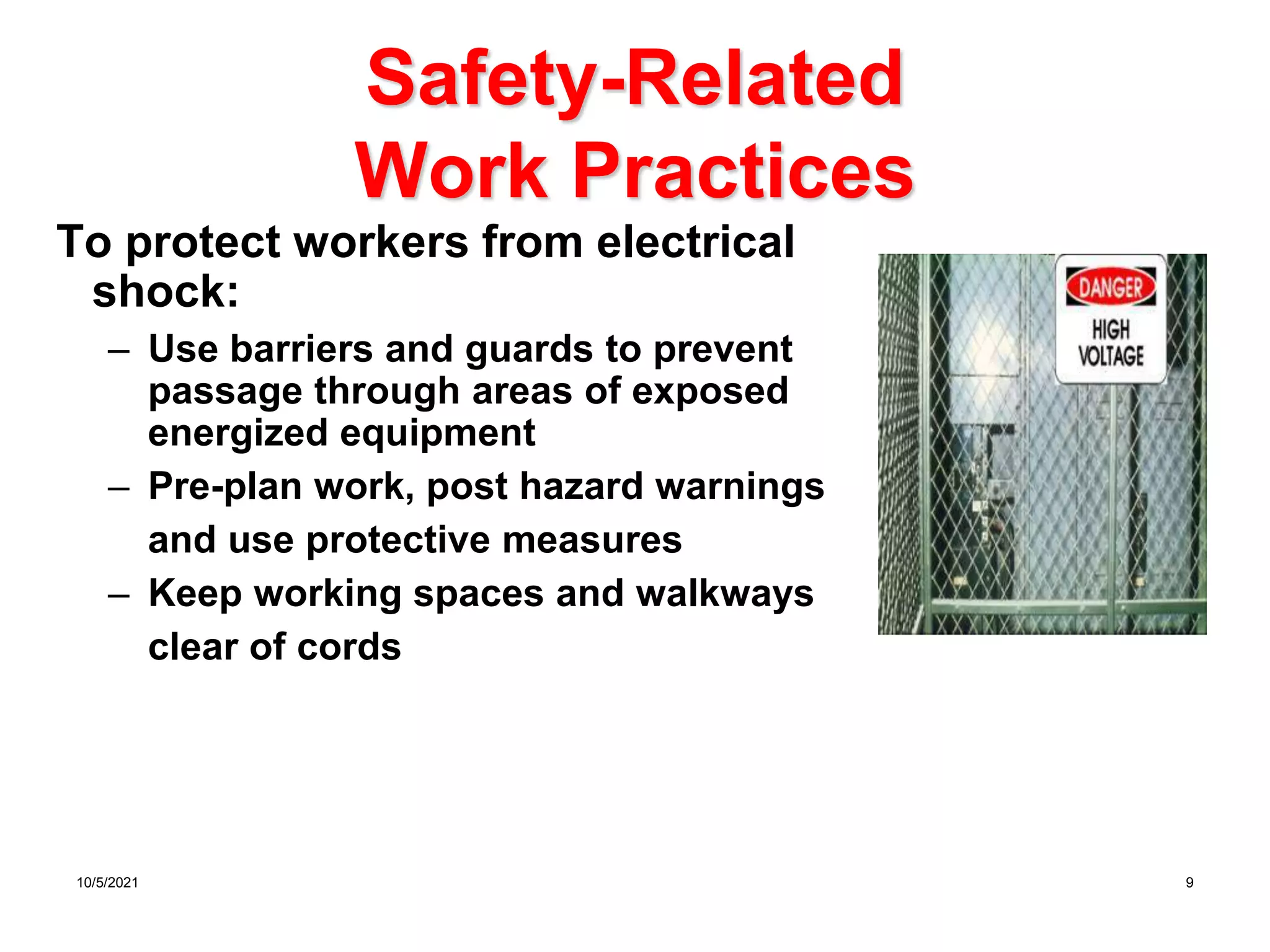
Safety-Related
Work Practices
To protect workers from electrical
shock:
– Use barriers and guards to prevent
passage through areas of exposed
energized equipment
– Pre-plan work, post hazard warnings
and use protective measures
– Keep working spaces and walkways
clear of cords
10/5/2021 10
• Special Training is required for work on
electrical equipment. Such training is for
Authorized Employees and it covers:
–Safe Work Practices
–Isolation of Electrical Sources
–Test Equipment
–Tools & PPE
• Only Authorized Employees may conduct
electrical work
Caution
10/5/2021 11
Control Devices
Control circuit devices such as…
–push buttons
–selector switches
–interlocks
… may not be used as the sole
means for de-energizing circuits
or equipment.
10/5/2021 12
How it works
10/5/2021 13
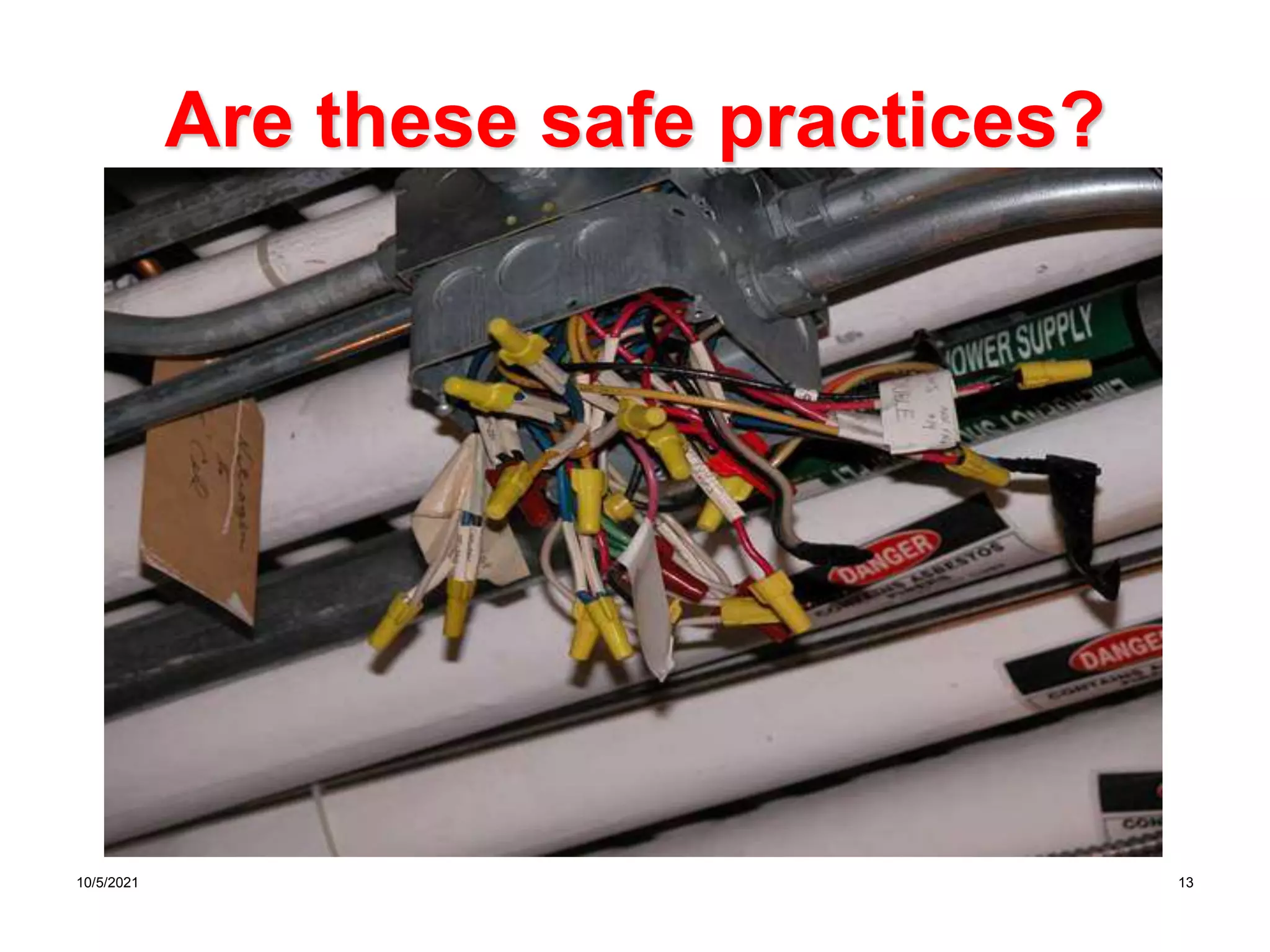
Are these safe practices?
10/5/2021 14
Lock & Tag
• Lock & Tag all Sources
– Place Lock & Tag on each disconnecting
means used to de-energize circuits
– Attach lock to prevent operating the
disconnecting means
– Place Tag with each lock
Note: Only the person who places the lock may remove it.
10/5/2021 15
Lockout Devices
10/5/2021 16
If a Lock cannot be applied…
• A tag used without a lock must be
supplemented by at least one additional
safety measure that provides a level of safety
equal to that of a lock.
• Examples:
– Removal of an isolating circuit element
such as a fuse
– Blocking of a controlling switch
– Opening of an extra disconnecting device.
10/5/2021 17
Tagout
There many different kinds of tags and Lockout devices.
10/5/2021 18
Release Stored Energy
• Stored electric energy must be released
before starting work.
– Discharge all Capacitors
–Short-Circuit & Ground all high
capacitance elements
10/5/2021 19
Alerting others of hazards
Use barricades to prevent or limit access to
work areas with un-insulated energized
conductors or circuit parts.
Use safety signs, safety symbols, or accident
prevention tags to warn others about electrical
hazards which may endanger them.
If signs and barricades do not provide sufficient
warning and protection from electrical hazards,
an attendant shall be stationed to warn and
protect employees.
10/5/2021 20
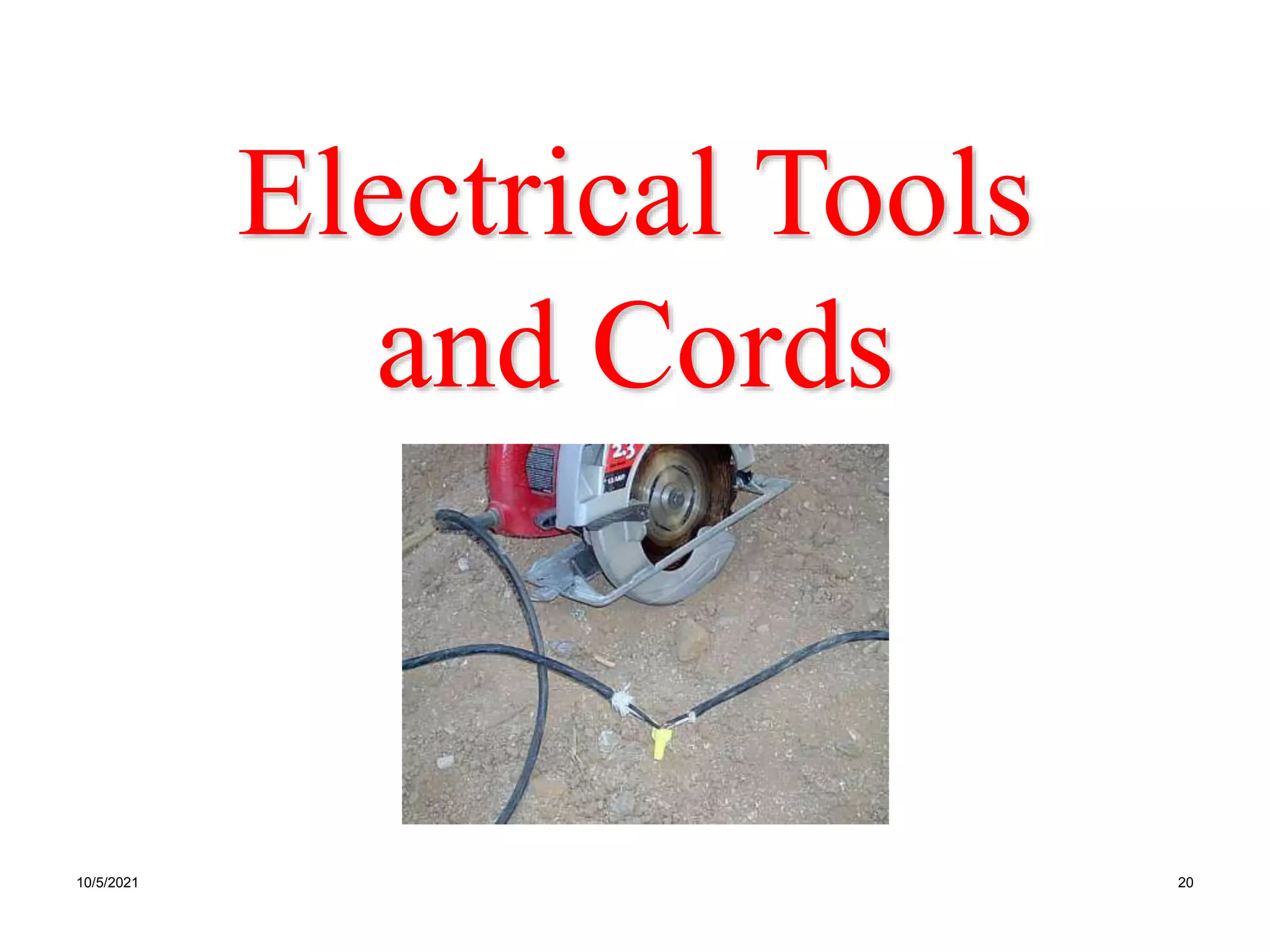
Electrical Tools
and Cords
10/5/2021 21
Portable Electric Tools
& Cords
• Portable equipment must be handled in a
manner which will not cause damage.
• Flexible electric cords connected to
equipment may not be used for raising or
lowering the equipment.
• Flexible cords may not be fastened with
staples or otherwise hung in such a fashion
as could damage the outer jacket or
insulation.
10/5/2021 22
Tools & Equipment
– Use insulated tools or handling equipment
when working near exposed energized
conductors or circuit parts.
– Use fuse handling equipment to remove or
install fuses when the fuse terminals are
energized.
– Ropes and handlines used near exposed
energized parts must be nonconductive.
10/5/2021 23
Power Tool Requirements
• Have a three-wire cord with
ground plugged into a
grounded receptacle, or
• Be double insulated, or
• Be powered by a low-voltage
isolation transformer
10/5/2021 24
Preventing Electrical Hazards -
Tools
• Inspect tools before
use
• Use the right tool
correctly
• Protect your tools
• Use double insulated
tools
Double Insulated marking
10/5/2021 25
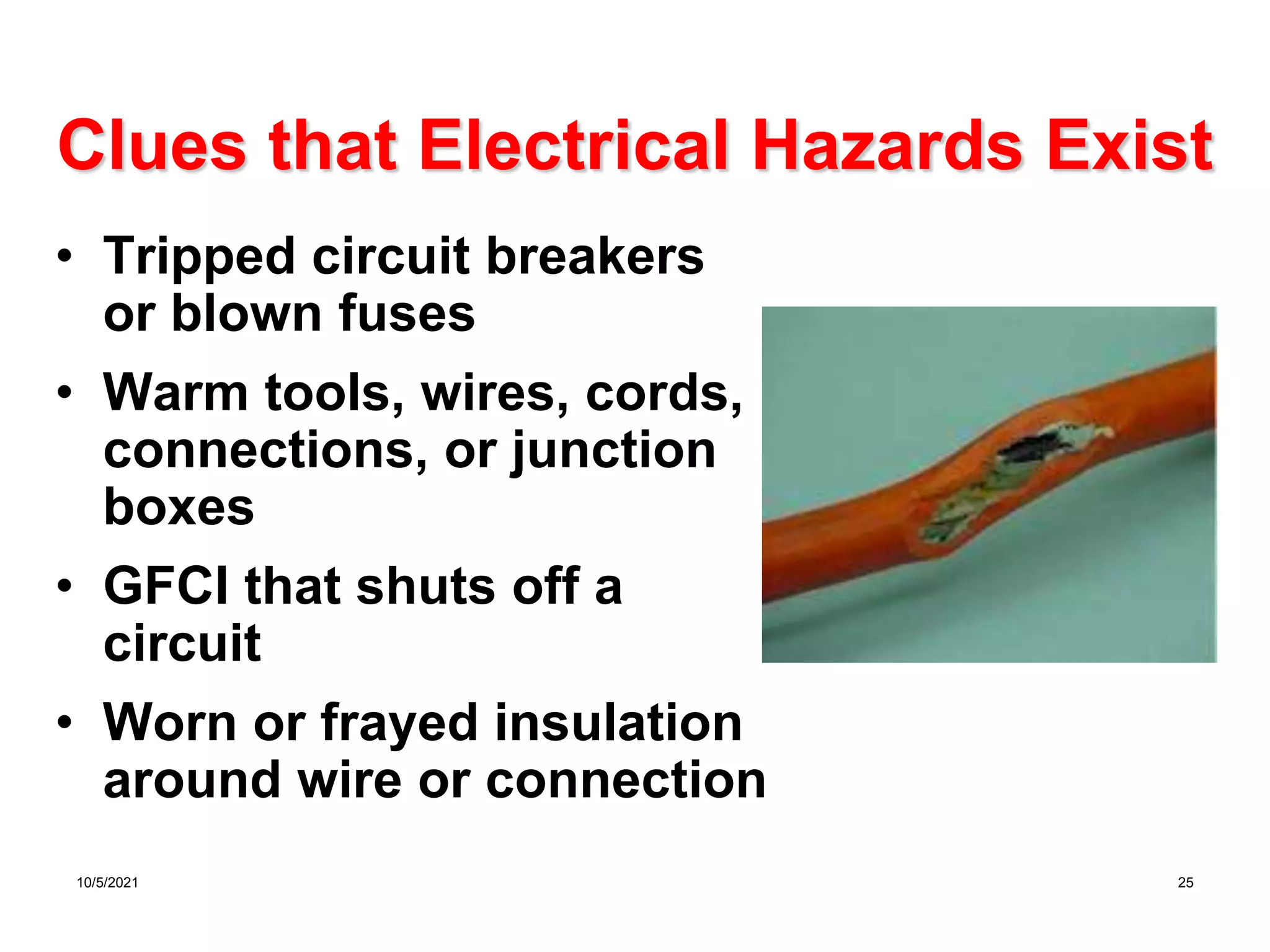
Clues that Electrical Hazards Exist
• Tripped circuit breakers
or blown fuses
• Warm tools, wires, cords,
connections, or junction
boxes
• GFCI that shuts off a
circuit
• Worn or frayed insulation
around wire or connection
10/5/2021 26
Always remember…
It’s your life!
“A tree trimmer was electrocuted
when he touched an overhead
electrical line while descending a
palm tree…”
“An employee was
electrocuted while working
on an A/C unit…”

ELectrical hazards

  • 1.
  • 2.
    10/5/2021 2 Causes of ElectrocutionFatalities • Contact with Overhead Power lines • Contact with Live Circuits • Not following Lock/Tagout procedures • Poorly Maintained Extension Cords • Defective Power Tools
  • 3.
    10/5/2021 3 Electrical Injuries Thereare three direct and two indirect types of electrical injuries: • Direct: Electrocution or death due to electrical shock Electrical shock Burns • Indirect: Falls Fire
  • 4.
    10/5/2021 4 Shock Severity •Severity of the shock depends on: – Path of current through the body – Amount of current flowing through the body (amps) – Duration of the shocking current through the body, • LOW VOLTAGE DOES NOT MEAN LOW HAZARD
  • 5.
    10/5/2021 5 Overhead PowerLines Hazard • Usually not insulated • Examples of equipment that can contact power lines: – Crane – Ladder – Scaffold – Backhoe – Scissors lift – Raised dump truck bed – Aluminum paint roller
  • 6.
    10/5/2021 6 It’s YourJob to Know!  Know the hazards of electricity  Know the equipment  Use Safe Work Practices  Inspect your Personal Protective Equipment (PPE) before each use  Don’t work on energized circuits without permission
  • 7.
    What are thelevels of effect of current? AC current (mA) Effect on human body 1 Slight tingling sensation 2-9 Small shock 10-24 Muscles contract causing you to freeze 25-74 Respiratory muscles can become paralysed; pain; exit burns often visible 75-300 Usually fatal; ventricular fibrillation; entry & exit wounds visible >300 Death almost certain; if survive will have badly burnt organs and probably require amputations 10/5/2021 7
  • 8.
    A welding incident… •Assistant hands welder a metal object. Resultant current is 35 mA I = V/R = 67/1900 = 35 mA Result = Assistant survived but welder died 10/5/2021 8
  • 9.
    10/5/2021 9 Safety-Related Work Practices Toprotect workers from electrical shock: – Use barriers and guards to prevent passage through areas of exposed energized equipment – Pre-plan work, post hazard warnings and use protective measures – Keep working spaces and walkways clear of cords
  • 10.
    10/5/2021 10 • SpecialTraining is required for work on electrical equipment. Such training is for Authorized Employees and it covers: –Safe Work Practices –Isolation of Electrical Sources –Test Equipment –Tools & PPE • Only Authorized Employees may conduct electrical work Caution
  • 11.
    10/5/2021 11 Control Devices Controlcircuit devices such as… –push buttons –selector switches –interlocks … may not be used as the sole means for de-energizing circuits or equipment.
  • 12.
  • 13.
    10/5/2021 13 Are thesesafe practices?
  • 14.
    10/5/2021 14 Lock &Tag • Lock & Tag all Sources – Place Lock & Tag on each disconnecting means used to de-energize circuits – Attach lock to prevent operating the disconnecting means – Place Tag with each lock Note: Only the person who places the lock may remove it.
  • 15.
  • 16.
    10/5/2021 16 If aLock cannot be applied… • A tag used without a lock must be supplemented by at least one additional safety measure that provides a level of safety equal to that of a lock. • Examples: – Removal of an isolating circuit element such as a fuse – Blocking of a controlling switch – Opening of an extra disconnecting device.
  • 17.
    10/5/2021 17 Tagout There manydifferent kinds of tags and Lockout devices.
  • 18.
    10/5/2021 18 Release StoredEnergy • Stored electric energy must be released before starting work. – Discharge all Capacitors –Short-Circuit & Ground all high capacitance elements
  • 19.
    10/5/2021 19 Alerting othersof hazards Use barricades to prevent or limit access to work areas with un-insulated energized conductors or circuit parts. Use safety signs, safety symbols, or accident prevention tags to warn others about electrical hazards which may endanger them. If signs and barricades do not provide sufficient warning and protection from electrical hazards, an attendant shall be stationed to warn and protect employees.
  • 20.
  • 21.
    10/5/2021 21 Portable ElectricTools & Cords • Portable equipment must be handled in a manner which will not cause damage. • Flexible electric cords connected to equipment may not be used for raising or lowering the equipment. • Flexible cords may not be fastened with staples or otherwise hung in such a fashion as could damage the outer jacket or insulation.
  • 22.
    10/5/2021 22 Tools &Equipment – Use insulated tools or handling equipment when working near exposed energized conductors or circuit parts. – Use fuse handling equipment to remove or install fuses when the fuse terminals are energized. – Ropes and handlines used near exposed energized parts must be nonconductive.
  • 23.
    10/5/2021 23 Power ToolRequirements • Have a three-wire cord with ground plugged into a grounded receptacle, or • Be double insulated, or • Be powered by a low-voltage isolation transformer
  • 24.
    10/5/2021 24 Preventing ElectricalHazards - Tools • Inspect tools before use • Use the right tool correctly • Protect your tools • Use double insulated tools Double Insulated marking
  • 25.
    10/5/2021 25 Clues thatElectrical Hazards Exist • Tripped circuit breakers or blown fuses • Warm tools, wires, cords, connections, or junction boxes • GFCI that shuts off a circuit • Worn or frayed insulation around wire or connection
  • 26.
    10/5/2021 26 Always remember… It’syour life! “A tree trimmer was electrocuted when he touched an overhead electrical line while descending a palm tree…” “An employee was electrocuted while working on an A/C unit…”