Electrical Power
Distribution
EE 543

Electric load patterns for
(residential/commercial /industrial) usage

Name : Muhammad fawaz abdulhadi
ID : 11102667
Supervision by : Dr. Ahmad anas
1|Page
1 GENERALLY

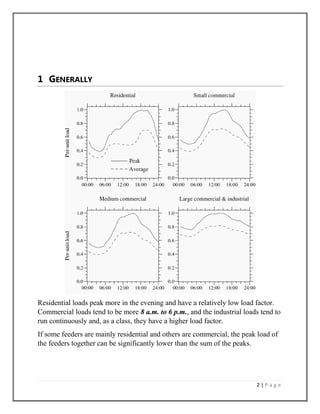
Residential loads peak more in the evening and have a relatively low load factor.
Commercial loads tend to be more 8 a.m. to 6 p.m., and the industrial loads tend to
run continuously and, as a class, they have a higher load factor.
If some feeders are mainly residential and others are commercial, the peak load of
the feeders together can be significantly lower than the sum of the peaks.

2|Page
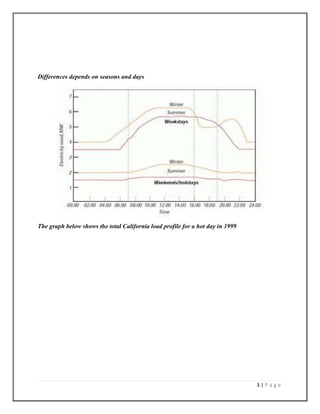
Differences depends on seasons and days

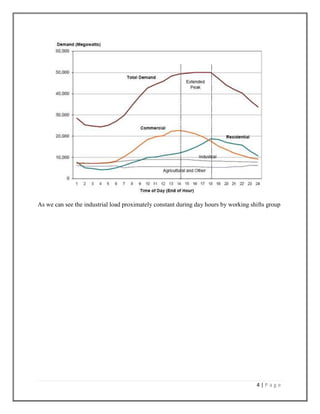
The graph below shows the total California load profile for a hot day in 1999

3|Page
As we can see the industrial load proximately constant during day hours by working shifts group

4|Page
Residential usage :
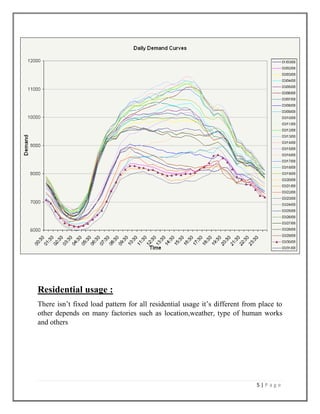
There isn’t fixed load pattern for all residential usage it’s different from place to
other depends on many factories such as location,weather, type of human works
and others

5|Page
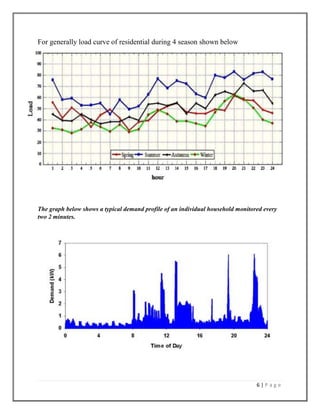
For generally load curve of residential during 4 season shown below

The graph below shows a typical demand profile of an individual household monitored every
two 2 minutes.

6|Page
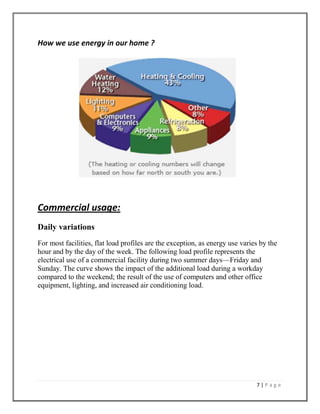
How we use energy in our home ?

Commercial usage:
Daily variations
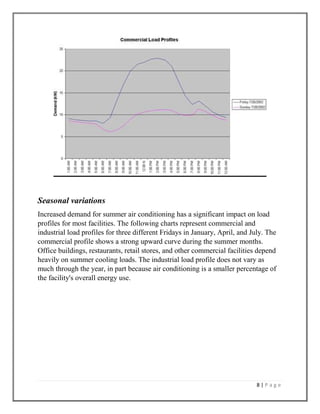
For most facilities, flat load profiles are the exception, as energy use varies by the
hour and by the day of the week. The following load profile represents the
electrical use of a commercial facility during two summer days—Friday and
Sunday. The curve shows the impact of the additional load during a workday
compared to the weekend; the result of the use of computers and other office
equipment, lighting, and increased air conditioning load.

7|Page
Seasonal variations
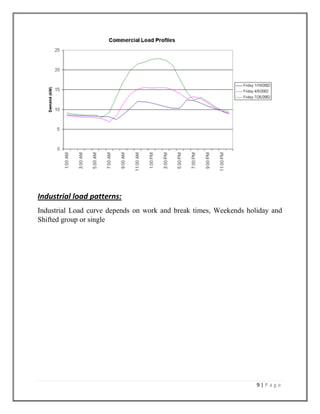
Increased demand for summer air conditioning has a significant impact on load
profiles for most facilities. The following charts represent commercial and
industrial load profiles for three different Fridays in January, April, and July. The
commercial profile shows a strong upward curve during the summer months.
Office buildings, restaurants, retail stores, and other commercial facilities depend
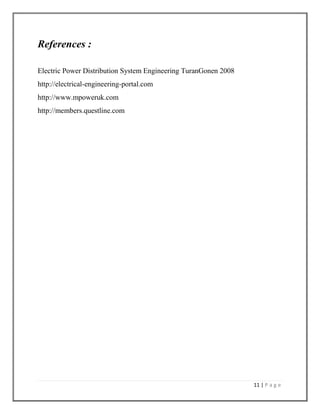
heavily on summer cooling loads. The industrial load profile does not vary as
much through the year, in part because air conditioning is a smaller percentage of
the facility's overall energy use.

8|Page
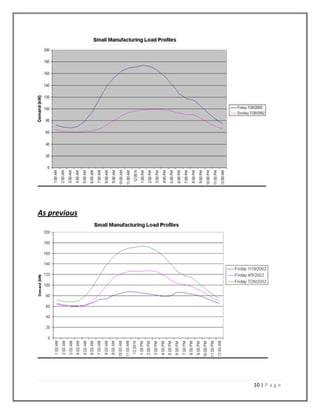
Industrial load patterns:
Industrial Load curve depends on work and break times, Weekends holiday and
Shifted group or single

9|Page
As previous

10 | P a g e
References :
Electric Power Distribution System Engineering TuranGonen 2008
http://electrical-engineering-portal.com
http://www.mpoweruk.com
http://members.questline.com

11 | P a g e

Electric load patterns for (residential/commercial /industrial) usage

  • 1.
    Electrical Power Distribution EE 543 Electricload patterns for (residential/commercial /industrial) usage Name : Muhammad fawaz abdulhadi ID : 11102667 Supervision by : Dr. Ahmad anas 1|Page
  • 2.
    1 GENERALLY Residential loadspeak more in the evening and have a relatively low load factor. Commercial loads tend to be more 8 a.m. to 6 p.m., and the industrial loads tend to run continuously and, as a class, they have a higher load factor. If some feeders are mainly residential and others are commercial, the peak load of the feeders together can be significantly lower than the sum of the peaks. 2|Page
  • 3.
    Differences depends onseasons and days The graph below shows the total California load profile for a hot day in 1999 3|Page
  • 4.
    As we cansee the industrial load proximately constant during day hours by working shifts group 4|Page
  • 5.
    Residential usage : Thereisn’t fixed load pattern for all residential usage it’s different from place to other depends on many factories such as location,weather, type of human works and others 5|Page
  • 6.
    For generally loadcurve of residential during 4 season shown below The graph below shows a typical demand profile of an individual household monitored every two 2 minutes. 6|Page
  • 7.
    How we useenergy in our home ? Commercial usage: Daily variations For most facilities, flat load profiles are the exception, as energy use varies by the hour and by the day of the week. The following load profile represents the electrical use of a commercial facility during two summer days—Friday and Sunday. The curve shows the impact of the additional load during a workday compared to the weekend; the result of the use of computers and other office equipment, lighting, and increased air conditioning load. 7|Page
  • 8.
    Seasonal variations Increased demandfor summer air conditioning has a significant impact on load profiles for most facilities. The following charts represent commercial and industrial load profiles for three different Fridays in January, April, and July. The commercial profile shows a strong upward curve during the summer months. Office buildings, restaurants, retail stores, and other commercial facilities depend heavily on summer cooling loads. The industrial load profile does not vary as much through the year, in part because air conditioning is a smaller percentage of the facility's overall energy use. 8|Page
  • 9.
    Industrial load patterns: IndustrialLoad curve depends on work and break times, Weekends holiday and Shifted group or single 9|Page
  • 10.
  • 11.
    References : Electric PowerDistribution System Engineering TuranGonen 2008 http://electrical-engineering-portal.com http://www.mpoweruk.com http://members.questline.com 11 | P a g e