




Concept
of
Elasticity
CHAPTER
4
Elasticity
It measures theresponsiveness of one variable to a
certain changeof anothervariable.
There are two significantwords:
measure – numbers orcoefficients
responsiveness – reaction to change
Elasticity=
percentage change in variable x
percentage change in variable y
%∆x
%∆y
Ɛ=
Types of Elasticity
•Elastic– the percentage change invariable x isgreater than the percentage
change in variabley.
( Ɛ > 1 )
•Inelastic - the percentage change in variable x is less than the percentage
change in variable y.
( Ɛ < 1 )
•Unitary Elastic- the percentage change in variable x is equal to the percentage
change in variabley.
( Ɛ = 1)
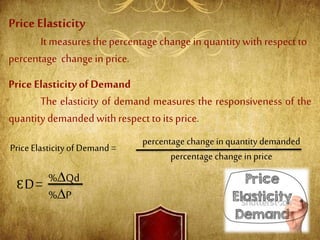
PriceElasticity
It measures thepercentage change in quantitywith respect to
percentage change in price.
Price Elasticityof Demand
The elasticity of demand measures the responsiveness of the
quantitydemandedwithrespect toits price.
Price Elasticityof Demand =
percentage change in quantity demanded
percentage change in price
ƐD= %∆Qd
%∆P
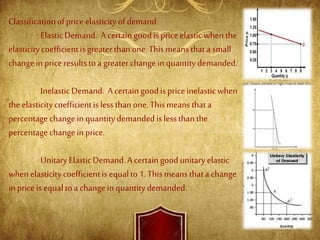
Classificationofpriceelasticityofdemand
ElasticDemand. Acertaingoodispriceelasticwhenthe
elasticitycoefficientisgreater thanone.Thismeansthata small
changeinpriceresultstoa greater changeinquantitydemanded.
InelasticDemand. Acertaingoodispriceinelasticwhen
theelasticitycoefficientislessthanone.Thismeansthata
percentagechangeinquantitydemandedislessthanthe
percentagechangeinprice.
UnitaryElasticDemand.Acertaingoodunitaryelastic
whenelasticitycoefficientisequalto1.Thismeansthata change
inpriceisequaltoa changeinquantitydemanded.
Determinants of price elasticityof demand
•The importance or degree of necessity of the goods.
•Number of availablesubstitute.
•The proportion of income in price changes.
•The time period.
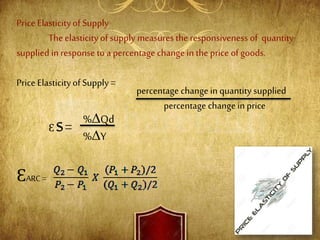
Price Elasticityof Supply
The elasticity of supply measures the responsiveness of quantity
supplied in response to a percentage change in the price of goods.
Price Elasticityof Supply =
percentage change in quantity supplied
percentage change in price
Ɛs= %∆Qd
%∆Y
ƐARC =
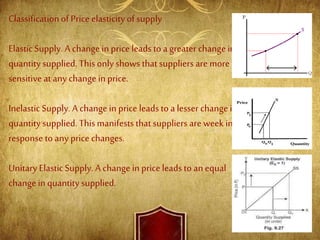
Classificationof Price elasticityof supply
ElasticSupply. A change in price leads to a greater change in
quantity supplied. Thisonlyshows that suppliers are more
sensitive at any change in price.
Inelastic Supply. A change in price leads to a lesser change in
quantity supplied. Thismanifests that suppliers are week in
response to any price changes.
Unitary ElasticSupply. A change in price leads to anequal
change in quantity supplied.
Determinants of Price elasticityof supply
AlfredMarshall (26July1842–13 July1924)was
oneofthemostinfluentialeconomistsofhistime. His
book,PrinciplesofEconomics(1890),wasthedominant
economictextbookinEnglandformany years.Itbringsthe
ideasofsupplyanddemand,marginalutilityandcostsof
productionintoa coherentwhole.Heisknownas oneofthe
foundersofneoclassicaleconomics.
•Monetary or Intermediate
•Short-run
•Long-run
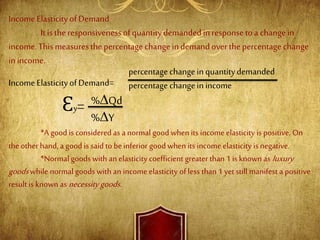
IncomeElasticityofDemand
Itistheresponsivenessofquantitydemandedinresponsetoa changein
income.Thismeasuresthepercentagechangeindemandoverthepercentagechange
inincome.
IncomeElasticityofDemand=
*A good is considered as a normal good when its incomeelasticity is positive. On
the other hand, a good is said to beinferior goodwhen its income elasticity is negative.
*Normal goods with an elasticity coefficient greater than 1 is known as luxury
goodswhile normal goods with an income elasticity of less than 1 yet still manifest a positive
result is known as necessity goods.
percentagechangeinquantitydemanded
percentagechangeinincome
Ɛy= %∆Qd
%∆Y
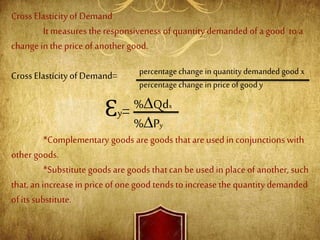
Cross Elasticityof Demand
It measures the responsiveness of quantity demanded of a good to a
change in the price of another good.
Cross Elasticityof Demand=
*Complementary goods are goods that are used in conjunctions with
other goods.
*Substitute goods are goods thatcan be used in place of another, such
that, an increase in price of one good tends to increase the quantity demanded
of its substitute.
percentage change in quantity demanded good x
percentage change in priceofgood y
Ɛy= %∆Qdx
%∆Py

Concept of Elasticity

  • 1.
  • 2.
    Elasticity It measures theresponsivenessof one variable to a certain changeof anothervariable. There are two significantwords: measure – numbers orcoefficients responsiveness – reaction to change Elasticity= percentage change in variable x percentage change in variable y %∆x %∆y Ɛ=
  • 3.
    Types of Elasticity •Elastic–the percentage change invariable x isgreater than the percentage change in variabley. ( Ɛ > 1 ) •Inelastic - the percentage change in variable x is less than the percentage change in variable y. ( Ɛ < 1 ) •Unitary Elastic- the percentage change in variable x is equal to the percentage change in variabley. ( Ɛ = 1)
  • 4.
    PriceElasticity It measures thepercentagechange in quantitywith respect to percentage change in price. Price Elasticityof Demand The elasticity of demand measures the responsiveness of the quantitydemandedwithrespect toits price. Price Elasticityof Demand = percentage change in quantity demanded percentage change in price ƐD= %∆Qd %∆P
  • 5.
    Classificationofpriceelasticityofdemand ElasticDemand. Acertaingoodispriceelasticwhenthe elasticitycoefficientisgreater thanone.Thismeansthatasmall changeinpriceresultstoa greater changeinquantitydemanded. InelasticDemand. Acertaingoodispriceinelasticwhen theelasticitycoefficientislessthanone.Thismeansthata percentagechangeinquantitydemandedislessthanthe percentagechangeinprice. UnitaryElasticDemand.Acertaingoodunitaryelastic whenelasticitycoefficientisequalto1.Thismeansthata change inpriceisequaltoa changeinquantitydemanded.
  • 6.
    Determinants of priceelasticityof demand •The importance or degree of necessity of the goods. •Number of availablesubstitute. •The proportion of income in price changes. •The time period.
  • 7.
    Price Elasticityof Supply Theelasticity of supply measures the responsiveness of quantity supplied in response to a percentage change in the price of goods. Price Elasticityof Supply = percentage change in quantity supplied percentage change in price Ɛs= %∆Qd %∆Y ƐARC =
  • 8.
    Classificationof Price elasticityofsupply ElasticSupply. A change in price leads to a greater change in quantity supplied. Thisonlyshows that suppliers are more sensitive at any change in price. Inelastic Supply. A change in price leads to a lesser change in quantity supplied. Thismanifests that suppliers are week in response to any price changes. Unitary ElasticSupply. A change in price leads to anequal change in quantity supplied.
  • 9.
    Determinants of Priceelasticityof supply AlfredMarshall (26July1842–13 July1924)was oneofthemostinfluentialeconomistsofhistime. His book,PrinciplesofEconomics(1890),wasthedominant economictextbookinEnglandformany years.Itbringsthe ideasofsupplyanddemand,marginalutilityandcostsof productionintoa coherentwhole.Heisknownas oneofthe foundersofneoclassicaleconomics. •Monetary or Intermediate •Short-run •Long-run
  • 10.
    IncomeElasticityofDemand Itistheresponsivenessofquantitydemandedinresponsetoa changein income.Thismeasuresthepercentagechangeindemandoverthepercentagechange inincome. IncomeElasticityofDemand= *A goodis considered as a normal good when its incomeelasticity is positive. On the other hand, a good is said to beinferior goodwhen its income elasticity is negative. *Normal goods with an elasticity coefficient greater than 1 is known as luxury goodswhile normal goods with an income elasticity of less than 1 yet still manifest a positive result is known as necessity goods. percentagechangeinquantitydemanded percentagechangeinincome Ɛy= %∆Qd %∆Y
  • 11.
    Cross Elasticityof Demand Itmeasures the responsiveness of quantity demanded of a good to a change in the price of another good. Cross Elasticityof Demand= *Complementary goods are goods that are used in conjunctions with other goods. *Substitute goods are goods thatcan be used in place of another, such that, an increase in price of one good tends to increase the quantity demanded of its substitute. percentage change in quantity demanded good x percentage change in priceofgood y Ɛy= %∆Qdx %∆Py