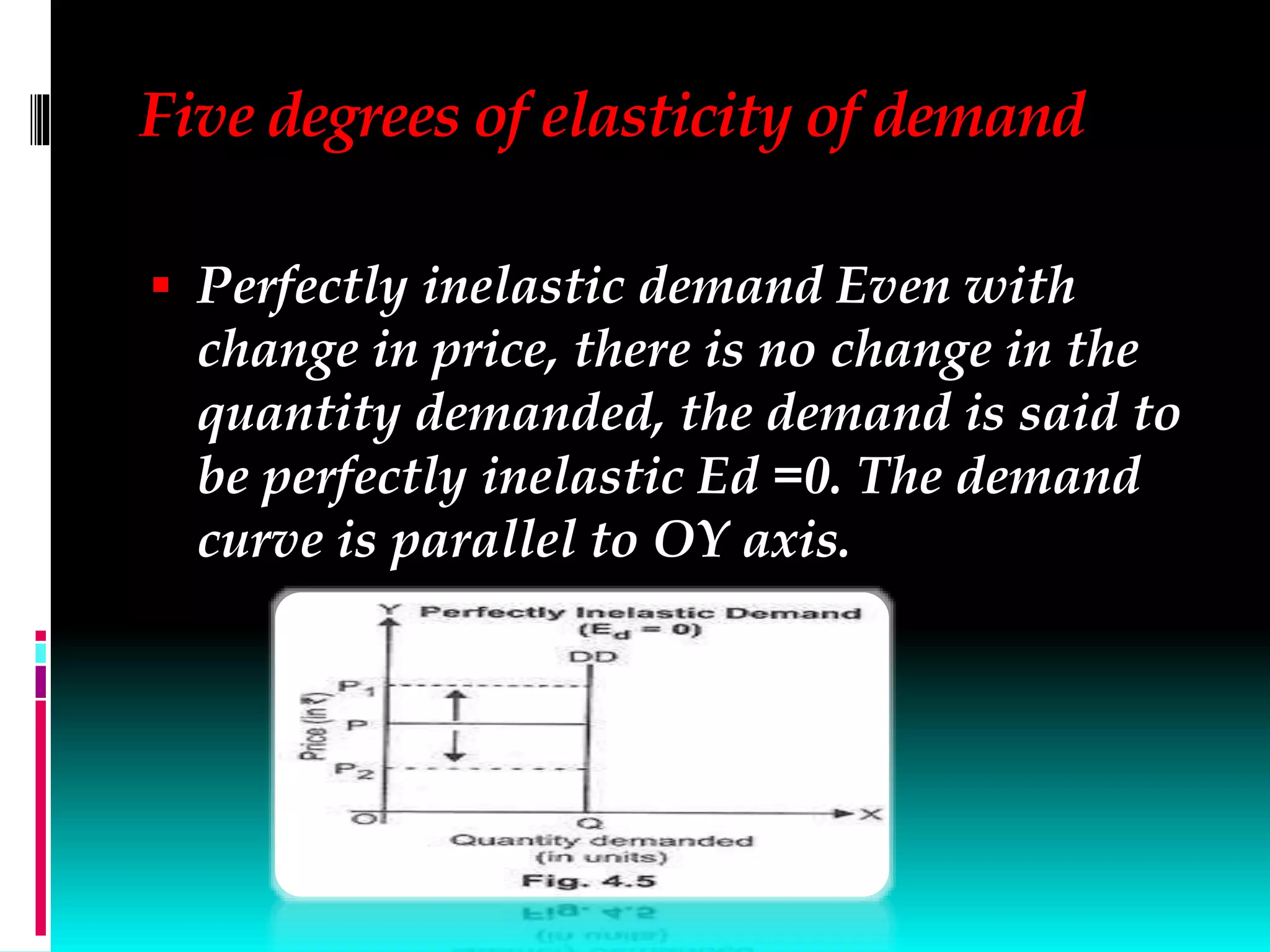
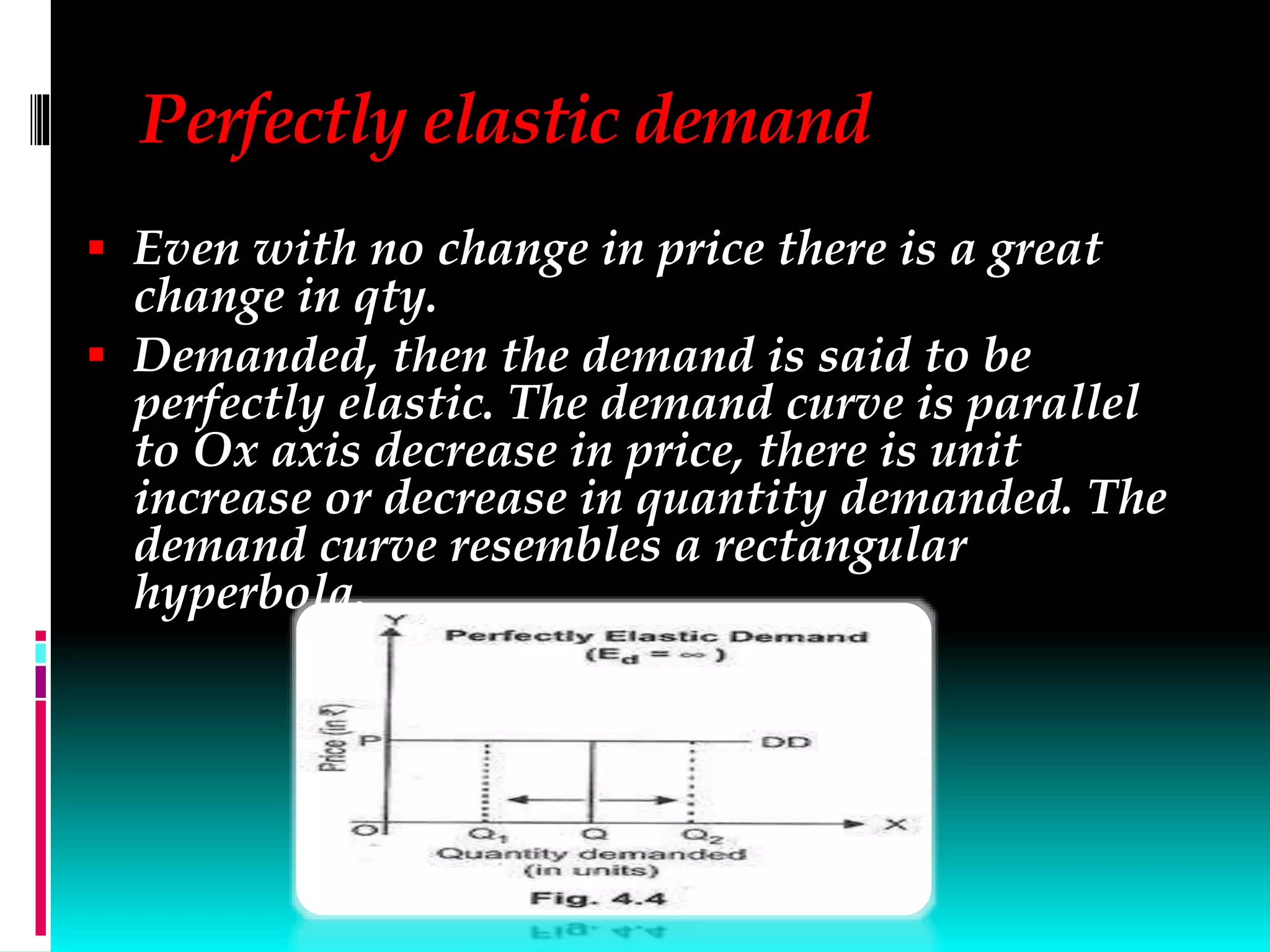
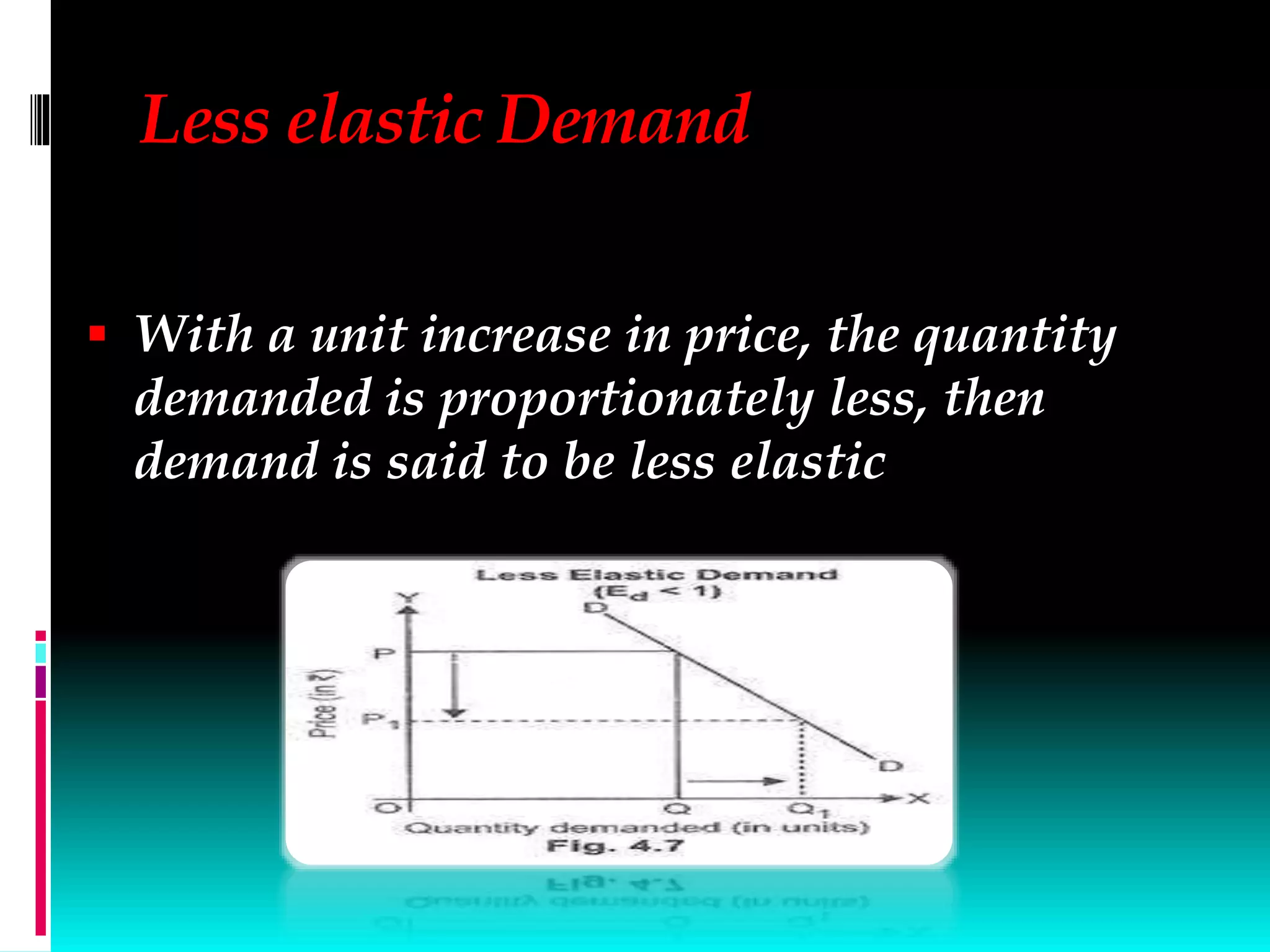
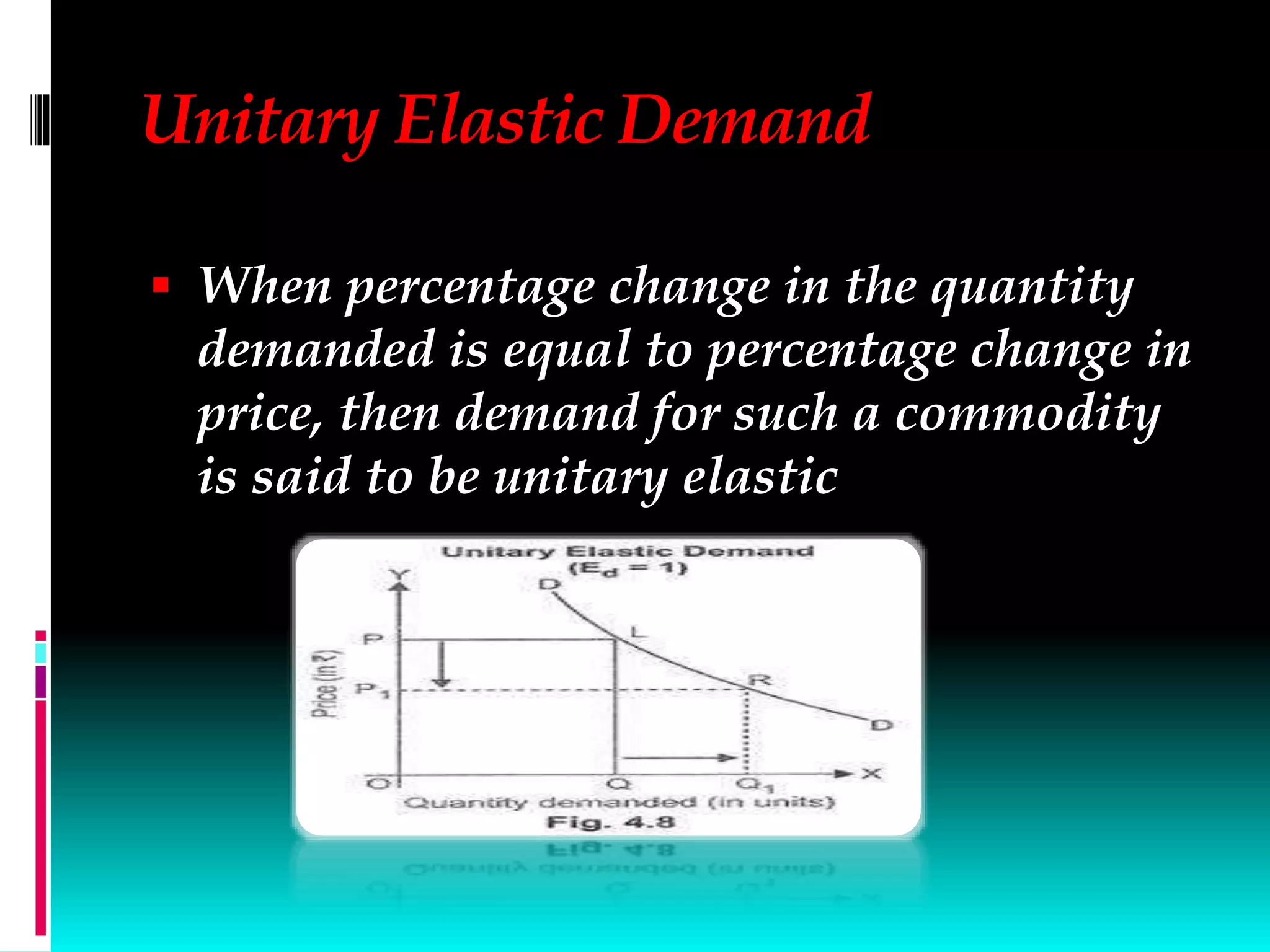
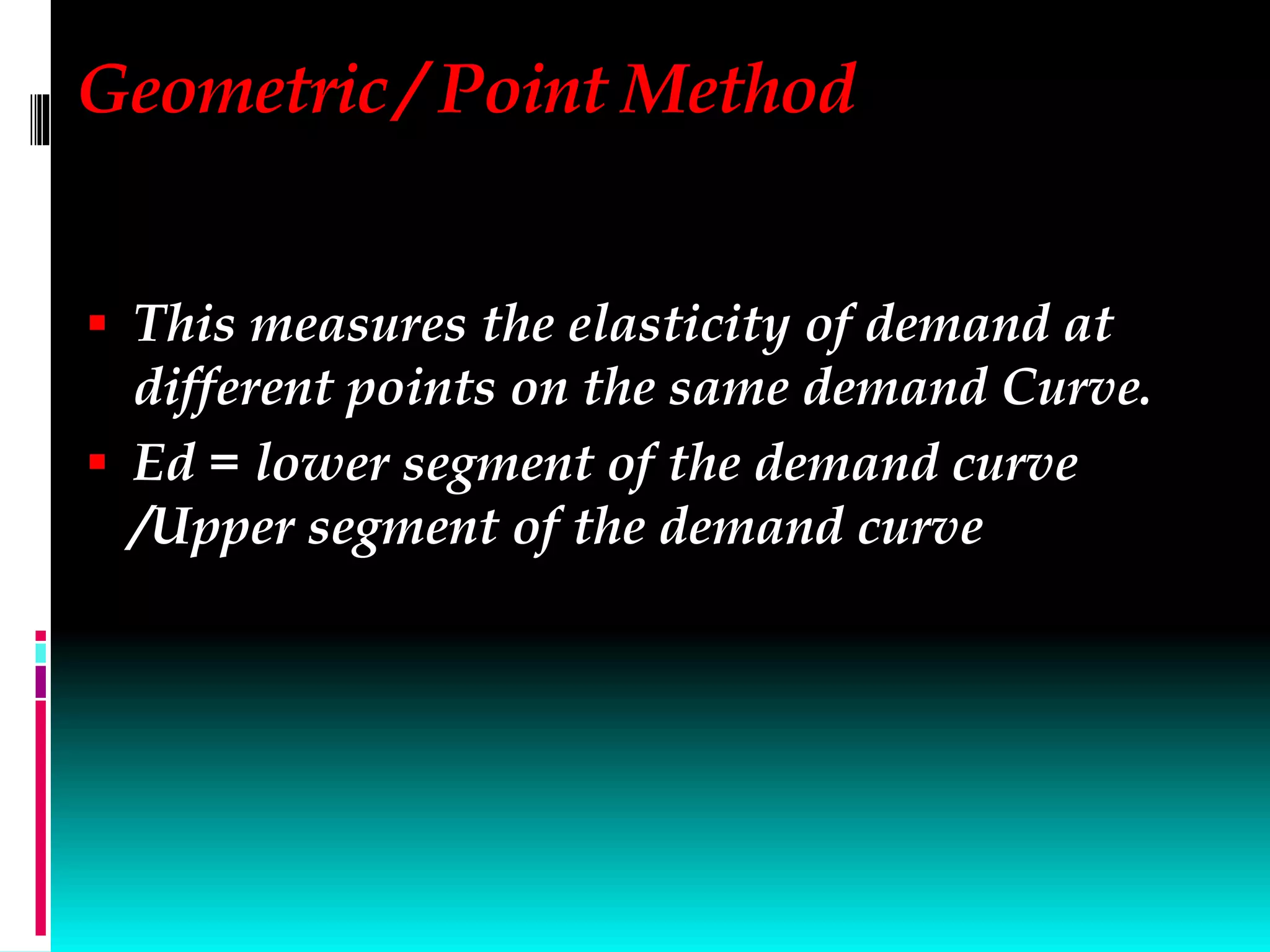
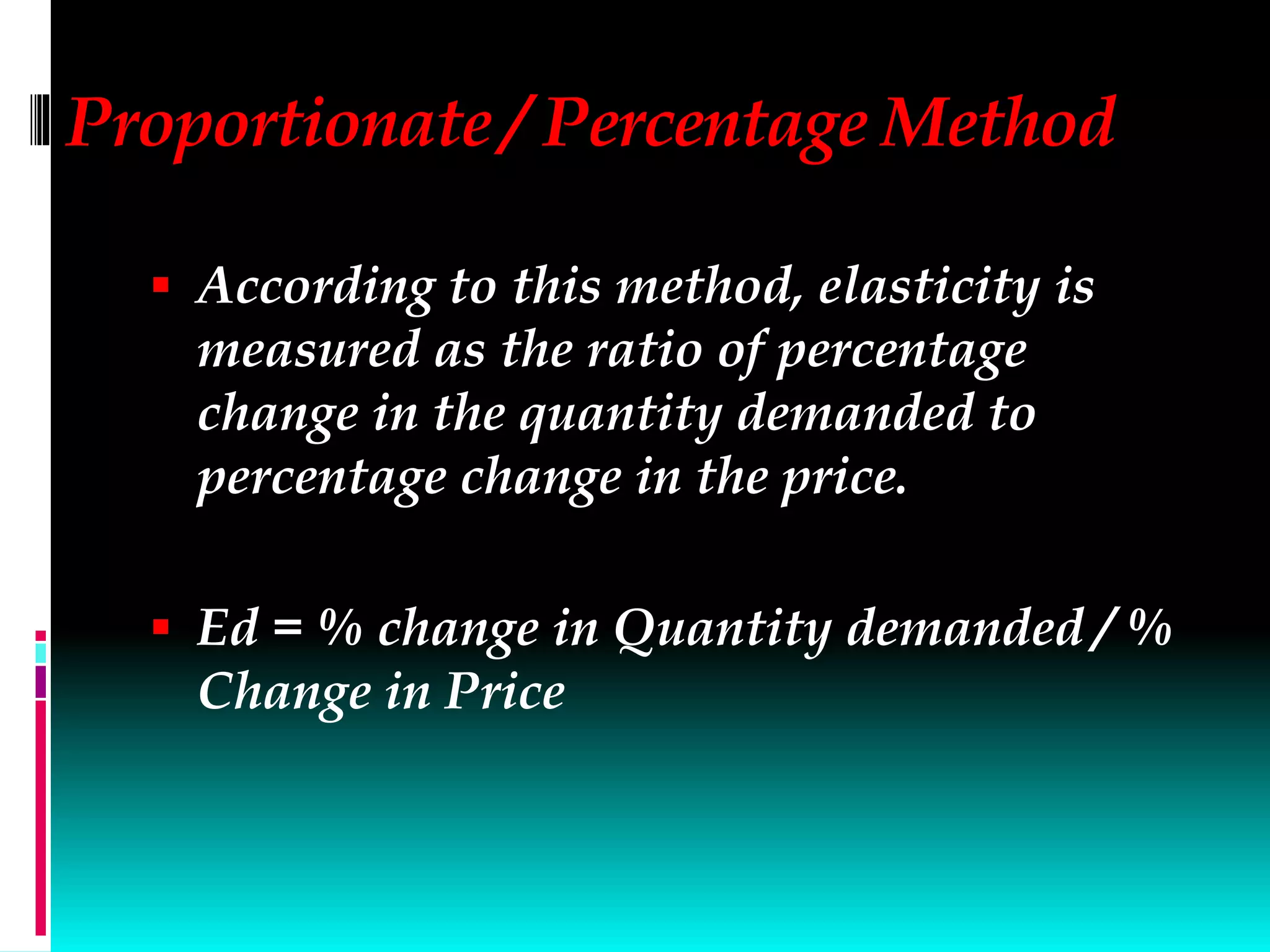
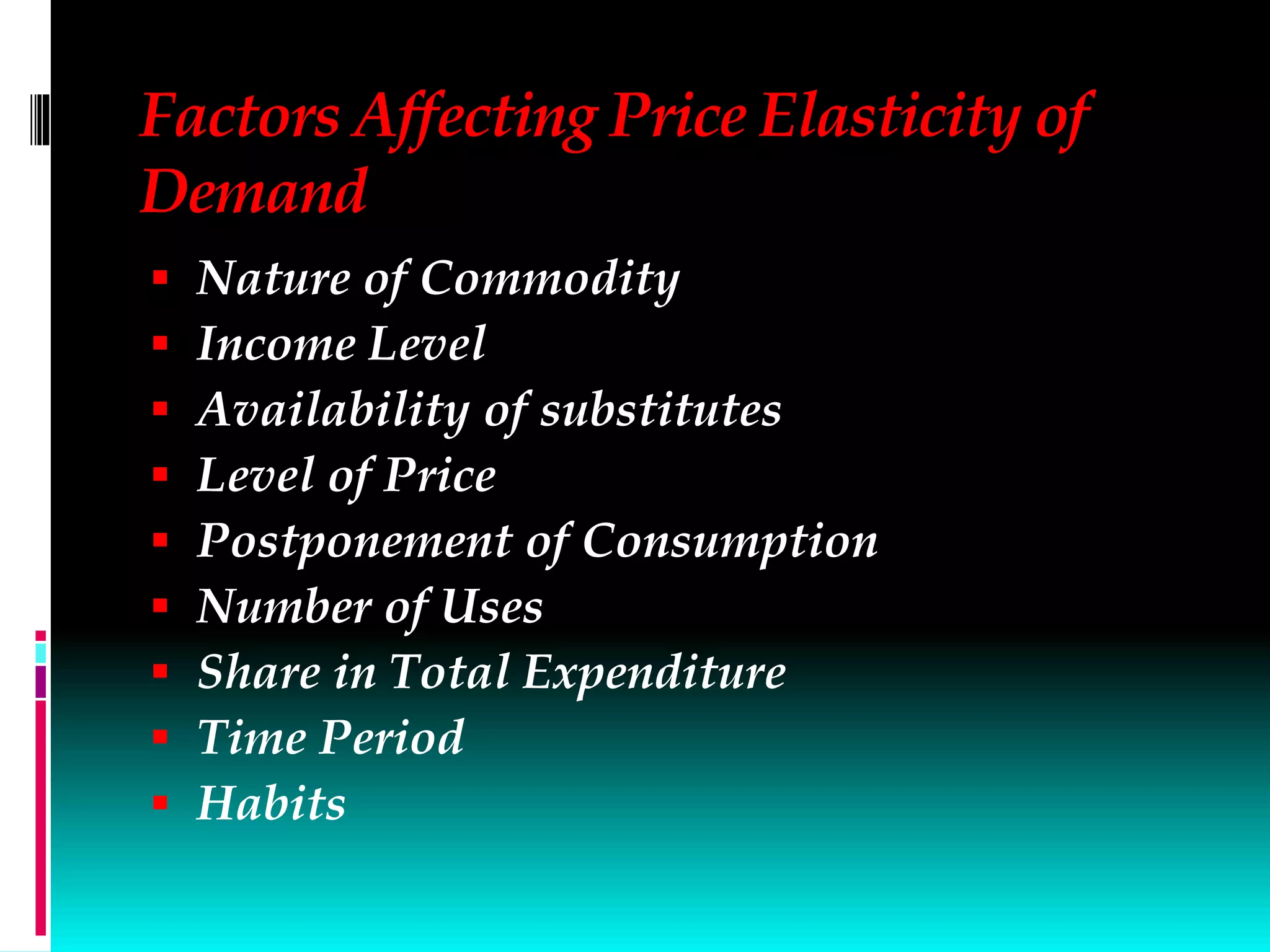
Elasticity of demand refers to the percentage change in demand for a commodity in response to a percentage change in factors that affect demand, such as price. Price elasticity of demand specifically measures the responsiveness of quantity demanded to changes in price. There are five degrees of price elasticity: perfectly inelastic, perfectly elastic, less elastic, highly elastic, and unitary elastic demand. The geometric or point method measures elasticity at different points on the demand curve by calculating the ratio of lower to upper segments. Factors like commodity nature, income, substitutes, and time period influence price elasticity. Understanding elasticity is important for international trade, government policymaking, and business decisions.