
Downloaded 25 times



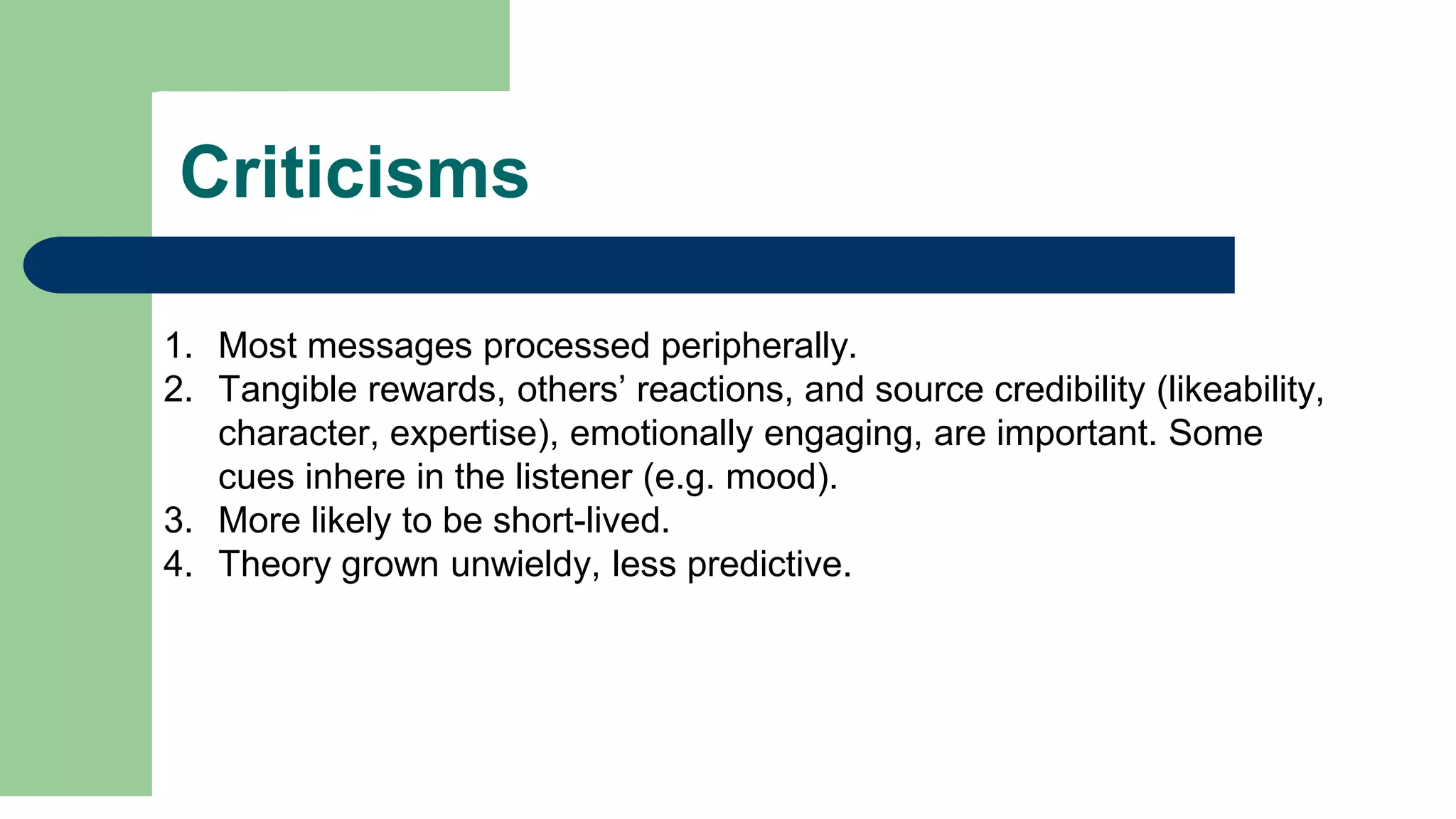

The Elaboration Likelihood Model describes two routes to changing attitudes: central and peripheral. The central route involves carefully considering the message's arguments and is more likely to result in lasting attitude change. The peripheral route involves less critical message analysis and can be influenced by superficial factors like likability or rewards. While initially popular, the ELM has been criticized for being less predictive and not accounting for how most messages are processed peripherally through cues and emotions.


