Title ?????
Dr. Vinod Sharma
National Heart Institute
New Delhi
1
2
3
4
5
6
7
8
9
10
11
12
14
15
16
17
18
19
20
21
22
23
24
26
29
31
32
33
34
35
36
37
40
41
42
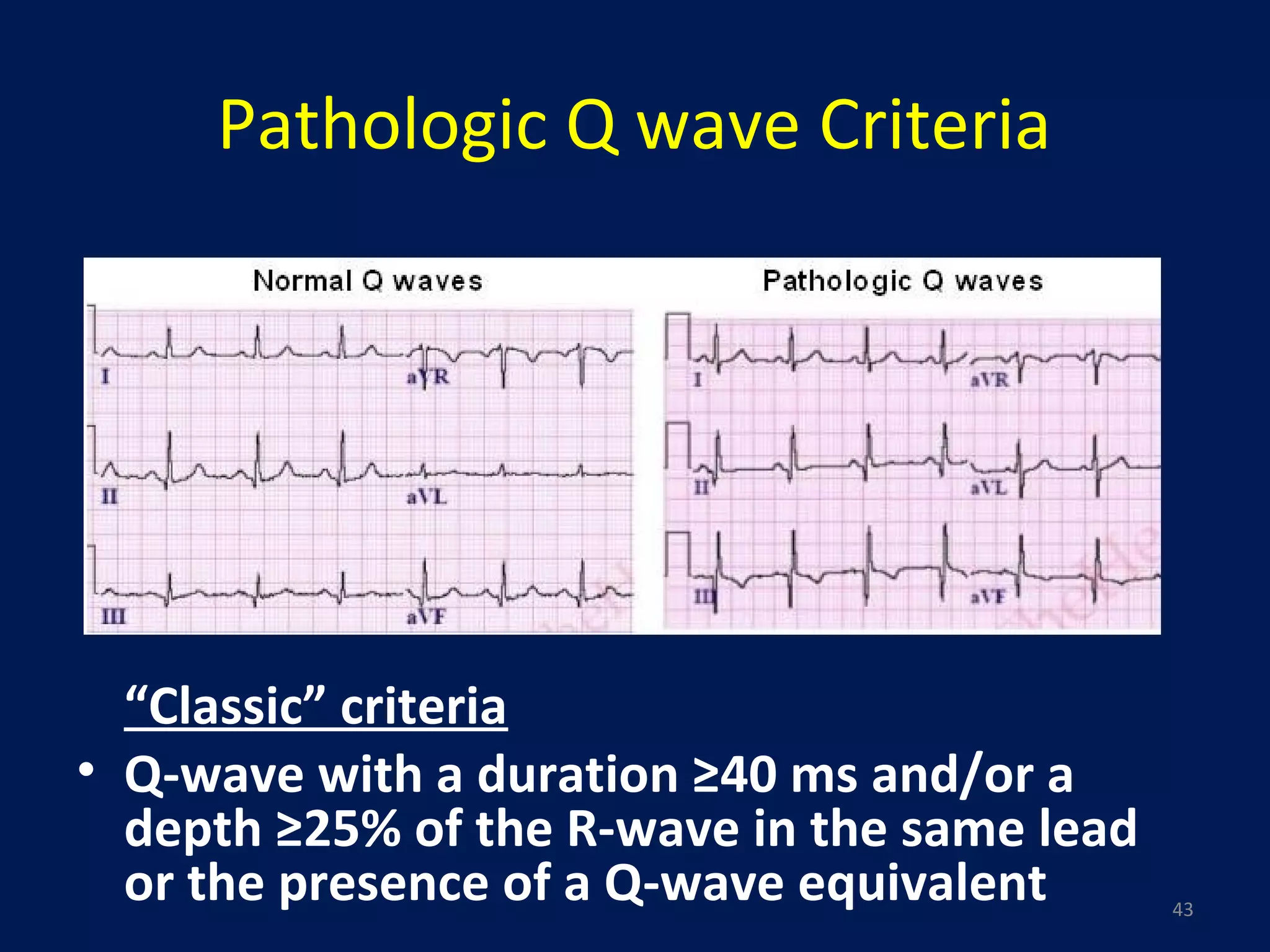
Pathologic Q wave Criteria
“Classic” criteria
• Q-wave with a duration ≥40 ms and/or a
depth ≥25% of the R-wave in the same lead
or the presence of a Q-wave equivalent 43
44
46
Anterior MI Pattern - Tombstoning
47
Tombstoning in Lead V2 – Septal
involvement
48
49
Anteroseptal MI
50
51
52
54
Anterolateral MI
55
Extensive Anterior MI
56
57
59
61
62
RV Myocardial infarction
63
Value of Lead V4R in Acute Inferior MI
Lead V4R identifies:-
• The coronary artery occluded
• Presence or absence of right ventricular
infarction.
• Those at risk for atrioventricular (AV) block
• Those who will profit most from thrombolytic
therapy
64
65
66
67
68
69
70
71
72
Inferoposterolateral MI
73
74
75
76
LMCA Occlusion Overview
Typical ECG findings with left main coronary
artery (LMCA) occlusion:
• Widespread horizontal ST depression, most
prominent in leads I, II and V4-6
• ST elevation in aVR ≥ 1mm
• ST elevation in aVR ≥ V1
79
ST elevation in aVR
80
De Winter’s T Waves
Clinical Significance of De Winter’s T Waves
• The de Winter ECG pattern is an anterior STEMI
equivalent that presents without obvious ST
segment elevation.
• Key diagnostic features include ST
depression and peaked T waves in the precordial
leads.
• The de Winter pattern is seen in ~2% of acute LAD
occlusions and is under-recognised by clinicians.
81
De Winter’s T Waves
82
De Winter’s T Waves
Diagnostic Criteria
• Tall, prominent, symmetric T waves in the precordial leads
• Up sloping ST segment depression >1mm at the J-point in
the precordial leads
• Absence of ST elevation in the precordial leads
• ST segment elevation (0.5mm-1mm) in aVR
• “Normal” STEMI morphology may precede or follow the
deWinter pattern
Original reports of the de Winter pattern suggested that the
ECG did not change or evolve until the culprit artery had
been opened. Since then, cases have been reported where
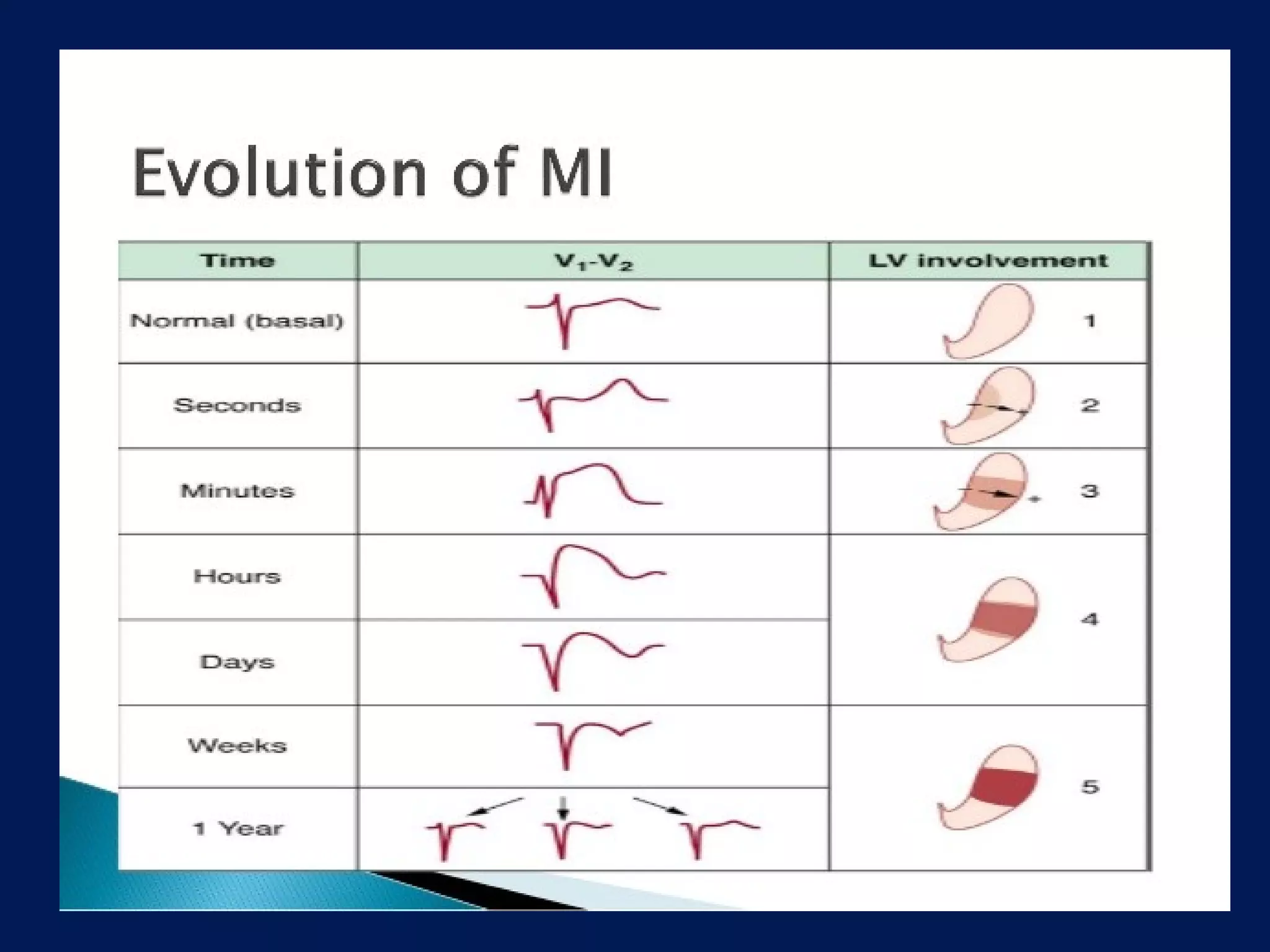
the deWinter pattern evolved from, or evolved to a “classic”
anterior STEMI.
83
De Winter’s T Waves
84
De Winter’s T waves
• Upsloping ST depression in the precordial leads (>
1mm at J-point).
• Peaked anterior T waves (V2-6), with the
ascending limb of the T wave commencing below
the isoelectric baseline.
• Subtle ST elevation in aVR > 0.5mm.
There is also some high lateral involvement, with
subtle ST elevation in aVL plus reciprocal change
in III + aVF. This is consistent with LAD occlusion
occurring proximal to the 1st diagonal.
85
De Winter’s T waves
86
De Winter’s T waves
87
88
89
90
Acute MI with a RBBB
91
Acute MI with a RBBB
92
Inferior Posterior STEMI
93
Inferior Posterior STEMI
94
Inferior STEMI
95
Inferior STEMI
96
Inferior STEMI
97
Anterior MI – Isolated J point Elevation
98

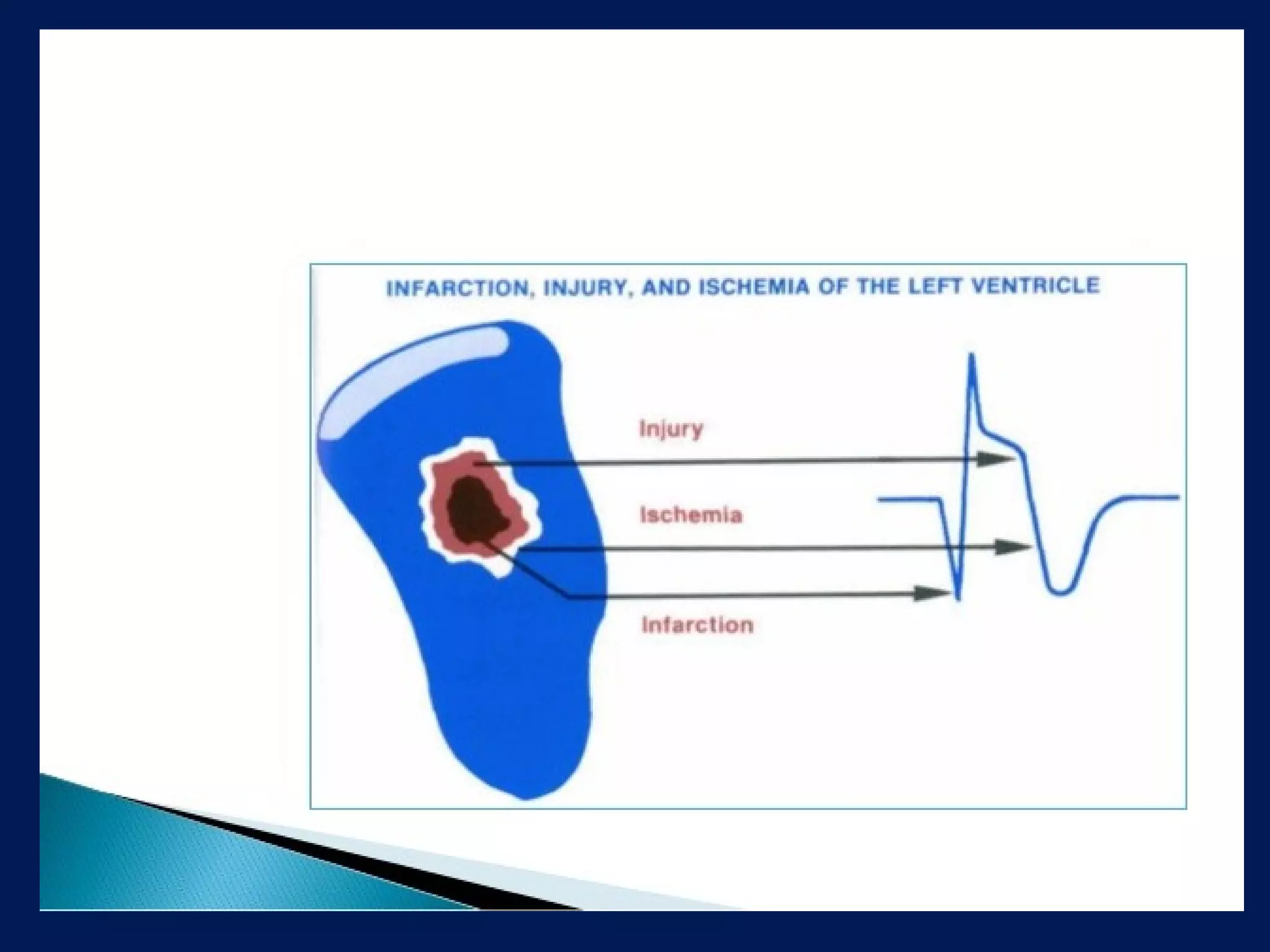
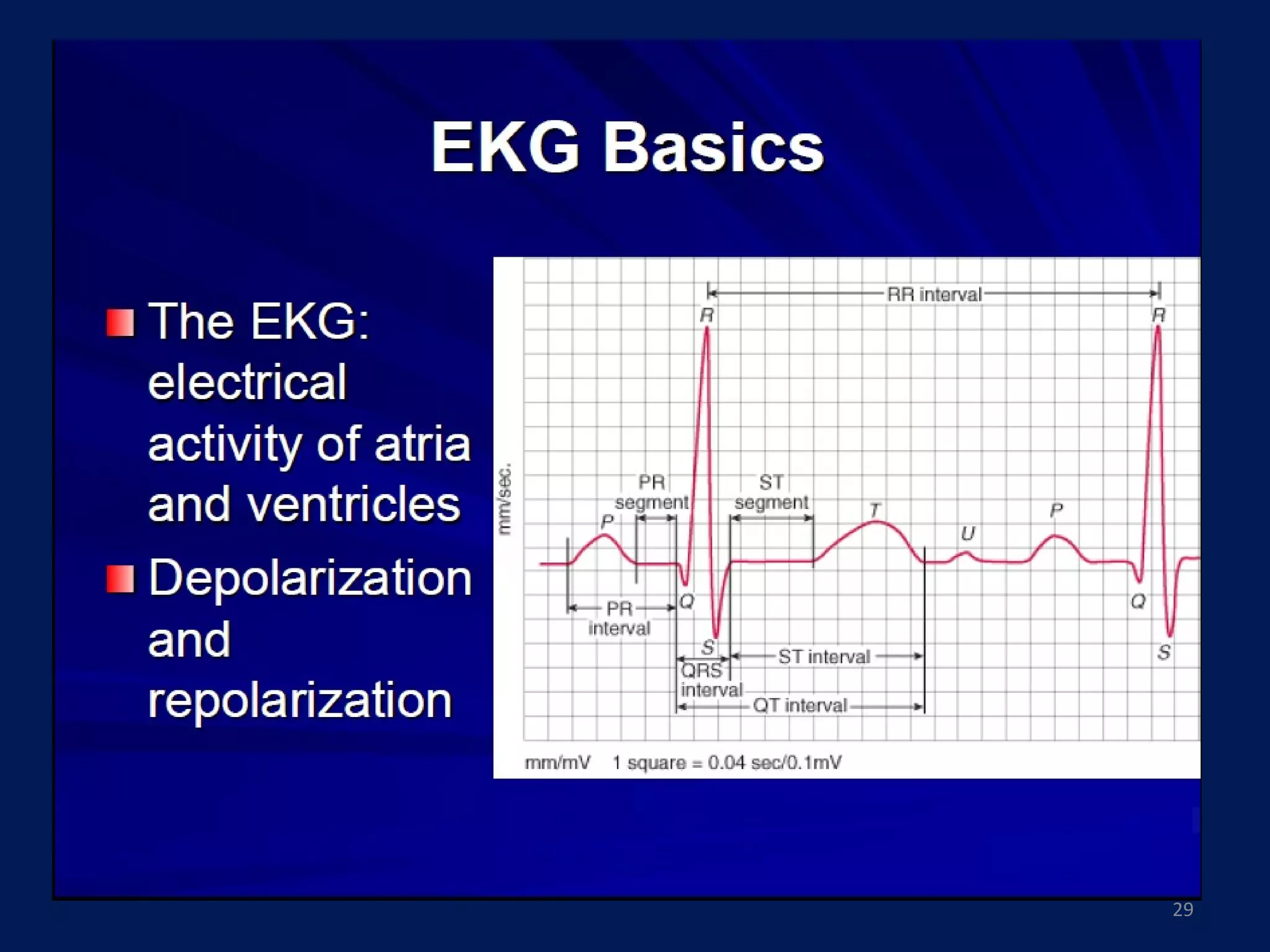
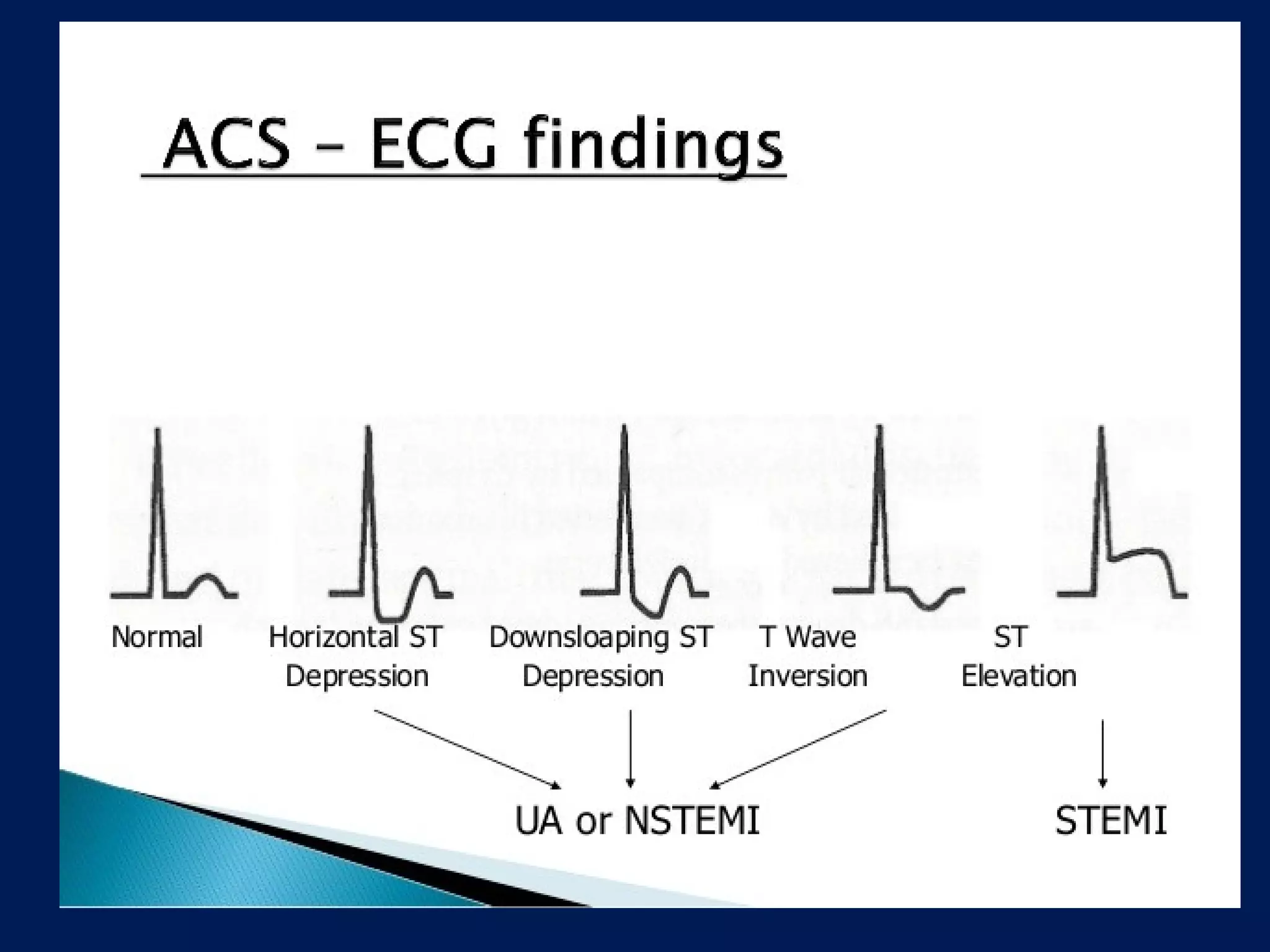
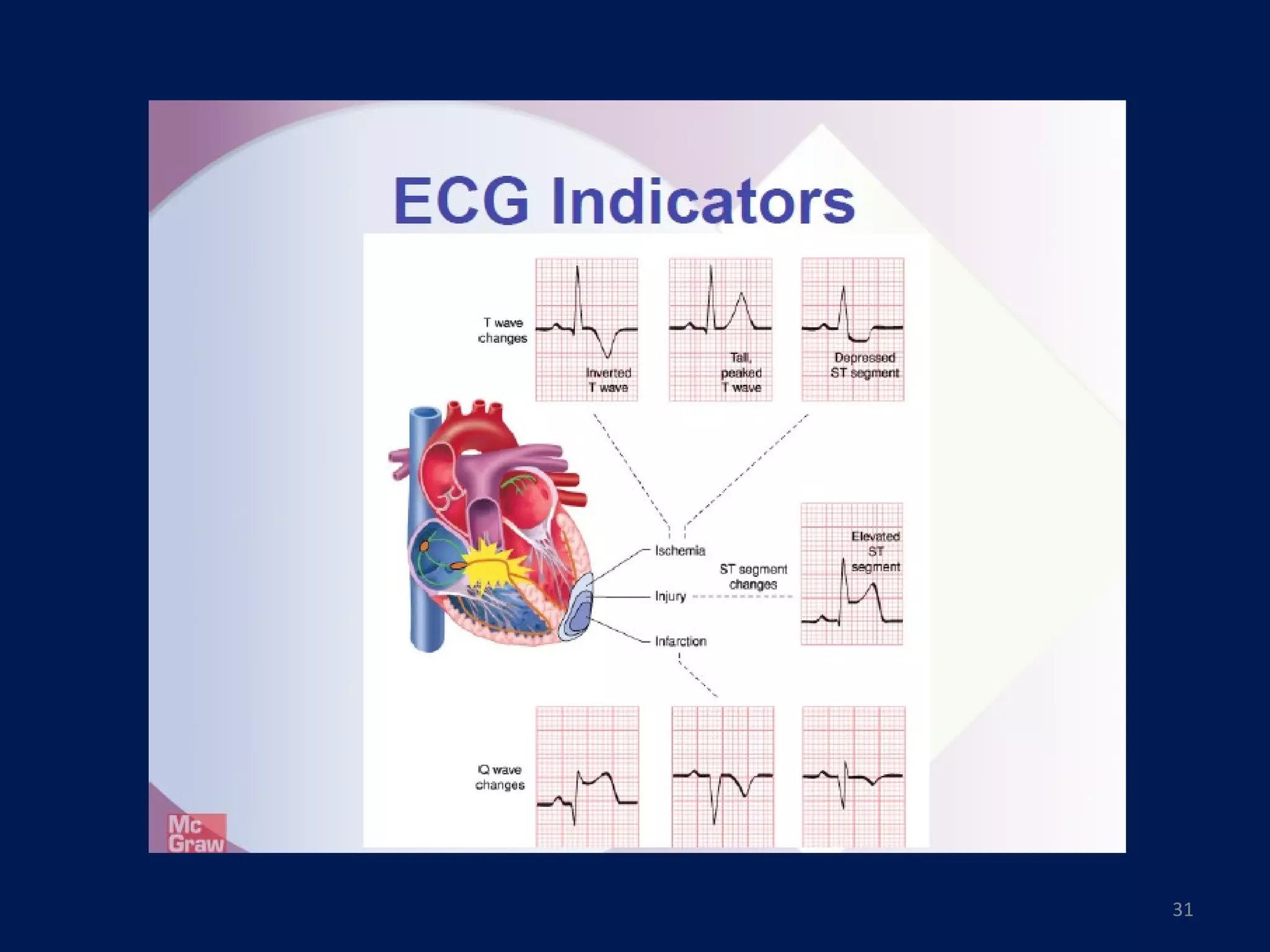
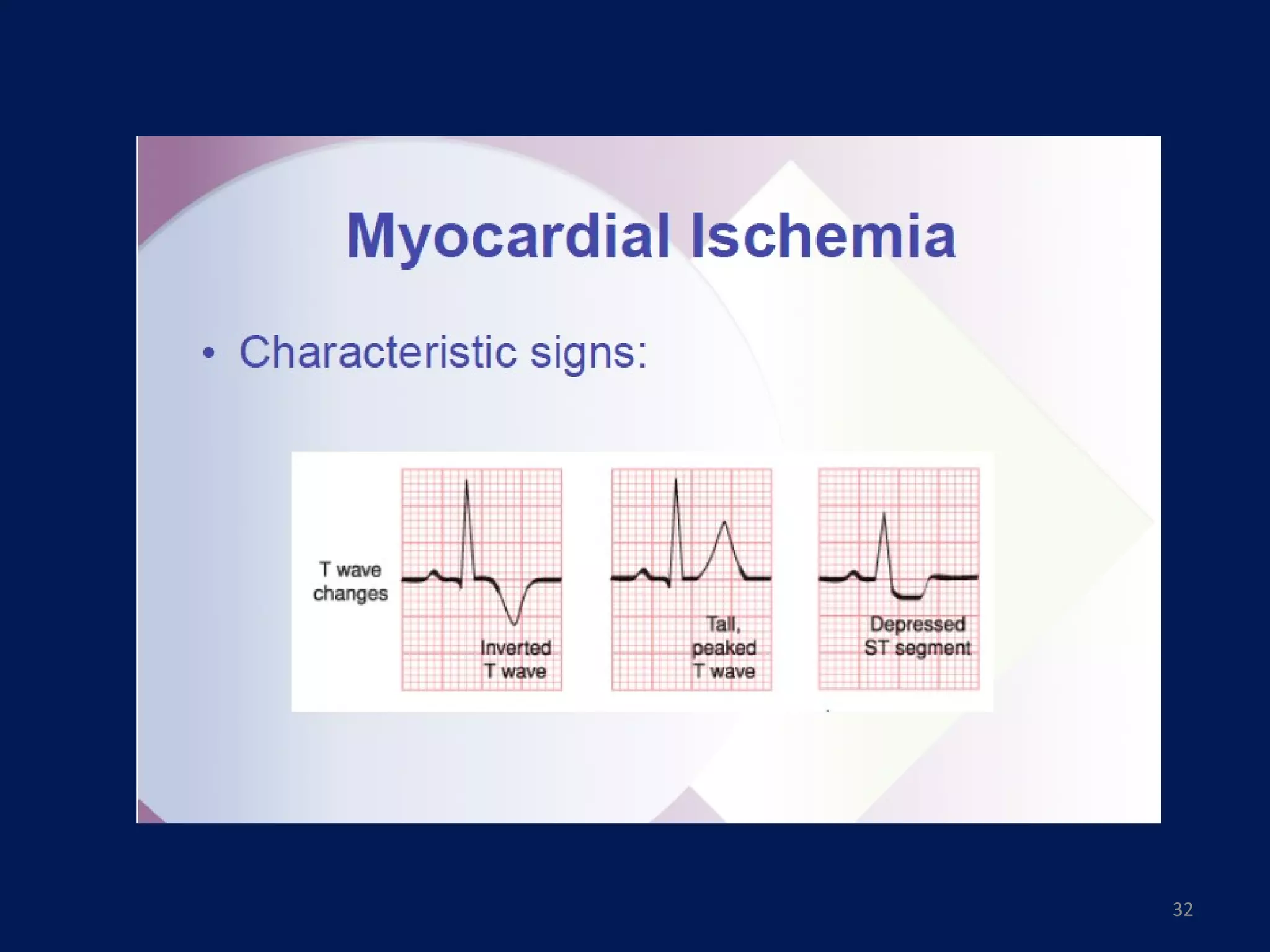
Ekg myocardial ischemia & Infarction