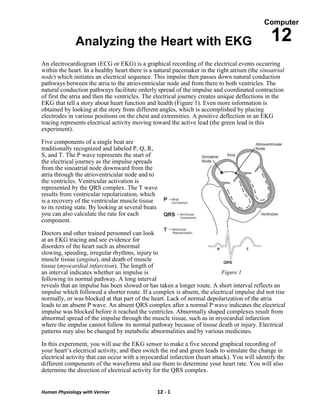
This document discusses electrocardiograms (EKGs) and how they are used to analyze the electrical activity of the heart. It provides the following key points:
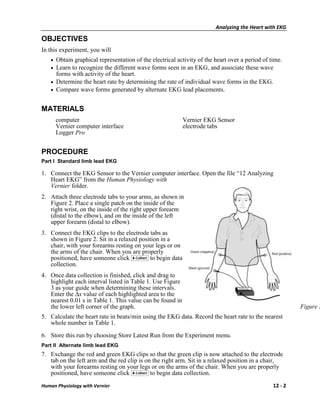
1. An EKG records the electrical signals produced by the heart during each beat and can be used to determine heart rate and identify any abnormalities.
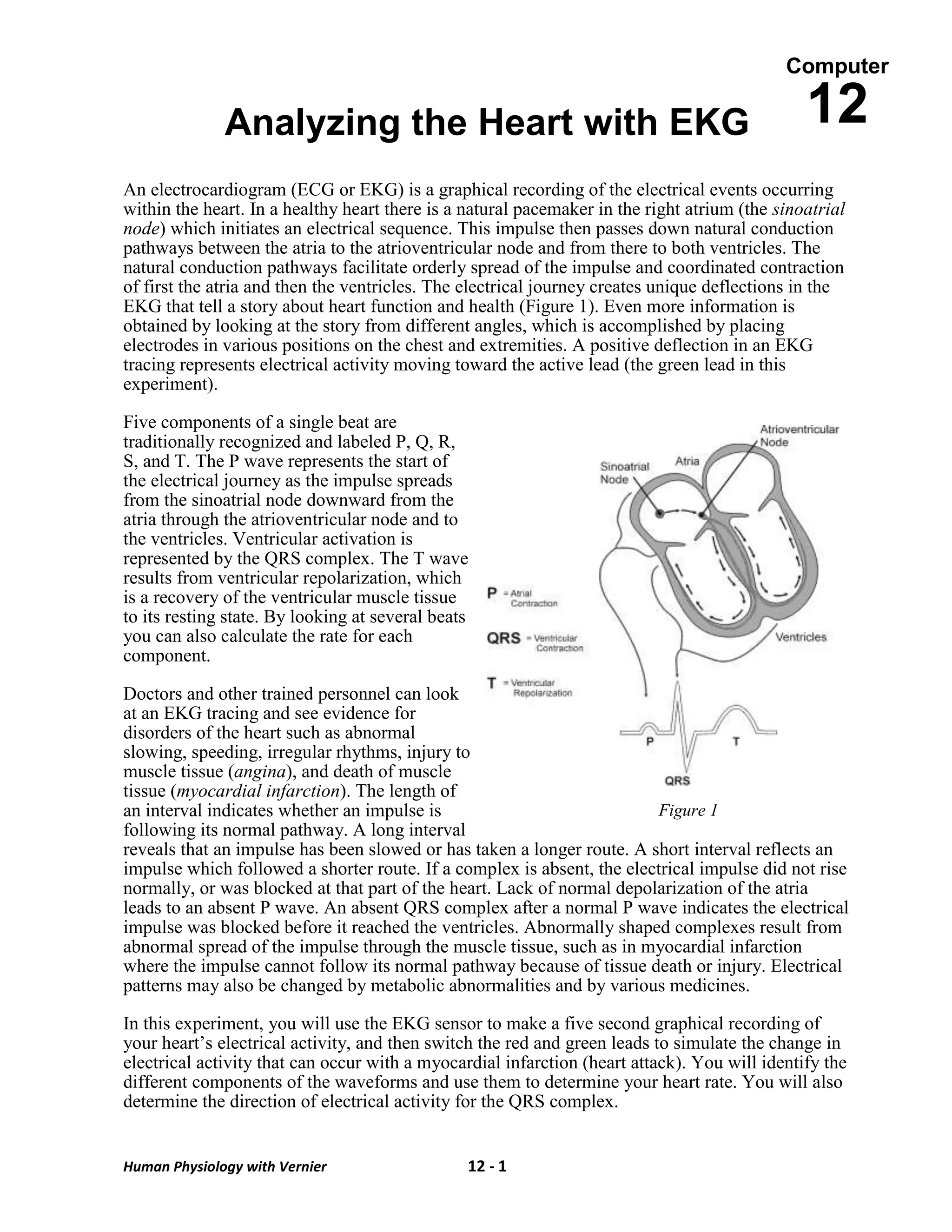
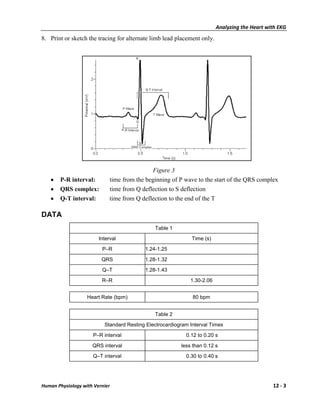
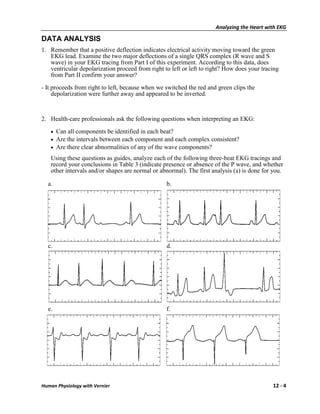
2. The main components of an EKG waveform are labeled P, Q, R, S, and T and correspond to different stages of electrical conduction through the heart.
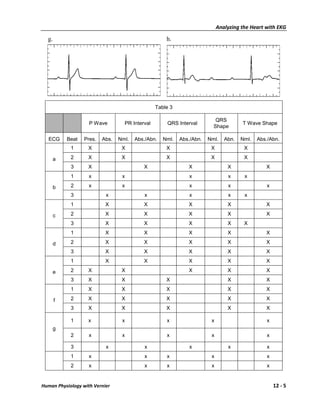
3. Doctors can examine EKG tracings to diagnose conditions like arrhythmias, heart attacks, or damage to heart muscle based on changes in waveforms and timing of intervals between components.