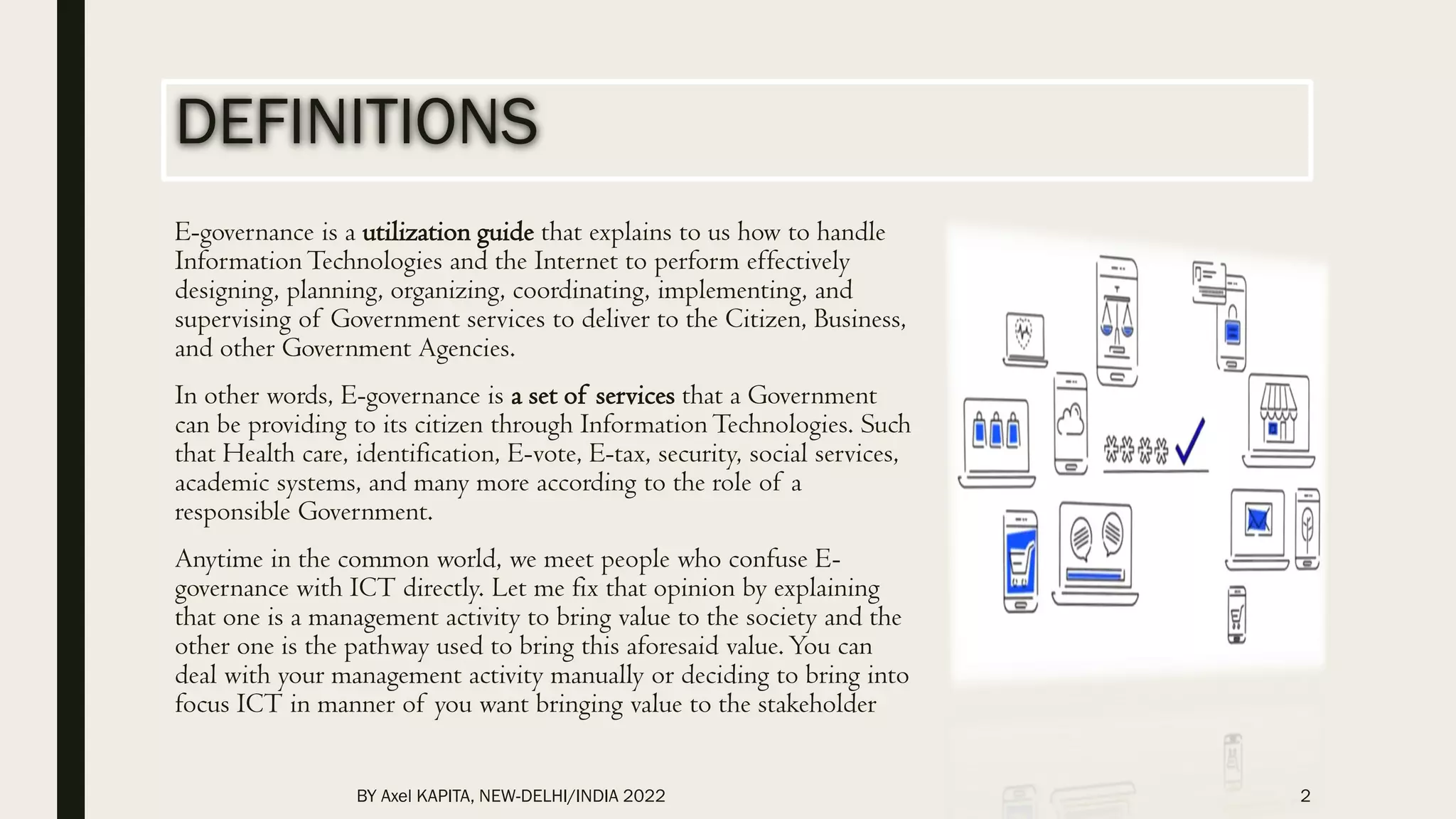
E-governance utilizes information technology to effectively design, plan, organize, coordinate, implement and supervise government services delivered to citizens, businesses and other government agencies. It can provide services such as healthcare, identification, e-voting, e-tax, security and more. E-governance is the management activity of using technology to provide value to stakeholders, while e-government specifically delivers national or local government information and services through digital means like the internet. Implementing e-governance requires political leadership, appropriate legal frameworks, infrastructure, expertise, and local literacy. Countries are evaluated based on indices like their e-government development index and online service provision.