June 2013
Learning Engineer/Project Manager
Open Learning Initiative
Kim Larson
oli.cmu.edu
What is the Open Learning Initiative?
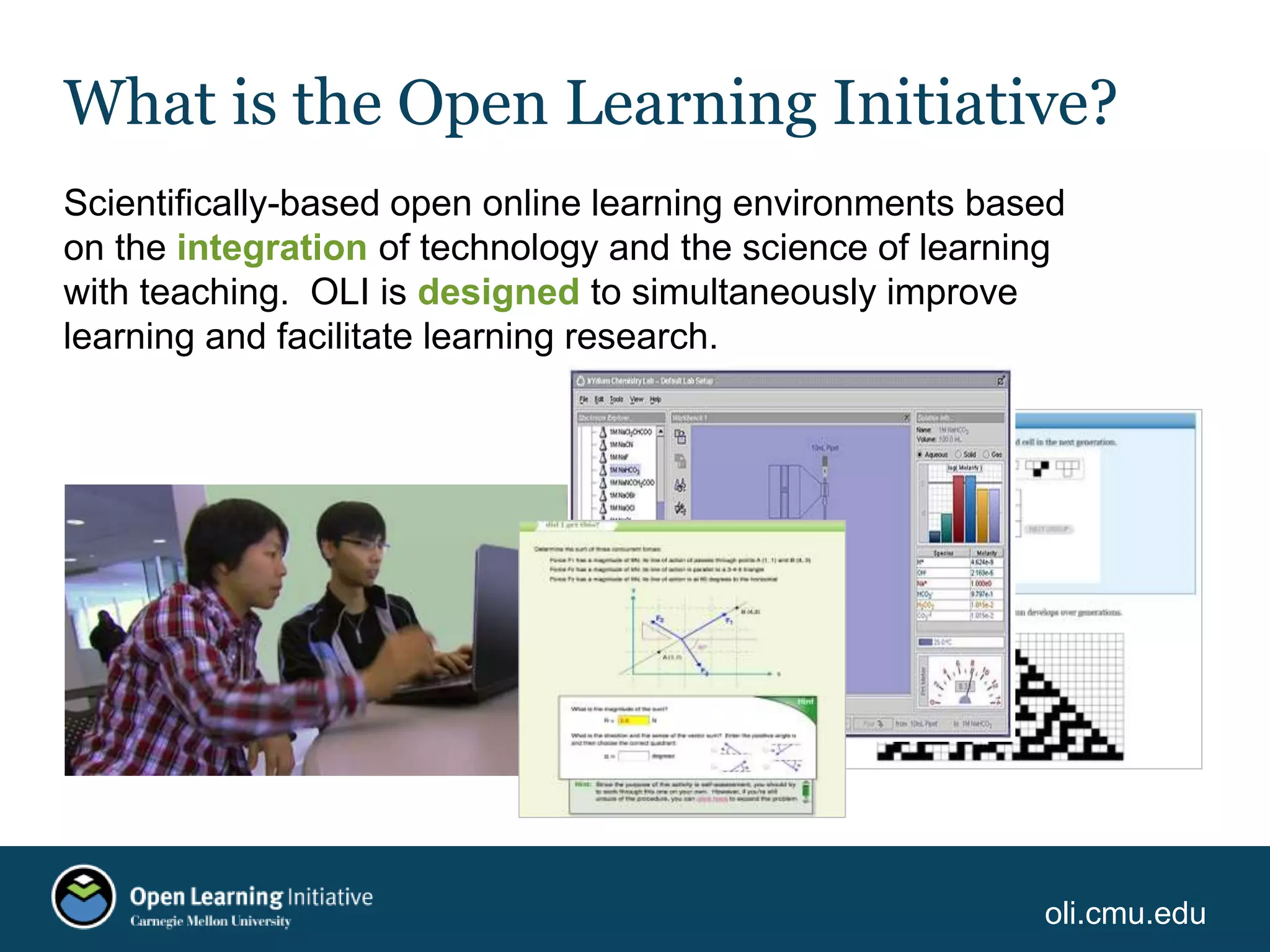
Scientifically-based open online learning environments based
on the integration of technology and the science of learning
with teaching. OLI is designed to simultaneously improve
learning and facilitate learning research.
oli.cmu.edu
oli.cmu.edu
oli.cmu.edu
oli.cmu.edu
oli.cmu.edu
oli.cmu.edu
oli.cmu.edu
oli.cmu.edu
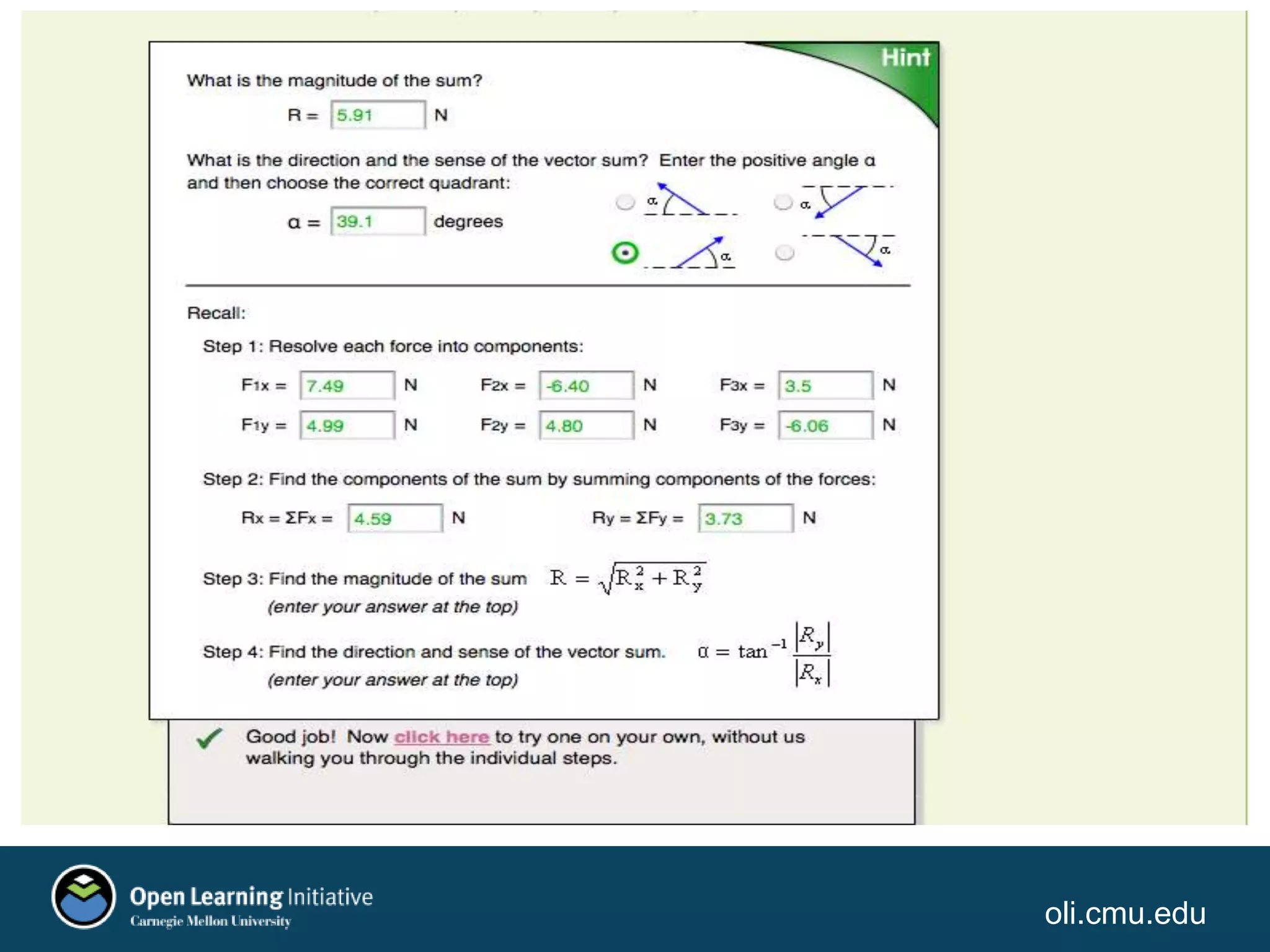
What is a Cognitive Tutor?
A computerized learning environment whose
design is based on cognitive principles and whose
interaction with students is based on that of a
(human) tutor—i.e., making comments when the
student errs, answering questions about what to
do next, and maintaining a low profile when the
student is performing well.
oli.cmu.edu
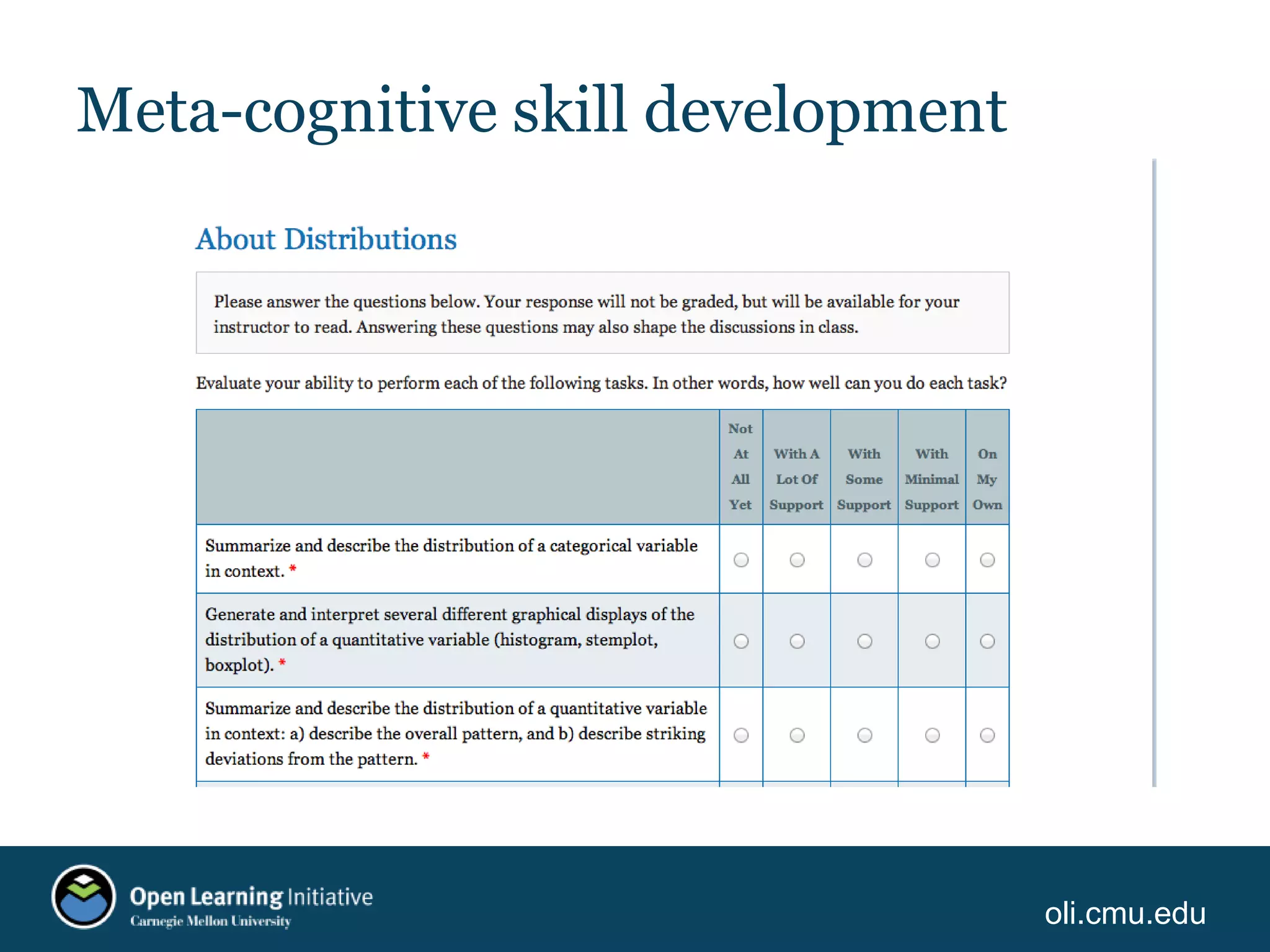
Meta-cognitive skill development
oli.cmu.edu
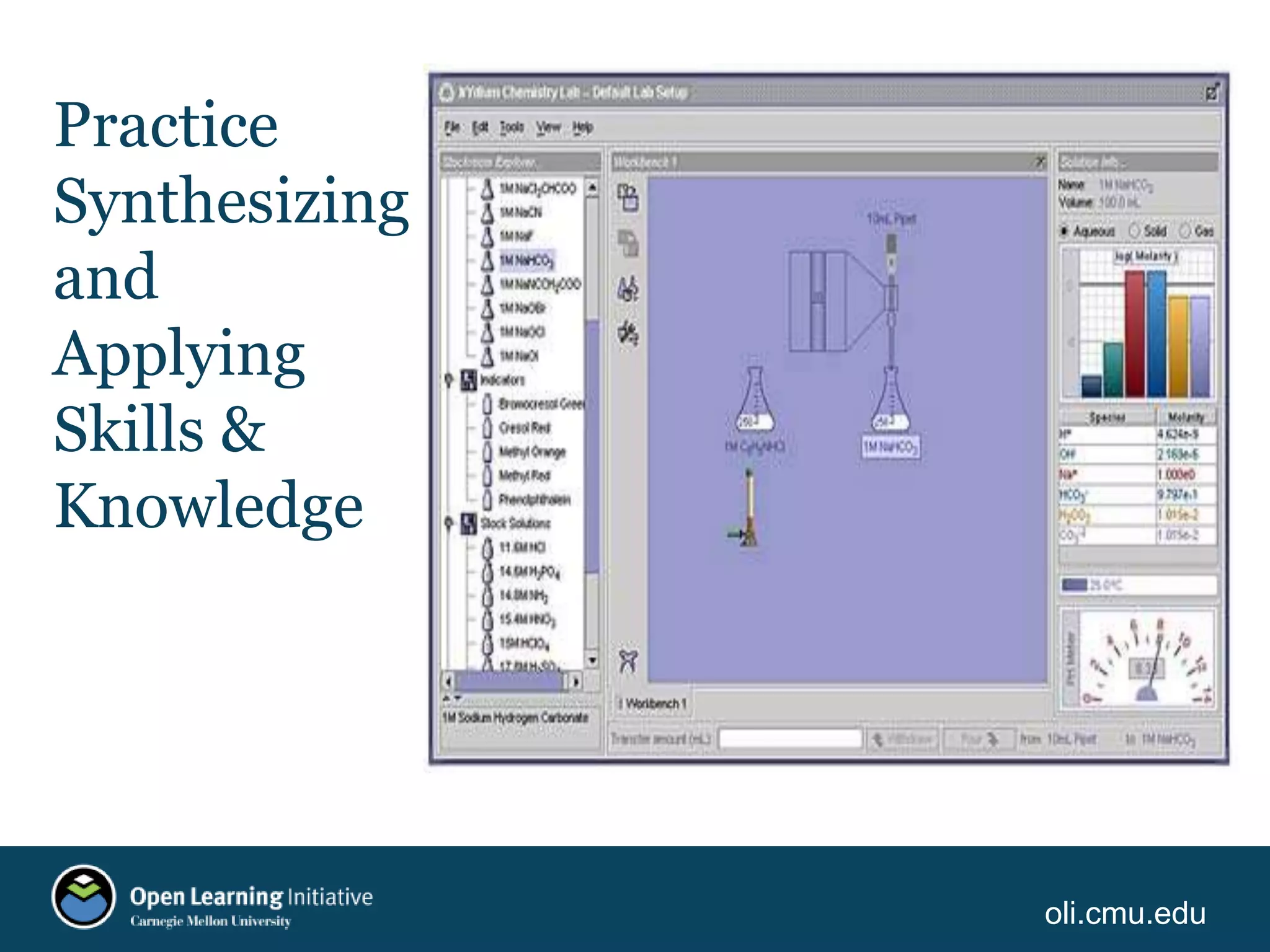
Practice
Synthesizing
and
Applying
Skills &
Knowledge
oli.cmu.edu
oli.cmu.edu
oli.cmu.edu
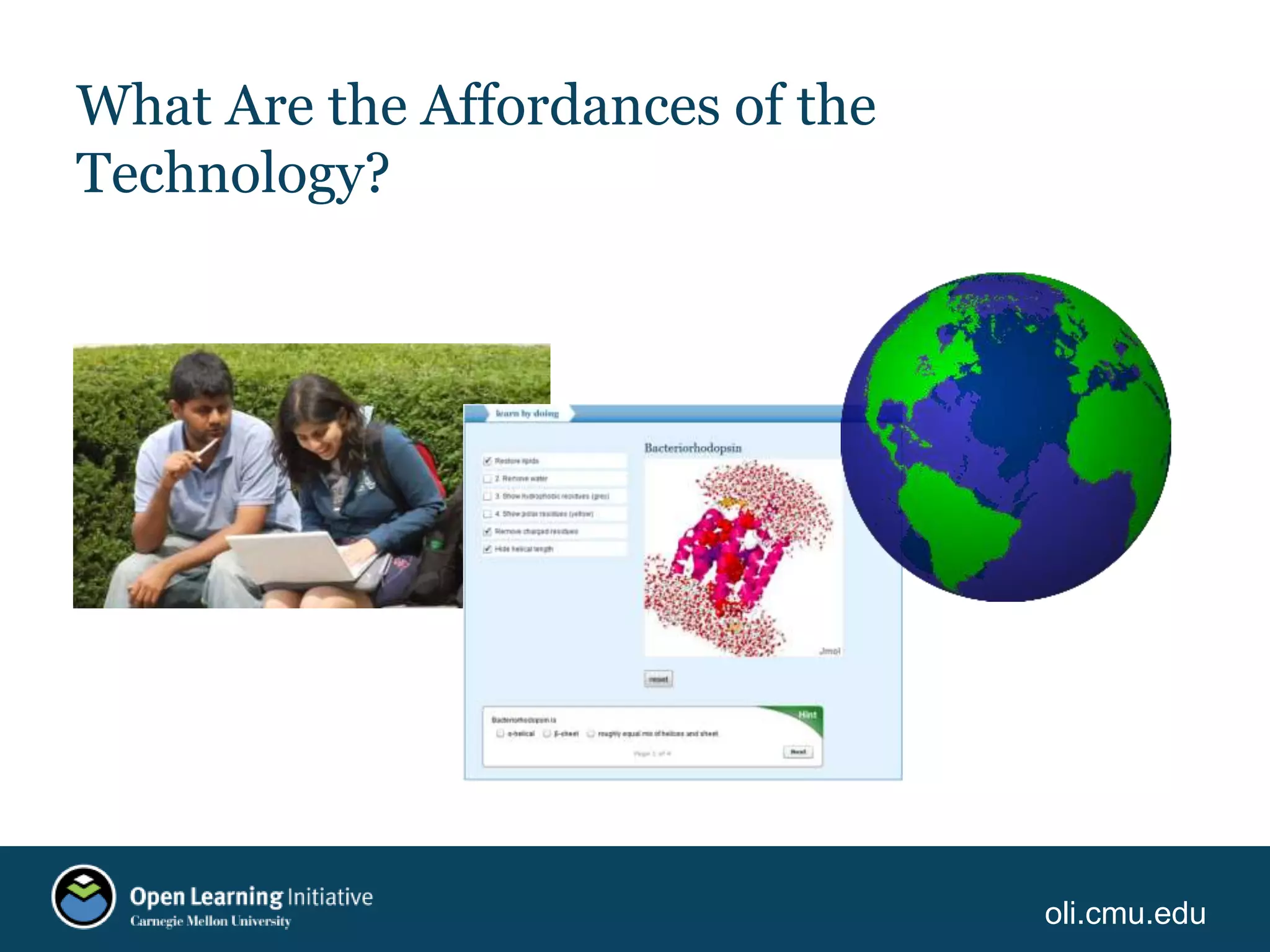
What Are the Affordances of the
Technology?
oli.cmu.edu
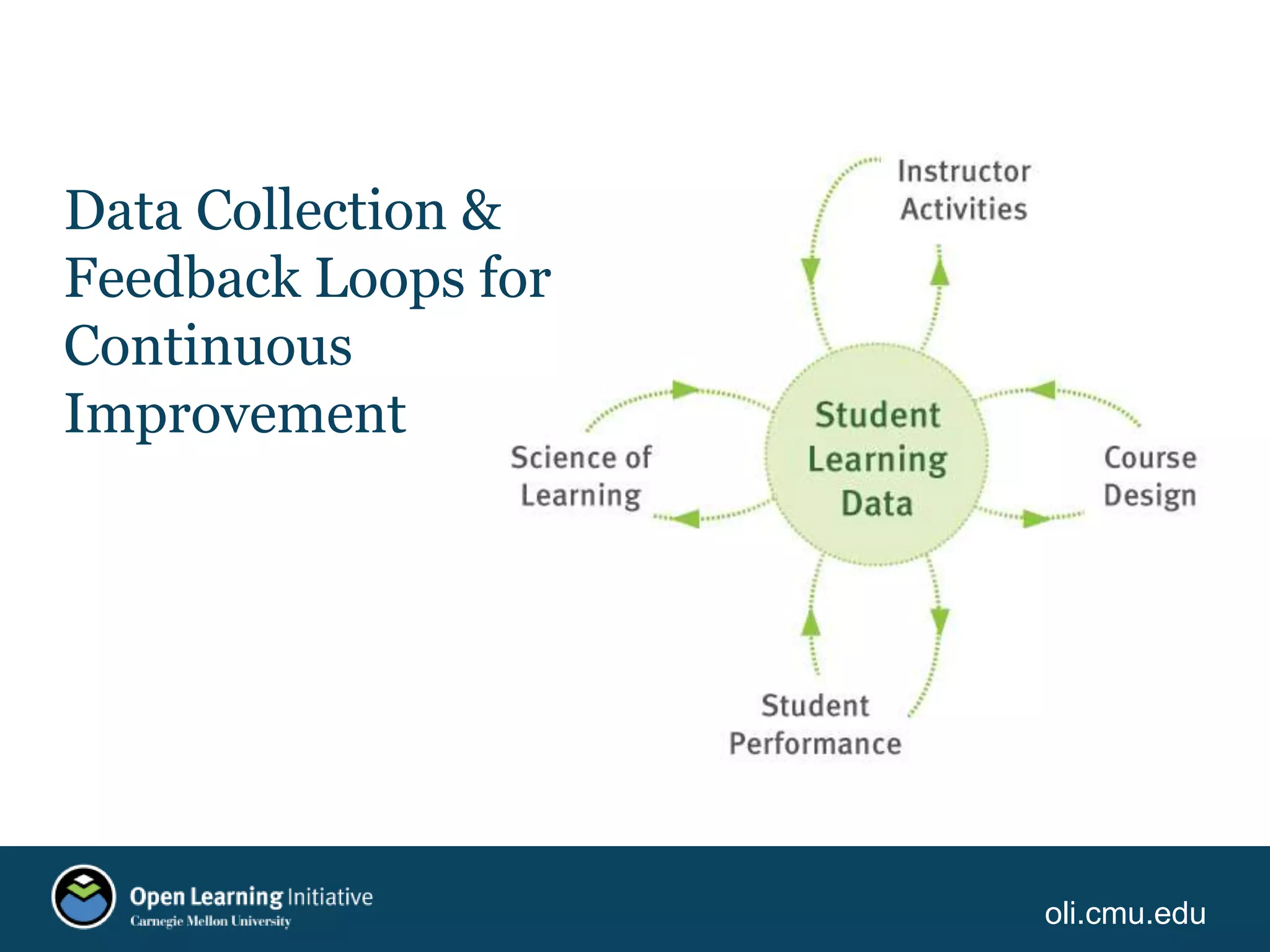
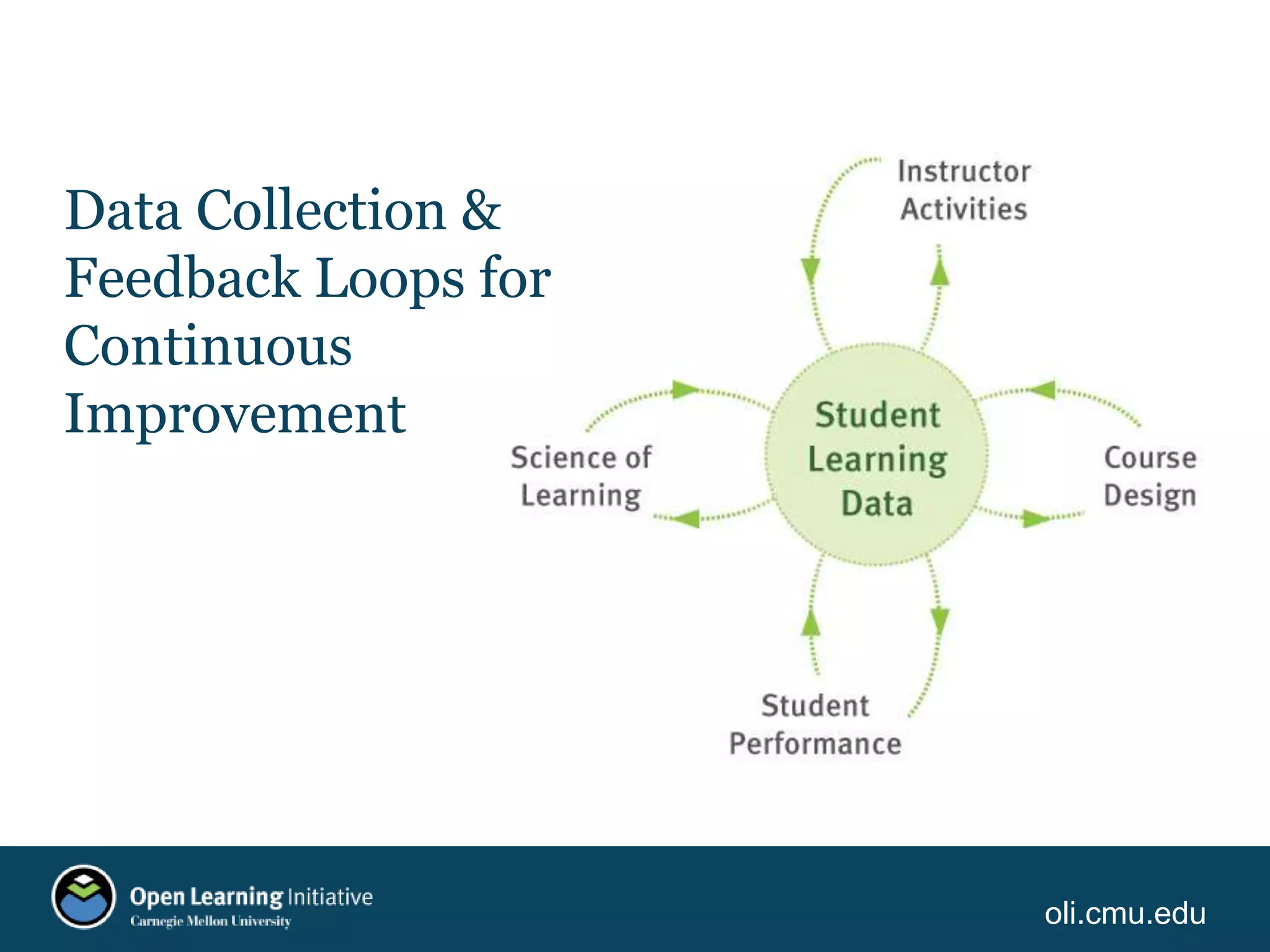
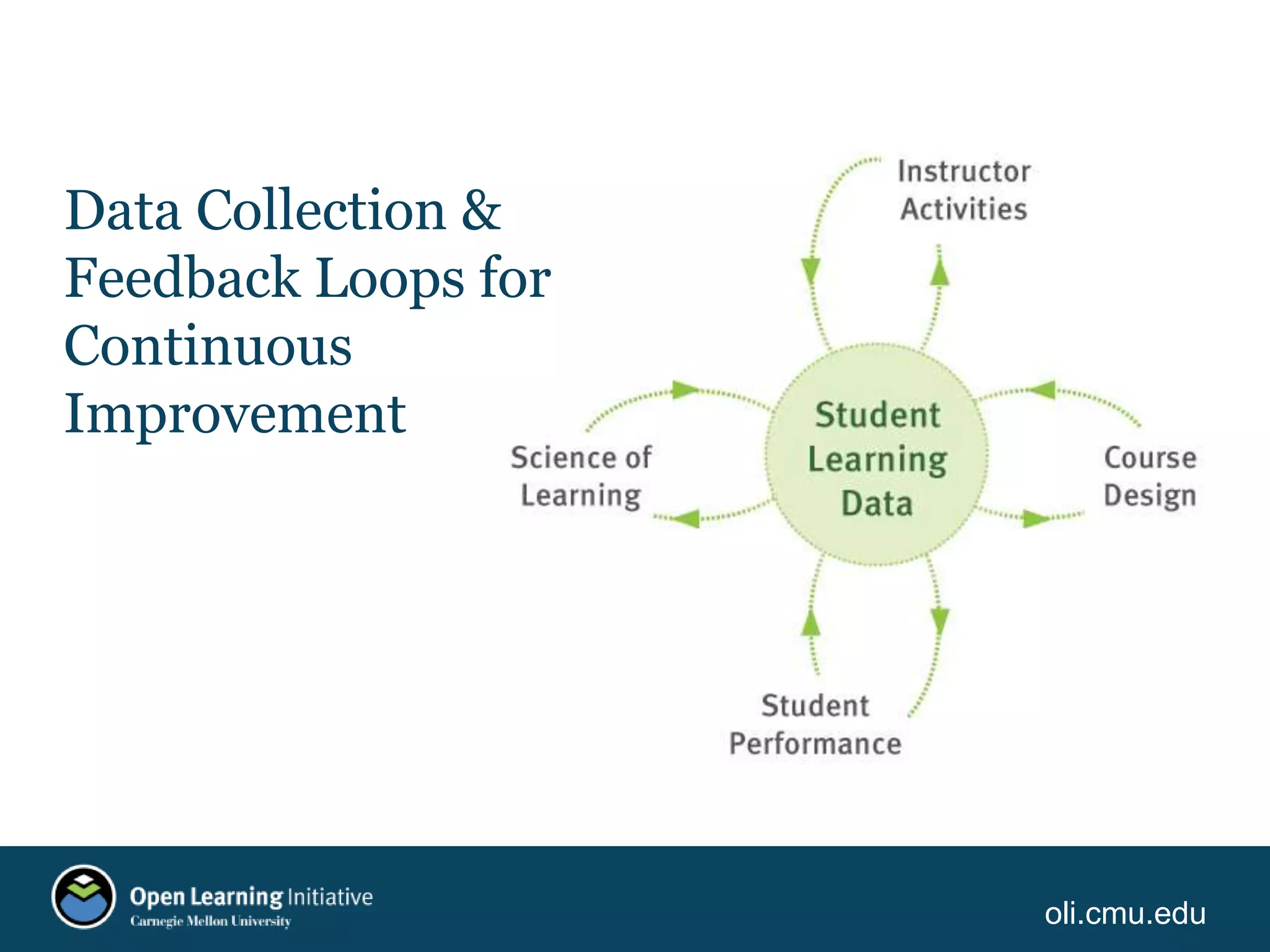
Data Collection &
Feedback Loops for
Continuous
Improvement
oli.cmu.edu
oli.cmu.edu
oli.cmu.edu
oli.cmu.edu
oli.cmu.edu
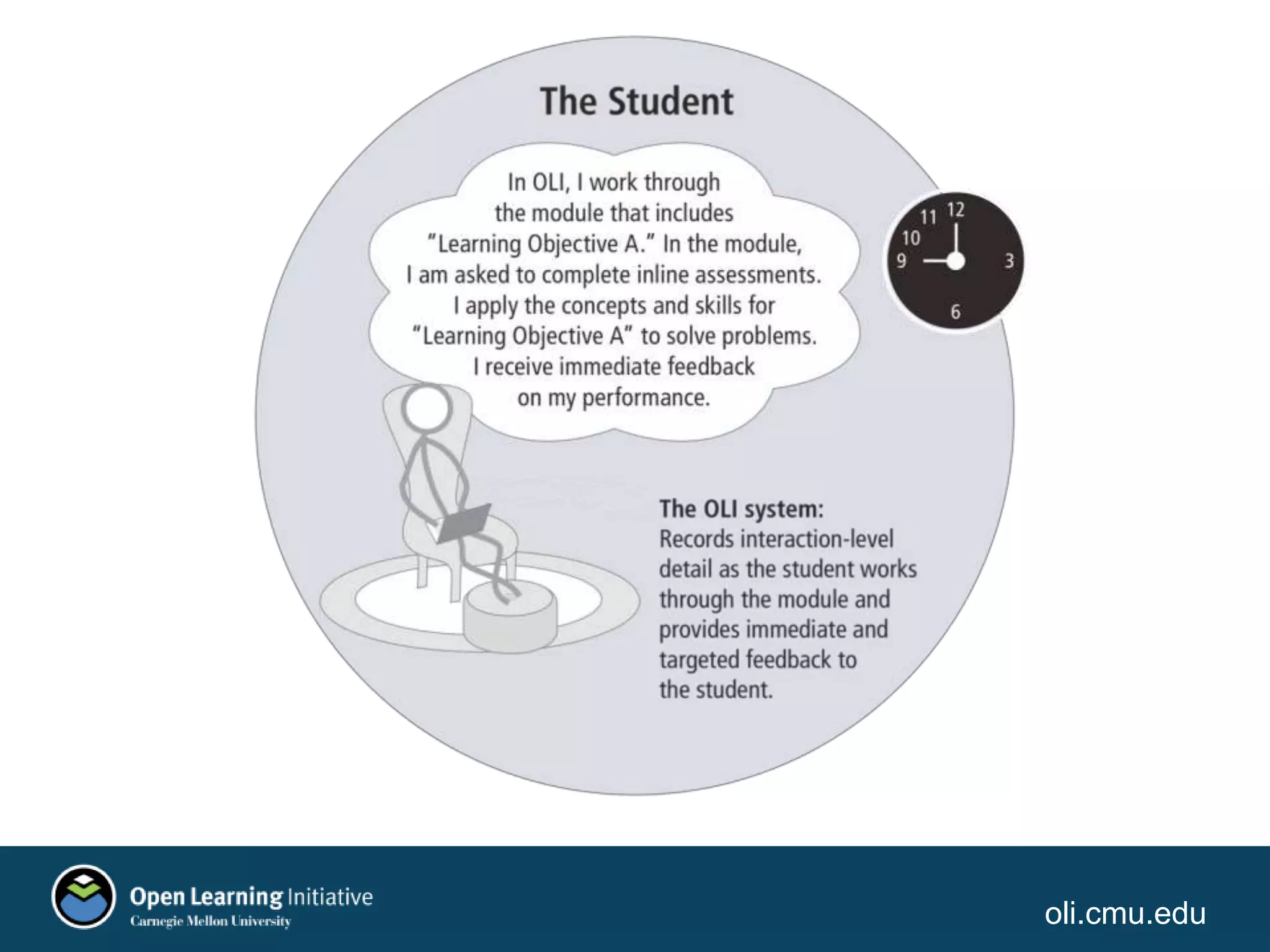
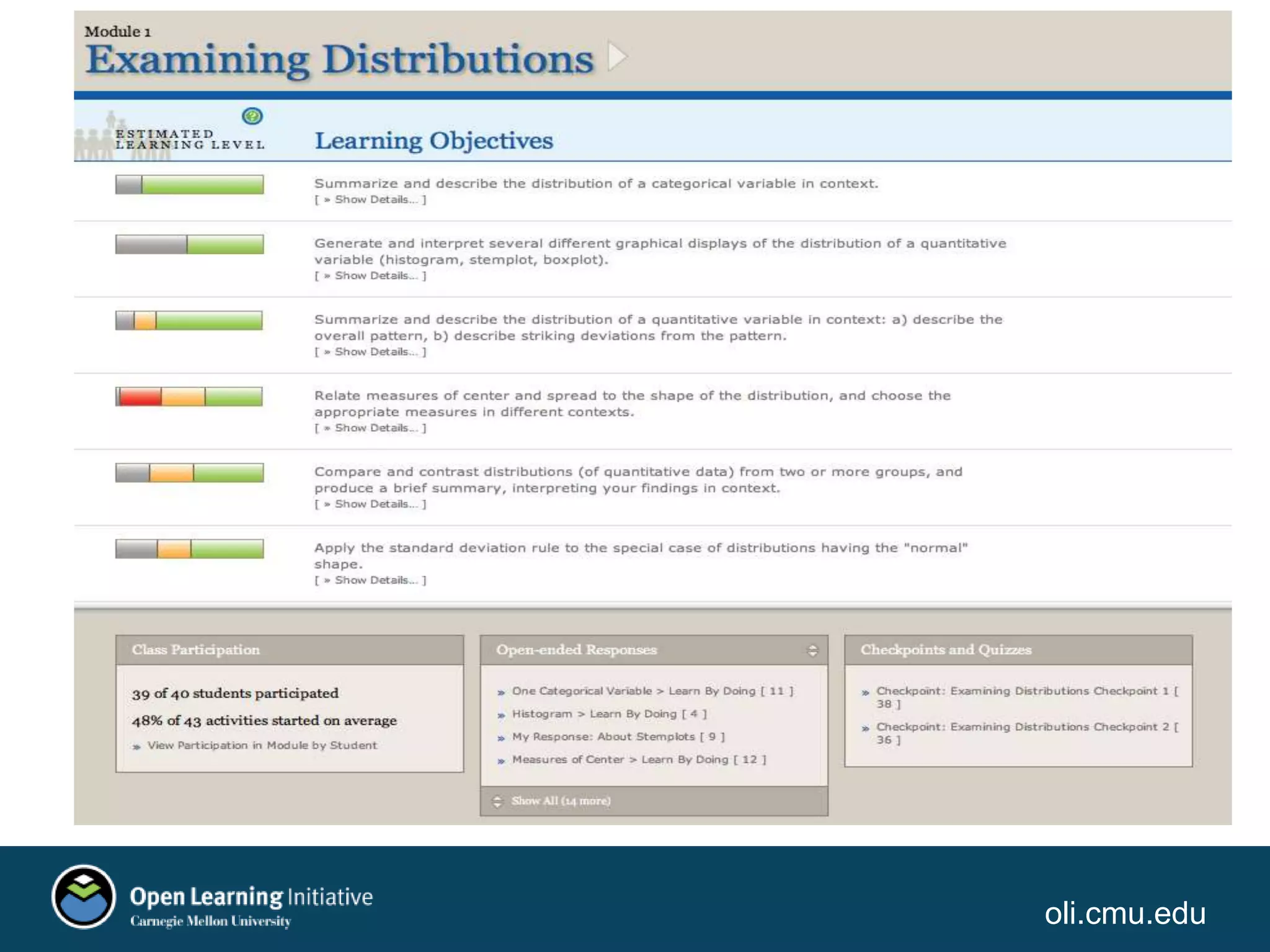
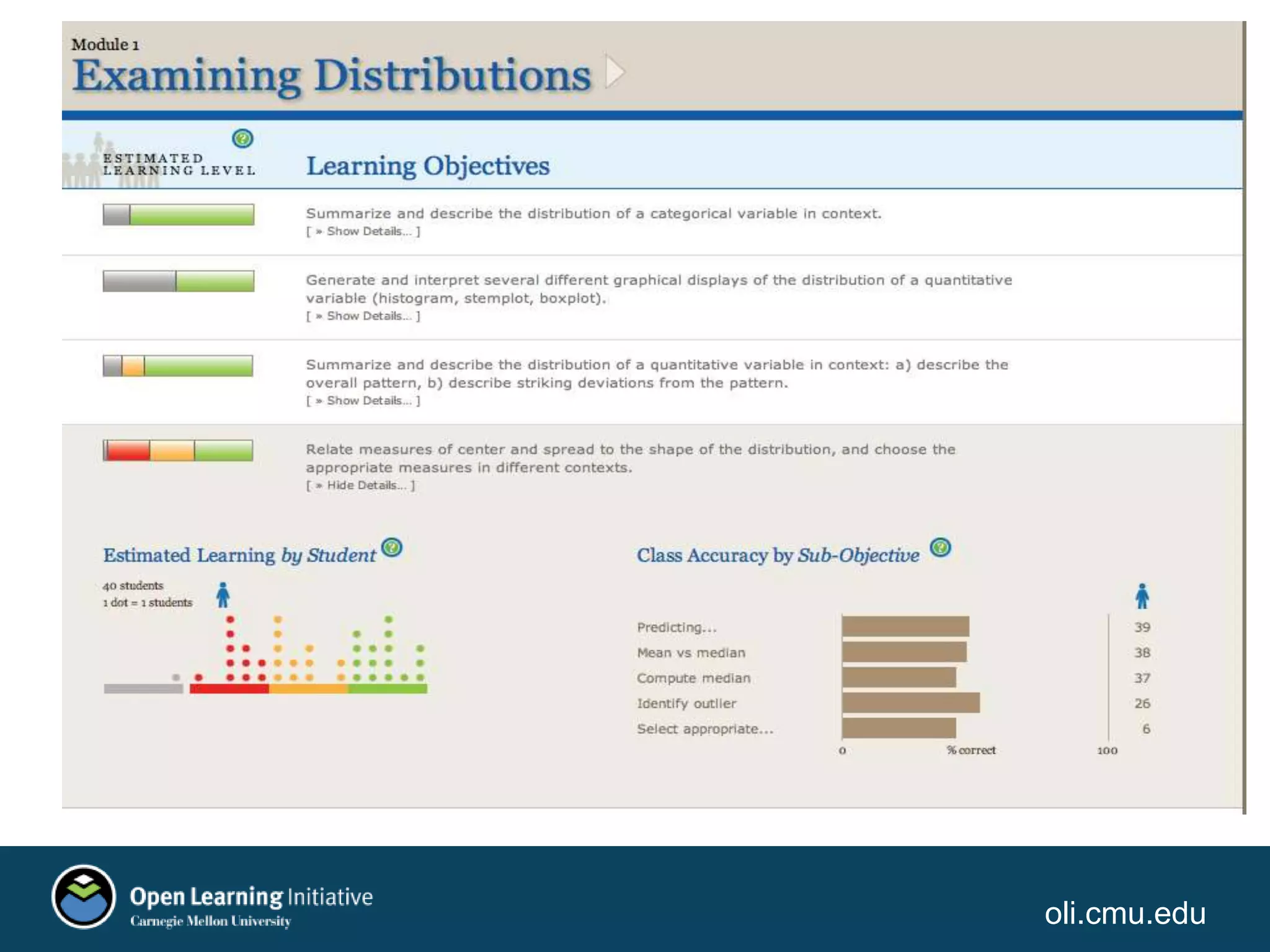
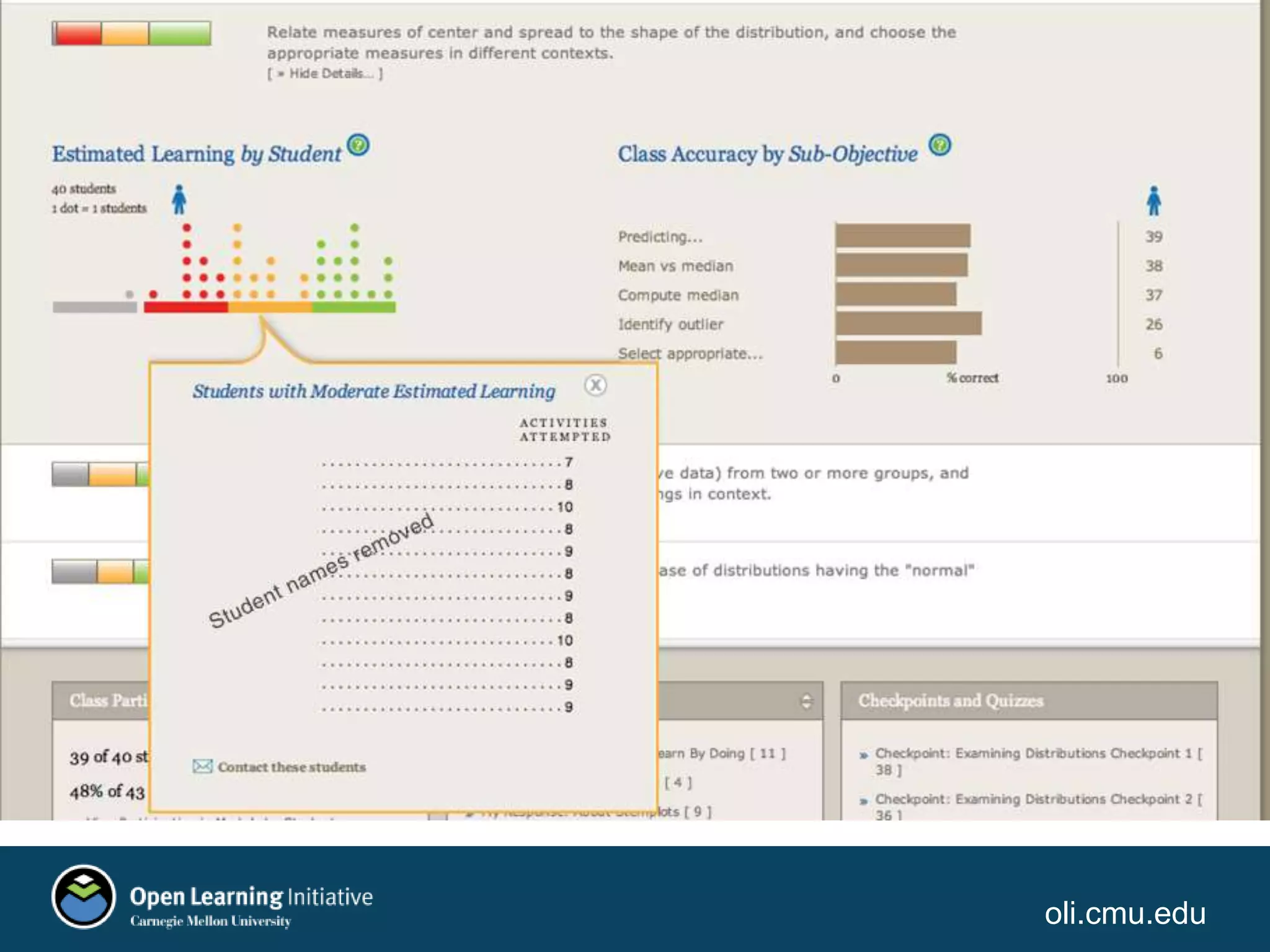
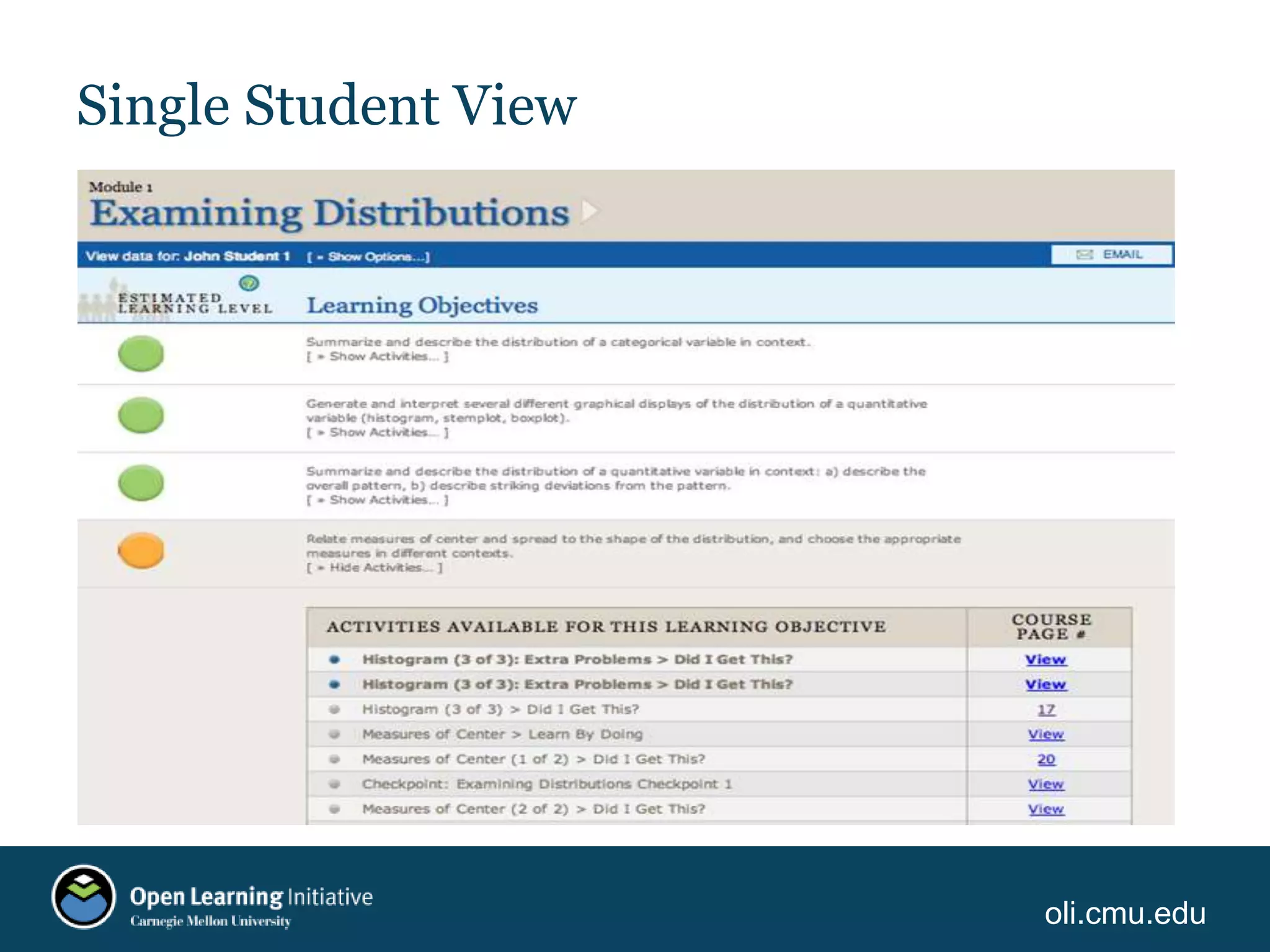
Single Student View
oli.cmu.edu
Data Collection &
Feedback Loops for
Continuous
Improvement
oli.cmu.edu
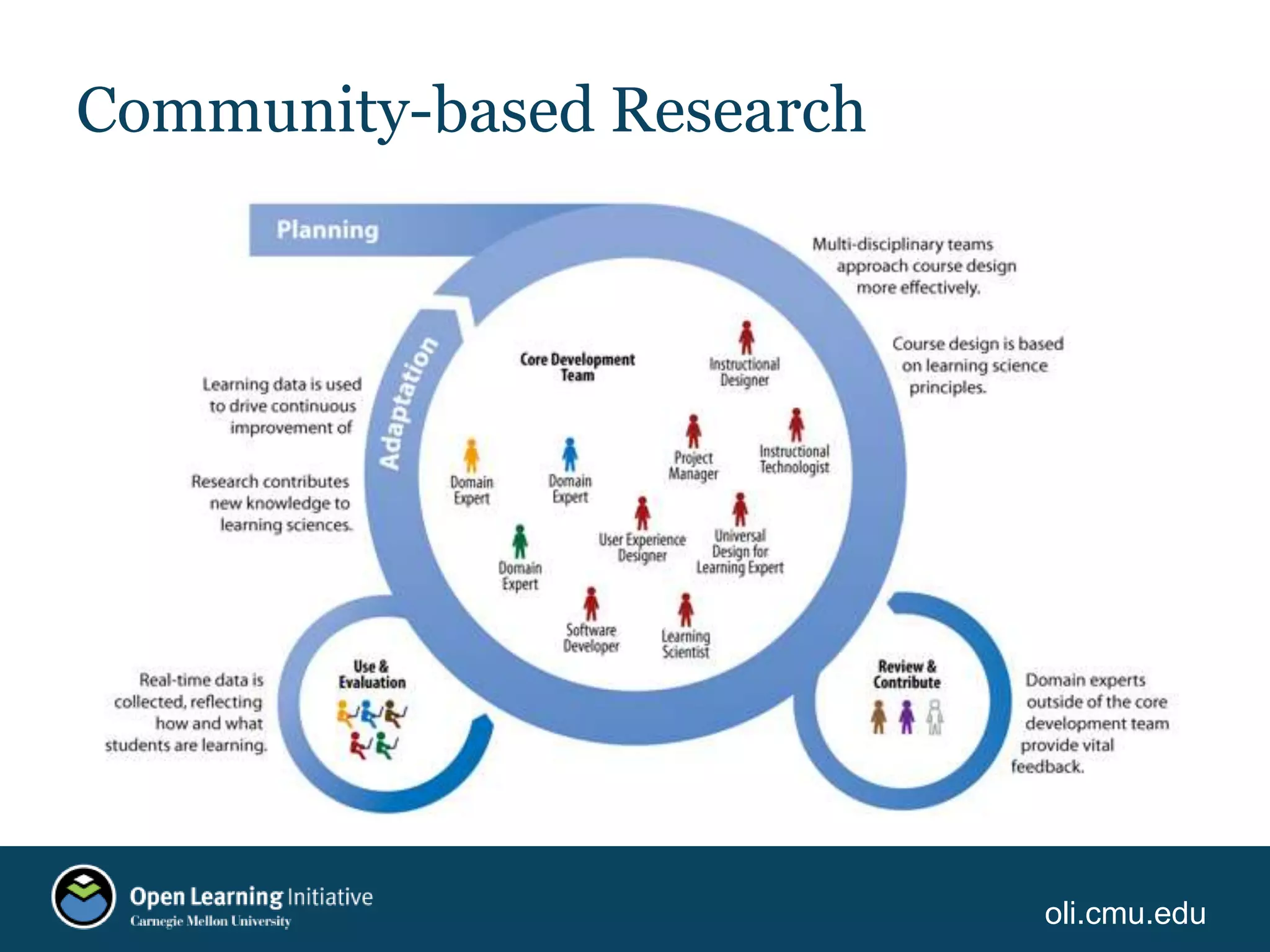
Community-based Research
oli.cmu.edu
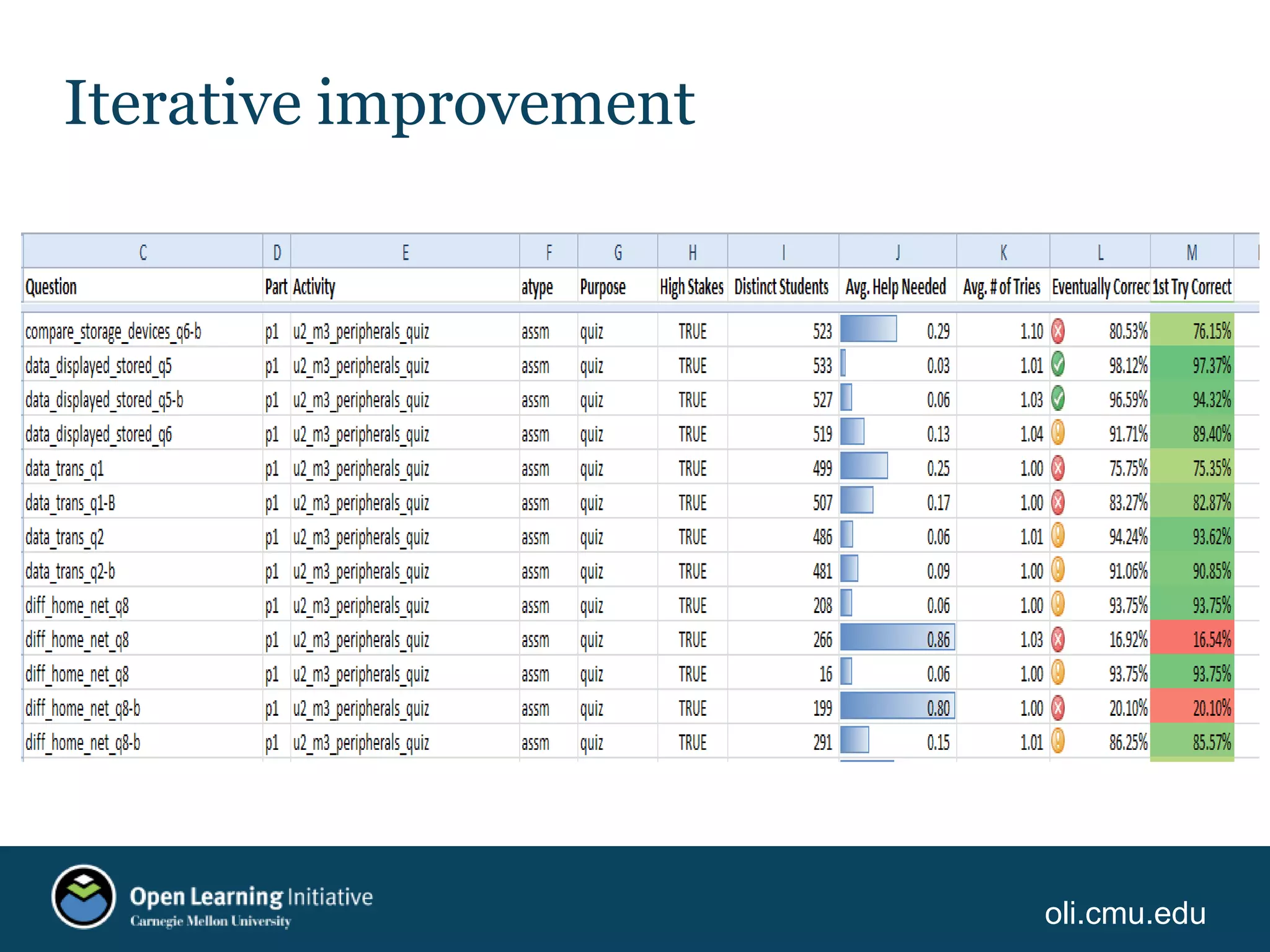
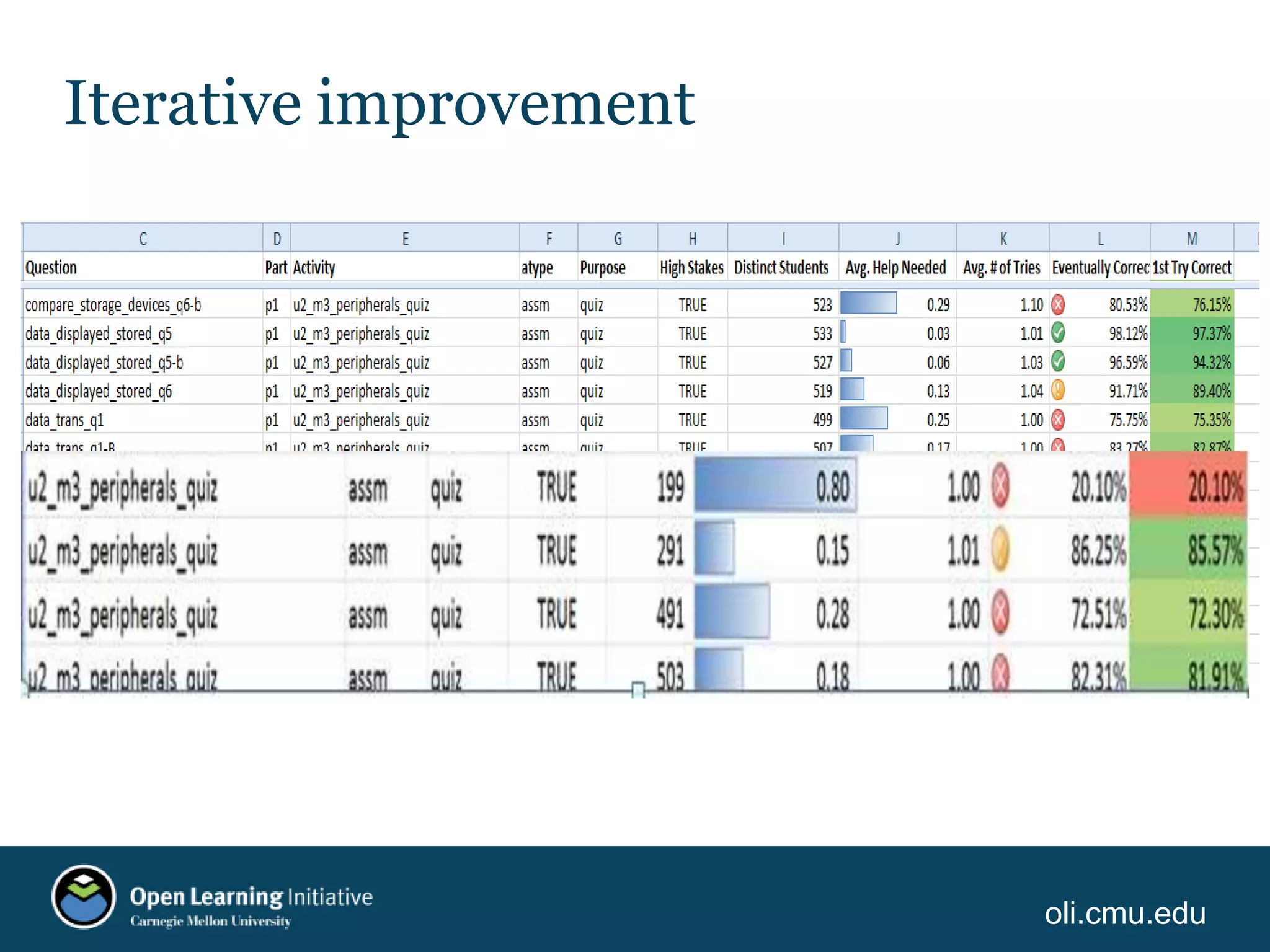
Iterative improvement
oli.cmu.edu
Iterative improvement
oli.cmu.edu
Data Collection &
Feedback Loops for
Continuous
Improvement
oli.cmu.edu
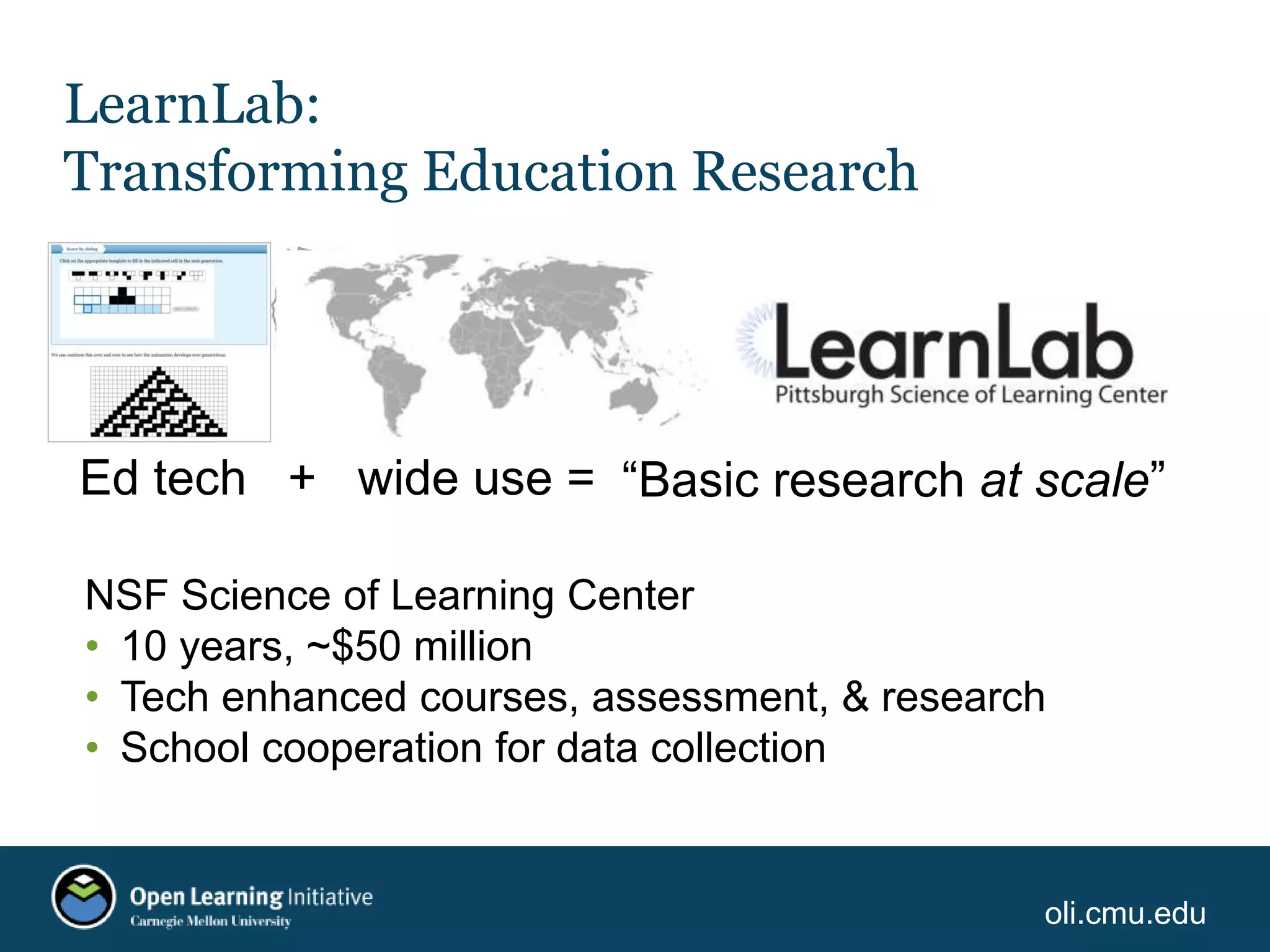
LearnLab:
Transforming Education Research
NSF Science of Learning Center
• 10 years, ~$50 million
• Tech enhanced courses, assessment, & research
• School cooperation for data collection
Ed tech + wide use = “Basic research at scale”
oli.cmu.edu
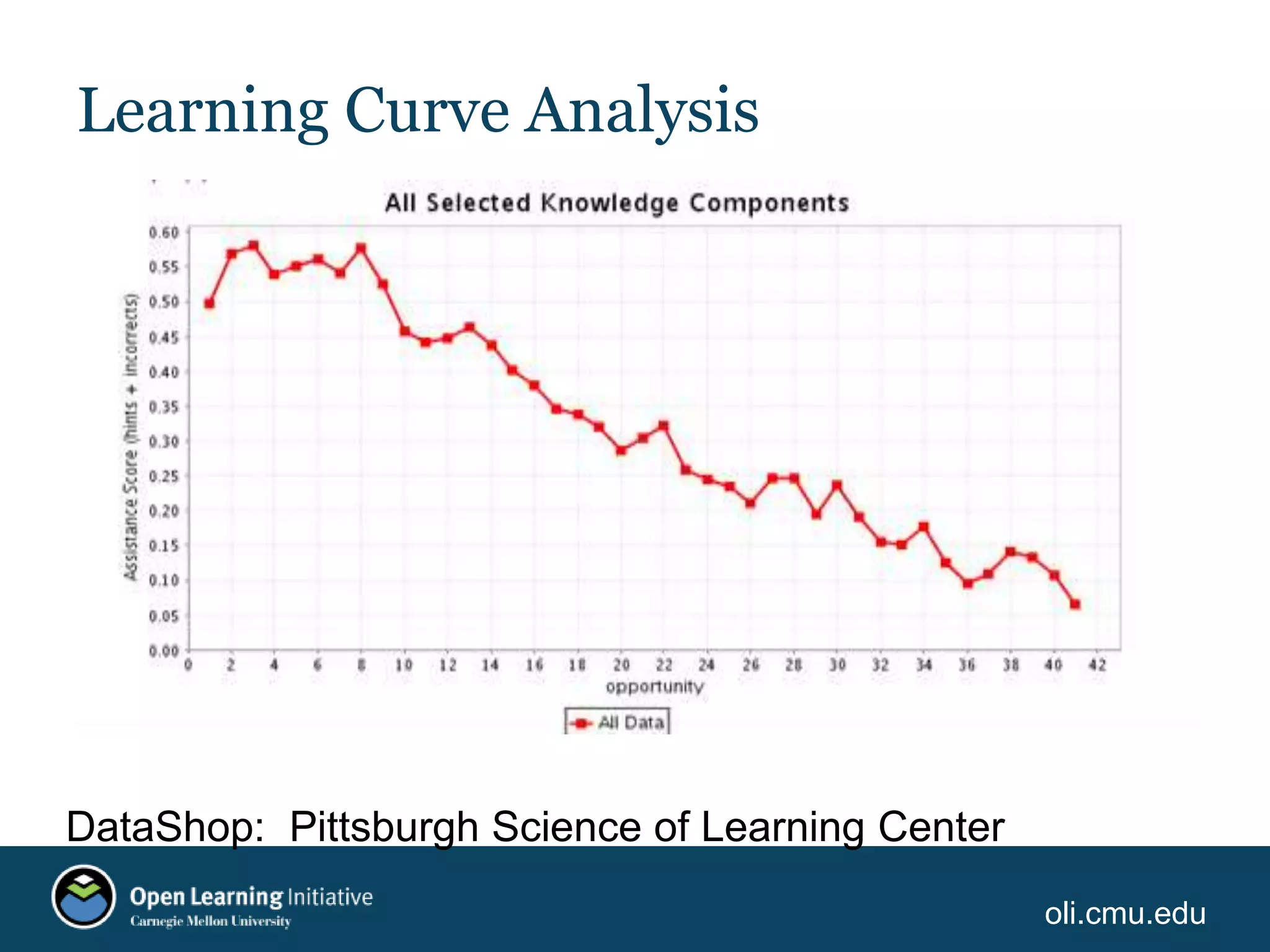
Learning Curve Analysis
DataShop: Pittsburgh Science of Learning Center
oli.cmu.edu
OLI Review:
• Apply learning science research and scientific method to course
development, implementation and evaluation.
• Develop interactive learning environments collaboratively (teams of
content experts and novices, learning scientists, HCI, software
engineers).
• Feedback loops for continuous improvement.
• Communities of use, evaluation and improvement.
What Difference Does it Make?
oli.cmu.edu
Proven Results
This study, conducted at Carnegie Mellon
University, shows that students using the
OLI statistics course at Carnegie Mellon
achieved the same or better learning
outcomes as students in the traditional
course in half the time.
Lovett, M., Meyer, O., & Thille, C. (2008). The Open Learning Initiative:
Measuring the effectiveness of the OLI statistics course in accelerating
student learning. Journal of Interactive Media in Education.
oli.cmu.edu
Accelerated Learning Results
• OLI students completed course in half the time with half the number of
in-person course meetings
• OLI students showed significantly greater learning gains (on the national
standard “CAOS” test for statistics knowledge) and similar exam scores
• No significant difference between OLI and traditional students in the
amount of time spent studying statistics outside of class
• No significant difference between OLI and traditional students in follow-
up measures given 1+ semesters later
M. Lovett, O. Meyer, & C. Thille, C., “The Open Learning Initiative: Measuring the effectiveness of the OLI
statistics course in accelerating student learning,” Journal of Interactive Media in Education (2008).
oli.cmu.edu
Proven Results
“The results of this study are remarkable;
they show comparable learning outcomes for
this basic course, with a promise of cost
savings and productivity gains over time.”
Deanna Marcum
Managing Director, Thaka S+R
Bowen, W.G., Chingos, M.M., Lack, K.L., & Nygren, T.I. (2012). Interactive
Learning Online at Public Universities: Evidence from Randomized Trials.
ITHAKA.
oli.cmu.edu
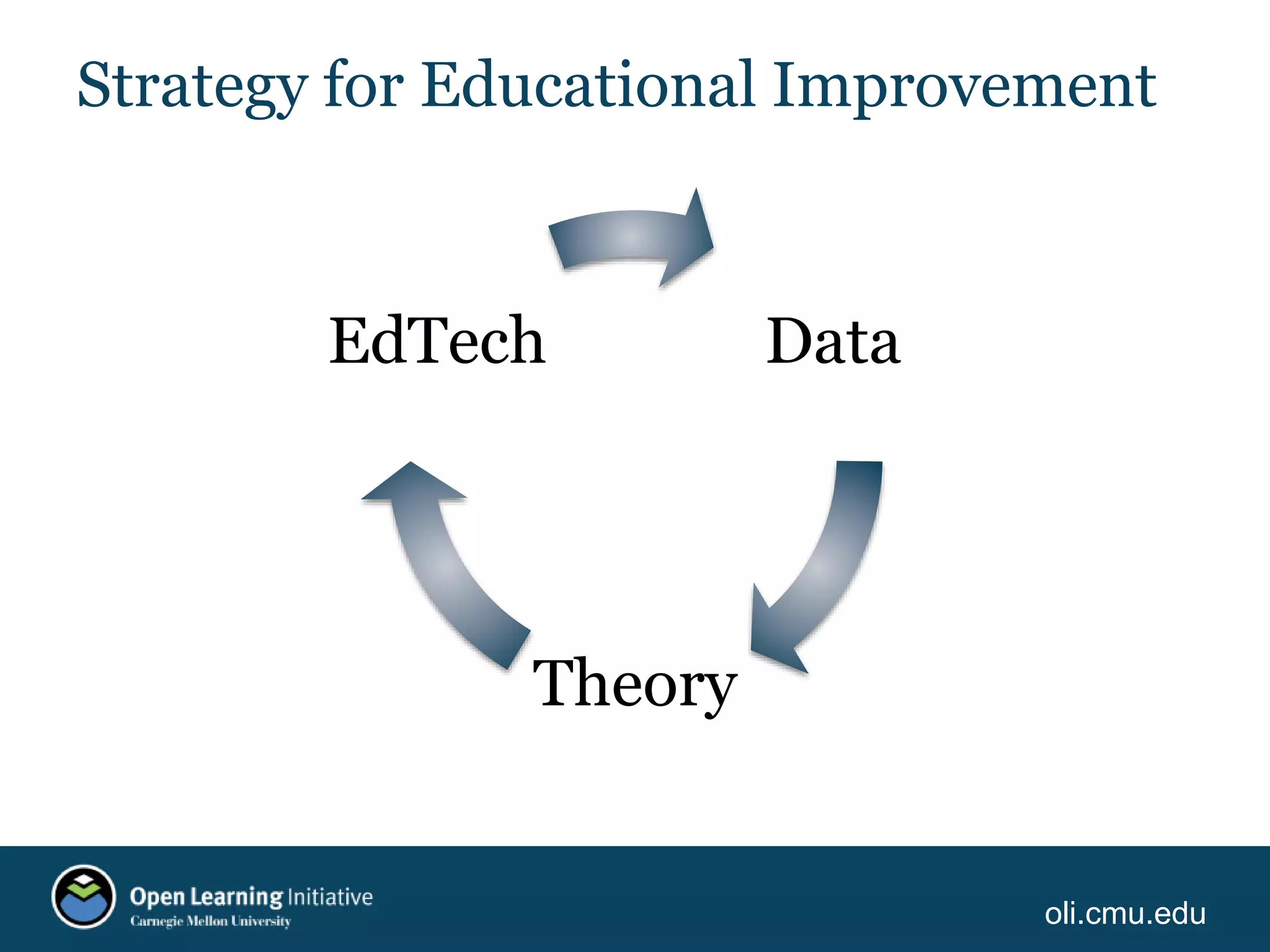
Strategy for Educational Improvement
Data
Theory
EdTech
oli.cmu.edu
OLI Funders
LearnLab is funded by The
National Science Foundation
award number SBE-0836012.
oli.cmu.edu
“Improvement in Post Secondary
Education will require converting
teaching from a ‘solo sport’ to a
community based research activity.”
—Herbert Simon
oli.cmu.edu
kllarson@cmu.edu

Effective Open Course Design - Kim Larson, Carnegie Mellon University OLI