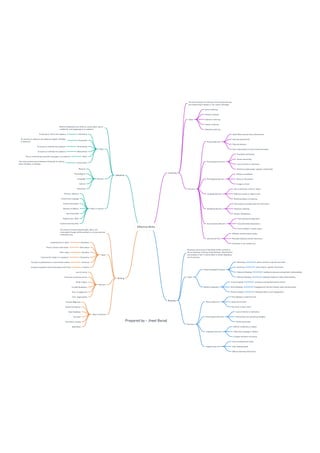
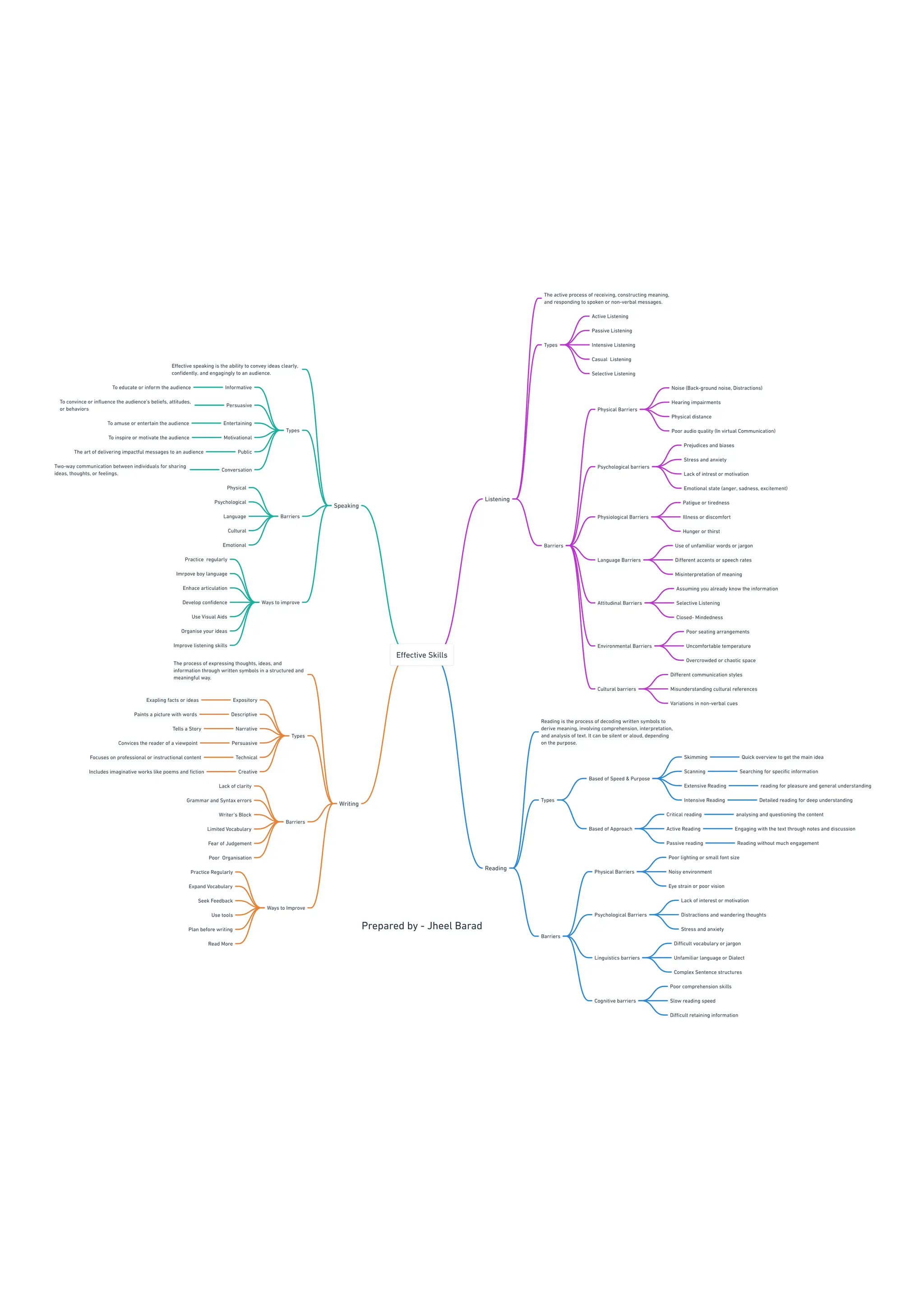
Listening
The active process of receiving, constructing meaning,
and responding to spoken or non-verbal messages.
Types
Active Listening
Passive Listening
Intensive Listening
Casual Listening
Selective Listening
Barriers
Physical Barriers
Noise (Back-ground noise, Distractions)
Hearing impairments
Physical distance
Poor audio quality (In virtual Communication)
Psychological barriers
Prejudices and biases
Stress and anxiety
Lack of intrest or motivation
Emotional state (anger, sadness, excitement)
Physiological Barriers
Patigue or tiredness
Illness or discomfort
Hunger or thirst
Language Barriers
Use of unfamiliar words or jargon
Different accents or speech rates
Misinterpretation of meaning
Attitudinal Barriers
Assuming you already know the information
Selective Listening
Closed- Mindedness
Environmental Barriers
Poor seating arrangements
Uncomfortable temperature
Overcrowded or chaotic space
Cultural barriers
Different communication styles
Misunderstanding cultural references
Variations in non-verbal cues
Reading
Reading is the process of decoding written symbols to
derive meaning, involving comprehension, interpretation,
and analysis of text. It can be silent or aloud, depending
on the purpose.
Types
Based of Speed & Purpose
Skimming Quick overview to get the main idea
Scanning Searching for specific information
Extensive Reading reading for pleasure and general understanding
Intensive Reading Detailed reading for deep understanding
Based of Approach
Critical reading analysing and questioning the content
Active Reading Engaging with the text through notes and discussion
Passive reading Reading without much engagement
Barriers
Physical Barriers
Poor lighting or small font size
Noisy environment
Eye strain or poor vision
Psychological Barriers
Lack of interest or motivation
Distractions and wandering thoughts
Stress and anxiety
Linguistics barriers
Difficult vocabulary or jargon
Unfamiliar language or Dialect
Complex Sentence structures
Cognitive barriers
Poor comprehension skills
Slow reading speed
Difficult retaining information
Speaking
Effective speaking is the ability to convey ideas clearly,
confidently, and engagingly to an audience.
Types
Informative
To educate or inform the audience
Persuasive
To convince or influence the audience’s beliefs, attitudes,
or behaviors
Entertaining
To amuse or entertain the audience
Motivational
To inspire or motivate the audience
Public
The art of delivering impactful messages to an audience
Conversation
Two-way communication between individuals for sharing
ideas, thoughts, or feelings.
Barriers
Physical
Psychological
Language
Cultural
Emotional
Ways to improve
Practice regularly
Imrpove boy language
Enhace articulation
Develop confidence
Use Visual Aids
Organise your ideas
Improve listening skills
Writing
The process of expressing thoughts, ideas, and
information through written symbols in a structured and
meaningful way.
Types
Expository
Exapling facts or ideas
Descriptive
Paints a picture with words
Narrative
Tells a Story
Persuasive
Convices the reader of a viewpoint
Technical
Focuses on professional or instructional content
Creative
Includes imaginative works like poems and fiction
Barriers
Lack of clarity
Grammar and Syntax errors
Writer’s Block
Limited Vocabulary
Fear of Judgement
Poor Organisation
Ways to Improve
Practice Regularly
Expand Vocabulary
Seek Feedback
Use tools
Plan before writing
Read More
Effective Skills
Prepared by - Jheel Barad

Effective Communication Skills- LSRW.pdf

  • 1.
    Listening The active processof receiving, constructing meaning, and responding to spoken or non-verbal messages. Types Active Listening Passive Listening Intensive Listening Casual Listening Selective Listening Barriers Physical Barriers Noise (Back-ground noise, Distractions) Hearing impairments Physical distance Poor audio quality (In virtual Communication) Psychological barriers Prejudices and biases Stress and anxiety Lack of intrest or motivation Emotional state (anger, sadness, excitement) Physiological Barriers Patigue or tiredness Illness or discomfort Hunger or thirst Language Barriers Use of unfamiliar words or jargon Different accents or speech rates Misinterpretation of meaning Attitudinal Barriers Assuming you already know the information Selective Listening Closed- Mindedness Environmental Barriers Poor seating arrangements Uncomfortable temperature Overcrowded or chaotic space Cultural barriers Different communication styles Misunderstanding cultural references Variations in non-verbal cues Reading Reading is the process of decoding written symbols to derive meaning, involving comprehension, interpretation, and analysis of text. It can be silent or aloud, depending on the purpose. Types Based of Speed & Purpose Skimming Quick overview to get the main idea Scanning Searching for specific information Extensive Reading reading for pleasure and general understanding Intensive Reading Detailed reading for deep understanding Based of Approach Critical reading analysing and questioning the content Active Reading Engaging with the text through notes and discussion Passive reading Reading without much engagement Barriers Physical Barriers Poor lighting or small font size Noisy environment Eye strain or poor vision Psychological Barriers Lack of interest or motivation Distractions and wandering thoughts Stress and anxiety Linguistics barriers Difficult vocabulary or jargon Unfamiliar language or Dialect Complex Sentence structures Cognitive barriers Poor comprehension skills Slow reading speed Difficult retaining information Speaking Effective speaking is the ability to convey ideas clearly, confidently, and engagingly to an audience. Types Informative To educate or inform the audience Persuasive To convince or influence the audience’s beliefs, attitudes, or behaviors Entertaining To amuse or entertain the audience Motivational To inspire or motivate the audience Public The art of delivering impactful messages to an audience Conversation Two-way communication between individuals for sharing ideas, thoughts, or feelings. Barriers Physical Psychological Language Cultural Emotional Ways to improve Practice regularly Imrpove boy language Enhace articulation Develop confidence Use Visual Aids Organise your ideas Improve listening skills Writing The process of expressing thoughts, ideas, and information through written symbols in a structured and meaningful way. Types Expository Exapling facts or ideas Descriptive Paints a picture with words Narrative Tells a Story Persuasive Convices the reader of a viewpoint Technical Focuses on professional or instructional content Creative Includes imaginative works like poems and fiction Barriers Lack of clarity Grammar and Syntax errors Writer’s Block Limited Vocabulary Fear of Judgement Poor Organisation Ways to Improve Practice Regularly Expand Vocabulary Seek Feedback Use tools Plan before writing Read More Effective Skills Prepared by - Jheel Barad