
Effect of Employees Motivation on
 the Organizational Performance


              Presented By
       Mohamad M. ADEL
        ESLSCA 35 Global Management


              Supervised By
       Dr. Saneya El Galaly
Agenda

   Literature review structure


   Today’s Organizational Performance Challenges


   What is Motivation


   Motivation types


   What is organizational performance
Problem Statement

   This research studies the effect of
    employee’s motivation through discussing
    several and different types of motives
    commonly used in the modern organizations
    on the organizational performance reflected
    in the organizational success that is
    represented in various measures being
    widely used in market leading organizations
Research Objectives

   The research objective is to study the
    effect of the different types of employees’
    motivations techniques and their effect on
    the different aspects of the organizational
    performance based on the some of the main
    organizational performance measures to
    emphasis on how important is the role of
    the    employees’      motivation   in   the
    organizational effectiveness and success
Research Questions

   What is the employee’s motivation and
    what the different types of employees’
    motivations ?
   What is the organizational
    performance, and what are its
    measures ?
   What is the role that employees’
    motivation plays in the organizational
    performance ?
Today’s Organizational
Performance Challenges

   Globalization and competition


   Multinationals and multi-cultural resources


   Many organizations are suffering Brain drain and
    headhunting.

   Surviving and thriving in today’s economical
    environment.
Motivation and Its Types

   Personal interest in maintaining the best
    output to achieve a desired objective.

   Intrinsic - is driven by an interest or
    enjoyment in the task itself.

   Extrinsic - the performance of an activity
    in order to attain an outcome

   Examples
Needs As Motives

   Needs and wants

   Work environment

   Responsibilities

   Supervision
Needs As Motives (Cont’d)

   Effort

   Feedback

   Fairness and Equity

   Employees’ Development
Organizational Performance

   How effective is the organization in
    achieving its strategic goals
   Impact on the employees.

   Impact on shareholders.

   Impact on investors.

   Internal with external focus debate.
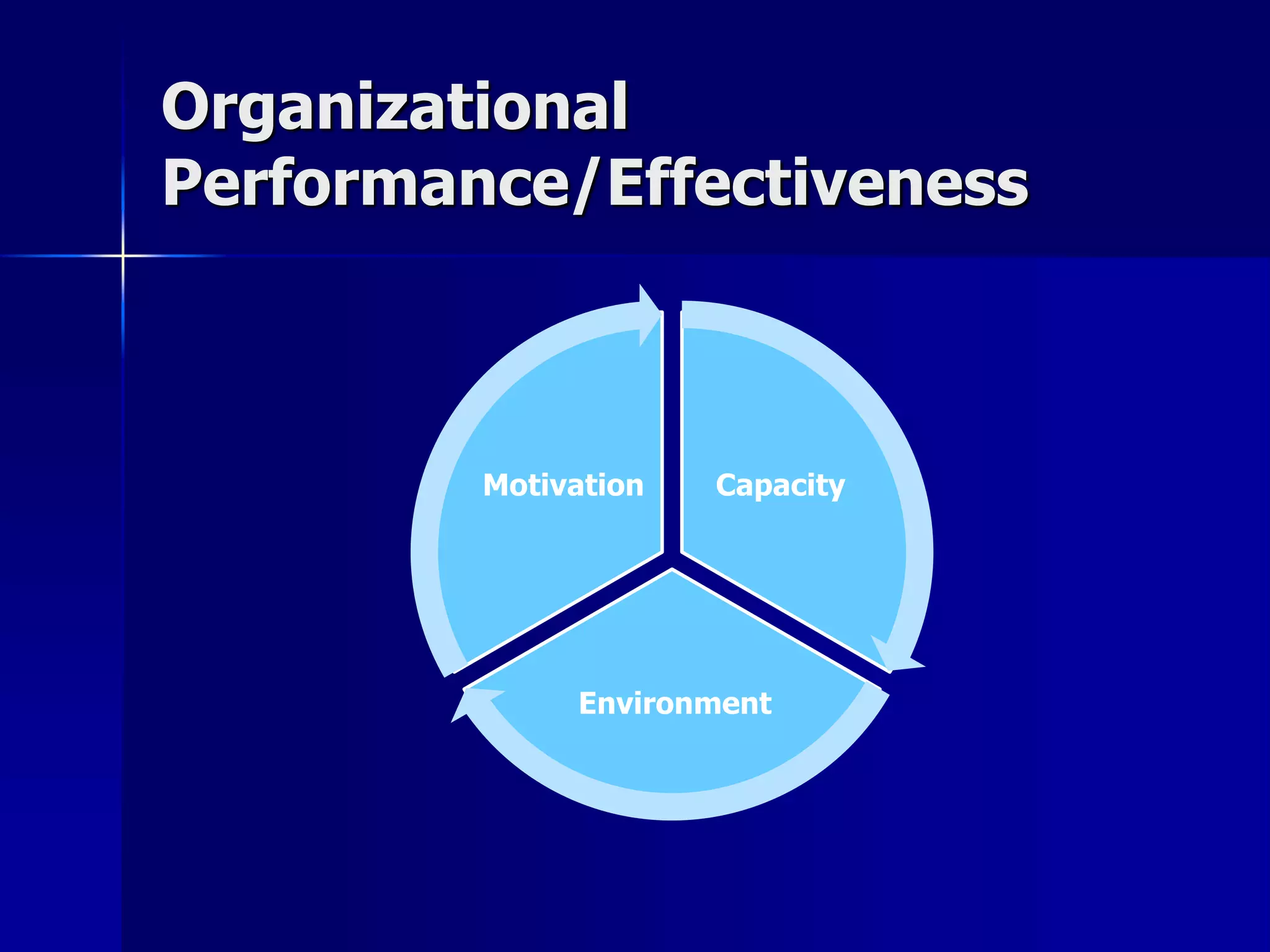
Organizational
Performance/Effectiveness


         Motivation   Capacity


              Environment
OP Financial Measures

   Financial Measures (NI and ROE)
    – Definitions

    – Other financial measures

    – Best to reflect the current performance

    – Tangible and can be easily benchmarked
OP Non-Financial Measures

   Non-Financial Measures (Employees
    Satisfaction and Customer Satisfaction)
    – Definitions

    – Other non-financial measures

    – Best to predict the organization future

    – Pressure on publically traded companies

    – Intangibles should be converted to tangibles

    – Drives non-financial measures with one to many and many
      to one relations
Balancing financial and non-
financial objectives


   Why balancing ?


   How to balance?


   Examples
Strategic Human Resource
Management


   What SHRM is all about ?


   Why strategic ?
Strategic Human Resource
Management Role - Motivation

   Staffing

   Compensation

   Training and development

   Empowerment and Leadership

   Rewarding
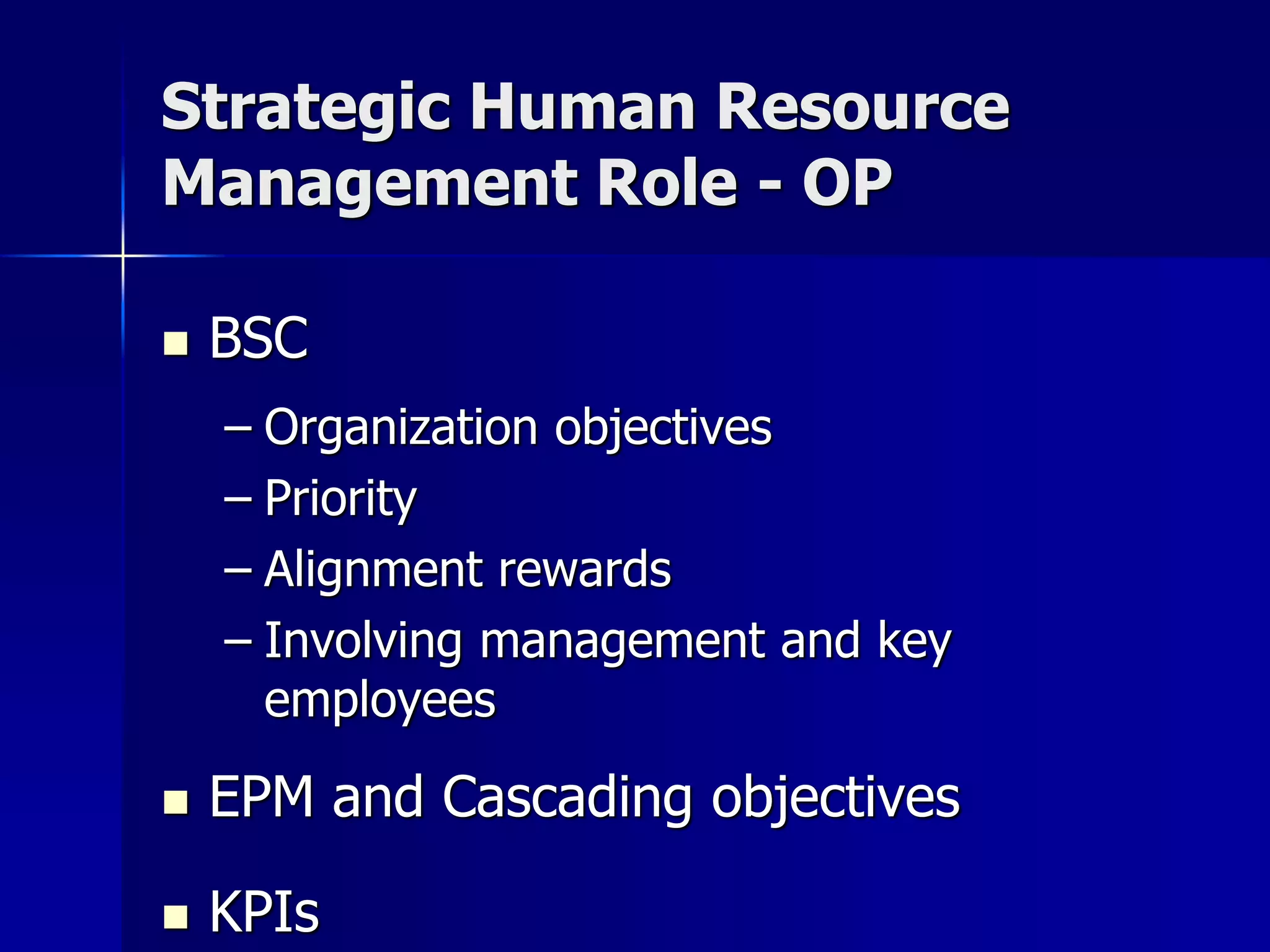
Strategic Human Resource
Management Role - OP

   BSC
    – Organization objectives
    – Priority
    – Alignment rewards
    – Involving management and key
      employees

   EPM and Cascading objectives

   KPIs
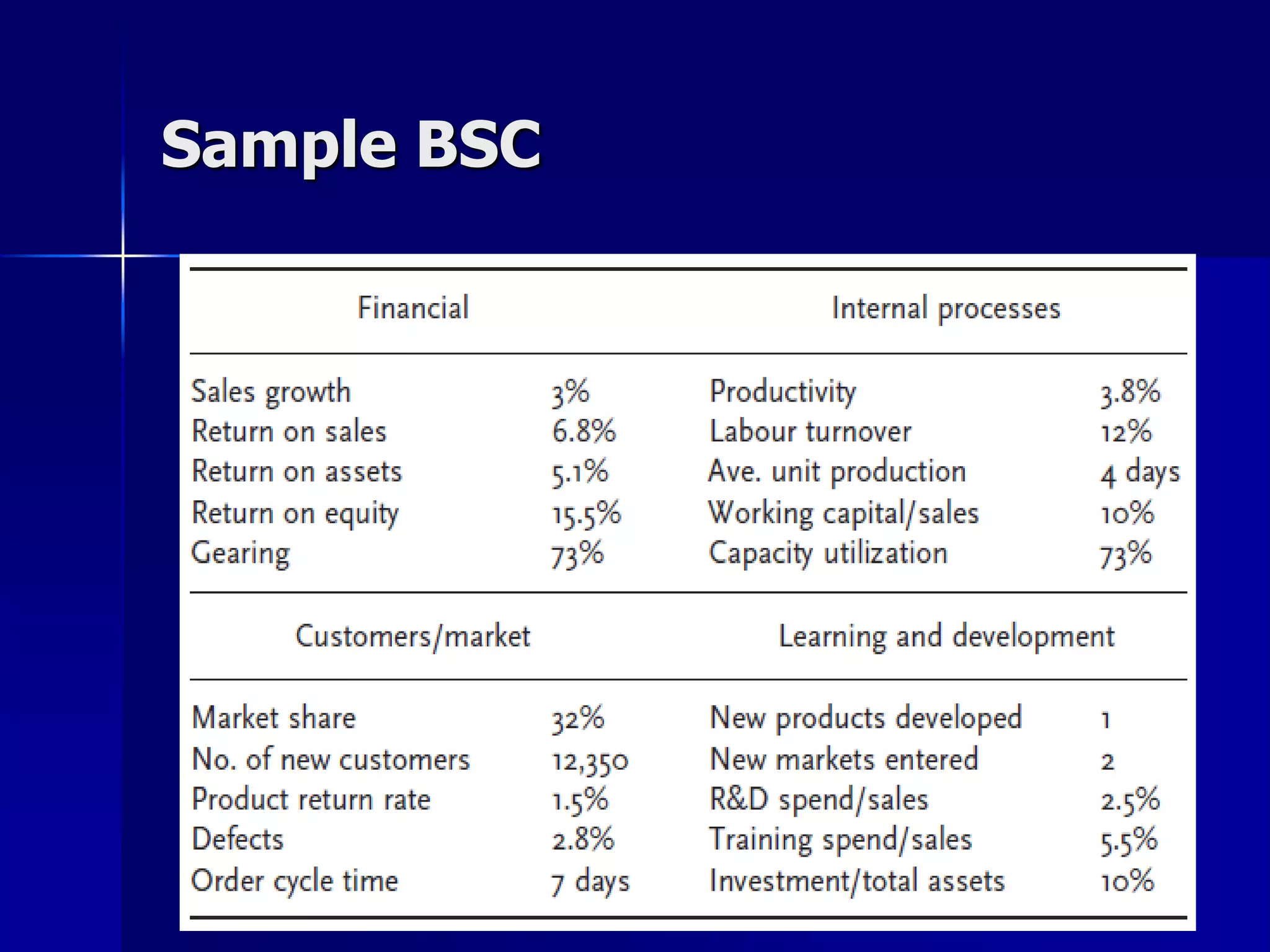
Sample BSC
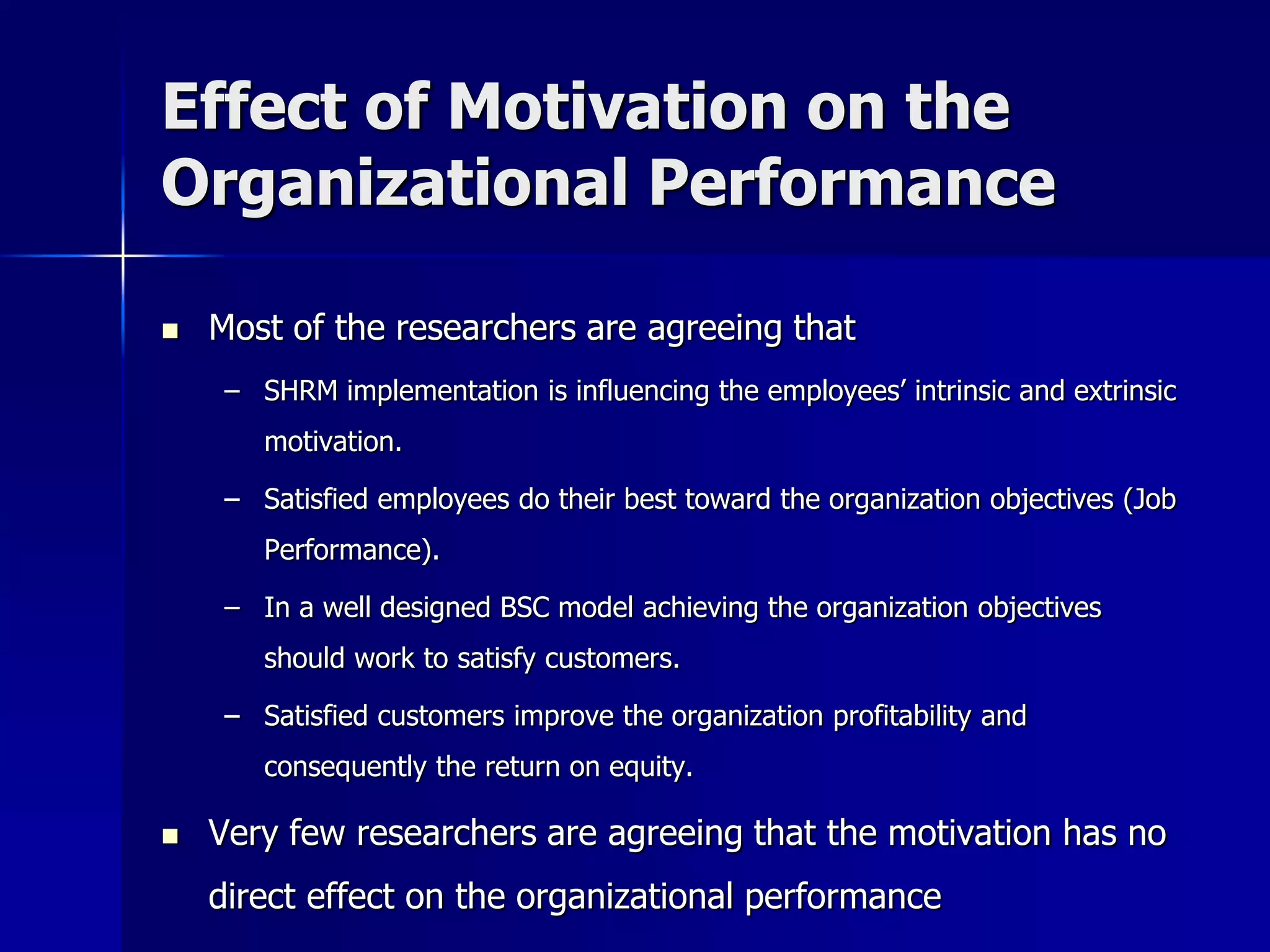
Effect of Motivation on the
Organizational Performance

   Most of the researchers are agreeing that
     – SHRM implementation is influencing the employees’ intrinsic and extrinsic
        motivation.

     – Satisfied employees do their best toward the organization objectives (Job
        Performance).

     – In a well designed BSC model achieving the organization objectives
        should work to satisfy customers.

     – Satisfied customers improve the organization profitability and
        consequently the return on equity.

   Very few researchers are agreeing that the motivation has no
    direct effect on the organizational performance
Thank You

Effect Of Employees Motivation On The Organizational Performance

  • 1.
    Effect of EmployeesMotivation on the Organizational Performance Presented By Mohamad M. ADEL ESLSCA 35 Global Management Supervised By Dr. Saneya El Galaly
  • 2.
    Agenda  Literature review structure  Today’s Organizational Performance Challenges  What is Motivation  Motivation types  What is organizational performance
  • 3.
    Problem Statement  This research studies the effect of employee’s motivation through discussing several and different types of motives commonly used in the modern organizations on the organizational performance reflected in the organizational success that is represented in various measures being widely used in market leading organizations
  • 4.
    Research Objectives  The research objective is to study the effect of the different types of employees’ motivations techniques and their effect on the different aspects of the organizational performance based on the some of the main organizational performance measures to emphasis on how important is the role of the employees’ motivation in the organizational effectiveness and success
  • 5.
    Research Questions  What is the employee’s motivation and what the different types of employees’ motivations ?  What is the organizational performance, and what are its measures ?  What is the role that employees’ motivation plays in the organizational performance ?
  • 6.
    Today’s Organizational Performance Challenges  Globalization and competition  Multinationals and multi-cultural resources  Many organizations are suffering Brain drain and headhunting.  Surviving and thriving in today’s economical environment.
  • 7.
    Motivation and ItsTypes  Personal interest in maintaining the best output to achieve a desired objective.  Intrinsic - is driven by an interest or enjoyment in the task itself.  Extrinsic - the performance of an activity in order to attain an outcome  Examples
  • 8.
    Needs As Motives  Needs and wants  Work environment  Responsibilities  Supervision
  • 9.
    Needs As Motives(Cont’d)  Effort  Feedback  Fairness and Equity  Employees’ Development
  • 10.
    Organizational Performance  How effective is the organization in achieving its strategic goals  Impact on the employees.  Impact on shareholders.  Impact on investors.  Internal with external focus debate.
  • 11.
    Organizational Performance/Effectiveness Motivation Capacity Environment
  • 12.
    OP Financial Measures  Financial Measures (NI and ROE) – Definitions – Other financial measures – Best to reflect the current performance – Tangible and can be easily benchmarked
  • 13.
    OP Non-Financial Measures  Non-Financial Measures (Employees Satisfaction and Customer Satisfaction) – Definitions – Other non-financial measures – Best to predict the organization future – Pressure on publically traded companies – Intangibles should be converted to tangibles – Drives non-financial measures with one to many and many to one relations
  • 14.
    Balancing financial andnon- financial objectives  Why balancing ?  How to balance?  Examples
  • 15.
    Strategic Human Resource Management  What SHRM is all about ?  Why strategic ?
  • 16.
    Strategic Human Resource ManagementRole - Motivation  Staffing  Compensation  Training and development  Empowerment and Leadership  Rewarding
  • 17.
    Strategic Human Resource ManagementRole - OP  BSC – Organization objectives – Priority – Alignment rewards – Involving management and key employees  EPM and Cascading objectives  KPIs
  • 18.
  • 19.
    Effect of Motivationon the Organizational Performance  Most of the researchers are agreeing that – SHRM implementation is influencing the employees’ intrinsic and extrinsic motivation. – Satisfied employees do their best toward the organization objectives (Job Performance). – In a well designed BSC model achieving the organization objectives should work to satisfy customers. – Satisfied customers improve the organization profitability and consequently the return on equity.  Very few researchers are agreeing that the motivation has no direct effect on the organizational performance
  • 20.