HR ANALYTICS
Kevin D Carlson & Michael J Kavanagh
                                       EP JOHN
                                       11397044
   Introduction  OVERVIEW
   A brief history
   Contemporary HR analytics
   Main objective
   Using HR analytics
    Problem solving and decision making
   HR process efficiency
   Analytics basics
   Things to remember
INTRODUCTION

 Org decision making
 Integrated HRIS

 Y2K

 TQM, 6 Sigma, Lean

 Evidence-based management

 1984 – Dr Jac Fitz-enz,

Saratoga Institute
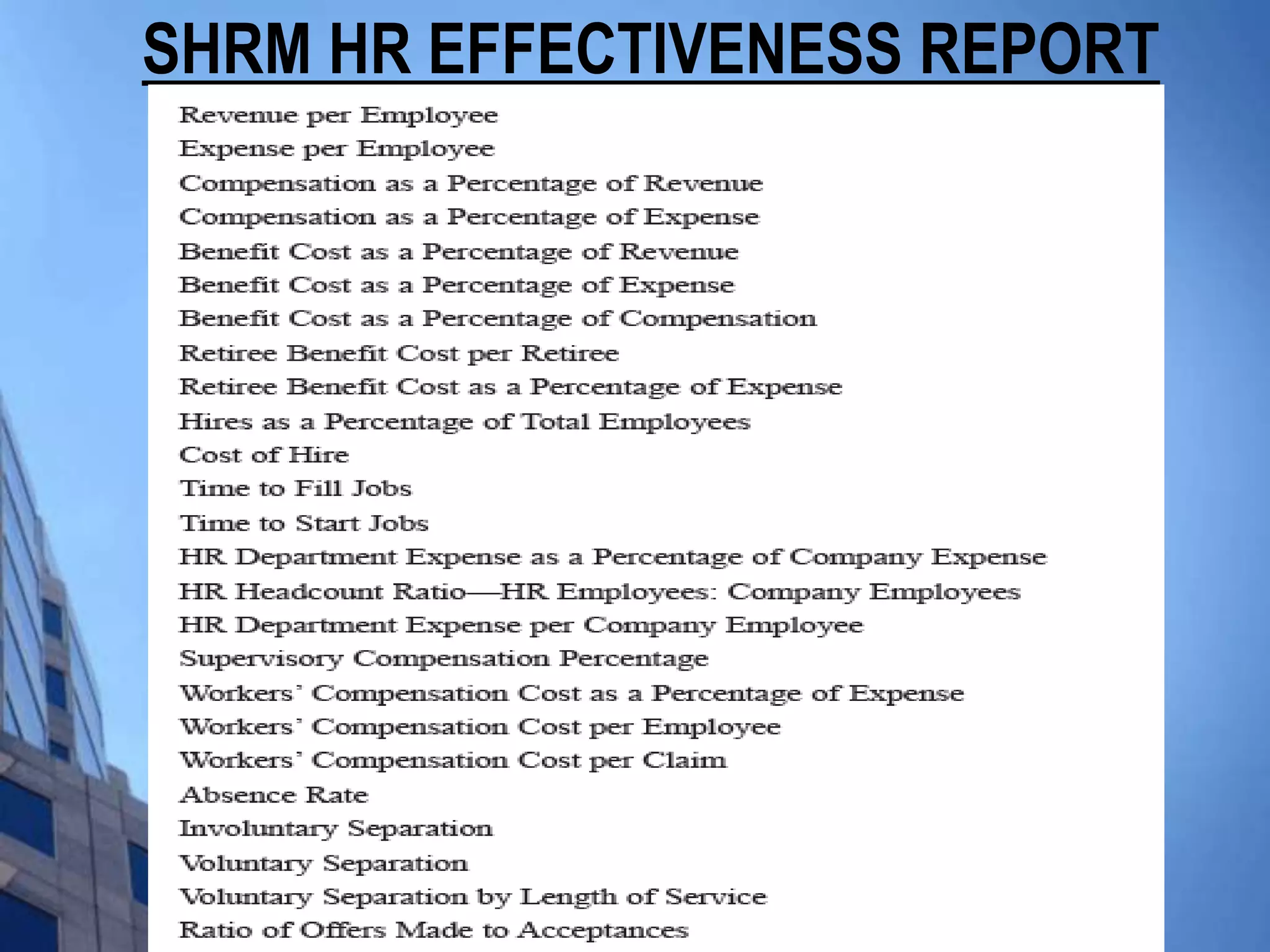
SHRM HR EFFECTIVENESS REPORT
CONTEMPORARY HR METRICS &
  WORKFORCE ANALYTICS
    Expense
    Cost & benefit
    Learn from the past
MAIN OBJECTIVE
   Tell, what you want???
   Existing reports???
   Acknowledge???
USE OF HR METRICS & WORKFORCE
           ANALYTICS
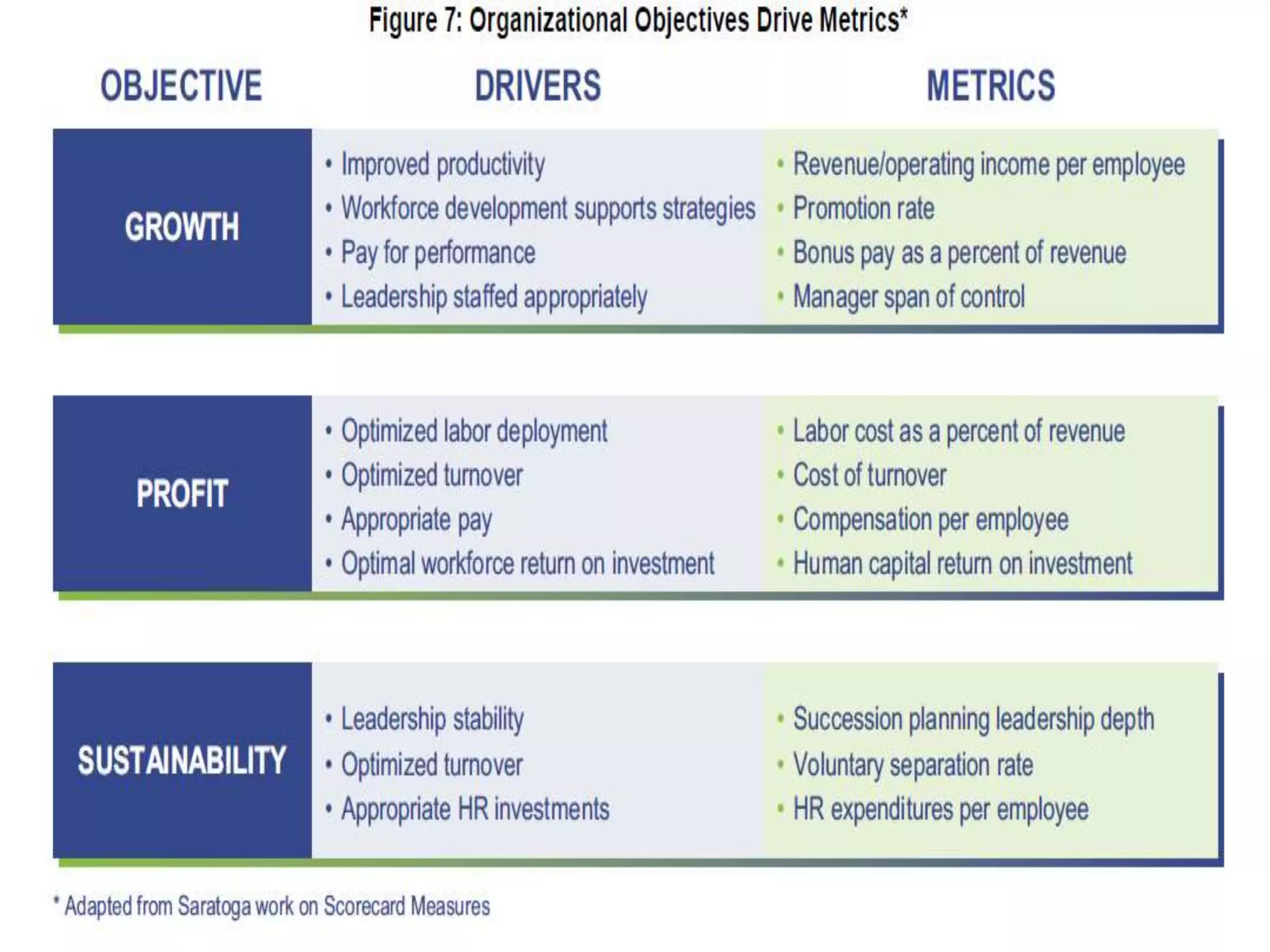
   Metrics – data that reflect some
    descriptive detail about given processes
    or outcomes.
   Analytics – strategies for combining data
    elements into metrics and for examining
    relationships or changes in metrics.
   Importance – depends on the problems
    and opportunities that currently face its
    managers.
HR ACTIVITIES
   Reporting
   Dash boards
   Bench marking
   Data mining
   Predictive analyses
   Operational experiments
   Workforce modeling
PROBLEM SOLVING & DECISION MAKING

    Decision making, is understanding of
      the outcomes that one is attempting to
       achieve
      the factors that influence those

       outcomes and their current states
      knowing available tactical options and

       their costs
PROBLEM SOLVING & DECISION MAKING
      Common & troublesome view
          Struggle to determine what & how to report
           Report large metrics, that may not be
           relevant.
      Opportunity domains of HR expertise
          Centers of excellence
          Business partners
          Process administration
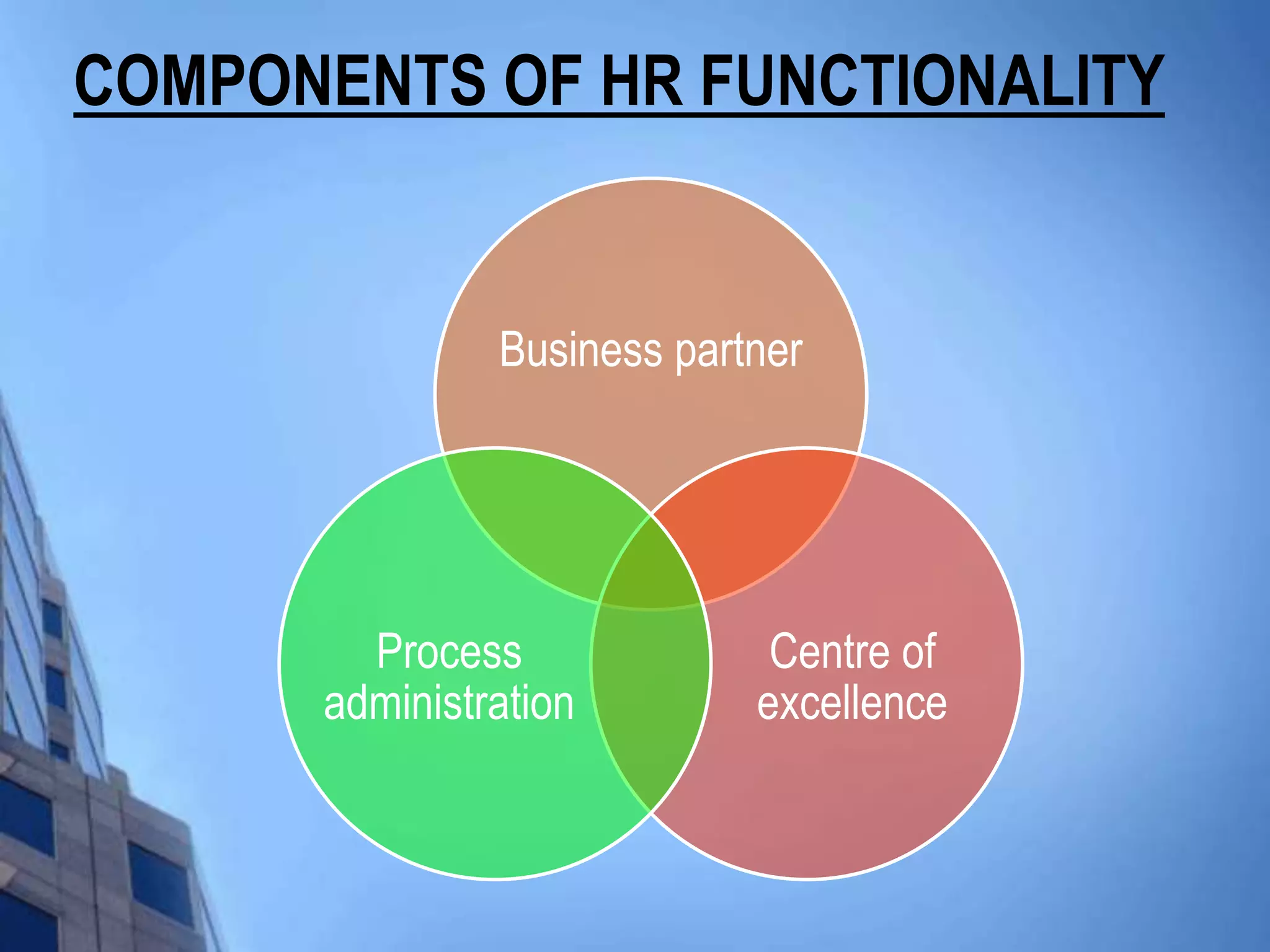
COMPONENTS OF HR FUNCTIONALITY


               Business partner


        Process              Centre of
      administration        excellence
HR PROCESS EFFICIENCY
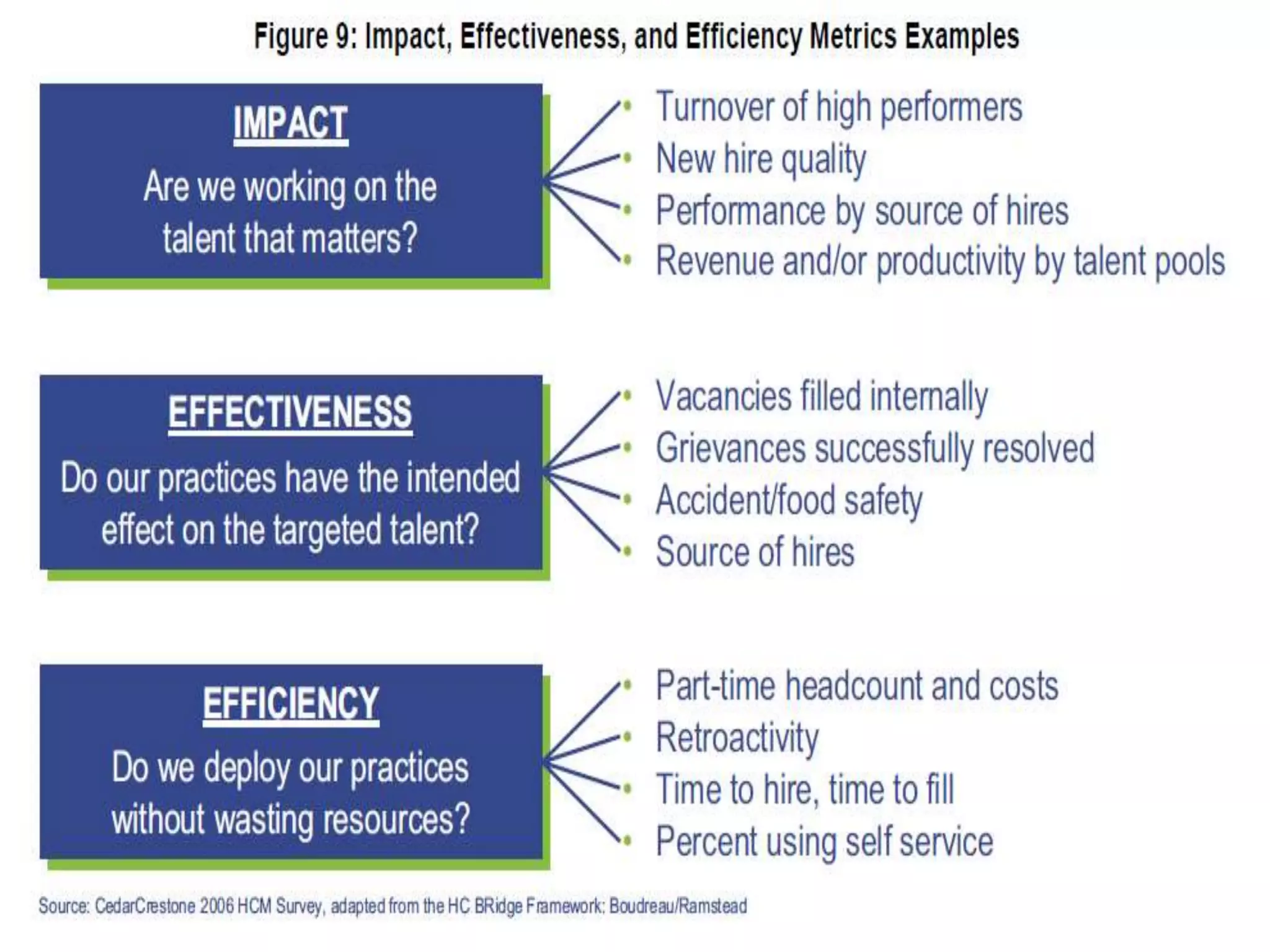
   Organizational effectiveness
       The outcomes are the business units’
        operational metrics i.e. Percentage of on-
        time deliveries, Operational
        downtime, Lost time accidents, Units sold
        or Cost per unit. (Operational
        effectiveness)
   Strategic realignment
       Long term planning
MEASUREMENT METRICS & ANALYTICS
           BASICS
   Getting started
       Increase organizational efficiency
   The role of Why???
       Intermediate variable effects
   Putting HR metrics and analytics data in context
       Trend information
   Reporting what we find
       Push systems
       Pull systems
PUSH & PULL SYSTEMS
   PUSH
       email
   PULL
     Posting HR metrics – company
      website
     Offer of access to information

     Access to information
THINGS TO REMEMBER
   Don’t DO METRICS
   Bigger is not always better
   Is a journey – not destination
   Be willing to learn
   Avoid the temptation to measure
    everything aggressively
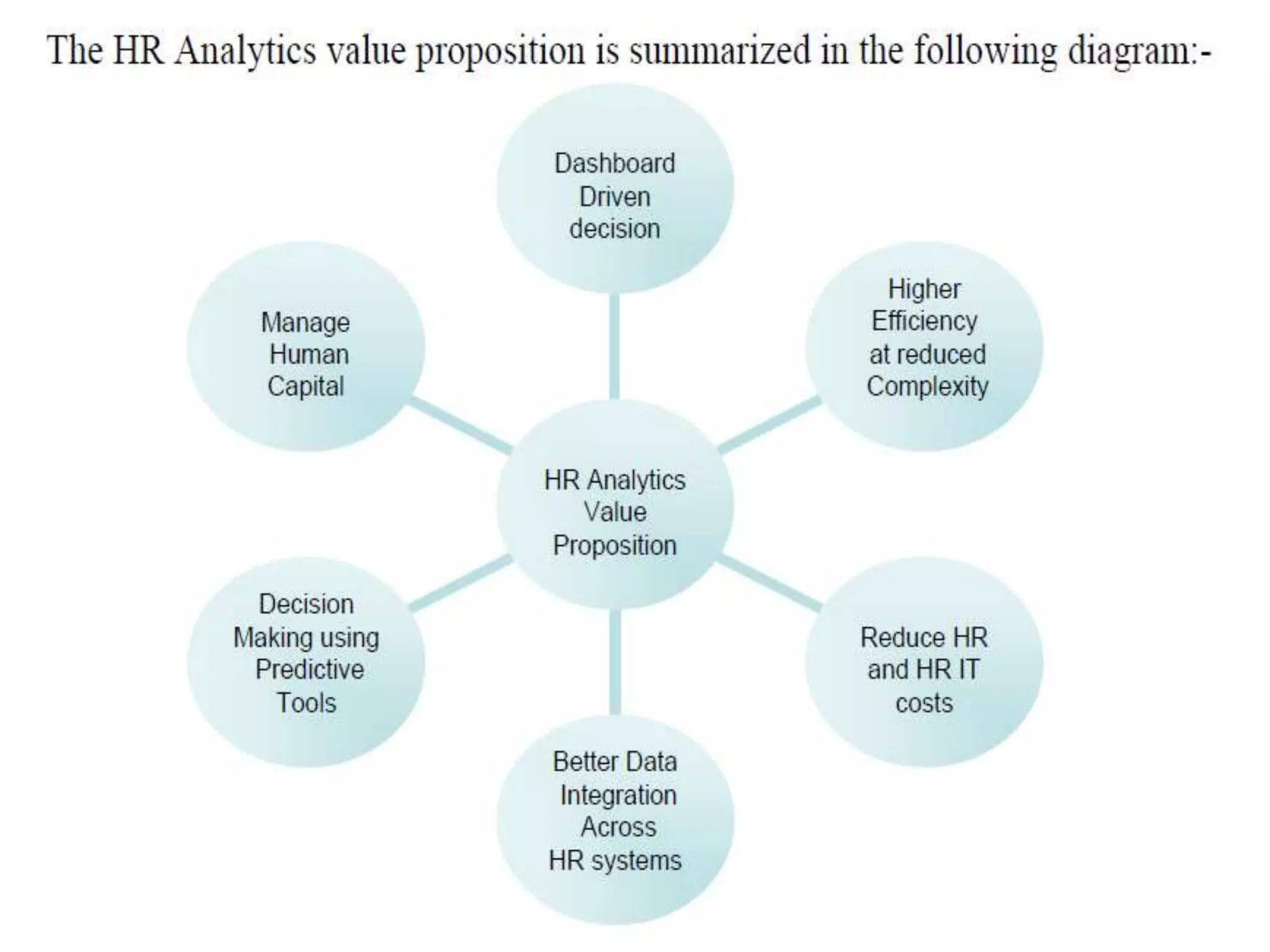
HR METRICS & FUTURE

 Competitive advantage
 Effective organizational functioning

 Effective decision making

 Manage human Capital
RESEARCH PAPERS
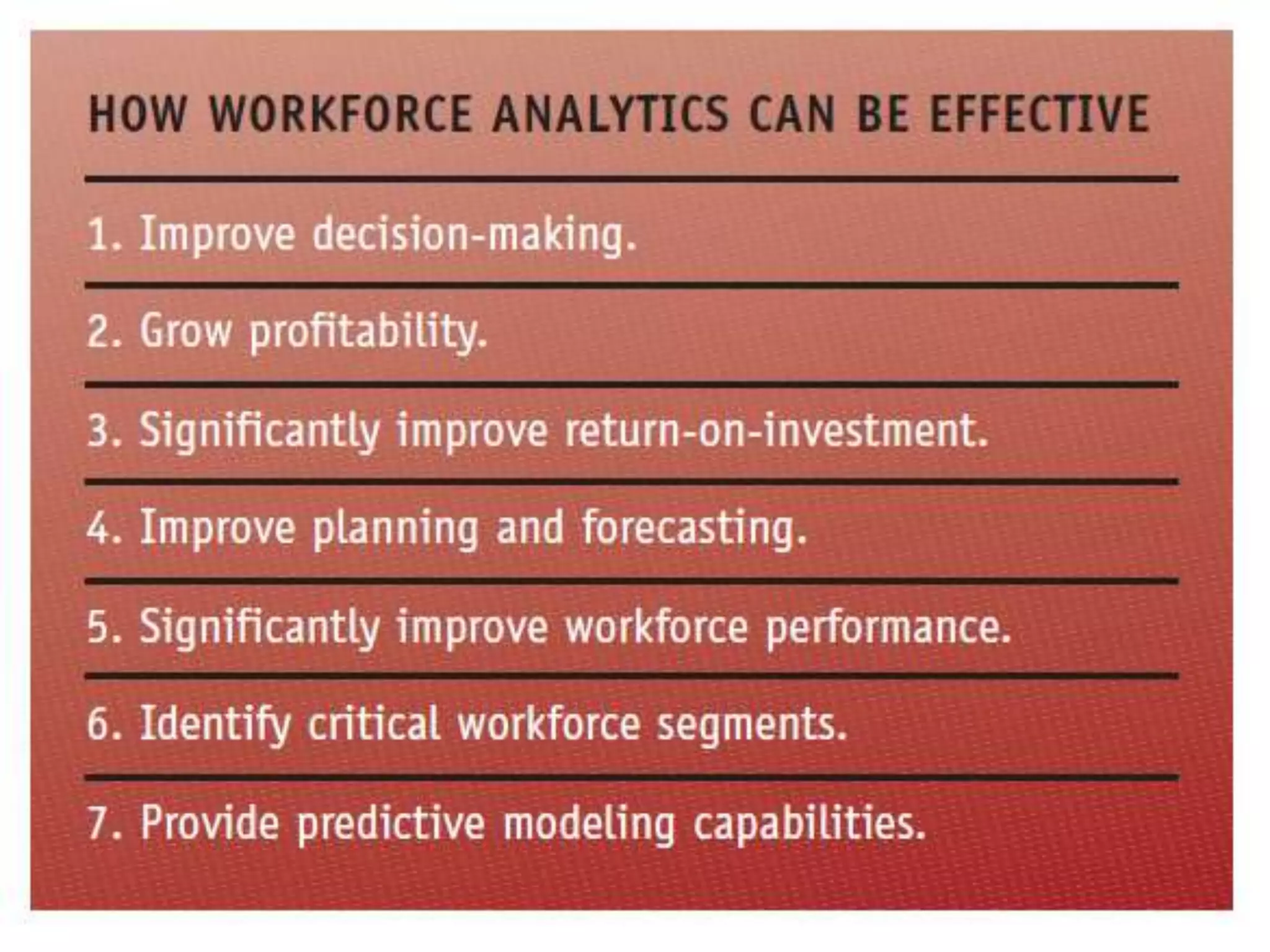
HOW CAN ORGANISATIONS USE
      WORKFORCE ANALYTICS?

 Forward-looking workforce planning
 Managing talent acquisition

 Diversity effectiveness

 Talent potential & progression

 Proactive retention
WHAT ARE THE KEY SUCCESS
           FACTORS?

   Start small and build momentum
   Focus on capabilities
   Use existing technology investments
   Consider cloud to jump-start the effort
   Use what you learn
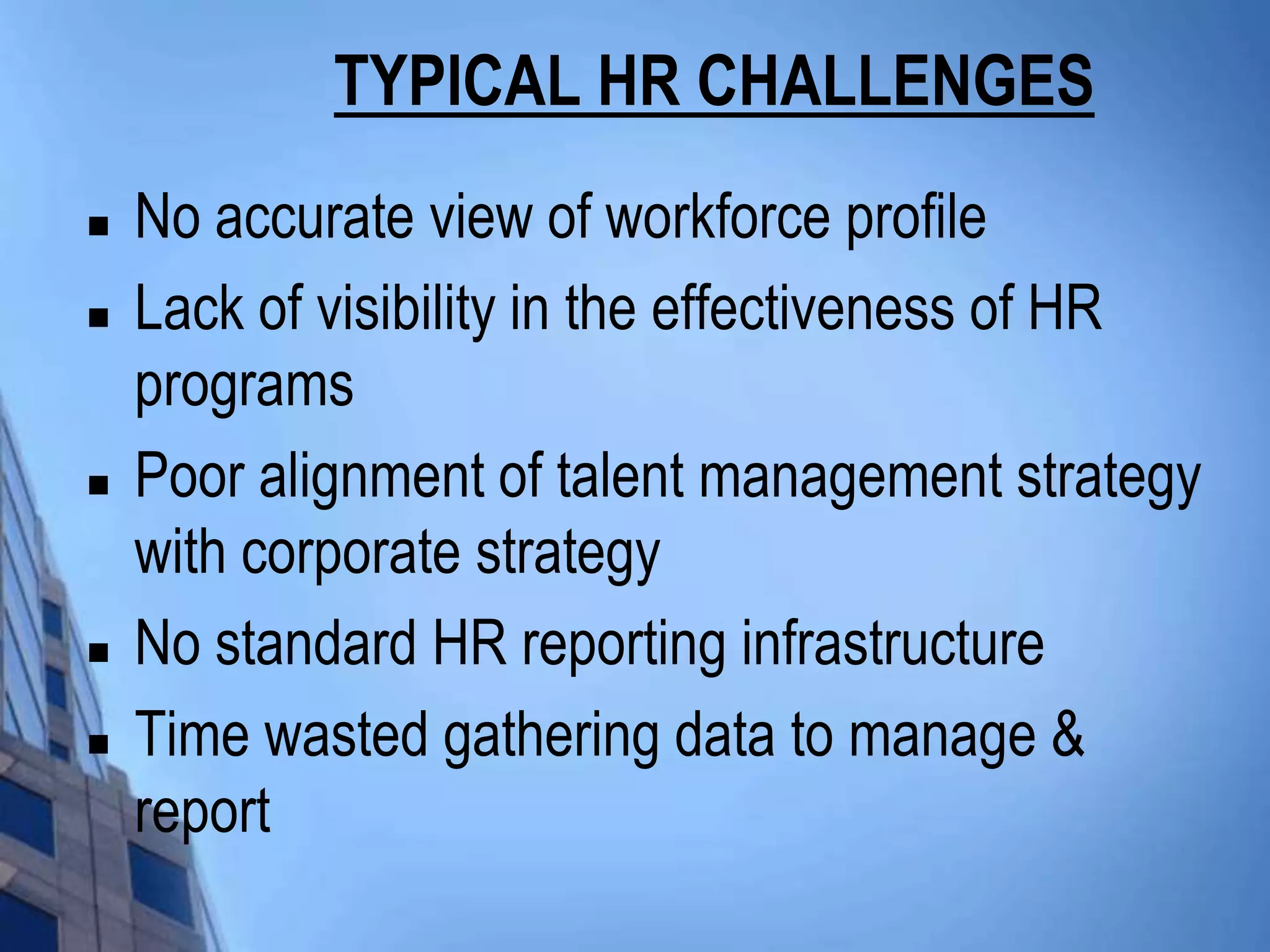
TYPICAL HR CHALLENGES
   No accurate view of workforce profile
   Lack of visibility in the effectiveness of HR
    programs
   Poor alignment of talent management strategy
    with corporate strategy
   No standard HR reporting infrastructure
   Time wasted gathering data to manage &
    report
Hr analytics
Hr analytics
Hr analytics
Hr analytics
Hr analytics
Hr analytics
Hr analytics
Hr analytics
Hr analytics
Hr analytics
Hr analytics
Hr analytics
Hr analytics
Hr analytics
Hr analytics
Hr analytics
Hr analytics
Hr analytics
Hr analytics
Hr analytics
Hr analytics

Hr analytics

  • 1.
    HR ANALYTICS Kevin DCarlson & Michael J Kavanagh EP JOHN 11397044
  • 2.
    Introduction OVERVIEW  A brief history  Contemporary HR analytics  Main objective  Using HR analytics  Problem solving and decision making  HR process efficiency  Analytics basics  Things to remember
  • 3.
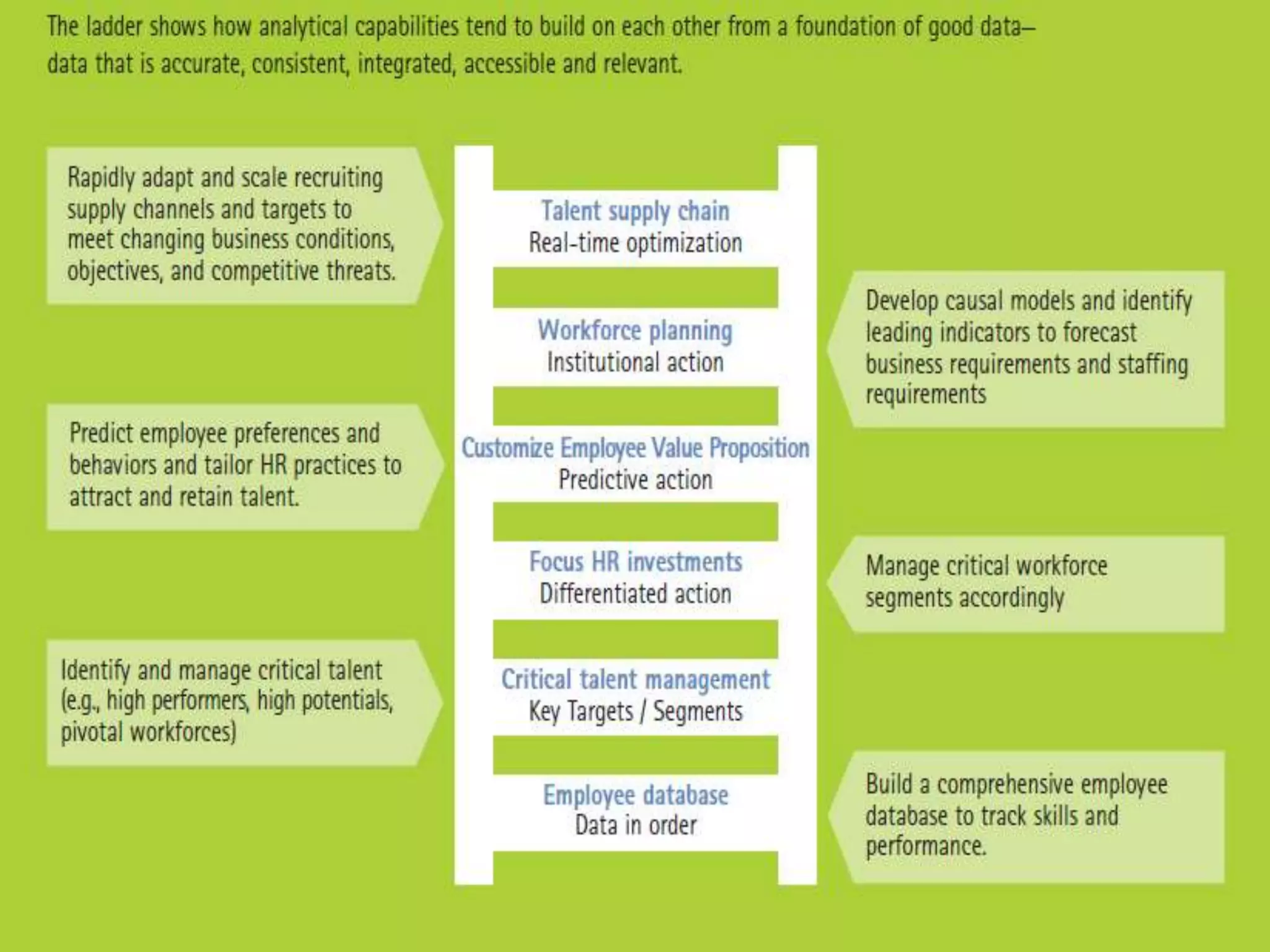
    INTRODUCTION  Org decisionmaking  Integrated HRIS  Y2K  TQM, 6 Sigma, Lean  Evidence-based management  1984 – Dr Jac Fitz-enz, Saratoga Institute
  • 4.
  • 5.
    CONTEMPORARY HR METRICS& WORKFORCE ANALYTICS  Expense  Cost & benefit  Learn from the past
  • 6.
    MAIN OBJECTIVE  Tell, what you want???  Existing reports???  Acknowledge???
  • 7.
    USE OF HRMETRICS & WORKFORCE ANALYTICS  Metrics – data that reflect some descriptive detail about given processes or outcomes.  Analytics – strategies for combining data elements into metrics and for examining relationships or changes in metrics.  Importance – depends on the problems and opportunities that currently face its managers.
  • 8.
    HR ACTIVITIES  Reporting  Dash boards  Bench marking  Data mining  Predictive analyses  Operational experiments  Workforce modeling
  • 9.
    PROBLEM SOLVING &DECISION MAKING  Decision making, is understanding of  the outcomes that one is attempting to achieve  the factors that influence those outcomes and their current states  knowing available tactical options and their costs
  • 10.
    PROBLEM SOLVING &DECISION MAKING  Common & troublesome view  Struggle to determine what & how to report  Report large metrics, that may not be relevant.  Opportunity domains of HR expertise  Centers of excellence  Business partners  Process administration
  • 11.
    COMPONENTS OF HRFUNCTIONALITY Business partner Process Centre of administration excellence
  • 12.
    HR PROCESS EFFICIENCY  Organizational effectiveness  The outcomes are the business units’ operational metrics i.e. Percentage of on- time deliveries, Operational downtime, Lost time accidents, Units sold or Cost per unit. (Operational effectiveness)  Strategic realignment  Long term planning
  • 13.
    MEASUREMENT METRICS &ANALYTICS BASICS  Getting started  Increase organizational efficiency  The role of Why???  Intermediate variable effects  Putting HR metrics and analytics data in context  Trend information  Reporting what we find  Push systems  Pull systems
  • 14.
    PUSH & PULLSYSTEMS  PUSH  email  PULL  Posting HR metrics – company website  Offer of access to information  Access to information
  • 15.
    THINGS TO REMEMBER  Don’t DO METRICS  Bigger is not always better  Is a journey – not destination  Be willing to learn  Avoid the temptation to measure everything aggressively
  • 16.
    HR METRICS &FUTURE  Competitive advantage  Effective organizational functioning  Effective decision making  Manage human Capital
  • 17.
  • 19.
    HOW CAN ORGANISATIONSUSE WORKFORCE ANALYTICS?  Forward-looking workforce planning  Managing talent acquisition  Diversity effectiveness  Talent potential & progression  Proactive retention
  • 20.
    WHAT ARE THEKEY SUCCESS FACTORS?  Start small and build momentum  Focus on capabilities  Use existing technology investments  Consider cloud to jump-start the effort  Use what you learn
  • 22.
    TYPICAL HR CHALLENGES  No accurate view of workforce profile  Lack of visibility in the effectiveness of HR programs  Poor alignment of talent management strategy with corporate strategy  No standard HR reporting infrastructure  Time wasted gathering data to manage & report