
ALFA College of Engineering and Technology
ALLAGADDA
S. KESHAVA RAO
M.Tech
Associate Professor
keshavaalfa@gmail.com
Best presentation award
in
National Conference
at AITS
 Present system is completely static case.
 vehicles must wait at the intersection for a predefined time
until microcontroller switches green light for that lane.
 Exists no process of preemption.
 No green light service for priority based vehicles.
 Adaptive system
 provides immediate pass through for prioritized vehicles
like:
 Ambulance
 Fire engine
 Police services
 VIP vehicles
d
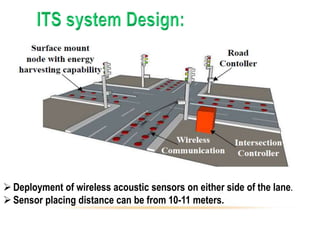
Deployment of wireless acoustic sensors on either side of the lane.
Sensor placing distance can be from 10-11 meters.
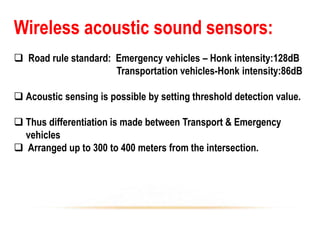
Wireless acoustic sound sensors:
 Road rule standard: Emergency vehicles – Honk intensity:128dB
Transportation vehicles-Honk intensity:86dB
 Acoustic sensing is possible by setting threshold detection value.
 Thus differentiation is made between Transport & Emergency
vehicles
 Arranged up to 300 to 400 meters from the intersection.
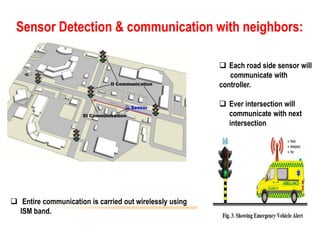
Sensor Detection & communication with neighbors:
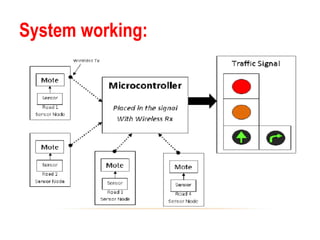
 Each road side sensor will
communicate with
controller.
 Ever intersection will
communicate with next
intersection
 Entire communication is carried out wirelessly using
ISM band.
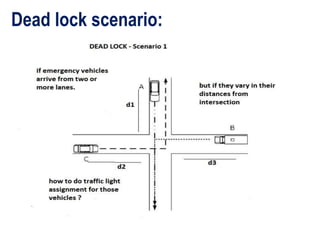
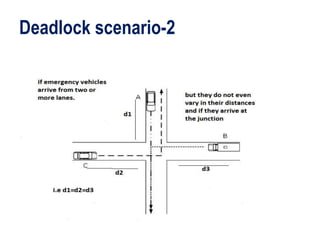
Dead lock scenario:
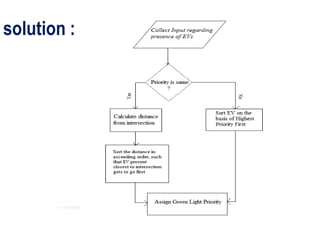
solution :
System working:
Deadlock scenario-2
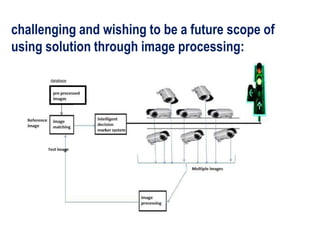
challenging and wishing to be a future scope of
using solution through image processing:
Conclusion:
Proposed system is fully automated and can be implemented
for present existing system.
For a developing country like India with heavy traffic this type
of effective adaptive system is a urgent need.
Using Acoustic WSN’s for implementation is very easy and
also inexpensive and high efficient operation during
emergency mode.

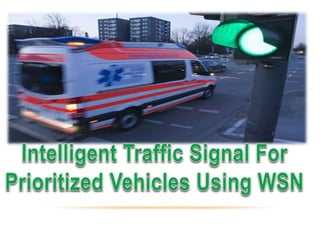
Intelligent Traffic Light System to Prioritized Emergency Purpose Vehicles based on Wireless Sensor Networks

  • 1.
    ALFA College ofEngineering and Technology ALLAGADDA S. KESHAVA RAO M.Tech Associate Professor keshavaalfa@gmail.com Best presentation award in National Conference at AITS
  • 4.
     Present systemis completely static case.  vehicles must wait at the intersection for a predefined time until microcontroller switches green light for that lane.  Exists no process of preemption.  No green light service for priority based vehicles.
  • 5.
     Adaptive system provides immediate pass through for prioritized vehicles like:  Ambulance  Fire engine  Police services  VIP vehicles
  • 6.
    d Deployment of wirelessacoustic sensors on either side of the lane. Sensor placing distance can be from 10-11 meters.
  • 7.
    Wireless acoustic soundsensors:  Road rule standard: Emergency vehicles – Honk intensity:128dB Transportation vehicles-Honk intensity:86dB  Acoustic sensing is possible by setting threshold detection value.  Thus differentiation is made between Transport & Emergency vehicles  Arranged up to 300 to 400 meters from the intersection.
  • 8.
    Sensor Detection &communication with neighbors:  Each road side sensor will communicate with controller.  Ever intersection will communicate with next intersection  Entire communication is carried out wirelessly using ISM band.
  • 9.
  • 10.
  • 11.
  • 12.
  • 13.
    challenging and wishingto be a future scope of using solution through image processing:
  • 14.
    Conclusion: Proposed system isfully automated and can be implemented for present existing system. For a developing country like India with heavy traffic this type of effective adaptive system is a urgent need. Using Acoustic WSN’s for implementation is very easy and also inexpensive and high efficient operation during emergency mode.