ECONOMIC IMPACTS OF
TOURISM
• The tourism industry
Generates
Economic benefits
to
Tourist
Host countries
• The
primary
motivatio
ns for a
region to
promote
itself as a
tourism
destinatio
n
•
•
Expected
economic
improve
ment.
DEVELOPING
COUNTRY
Economic development brings along both
Positive and Negative
Consequences
• According to the world tourism
organization,
• International tourist arrivals
• are estimated to 880 million
• In 2009, international
• tourism generated US$ 852
• billion (€ 611 billion) in
• export earnings
• International tourism receipts
combined with passenger
transport currently total more
than us$735 billion - making
tourism the world's number one
export earner, ahead of
automotive products, chemicals,
petroleum and food.
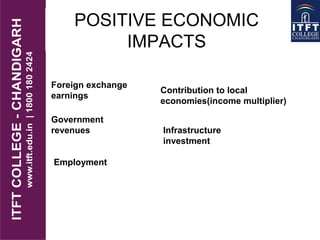
POSITIVE ECONOMIC
IMPACTS
Foreign exchange
earnings
Government
revenues
Employment
Infrastructure
investment
Contribution to local
economies(income multiplier)
• 1.Foreign exchange earnings
• Tourism is one of the top five export
categories for as many as 83% of
countries and is a main source of
foreign exchange earnings for at least
38% of countries. Source:UNWTO
• FEE during the month of February 2010 were
US$ 1.4 billion as compared to US$ 923 million
during the month of February 2009.
• 2.Contribution to government
revenues
Direct contributions
 taxes on incomes from tourism
employment
 by direct levies on tourists such as
departure taxes.
• Indirect contributions
 From taxes and duties levied on
goods and services supplied to tourists.
• 3.Employment
generation
The hotel
accommodation
sector alone
provided
around 11.3
million jobs
worldwide
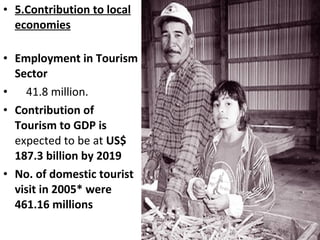
• 5.Contribution to local
economies
• Employment in Tourism
Sector
• 41.8 million.
• Contribution of
Tourism to GDP is
expected to be at US$
187.3 billion by 2019
• No. of domestic tourist
visit in 2005* were
461.16 millions
• FTAs during the Month of February 2010 were
601,000 as compared to FTAs of 547,000
during the month of February 2009. A growth
of 9.9 per cent was registered in February
2010 over February 2009
NEGATIVE ECONOMIC IMPACTS
Leakage
Enclave tourism
Infrastructure cost
Increase in prices
Economic dependence of the local community
on tourism
Seasonal character of jobs
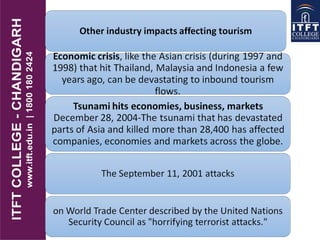
Economic crisis
Tsunami hits economies, business, markets
TOURISM LEAKAGE
Leakage describes an unwanted loss, or
leak, of something which escapes from its
proper location. The term refers to the way
in which revenue created through tourism
in LEDCs (Less Economically Developed
Countries) can 'leak' back to richer countries.
• In most all-inclusive package tours,
about 80% of travellers' expenditures
go to the airlines, hotels and other
international companies (who often
have their headquarters in the
travellers' home countries), and not to
local businesses or workers.
• Import leakage occurs when tourists demands
standards of equipment, food, and other products
that the host country cannot supply. Especially in
less-developed countries, where food and drinks
are often imported .
• Export leakage
Often, especially in poor developing destinations,
overseas investors are the only ones that possess
the necessary capital to invest in the construction
of tourism infrastructure and facilities.
ITFT-Economic impacts

ITFT-Economic impacts

  • 1.
  • 2.
    • The tourismindustry Generates Economic benefits to Tourist Host countries
  • 3.
    • The primary motivatio ns fora region to promote itself as a tourism destinatio n • • Expected economic improve ment. DEVELOPING COUNTRY
  • 4.
    Economic development bringsalong both Positive and Negative Consequences
  • 6.
    • According tothe world tourism organization, • International tourist arrivals • are estimated to 880 million • In 2009, international • tourism generated US$ 852 • billion (€ 611 billion) in • export earnings • International tourism receipts combined with passenger transport currently total more than us$735 billion - making tourism the world's number one export earner, ahead of automotive products, chemicals, petroleum and food.
  • 7.
  • 8.
    • 1.Foreign exchangeearnings • Tourism is one of the top five export categories for as many as 83% of countries and is a main source of foreign exchange earnings for at least 38% of countries. Source:UNWTO
  • 9.
    • FEE duringthe month of February 2010 were US$ 1.4 billion as compared to US$ 923 million during the month of February 2009.
  • 10.
    • 2.Contribution togovernment revenues Direct contributions  taxes on incomes from tourism employment  by direct levies on tourists such as departure taxes. • Indirect contributions  From taxes and duties levied on goods and services supplied to tourists.
  • 11.
    • 3.Employment generation The hotel accommodation sectoralone provided around 11.3 million jobs worldwide
  • 12.
    • 5.Contribution tolocal economies • Employment in Tourism Sector • 41.8 million. • Contribution of Tourism to GDP is expected to be at US$ 187.3 billion by 2019 • No. of domestic tourist visit in 2005* were 461.16 millions
  • 13.
    • FTAs duringthe Month of February 2010 were 601,000 as compared to FTAs of 547,000 during the month of February 2009. A growth of 9.9 per cent was registered in February 2010 over February 2009
  • 14.
    NEGATIVE ECONOMIC IMPACTS Leakage Enclavetourism Infrastructure cost Increase in prices Economic dependence of the local community on tourism Seasonal character of jobs Economic crisis Tsunami hits economies, business, markets
  • 15.
    TOURISM LEAKAGE Leakage describesan unwanted loss, or leak, of something which escapes from its proper location. The term refers to the way in which revenue created through tourism in LEDCs (Less Economically Developed Countries) can 'leak' back to richer countries.
  • 16.
    • In mostall-inclusive package tours, about 80% of travellers' expenditures go to the airlines, hotels and other international companies (who often have their headquarters in the travellers' home countries), and not to local businesses or workers.
  • 17.
    • Import leakageoccurs when tourists demands standards of equipment, food, and other products that the host country cannot supply. Especially in less-developed countries, where food and drinks are often imported . • Export leakage Often, especially in poor developing destinations, overseas investors are the only ones that possess the necessary capital to invest in the construction of tourism infrastructure and facilities.