IMPACTS OF TOURISM
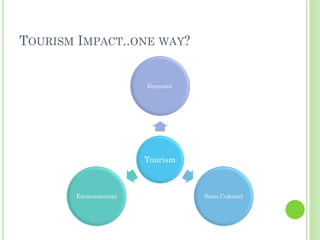
TOURISM IMPACT..ONE WAY?
Tourism
Economic
Socio-Cultural
Environmental
TOURISM IMPACTS
 Jafari (1990) and Wall (1997)
 Negative impacts tend to outweigh positive impacts
 Still, residents want tourists!
 Concept of TRADE-OFF
 Wall (1997)
 “The situation is extremely complex... But impacts are
often desired, are extremely difficult to assess, may
require the acceptance of trade-offs and in a policy
context, may involve the development of strategies to
mitigate undesirable impacts”
 Butler (1980)
 Likely to change over time as a destination area
develops
FACTORS CONTRIBUTING TO THE NATURE
OF IMPACTS (WALL, 1997)
Impact
Tourism
Activities
Characteristics
of the
Destination
Nature of
Interaction
between
Visitors and
Residents
FACTORS CONTRIBUTING TO THE NATURE
OF IMPACTS (DAVISON, 1996)
IMPACT
When
Where
Wall
(1997)
WHERE AND WHEN?
 Sets tourism apart from other industrial sectors
 Tourism being concentrated in SPACE
 PRODUCTION and CONSUMPTION take
place in the SAME LOCATION = Largely
SPATIALLY concentrated
 SEASONAL nature makes time (when)
important
 Climate and Holiday Periods
 Climate: Controls important resources for
tourism
 Holidays: when a person can visit the place
MAJOR INFLUENCES ON TOURISM
IMPACTS
 Where is tourism taking place? (Rural/Urban
location, a coastal/inland location?)
 What is the scale of tourism? (How many tourists
are involved?)
 Who are the tourists? (What is their origin? Are
they domestic/international?)
 In what type of activities do tourist engage?
(Passive or active? Consumptive of resources?)
 What infrastructure exists for tourism? (Roads?
Sewage System?)
 When is the tourist season? (Time of year?
Importance of rainy/dry season?)
OTHER IMPACTS
 Some impacts also occur beyond the
destination!
 Transit Zones
 Package tour purchased in the tourist’s home
region
 Also has impacts on tourists themselves!
 Behavior in destinations
 Behavior after the tour (e.g. Experiences affect
their decision on a future visit)
MCKERCHER’S “FUNDAMENTAL TRUTHS”
(1993)
 Tourism consumes resources and creates waste
 Tourism has the ability to over-consume
resources
 Tourism competes with other resource users and
needs to do this to survive
 Tourism is private-sector dominated
 Tourism is multi-faceted and is therefore almost
impossible to control
 Tourists are consumers, not anthropologists
 Tourism is entertainment
 Unlike other industrial activities, tourism
imports the clients rather than exports a product

4 - Impacts_of_Tourism.pdf

  • 1.
  • 2.
  • 3.
    TOURISM IMPACTS  Jafari(1990) and Wall (1997)  Negative impacts tend to outweigh positive impacts  Still, residents want tourists!  Concept of TRADE-OFF  Wall (1997)  “The situation is extremely complex... But impacts are often desired, are extremely difficult to assess, may require the acceptance of trade-offs and in a policy context, may involve the development of strategies to mitigate undesirable impacts”  Butler (1980)  Likely to change over time as a destination area develops
  • 4.
    FACTORS CONTRIBUTING TOTHE NATURE OF IMPACTS (WALL, 1997) Impact Tourism Activities Characteristics of the Destination Nature of Interaction between Visitors and Residents
  • 5.
    FACTORS CONTRIBUTING TOTHE NATURE OF IMPACTS (DAVISON, 1996) IMPACT When Where Wall (1997)
  • 6.
    WHERE AND WHEN? Sets tourism apart from other industrial sectors  Tourism being concentrated in SPACE  PRODUCTION and CONSUMPTION take place in the SAME LOCATION = Largely SPATIALLY concentrated  SEASONAL nature makes time (when) important  Climate and Holiday Periods  Climate: Controls important resources for tourism  Holidays: when a person can visit the place
  • 7.
    MAJOR INFLUENCES ONTOURISM IMPACTS  Where is tourism taking place? (Rural/Urban location, a coastal/inland location?)  What is the scale of tourism? (How many tourists are involved?)  Who are the tourists? (What is their origin? Are they domestic/international?)  In what type of activities do tourist engage? (Passive or active? Consumptive of resources?)  What infrastructure exists for tourism? (Roads? Sewage System?)  When is the tourist season? (Time of year? Importance of rainy/dry season?)
  • 8.
    OTHER IMPACTS  Someimpacts also occur beyond the destination!  Transit Zones  Package tour purchased in the tourist’s home region  Also has impacts on tourists themselves!  Behavior in destinations  Behavior after the tour (e.g. Experiences affect their decision on a future visit)
  • 9.
    MCKERCHER’S “FUNDAMENTAL TRUTHS” (1993) Tourism consumes resources and creates waste  Tourism has the ability to over-consume resources  Tourism competes with other resource users and needs to do this to survive  Tourism is private-sector dominated  Tourism is multi-faceted and is therefore almost impossible to control  Tourists are consumers, not anthropologists  Tourism is entertainment  Unlike other industrial activities, tourism imports the clients rather than exports a product