Sustainable Small Town Economic Development Della G. Rucker, AICP, CEcD  JACOBS | Urban Design + Planning Wise Economy Media American Planning Association National Conference April 11, 2010
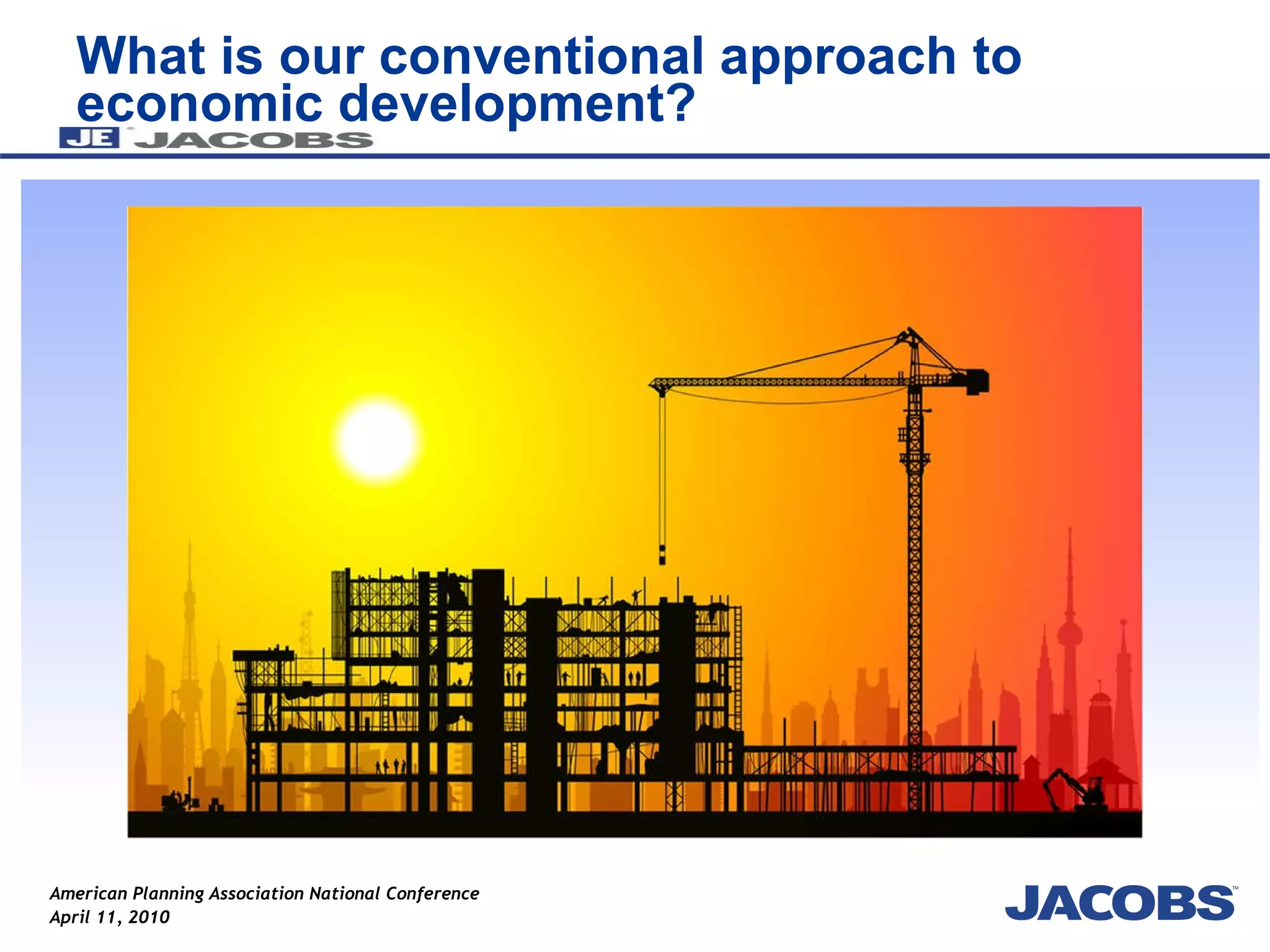
What is our conventional approach to economic development?
What are the assumptions? If you build it they will come Shoot what flies and claim what falls Bigger is better Success is one size fits all Basic requirements aside, most communities are interchangeable The key driver of economic development = low site costs.  The lower the costs, the more business
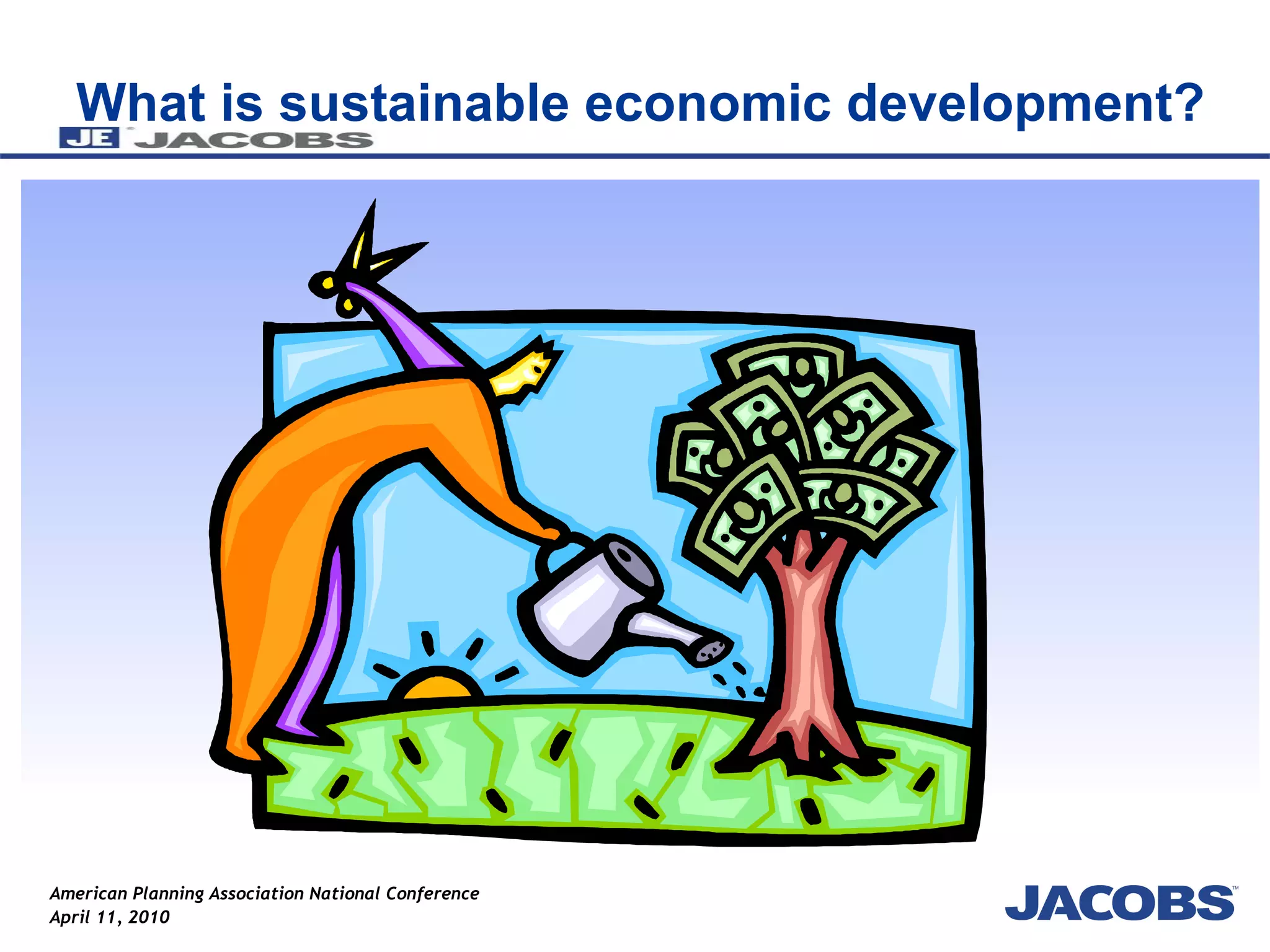
What is sustainable economic development?
What is this? Constantly looks for new and unexpected  opportunities Embrace  differentiators  and values  assets Focus on  cultivating  its  native species , rather than investing everything it has in transplants.  Cultivate  consciously  and according to a plan.  Bewares  one-shot solutions and magic pills.  Maintains  bravery  in the face of setbacks.  Fertilizes  the soil.  Maintains a healthy environment.  Understands the  unique role  that it can play in that world.
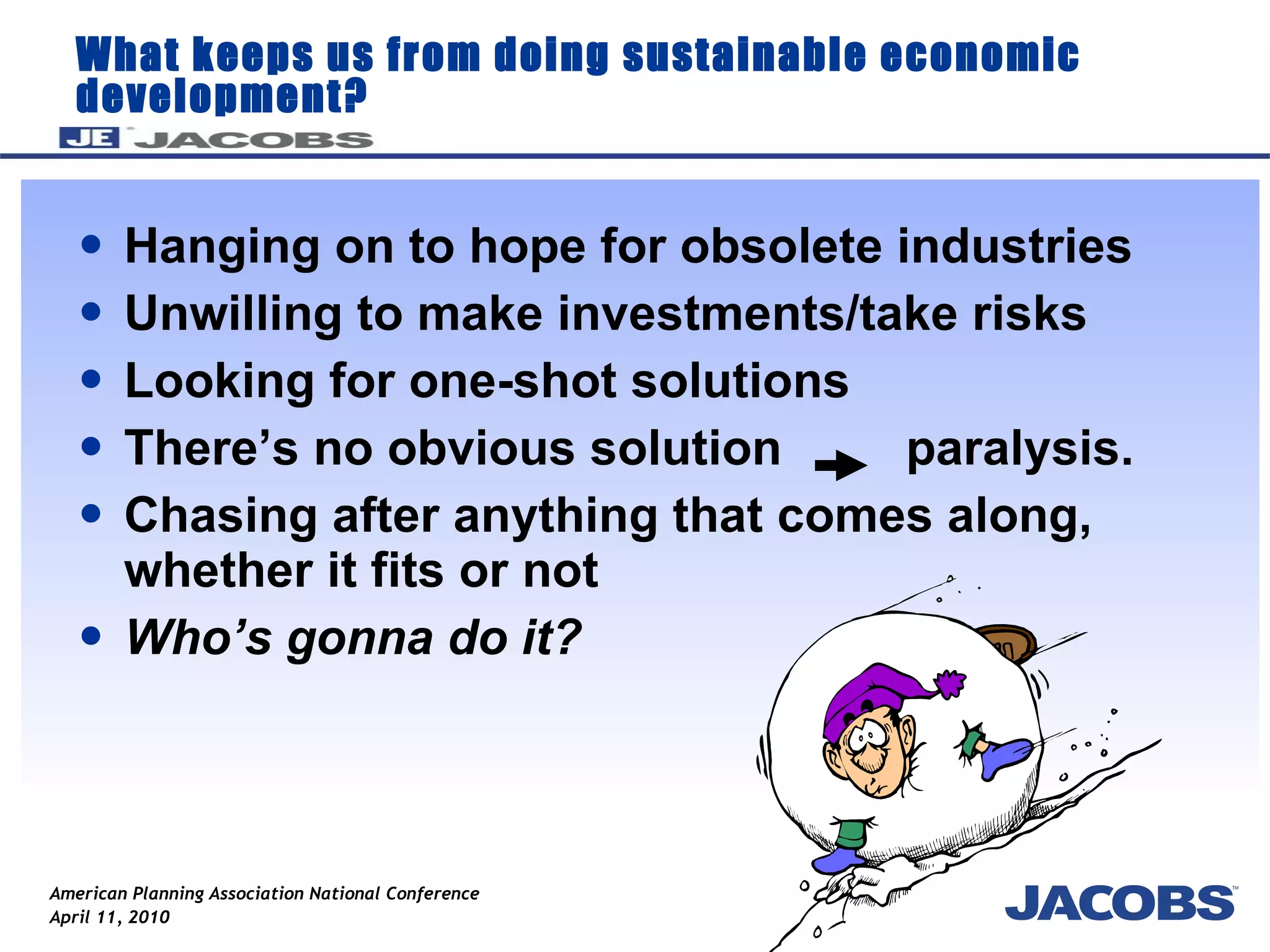
What keeps us from doing sustainable economic development? Hanging on to hope for obsolete industries Unwilling to make investments/take risks Looking for one-shot solutions There’s no obvious solution  paralysis. Chasing after anything that comes along, whether it fits or not Who’s gonna do it?
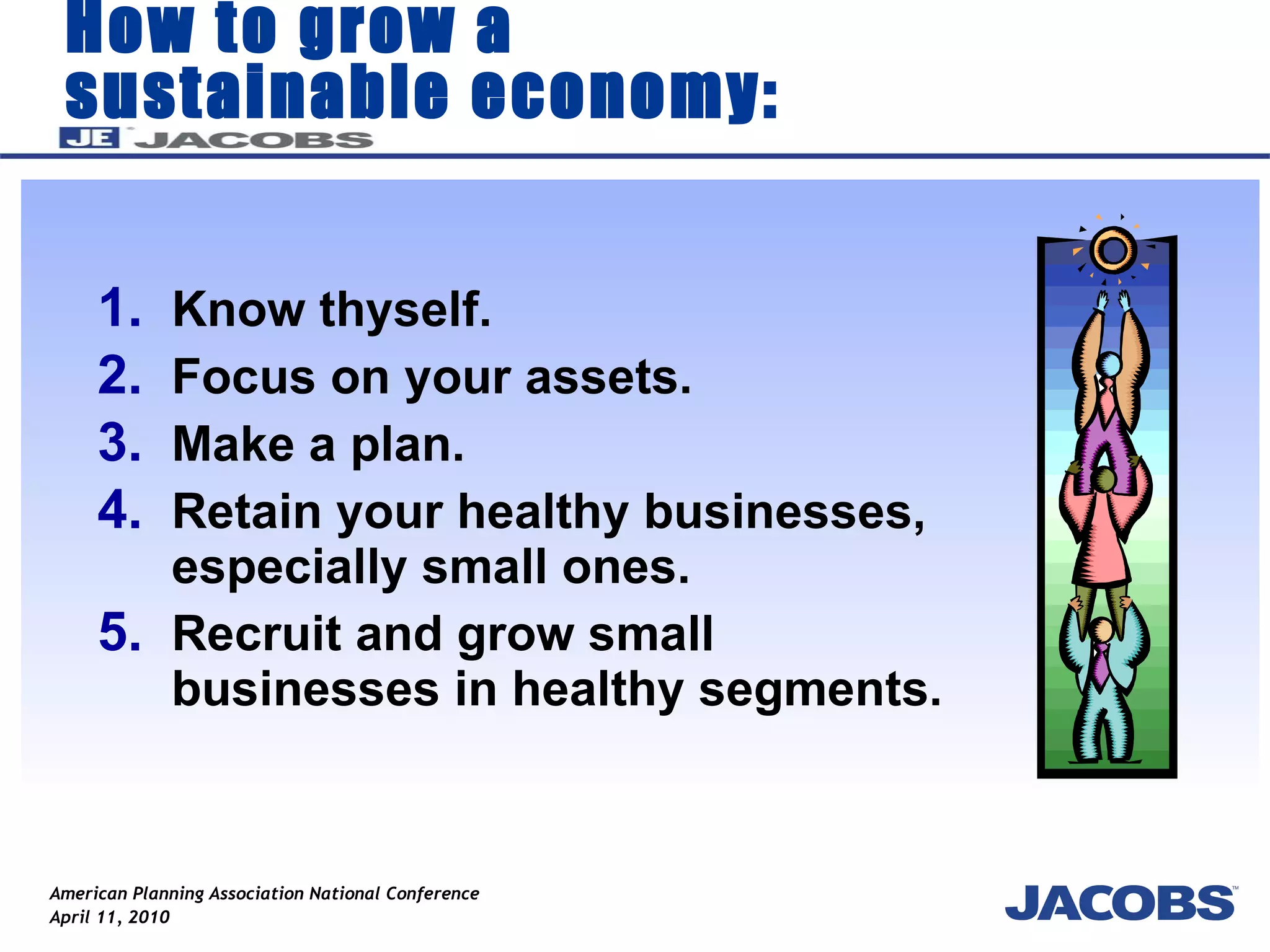
How to grow a sustainable economy: Know thyself. Focus on your assets. Make a plan. Retain your healthy businesses, especially small ones. Recruit and grow small businesses in healthy segments.
How to grow a sustainable economy: Prune your retail. Brand and use it consistently.  Use your hidden resources. Keep your focus. Be in it for the long haul.
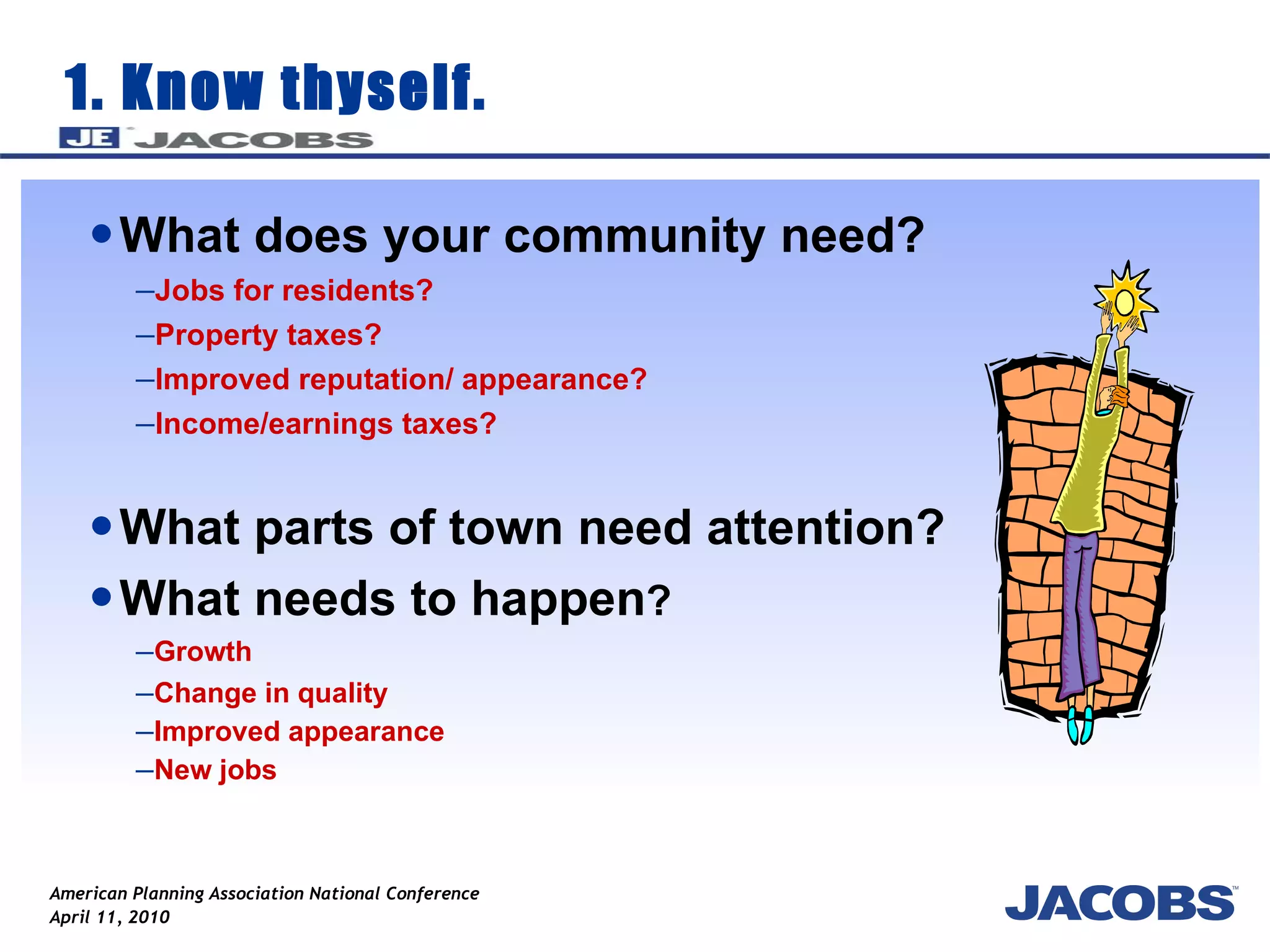
1. Know thyself. What does your community need? Jobs for residents? Property taxes? Improved reputation/ appearance? Income/earnings taxes? What parts of town need attention? What needs to happen ?  Growth  Change in quality Improved appearance New jobs
An Example Our community will offer a variety of opportunities for employment, education, shopping ,  dining   and   culture .  Wapakoneta’s residents will expect and support high standards for the appearance and   efficiency of our business sites . Our major corridors, public areas and key entry points will demonstrate that Wapakoneta is a place people want to be.  Wapakoneta will cooperate with surrounding communities to attract businesses and industries strategically and responsibly, enhancing the community’s total quality of life.
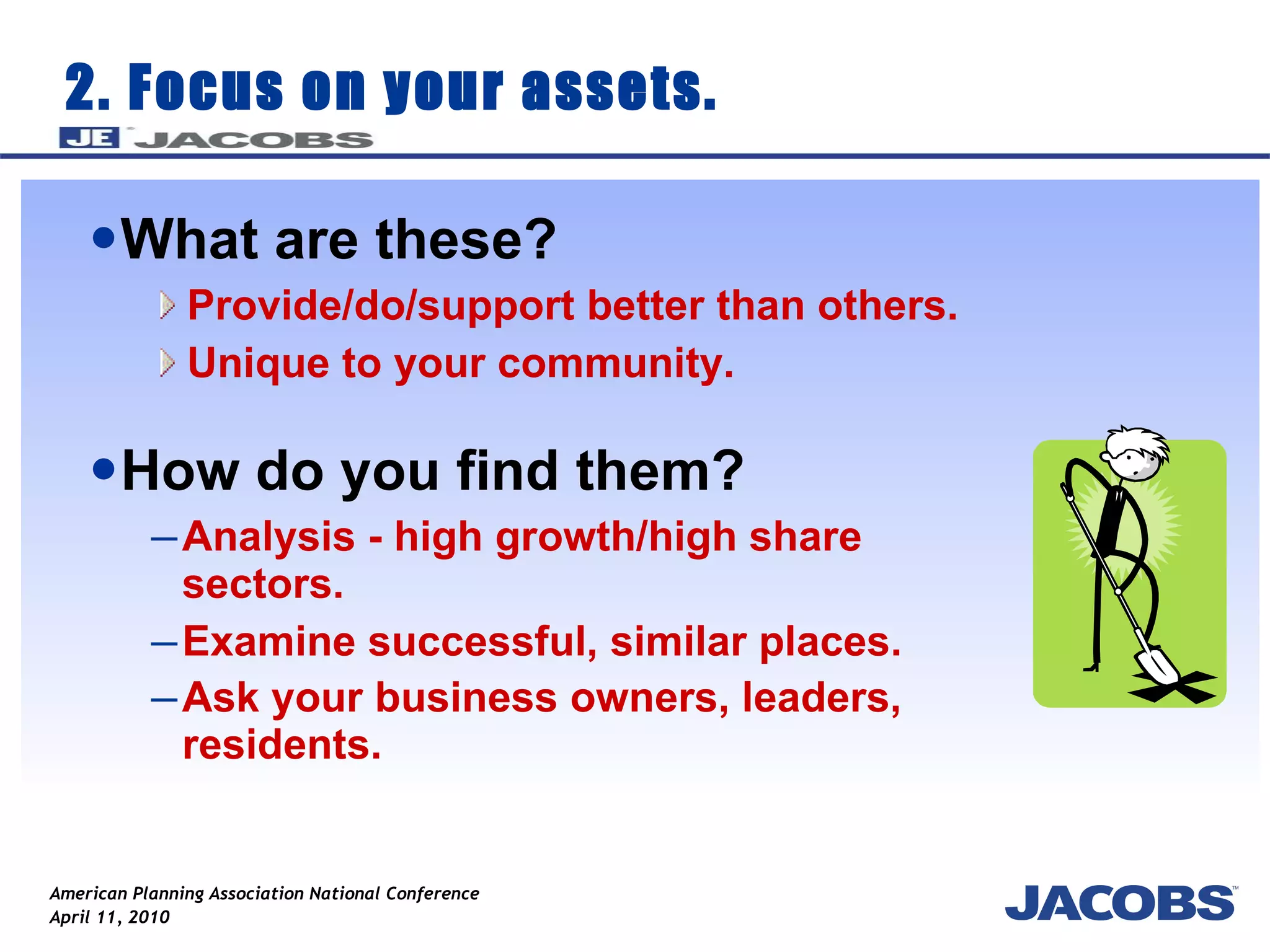
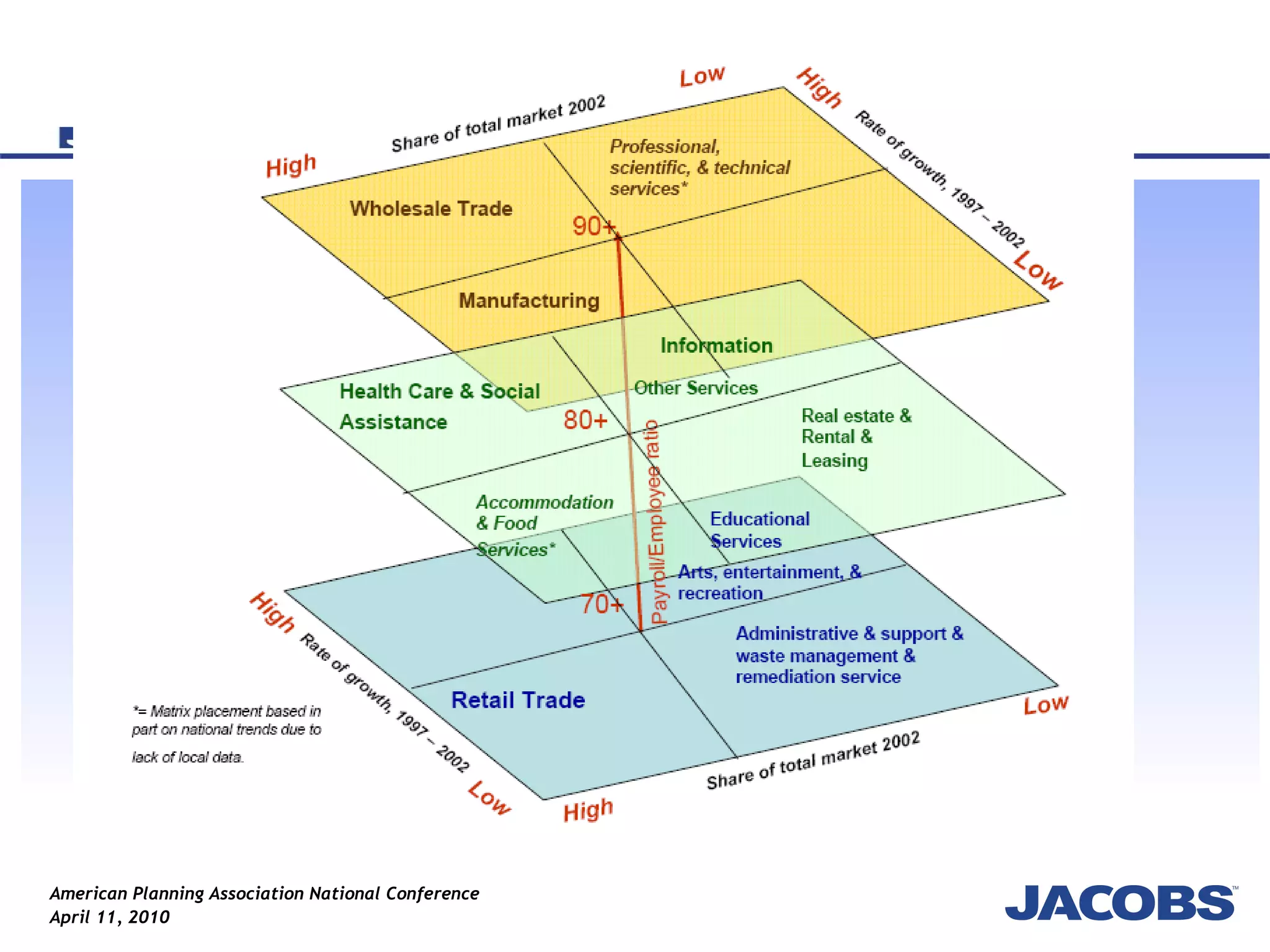
2. Focus on your assets. What are these?  Provide/do/support better than others. Unique to your community. How do you find them? Analysis - high growth/high share sectors. Examine successful, similar places. Ask your business owners, leaders, residents.
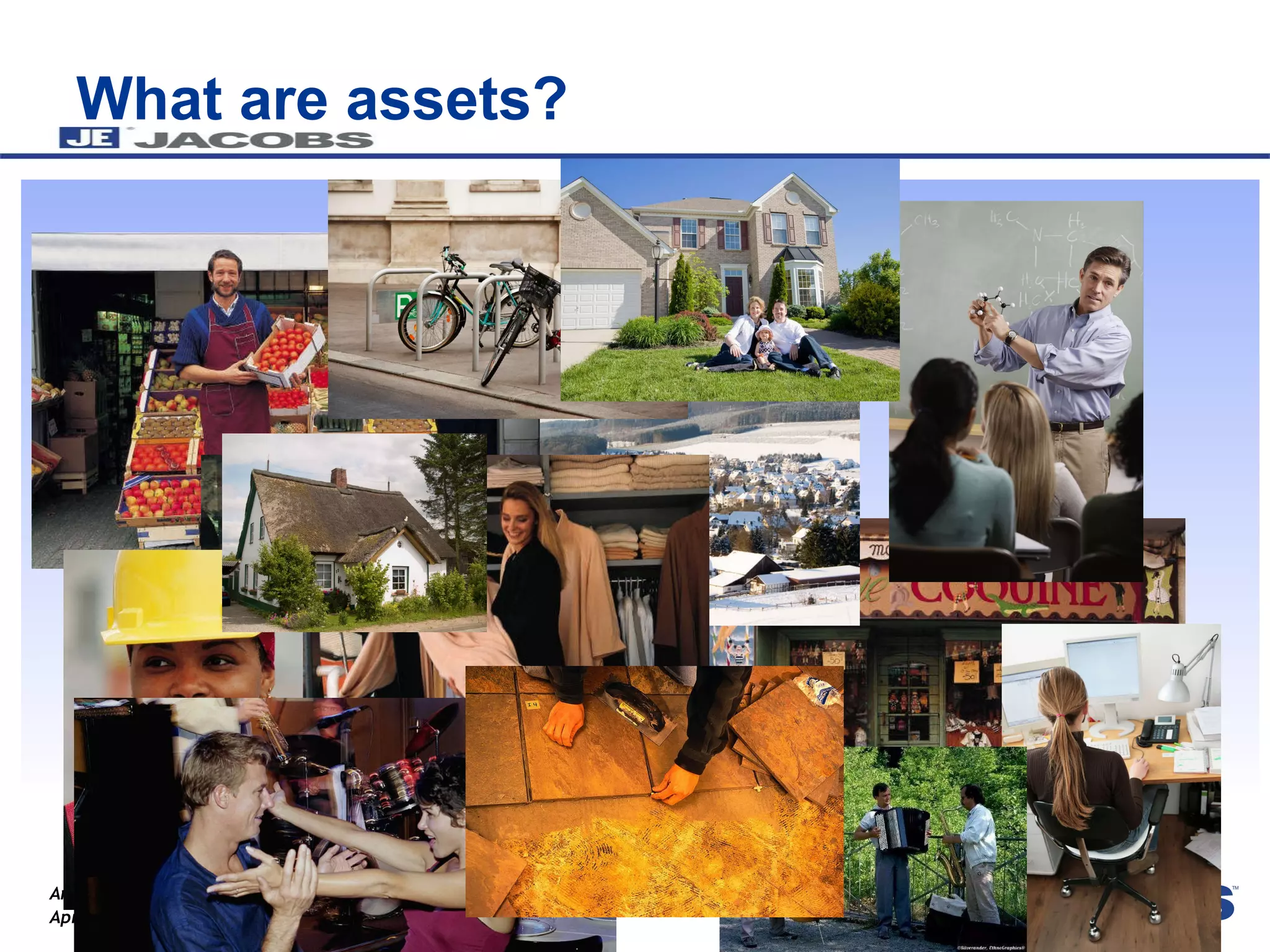
What are assets?
 
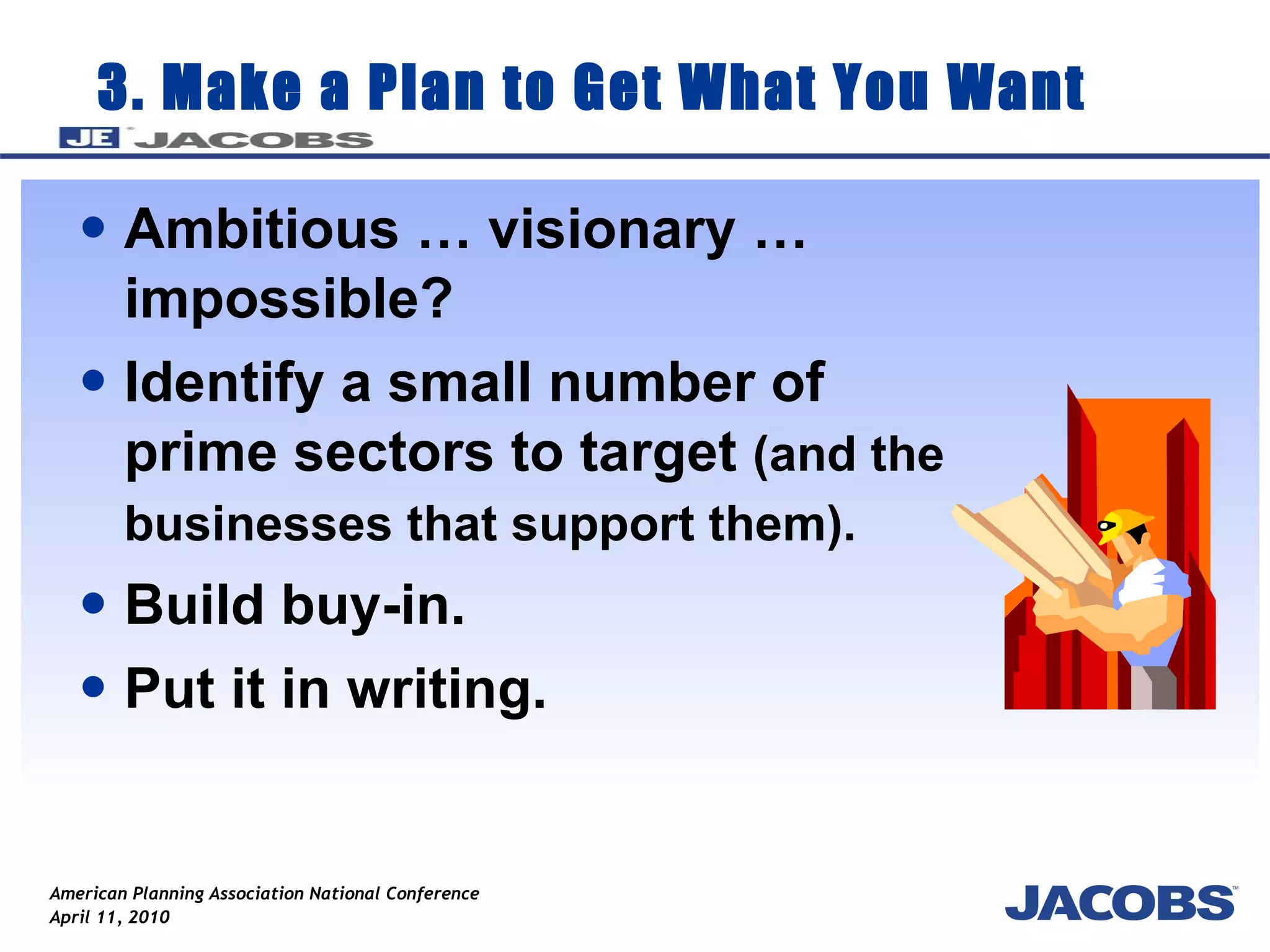
3. Make a Plan to Get What You Want Ambitious … visionary … impossible?  Identify a small number of prime sectors to target  (and the businesses that support them).   Build buy-in. Put it in writing.
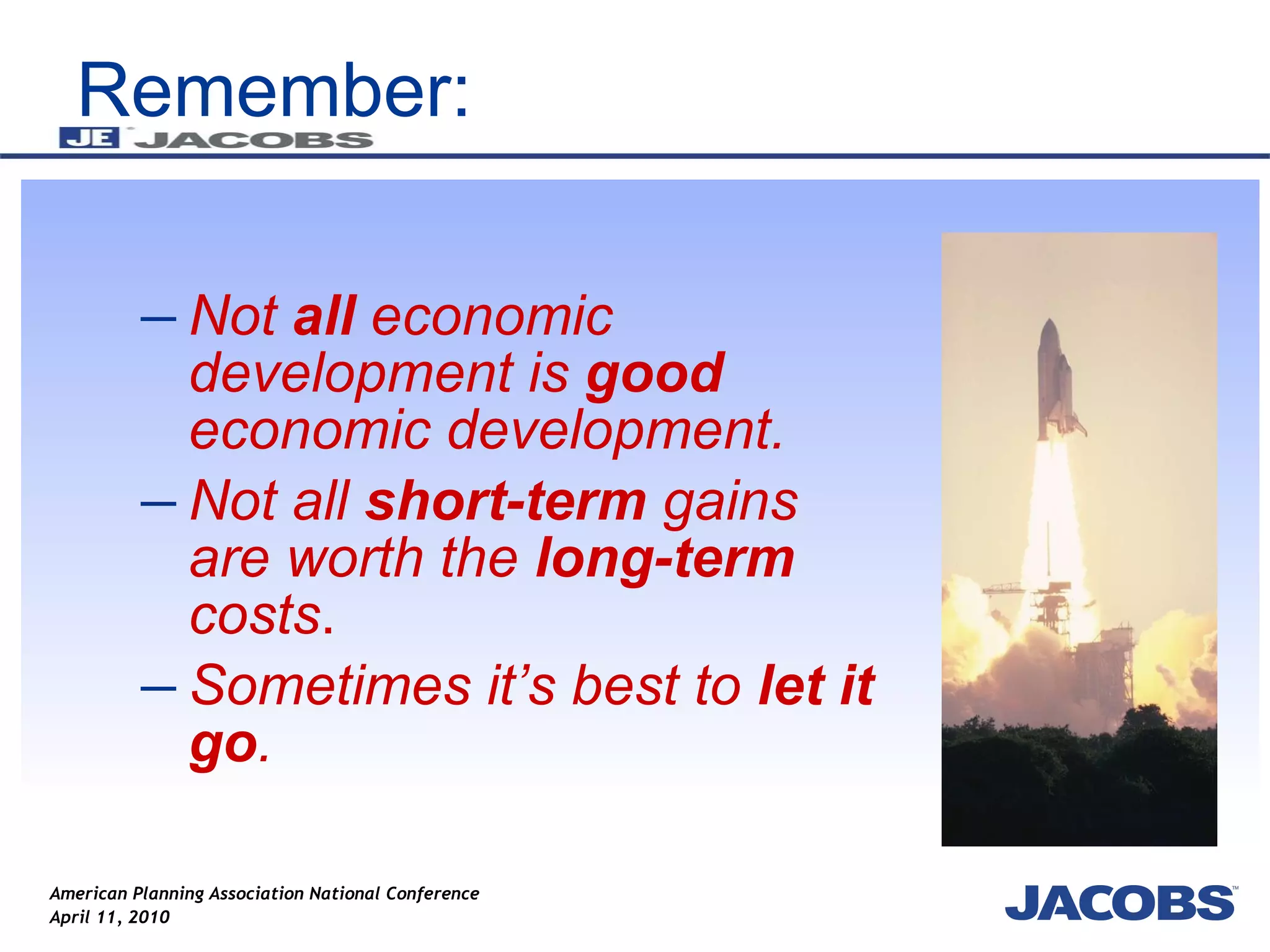
Remember: Not  all  economic development is  good  economic development. Not all  short-term  gains are worth the  long-term  costs . Sometimes it’s best to  let it go .
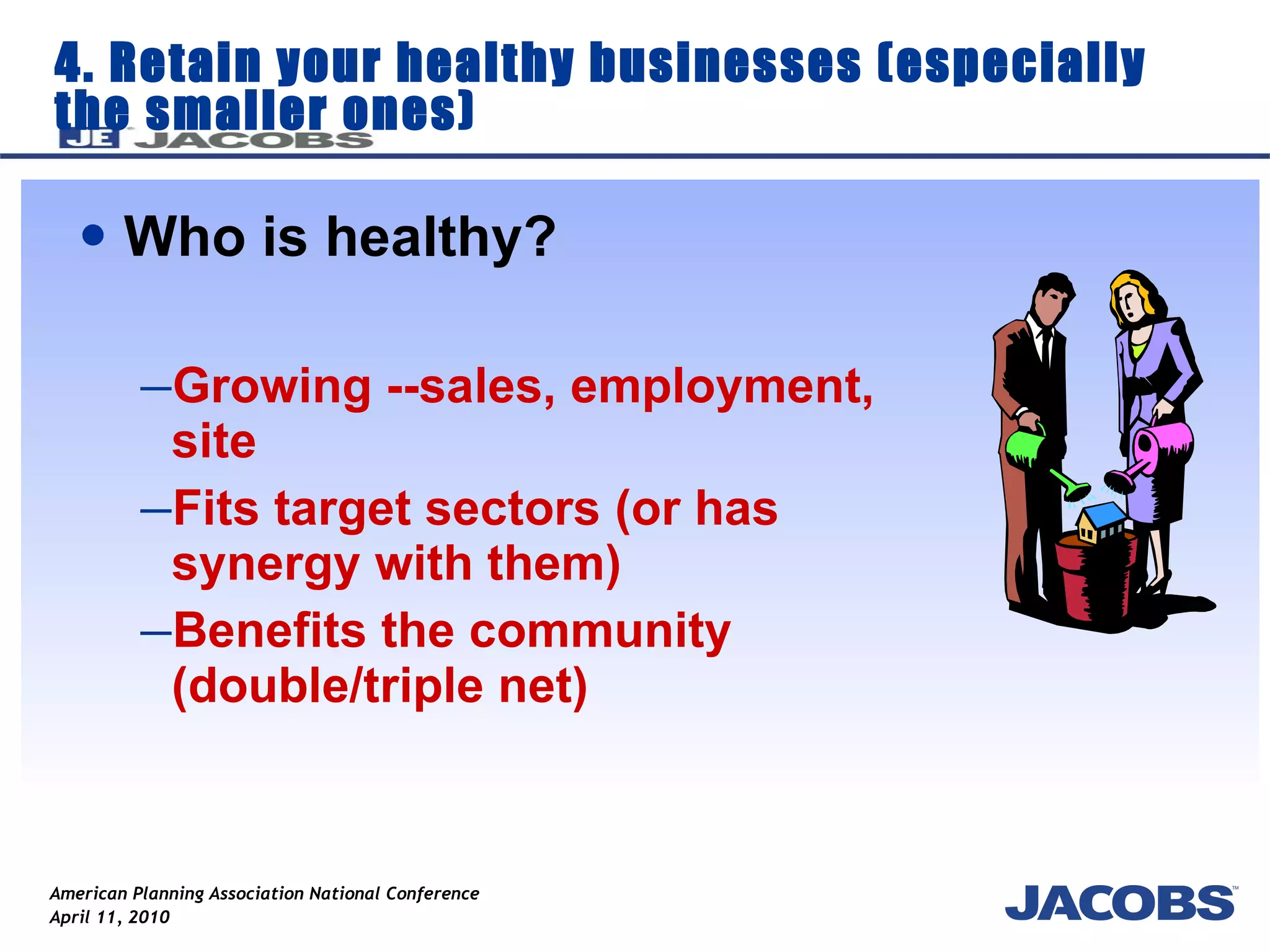
4. Retain your healthy businesses (especially the smaller ones) Who is healthy? Growing --sales, employment, site Fits target sectors (or has synergy with them) Benefits the community (double/triple net)
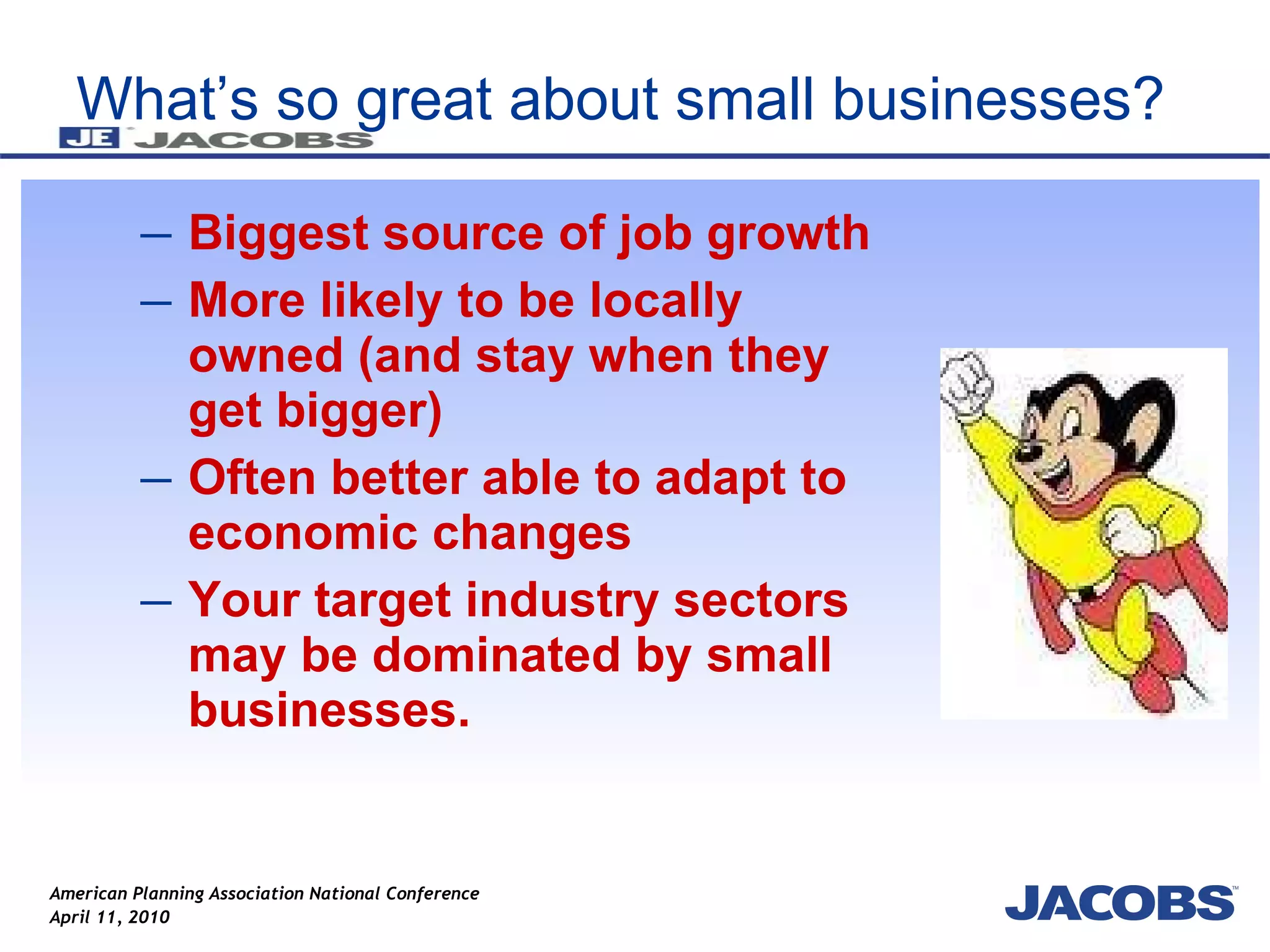
What’s so great about small businesses? Biggest source of job growth More likely to be locally owned (and stay when they get bigger) Often better able to adapt to economic changes Your target industry sectors may be dominated by small businesses.
4. Retain your healthy businesses How do you retain them? Talk frequently and honestly. Take their concerns seriously  Fix them if you can. Help them find other things they need (e.g, loans). Make sure they know you value them. Encourage them to participate. Thank them.
5. Recruit and Grow Small Businesses How do we find them? Word of mouth  Next door Potential entrepreneurs  Business incubator tenants How do we help them grow? Talk to them Listen to them Know where to find help Help them talk to each other
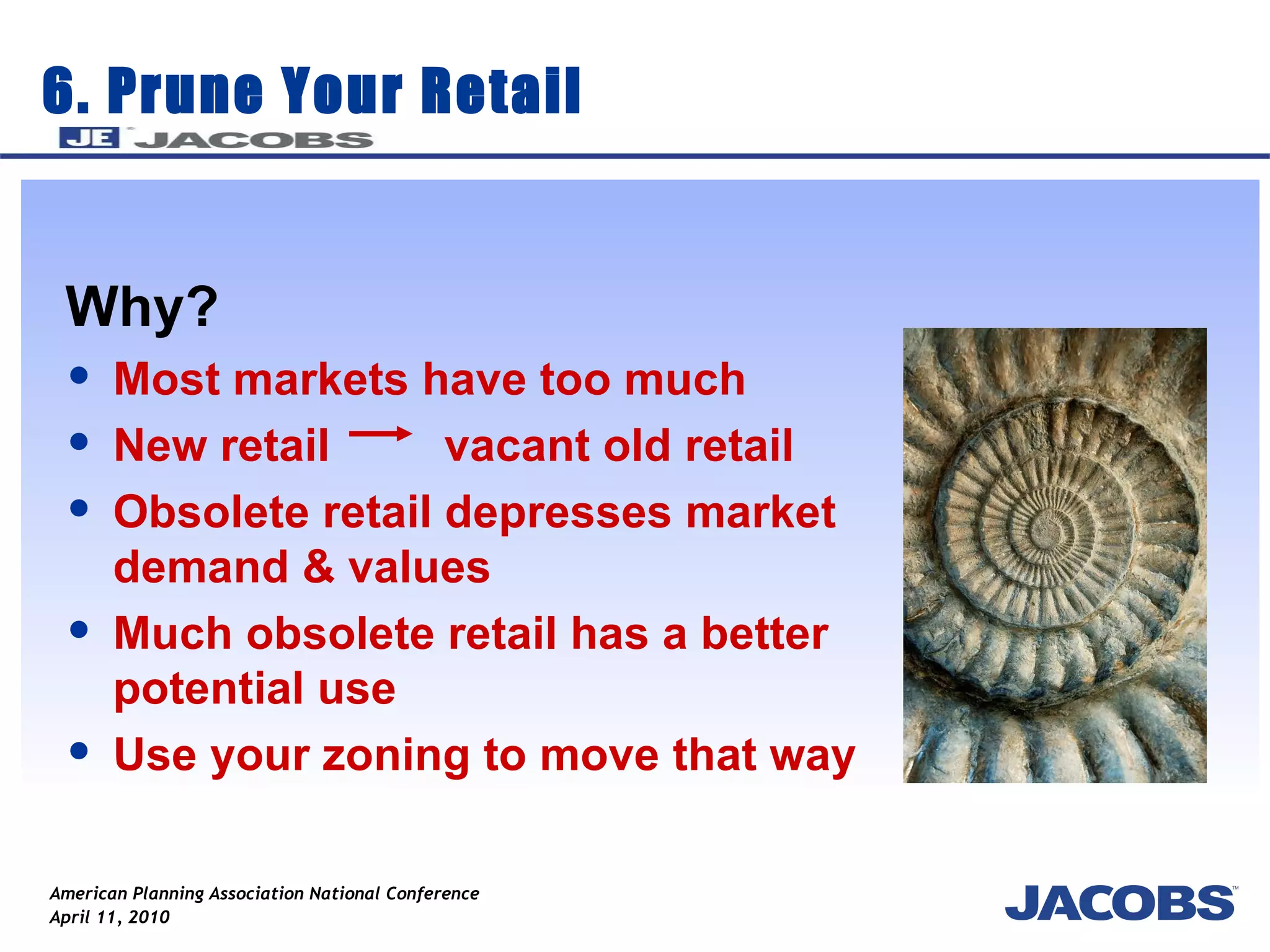
6. Prune Your Retail Why? Most markets have too much  New retail  vacant old retail Obsolete retail depresses market demand & values Much obsolete retail has a better potential use Use your zoning to move that way
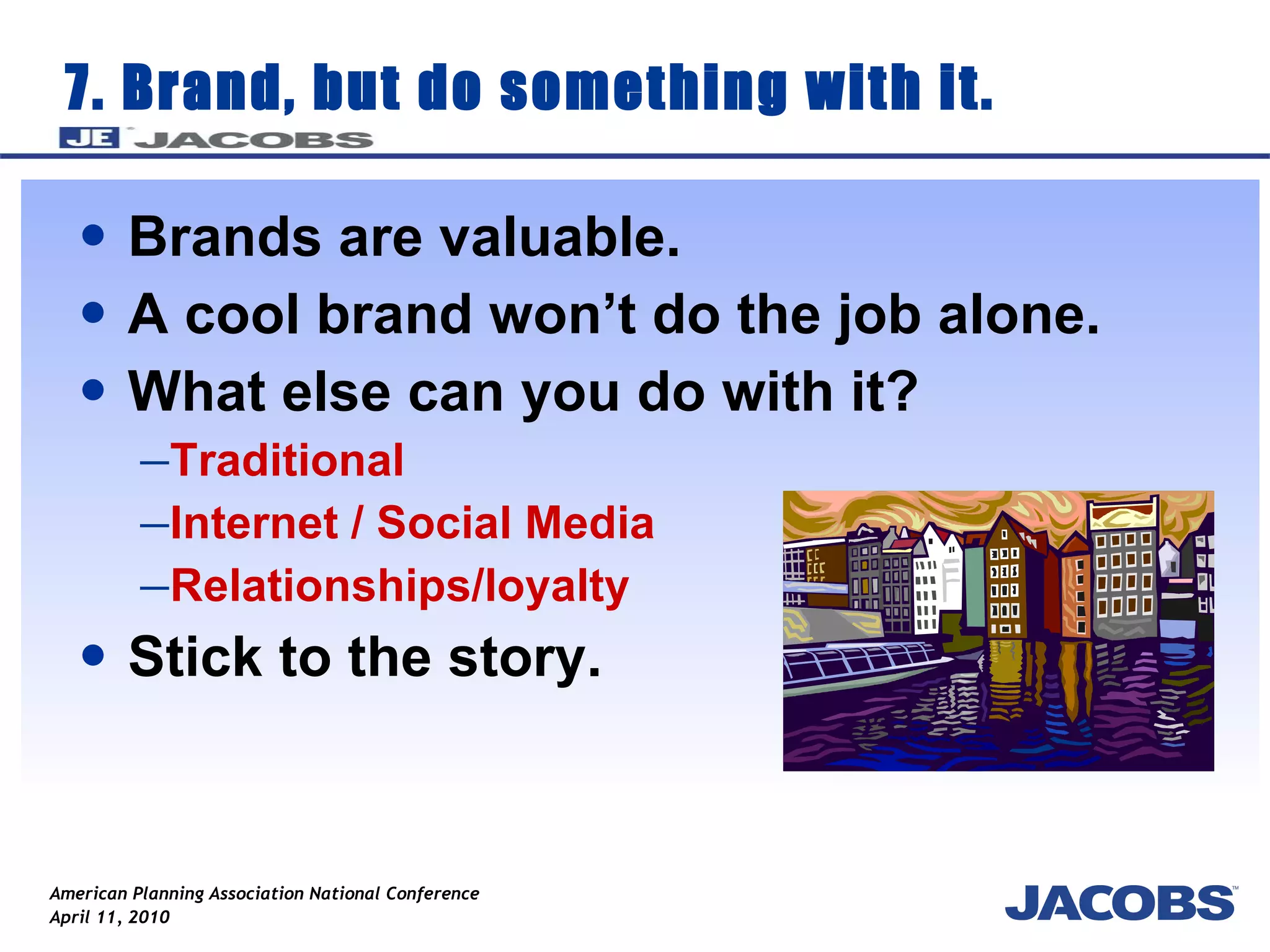
7. Brand, but do something with it. Brands are valuable. A cool brand won’t do the job alone. What else can you do with it? Traditional Internet / Social Media Relationships/loyalty Stick to the story.
8. Use your hidden resources Non profit organizations Charities and Foundations  Service Groups Schools  What can they do?  Community Improvements Wisdom/Expertise Entrepreneurs Ambassadors
9. Keep your focus Hard decisions are a fact of life. A wobble may cost you the ability to use the plan Communicate to everyone (and refer to the plan)
Again…. Remember: You can’t change the past. Not all economic development is good economic development. Not all short-term gains are worth the long-term costs . Sometimes it’s best to let go.
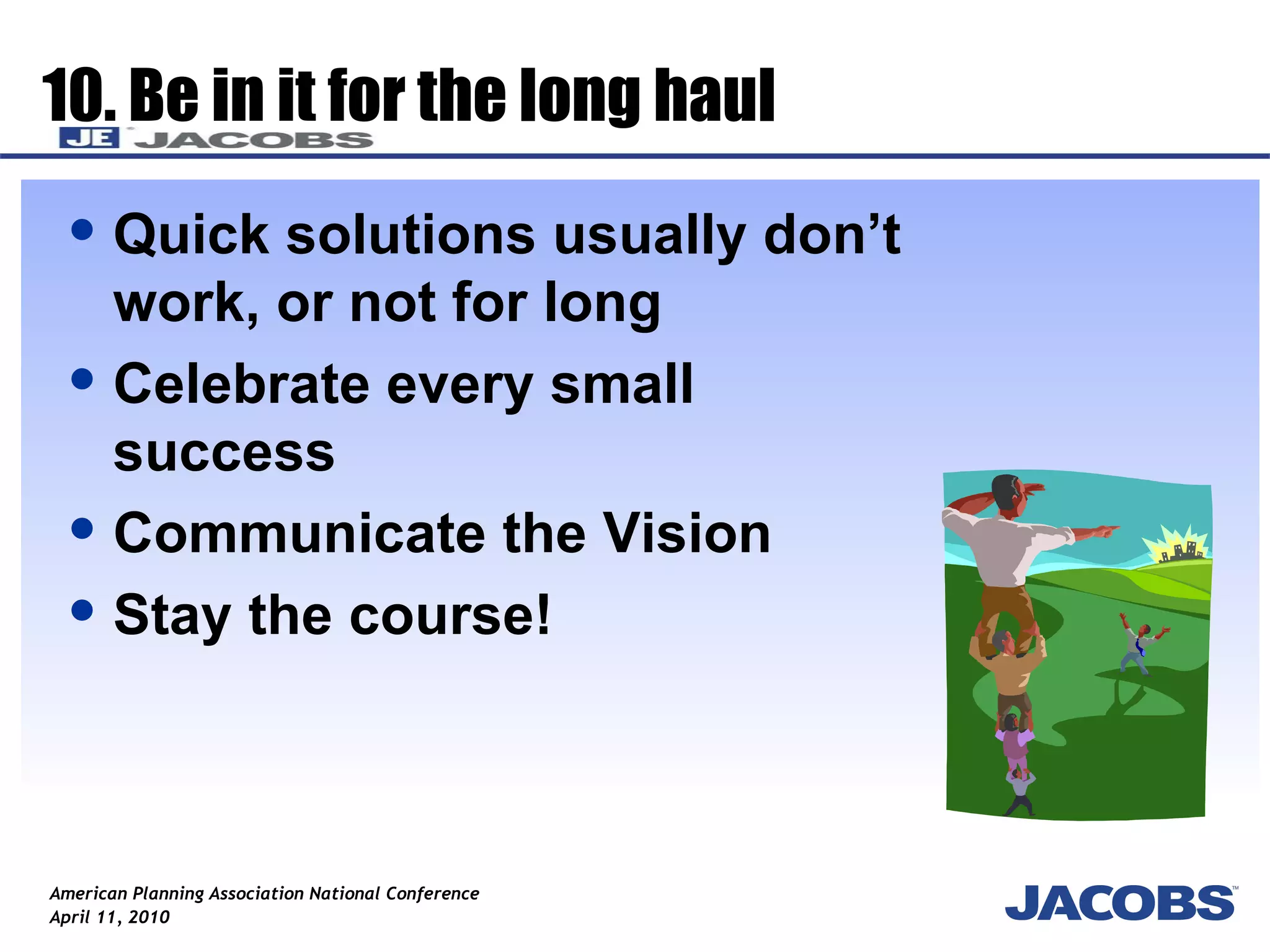
10. Be in it for the long haul Quick solutions usually don’t work, or not for long Celebrate every small success  Communicate the Vision  Stay the course!
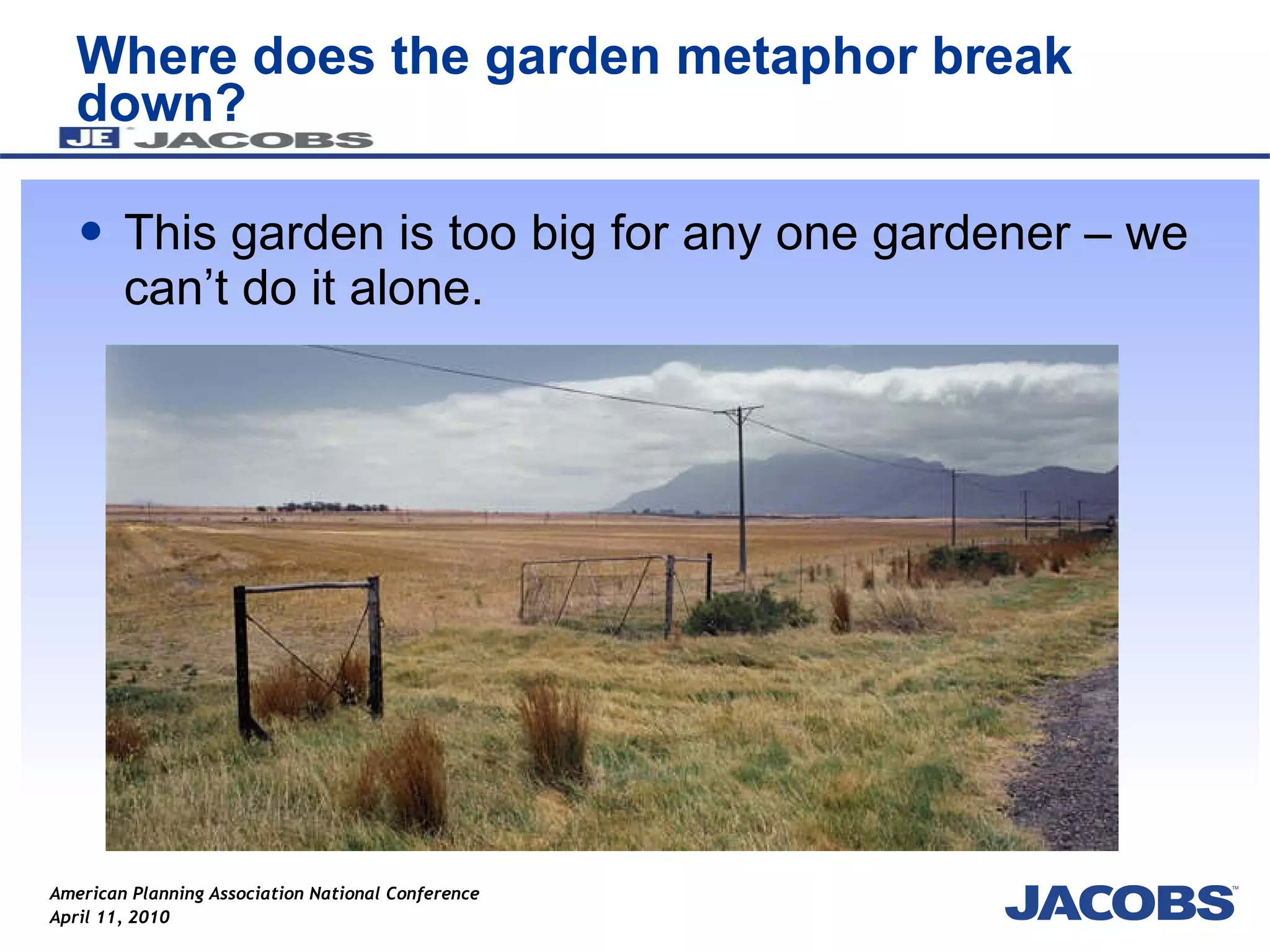
Where does the garden metaphor break down? This garden is too big for any one gardener – we can’t do it alone.
Questions?  Insights?  Good ideas?
“ Nothing in this world can take the place of  persistence . Talent will not; nothing is more common than unsuccessful people with talent. Genius will not; unrewarded genius is almost a proverb. Education will not; the world is full of educated derelicts.  Persistence and determination alone are omnipotent. The slogan  "press on"  has solved and always will solve the problems of the human race” - Calvin Coolidge. Parting thought
Thank you ! Della G. Rucker, AICP, CEcD JACOBS | Urban Design + Planning 1880 Waycross Road Cincinnati, OH 45240 Phone: 513-288-6613 [email_address] www.dellarucker.wordpress.com Twitter: @dgottrucker

Econ Dev Presentation Apa 04 11 10

  • 1.
    Sustainable Small TownEconomic Development Della G. Rucker, AICP, CEcD JACOBS | Urban Design + Planning Wise Economy Media American Planning Association National Conference April 11, 2010
  • 2.
    What is ourconventional approach to economic development?
  • 3.
    What are theassumptions? If you build it they will come Shoot what flies and claim what falls Bigger is better Success is one size fits all Basic requirements aside, most communities are interchangeable The key driver of economic development = low site costs. The lower the costs, the more business
  • 4.
    What is sustainableeconomic development?
  • 5.
    What is this?Constantly looks for new and unexpected opportunities Embrace differentiators and values assets Focus on cultivating its native species , rather than investing everything it has in transplants. Cultivate consciously and according to a plan. Bewares one-shot solutions and magic pills. Maintains bravery in the face of setbacks. Fertilizes the soil. Maintains a healthy environment. Understands the unique role that it can play in that world.
  • 6.
    What keeps usfrom doing sustainable economic development? Hanging on to hope for obsolete industries Unwilling to make investments/take risks Looking for one-shot solutions There’s no obvious solution paralysis. Chasing after anything that comes along, whether it fits or not Who’s gonna do it?
  • 7.
    How to growa sustainable economy: Know thyself. Focus on your assets. Make a plan. Retain your healthy businesses, especially small ones. Recruit and grow small businesses in healthy segments.
  • 8.
    How to growa sustainable economy: Prune your retail. Brand and use it consistently. Use your hidden resources. Keep your focus. Be in it for the long haul.
  • 9.
    1. Know thyself.What does your community need? Jobs for residents? Property taxes? Improved reputation/ appearance? Income/earnings taxes? What parts of town need attention? What needs to happen ? Growth Change in quality Improved appearance New jobs
  • 10.
    An Example Ourcommunity will offer a variety of opportunities for employment, education, shopping , dining and culture . Wapakoneta’s residents will expect and support high standards for the appearance and efficiency of our business sites . Our major corridors, public areas and key entry points will demonstrate that Wapakoneta is a place people want to be. Wapakoneta will cooperate with surrounding communities to attract businesses and industries strategically and responsibly, enhancing the community’s total quality of life.
  • 11.
    2. Focus onyour assets. What are these? Provide/do/support better than others. Unique to your community. How do you find them? Analysis - high growth/high share sectors. Examine successful, similar places. Ask your business owners, leaders, residents.
  • 12.
  • 13.
  • 14.
    3. Make aPlan to Get What You Want Ambitious … visionary … impossible? Identify a small number of prime sectors to target (and the businesses that support them). Build buy-in. Put it in writing.
  • 15.
    Remember: Not all economic development is good economic development. Not all short-term gains are worth the long-term costs . Sometimes it’s best to let it go .
  • 16.
    4. Retain yourhealthy businesses (especially the smaller ones) Who is healthy? Growing --sales, employment, site Fits target sectors (or has synergy with them) Benefits the community (double/triple net)
  • 17.
    What’s so greatabout small businesses? Biggest source of job growth More likely to be locally owned (and stay when they get bigger) Often better able to adapt to economic changes Your target industry sectors may be dominated by small businesses.
  • 18.
    4. Retain yourhealthy businesses How do you retain them? Talk frequently and honestly. Take their concerns seriously Fix them if you can. Help them find other things they need (e.g, loans). Make sure they know you value them. Encourage them to participate. Thank them.
  • 19.
    5. Recruit andGrow Small Businesses How do we find them? Word of mouth Next door Potential entrepreneurs Business incubator tenants How do we help them grow? Talk to them Listen to them Know where to find help Help them talk to each other
  • 20.
    6. Prune YourRetail Why? Most markets have too much New retail vacant old retail Obsolete retail depresses market demand & values Much obsolete retail has a better potential use Use your zoning to move that way
  • 21.
    7. Brand, butdo something with it. Brands are valuable. A cool brand won’t do the job alone. What else can you do with it? Traditional Internet / Social Media Relationships/loyalty Stick to the story.
  • 22.
    8. Use yourhidden resources Non profit organizations Charities and Foundations Service Groups Schools What can they do? Community Improvements Wisdom/Expertise Entrepreneurs Ambassadors
  • 23.
    9. Keep yourfocus Hard decisions are a fact of life. A wobble may cost you the ability to use the plan Communicate to everyone (and refer to the plan)
  • 24.
    Again…. Remember: Youcan’t change the past. Not all economic development is good economic development. Not all short-term gains are worth the long-term costs . Sometimes it’s best to let go.
  • 25.
    10. Be init for the long haul Quick solutions usually don’t work, or not for long Celebrate every small success Communicate the Vision Stay the course!
  • 26.
    Where does thegarden metaphor break down? This garden is too big for any one gardener – we can’t do it alone.
  • 27.
  • 28.
    “ Nothing inthis world can take the place of persistence . Talent will not; nothing is more common than unsuccessful people with talent. Genius will not; unrewarded genius is almost a proverb. Education will not; the world is full of educated derelicts. Persistence and determination alone are omnipotent. The slogan "press on" has solved and always will solve the problems of the human race” - Calvin Coolidge. Parting thought
  • 29.
    Thank you !Della G. Rucker, AICP, CEcD JACOBS | Urban Design + Planning 1880 Waycross Road Cincinnati, OH 45240 Phone: 513-288-6613 [email_address] www.dellarucker.wordpress.com Twitter: @dgottrucker

Editor's Notes

  • #2 Fix title to match what program says
  • #3 Ask them for the assumptions
  • #5 Extended metaphor around garden. Script this.
  • #7 does this still fit?
  • #11 Examples of vision statements or objectives
  • #12 Insert analysis example.s
  • #14 Examples of assets?
  • #15 Split into two