EASYJET
Come on, lets fly!!
HISTORY
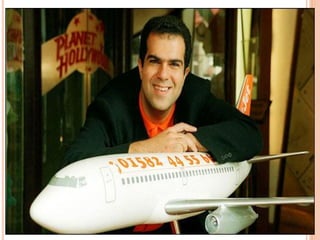
 1995:  Stelios creates easyJet and starts
  flights between Luton and Scotland
 1996: easyJet opens international routes
  to Amsterdam, Nice and Barcelona
 1997: the website easyJet.com goes live

 1998: easyJet acquires a Swiss airline and
  becomes Geneva’s defacto home carrier
 1998:   BA launches GO airlines in
  response to easyJet – Stelios is on their
  first flight
 1998: easyJet is elevated by the media as
  the arch rival of BA and credited with
  sparking a price war
 1998: as the airline becomes a “brand”
  Stelios starts to work on brand extension
  and founds the easyGroup
 1999:  the TV docusoap on easyJet is first
  broadcast on Britain’s ITV to an audience
  of 9m viewers
 2000: easyJet PLC is partially floated on
  the London Stock Exchange
 2001: easyJet PLC acquires go airlines
  nearly doubling in size
 2005: easyJet reaches 100 aircraft in the
  fleet.
AND NOW, IT IS
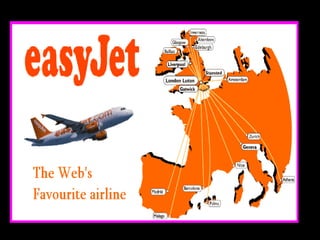
 One of Europe’s leading airlines with
  some 170 aircraft flying over 400 routes
  between 103 airports in 26 countries.
 Approximately 45 million people a year fly
  with easyJet enjoying more value for less!
 The airline is based at EasyLand, at
  Luton Airport.
EASYGROUP

 easyJet             easy4men   (male
 easyInternetcafe     toiletries)
 easyValue           easyPizza

 easyCar             easyMusic

 easyMoney           easyCruise

 easyCinema          easyMobile

 easyBus             easyWatch

 easyHotel           easyVan

 easyJobs            easyOffice
BRAND VALUES
 great value
 taking on the big boys

 for the many not the few

 relentless innovation

 keep it simple

 entrepreneurial

 making a difference in people’s lives

 honest, open, caring and fun

 SHOW VIDEO: Stelios with Riz Khan.flv
 Modeled     after Southwest Airlines of the
  US.
 Stelios borrowed these features from SW
  airlines:
     One type of aircraft
     Point to point short haul travel
     No in-flight meals
     Rapid turnaround time
     High aircraft utilisation
AND THEN,
STELIOS ADDED HIS OWN TWIST:


 •   No travel agents
 •   No tickets; A six character booking
     reference number is issued.
 •   Encouraged direct sales over the
     internet
 •   Flew brand new Boeing 737’s
 •   Used maximum seat capacity of
     149 seats
 •   No free drinks or peanuts.
 Stelios   championed the idea of no frills
  travel.
 The only free item on board an easyJet

  flight is an easyRider, the airlines in-
  flight magazine.
 Stelios remains the biggest single
  shareholder of easyJet PLC and a non-
  executive director
MISSION STATEMENT
 To  provide our customers with safe, good
  value, point-to-point air services.
 To effect and to offer a consistent and
  reliable product and fares appealing to
  leisure and business markets on a range
  of European routes.
 To achieve this we will develop our people
  and establish lasting relationships with
  our suppliers.
TARGET SEGMENT
 Young people
 Leisure Travellers

 Business clients able to plan in advance.
KEY MARKETS
 UK

 Germany

 Switzerland

 Italy

 France

 Spain
COMPETING ON COST
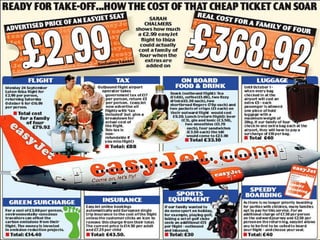
 Up to 50% lower costs compared to
  traditional carriers.
 Higher plane productivity.

 Secondary and regional airports. (Luton)

 One type aircraft fleet.(Brand new Boeing
  737’s)
 Focus on direct sales(90% on internet)
COMPETING ON SERVICE
 No  pre-assigned or business class seating.
  First come first serve basis.
 Yield management: ‘more the demand,
  more the fare.’
 No meals.

 Outsource everything except planes,
  pilots, cabin crew, marketing and sales
  people.
ORANGE
 Extensive  use of the color orange.
 The crew wore orange clothes, the planes
  and the office building were painted
  orange, and even the trash bags were
  orange.
 The neon orange represents
   value for money.
   creates a theme park kind of atmosphere.
CREATING BRAND AWARENESS
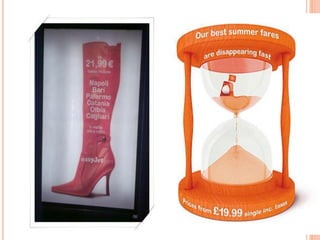
 Does  not use television advertising much.
 Relies heavily on press, outdoor and radio
  advertising , mobile display unit (buses)
  and PR.
 EasyJet also uses its own aircraft as
  airborne billboards.
 All EasyJet sales promotions are exclusive
  to the internet.
 Awareness of EasyJet has also been
  raised by 'Airline' the ITV docu-soap.
CREATING BRAND AWARENESS
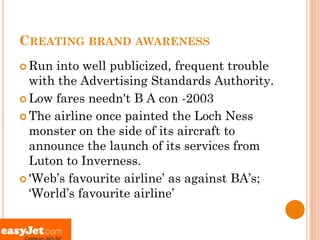
 Run into well publicized, frequent trouble
  with the Advertising Standards Authority.
 Low fares needn't B A con -2003

 The airline once painted the Loch Ness
  monster on the side of its aircraft to
  announce the launch of its services from
  Luton to Inverness.
 'Web’s favourite airline’ as against BA’s;
  ‘World’s favourite airline’
COMPETITION AND CONSOLIDATIONS
 Ryanair:   took over BUZZ: KLM’s low cost
  airline, in 2003.
 British Airways’ low cost carrier, ‘Go Fly’
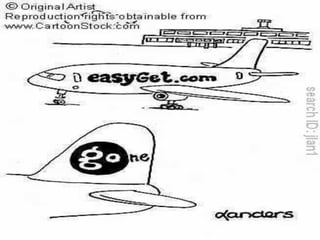
  was acquired by easyJet in 2002.
CHALLENGES
 High overcapacity
 Race of traditional airlines to catch up

 Airline offerings are becoming homogeneous.
       Lowcost carriers, charters, and scheduled airlines are
        battling for many of the same price-sensitive
        customer groups.
   Lowcost carriers need to pursue three strategies:
     cost leadership,
     differentiation, and
     diversification.
Easyjet  a marketing profile

Easyjet a marketing profile

  • 1.
  • 3.
    HISTORY  1995: Stelios creates easyJet and starts flights between Luton and Scotland  1996: easyJet opens international routes to Amsterdam, Nice and Barcelona  1997: the website easyJet.com goes live  1998: easyJet acquires a Swiss airline and becomes Geneva’s defacto home carrier
  • 4.
     1998: BA launches GO airlines in response to easyJet – Stelios is on their first flight  1998: easyJet is elevated by the media as the arch rival of BA and credited with sparking a price war  1998: as the airline becomes a “brand” Stelios starts to work on brand extension and founds the easyGroup
  • 5.
     1999: the TV docusoap on easyJet is first broadcast on Britain’s ITV to an audience of 9m viewers  2000: easyJet PLC is partially floated on the London Stock Exchange  2001: easyJet PLC acquires go airlines nearly doubling in size  2005: easyJet reaches 100 aircraft in the fleet.
  • 6.
    AND NOW, ITIS  One of Europe’s leading airlines with some 170 aircraft flying over 400 routes between 103 airports in 26 countries.  Approximately 45 million people a year fly with easyJet enjoying more value for less!  The airline is based at EasyLand, at Luton Airport.
  • 7.
    EASYGROUP  easyJet  easy4men (male  easyInternetcafe toiletries)  easyValue  easyPizza  easyCar  easyMusic  easyMoney  easyCruise  easyCinema  easyMobile  easyBus  easyWatch  easyHotel  easyVan  easyJobs  easyOffice
  • 8.
    BRAND VALUES  greatvalue  taking on the big boys  for the many not the few  relentless innovation  keep it simple  entrepreneurial  making a difference in people’s lives  honest, open, caring and fun  SHOW VIDEO: Stelios with Riz Khan.flv
  • 9.
     Modeled after Southwest Airlines of the US.  Stelios borrowed these features from SW airlines:  One type of aircraft  Point to point short haul travel  No in-flight meals  Rapid turnaround time  High aircraft utilisation
  • 10.
    AND THEN, STELIOS ADDEDHIS OWN TWIST: • No travel agents • No tickets; A six character booking reference number is issued. • Encouraged direct sales over the internet • Flew brand new Boeing 737’s • Used maximum seat capacity of 149 seats • No free drinks or peanuts.
  • 11.
     Stelios championed the idea of no frills travel.  The only free item on board an easyJet flight is an easyRider, the airlines in- flight magazine.  Stelios remains the biggest single shareholder of easyJet PLC and a non- executive director
  • 12.
    MISSION STATEMENT  To provide our customers with safe, good value, point-to-point air services.  To effect and to offer a consistent and reliable product and fares appealing to leisure and business markets on a range of European routes.  To achieve this we will develop our people and establish lasting relationships with our suppliers.
  • 13.
    TARGET SEGMENT  Youngpeople  Leisure Travellers  Business clients able to plan in advance.
  • 14.
    KEY MARKETS  UK Germany  Switzerland  Italy  France  Spain
  • 15.
    COMPETING ON COST Up to 50% lower costs compared to traditional carriers.  Higher plane productivity.  Secondary and regional airports. (Luton)  One type aircraft fleet.(Brand new Boeing 737’s)  Focus on direct sales(90% on internet)
  • 16.
    COMPETING ON SERVICE No pre-assigned or business class seating. First come first serve basis.  Yield management: ‘more the demand, more the fare.’  No meals.  Outsource everything except planes, pilots, cabin crew, marketing and sales people.
  • 17.
    ORANGE  Extensive use of the color orange.  The crew wore orange clothes, the planes and the office building were painted orange, and even the trash bags were orange.  The neon orange represents  value for money.  creates a theme park kind of atmosphere.
  • 18.
    CREATING BRAND AWARENESS Does not use television advertising much.  Relies heavily on press, outdoor and radio advertising , mobile display unit (buses) and PR.  EasyJet also uses its own aircraft as airborne billboards.  All EasyJet sales promotions are exclusive to the internet.  Awareness of EasyJet has also been raised by 'Airline' the ITV docu-soap.
  • 19.
    CREATING BRAND AWARENESS Run into well publicized, frequent trouble with the Advertising Standards Authority.  Low fares needn't B A con -2003  The airline once painted the Loch Ness monster on the side of its aircraft to announce the launch of its services from Luton to Inverness.  'Web’s favourite airline’ as against BA’s; ‘World’s favourite airline’
  • 26.
    COMPETITION AND CONSOLIDATIONS Ryanair: took over BUZZ: KLM’s low cost airline, in 2003.  British Airways’ low cost carrier, ‘Go Fly’ was acquired by easyJet in 2002.
  • 27.
    CHALLENGES  High overcapacity Race of traditional airlines to catch up  Airline offerings are becoming homogeneous.  Lowcost carriers, charters, and scheduled airlines are battling for many of the same price-sensitive customer groups.  Lowcost carriers need to pursue three strategies:  cost leadership,  differentiation, and  diversification.