Earthquakes
Explosions
What is?
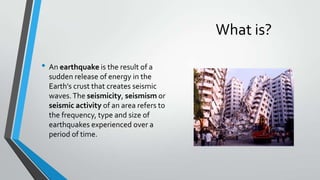
• An earthquake is the result of a
sudden release of energy in the
Earth's crust that creates seismic
waves. The seismicity, seismism or
seismic activity of an area refers to
the frequency, type and size of
earthquakes experienced over a
period of time.
Measure
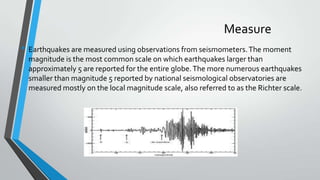
• Earthquakes are measured using observations from seismometers. The moment
magnitude is the most common scale on which earthquakes larger than
approximately 5 are reported for the entire globe. The more numerous earthquakes
smaller than magnitude 5 reported by national seismological observatories are
measured mostly on the local magnitude scale, also referred to as the Richter scale.
Reasons
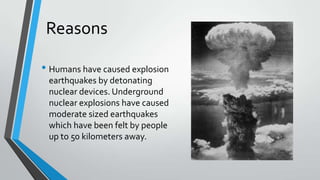
• Humans have caused explosion
earthquakes by detonating
nuclear devices. Underground
nuclear explosions have caused
moderate sized earthquakes
which have been felt by people
up to 50 kilometers away.
• Rock blasting in quarries also produce small seismic
events which people sometimes mistakenly believe
to be earthquakes.
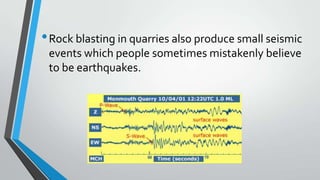
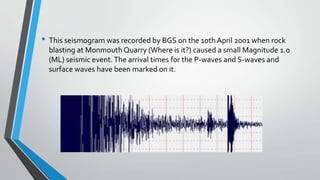
• This seismogram was recorded by BGS on the 10th April 2001 when rock
blasting at Monmouth Quarry (Where is it?) caused a small Magnitude 1.0
(ML) seismic event. The arrival times for the P-waves and S-waves and
surface waves have been marked on it.
Cases:
• North Korea has carried out a third atomic test has caused an earthquake that
was detected in South Korea.

• South corea said that an earthquake with a magnitude of 3.9 and another with
a magnitude of 4.5 were collected on North Korea's nuclear tests in 2006 and
2009.
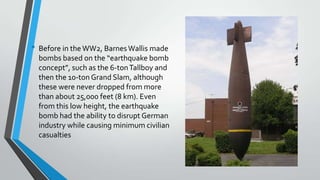
• Before in the WW2, Barnes Wallis made
bombs based on the “earthquake bomb
concept”, such as the 6-ton Tallboy and
then the 10-ton Grand Slam, although
these were never dropped from more
than about 25,000 feet (8 km). Even
from this low height, the earthquake
bomb had the ability to disrupt German
industry while causing minimum civilian
casualties

Earthquakes

  • 1.
  • 2.
    What is? • Anearthquake is the result of a sudden release of energy in the Earth's crust that creates seismic waves. The seismicity, seismism or seismic activity of an area refers to the frequency, type and size of earthquakes experienced over a period of time.
  • 3.
    Measure • Earthquakes aremeasured using observations from seismometers. The moment magnitude is the most common scale on which earthquakes larger than approximately 5 are reported for the entire globe. The more numerous earthquakes smaller than magnitude 5 reported by national seismological observatories are measured mostly on the local magnitude scale, also referred to as the Richter scale.
  • 4.
    Reasons • Humans havecaused explosion earthquakes by detonating nuclear devices. Underground nuclear explosions have caused moderate sized earthquakes which have been felt by people up to 50 kilometers away.
  • 5.
    • Rock blastingin quarries also produce small seismic events which people sometimes mistakenly believe to be earthquakes.
  • 6.
    • This seismogramwas recorded by BGS on the 10th April 2001 when rock blasting at Monmouth Quarry (Where is it?) caused a small Magnitude 1.0 (ML) seismic event. The arrival times for the P-waves and S-waves and surface waves have been marked on it.
  • 7.
    Cases: • North Koreahas carried out a third atomic test has caused an earthquake that was detected in South Korea. • South corea said that an earthquake with a magnitude of 3.9 and another with a magnitude of 4.5 were collected on North Korea's nuclear tests in 2006 and 2009.
  • 8.
    • Before inthe WW2, Barnes Wallis made bombs based on the “earthquake bomb concept”, such as the 6-ton Tallboy and then the 10-ton Grand Slam, although these were never dropped from more than about 25,000 feet (8 km). Even from this low height, the earthquake bomb had the ability to disrupt German industry while causing minimum civilian casualties