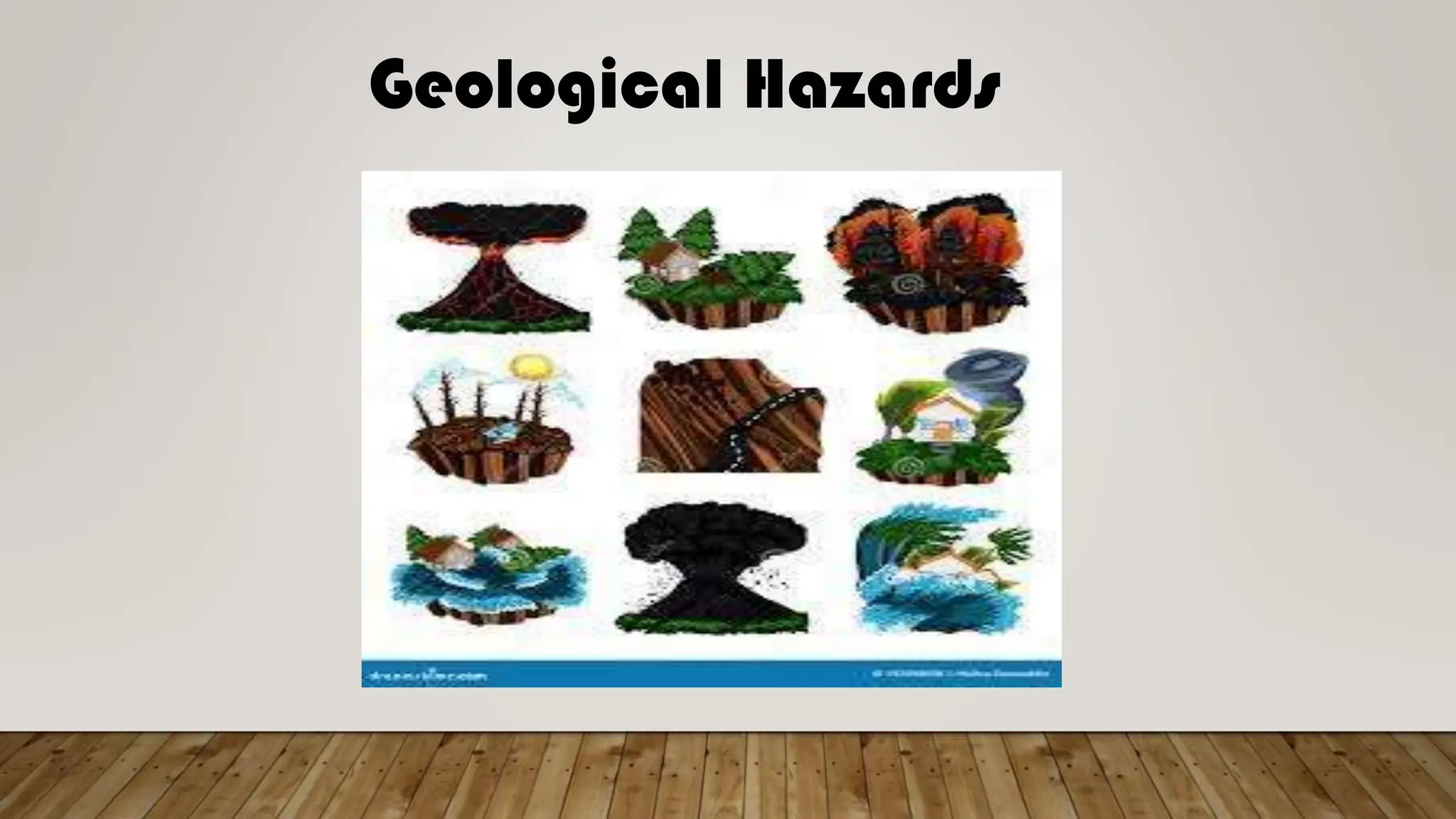
Geological Hazards
Geologic hazards are naturally occurring geologic
conditions that can cause immense damage to
properties and loss of lives.
Earthquake
● This is the sudden
movement of Earth’s crust
that results from the
release of accumulated
strain from tectonic and
volcanic activities.
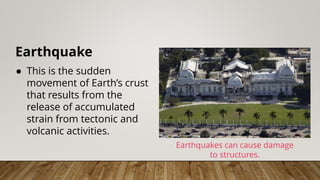
Earthquakes can cause damage
to structures.
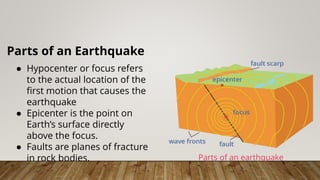
Parts of an Earthquake
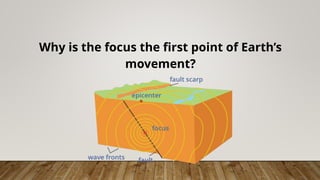
● Hypocenter or focus refers
to the actual location of the
first motion that causes the
earthquake
● Epicenter is the point on
Earth’s surface directly
above the focus.
● Faults are planes of fracture
in rock bodies. Parts of an earthquake
Effects of an Earthquake
● Ground shaking is the vibration of the ground during an
earthquake.
● Liquefaction is where soil loses strength temporarily and
behaves as a liquid.
● Surface faulting is the tearing of the ground surface
caused by displacement along faults during earthquakes.
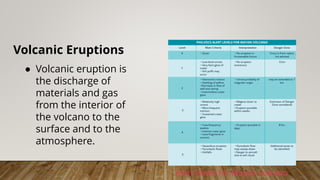
Volcanic Eruptions
● Volcanic eruption is
the discharge of
materials and gas
from the interior of
the volcano to the
surface and to the
atmosphere.
Alert levels for Mayon volcano
Movement of Materials:
Volcanic Eruptions
● Basal flow is a dense
mixture of gas, ash and
volcanic rocks.
● Turbulent ash cloud
includes pyroclastic surges
and columns of ash.
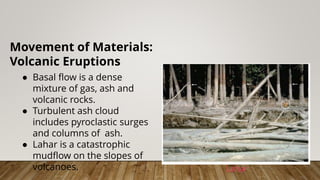
● Lahar is a catastrophic
mudflow on the slopes of
volcanoes. Lahar
Landslides
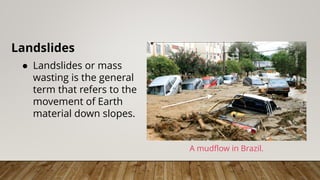
● Landslides or mass
wasting is the general
term that refers to the
movement of Earth
material down slopes.
A mudflow in Brazil.
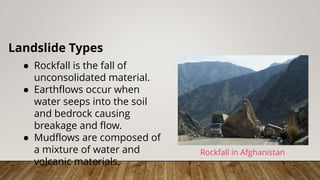
Landslide Types
● Rockfall is the fall of
unconsolidated material.
● Earthflows occur when
water seeps into the soil
and bedrock causing
breakage and flow.
● Mudflows are composed of
a mixture of water and
volcanic materials.
Rockfall in Afghanistan
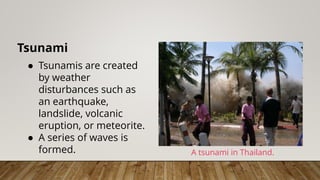
Tsunami
● Tsunamis are created
by weather
disturbances such as
an earthquake,
landslide, volcanic
eruption, or meteorite.
● A series of waves is
formed. A tsunami in Thailand.
Earthquake is the sudden movement of Earth’s crust
caused by movements along faults.
1
Volcanic eruptions may cause pyroclastic flows and
lahar and may release toxic gases.
2
Landslides may be in the form of mudflow, earthflow
or rockfall. All can impose danger to human lives and
structures.
3
Read and analyze the following statements given
below. Identify the word or words being described
by each statement.
1.This is composed of mixture of water and volcanic materials that are
fast moving outflows.
2.It is the movement of Earth material down slopes.
3.This is a composition of pyroclastic flows that are characterized by
dense mixture of gas, ash, and volcanic rock.
4.It is the amount of energy released by earthquake.
5.These are formed on hillsides during heavy rains or melting of snow.
Why is the focus the first point of Earth’s
movement?

1.pptx

  • 1.
  • 2.
    Geologic hazards arenaturally occurring geologic conditions that can cause immense damage to properties and loss of lives.
  • 3.
    Earthquake ● This isthe sudden movement of Earth’s crust that results from the release of accumulated strain from tectonic and volcanic activities. Earthquakes can cause damage to structures.
  • 4.
    Parts of anEarthquake ● Hypocenter or focus refers to the actual location of the first motion that causes the earthquake ● Epicenter is the point on Earth’s surface directly above the focus. ● Faults are planes of fracture in rock bodies. Parts of an earthquake
  • 5.
    Effects of anEarthquake ● Ground shaking is the vibration of the ground during an earthquake. ● Liquefaction is where soil loses strength temporarily and behaves as a liquid. ● Surface faulting is the tearing of the ground surface caused by displacement along faults during earthquakes.
  • 6.
    Volcanic Eruptions ● Volcaniceruption is the discharge of materials and gas from the interior of the volcano to the surface and to the atmosphere. Alert levels for Mayon volcano
  • 7.
    Movement of Materials: VolcanicEruptions ● Basal flow is a dense mixture of gas, ash and volcanic rocks. ● Turbulent ash cloud includes pyroclastic surges and columns of ash. ● Lahar is a catastrophic mudflow on the slopes of volcanoes. Lahar
  • 8.
    Landslides ● Landslides ormass wasting is the general term that refers to the movement of Earth material down slopes. A mudflow in Brazil.
  • 9.
    Landslide Types ● Rockfallis the fall of unconsolidated material. ● Earthflows occur when water seeps into the soil and bedrock causing breakage and flow. ● Mudflows are composed of a mixture of water and volcanic materials. Rockfall in Afghanistan
  • 10.
    Tsunami ● Tsunamis arecreated by weather disturbances such as an earthquake, landslide, volcanic eruption, or meteorite. ● A series of waves is formed. A tsunami in Thailand.
  • 11.
    Earthquake is thesudden movement of Earth’s crust caused by movements along faults. 1 Volcanic eruptions may cause pyroclastic flows and lahar and may release toxic gases. 2 Landslides may be in the form of mudflow, earthflow or rockfall. All can impose danger to human lives and structures. 3
  • 12.
    Read and analyzethe following statements given below. Identify the word or words being described by each statement. 1.This is composed of mixture of water and volcanic materials that are fast moving outflows. 2.It is the movement of Earth material down slopes. 3.This is a composition of pyroclastic flows that are characterized by dense mixture of gas, ash, and volcanic rock. 4.It is the amount of energy released by earthquake. 5.These are formed on hillsides during heavy rains or melting of snow.
  • 13.
    Why is thefocus the first point of Earth’s movement?