Africa RISING
                                 East and Southern Africa Research Review and Planning Meeting,
                                                              Arusha, Tanzania, 1-5 October 2012


Value chain analysis of grain legumes
    in East and Southern Africa

J. Rusike (IITA), C. Donovan (MSU-CRSP), A. Orr (ICRISAT), E. Birachi (CIAT), K. Mutabazi
        (Sokoine), S. Lyimo (Selian ARI), V. Kabambe (Bunda), K. Kanenga (ZARI)
1. The project
 • Build partnerships for impact through research on SI of
   farming systems through linking farmers to grain legume value
   chains
 • Mobilize stakeholders/conduct value chain analyses to
   identify opportunities for upgrading, constraints, entry points
   and leverage nodes
 • Catalogue best bet technologies
 • Map potential partners and networks to support the shift to
   sustainable intensification through grain legumes
 • Vet findings with stakeholders and areas for targeting Africa
   RISING research investments
2. Outputs
• Production and marketing of grain legumes mapped and
  quantified
• End-use markets, structure and dynamics of grain legume
  value chains mapped; opportunities and constraints identified
• Best-bet system components of intensification technologies
  catalogued
• Key actors, networks and points of leverage to support
  sustainable intensification identified
• Key stakeholders for innovation platforms galvanised and
  strategies developed to improve performance of value chains
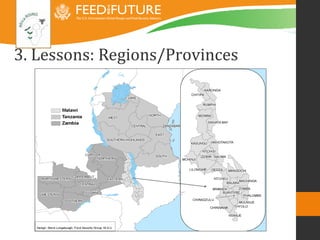
3. Lessons: Regions/Provinces
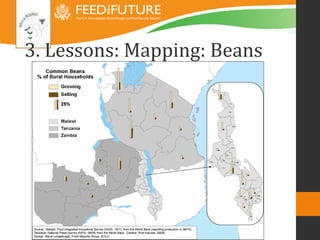
3. Lessons: Mapping: Beans
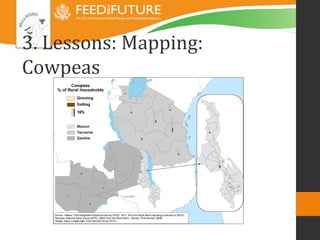
3. Lessons: Mapping:
Cowpeas
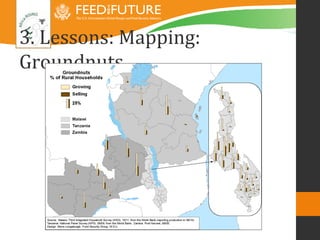
3. Lessons: Mapping:
Groundnuts
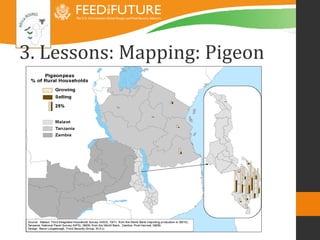
3. Lessons: Mapping: Pigeon
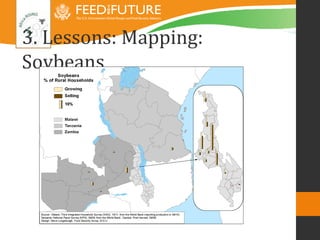
3. Lessons: Mapping:
Soybeans
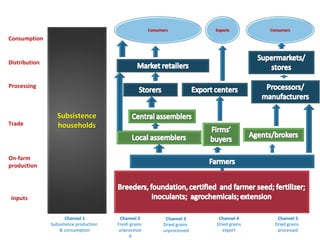
Consumption


Distribution


Processing


Trade


On-farm
production


 Inputs


                      Channel 1           Channel 2     Channel 3      Channel 4      Channel 5
               Subsistence production   Fresh grains   Dried grains   Dried grains   Dried grains
                   & consumption         unprocesse    unprocessed       export       processed
                                             d
3. Lessons: Opportunities
• Deficit rural areas, urban markets, regional
  markets, international exports markets (import
  substitution eg poultry feed and meat and eggs)
• Malawi exporting groundnuts/soybeans
  (Mozambique, Zambia, Zimbabwe, Tanzania,
  Kenya)
• Tanzania common beans (Kenya, Burundi,
  Rwanda, DRC, South Sudan, Somalia)
• Zambia cowpeas Botswana, Namibia
3. Lessons: Constraints
• Lack of capabilities to supply end-products (volume,
  quality, timeliness, price, consistency) => technology
• Low productivity/yields => production systems
• Poor access to inputs, extension services and
  markets
• Lack of post-harvest storage
• Lack of market coordination/price volatility
• Poor road and communication infrastructure
• Unavailability of micro-credit/financing
• Poor government market regulations and high
  transaction costs
3. Lessons: Catalogue best
bets adapted to AEZs & traits (time to flowering and
• Varieties
  maturity, disease or pest resistance, abiotic stress
  adaptation (eg soil acidity, drought and temperatures)

• Official crop management (time of planting, plant
  spacing and density, seed treatments, fertilizer types,
  application rates and methods, weed management, pest
  & disease management, harvesting time and method,
  post harvest)

• Unofficial research findings conducted in localized areas
  or zones such as student or research or NGO or private
  sector projects do not end up as approved
  recommendations; yet significant knowledge to the
  improvement of crop yields
4. Lessons: Market analysis
•   Tanzania: Export Trade, Mohammed Enterprises, H.S. Imprex, Afrisian
    Ginning, J.M. Kambi, Praydsa, Hirago, Commodity United Alliance, Quality
    Pulse Exporters, Alia, Aklan Malk Mahsen, Edward Philip, Mt. Meru, WFP
    P4P, Seed firms (52 Seed Co, Monsanto, Eat African Seed, Tanssed, ASA,
    Pannar/Pioneer), fertilizer firms (Yara, Export Trading, Minjingu, Premium
    Agro-Chem, STACO, DRTC, Mohamed enterprises, TFC, Nyiombo, Chapa
    Meli, Mea)

•   Malawi: NASFAM, Agricultural Development and Marketing Corporation,
    Rab Processors, Transglobe, Export Trading, CP Feeds, Charles Stewart-
    Lenzie Mills, Seba Foods, Hugh Fen, Greenland Feeds, WFP P4P, Seed Firms
    (Seed Co, Demeter, Pannar/Pioneer, Peacock, Funwe, Seed Tech ), Fertilizer
    Firms (Farmers World, Omnia)

•   Zambia: Agricultural Commodity Exchange, Zamanita, Tiger Animal Feeds,
    Meadow/Quality Feeds, Yielding Tree Milling, Olympia Milling and Hi-pro
    feeds, WFP P4P, Seed firms (Seed Co, Pannar/Pioneer, Monsanto,ZamSeed,
    MRI, Kimano, Clay and Carol, Premier) Fertilizer firms (Omnia)
4. What worked and didn’t
•   Hard work to get project running
•   Timely reporting
•   Delivery of project outputs by partners
•   Value delivered (targeting of research
    options/private sector/NGOs partners for
    implementation)

• Not enough time for contracts/joint planning
• Not much interaction among researchers
• Limited involvement of private, farmer and policy
  makers’ stakeholder consultation
Thank you!

Value chain analysis of grain legumes in East and Southern Africa

  • 1.
    Africa RISING East and Southern Africa Research Review and Planning Meeting, Arusha, Tanzania, 1-5 October 2012 Value chain analysis of grain legumes in East and Southern Africa J. Rusike (IITA), C. Donovan (MSU-CRSP), A. Orr (ICRISAT), E. Birachi (CIAT), K. Mutabazi (Sokoine), S. Lyimo (Selian ARI), V. Kabambe (Bunda), K. Kanenga (ZARI)
  • 2.
    1. The project • Build partnerships for impact through research on SI of farming systems through linking farmers to grain legume value chains • Mobilize stakeholders/conduct value chain analyses to identify opportunities for upgrading, constraints, entry points and leverage nodes • Catalogue best bet technologies • Map potential partners and networks to support the shift to sustainable intensification through grain legumes • Vet findings with stakeholders and areas for targeting Africa RISING research investments
  • 3.
    2. Outputs • Productionand marketing of grain legumes mapped and quantified • End-use markets, structure and dynamics of grain legume value chains mapped; opportunities and constraints identified • Best-bet system components of intensification technologies catalogued • Key actors, networks and points of leverage to support sustainable intensification identified • Key stakeholders for innovation platforms galvanised and strategies developed to improve performance of value chains
  • 4.
  • 5.
  • 6.
  • 7.
  • 8.
  • 9.
  • 10.
    Consumption Distribution Processing Trade On-farm production Inputs Channel 1 Channel 2 Channel 3 Channel 4 Channel 5 Subsistence production Fresh grains Dried grains Dried grains Dried grains & consumption unprocesse unprocessed export processed d
  • 11.
    3. Lessons: Opportunities •Deficit rural areas, urban markets, regional markets, international exports markets (import substitution eg poultry feed and meat and eggs) • Malawi exporting groundnuts/soybeans (Mozambique, Zambia, Zimbabwe, Tanzania, Kenya) • Tanzania common beans (Kenya, Burundi, Rwanda, DRC, South Sudan, Somalia) • Zambia cowpeas Botswana, Namibia
  • 12.
    3. Lessons: Constraints •Lack of capabilities to supply end-products (volume, quality, timeliness, price, consistency) => technology • Low productivity/yields => production systems • Poor access to inputs, extension services and markets • Lack of post-harvest storage • Lack of market coordination/price volatility • Poor road and communication infrastructure • Unavailability of micro-credit/financing • Poor government market regulations and high transaction costs
  • 13.
    3. Lessons: Cataloguebest bets adapted to AEZs & traits (time to flowering and • Varieties maturity, disease or pest resistance, abiotic stress adaptation (eg soil acidity, drought and temperatures) • Official crop management (time of planting, plant spacing and density, seed treatments, fertilizer types, application rates and methods, weed management, pest & disease management, harvesting time and method, post harvest) • Unofficial research findings conducted in localized areas or zones such as student or research or NGO or private sector projects do not end up as approved recommendations; yet significant knowledge to the improvement of crop yields
  • 14.
    4. Lessons: Marketanalysis • Tanzania: Export Trade, Mohammed Enterprises, H.S. Imprex, Afrisian Ginning, J.M. Kambi, Praydsa, Hirago, Commodity United Alliance, Quality Pulse Exporters, Alia, Aklan Malk Mahsen, Edward Philip, Mt. Meru, WFP P4P, Seed firms (52 Seed Co, Monsanto, Eat African Seed, Tanssed, ASA, Pannar/Pioneer), fertilizer firms (Yara, Export Trading, Minjingu, Premium Agro-Chem, STACO, DRTC, Mohamed enterprises, TFC, Nyiombo, Chapa Meli, Mea) • Malawi: NASFAM, Agricultural Development and Marketing Corporation, Rab Processors, Transglobe, Export Trading, CP Feeds, Charles Stewart- Lenzie Mills, Seba Foods, Hugh Fen, Greenland Feeds, WFP P4P, Seed Firms (Seed Co, Demeter, Pannar/Pioneer, Peacock, Funwe, Seed Tech ), Fertilizer Firms (Farmers World, Omnia) • Zambia: Agricultural Commodity Exchange, Zamanita, Tiger Animal Feeds, Meadow/Quality Feeds, Yielding Tree Milling, Olympia Milling and Hi-pro feeds, WFP P4P, Seed firms (Seed Co, Pannar/Pioneer, Monsanto,ZamSeed, MRI, Kimano, Clay and Carol, Premier) Fertilizer firms (Omnia)
  • 15.
    4. What workedand didn’t • Hard work to get project running • Timely reporting • Delivery of project outputs by partners • Value delivered (targeting of research options/private sector/NGOs partners for implementation) • Not enough time for contracts/joint planning • Not much interaction among researchers • Limited involvement of private, farmer and policy makers’ stakeholder consultation
  • 16.