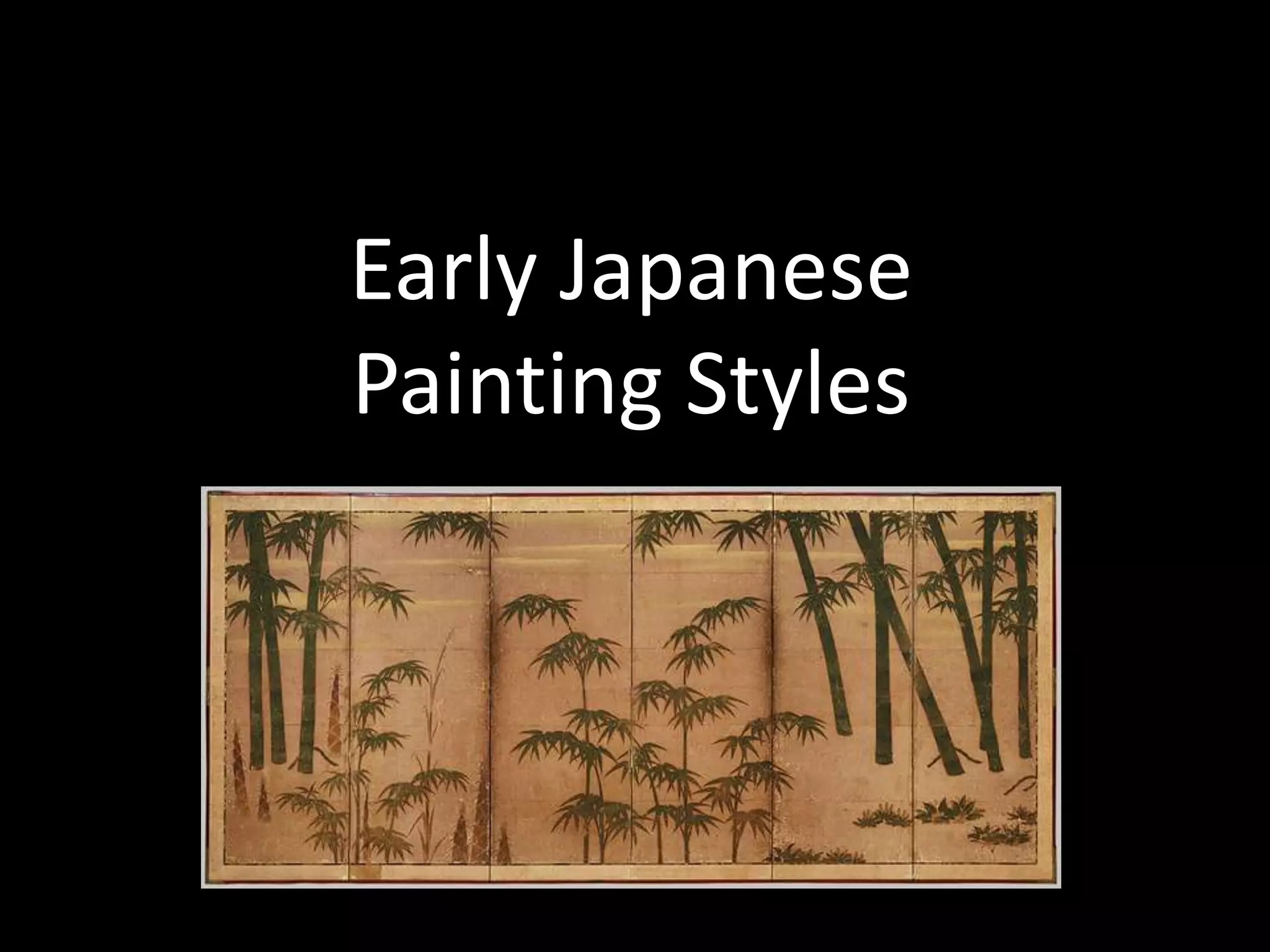
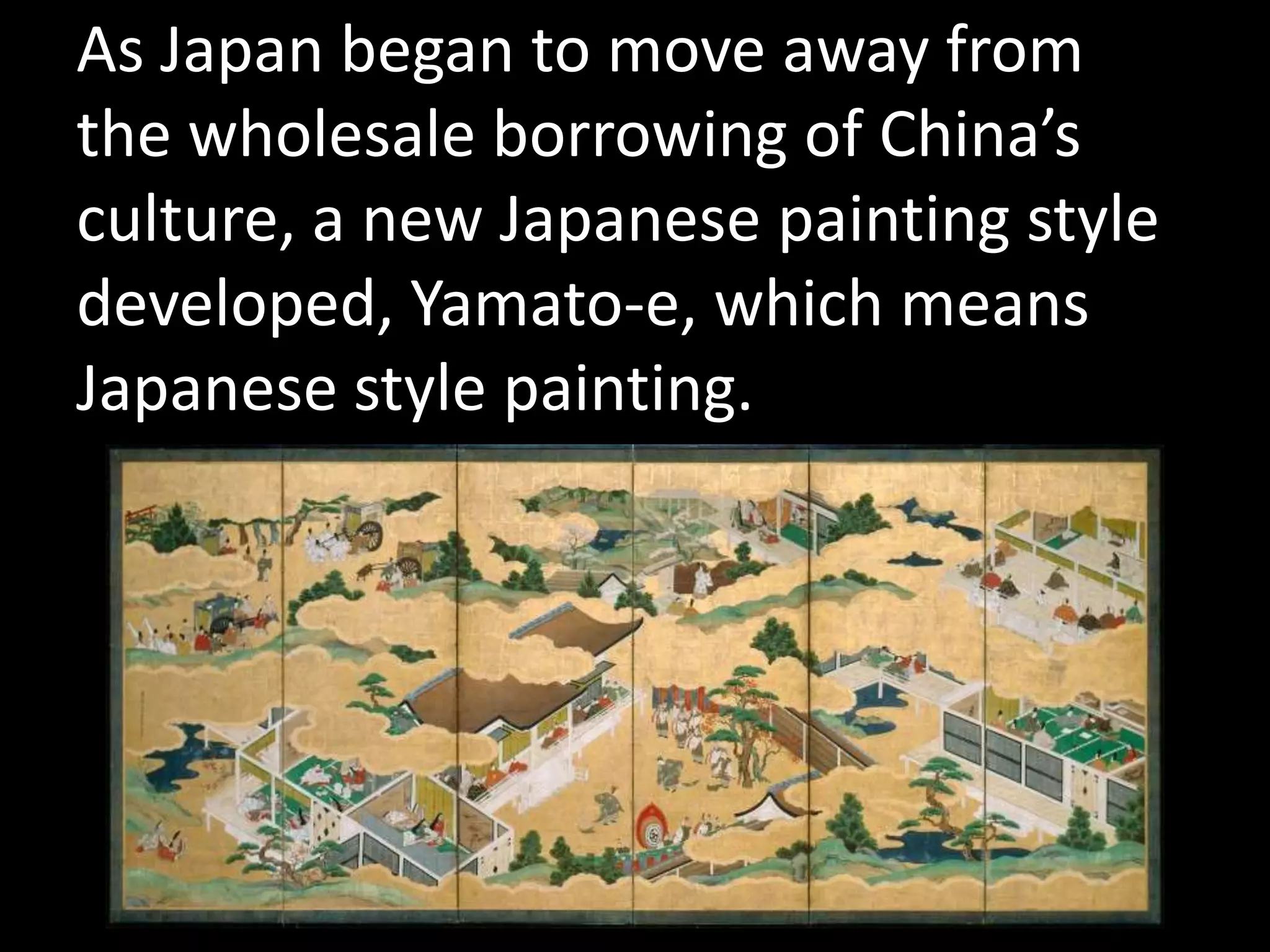
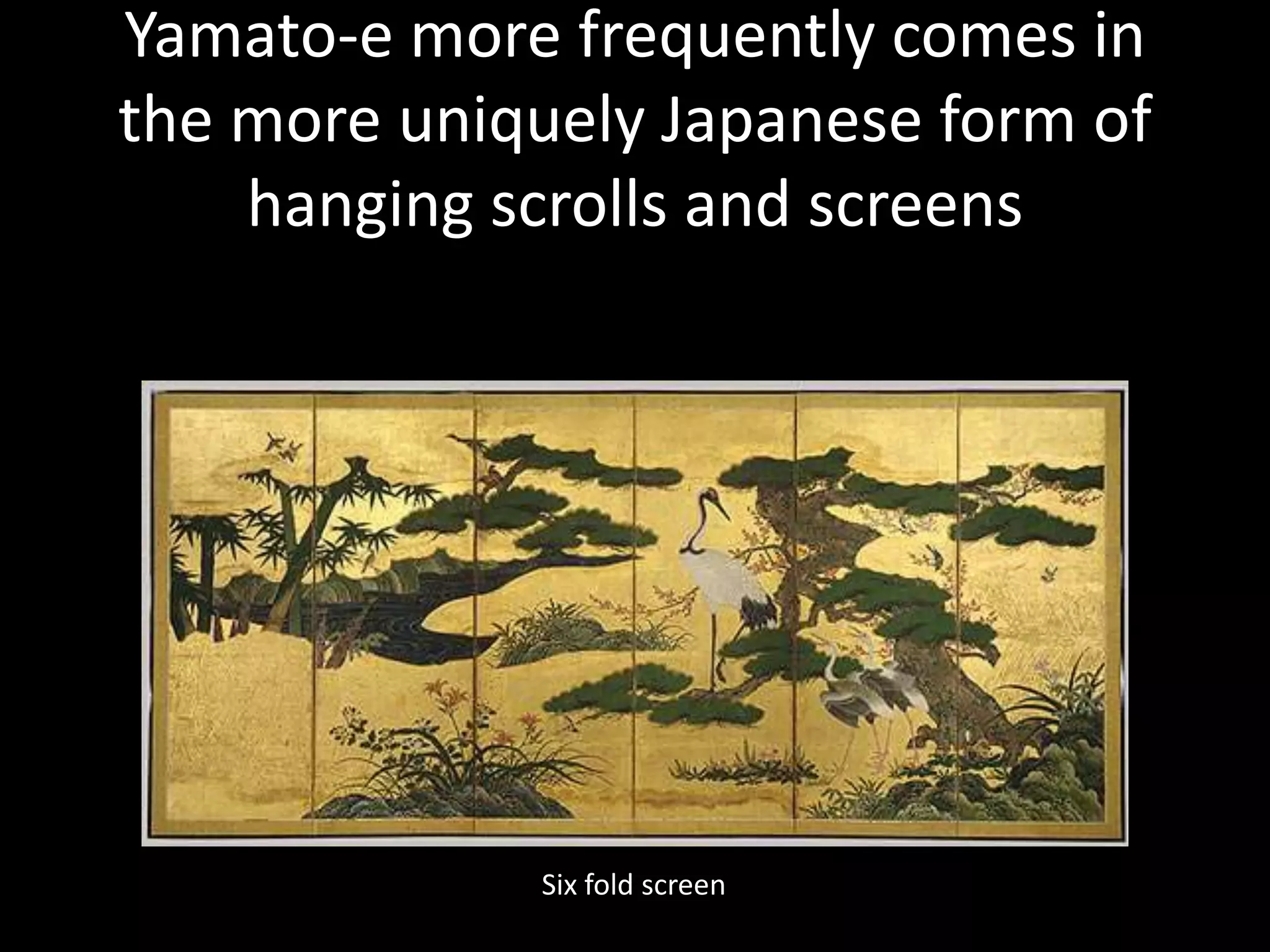
Early Japanese painting was heavily influenced by Chinese styles from the Tang Dynasty. The earliest high-style paintings found in tombs showed Chinese and Buddhist influences. The first major style was kara-e, meaning Chinese-style painting, which imitated Tang Dynasty works. Originally referring only to imported Tang works, kara-e later described paintings made in Japan by artists trained in China. As Japanese culture became more independent, the Yamato-e style developed featuring colorful gold backgrounds and scenes from nature or literature. Yamato-e works were commonly found as hanging scrolls and screens, whereas kara-e works typically used horizontal hand scrolls like Chinese paintings.