EARLY CHILDHOOD CARE
AND DEVELOPMENT
(ECCD)
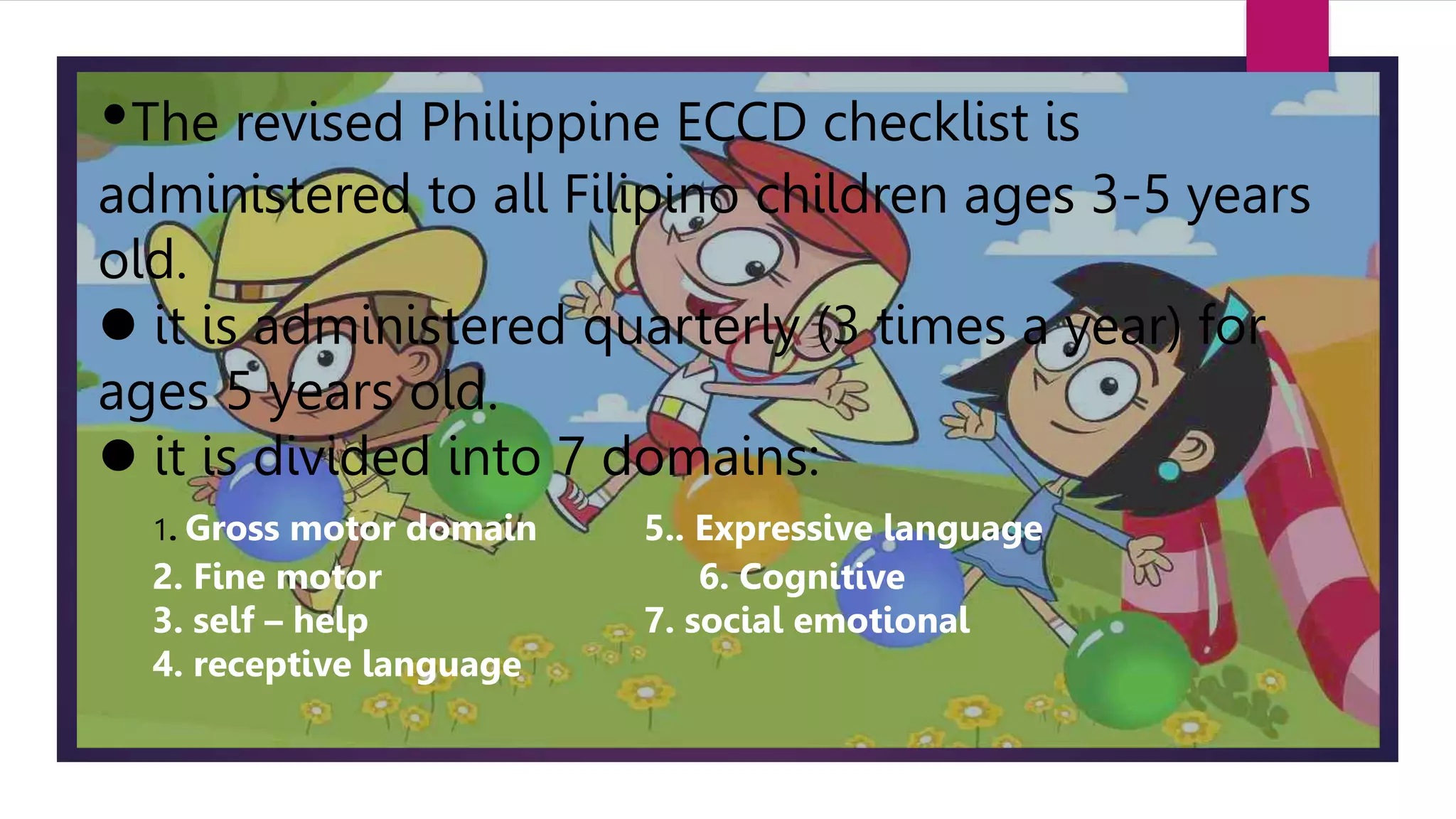
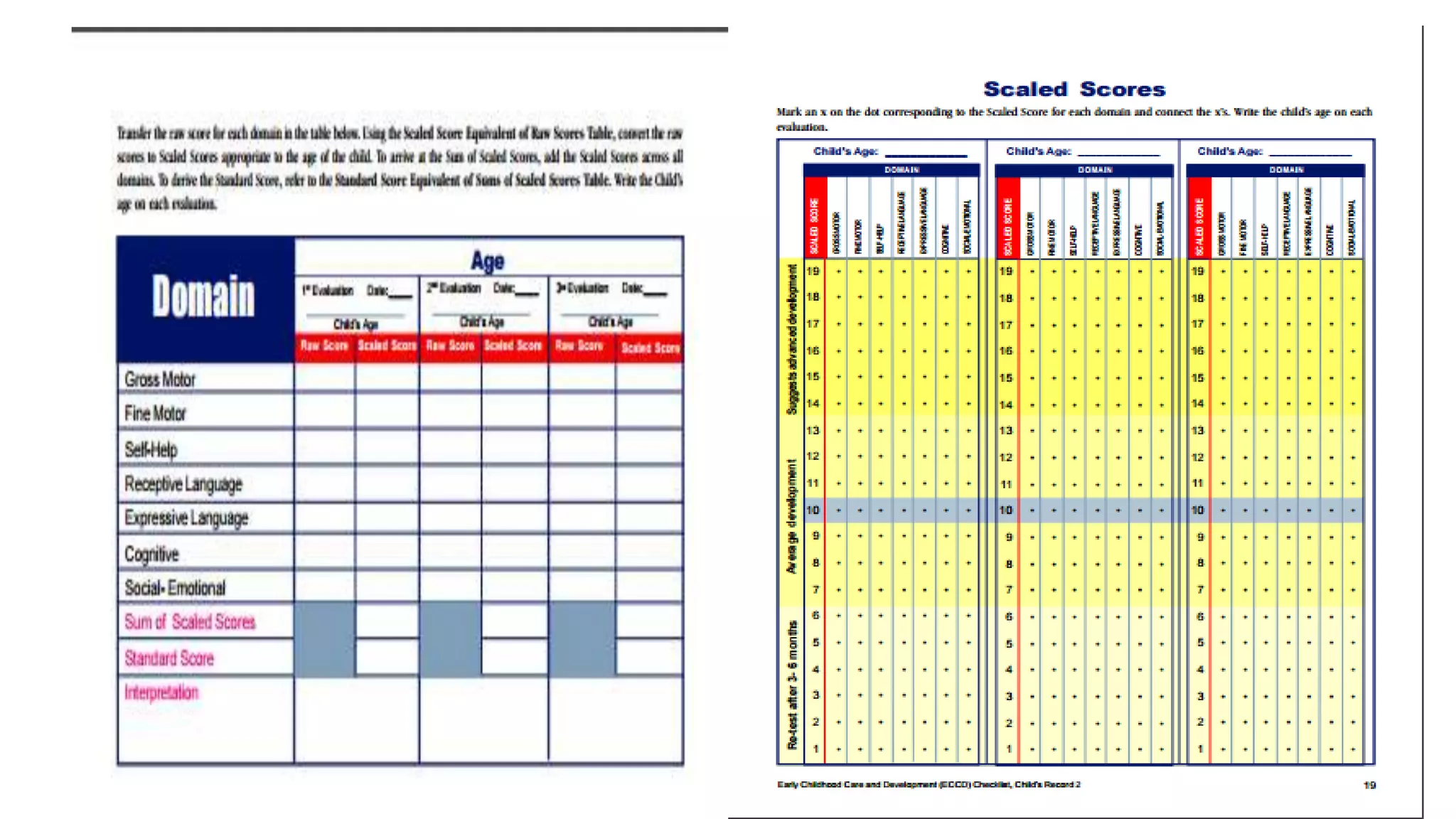
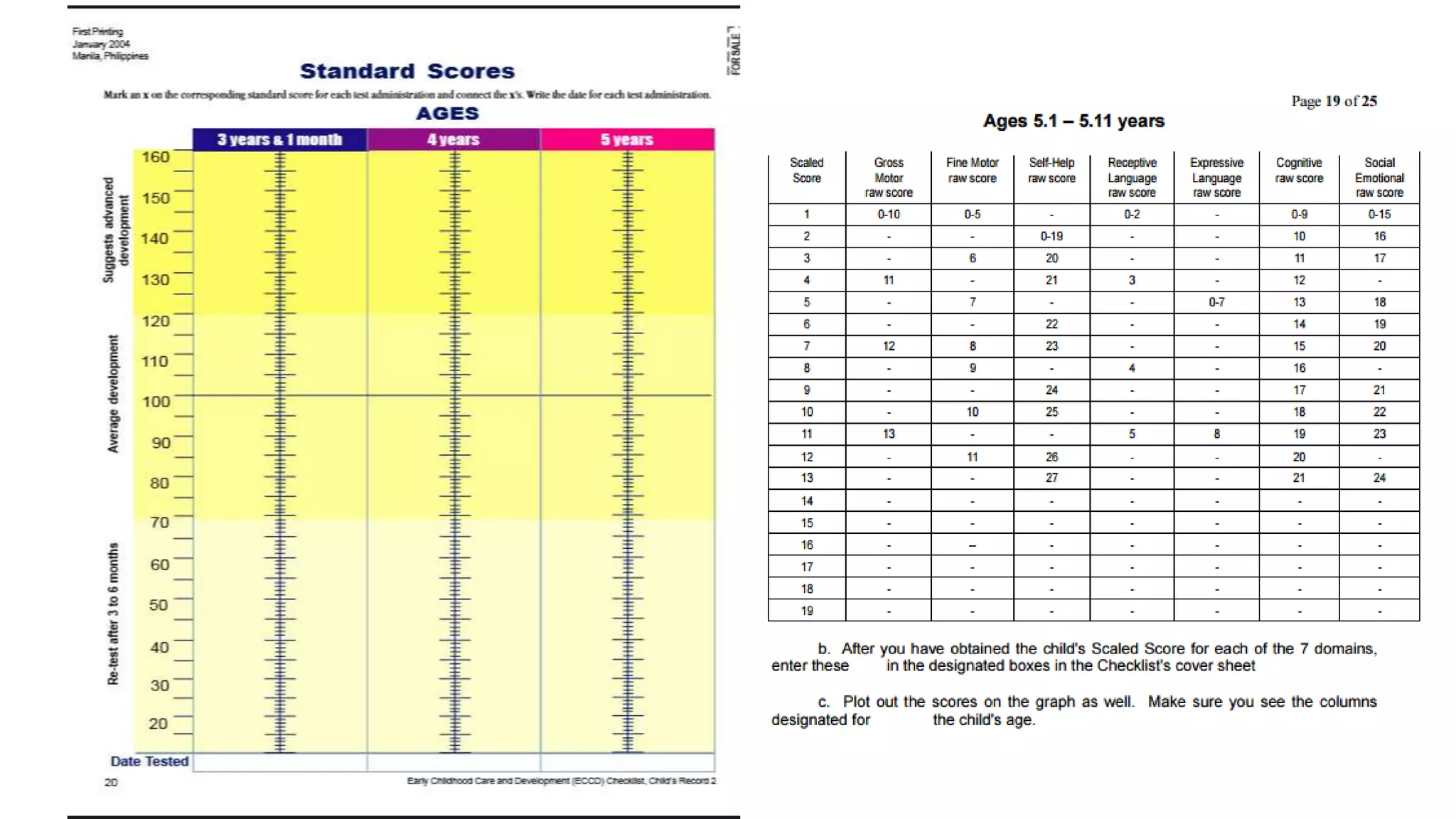
•The revised Philippine ECCD checklist is
administered to all Filipino children ages 3-5 years
old.
 it is administered quarterly (3 times a year) for
ages 5 years old.
 it is divided into 7 domains:
1. Gross motor domain 5.. Expressive language
2. Fine motor 6. Cognitive
3. self – help 7. social emotional
4. receptive language
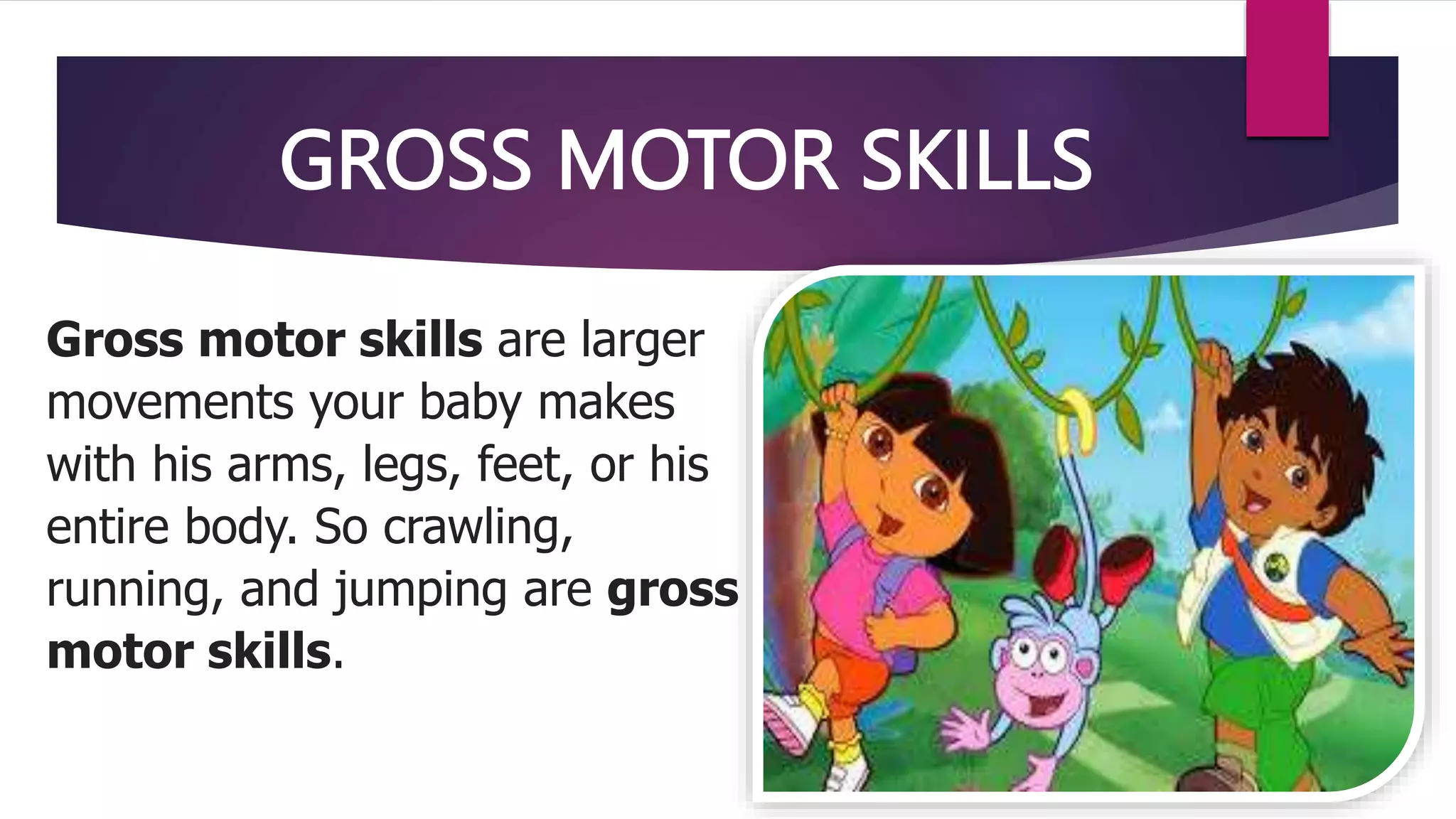
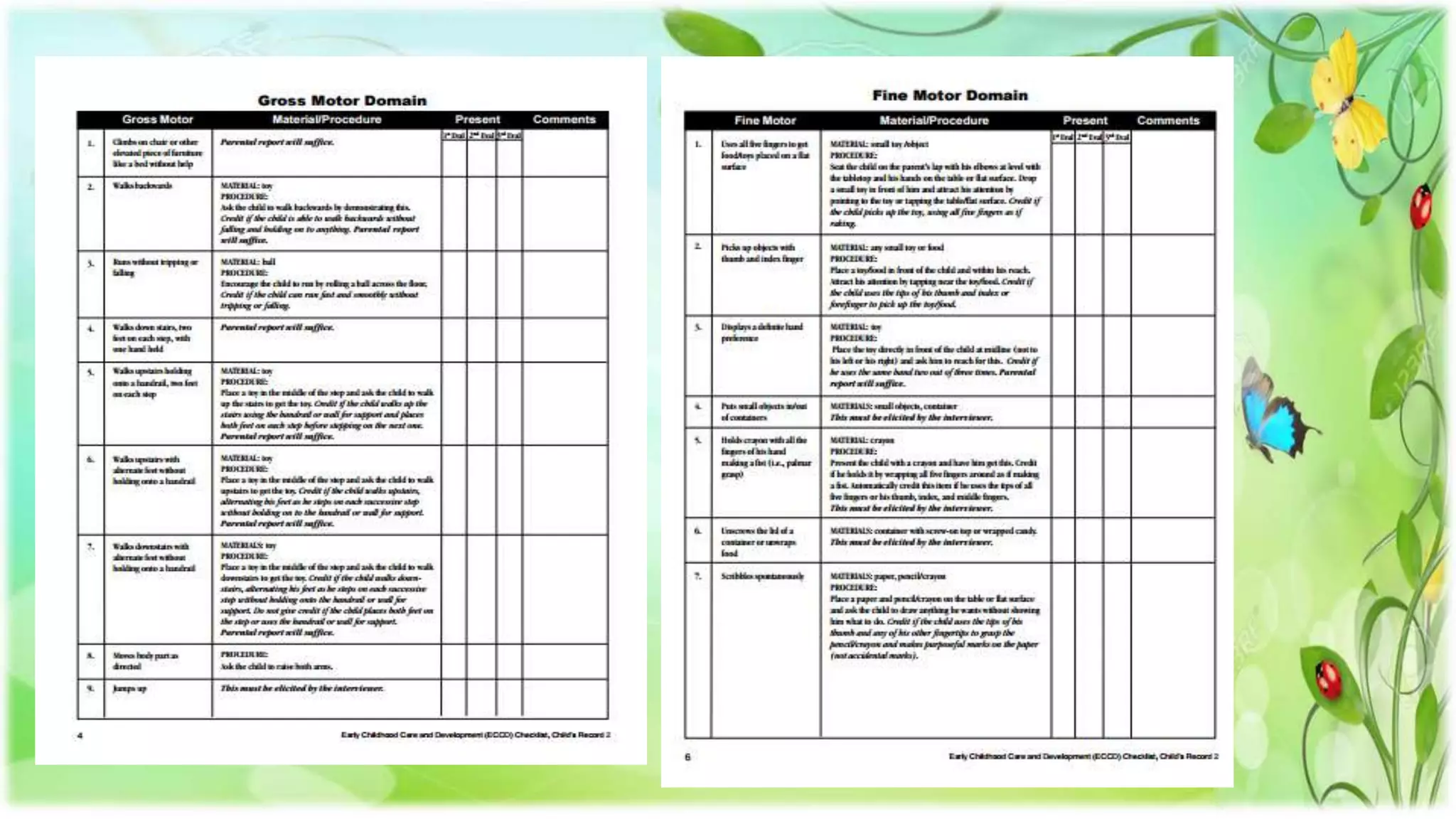
Gross motor skills are larger
movements your baby makes
with his arms, legs, feet, or his
entire body. So crawling,
running, and jumping are gross
motor skills.
GROSS MOTOR SKILLS
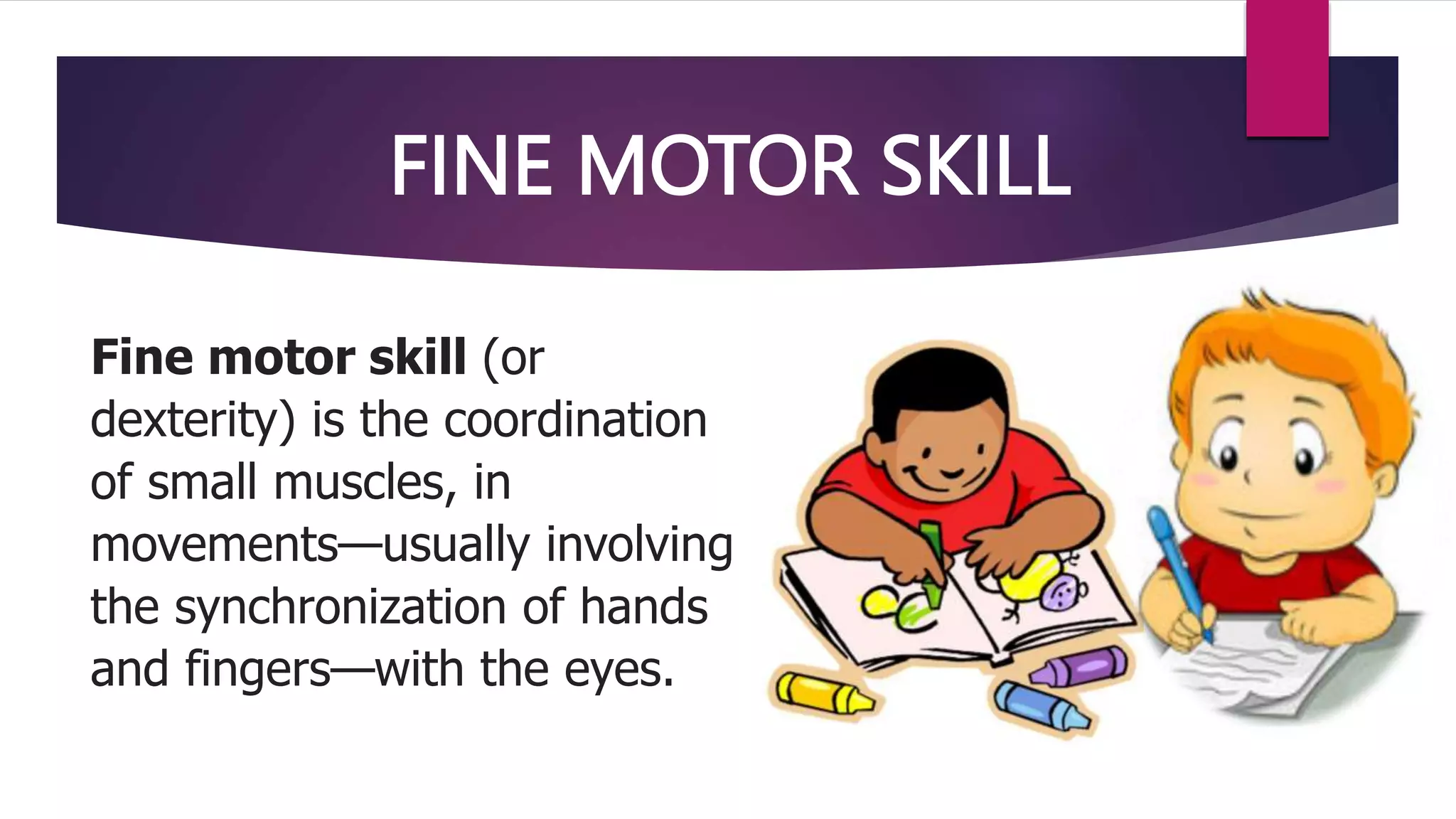
Fine motor skill (or
dexterity) is the coordination
of small muscles, in
movements—usually involving
the synchronization of hands
and fingers—with the eyes.
FINE MOTOR SKILL
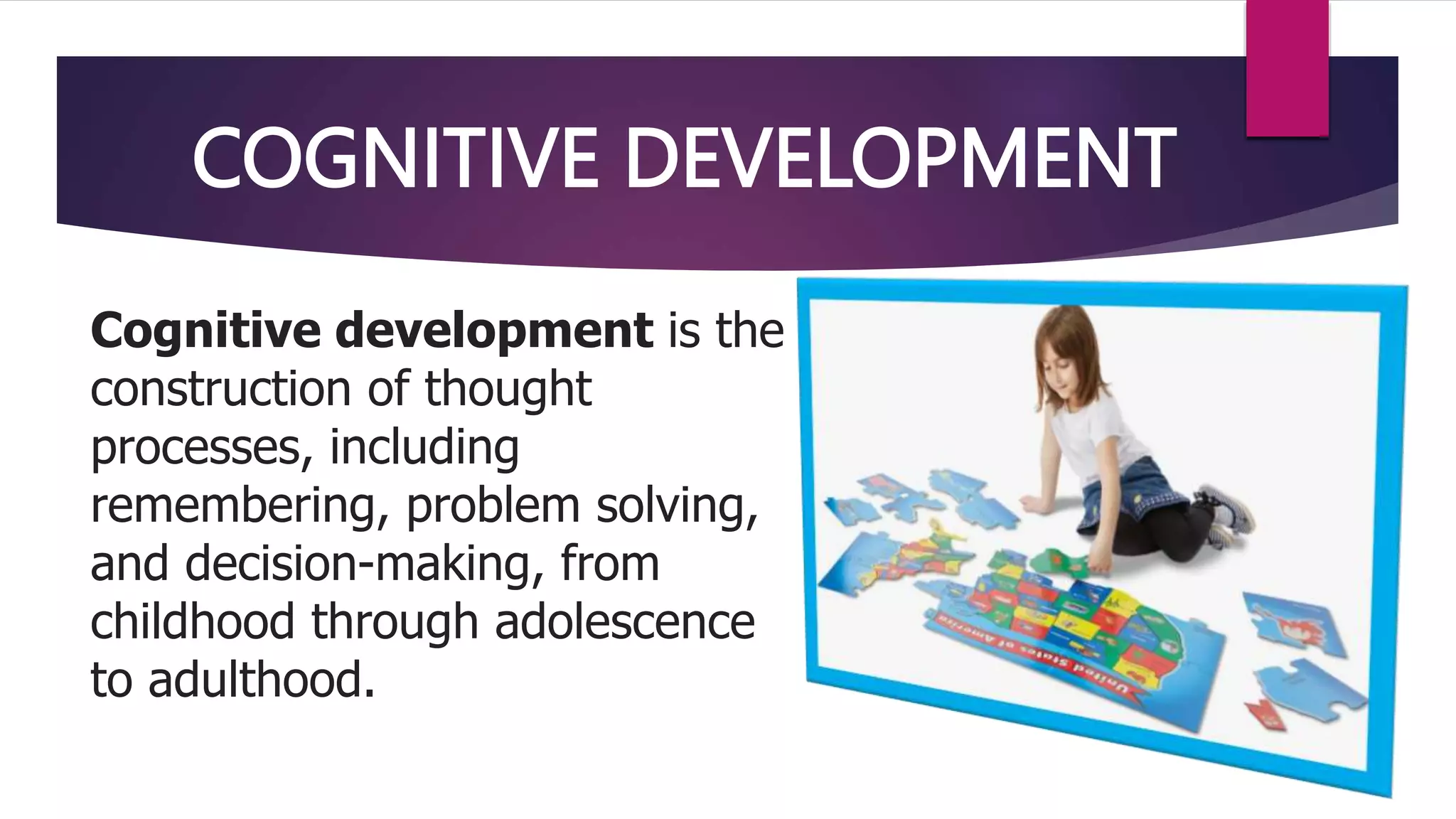
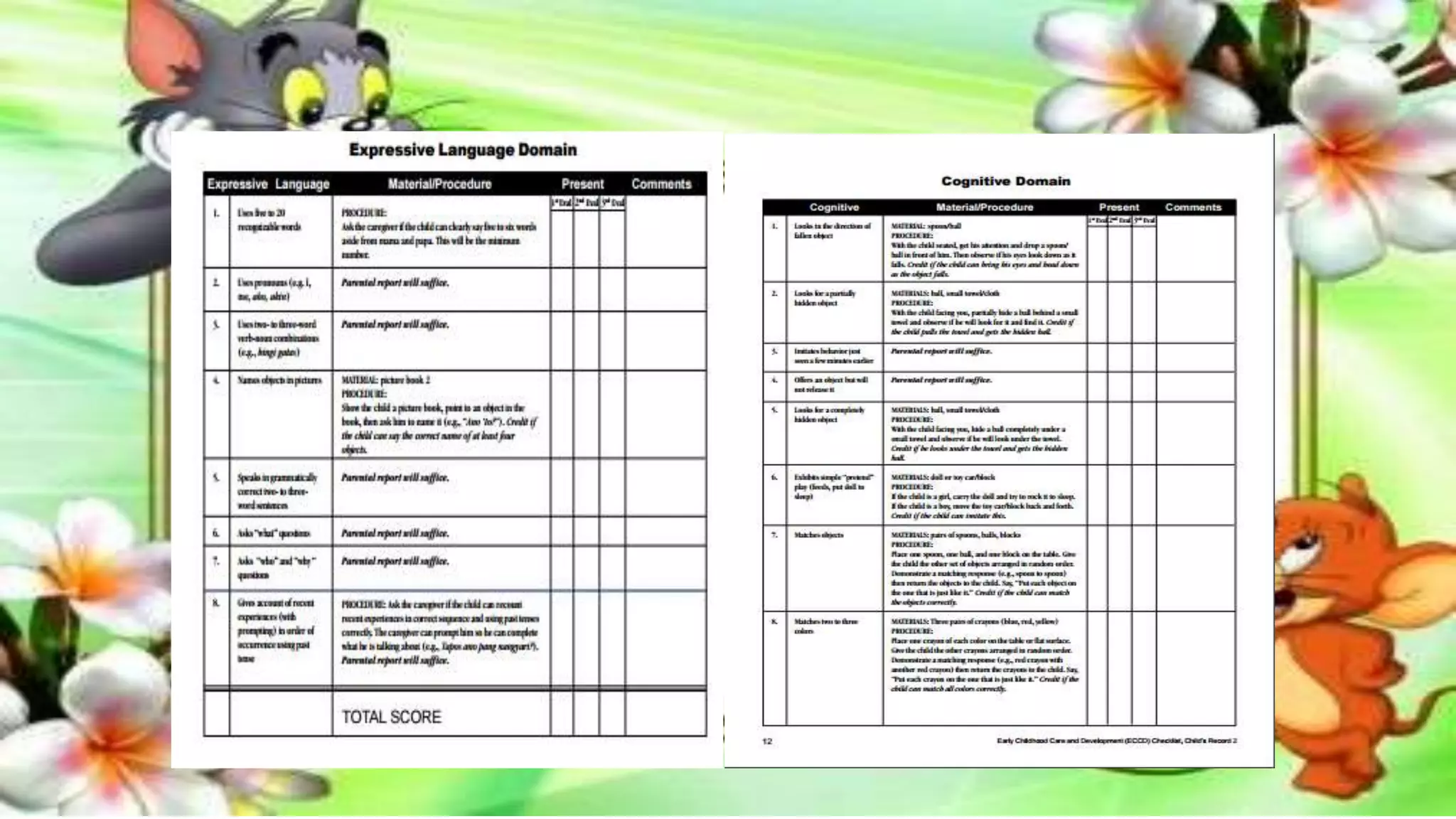
Cognitive development is the
construction of thought
processes, including
remembering, problem solving,
and decision-making, from
childhood through adolescence
to adulthood.
COGNITIVE DEVELOPMENT
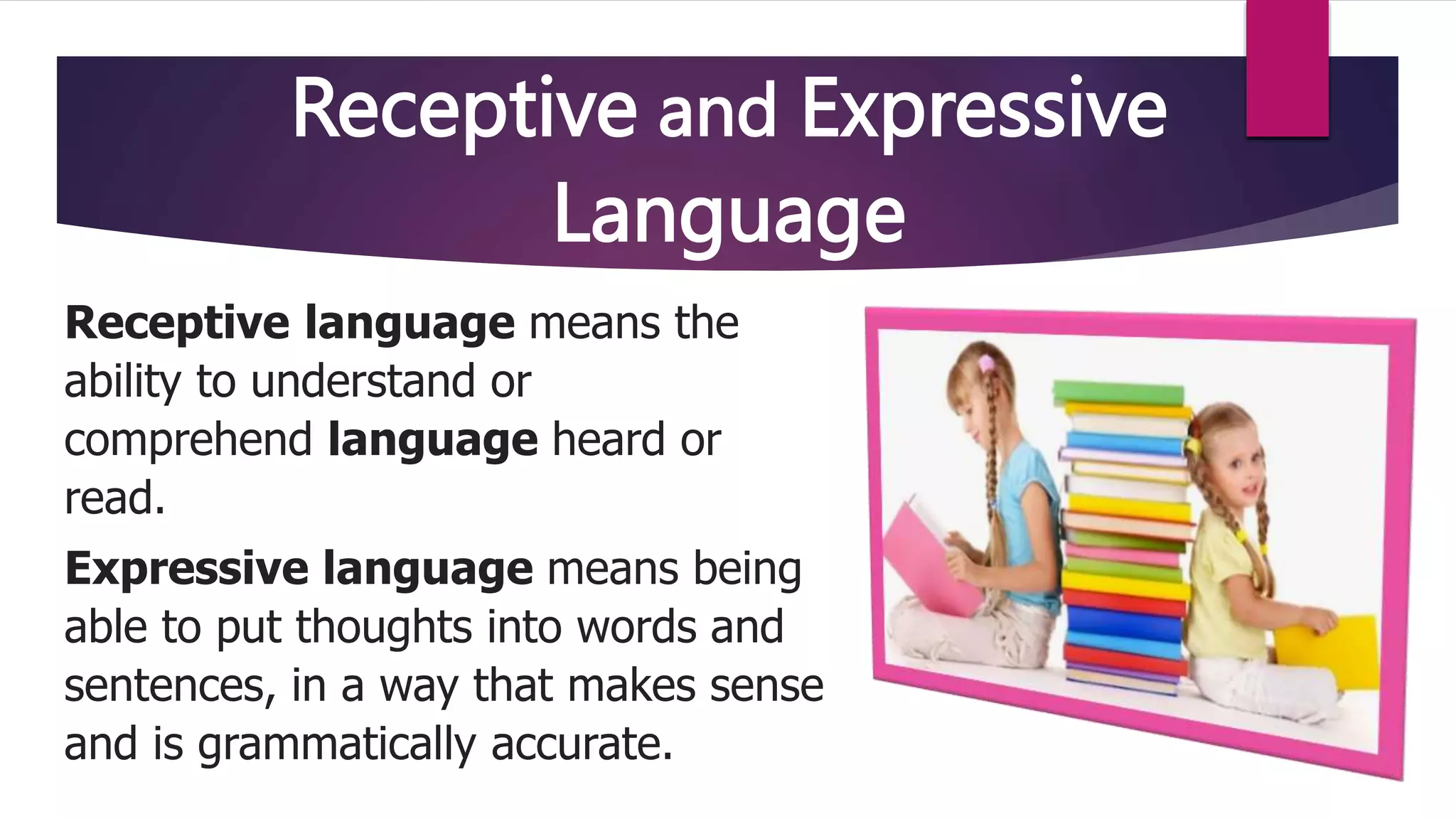
Receptive language means the
ability to understand or
comprehend language heard or
read.
Expressive language means being
able to put thoughts into words and
sentences, in a way that makes sense
and is grammatically accurate.
Receptive and Expressive
Language
Social emotional - learning to talk about their feelings
and the feelings of others. Social-emotional
development, however, involves more than just
expressing emotions. It entails taking turns, becoming
independent in following routines, interacting more with
peers, engaging in meaningful relationships with others,
controlling emotions, and developing a positive self-
image.
SOCIAL EMOTIONAL
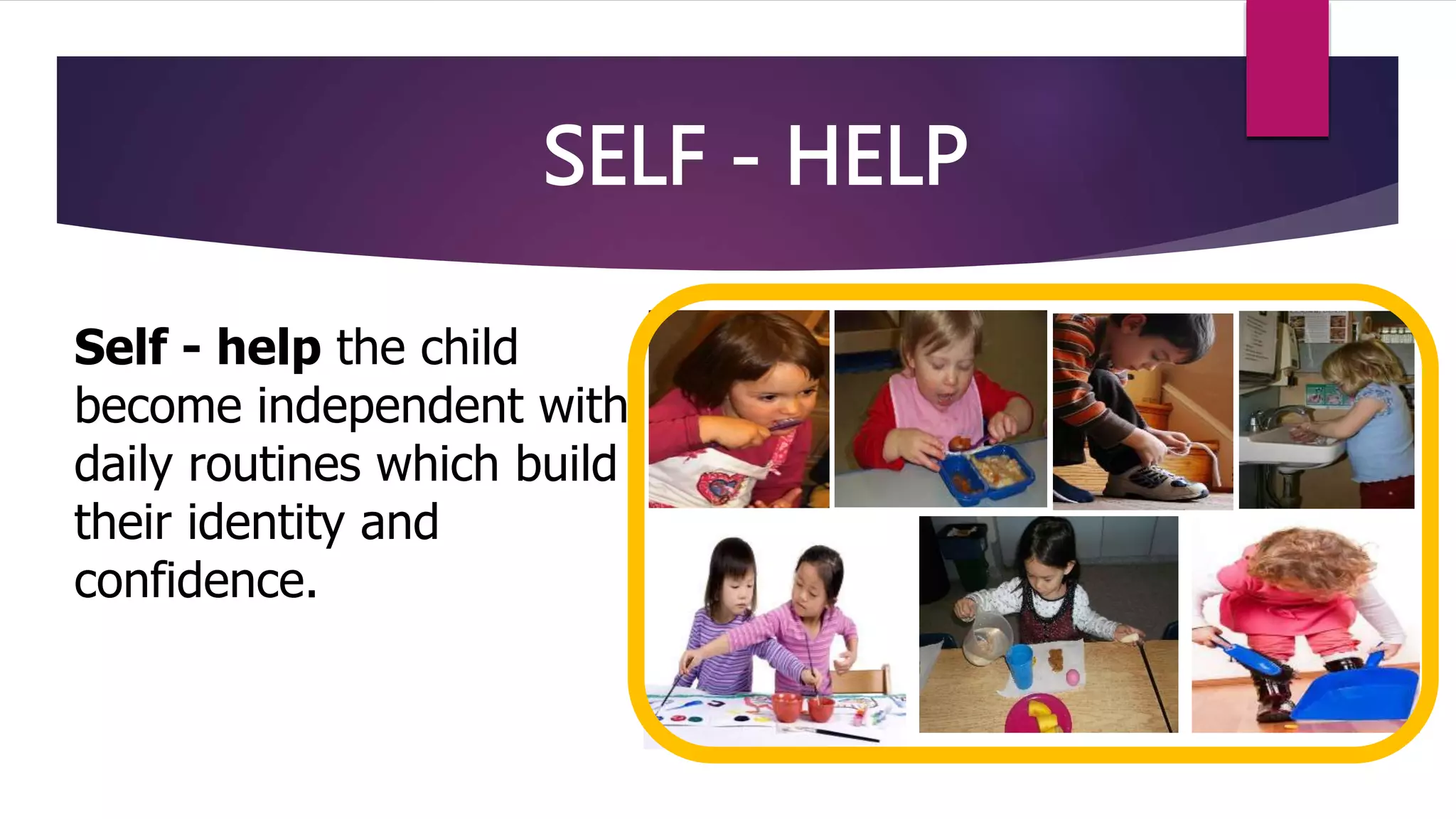
Self - help the child
become independent with
daily routines which build
their identity and
confidence.
SELF - HELP
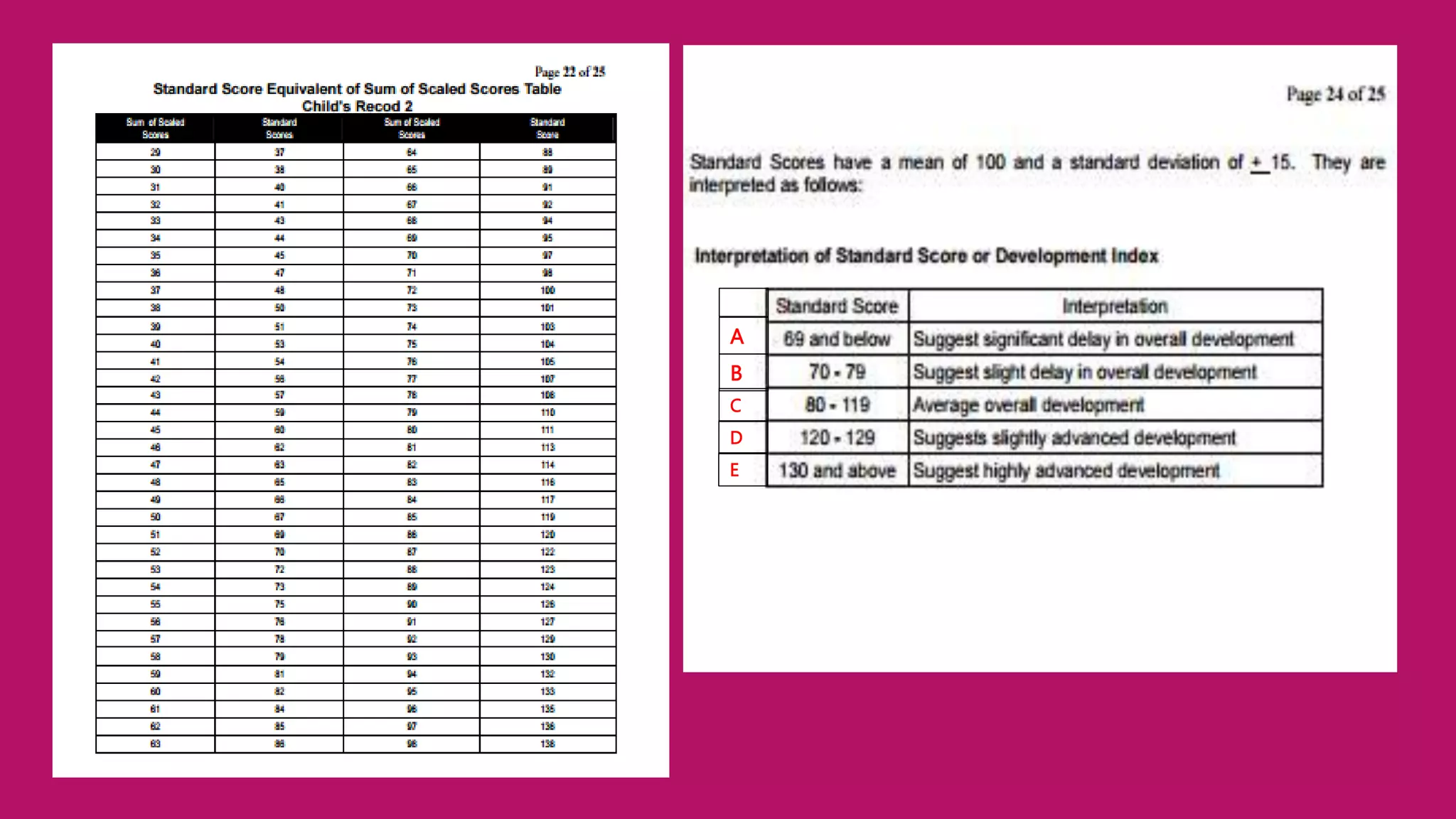
A
B
C
D
E
DAMO NGA
SALAMAT!

EARLY CHILDHOOD CARE AND DEVELOPMENT (ECCD) INSET PRESENT.pptx

  • 1.
    EARLY CHILDHOOD CARE ANDDEVELOPMENT (ECCD)
  • 2.
    •The revised PhilippineECCD checklist is administered to all Filipino children ages 3-5 years old.  it is administered quarterly (3 times a year) for ages 5 years old.  it is divided into 7 domains: 1. Gross motor domain 5.. Expressive language 2. Fine motor 6. Cognitive 3. self – help 7. social emotional 4. receptive language
  • 3.
    Gross motor skillsare larger movements your baby makes with his arms, legs, feet, or his entire body. So crawling, running, and jumping are gross motor skills. GROSS MOTOR SKILLS
  • 4.
    Fine motor skill(or dexterity) is the coordination of small muscles, in movements—usually involving the synchronization of hands and fingers—with the eyes. FINE MOTOR SKILL
  • 5.
    Cognitive development isthe construction of thought processes, including remembering, problem solving, and decision-making, from childhood through adolescence to adulthood. COGNITIVE DEVELOPMENT
  • 6.
    Receptive language meansthe ability to understand or comprehend language heard or read. Expressive language means being able to put thoughts into words and sentences, in a way that makes sense and is grammatically accurate. Receptive and Expressive Language
  • 7.
    Social emotional -learning to talk about their feelings and the feelings of others. Social-emotional development, however, involves more than just expressing emotions. It entails taking turns, becoming independent in following routines, interacting more with peers, engaging in meaningful relationships with others, controlling emotions, and developing a positive self- image. SOCIAL EMOTIONAL
  • 8.
    Self - helpthe child become independent with daily routines which build their identity and confidence. SELF - HELP
  • 15.
  • 16.