e-Accounting Made
Easy: Embrace
Technology for
Financial Efficiency
e-Accounting is a modern approach to managing
financial records electronically, leveraging software
and technology to streamline processes and enhance
accuracy. Embracing e-Accounting can lead to
improved efficiency, cost savings, and better financial
decision-making for businesses of all sizes.
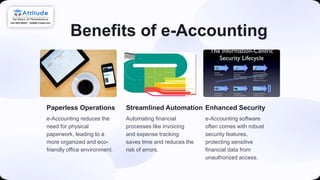
Benefits of e-Accounting
Paperless Operations
e-Accounting reduces the
need for physical
paperwork, leading to a
more organized and eco-
friendly office environment.
Streamlined Automation
Automating financial
processes like invoicing
and expense tracking
saves time and reduces the
risk of errors.
Enhanced Security
e-Accounting software
often comes with robust
security features,
protecting sensitive
financial data from
unauthorized access.
Key features and
functionalities of e-
Accounting software
User-Friendly Interface
Intuitive design and
user interfaces make
it easy for non-
accounting
professionals to
navigate and use the
software effectively.
Real-Time Reporting
Access to up-to-date
financial reports and
insights enables
informed decision-
making and better
financial planning.
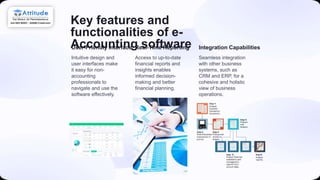
Integration Capabilities
Seamless integration
with other business
systems, such as
CRM and ERP, for a
cohesive and holistic
view of business
operations.
How to choose the right e-Accounting
software for your business
1 Scalability
Ensure that the
software can grow
with your business
and adapt to
changing needs over
time.
2 Cost-Effectiveness
Consider both the
initial investment and
long-term value to
find a solution that
aligns with your
budget and financial
goals.
3 Customer Support
Reliable and
responsive customer
service can make a
significant difference
in troubleshooting
and optimizing the
software usage.
Implementing e-Accounting in
your organization
1 Assessment & Planning
Evaluate existing processes and develop a detailed
plan for the transition to e-Accounting.
2 Training & Integration
Provide comprehensive training to stakeholders and
ensure seamless integration with existing business
systems.
3 Monitoring & Optimization
Continuously monitor and optimize e-Accounting
workflows to maximize benefits and efficiency.
Best practices for using e-
Accounting effectively
Data Backup &
Recovery
Regularly backup financial
data and implement robust
recovery procedures to
mitigate the risk of data
loss.
Regular Software
Updates
Stay up to date with
software patches and
updates to ensure optimal
performance and security.
Internal Controls &
Auditing
Establish strict internal
controls and conduct
regular audits to maintain
data integrity and
compliance.
Overcoming challenges in
transitioning to e-Accounting
Resistance to Change
Address employee
concerns and provide
comprehensive training
to ease the transition and
build confidence.
Data Migration
Complexities
Plan meticulously for
data migration to avoid
disruptions and ensure
data accuracy during the
transition.
Security Concerns
Implement robust
security protocols and
address data privacy
concerns to build trust in
the new system.
Future trends in e-Accounting
technology
AI & Automation
The integration of artificial
intelligence and advanced
automation will
revolutionize e-Accounting
processes, increasing
efficiency and accuracy.
Blockchain Integration
Blockchain technology
will bring unprecedented
levels of security and
transparency to financial
transactions and record-
keeping.
Cloud-Based Solutions
Greater adoption of cloud-
based e-Accounting
solutions will enhance
accessibility and
collaboration while
reducing infrastructure
costs.
FAQ
1 Is e-Accounting suitable for
small businesses?
Absolutely! e-Accounting offers scalability
and cost-effective solutions that are well-
suited for small business operations.
2 How secure is e-Accounting
software?
e-Accounting software is designed with
robust security features to safeguard
sensitive financial data from unauthorized
access and breaches.
3 Can e-Accounting software
integrate with existing
systems?
Yes, modern e-Accounting software
provides seamless integration capabilities
with various business systems for a holistic
view of operations.
4 What are the cost implications of
implementing e-Accounting?
While there may be initial investments, the
long-term benefits of efficiency and cost
savings often outweigh the implementation
costs.
Thank you!
Thank you for exploring the world of e-Accounting with us. Embracing
technology for financial efficiency can lead to transformative changes in the
way businesses manage their financial operations. To stay updated on the
latest trends and best practices, continue your journey with e-Accounting
today!

e-Accounting-Made-Easy-Embrace-Technology-for-Financial-Efficiency.

  • 1.
    e-Accounting Made Easy: Embrace Technologyfor Financial Efficiency e-Accounting is a modern approach to managing financial records electronically, leveraging software and technology to streamline processes and enhance accuracy. Embracing e-Accounting can lead to improved efficiency, cost savings, and better financial decision-making for businesses of all sizes.
  • 2.
    Benefits of e-Accounting PaperlessOperations e-Accounting reduces the need for physical paperwork, leading to a more organized and eco- friendly office environment. Streamlined Automation Automating financial processes like invoicing and expense tracking saves time and reduces the risk of errors. Enhanced Security e-Accounting software often comes with robust security features, protecting sensitive financial data from unauthorized access.
  • 3.
    Key features and functionalitiesof e- Accounting software User-Friendly Interface Intuitive design and user interfaces make it easy for non- accounting professionals to navigate and use the software effectively. Real-Time Reporting Access to up-to-date financial reports and insights enables informed decision- making and better financial planning. Integration Capabilities Seamless integration with other business systems, such as CRM and ERP, for a cohesive and holistic view of business operations.
  • 4.
    How to choosethe right e-Accounting software for your business 1 Scalability Ensure that the software can grow with your business and adapt to changing needs over time. 2 Cost-Effectiveness Consider both the initial investment and long-term value to find a solution that aligns with your budget and financial goals. 3 Customer Support Reliable and responsive customer service can make a significant difference in troubleshooting and optimizing the software usage.
  • 5.
    Implementing e-Accounting in yourorganization 1 Assessment & Planning Evaluate existing processes and develop a detailed plan for the transition to e-Accounting. 2 Training & Integration Provide comprehensive training to stakeholders and ensure seamless integration with existing business systems. 3 Monitoring & Optimization Continuously monitor and optimize e-Accounting workflows to maximize benefits and efficiency.
  • 6.
    Best practices forusing e- Accounting effectively Data Backup & Recovery Regularly backup financial data and implement robust recovery procedures to mitigate the risk of data loss. Regular Software Updates Stay up to date with software patches and updates to ensure optimal performance and security. Internal Controls & Auditing Establish strict internal controls and conduct regular audits to maintain data integrity and compliance.
  • 7.
    Overcoming challenges in transitioningto e-Accounting Resistance to Change Address employee concerns and provide comprehensive training to ease the transition and build confidence. Data Migration Complexities Plan meticulously for data migration to avoid disruptions and ensure data accuracy during the transition. Security Concerns Implement robust security protocols and address data privacy concerns to build trust in the new system.
  • 8.
    Future trends ine-Accounting technology AI & Automation The integration of artificial intelligence and advanced automation will revolutionize e-Accounting processes, increasing efficiency and accuracy. Blockchain Integration Blockchain technology will bring unprecedented levels of security and transparency to financial transactions and record- keeping. Cloud-Based Solutions Greater adoption of cloud- based e-Accounting solutions will enhance accessibility and collaboration while reducing infrastructure costs.
  • 9.
    FAQ 1 Is e-Accountingsuitable for small businesses? Absolutely! e-Accounting offers scalability and cost-effective solutions that are well- suited for small business operations. 2 How secure is e-Accounting software? e-Accounting software is designed with robust security features to safeguard sensitive financial data from unauthorized access and breaches. 3 Can e-Accounting software integrate with existing systems? Yes, modern e-Accounting software provides seamless integration capabilities with various business systems for a holistic view of operations. 4 What are the cost implications of implementing e-Accounting? While there may be initial investments, the long-term benefits of efficiency and cost savings often outweigh the implementation costs.
  • 10.
    Thank you! Thank youfor exploring the world of e-Accounting with us. Embracing technology for financial efficiency can lead to transformative changes in the way businesses manage their financial operations. To stay updated on the latest trends and best practices, continue your journey with e-Accounting today!