Learn Financial e-
Accounting
From Basics to Advanced: Master the essential digital skills for finance
careers
Why Financial e-Accounting Matters
Digital Transformation
Modern businesses rely on digital accounting systems to
manage finances efficiently. Traditional pen-and-paper
methods are rapidly becoming obsolete as companies
embrace cloud-based solutions and automated processes.
Career Essential
Financial e-accounting skills are now mandatory for finance
and business careers. Employers expect proficiency in digital
tools, making these competencies crucial for professional
success and advancement.
Step 1: Master Accounting
Fundamentals
Debit & Credit Rules
Understanding the fundamental
principle that debits equal credits
is essential for accurate
bookkeeping and financial record
maintenance.
Journal Entries
Learn to record business
transactions systematically,
ensuring every financial event is
properly documented with
supporting details.
Double-Entry System
Master the cornerstone of accounting where every transaction affects at
least two accounts, maintaining perfect balance in financial records.
Step 2: Company Setup & Structure
01
Chart of Accounts
Design a comprehensive account
structure that organizes assets, liabilities,
equity, revenue, and expenses for
efficient financial tracking.
02
Account Groups
Create logical groupings of related
accounts to streamline reporting and
ensure consistent categorization across
all transactions.
03
Master Data Setup
Configure customer, vendor, and product
masters with complete details to
automate data entry and improve
accuracy.
Step 3: Voucher Entry Mastery
Sales Vouchers
Record customer transactions, including
invoicing, payment terms, and tax
calculations to maintain accurate
revenue tracking.
Purchase Entries
Document supplier transactions,
inventory purchases, and expense
allocations with proper approval
workflows and cost tracking.
Receipts & Payments
Process cash and bank transactions,
reconcile accounts, and maintain
detailed records of all monetary
movements.
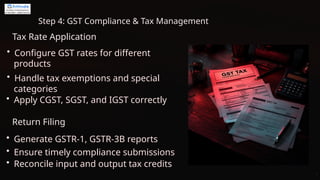
Step 4: GST Compliance & Tax Management
Tax Rate Application
• Configure GST rates for different
products
• Apply CGST, SGST, and IGST correctly
• Handle tax exemptions and special
categories
Return Filing
• Generate GSTR-1, GSTR-3B reports
• Ensure timely compliance submissions
• Reconcile input and output tax credits
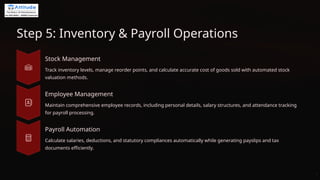
Step 5: Inventory & Payroll Operations
Stock Management
Track inventory levels, manage reorder points, and calculate accurate cost of goods sold with automated stock
valuation methods.
Employee Management
Maintain comprehensive employee records, including personal details, salary structures, and attendance tracking
for payroll processing.
Payroll Automation
Calculate salaries, deductions, and statutory compliances automatically while generating payslips and tax
documents efficiently.
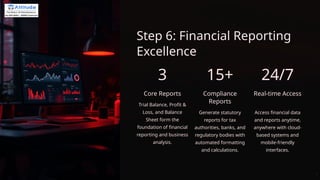
Step 6: Financial Reporting
Excellence
3
Core Reports
Trial Balance, Profit &
Loss, and Balance
Sheet form the
foundation of financial
reporting and business
analysis.
15+
Compliance
Reports
Generate statutory
reports for tax
authorities, banks, and
regulatory bodies with
automated formatting
and calculations.
24/7
Real-time Access
Access financial data
and reports anytime,
anywhere with cloud-
based systems and
mobile-friendly
interfaces.
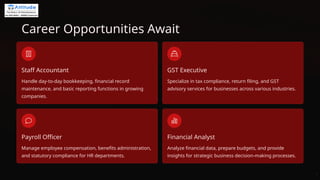
Career Opportunities Await
Staff Accountant
Handle day-to-day bookkeeping, financial record
maintenance, and basic reporting functions in growing
companies.
GST Executive
Specialize in tax compliance, return filing, and GST
advisory services for businesses across various industries.
Payroll Officer
Manage employee compensation, benefits administration,
and statutory compliance for HR departments.
Financial Analyst
Analyze financial data, prepare budgets, and provide
insights for strategic business decision-making processes.
Start Your Journey Today
Structured Learning Path
Master e-accounting through hands-on practical training with industry-
standard software. Our comprehensive curriculum covers everything from
basic concepts to advanced financial reporting.
Expert Training Locations
• Yamuna Vihar Campus
• Uttam Nagar Branch
Thank you for joining us today. We hope you found this presentation valuable. We wish you all the best.
For more information, or visit our website:- Attitude Academy
THANK YOU

Learn-Financial-e-Accounting from Beginner (1).pptx

  • 1.
    Learn Financial e- Accounting FromBasics to Advanced: Master the essential digital skills for finance careers
  • 2.
    Why Financial e-AccountingMatters Digital Transformation Modern businesses rely on digital accounting systems to manage finances efficiently. Traditional pen-and-paper methods are rapidly becoming obsolete as companies embrace cloud-based solutions and automated processes. Career Essential Financial e-accounting skills are now mandatory for finance and business careers. Employers expect proficiency in digital tools, making these competencies crucial for professional success and advancement.
  • 3.
    Step 1: MasterAccounting Fundamentals Debit & Credit Rules Understanding the fundamental principle that debits equal credits is essential for accurate bookkeeping and financial record maintenance. Journal Entries Learn to record business transactions systematically, ensuring every financial event is properly documented with supporting details. Double-Entry System Master the cornerstone of accounting where every transaction affects at least two accounts, maintaining perfect balance in financial records.
  • 4.
    Step 2: CompanySetup & Structure 01 Chart of Accounts Design a comprehensive account structure that organizes assets, liabilities, equity, revenue, and expenses for efficient financial tracking. 02 Account Groups Create logical groupings of related accounts to streamline reporting and ensure consistent categorization across all transactions. 03 Master Data Setup Configure customer, vendor, and product masters with complete details to automate data entry and improve accuracy.
  • 5.
    Step 3: VoucherEntry Mastery Sales Vouchers Record customer transactions, including invoicing, payment terms, and tax calculations to maintain accurate revenue tracking. Purchase Entries Document supplier transactions, inventory purchases, and expense allocations with proper approval workflows and cost tracking. Receipts & Payments Process cash and bank transactions, reconcile accounts, and maintain detailed records of all monetary movements.
  • 6.
    Step 4: GSTCompliance & Tax Management Tax Rate Application • Configure GST rates for different products • Apply CGST, SGST, and IGST correctly • Handle tax exemptions and special categories Return Filing • Generate GSTR-1, GSTR-3B reports • Ensure timely compliance submissions • Reconcile input and output tax credits
  • 7.
    Step 5: Inventory& Payroll Operations Stock Management Track inventory levels, manage reorder points, and calculate accurate cost of goods sold with automated stock valuation methods. Employee Management Maintain comprehensive employee records, including personal details, salary structures, and attendance tracking for payroll processing. Payroll Automation Calculate salaries, deductions, and statutory compliances automatically while generating payslips and tax documents efficiently.
  • 8.
    Step 6: FinancialReporting Excellence 3 Core Reports Trial Balance, Profit & Loss, and Balance Sheet form the foundation of financial reporting and business analysis. 15+ Compliance Reports Generate statutory reports for tax authorities, banks, and regulatory bodies with automated formatting and calculations. 24/7 Real-time Access Access financial data and reports anytime, anywhere with cloud- based systems and mobile-friendly interfaces.
  • 9.
    Career Opportunities Await StaffAccountant Handle day-to-day bookkeeping, financial record maintenance, and basic reporting functions in growing companies. GST Executive Specialize in tax compliance, return filing, and GST advisory services for businesses across various industries. Payroll Officer Manage employee compensation, benefits administration, and statutory compliance for HR departments. Financial Analyst Analyze financial data, prepare budgets, and provide insights for strategic business decision-making processes.
  • 10.
    Start Your JourneyToday Structured Learning Path Master e-accounting through hands-on practical training with industry- standard software. Our comprehensive curriculum covers everything from basic concepts to advanced financial reporting. Expert Training Locations • Yamuna Vihar Campus • Uttam Nagar Branch
  • 11.
    Thank you forjoining us today. We hope you found this presentation valuable. We wish you all the best. For more information, or visit our website:- Attitude Academy THANK YOU