

eAccessibility:
Compliance towards Innovation

Prof Jonathan Hassell
Director, Hassell Inclusion ltd.

QITCOM 2012 eAccessibility Panel
Tues 6th March 2012
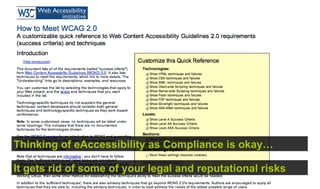
Thinking of eAccessibility as Compliance is okay…

It gets rid of some of your legal and reputational risks
But it’s not the key to your success…


And, without thinking of the people you’re helping,
it’s not exactly exciting…
How to flourish in the wild west…
Innovation…
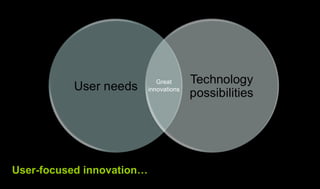
Great
                           innovations


User-focused innovation…
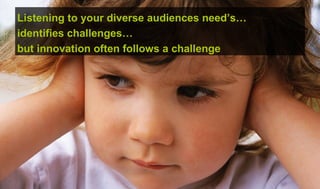
Listening to your diverse audiences need’s…
identifies challenges…
but innovation often follows a challenge
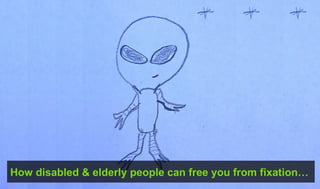
How disabled & elderly people can free you from fixation…
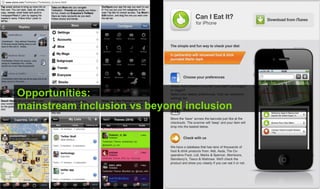
Opportunities:
mainstream inclusion vs beyond inclusion
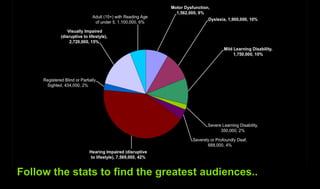
Follow the stats to find the greatest audiences..
Don’t be afraid of doing things for disabled audiences
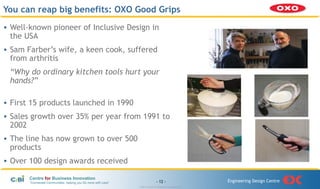
You can reap big benefits: OXO Good Grips
• Well-known pioneer of Inclusive Design in
  the USA
• Sam Farber’s wife, a keen cook, suffered
  from arthritis
 “Why do ordinary kitchen tools hurt your
 hands?”

• First 15 products launched in 1990
• Sales growth over 35% per year from 1991 to
  2002
• The line has now grown to over 500
  products
• Over 100 design awards received

       Centre for Business Innovation
       “Connected Communities, helping you Do more with Less”                   - 12 -                      Engineering Design Centre
                                                                © 2011 Centre for Business Innovation Ltd
How listening to your users can
prompt innovative thinking
- case study: MyDisplay for the BBC
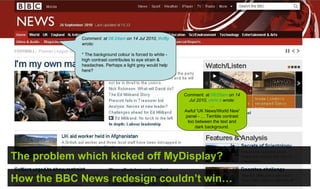
Comment: at 08:24am on 14 Jul 2010, thrifty
             wrote:

             * The background colour is forced to white -
             high contrast contributes to eye strain &
             headaches. Perhaps a light grey would help
             here?


                                                            Comment: at 08:05am on 14
                                                               Jul 2010, chris b wrote:
                                                                          …
                                                            Awful 'UK News/World New'
                                                             panel - … Terrible contrast
                                                              too between the text and
                                                                  dark background.


The problem which kicked off MyDisplay?

How the BBC News redesign couldn’t win…
MyDisplay initial purpose:
A way of turning complaints into positive user
experiences
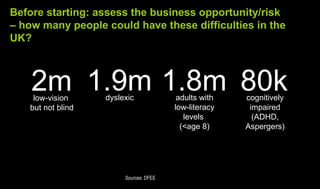
Before starting: assess the business opportunity/risk
– how many people could have these difficulties in the
UK?


    2m 1.9m 1.8m 80k
    low-vision     dyslexic              adults with   cognitively
   but not blind                        low-literacy    impaired
                                           levels        (ADHD,
                                          (<age 8)     Aspergers)


                        Sources: DFEE
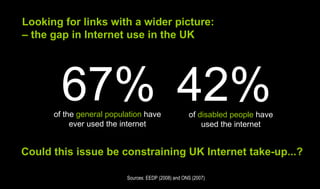
Looking for links with a wider picture:
– the gap in Internet use in the UK


        67% 42%
      of the general population have                 of disabled people have
           ever used the internet                        used the internet


Could this issue be constraining UK Internet take-up...?

                          Sources: EEDP (2008) and ONS (2007)
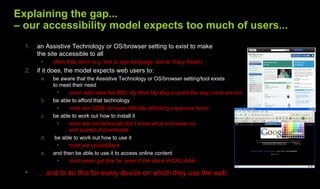
Explaining the gap...
– our accessibility model expects too much of users...
  1.   an Assistive Technology or OS/browser setting to exist to make
       the site accessible to all
        •    often they don’t (e.g. text to sign language, text to ‘Easy Read’)
  2.   if it does, the model expects web users to:
        a.   be aware that the Assistive Technology or OS/browser setting/tool exists
             to meet their need
               •    (even with sites like BBC My Web My Way to point the way) most are not
        b.   be able to afford that technology
               •    most are C2DE so have difficulty affording expensive techs
        c.   be able to work out how to install it
               •    most are not technical (don’t know what a browser is)
                    and scared of downloads
        d.    be able to work out how to use it
               •    most are unconfident
        e.   and then be able to use it to access online content
               •    most never get this far, even if the site is WCAG AAA...

  •    … and to do this for every device on which they use the web
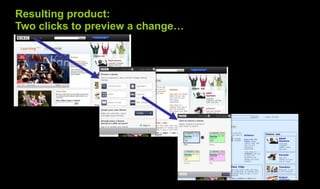
Resulting product:
Two clicks to preview a change…
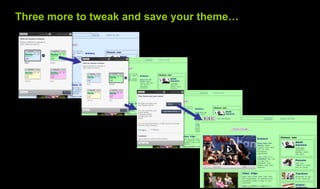
Three more to tweak and save your theme…
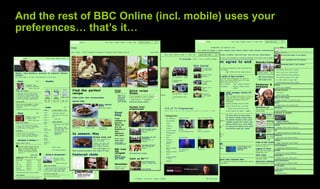
And the rest of BBC Online (incl. mobile) uses your
preferences… that’s it…
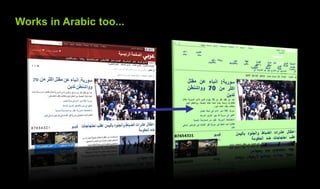
Works in Arabic too...
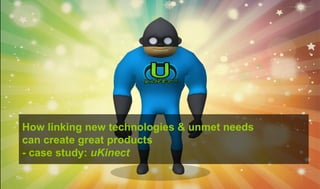
How linking new technologies & unmet needs
can create great products
- case study: uKinect
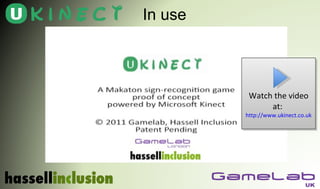
In use


          Watch the video
               at:
         http://www.ukinect.co.uk
I’m happy to help you get things moving…
How I can help – research to find user-needs
How I can help
– collision for ideas generation & incubation
How I can help – finding you the right experts
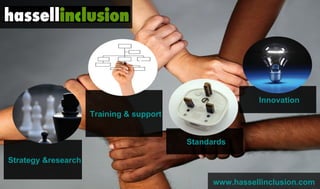
Innovation
                     Training & supportfor embedding


                                            Standards

Strategy &research

                                                  www.hassellinclusion.com
e: jonathan@hassellinclusion.com
t: @jonhassell
w: www.hassellinclusion.com

eAccessibility: Compliance towards Innovation

  • 1.
    eAccessibility: Compliance towards Innovation ProfJonathan Hassell Director, Hassell Inclusion ltd. QITCOM 2012 eAccessibility Panel Tues 6th March 2012
  • 2.
    Thinking of eAccessibilityas Compliance is okay… It gets rid of some of your legal and reputational risks
  • 3.
    But it’s notthe key to your success… And, without thinking of the people you’re helping, it’s not exactly exciting…
  • 4.
    How to flourishin the wild west…
  • 5.
  • 6.
    Great innovations User-focused innovation…
  • 7.
    Listening to yourdiverse audiences need’s… identifies challenges… but innovation often follows a challenge
  • 8.
    How disabled &elderly people can free you from fixation…
  • 9.
  • 10.
    Follow the statsto find the greatest audiences..
  • 11.
    Don’t be afraidof doing things for disabled audiences
  • 12.
    You can reapbig benefits: OXO Good Grips • Well-known pioneer of Inclusive Design in the USA • Sam Farber’s wife, a keen cook, suffered from arthritis “Why do ordinary kitchen tools hurt your hands?” • First 15 products launched in 1990 • Sales growth over 35% per year from 1991 to 2002 • The line has now grown to over 500 products • Over 100 design awards received Centre for Business Innovation “Connected Communities, helping you Do more with Less” - 12 - Engineering Design Centre © 2011 Centre for Business Innovation Ltd
  • 13.
    How listening toyour users can prompt innovative thinking - case study: MyDisplay for the BBC
  • 14.
    Comment: at 08:24amon 14 Jul 2010, thrifty wrote: * The background colour is forced to white - high contrast contributes to eye strain & headaches. Perhaps a light grey would help here? Comment: at 08:05am on 14 Jul 2010, chris b wrote: … Awful 'UK News/World New' panel - … Terrible contrast too between the text and dark background. The problem which kicked off MyDisplay? How the BBC News redesign couldn’t win…
  • 15.
    MyDisplay initial purpose: Away of turning complaints into positive user experiences
  • 16.
    Before starting: assessthe business opportunity/risk – how many people could have these difficulties in the UK? 2m 1.9m 1.8m 80k low-vision dyslexic adults with cognitively but not blind low-literacy impaired levels (ADHD, (<age 8) Aspergers) Sources: DFEE
  • 17.
    Looking for linkswith a wider picture: – the gap in Internet use in the UK 67% 42% of the general population have of disabled people have ever used the internet used the internet Could this issue be constraining UK Internet take-up...? Sources: EEDP (2008) and ONS (2007)
  • 18.
    Explaining the gap... –our accessibility model expects too much of users... 1. an Assistive Technology or OS/browser setting to exist to make the site accessible to all • often they don’t (e.g. text to sign language, text to ‘Easy Read’) 2. if it does, the model expects web users to: a. be aware that the Assistive Technology or OS/browser setting/tool exists to meet their need • (even with sites like BBC My Web My Way to point the way) most are not b. be able to afford that technology • most are C2DE so have difficulty affording expensive techs c. be able to work out how to install it • most are not technical (don’t know what a browser is) and scared of downloads d. be able to work out how to use it • most are unconfident e. and then be able to use it to access online content • most never get this far, even if the site is WCAG AAA... • … and to do this for every device on which they use the web
  • 19.
    Resulting product: Two clicksto preview a change…
  • 20.
    Three more totweak and save your theme…
  • 21.
    And the restof BBC Online (incl. mobile) uses your preferences… that’s it…
  • 22.
  • 23.
    How linking newtechnologies & unmet needs can create great products - case study: uKinect
  • 24.
    In use Watch the video at: http://www.ukinect.co.uk
  • 25.
    I’m happy tohelp you get things moving…
  • 26.
    How I canhelp – research to find user-needs
  • 27.
    How I canhelp – collision for ideas generation & incubation
  • 28.
    How I canhelp – finding you the right experts
  • 29.
    Innovation Training & supportfor embedding Standards Strategy &research www.hassellinclusion.com
  • 30.

Editor's Notes

  • #24 So that ’ s a summary of our Phase 2 application. Thanks for you attention. And do you have any questions?
  • #25 Here’s a summary of what we were able to achieve in our Phase One.
  • #30 Strategy and research researching users needs from technology and how evolving technology directions will present challenges and opportunities to supporting those needs standards setting the right international standards BS8878 =&gt; ISO... embedding training consultancy support tools innovation innovation through inclusion inclusion solutions finding the hard/costly barriers for inclusion finding ways to create solutions for them licensing those solutions at low cost to the widest number of websites