IOSR Journal of Polymer and Textile Engineering (IOSR-JPTE)
e-ISSN: 2348-019X, p-ISSN: 2348-0181, Volume 2, Issue 1 (Jan - Feb. 2015), PP 27-33
www.iosrjournals.org
DOI: 10.9790/019X-0212733 www.iosrjournals.org 27 | Page
Use of Polyvinylindene Fluoride (PVDF) and Lead Zirconate
Titanate (PZT) In Structural Health Monitoring
B M Dauda1
and P K Onoja2
1
Department of Textile Science and Technology, Ahmadu Bello University, Zaria, Nigeria
2
Department of Chemistry, Kogi State University, Anyigba, Nigeria
Abstract: Smart composite systems have been developed to sense and actuate vibration of braided composite
cantilever beams using surface laminated and embedded Lead Zirconate Titanate (PZT) and Polyvinylindene
fluoride (PVDF). Three test specimens of the cantilevered beams were constructed with surface mounted PZT
coupons have discreet, distributed and edge delaminations. A fourth set of composite samples were produced
having PVDF films integrally woven into the preform. Results obtained showed the effectiveness of the PZT
structures in measurement and actuation of vibration of the host structure. The nature of delamination between
the PZT and host structure also affects vibration sensing and actuation. The PVDF composites were very
effective in vibration sensing, however, they could actuate vibration within the host structure.
I. Introduction
Piezoelectric actuators and sensors are the primary components in intelligent structures. When voltage
is applied to a piezoelectric material, it becomes mechanically strained; conversely when it is strained, it
generates voltage. If this material is bonded to or embedded within a structure, the strain induces stress to the
host structure, and this can be used to introduce control forces into the structure. The working principle of
piezoelectrics is described below.
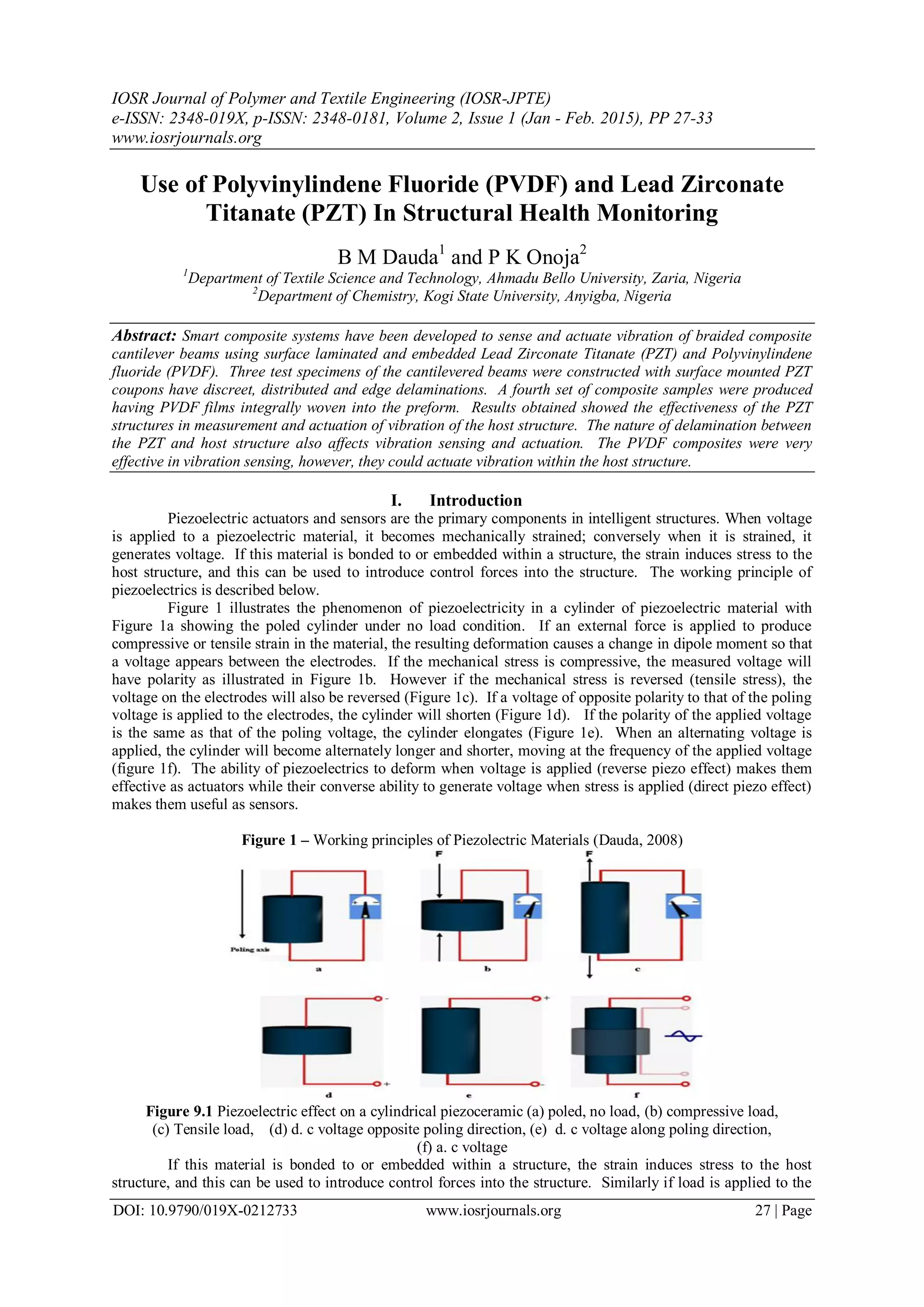
Figure 1 illustrates the phenomenon of piezoelectricity in a cylinder of piezoelectric material with
Figure 1a showing the poled cylinder under no load condition. If an external force is applied to produce
compressive or tensile strain in the material, the resulting deformation causes a change in dipole moment so that
a voltage appears between the electrodes. If the mechanical stress is compressive, the measured voltage will
have polarity as illustrated in Figure 1b. However if the mechanical stress is reversed (tensile stress), the
voltage on the electrodes will also be reversed (Figure 1c). If a voltage of opposite polarity to that of the poling
voltage is applied to the electrodes, the cylinder will shorten (Figure 1d). If the polarity of the applied voltage
is the same as that of the poling voltage, the cylinder elongates (Figure 1e). When an alternating voltage is
applied, the cylinder will become alternately longer and shorter, moving at the frequency of the applied voltage
(figure 1f). The ability of piezoelectrics to deform when voltage is applied (reverse piezo effect) makes them
effective as actuators while their converse ability to generate voltage when stress is applied (direct piezo effect)
makes them useful as sensors.
Figure 1 – Working principles of Piezolectric Materials (Dauda, 2008)
Figure 9.1 Piezoelectric effect on a cylindrical piezoceramic (a) poled, no load, (b) compressive load,
(c) Tensile load, (d) d. c voltage opposite poling direction, (e) d. c voltage along poling direction,
(f) a. c voltage
If this material is bonded to or embedded within a structure, the strain induces stress to the host
structure, and this can be used to introduce control forces into the structure. Similarly if load is applied to the
Use of Polyvinylindene Fluoride (PVDF) and Lead Zirconate Titanate (PZT) in
DOI: 10.9790/019X-0212733 www.iosrjournals.org 28 | Page
„composite‟ structure, a proportional voltage will be generated at the terminals of the bonded or embedded
piezoelectric. However, during the lifetime of the structure, debonding may occur in the structure between the
piezoelectric actuators/sensor and the composite host. This alters the dynamic response of the structure and
reduces the control authority of the actuator. Many natural and synthetic materials exhibit piezoelectric
behaviour. Examples include Quartz, Rochelle salt, Lead zirconate titanate (PZT), Polyvinylindene fluoride
(PVDF), etc. By far, PZT and PVDF are the most commonly used piezoelectric materials for vibration sensing
or control.
Techniques for in-service health monitoring are becoming increasing popular as they lead to a
reduction in cost and improved safety and reliability. A significant advantage of composites is the fact that
sensors/actuators can be incorporated during the manufacturing process. The application of piezoelectric
sensors/actuators to composite structures can be carried out by either laminating the piezoelectric
actuator/sensor on the surface of the composite (Bailey and Hubbard 1985, Seeley and Chattopadhyay (1998) or
inserting the actuator/sensor between adjacent lamina layers (Crawley and de-Luis (1987) and Yang et al,
(2005). Bailey and Hubbard (1985) used the “reverse” piezoelectric effect to damp the free vibration of an
aluminium cantilever (i.e. as an actuator). They utilized a layer of PVDF film bonded to one face of the
cantilever and showed that the first vibrational mode of the beam could be controlled. Crawley and de-Luis
(1987) and Baz and Poh (1988) carried out experiments in which three test specimens (an aluminium beam with
surface bonded actuators; a glass/epoxy composite beam with embedded actuators; and a graphite/epoxy
composite beam with embedded actuators) were constructed and the actuators used to excite steady-state
resonant vibrations in the beams. It was shown that stiffer piezoactuators provided higher bending moments.
Kim and Jones (1991) studied the effective bending moment induced by piezoactuators bonded to the
upper and lower surfaces of a thin flat plate. They showed that for commercially available piezoactuators and
bonding materials, there exists an optimal thickness of piezoactuator by which maximum bending moment can
be achieved under a constant applied electric field. It was also shown that an increase in the Young‟s modulus
of the piezoactuator reduces the optimal thickness of the actuators and gives higher bending moments. Dosch et
al (1992) successfully developed a new technique by means of which a single piece of piezoelectric material can
simultaneously sense and actuate vibration in a closed loop system. Solook (2000) carried out experimental
implementation of sensors, which are able to monitor the first, second, and third modes of vibration of a
structure and the modal sensors were also applied in active vibration control experiment. Yu and Ng (2005)
developed active control methods to suppress structural vibration of flexible circular plates using piezoceramic
plates. The experimental results show that the proposed robust active control method is efficient for active
vibration suppression.
From this survey of work done on the use of piezoelectric materials for smart structural control, it is
obvious that smart structures are increasingly proving to be invaluable in sensing and activation of movement
composite structures. Delamination however is a critical mode of failure of laminated composite materials
having serious implications on the integrity of the structure. Therefore a lot of research in the field of structural
health monitoring (SHM) is currently been focused on studying the effect of delamination in composites. In this
context, the use of piezoelectric materials has proved to be quite useful because they are rapidly responsive
when bonded or embedded within a composite structure. The efficiency of an actuator or sensor highly depends
on its bonding strength with the host laminate. If the bonding is perfect, then the actuator can effectively
transfer the electro-elastically generated strain into the substrate on which it is bonded or embedded. Also as
sensors, piezoelectric materials can capture the structural response accurately for quantitative assessment in
SHM applications. However, the actuator/composite interface is highly susceptible to failures caused by
debonding (delamination) and its subsequent growth especially where the actuator is used for vibration sensing
and control. Seeley and Chattopadhyay (1998) have shown that debonding significantly compromise the
dynamic response of the structure and also reduces the control authority. Therefore it is of utmost importance to
look at this issue comprehensively for effective implementation of smart composite laminates and that is the
main trust of this research. Advantage is taken of the flexibility of PVDF to weave it into the preform structure
in order to its delamination or total detachment from the host composite structure.
II. Experimental Procedure
Laminating PZT on Composite (Test Specimen Construction)
Using PZT ceramic coupon as vibration sensor/actuator, uniaxially poled PZT wafer (Lambda
Photometrics, UK) having copper/nickel electrodes on both surfaces and of size 70 x 25 x 0.25 mm3
were used.
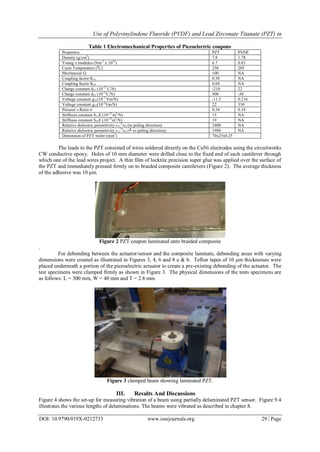
The dimensions and physical properties are shown in Table 1.
Use of Polyvinylindene Fluoride (PVDF) and Lead Zirconate Titanate (PZT) in
DOI: 10.9790/019X-0212733 www.iosrjournals.org 29 | Page
Table 1 Electromechanical Properties of Piezoelectric coupons
Properties PZT PVDF
Density (g/cm3
) 7.8 1.78
Young‟s modulus (Nm-2
x 1010
) 6.7 0.83
Curie Temperature (0
C) 250 205
Mechanical Q 100 NA
Coupling factor K31 0.38 NA
Coupling factor K33 0.69 NA
Charge constant d31 (10-12
C/N) -210 22
Charge constant d33 (10-12
C/N) 500 -30
Voltage constant g31(10-3
Vm/N) -11.5 0.216
Voltage constant g33(10-3
Vm/N) 22 330
Poisson‟s Ratio σ 0.34 0.18
Stiffness constant S11E (10-12
m2
/N) 15 NA
Stiffness constant S33E (10-12
m2
/N) 19 NA
Relative dielectric permittivity є33
T
/є0 (in poling direction) 2400 NA
Relative dielectric permittivity є11
T
/є0 (┴ to poling direction) 1980 NA
Dimension of PZT wafer (mm3
) 70x25x0.25
The leads to the PZT consisted of wires soldered directly on the CuNi electrodes using the circuitworks
CW conductive epoxy. Holes of 10 mm diameter were drilled close to the fixed end of each cantilever through
which one of the lead wires project. A thin film of locktite precision super glue was applied over the surface of
the PZT and immediately pressed firmly on to braided composite cantilevers (Figure 2). The average thickness
of the adhesive was 10 μm.
Figure 2 PZT coupon laminated unto braided composite
.
For debonding between the actuator/sensor and the composite laminate, debonding areas with varying
dimensions were created as illustrated in Figures 3, 4, 6 and 8 a & b. Teflon tapes of 10 μm thicknesses were
placed underneath a portion of the piezoelectric actuator to create a pre-existing debonding of the actuator. The
test specimens were clamped firmly as shown in Figure 3. The physical dimensions of the tests specimens are
as follows: L = 300 mm, W = 40 mm and T = 2.8 mm.
Figure 3 clamped beam showing laminated PZT.
III. Results And Discussions
Figure 4 shows the set-up for measuring vibration of a beam using partially delaminated PZT sensor. Figure 9.4
illustrates the various lengths of delaminations. The beams were vibrated as described in chapter 8.
Use of Polyvinylindene Fluoride (PVDF) and Lead Zirconate Titanate (PZT) in
DOI: 10.9790/019X-0212733 www.iosrjournals.org 30 | Page
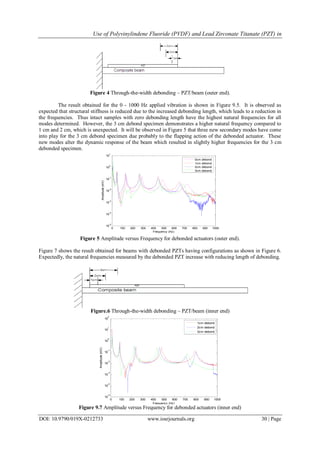
Figure 4 Through-the-width debonding – PZT/beam (outer end).
The result obtained for the 0 - 1000 Hz applied vibration is shown in Figure 9.5. It is observed as
expected that structural stiffness is reduced due to the increased debonding length, which leads to a reduction in
the frequencies. Thus intact samples with zero debonding length have the highest natural frequencies for all
modes determined. However, the 3 cm debond specimen demonstrates a higher natural frequency compared to
1 cm and 2 cm, which is unexpected. It will be observed in Figure 5 that three new secondary modes have come
into play for the 3 cm debond specimen due probably to the flapping action of the debonded actuator. These
new modes alter the dynamic response of the beam which resulted in slightly higher frequencies for the 3 cm
debonded specimen.
Figure 5 Amplitude versus Frequency for debonded actuators (outer end).
Figure 7 shows the result obtained for beams with debonded PZTs having configurations as shown in Figure 6.
Expectedly, the natural frequencies measured by the debonded PZT increase with reducing length of debonding.
Figure.6 Through-the-width debonding – PZT/beam (inner end)
Figure 9.7 Amplitude versus Frequency for debonded actuators (inner end)
0 100 200 300 400 500 600 700 800 900 1000
10
-5
10
-4
10
-3
10
-2
10
-1
10
0
10
1
Amplitude(mV)
Frequency (Hz)
0cm debond
1cm debond
2cm debond
3cm debond
0 100 200 300 400 500 600 700 800 900 1000
10
-5
10
-4
10
-3
10
-2
10
-1
10
0
10
1
10
2
Amplitude(mV)
Frequency (Hz)
1cm debond
2cm debond
3cm debond
Use of Polyvinylindene Fluoride (PVDF) and Lead Zirconate Titanate (PZT) in
DOI: 10.9790/019X-0212733 www.iosrjournals.org 31 | Page
The third set of beams with embedded debonding as illustrated in Figure 8 a & b were also tested as
discussed above and it will be observed from the result obtained in Figure 9 that the specimen with zero
debonding has the highest natural frequencies. This is expected since it should be the stiffest of the three
samples. It will be observed that the specimen with distributed delamination shows higher natural frequency
compared to the specimen with discreet type debonding. Thus distributed debonding gives better natural
frequency measurement compared to discreet debonding of the same overall dimension.
Figure 8a Embedded debonding – PZT/beam (distributed).
Figure 8b Embedded debonding – PZT/beam (discrete).
Figure 9 Amplitude versus Frequency for debonded actuators (centre debond).
Weaving PVDF into Woven Fabric Preform
In a novel method, 3-layered piezofilms (50 x 5 mm2
) were woven into a fabric alongside the warp
yarns as illustrated in Figure 10a. In using PVDF as a sensor, a PVDF film (Precision Acoustics, U.K.) which
was poled through the thickness with gold electrodes on both surfaces of the film were used. Table 1 gives the
dimensions and typical physical properties of the film. The PVDF was bonded to adjacent warp tows prior to
interlacing of the warp and weft. The leads to the PVDF consisted of wires carefully soldered to films in-
between adjacent layers. During consolidation of the preforms with the PVDFs integrally woven, care was
taken to safeguard the lead wires as shown in Figures 10 a & b.
Figure 10a layered piezofilm woven into composite preform.
Use of Polyvinylindene Fluoride (PVDF) and Lead Zirconate Titanate (PZT) in
DOI: 10.9790/019X-0212733 www.iosrjournals.org 32 | Page
Figure 10b layered piezofilm woven into composite preform prior resin infusion.
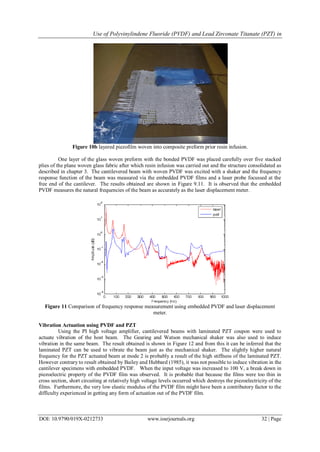
One layer of the glass woven preform with the bonded PVDF was placed carefully over five stacked
plies of the plane woven glass fabric after which resin infusion was carried out and the structure consolidated as
described in chapter 3. The cantilevered beam with woven PVDF was excited with a shaker and the frequency
response function of the beam was measured via the embedded PVDF films and a laser probe focussed at the
free end of the cantilever. The results obtained are shown in Figure 9.11. It is observed that the embedded
PVDF measures the natural frequencies of the beam as accurately as the laser displacement meter.
Figure 11 Comparison of frequency response measurement using embedded PVDF and laser displacement
meter.
Vibration Actuation using PVDF and PZT
Using the PI high voltage amplifier, cantilevered beams with laminated PZT coupon were used to
actuate vibration of the host beam. The Gearing and Watson mechanical shaker was also used to induce
vibration in the same beam. The result obtained is shown in Figure 12 and from this it can be inferred that the
laminated PZT can be used to vibrate the beam just as the mechanical shaker. The slightly higher natural
frequency for the PZT actuated beam at mode 2 is probably a result of the high stiffness of the laminated PZT.
However contrary to result obtained by Bailey and Hubbard (1985), it was not possible to induce vibration in the
cantilever specimens with embedded PVDF. When the input voltage was increased to 100 V, a break down in
piezoelectric property of the PVDF film was observed. It is probable that because the films were too thin in
cross section, short circuiting at relatively high voltage levels occurred which destroys the piezoelectricity of the
films. Furthermore, the very low elastic modulus of the PVDF film might have been a contributory factor to the
difficulty experienced in getting any form of actuation out of the PVDF film.
Use of Polyvinylindene Fluoride (PVDF) and Lead Zirconate Titanate (PZT) in
DOI: 10.9790/019X-0212733 www.iosrjournals.org 33 | Page
Figure 12 Actuation of vibration using PZT and mechanical vibrator
IV. Conclusions
PZT has shown its ability to induce vibration in structure on to which it is securely laminated, just as a
mechanical shaker can do. PZT has also shown its inherent ability to measure vibration displacements with
about equal degree of sensitivity as the Laser meter. While PZT unlike the Laser can easily be placed anywhere
on any object of interest, it is limited to flat surfaces due to its high stiffness. Furthermore its brittle nature
makes it easily susceptible to breakage by high level shocks as was experienced severally in this work. PVDF
has proved to have the ability to measure vibrations accurately and with no effects on vibration of the vibrating
body because of its relatively light weight. Furthermore, it can be used to measure vibration at any point of a
body and with any surface configuration thereof. Moreover since the PVDF have low elastic constant and have
the form of a thin film, no great stress is required for its displacement, so that it virtually does not restrict the
vibration of the body. Most researchers on active vibration control of cantilevers use accelerometers to measure
vibration which has the disadvantage of adding mass to the structure being tested. The devices used here
generally have relatively low mass and the Laser was a non contact method (laser displacement meter). The
effectiveness of PZT as a sensor is equally good when laminated to the surface of the host structure. However
partial debonding of the PZT from the host structure affects the value of natural frequency measured. The size
and nature of distribution of the debonded region also affects the measured frequency.
Reference
[1]. Bailey T and Hubbard J E, (1985). Distributed piezoelectric polymer active vibration control of a cantilevered beam, AIAA J. of Guidance,
Control and Dynamics, 5: 605-611.
[2]. Baz A and Poh S (1988). Performance of an active control system with piezoelectric actuators, J of Sound and Vibration, 2: 126-137.
[3]. Bent AA (1997) “Active Fiber Composites for Structural Actuation” PhD dissertation, Massachusetts Institute of Technology, Boston, U S
A.
[4]. Cannon B J and Brei D (2000). “Feasibility Study of Microfabrication by Co-extrusion (MFCX) Hollow fibres for Active Composites”,
Journal of Intelligent Material Systems and Structures, 11: 659-670.
[5]. Chattopadhyay A, Dragomir-Daescu D and Gu H (1999). Dynamics of delaminated smart composite cross-ply beams, Smart Materials &
Structure J. 8: 92-99.
[6]. Crawley E F and de-Luis J (1987). Use of piezoelectric actuators as elements of intelligent structures, AIAA Journal, 25: 10-21.
[7]. Dimitriadis E K, et.al. (1991). Piezoelectric actuators for distributed vibration excitation of thin plates, J of Vibration and Acoustics, 113:
265-287.
[8]. Dosch J J et.al. (1992). A self-sensing piezoelectric actuator for collocated control, J. of Intelligent Material System and Structures, 3: 67-
81.
[9]. Hiroshi S Tadashi S and Masaru N (2003). “Development of the Piezoelectric Fibre and Application for Smart Board” Smart Materials,
Structures and Systems, Proceedings of SPIE, Vol. 5062.
[10]. Hu Y. and Ng A. (2005), “Active robust vibration control of flexible structures” Journal of Sound and Vibration, 288: 43 – 56.
[11]. Kim S J and Jones J D (1991). AIAA Journal, 29: 12-18.
[12]. Okafor A C, Chandrashekhara K and Jiang Y P (1996). Delamination prediction in composite beams with built-in piezoelectric devices
using modal analysis and neural network. Smart Materials & Structure J. 5: 338-347.
[13]. Raja S, Prathima A and Viswanath S (2006). Analysis of Piezoelectric Composite Beams and Plates with Multiple Delaminations. Structural
Health Monitoring J 5: 255-266.
[14]. Seeley C E and Chattopadhyay A (1998). “Experimental investigation of composite beams with piezoelectric actuation and debonding”
Smart Materials and Structures, 7: 502-511.
[15]. Solook M. (2000). “Distributed and Discrete Modal Sensors for Beams and Plates, PhD Thesis, The Univesity of Manchester, U K.
[16]. Wilkie W K, Bryant R G, Fox R L, Hellbaum R F, High J W, Jalink A, Little BD and Mirrick P H (2007), “Method of fabricating a
piezoelectric composite apparatus”, US Patent 6629341.
[17]. Yang S. M., Hung C. C. & Chen K. H. (2005). “Design and Fabrication of a Smart layer Module in Composite Laminated Structure” Smart
Materials and Structures, 14: 315-320

Use of Polyvinylindene Fluoride (PVDF) and Lead Zirconate Titanate (PZT) In Structural Health Monitoring

  • 1.
    IOSR Journal ofPolymer and Textile Engineering (IOSR-JPTE) e-ISSN: 2348-019X, p-ISSN: 2348-0181, Volume 2, Issue 1 (Jan - Feb. 2015), PP 27-33 www.iosrjournals.org DOI: 10.9790/019X-0212733 www.iosrjournals.org 27 | Page Use of Polyvinylindene Fluoride (PVDF) and Lead Zirconate Titanate (PZT) In Structural Health Monitoring B M Dauda1 and P K Onoja2 1 Department of Textile Science and Technology, Ahmadu Bello University, Zaria, Nigeria 2 Department of Chemistry, Kogi State University, Anyigba, Nigeria Abstract: Smart composite systems have been developed to sense and actuate vibration of braided composite cantilever beams using surface laminated and embedded Lead Zirconate Titanate (PZT) and Polyvinylindene fluoride (PVDF). Three test specimens of the cantilevered beams were constructed with surface mounted PZT coupons have discreet, distributed and edge delaminations. A fourth set of composite samples were produced having PVDF films integrally woven into the preform. Results obtained showed the effectiveness of the PZT structures in measurement and actuation of vibration of the host structure. The nature of delamination between the PZT and host structure also affects vibration sensing and actuation. The PVDF composites were very effective in vibration sensing, however, they could actuate vibration within the host structure. I. Introduction Piezoelectric actuators and sensors are the primary components in intelligent structures. When voltage is applied to a piezoelectric material, it becomes mechanically strained; conversely when it is strained, it generates voltage. If this material is bonded to or embedded within a structure, the strain induces stress to the host structure, and this can be used to introduce control forces into the structure. The working principle of piezoelectrics is described below. Figure 1 illustrates the phenomenon of piezoelectricity in a cylinder of piezoelectric material with Figure 1a showing the poled cylinder under no load condition. If an external force is applied to produce compressive or tensile strain in the material, the resulting deformation causes a change in dipole moment so that a voltage appears between the electrodes. If the mechanical stress is compressive, the measured voltage will have polarity as illustrated in Figure 1b. However if the mechanical stress is reversed (tensile stress), the voltage on the electrodes will also be reversed (Figure 1c). If a voltage of opposite polarity to that of the poling voltage is applied to the electrodes, the cylinder will shorten (Figure 1d). If the polarity of the applied voltage is the same as that of the poling voltage, the cylinder elongates (Figure 1e). When an alternating voltage is applied, the cylinder will become alternately longer and shorter, moving at the frequency of the applied voltage (figure 1f). The ability of piezoelectrics to deform when voltage is applied (reverse piezo effect) makes them effective as actuators while their converse ability to generate voltage when stress is applied (direct piezo effect) makes them useful as sensors. Figure 1 – Working principles of Piezolectric Materials (Dauda, 2008) Figure 9.1 Piezoelectric effect on a cylindrical piezoceramic (a) poled, no load, (b) compressive load, (c) Tensile load, (d) d. c voltage opposite poling direction, (e) d. c voltage along poling direction, (f) a. c voltage If this material is bonded to or embedded within a structure, the strain induces stress to the host structure, and this can be used to introduce control forces into the structure. Similarly if load is applied to the
  • 2.
    Use of PolyvinylindeneFluoride (PVDF) and Lead Zirconate Titanate (PZT) in DOI: 10.9790/019X-0212733 www.iosrjournals.org 28 | Page „composite‟ structure, a proportional voltage will be generated at the terminals of the bonded or embedded piezoelectric. However, during the lifetime of the structure, debonding may occur in the structure between the piezoelectric actuators/sensor and the composite host. This alters the dynamic response of the structure and reduces the control authority of the actuator. Many natural and synthetic materials exhibit piezoelectric behaviour. Examples include Quartz, Rochelle salt, Lead zirconate titanate (PZT), Polyvinylindene fluoride (PVDF), etc. By far, PZT and PVDF are the most commonly used piezoelectric materials for vibration sensing or control. Techniques for in-service health monitoring are becoming increasing popular as they lead to a reduction in cost and improved safety and reliability. A significant advantage of composites is the fact that sensors/actuators can be incorporated during the manufacturing process. The application of piezoelectric sensors/actuators to composite structures can be carried out by either laminating the piezoelectric actuator/sensor on the surface of the composite (Bailey and Hubbard 1985, Seeley and Chattopadhyay (1998) or inserting the actuator/sensor between adjacent lamina layers (Crawley and de-Luis (1987) and Yang et al, (2005). Bailey and Hubbard (1985) used the “reverse” piezoelectric effect to damp the free vibration of an aluminium cantilever (i.e. as an actuator). They utilized a layer of PVDF film bonded to one face of the cantilever and showed that the first vibrational mode of the beam could be controlled. Crawley and de-Luis (1987) and Baz and Poh (1988) carried out experiments in which three test specimens (an aluminium beam with surface bonded actuators; a glass/epoxy composite beam with embedded actuators; and a graphite/epoxy composite beam with embedded actuators) were constructed and the actuators used to excite steady-state resonant vibrations in the beams. It was shown that stiffer piezoactuators provided higher bending moments. Kim and Jones (1991) studied the effective bending moment induced by piezoactuators bonded to the upper and lower surfaces of a thin flat plate. They showed that for commercially available piezoactuators and bonding materials, there exists an optimal thickness of piezoactuator by which maximum bending moment can be achieved under a constant applied electric field. It was also shown that an increase in the Young‟s modulus of the piezoactuator reduces the optimal thickness of the actuators and gives higher bending moments. Dosch et al (1992) successfully developed a new technique by means of which a single piece of piezoelectric material can simultaneously sense and actuate vibration in a closed loop system. Solook (2000) carried out experimental implementation of sensors, which are able to monitor the first, second, and third modes of vibration of a structure and the modal sensors were also applied in active vibration control experiment. Yu and Ng (2005) developed active control methods to suppress structural vibration of flexible circular plates using piezoceramic plates. The experimental results show that the proposed robust active control method is efficient for active vibration suppression. From this survey of work done on the use of piezoelectric materials for smart structural control, it is obvious that smart structures are increasingly proving to be invaluable in sensing and activation of movement composite structures. Delamination however is a critical mode of failure of laminated composite materials having serious implications on the integrity of the structure. Therefore a lot of research in the field of structural health monitoring (SHM) is currently been focused on studying the effect of delamination in composites. In this context, the use of piezoelectric materials has proved to be quite useful because they are rapidly responsive when bonded or embedded within a composite structure. The efficiency of an actuator or sensor highly depends on its bonding strength with the host laminate. If the bonding is perfect, then the actuator can effectively transfer the electro-elastically generated strain into the substrate on which it is bonded or embedded. Also as sensors, piezoelectric materials can capture the structural response accurately for quantitative assessment in SHM applications. However, the actuator/composite interface is highly susceptible to failures caused by debonding (delamination) and its subsequent growth especially where the actuator is used for vibration sensing and control. Seeley and Chattopadhyay (1998) have shown that debonding significantly compromise the dynamic response of the structure and also reduces the control authority. Therefore it is of utmost importance to look at this issue comprehensively for effective implementation of smart composite laminates and that is the main trust of this research. Advantage is taken of the flexibility of PVDF to weave it into the preform structure in order to its delamination or total detachment from the host composite structure. II. Experimental Procedure Laminating PZT on Composite (Test Specimen Construction) Using PZT ceramic coupon as vibration sensor/actuator, uniaxially poled PZT wafer (Lambda Photometrics, UK) having copper/nickel electrodes on both surfaces and of size 70 x 25 x 0.25 mm3 were used. The dimensions and physical properties are shown in Table 1.
  • 3.
    Use of PolyvinylindeneFluoride (PVDF) and Lead Zirconate Titanate (PZT) in DOI: 10.9790/019X-0212733 www.iosrjournals.org 29 | Page Table 1 Electromechanical Properties of Piezoelectric coupons Properties PZT PVDF Density (g/cm3 ) 7.8 1.78 Young‟s modulus (Nm-2 x 10¹⁰ ) 6.7 0.83 Curie Temperature (0 C) 250 205 Mechanical Q 100 NA Coupling factor K31 0.38 NA Coupling factor K33 0.69 NA Charge constant d31 (10-12 C/N) -210 22 Charge constant d33 (10-12 C/N) 500 -30 Voltage constant g31(10-3 Vm/N) -11.5 0.216 Voltage constant g33(10-3 Vm/N) 22 330 Poisson‟s Ratio σ 0.34 0.18 Stiffness constant S11E (10-12 m2 /N) 15 NA Stiffness constant S33E (10-12 m2 /N) 19 NA Relative dielectric permittivity є33 T /є0 (in poling direction) 2400 NA Relative dielectric permittivity є11 T /є0 (┴ to poling direction) 1980 NA Dimension of PZT wafer (mm3 ) 70x25x0.25 The leads to the PZT consisted of wires soldered directly on the CuNi electrodes using the circuitworks CW conductive epoxy. Holes of 10 mm diameter were drilled close to the fixed end of each cantilever through which one of the lead wires project. A thin film of locktite precision super glue was applied over the surface of the PZT and immediately pressed firmly on to braided composite cantilevers (Figure 2). The average thickness of the adhesive was 10 μm. Figure 2 PZT coupon laminated unto braided composite . For debonding between the actuator/sensor and the composite laminate, debonding areas with varying dimensions were created as illustrated in Figures 3, 4, 6 and 8 a & b. Teflon tapes of 10 μm thicknesses were placed underneath a portion of the piezoelectric actuator to create a pre-existing debonding of the actuator. The test specimens were clamped firmly as shown in Figure 3. The physical dimensions of the tests specimens are as follows: L = 300 mm, W = 40 mm and T = 2.8 mm. Figure 3 clamped beam showing laminated PZT. III. Results And Discussions Figure 4 shows the set-up for measuring vibration of a beam using partially delaminated PZT sensor. Figure 9.4 illustrates the various lengths of delaminations. The beams were vibrated as described in chapter 8.
  • 4.
    Use of PolyvinylindeneFluoride (PVDF) and Lead Zirconate Titanate (PZT) in DOI: 10.9790/019X-0212733 www.iosrjournals.org 30 | Page Figure 4 Through-the-width debonding – PZT/beam (outer end). The result obtained for the 0 - 1000 Hz applied vibration is shown in Figure 9.5. It is observed as expected that structural stiffness is reduced due to the increased debonding length, which leads to a reduction in the frequencies. Thus intact samples with zero debonding length have the highest natural frequencies for all modes determined. However, the 3 cm debond specimen demonstrates a higher natural frequency compared to 1 cm and 2 cm, which is unexpected. It will be observed in Figure 5 that three new secondary modes have come into play for the 3 cm debond specimen due probably to the flapping action of the debonded actuator. These new modes alter the dynamic response of the beam which resulted in slightly higher frequencies for the 3 cm debonded specimen. Figure 5 Amplitude versus Frequency for debonded actuators (outer end). Figure 7 shows the result obtained for beams with debonded PZTs having configurations as shown in Figure 6. Expectedly, the natural frequencies measured by the debonded PZT increase with reducing length of debonding. Figure.6 Through-the-width debonding – PZT/beam (inner end) Figure 9.7 Amplitude versus Frequency for debonded actuators (inner end) 0 100 200 300 400 500 600 700 800 900 1000 10 -5 10 -4 10 -3 10 -2 10 -1 10 0 10 1 Amplitude(mV) Frequency (Hz) 0cm debond 1cm debond 2cm debond 3cm debond 0 100 200 300 400 500 600 700 800 900 1000 10 -5 10 -4 10 -3 10 -2 10 -1 10 0 10 1 10 2 Amplitude(mV) Frequency (Hz) 1cm debond 2cm debond 3cm debond
  • 5.
    Use of PolyvinylindeneFluoride (PVDF) and Lead Zirconate Titanate (PZT) in DOI: 10.9790/019X-0212733 www.iosrjournals.org 31 | Page The third set of beams with embedded debonding as illustrated in Figure 8 a & b were also tested as discussed above and it will be observed from the result obtained in Figure 9 that the specimen with zero debonding has the highest natural frequencies. This is expected since it should be the stiffest of the three samples. It will be observed that the specimen with distributed delamination shows higher natural frequency compared to the specimen with discreet type debonding. Thus distributed debonding gives better natural frequency measurement compared to discreet debonding of the same overall dimension. Figure 8a Embedded debonding – PZT/beam (distributed). Figure 8b Embedded debonding – PZT/beam (discrete). Figure 9 Amplitude versus Frequency for debonded actuators (centre debond). Weaving PVDF into Woven Fabric Preform In a novel method, 3-layered piezofilms (50 x 5 mm2 ) were woven into a fabric alongside the warp yarns as illustrated in Figure 10a. In using PVDF as a sensor, a PVDF film (Precision Acoustics, U.K.) which was poled through the thickness with gold electrodes on both surfaces of the film were used. Table 1 gives the dimensions and typical physical properties of the film. The PVDF was bonded to adjacent warp tows prior to interlacing of the warp and weft. The leads to the PVDF consisted of wires carefully soldered to films in- between adjacent layers. During consolidation of the preforms with the PVDFs integrally woven, care was taken to safeguard the lead wires as shown in Figures 10 a & b. Figure 10a layered piezofilm woven into composite preform.
  • 6.
    Use of PolyvinylindeneFluoride (PVDF) and Lead Zirconate Titanate (PZT) in DOI: 10.9790/019X-0212733 www.iosrjournals.org 32 | Page Figure 10b layered piezofilm woven into composite preform prior resin infusion. One layer of the glass woven preform with the bonded PVDF was placed carefully over five stacked plies of the plane woven glass fabric after which resin infusion was carried out and the structure consolidated as described in chapter 3. The cantilevered beam with woven PVDF was excited with a shaker and the frequency response function of the beam was measured via the embedded PVDF films and a laser probe focussed at the free end of the cantilever. The results obtained are shown in Figure 9.11. It is observed that the embedded PVDF measures the natural frequencies of the beam as accurately as the laser displacement meter. Figure 11 Comparison of frequency response measurement using embedded PVDF and laser displacement meter. Vibration Actuation using PVDF and PZT Using the PI high voltage amplifier, cantilevered beams with laminated PZT coupon were used to actuate vibration of the host beam. The Gearing and Watson mechanical shaker was also used to induce vibration in the same beam. The result obtained is shown in Figure 12 and from this it can be inferred that the laminated PZT can be used to vibrate the beam just as the mechanical shaker. The slightly higher natural frequency for the PZT actuated beam at mode 2 is probably a result of the high stiffness of the laminated PZT. However contrary to result obtained by Bailey and Hubbard (1985), it was not possible to induce vibration in the cantilever specimens with embedded PVDF. When the input voltage was increased to 100 V, a break down in piezoelectric property of the PVDF film was observed. It is probable that because the films were too thin in cross section, short circuiting at relatively high voltage levels occurred which destroys the piezoelectricity of the films. Furthermore, the very low elastic modulus of the PVDF film might have been a contributory factor to the difficulty experienced in getting any form of actuation out of the PVDF film.
  • 7.
    Use of PolyvinylindeneFluoride (PVDF) and Lead Zirconate Titanate (PZT) in DOI: 10.9790/019X-0212733 www.iosrjournals.org 33 | Page Figure 12 Actuation of vibration using PZT and mechanical vibrator IV. Conclusions PZT has shown its ability to induce vibration in structure on to which it is securely laminated, just as a mechanical shaker can do. PZT has also shown its inherent ability to measure vibration displacements with about equal degree of sensitivity as the Laser meter. While PZT unlike the Laser can easily be placed anywhere on any object of interest, it is limited to flat surfaces due to its high stiffness. Furthermore its brittle nature makes it easily susceptible to breakage by high level shocks as was experienced severally in this work. PVDF has proved to have the ability to measure vibrations accurately and with no effects on vibration of the vibrating body because of its relatively light weight. Furthermore, it can be used to measure vibration at any point of a body and with any surface configuration thereof. Moreover since the PVDF have low elastic constant and have the form of a thin film, no great stress is required for its displacement, so that it virtually does not restrict the vibration of the body. Most researchers on active vibration control of cantilevers use accelerometers to measure vibration which has the disadvantage of adding mass to the structure being tested. The devices used here generally have relatively low mass and the Laser was a non contact method (laser displacement meter). The effectiveness of PZT as a sensor is equally good when laminated to the surface of the host structure. However partial debonding of the PZT from the host structure affects the value of natural frequency measured. The size and nature of distribution of the debonded region also affects the measured frequency. Reference [1]. Bailey T and Hubbard J E, (1985). Distributed piezoelectric polymer active vibration control of a cantilevered beam, AIAA J. of Guidance, Control and Dynamics, 5: 605-611. [2]. Baz A and Poh S (1988). Performance of an active control system with piezoelectric actuators, J of Sound and Vibration, 2: 126-137. [3]. Bent AA (1997) “Active Fiber Composites for Structural Actuation” PhD dissertation, Massachusetts Institute of Technology, Boston, U S A. [4]. Cannon B J and Brei D (2000). “Feasibility Study of Microfabrication by Co-extrusion (MFCX) Hollow fibres for Active Composites”, Journal of Intelligent Material Systems and Structures, 11: 659-670. [5]. Chattopadhyay A, Dragomir-Daescu D and Gu H (1999). Dynamics of delaminated smart composite cross-ply beams, Smart Materials & Structure J. 8: 92-99. [6]. Crawley E F and de-Luis J (1987). Use of piezoelectric actuators as elements of intelligent structures, AIAA Journal, 25: 10-21. [7]. Dimitriadis E K, et.al. (1991). Piezoelectric actuators for distributed vibration excitation of thin plates, J of Vibration and Acoustics, 113: 265-287. [8]. Dosch J J et.al. (1992). A self-sensing piezoelectric actuator for collocated control, J. of Intelligent Material System and Structures, 3: 67- 81. [9]. Hiroshi S Tadashi S and Masaru N (2003). “Development of the Piezoelectric Fibre and Application for Smart Board” Smart Materials, Structures and Systems, Proceedings of SPIE, Vol. 5062. [10]. Hu Y. and Ng A. (2005), “Active robust vibration control of flexible structures” Journal of Sound and Vibration, 288: 43 – 56. [11]. Kim S J and Jones J D (1991). AIAA Journal, 29: 12-18. [12]. Okafor A C, Chandrashekhara K and Jiang Y P (1996). Delamination prediction in composite beams with built-in piezoelectric devices using modal analysis and neural network. Smart Materials & Structure J. 5: 338-347. [13]. Raja S, Prathima A and Viswanath S (2006). Analysis of Piezoelectric Composite Beams and Plates with Multiple Delaminations. Structural Health Monitoring J 5: 255-266. [14]. Seeley C E and Chattopadhyay A (1998). “Experimental investigation of composite beams with piezoelectric actuation and debonding” Smart Materials and Structures, 7: 502-511. [15]. Solook M. (2000). “Distributed and Discrete Modal Sensors for Beams and Plates, PhD Thesis, The Univesity of Manchester, U K. [16]. Wilkie W K, Bryant R G, Fox R L, Hellbaum R F, High J W, Jalink A, Little BD and Mirrick P H (2007), “Method of fabricating a piezoelectric composite apparatus”, US Patent 6629341. [17]. Yang S. M., Hung C. C. & Chen K. H. (2005). “Design and Fabrication of a Smart layer Module in Composite Laminated Structure” Smart Materials and Structures, 14: 315-320