



z
Dandy Walker
Malformation
By: Kimberly Walsh
PT Intern
z
 Brief Background
 Definition
 Anatomy
 Epidemiology
 Etiology
 Pathophysiology
 Clinical Manifestations
z
 Dx
 Mx
 Medical
 Surgical
 Physiotherapy
 Prognosis
z
Brief Background
Dandy Walker syndrome was named after two
physicians, Walter E. Dandy and Arthur E. Walker.
However, the condition was first described by
Dandy and a US physician named Kenneth
Blackfan in 1914.
z
 Dandy and Blackfan described the case
of a 13 year old child with an abnormally
high amount of CSF fluid in the head,
z
 posterior cyst and abnormal
development of the vermis (located in
the cerebellum)
z
The term, "Dandy-Walker syndrome" was
first used in 1954 by C. E. Benda in a
paper he published entitled, "The Dandy-
Walker syndrome or the so-called atresia
of the foramen of Magendie
z
Definition
 The Dandy Walker Malformation (DWM)
also known as Dandy Walker
Syndrome, Dandy Walker cyst or Dandy
Walker Variant, is a congenital defect of
the cerebellum.
z
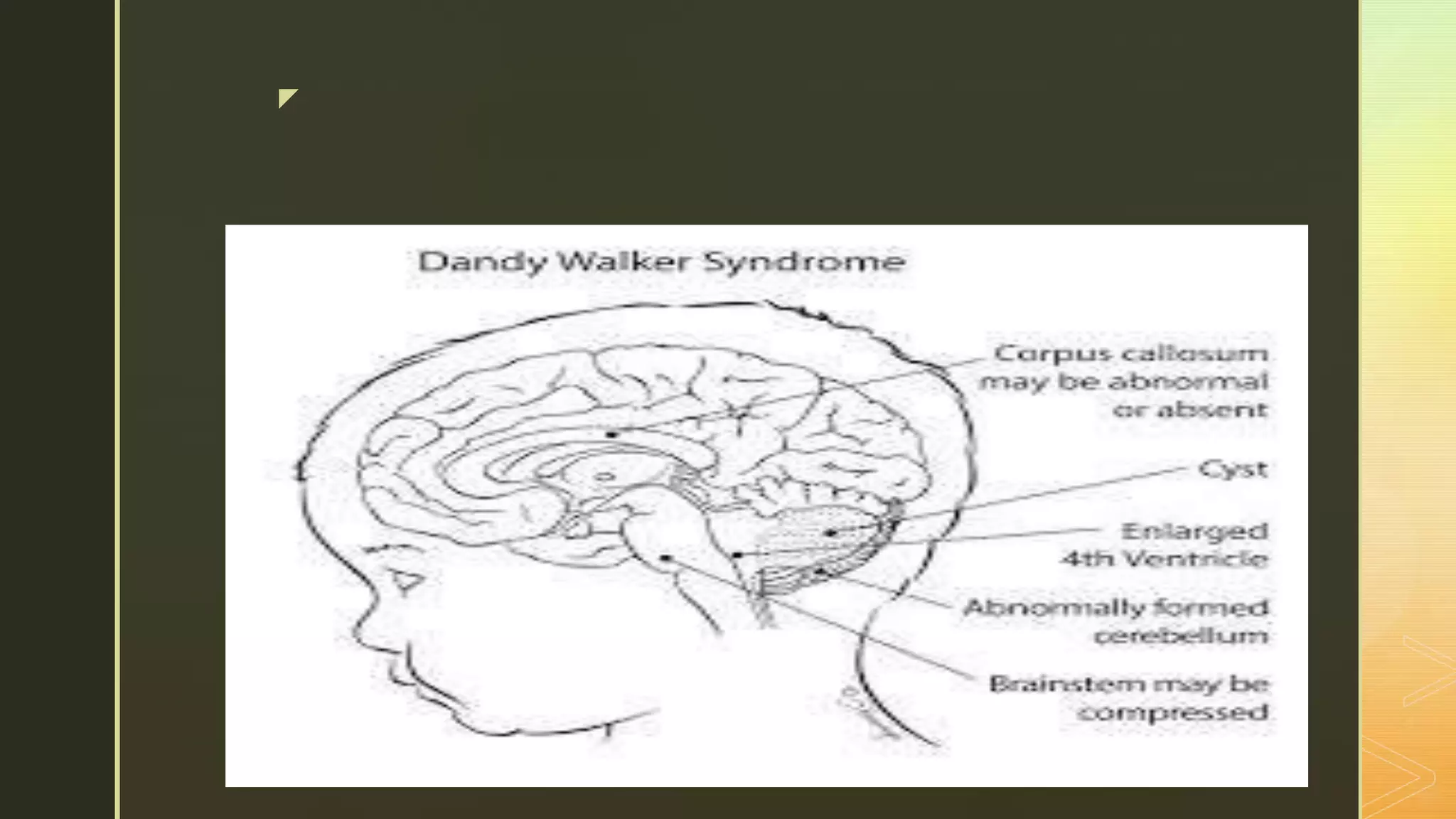
 There are 3 key features of DWM
 Enlarged back compartment (posterior fossa)
of the brain
 Malformed or missing cerebellar vermis (part of
the cerebellum)
 Large cyst in the fourth ventricle of the brain
z
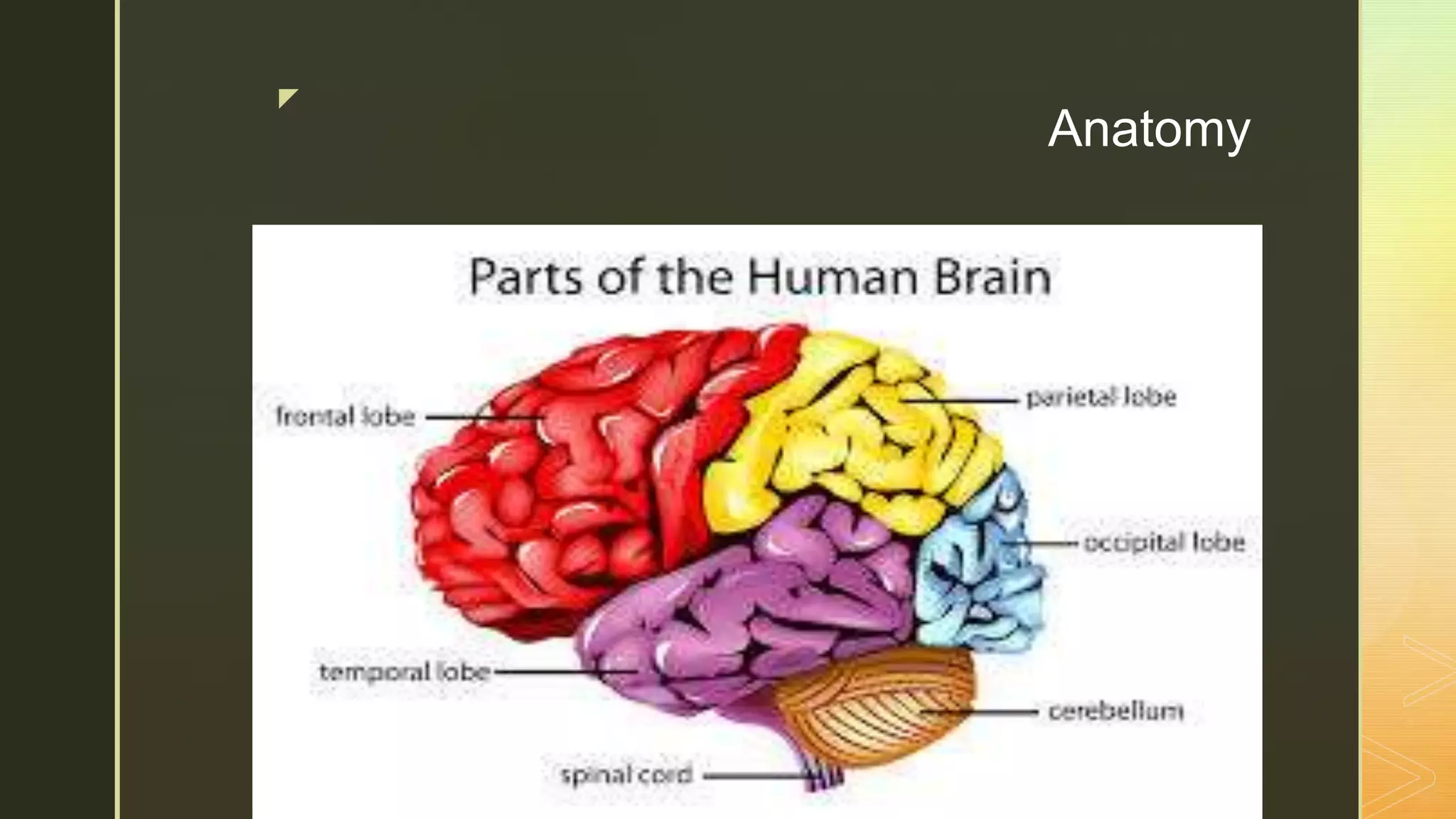
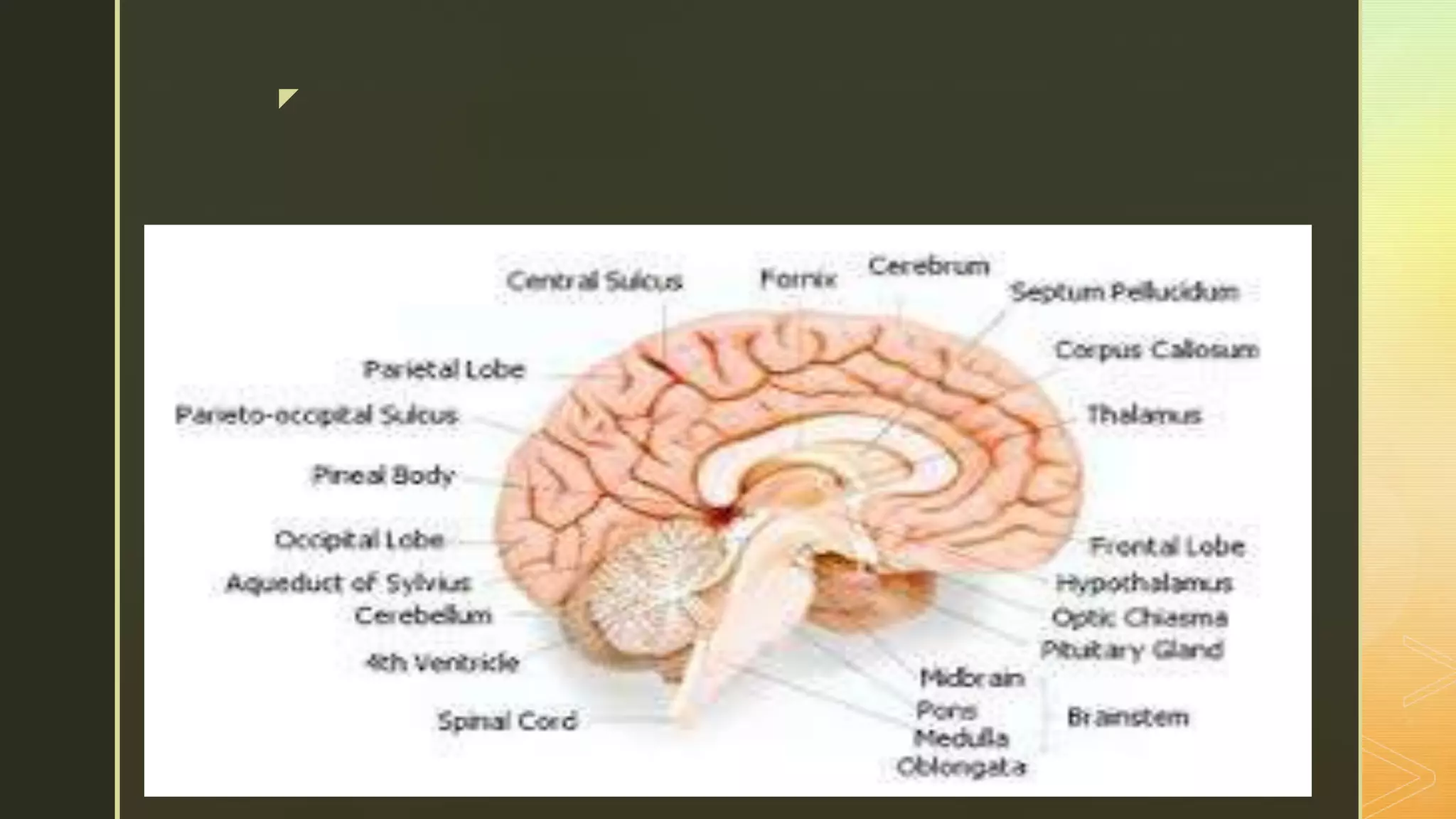
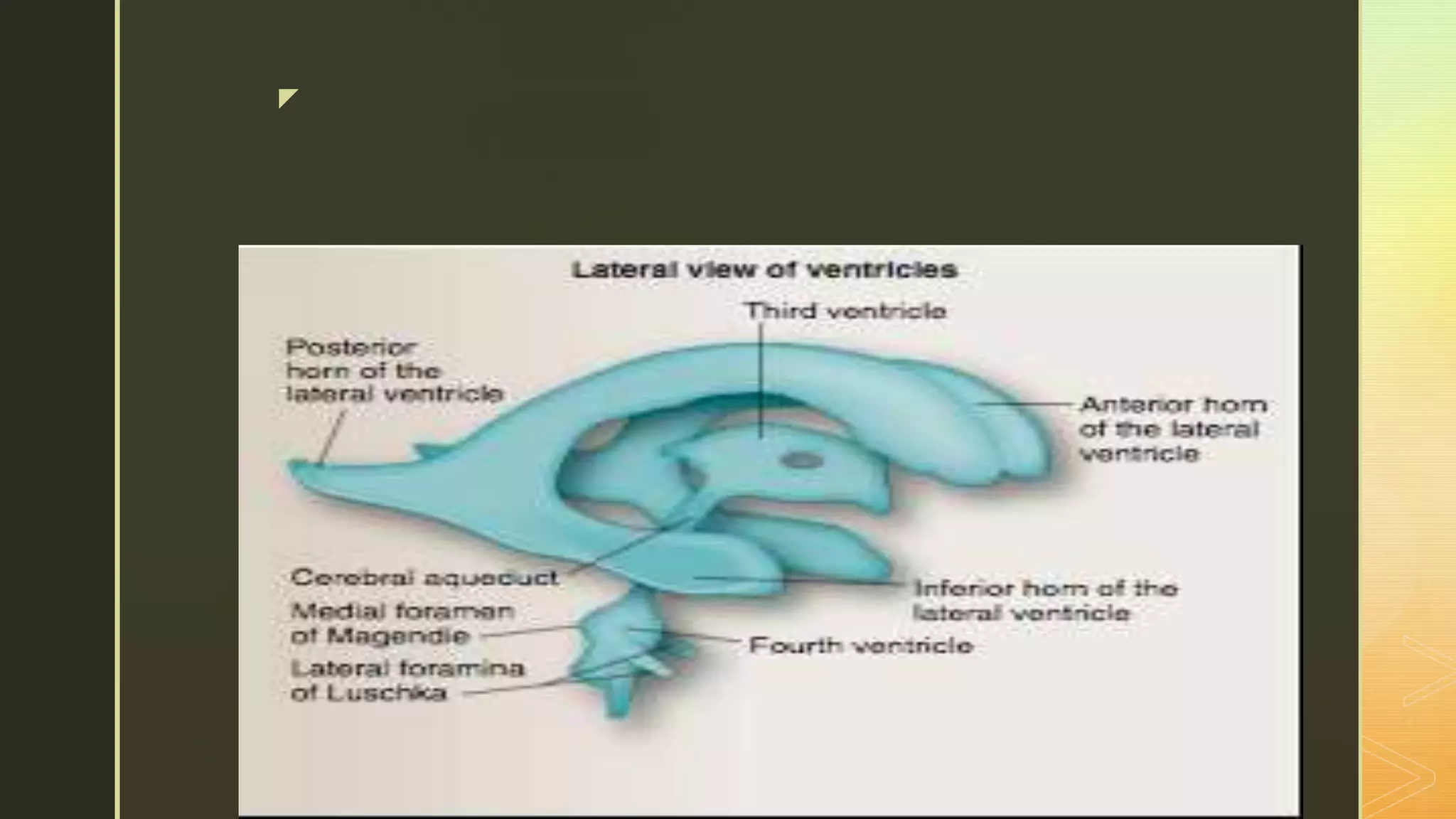
Anatomy
z
z
z
z
z
Epidemiology
 The incidence is 1:25,000 - 1:30,000
births with a slight female predominance
 Familial cases are very uncommon
z
Etiology
 DWM can occur due to factors such as;
1. Chromosomal defects that affect foetal
brain development
z
Etiology
2. Environmentally induced malformation syndrome:
prenatal exposure to rubella, cytomegalovirus,
toxoplasmosis, alcohol
3.Certain viral infections in the mother that pass to the
developing baby
z
Etiology
 4. Maternal Diabetes
Inheritance
 Multifactorial and Sporadic
z
Pathophysiology
 The exact pathophysiology of DWM is
the subject of continuous debate
 Four theories have been proposed for
this developmental abnormality;
z
 a nonspecific central nervous system malformation,
which may occur alone or with other malformations
 single gene disorders
 chromosomal aberrations
 environmental insult.
z
 Dandy and Blackfan and later Taggart and
Walker were of the opinion that congenital
occlusion of the foramina of Luschka and
Magendie was the principal factor responsible
for the dilatation of the 4th ventricle and the
secondary maldevelopment of the cerebellar
vermis.
z
Clinical Manifestations
 Developmental delays in motor and language
skills
 Poor muscle tone, balance, and coordination
 Problems with eye movement, mainly jerky eye
movement
 Vision and hearing impairment
 Seizures
z
Clinical Manifestations
 DWM typically affects the brain but problems in
other systems such as;
 heart defects
 malformations of the urogenital tract
 Abnormal Facial Features
z
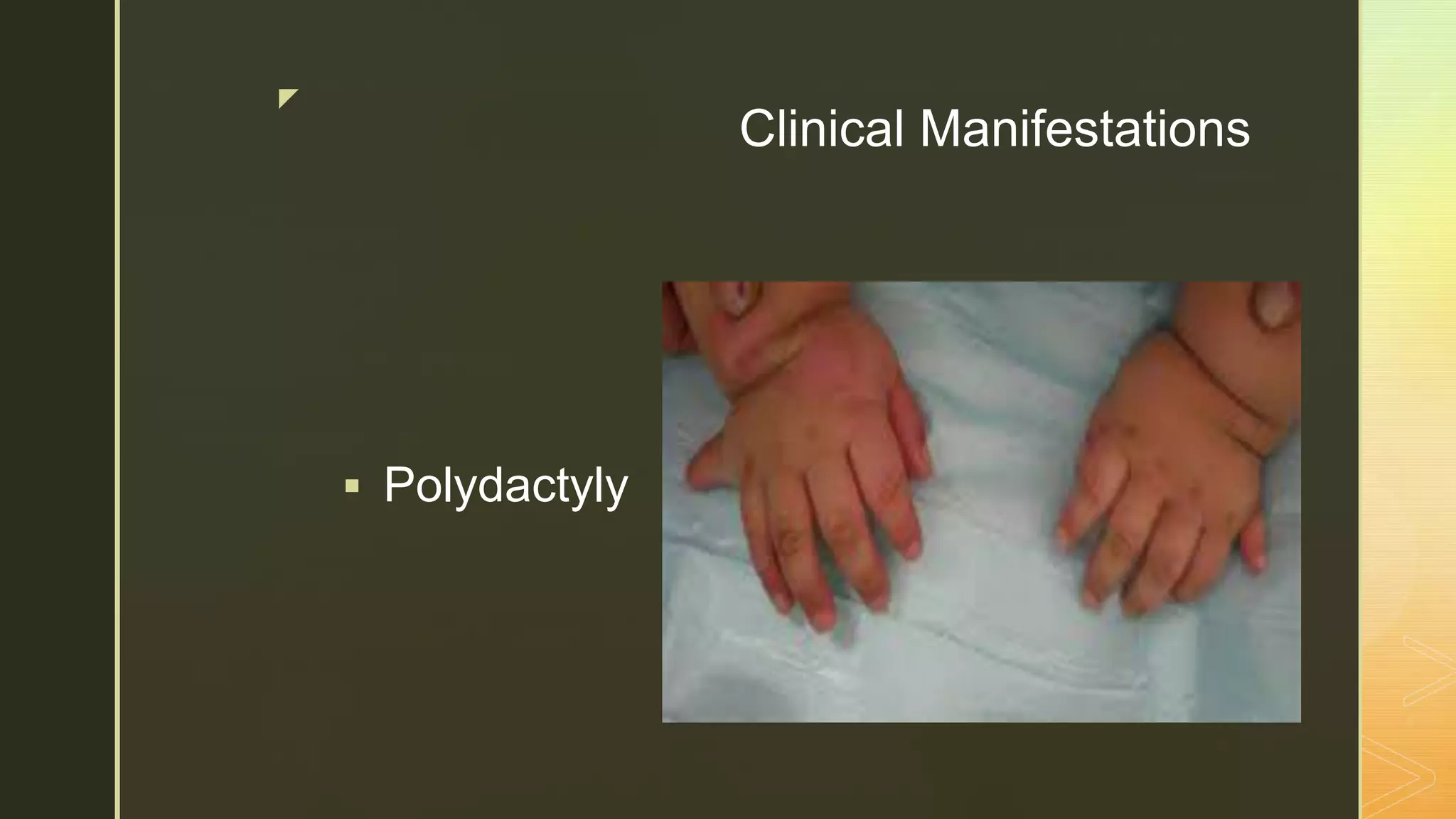
Clinical Manifestations
 Polydactyly
z
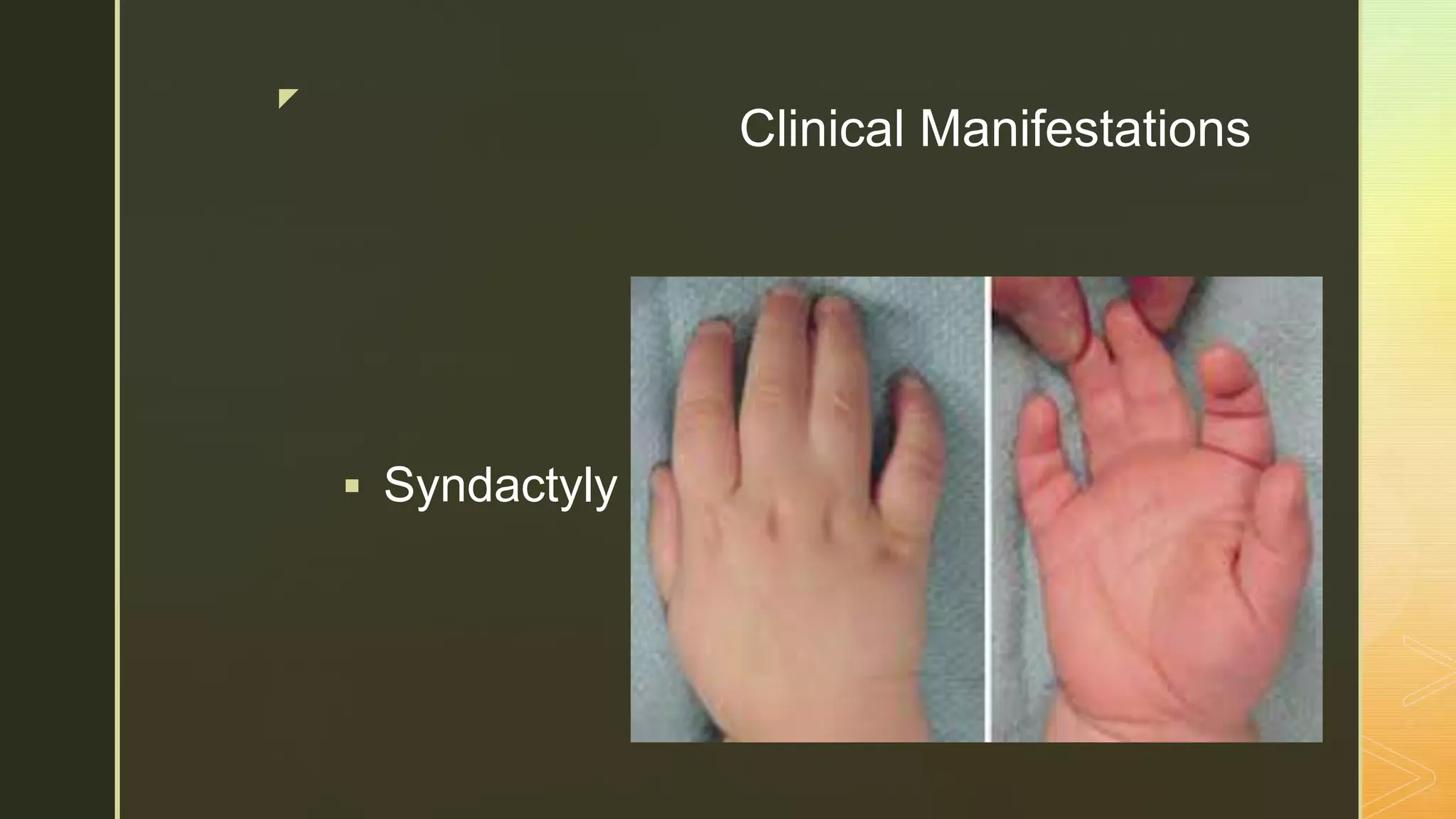
Clinical Manifestations
 Syndactyly
z
Diagnosis
 The Dandy-Walker malformation develops at
approximately 4 weeks gestation. After the first
trimester, ultrasound is useful in identifying the
cyst and other brain anomalies.
z
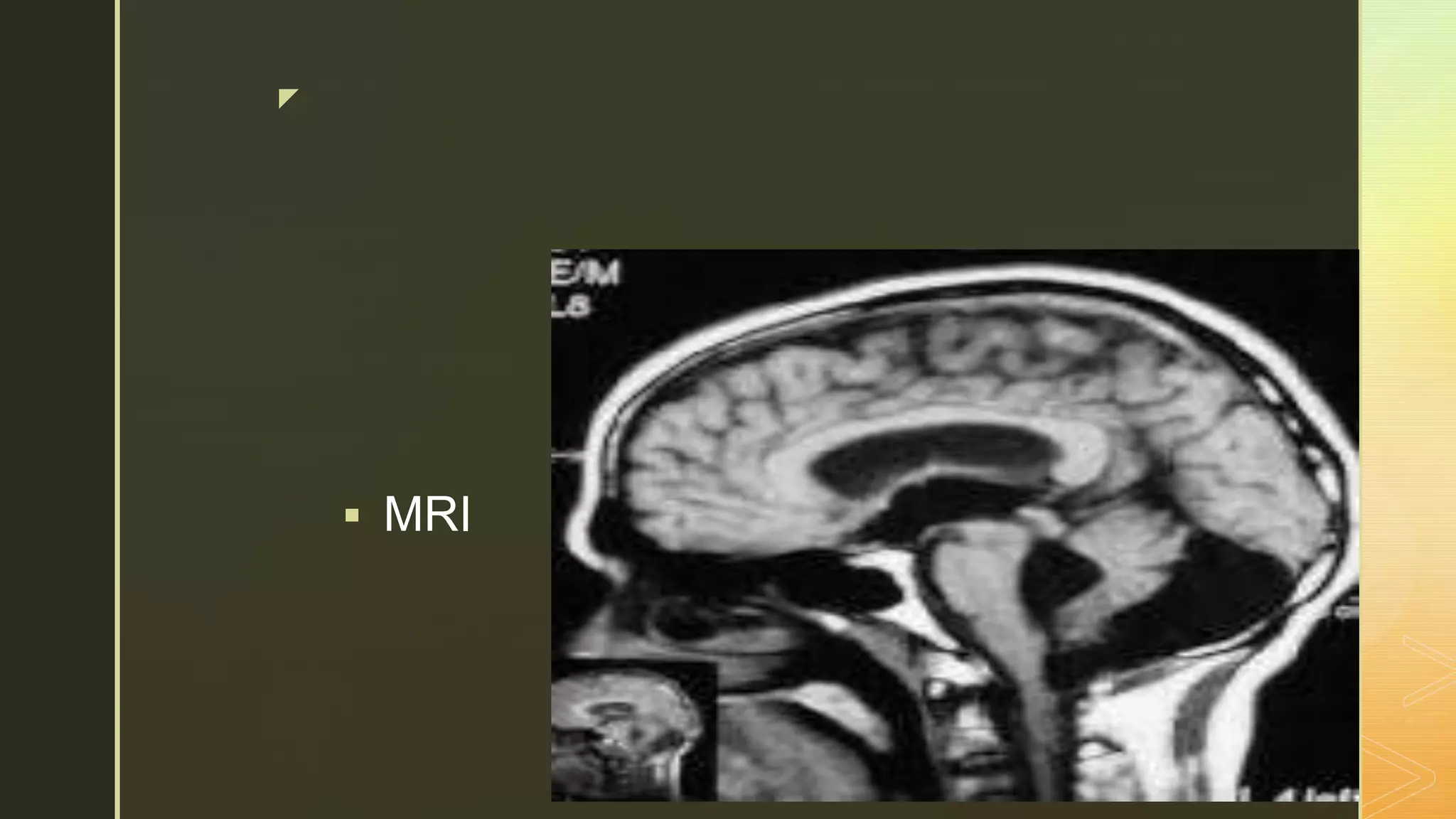
 MRI
z
Diagnosis
 CT scan
 CT is used to diagnose Dandy-Walker
malformation and to follow ventricular
shunt function in shunted patients
z
Medical Mx
 Medications are used to control seizures
 Epilim
z
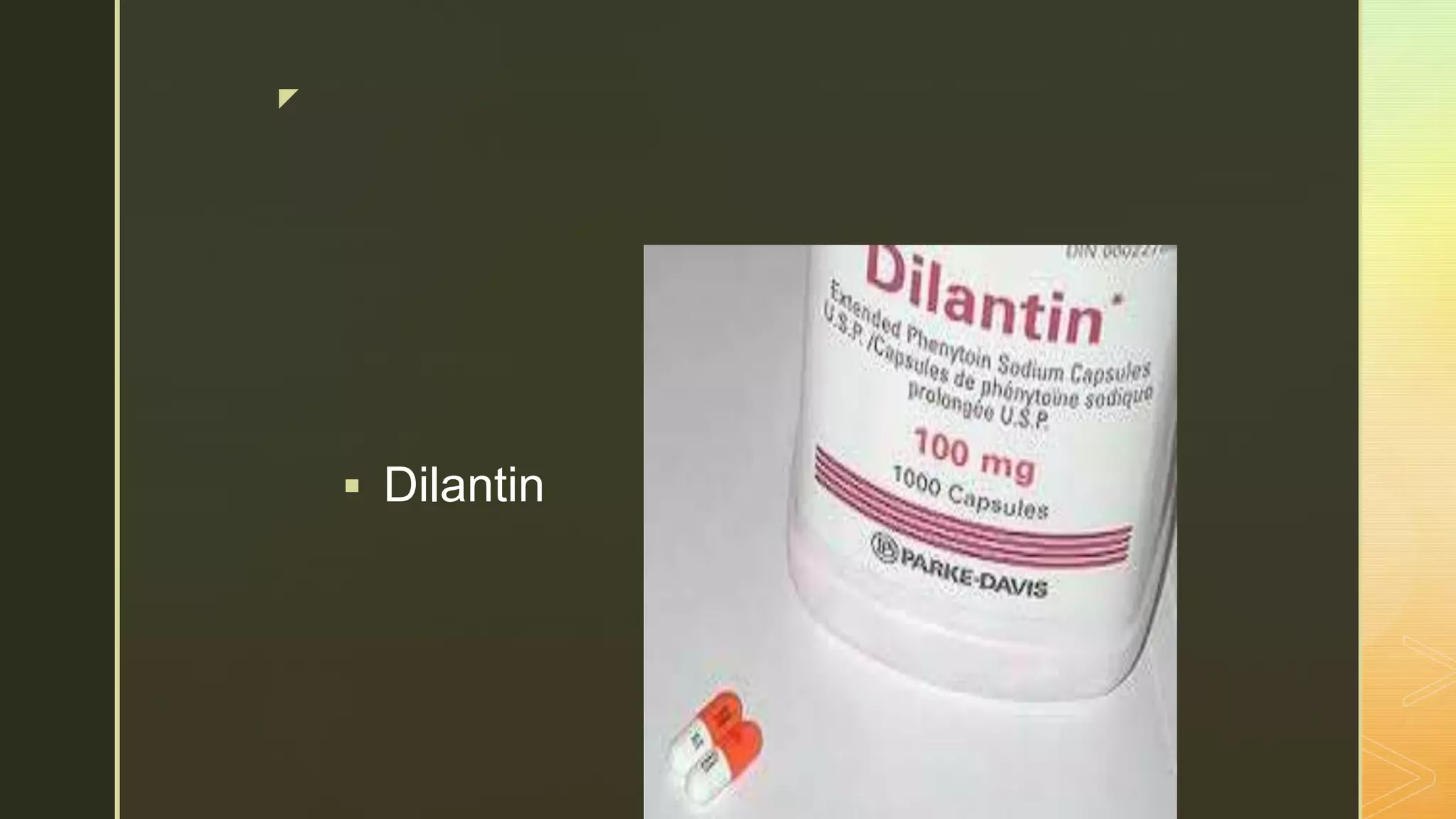
 Dilantin
z
Surgical Mx
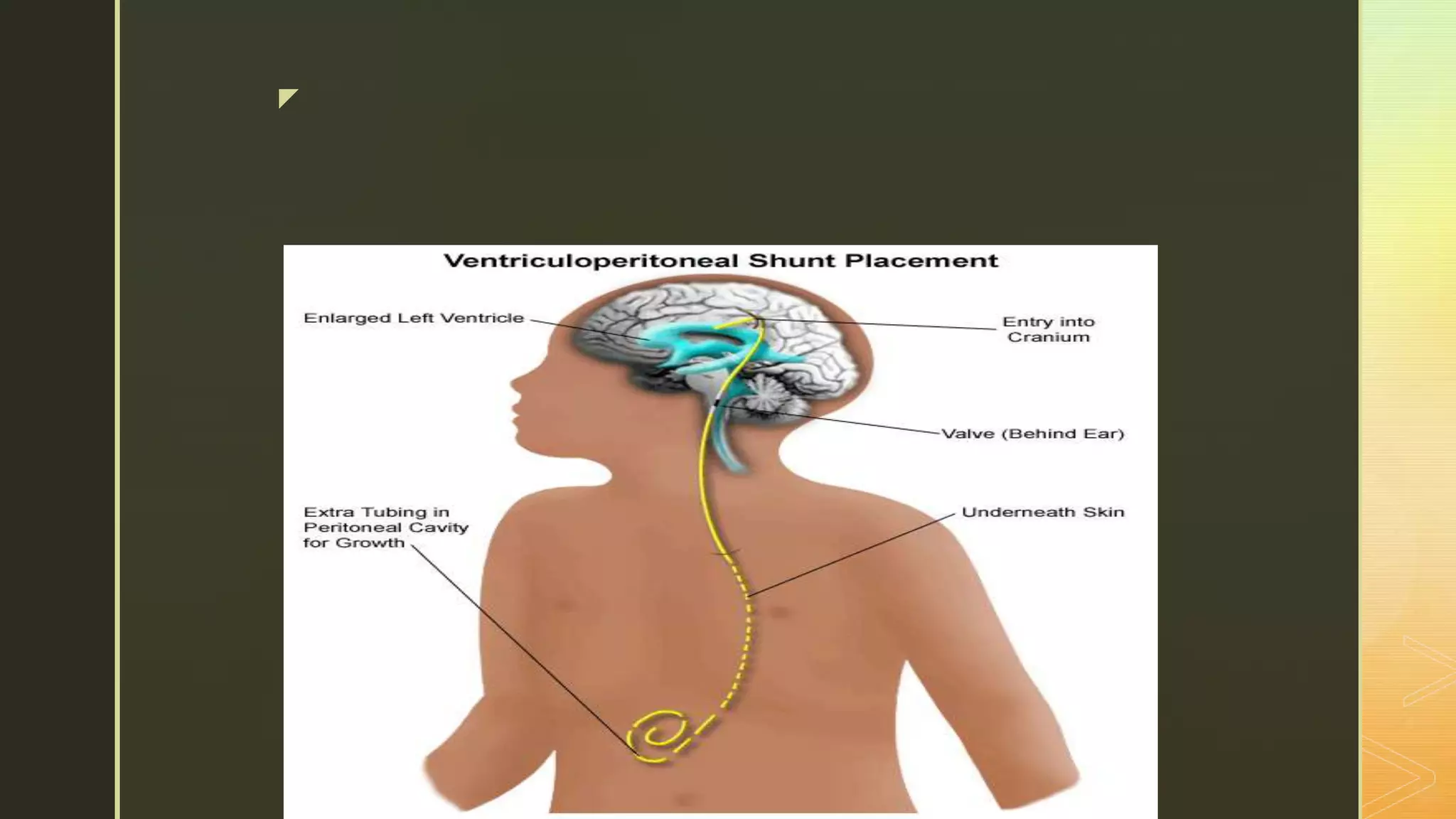
 The aim of surgical mx is to control the
hydrocephalus
 Popular procedure that is use to treat
hydrocephalus is to place a
Ventriculoperitoneal (VP) shunt
z
 VP shunt helps to drain the excess fluid
thus relieving pressure inside the head
z
z
z
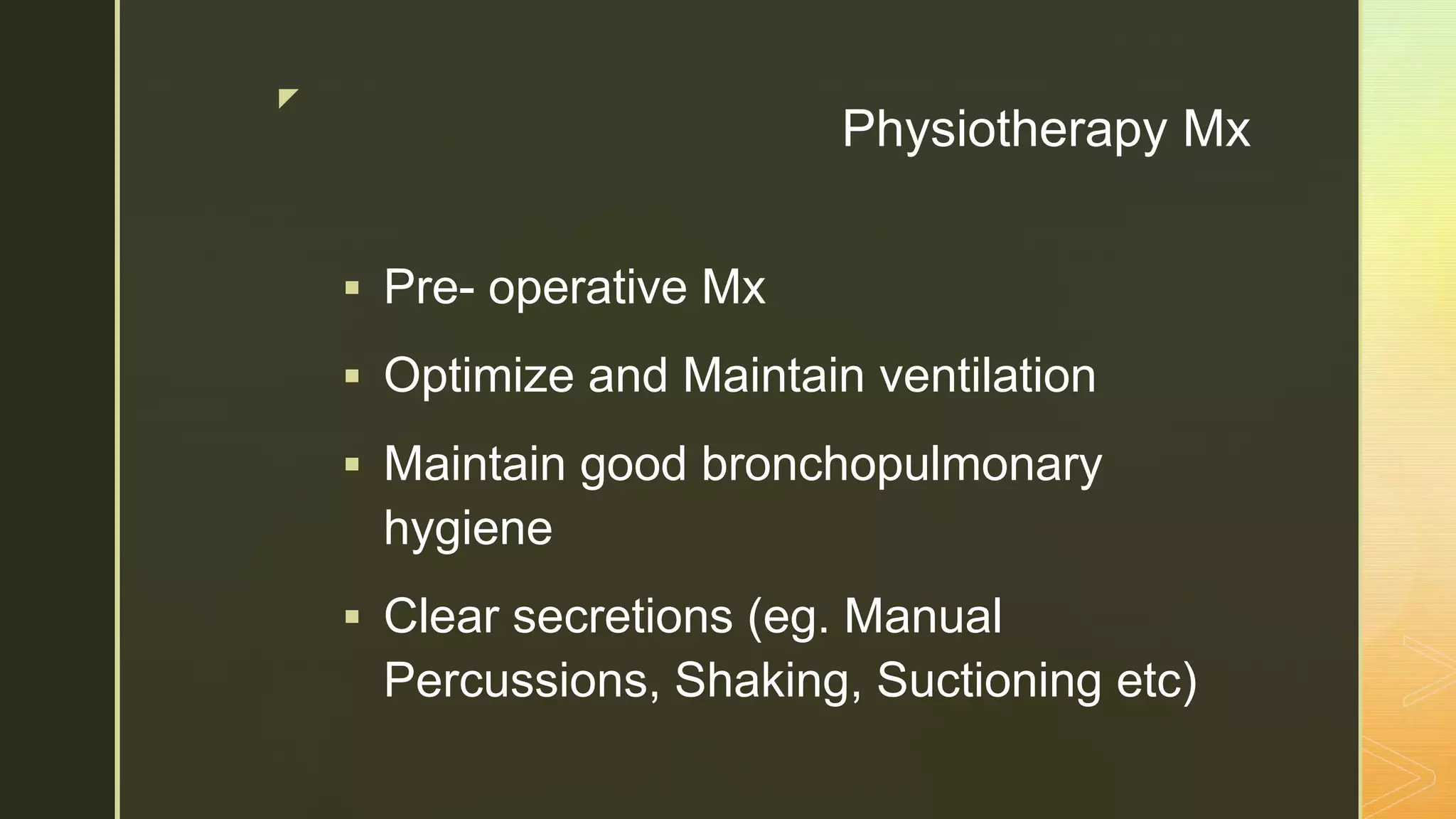
Physiotherapy Mx
 Pre- operative Mx
 Optimize and Maintain ventilation
 Maintain good bronchopulmonary
hygiene
 Clear secretions (eg. Manual
Percussions, Shaking, Suctioning etc)
z
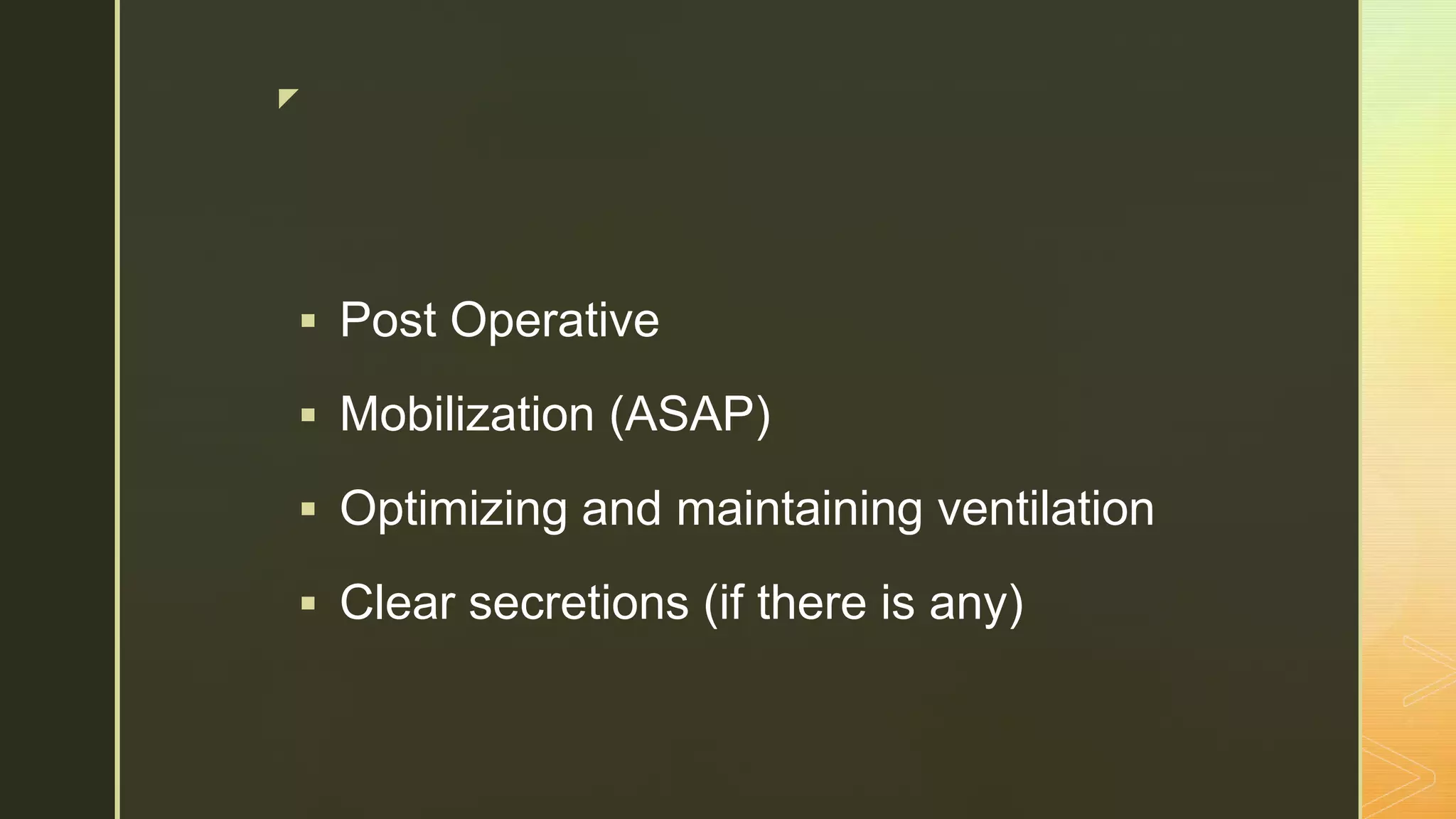
 Post Operative
 Mobilization (ASAP)
 Optimizing and maintaining ventilation
 Clear secretions (if there is any)
z
 Rehabilitation phase
 Gait training
 Coordination excs
 Balance excs
 Ms strengthening excs
z
Prognosis
The prognosis of people with Dandy Walker
syndrome is variable, even when the build up of fluid
in the head is correctly treated at an early stage.
Generally, the more severe the defects, the worse
intellectual abilities and the less likely the chance of
survival will be.
z
References
 Dandy Walker Complex.
https://rarediseases.info.nih.gov/diseases/6242/da
ndy-walker-complex
 Dandy-Walker Alliance. http://dandy-walker.org/
 Genetics Home Reference:
 https://ghr.nlm.nih.gov/condition/dandy-walker-
malformation
z
References
 Paediatric Malformation and related
entities. Dandy-Walker malformation.
http://www.pathologyoutlines.com/topic/
pediatricdandywalker.html

Dwm

  • 1.
  • 2.
    z  Brief Background Definition  Anatomy  Epidemiology  Etiology  Pathophysiology  Clinical Manifestations
  • 3.
    z  Dx  Mx Medical  Surgical  Physiotherapy  Prognosis
  • 4.
    z Brief Background Dandy Walkersyndrome was named after two physicians, Walter E. Dandy and Arthur E. Walker. However, the condition was first described by Dandy and a US physician named Kenneth Blackfan in 1914.
  • 5.
    z  Dandy andBlackfan described the case of a 13 year old child with an abnormally high amount of CSF fluid in the head,
  • 6.
    z  posterior cystand abnormal development of the vermis (located in the cerebellum)
  • 7.
    z The term, "Dandy-Walkersyndrome" was first used in 1954 by C. E. Benda in a paper he published entitled, "The Dandy- Walker syndrome or the so-called atresia of the foramen of Magendie
  • 8.
    z Definition  The DandyWalker Malformation (DWM) also known as Dandy Walker Syndrome, Dandy Walker cyst or Dandy Walker Variant, is a congenital defect of the cerebellum.
  • 9.
    z  There are3 key features of DWM  Enlarged back compartment (posterior fossa) of the brain  Malformed or missing cerebellar vermis (part of the cerebellum)  Large cyst in the fourth ventricle of the brain
  • 10.
  • 11.
  • 12.
  • 13.
  • 14.
  • 15.
    z Epidemiology  The incidenceis 1:25,000 - 1:30,000 births with a slight female predominance  Familial cases are very uncommon
  • 16.
    z Etiology  DWM canoccur due to factors such as; 1. Chromosomal defects that affect foetal brain development
  • 17.
    z Etiology 2. Environmentally inducedmalformation syndrome: prenatal exposure to rubella, cytomegalovirus, toxoplasmosis, alcohol 3.Certain viral infections in the mother that pass to the developing baby
  • 18.
    z Etiology  4. MaternalDiabetes Inheritance  Multifactorial and Sporadic
  • 19.
    z Pathophysiology  The exactpathophysiology of DWM is the subject of continuous debate  Four theories have been proposed for this developmental abnormality;
  • 20.
    z  a nonspecificcentral nervous system malformation, which may occur alone or with other malformations  single gene disorders  chromosomal aberrations  environmental insult.
  • 21.
    z  Dandy andBlackfan and later Taggart and Walker were of the opinion that congenital occlusion of the foramina of Luschka and Magendie was the principal factor responsible for the dilatation of the 4th ventricle and the secondary maldevelopment of the cerebellar vermis.
  • 22.
    z Clinical Manifestations  Developmentaldelays in motor and language skills  Poor muscle tone, balance, and coordination  Problems with eye movement, mainly jerky eye movement  Vision and hearing impairment  Seizures
  • 23.
    z Clinical Manifestations  DWMtypically affects the brain but problems in other systems such as;  heart defects  malformations of the urogenital tract  Abnormal Facial Features
  • 24.
  • 25.
  • 26.
    z Diagnosis  The Dandy-Walkermalformation develops at approximately 4 weeks gestation. After the first trimester, ultrasound is useful in identifying the cyst and other brain anomalies.
  • 27.
  • 28.
    z Diagnosis  CT scan CT is used to diagnose Dandy-Walker malformation and to follow ventricular shunt function in shunted patients
  • 29.
    z Medical Mx  Medicationsare used to control seizures  Epilim
  • 30.
  • 31.
    z Surgical Mx  Theaim of surgical mx is to control the hydrocephalus  Popular procedure that is use to treat hydrocephalus is to place a Ventriculoperitoneal (VP) shunt
  • 32.
    z  VP shunthelps to drain the excess fluid thus relieving pressure inside the head
  • 33.
  • 34.
  • 35.
    z Physiotherapy Mx  Pre-operative Mx  Optimize and Maintain ventilation  Maintain good bronchopulmonary hygiene  Clear secretions (eg. Manual Percussions, Shaking, Suctioning etc)
  • 36.
    z  Post Operative Mobilization (ASAP)  Optimizing and maintaining ventilation  Clear secretions (if there is any)
  • 37.
    z  Rehabilitation phase Gait training  Coordination excs  Balance excs  Ms strengthening excs
  • 38.
    z Prognosis The prognosis ofpeople with Dandy Walker syndrome is variable, even when the build up of fluid in the head is correctly treated at an early stage. Generally, the more severe the defects, the worse intellectual abilities and the less likely the chance of survival will be.
  • 39.
    z References  Dandy WalkerComplex. https://rarediseases.info.nih.gov/diseases/6242/da ndy-walker-complex  Dandy-Walker Alliance. http://dandy-walker.org/  Genetics Home Reference:  https://ghr.nlm.nih.gov/condition/dandy-walker- malformation
  • 40.
    z References  Paediatric Malformationand related entities. Dandy-Walker malformation. http://www.pathologyoutlines.com/topic/ pediatricdandywalker.html

Editor's Notes

  • #8 The term, "Dandy-Walker syndrome" was first used in 1954 by C. E. Benda in a paper he published entitled, "The Dandy-Walker syndrome or the so-called atresia of the foramen of Magendie
  • #9 the back part of the brain that controls movement, behavior, and cognitive ability.
  • #17 This condition can be a feature of some conditions in which there is an extra copy of one chromosome in each cell (trisomy). Dandy-Walker malformation most often occurs in people with trisomy 18 (an extra copy of chromosome 18), but can also occur in people with trisomy 13, trisomy 21, or trisomy 9. This condition can also be associated with missing (deletions) or copied (duplications) pieces of certain chromosomes. Dandy-Walker malformation can also be a feature of genetic syndromes that are caused by mutations in specific genes.
  • #19  Multifactorial- Multiple genetic and environmental factors likely play a part indetermining the risk of developing this disorder Sporadic - which means they occurring people with no history of the disorder in their family. small percentage of cases seem to run in families
  • #23 such as sitting up, walking, and talking
  • #27 3Dd ultrasound can dx the condition in utero
  • #28 Dilatation of the. 4th ventricle Principal features on MRI include partial or complete agenesis of vermian, dilatation of the 4th ventricle, enlarged posterior fossa and cerebellar hypoplasia.