

INTESTINAL
OBSTRUCTION
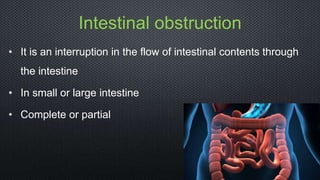
Intestinal obstruction
• It is an interruption in the flow of intestinal contents through
the intestine
• In small or large intestine
• Complete or partial
Causes
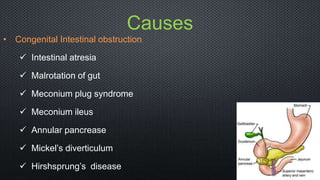
• Congenital Intestinal obstruction
 Intestinal atresia
 Malrotation of gut
 Meconium plug syndrome
 Meconium ileus
 Annular pancrease
 Mickel’s diverticulum
 Hirshsprung’s disease
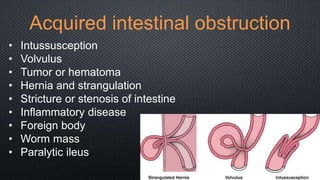
Acquired intestinal obstruction
• Intussusception
• Volvulus
• Tumor or hematoma
• Hernia and strangulation
• Stricture or stenosis of intestine
• Inflammatory disease
• Foreign body
• Worm mass
• Paralytic ileus
Duodenal Atresia
• Duodenal atresia is the congenital absence or complete closure
of a portion of the lumen of the duodenum
• 1 per 5000 to 10,000 live births
• Affecting boys more commonly-
than girls
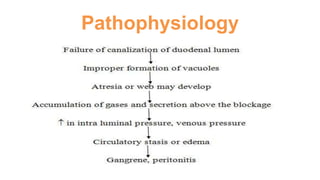
Pathophysiology
Clinical manifestation
• Abdominal distension
• Bilious vomiting
• Absence of flatus
• No passage of stool
• Respiratory distress
• Abdominal tenderness
• Shock
• Chance to have trisomy 21
Diagnostic evaluation
• History collection
• Physical examination
• USG abdomen
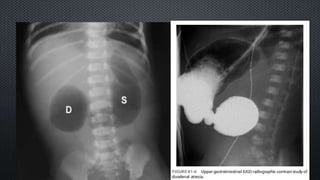
• X ray chest abdomen - double bubble
• Blood test
• CT scan
Management
• IV fluids
• Oro or nasogastric aspiration
• Stomach wash
• NPO
• Antibiotics, Antiemetic ,vitamin supplement,
Antacids
Surgical management
Laprotomy
• Rescection bowel –strangulated bowel
• Ladd’s band-malrotation
• Enterotomy –foreign bodies
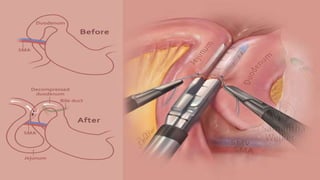
• Stenosis-duodeno/ jejuno duodenostomy
Duodenal atresia
Duodenal atresia

Duodenal atresia

  • 1.
  • 2.
    Intestinal obstruction • Itis an interruption in the flow of intestinal contents through the intestine • In small or large intestine • Complete or partial
  • 3.
    Causes • Congenital Intestinalobstruction  Intestinal atresia  Malrotation of gut  Meconium plug syndrome  Meconium ileus  Annular pancrease  Mickel’s diverticulum  Hirshsprung’s disease
  • 4.
    Acquired intestinal obstruction •Intussusception • Volvulus • Tumor or hematoma • Hernia and strangulation • Stricture or stenosis of intestine • Inflammatory disease • Foreign body • Worm mass • Paralytic ileus
  • 5.
    Duodenal Atresia • Duodenalatresia is the congenital absence or complete closure of a portion of the lumen of the duodenum • 1 per 5000 to 10,000 live births • Affecting boys more commonly- than girls
  • 6.
  • 7.
    Clinical manifestation • Abdominaldistension • Bilious vomiting • Absence of flatus • No passage of stool • Respiratory distress • Abdominal tenderness • Shock • Chance to have trisomy 21
  • 8.
    Diagnostic evaluation • Historycollection • Physical examination • USG abdomen • X ray chest abdomen - double bubble • Blood test • CT scan
  • 10.
    Management • IV fluids •Oro or nasogastric aspiration • Stomach wash • NPO • Antibiotics, Antiemetic ,vitamin supplement, Antacids
  • 11.
    Surgical management Laprotomy • Rescectionbowel –strangulated bowel • Ladd’s band-malrotation • Enterotomy –foreign bodies • Stenosis-duodeno/ jejuno duodenostomy