DSDN 171
      Giovanni Piranesi
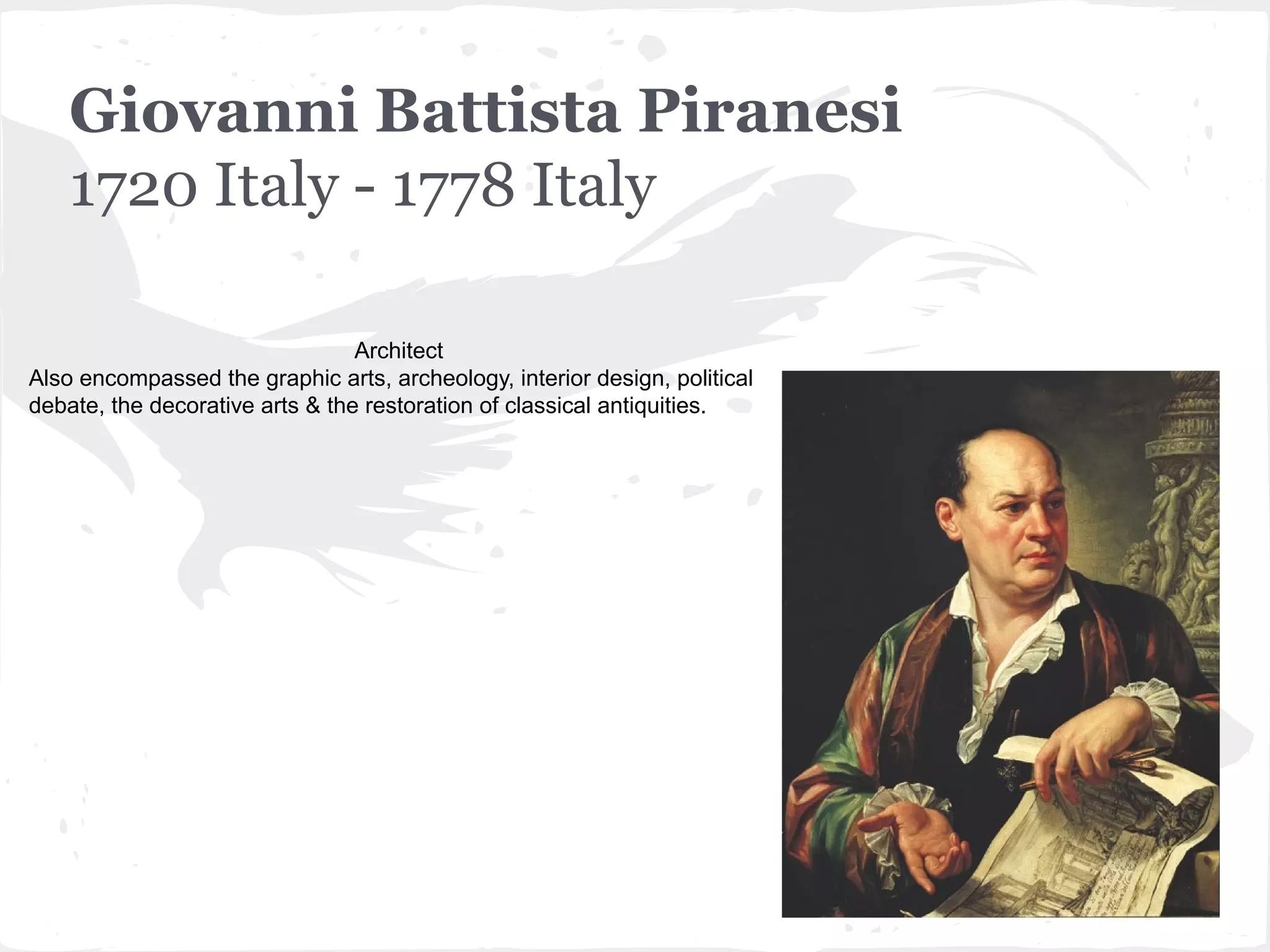
Giovanni Battista Piranesi
    1720 Italy - 1778 Italy

                                 Architect
Also encompassed the graphic arts, archeology, interior design, political
debate, the decorative arts & the restoration of classical antiquities.
Life:
- First 20 years of his life in Venice
- Piranesi studied as an architect under his Uncle Matteo
Lucchesi.
- In 1740 Giovanni over to Rome where he spent most of
his life, and developed his etching skills.
Work:
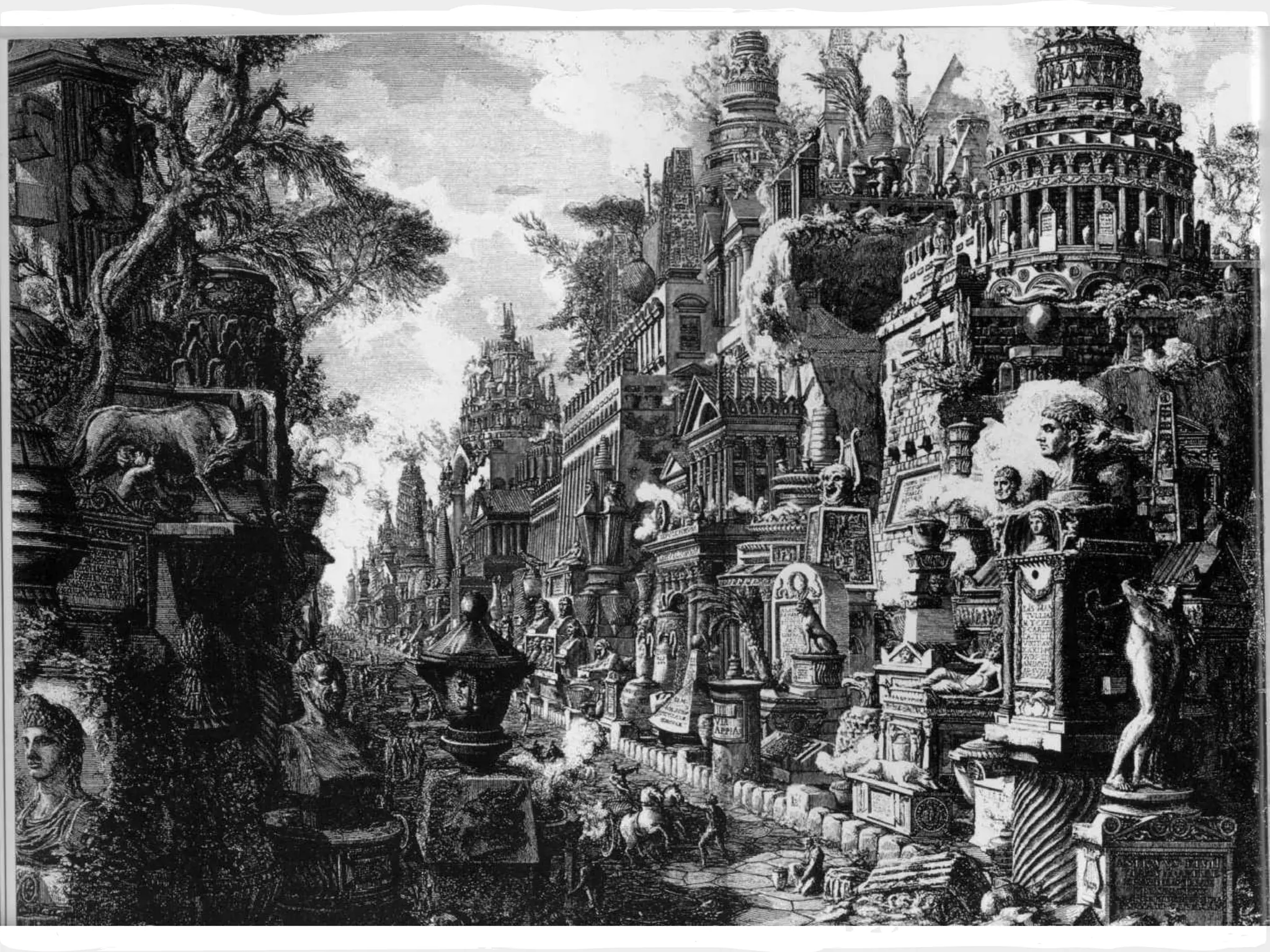
- Vedute di Rome.
- Prima parte di architture e prospettive, 1943.
- Le antichità romane. 1756, the antiquities of Rome
- Della magnificenza ed architettura de' Romani. 1761
AND Il Campo Marzio dell'antica Roma. 1762
Giovanni was influenced by:
Family:
- Andrea (Brother), who introduced him to Latin
and ancient civilisation.
- (Father), A stone mason and master builder.
- Matteo Lucchesi (Uncle), Venetian engineer
and specialized in excavation.
Designers:
- The tradition of typographical art represented
by Canaletto (A italian landscape painter,
printmaker, etcher)
- Also Marco Ricci and Giovanni Battista Tiepolo
(Both etchers)
Giovannis influence during his life:

- “On Roman antiquity and exerted a major
influence on many of the leading architects and
designers of European neoclassicism.”

- In 1745 Giovanni influenced visiting artists,
architects and patrons in Rome for the
following 4 decades. This allowed him to exert a
critical influence on the development of Avant-
garde British architecture.
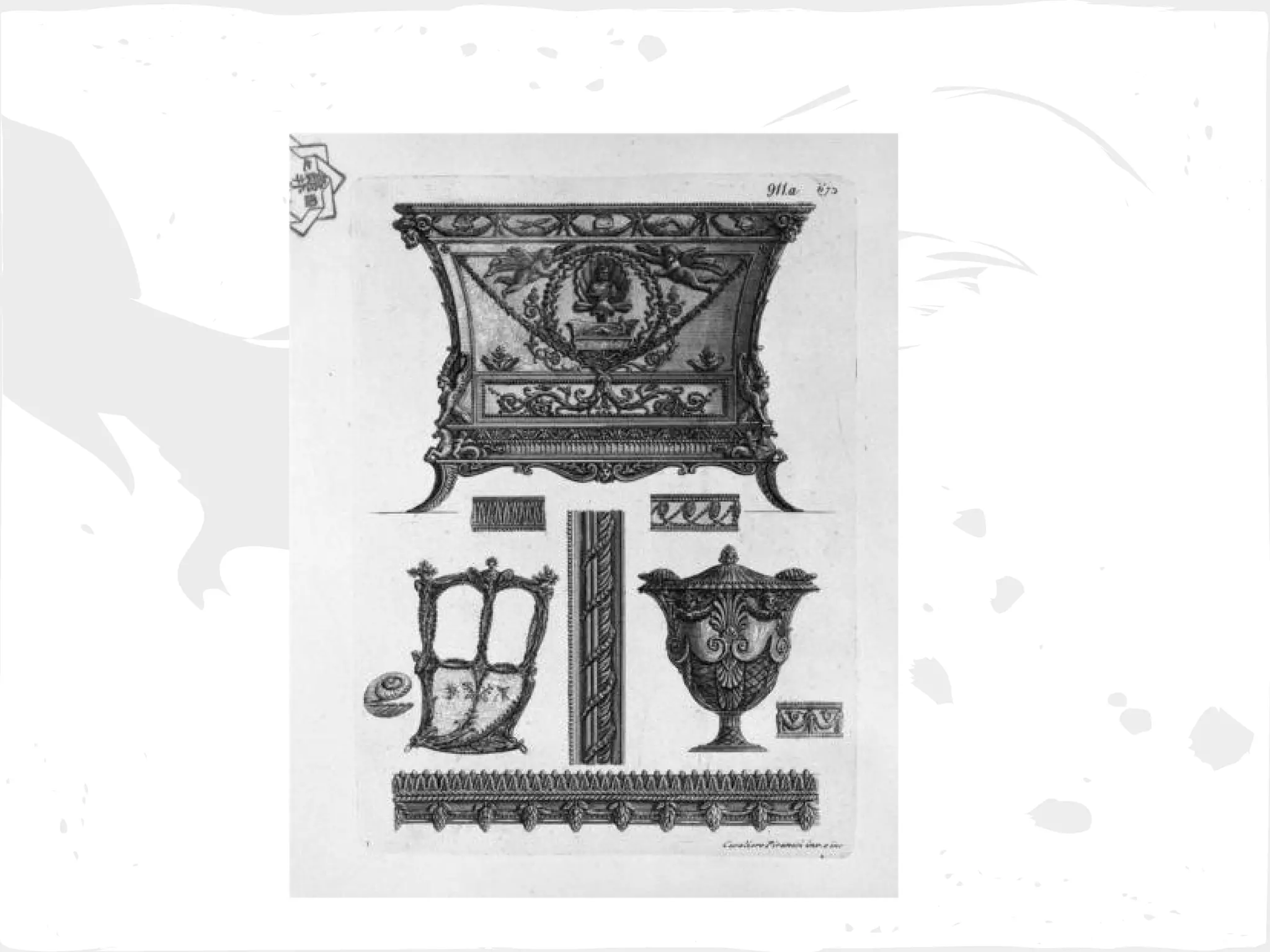
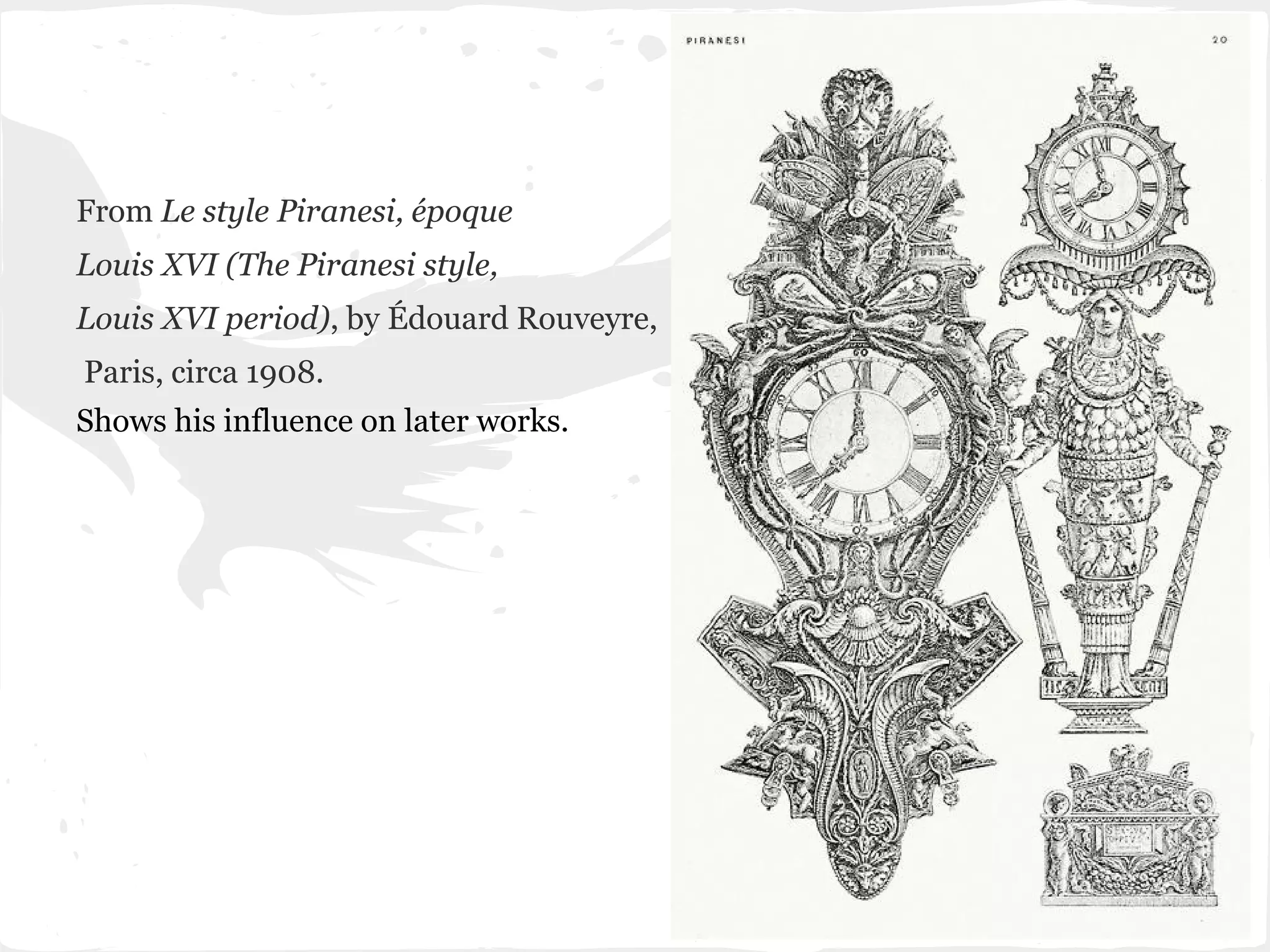
From Le style Piranesi, époque
Louis XVI (The Piranesi style,
Louis XVI period), by Édouard Rouveyre,
Paris, circa 1908.
Shows his influence on later works.
Giovanni Piranesi's Influence on Other Artists
•   Piranesi’s artworks hugely influenced neoclassicism. Neoclassical design is
    also continuously used throughout the 20th and 21st century.


•   His prints depicting buildings of classical and postclassical Rome
    contributed to Rome’s fame and the growth of classical archaeology and
    the neoclassical movement in art.


•    The etched plates of the Vedute di Roma helped sculpt Europe's view of
    classical design, and these prints influenced other designers.


•   Piranesi's may have not been an influence as an architect but his
    romanticized views, imaginary interiors and hyper exaggerated images
    inspired designers, writers and painters.
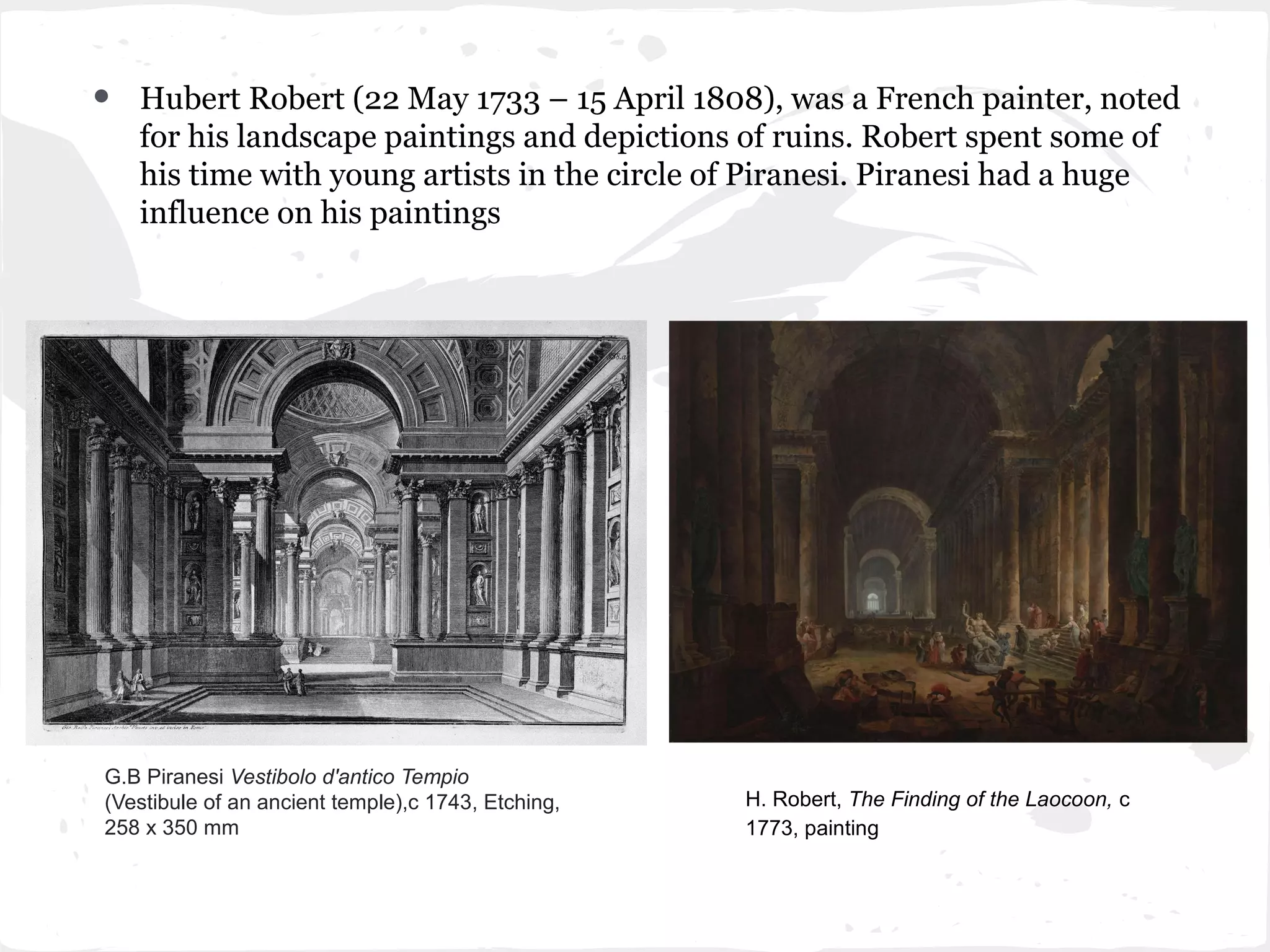
•   Hubert Robert (22 May 1733 – 15 April 1808), was a French painter, noted
    for his landscape paintings and depictions of ruins. Robert spent some of
    his time with young artists in the circle of Piranesi. Piranesi had a huge
    influence on his paintings


G.B Piranesi Vestibolo d'antico Tempio
(Vestibule of an ancient temple),c 1743, Etching,   H. Robert, The Finding of the Laocoon, c
258 x 350 mm                                        1773, painting
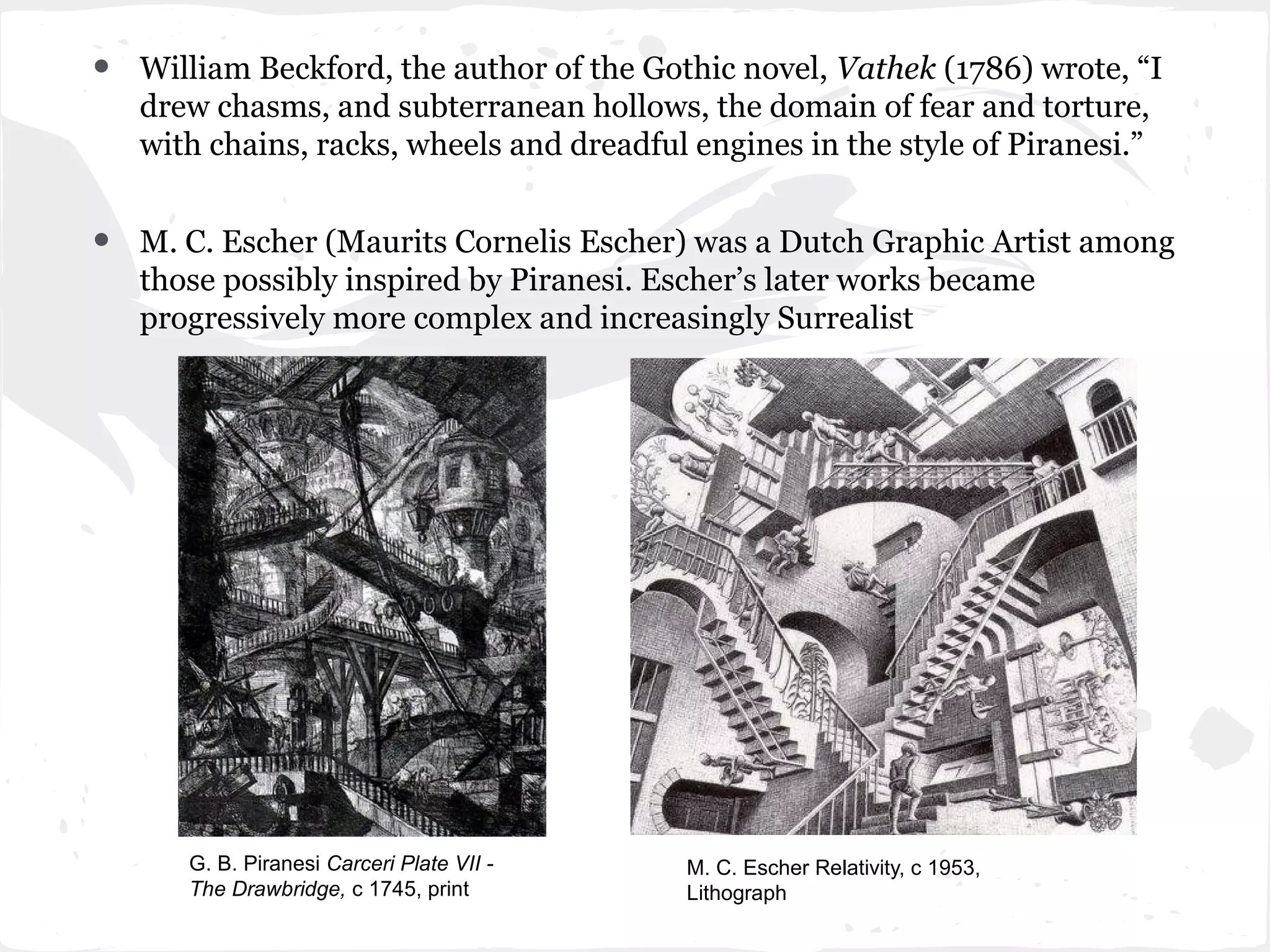
•   William Beckford, the author of the Gothic novel, Vathek (1786) wrote, “I
    drew chasms, and subterranean hollows, the domain of fear and torture,
    with chains, racks, wheels and dreadful engines in the style of Piranesi.”


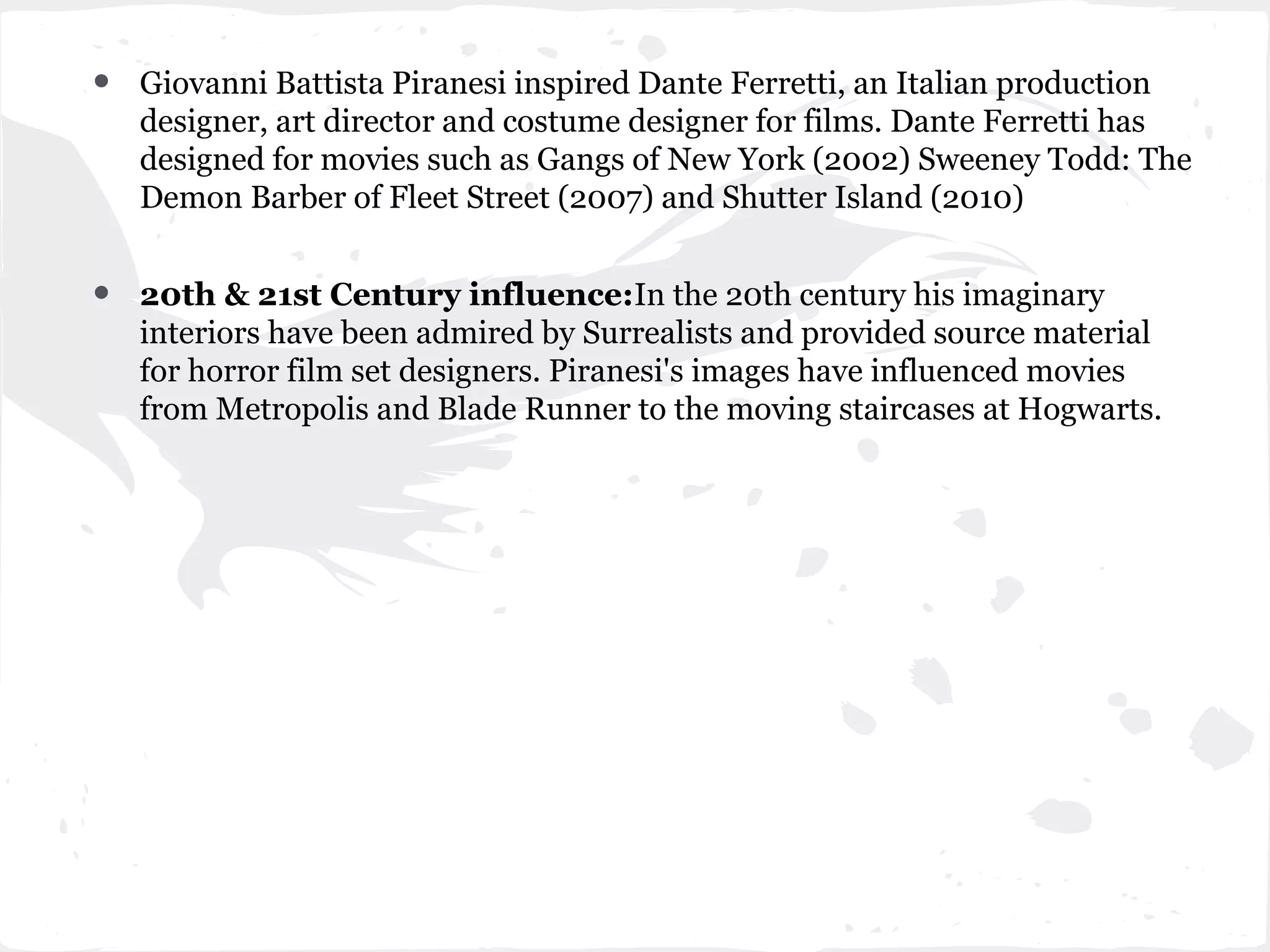
•   M. C. Escher (Maurits Cornelis Escher) was a Dutch Graphic Artist among
    those possibly inspired by Piranesi. Escher’s later works became
    progressively more complex and increasingly Surrealist


       G. B. Piranesi Carceri Plate VII -   M. C. Escher Relativity, c 1953,
       The Drawbridge, c 1745, print        Lithograph
•   Giovanni Battista Piranesi inspired Dante Ferretti, an Italian production
    designer, art director and costume designer for films. Dante Ferretti has
    designed for movies such as Gangs of New York (2002) Sweeney Todd: The
    Demon Barber of Fleet Street (2007) and Shutter Island (2010)


•   20th & 21st Century influence:In the 20th century his imaginary
    interiors have been admired by Surrealists and provided source material
    for horror film set designers. Piranesi's images have influenced movies
    from Metropolis and Blade Runner to the moving staircases at Hogwarts.
Two major socio-political influences:

- European Enlightenment

- Graeco-Roman debate
Personal circumstances:

- trained as architect

- supported by Venetian Pope Clement XIII
Giovanni Piranesi


Researched by - Christie Higgins, Grace
       Hemara, James Bodnar
    Presented by - Helen Williams
Referencing:
- Slide 1 through till 4:
John, W.E. (1978). The mind and art of Giovanni Piranesi. London: Thames and Hudson
- Quote on 5th slide:
APA: Jonathan, D. (2004). Europe, 1450 to 1789: Encyclopedia of the Early Modern World. (Volume
6: pp. 482 – 485). New York: Charles Scribner’s Sons.
- slides 6 through 9
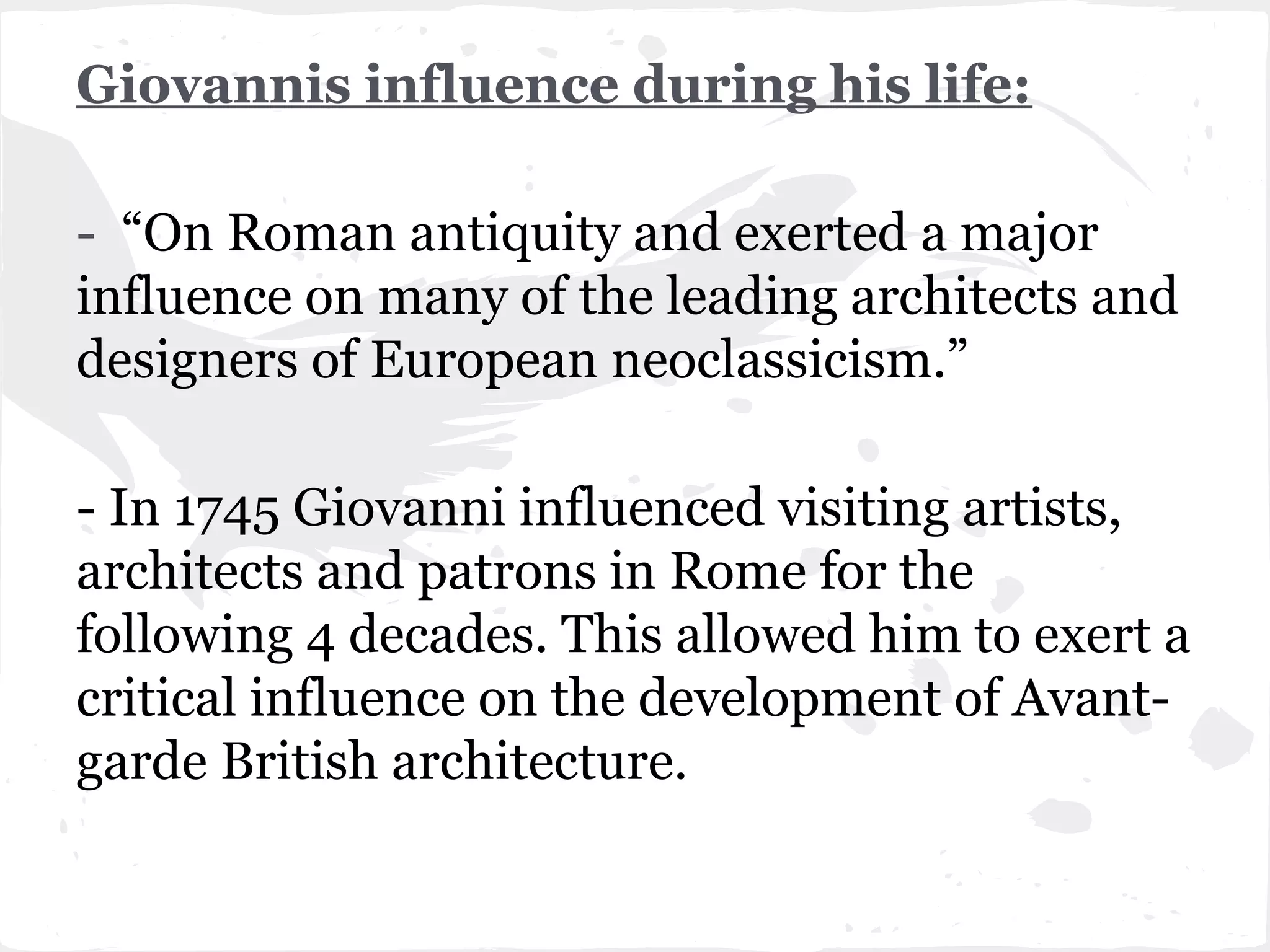
-Piranesi, G. B (1756). View of the Via Appia. Retrieved April 4, 2013, from
http://www.artchive.com/web_gallery/G/Giovanni-Battista-Piranesi/The-paving-of-the-Via-Appia-
Antica,-from-Le-Antichita-Romane-de-G.B.-Piranesi-1756,-published-in-Paris,-1835.html
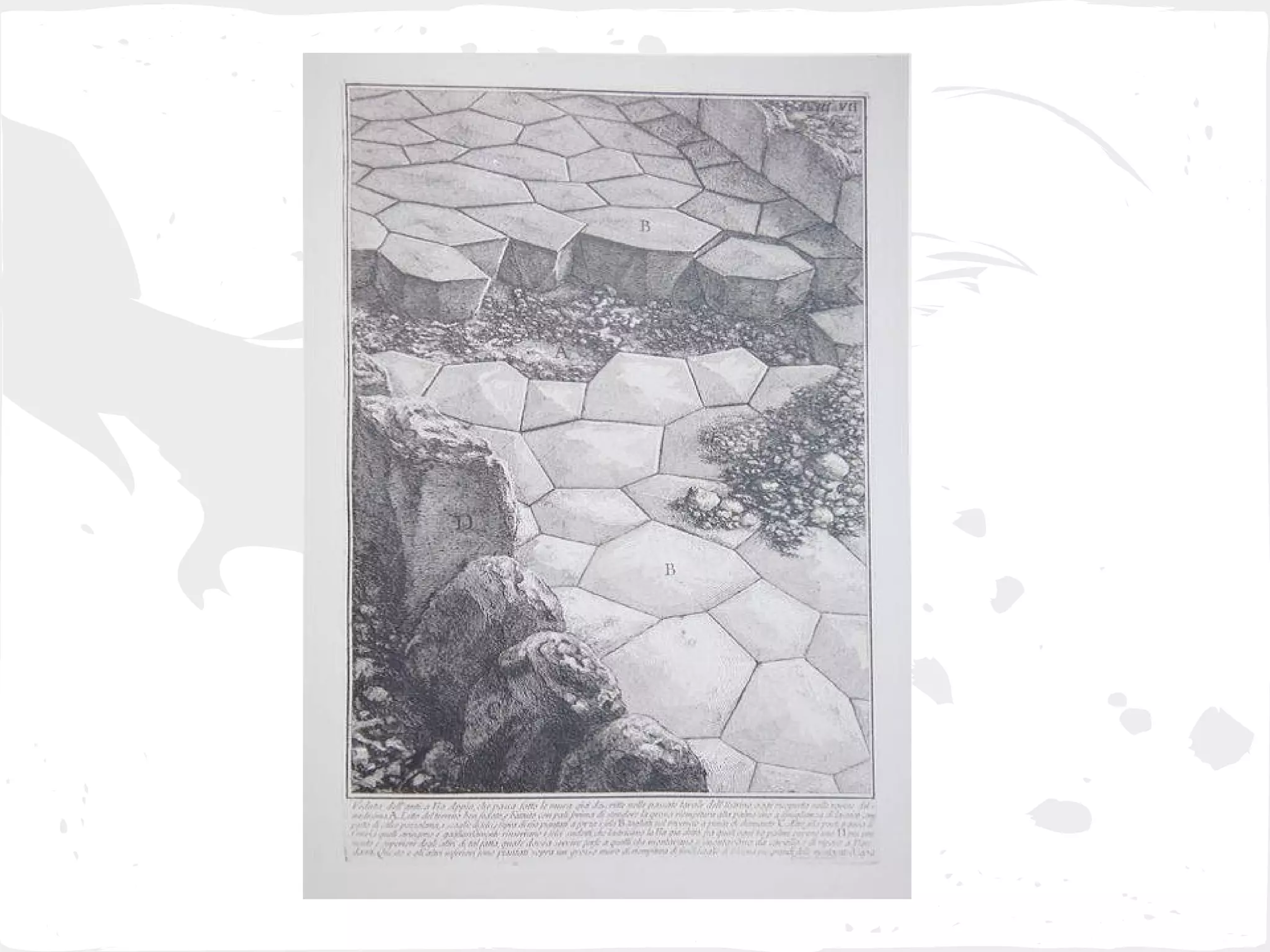
-Piranesi, G. B. (1748). Fantasy of ruins with statue of minerva. Frontispiece of the Series “Views of
Rome”, Roman Edition; Etching on paper
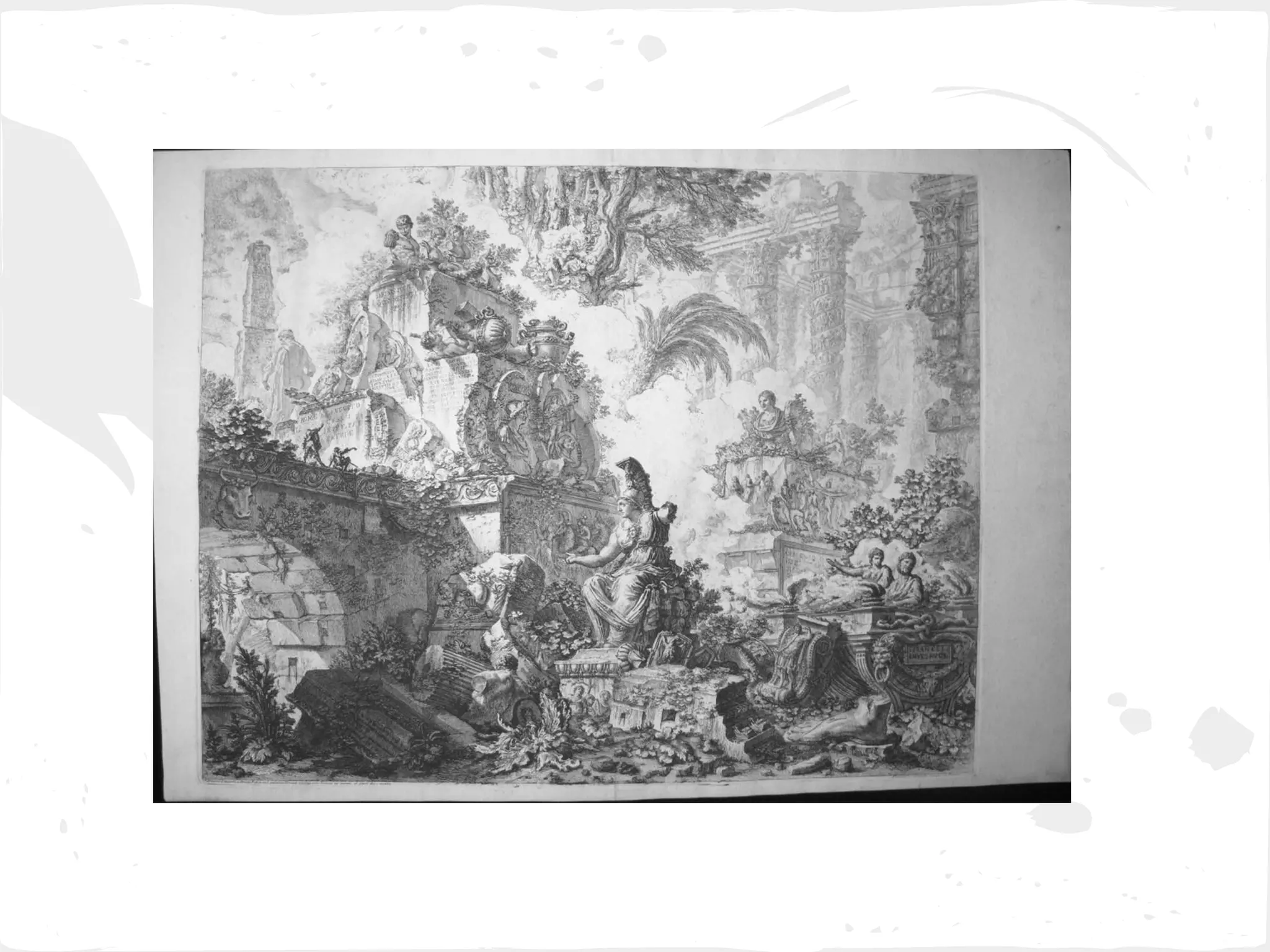
-Piranesi, G. B. (1750). Imperial Mausoleum, retrieved April 4, 2013 from
http://seattle.urbansketchers.org/2012/12/piranesi-urban-etcher.html
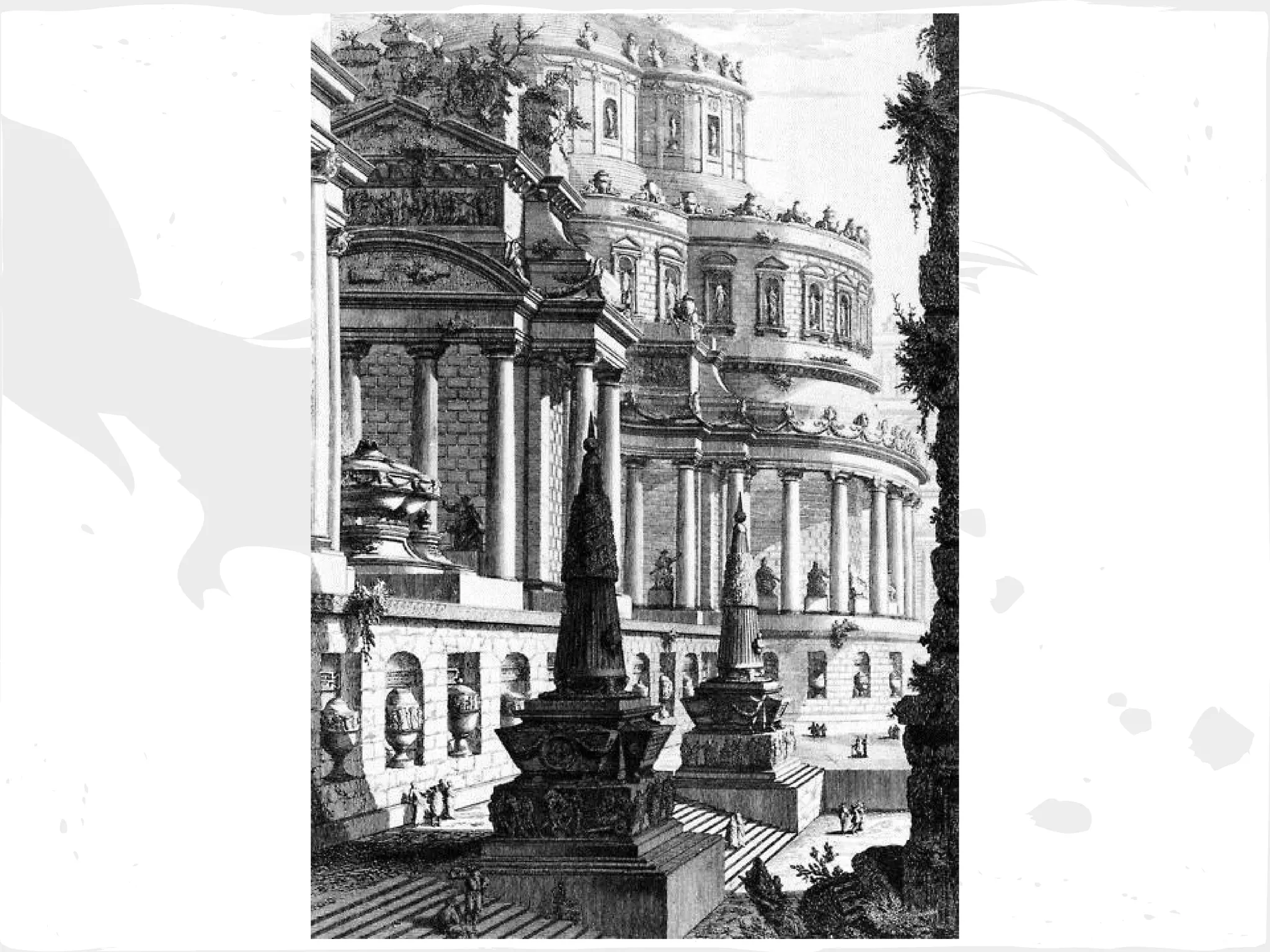
-Piranesi, G. B. (1756). Via Appia Imaginaria. retrieved April 4, 2013 from
http://www.architecture.com/LibraryDrawingsAndPhotographs/OnlineWorkshops/RomingRome/09Pira
nesi.aspx
Slides 10 through 14
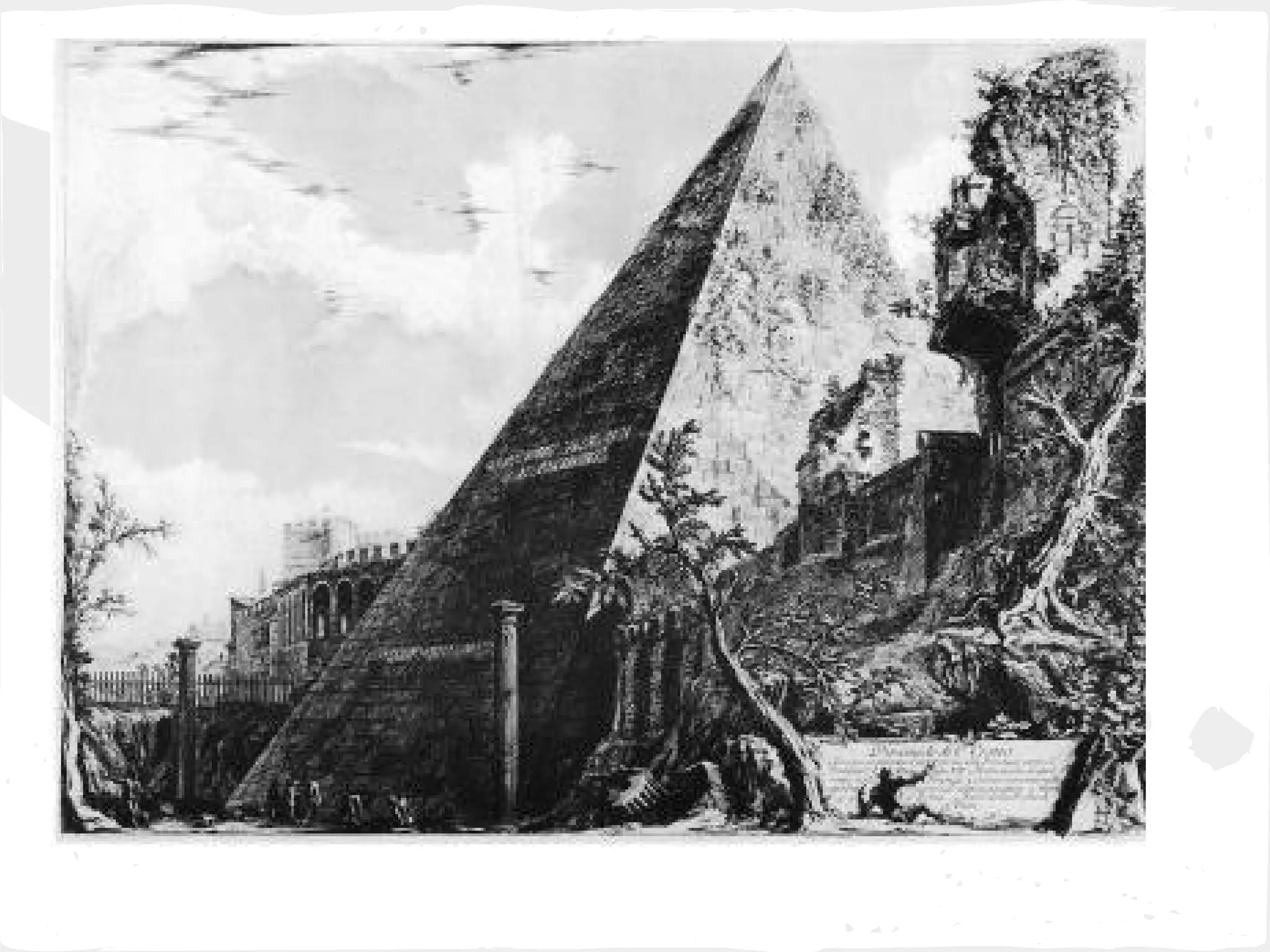
- Piranesi, G. B. (1750). Pyramid of Cestius. retrieved April 4, 2013 from
http://www.jahsonic.com/Piranesi.html
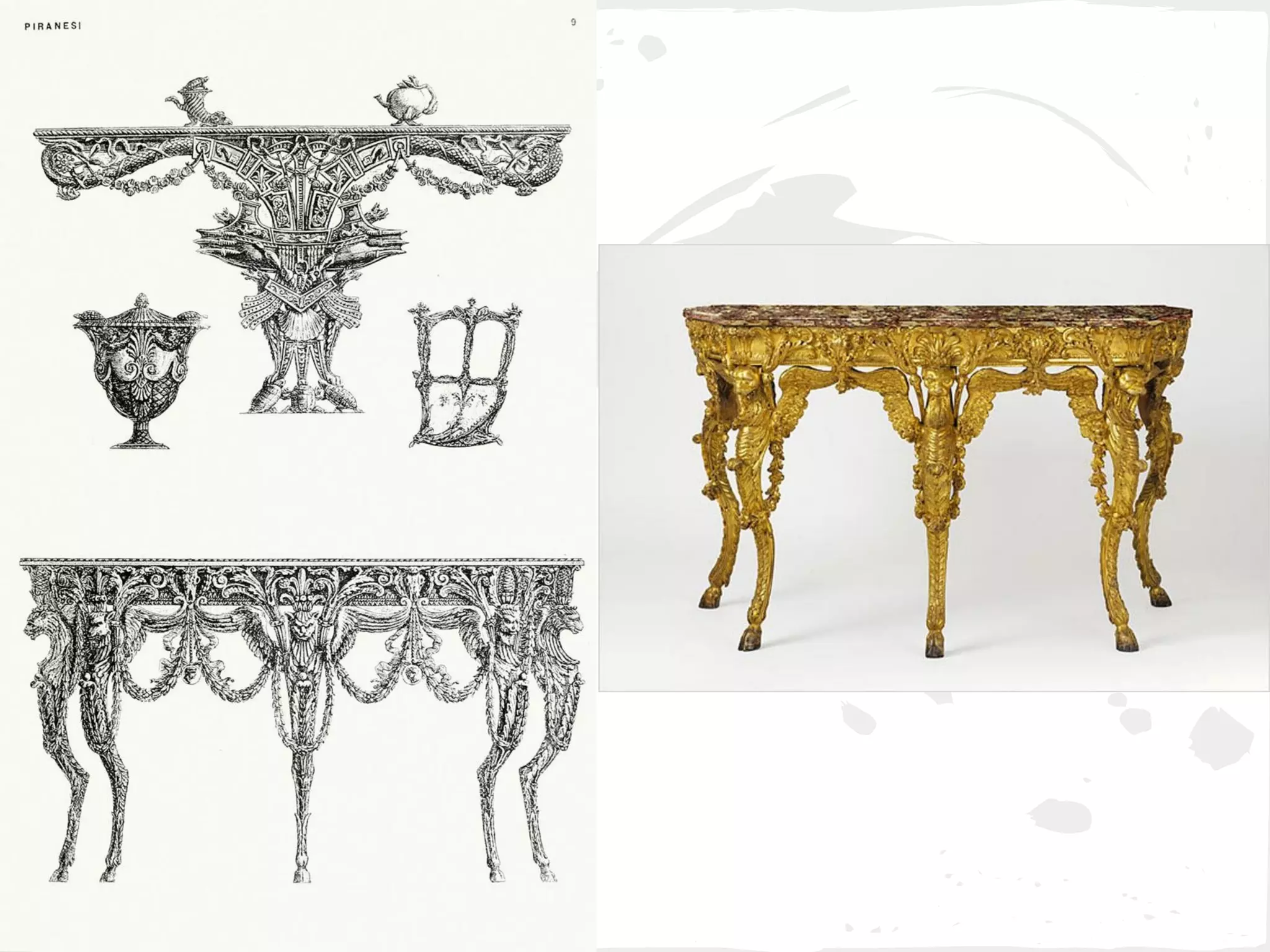
- Piranesi, G. B. (1753). Two sides of sedan chairs, two tables to the wall, two clocks, three coffee
makers, a frieze. Retrieved april 4, 2013 from http://www.wikipaintings.org/en/giovanni-battista-
piranesi/two-sides-of-sedan-chairs-two-tables-to-the-wall-two-clocks-three-coffee-makers-a-frieze
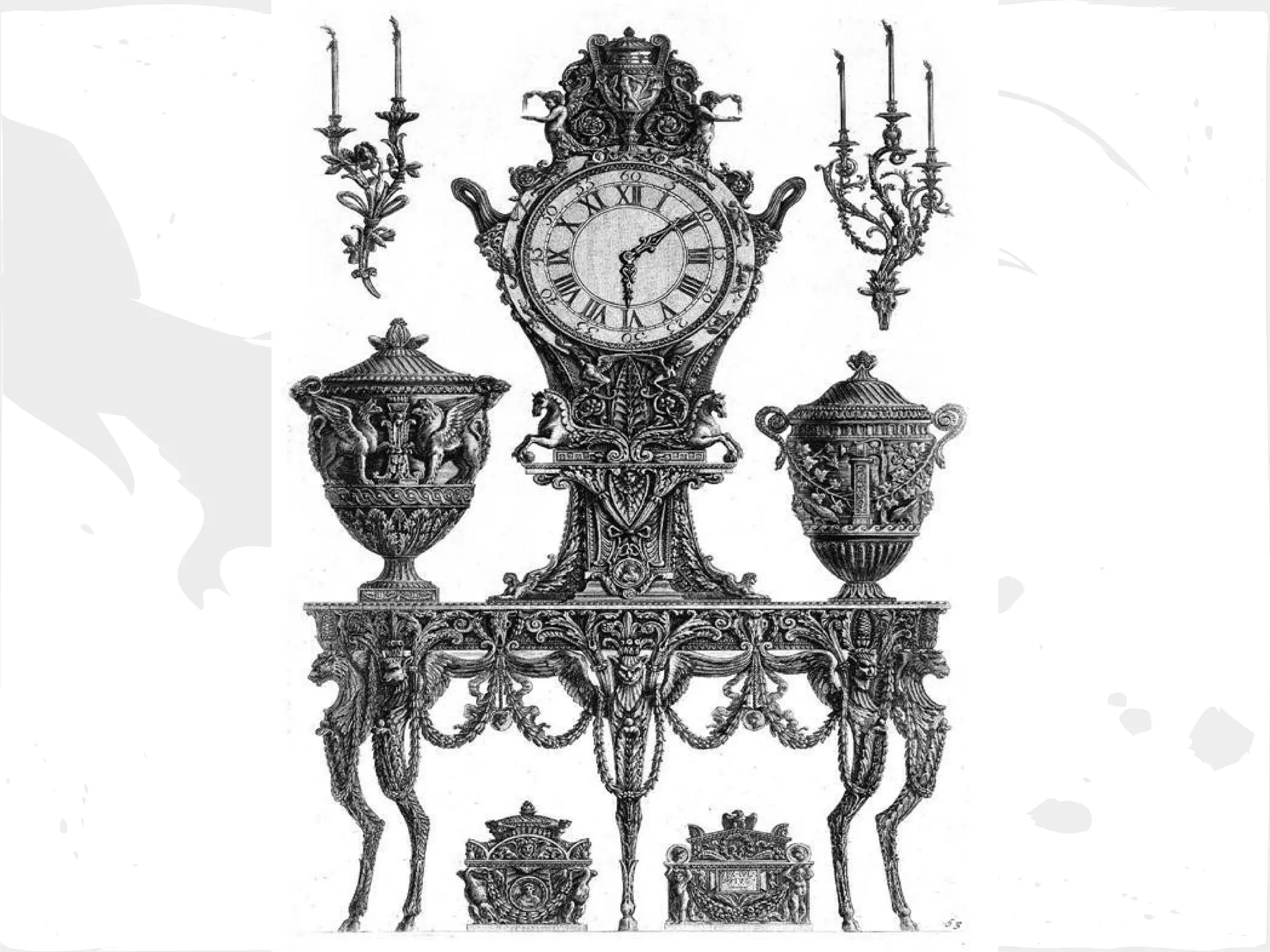
-Piranesi, G. B. (1769). Side table for Monsignor Rezzonico. retrieved april 6, 2013 fom
http://www.johncoulthart.com/feuilleton/2007/09/29/piranesi-as-designer/
- Rouveyre, E. (1908). Le style Piranesi, époque Louis XVI (The Piranesi style, Louis XVI period).
retrieved april 6, 2013 from http://theillustratedencyclopediaof.tumblr.com/
Slides 15 to 18:
- J.Jones, The Guardian, No Way Out (2002). Retrieved April 7th, 2013 from
http://www.guardian.co.uk/culture/2002/nov/06/artsfeatures.highereducation
- S. West, (1996) The Bulfinch Guide to Art History: A Comprehensive Survey and Dictionary of Western
Art and Architecture , Little, Brown and Company, Retrieved April 7th, 2013 from
http://www.artchive.com/artchive/P/piranesi.html
- Baroque and Rococo. Retrieved April 7th, 2013 from http://www.all-art.org/history294-3.html
- J. Altdorfer, Inside A Fantastical Mind (2008). Retrieved April 7th, 2013 from
http://www.carnegiemuseums.org/cmag/article.php?id=123
- G.B Piranesi Vestibolo d'antico Tempio (Vestibule of an ancient temple),c 1743, Etching. Retrieved April
8th, 2013 from http://www.aucklandartgallery.com/
-H. Robert, The Finding of the Laocoon, (c 1773), painting. Retrieved April 8th, 2013 from
fhttp://www.mutualart.com/Artwork/The-Finding-of-the-Laocoon/257DC9D7D3EC9167
- G. B. Piranesi Carceri Plate VII - The Drawbridge, (c 1745), print Retrieved April 8th, 2013 from
http://artsy.net/artwork/giovanni-battista-piranesi-the-drawbridge-plate-vii-from-the-series-carceri-
dinvenzione
- M. C. Escher Relativity, (c 1953), Lithograph Retrieved April 8th, 2013 from http://www.mcescher.com/

Giovanni Piranesi

  • 1.
    DSDN 171 Giovanni Piranesi
  • 2.
    Giovanni Battista Piranesi 1720 Italy - 1778 Italy Architect Also encompassed the graphic arts, archeology, interior design, political debate, the decorative arts & the restoration of classical antiquities.
  • 3.
    Life: - First 20years of his life in Venice - Piranesi studied as an architect under his Uncle Matteo Lucchesi. - In 1740 Giovanni over to Rome where he spent most of his life, and developed his etching skills. Work: - Vedute di Rome. - Prima parte di architture e prospettive, 1943. - Le antichità romane. 1756, the antiquities of Rome - Della magnificenza ed architettura de' Romani. 1761 AND Il Campo Marzio dell'antica Roma. 1762
  • 4.
    Giovanni was influencedby: Family: - Andrea (Brother), who introduced him to Latin and ancient civilisation. - (Father), A stone mason and master builder. - Matteo Lucchesi (Uncle), Venetian engineer and specialized in excavation. Designers: - The tradition of typographical art represented by Canaletto (A italian landscape painter, printmaker, etcher) - Also Marco Ricci and Giovanni Battista Tiepolo (Both etchers)
  • 5.
    Giovannis influence duringhis life: - “On Roman antiquity and exerted a major influence on many of the leading architects and designers of European neoclassicism.” - In 1745 Giovanni influenced visiting artists, architects and patrons in Rome for the following 4 decades. This allowed him to exert a critical influence on the development of Avant- garde British architecture.
  • 14.
    From Le stylePiranesi, époque Louis XVI (The Piranesi style, Louis XVI period), by Édouard Rouveyre, Paris, circa 1908. Shows his influence on later works.
  • 15.
    Giovanni Piranesi's Influenceon Other Artists • Piranesi’s artworks hugely influenced neoclassicism. Neoclassical design is also continuously used throughout the 20th and 21st century. • His prints depicting buildings of classical and postclassical Rome contributed to Rome’s fame and the growth of classical archaeology and the neoclassical movement in art. • The etched plates of the Vedute di Roma helped sculpt Europe's view of classical design, and these prints influenced other designers. • Piranesi's may have not been an influence as an architect but his romanticized views, imaginary interiors and hyper exaggerated images inspired designers, writers and painters.
  • 16.
    Hubert Robert (22 May 1733 – 15 April 1808), was a French painter, noted for his landscape paintings and depictions of ruins. Robert spent some of his time with young artists in the circle of Piranesi. Piranesi had a huge influence on his paintings G.B Piranesi Vestibolo d'antico Tempio (Vestibule of an ancient temple),c 1743, Etching, H. Robert, The Finding of the Laocoon, c 258 x 350 mm 1773, painting
  • 17.
    William Beckford, the author of the Gothic novel, Vathek (1786) wrote, “I drew chasms, and subterranean hollows, the domain of fear and torture, with chains, racks, wheels and dreadful engines in the style of Piranesi.” • M. C. Escher (Maurits Cornelis Escher) was a Dutch Graphic Artist among those possibly inspired by Piranesi. Escher’s later works became progressively more complex and increasingly Surrealist G. B. Piranesi Carceri Plate VII - M. C. Escher Relativity, c 1953, The Drawbridge, c 1745, print Lithograph
  • 18.
    Giovanni Battista Piranesi inspired Dante Ferretti, an Italian production designer, art director and costume designer for films. Dante Ferretti has designed for movies such as Gangs of New York (2002) Sweeney Todd: The Demon Barber of Fleet Street (2007) and Shutter Island (2010) • 20th & 21st Century influence:In the 20th century his imaginary interiors have been admired by Surrealists and provided source material for horror film set designers. Piranesi's images have influenced movies from Metropolis and Blade Runner to the moving staircases at Hogwarts.
  • 19.
    Two major socio-politicalinfluences: - European Enlightenment - Graeco-Roman debate
  • 20.
    Personal circumstances: - trainedas architect - supported by Venetian Pope Clement XIII
  • 21.
    Giovanni Piranesi Researched by- Christie Higgins, Grace Hemara, James Bodnar Presented by - Helen Williams
  • 22.
    Referencing: - Slide 1through till 4: John, W.E. (1978). The mind and art of Giovanni Piranesi. London: Thames and Hudson - Quote on 5th slide: APA: Jonathan, D. (2004). Europe, 1450 to 1789: Encyclopedia of the Early Modern World. (Volume 6: pp. 482 – 485). New York: Charles Scribner’s Sons. - slides 6 through 9 -Piranesi, G. B (1756). View of the Via Appia. Retrieved April 4, 2013, from http://www.artchive.com/web_gallery/G/Giovanni-Battista-Piranesi/The-paving-of-the-Via-Appia- Antica,-from-Le-Antichita-Romane-de-G.B.-Piranesi-1756,-published-in-Paris,-1835.html -Piranesi, G. B. (1748). Fantasy of ruins with statue of minerva. Frontispiece of the Series “Views of Rome”, Roman Edition; Etching on paper -Piranesi, G. B. (1750). Imperial Mausoleum, retrieved April 4, 2013 from http://seattle.urbansketchers.org/2012/12/piranesi-urban-etcher.html -Piranesi, G. B. (1756). Via Appia Imaginaria. retrieved April 4, 2013 from http://www.architecture.com/LibraryDrawingsAndPhotographs/OnlineWorkshops/RomingRome/09Pira nesi.aspx
  • 23.
    Slides 10 through14 - Piranesi, G. B. (1750). Pyramid of Cestius. retrieved April 4, 2013 from http://www.jahsonic.com/Piranesi.html - Piranesi, G. B. (1753). Two sides of sedan chairs, two tables to the wall, two clocks, three coffee makers, a frieze. Retrieved april 4, 2013 from http://www.wikipaintings.org/en/giovanni-battista- piranesi/two-sides-of-sedan-chairs-two-tables-to-the-wall-two-clocks-three-coffee-makers-a-frieze -Piranesi, G. B. (1769). Side table for Monsignor Rezzonico. retrieved april 6, 2013 fom http://www.johncoulthart.com/feuilleton/2007/09/29/piranesi-as-designer/ - Rouveyre, E. (1908). Le style Piranesi, époque Louis XVI (The Piranesi style, Louis XVI period). retrieved april 6, 2013 from http://theillustratedencyclopediaof.tumblr.com/
  • 24.
    Slides 15 to18: - J.Jones, The Guardian, No Way Out (2002). Retrieved April 7th, 2013 from http://www.guardian.co.uk/culture/2002/nov/06/artsfeatures.highereducation - S. West, (1996) The Bulfinch Guide to Art History: A Comprehensive Survey and Dictionary of Western Art and Architecture , Little, Brown and Company, Retrieved April 7th, 2013 from http://www.artchive.com/artchive/P/piranesi.html - Baroque and Rococo. Retrieved April 7th, 2013 from http://www.all-art.org/history294-3.html - J. Altdorfer, Inside A Fantastical Mind (2008). Retrieved April 7th, 2013 from http://www.carnegiemuseums.org/cmag/article.php?id=123 - G.B Piranesi Vestibolo d'antico Tempio (Vestibule of an ancient temple),c 1743, Etching. Retrieved April 8th, 2013 from http://www.aucklandartgallery.com/ -H. Robert, The Finding of the Laocoon, (c 1773), painting. Retrieved April 8th, 2013 from fhttp://www.mutualart.com/Artwork/The-Finding-of-the-Laocoon/257DC9D7D3EC9167 - G. B. Piranesi Carceri Plate VII - The Drawbridge, (c 1745), print Retrieved April 8th, 2013 from http://artsy.net/artwork/giovanni-battista-piranesi-the-drawbridge-plate-vii-from-the-series-carceri- dinvenzione - M. C. Escher Relativity, (c 1953), Lithograph Retrieved April 8th, 2013 from http://www.mcescher.com/