Drug InformationDrug Information
CenterCenter
Library without wallsLibrary without walls
THAT MOMMENT CALL
DIC
BUTFIRST U NEED TO KNOW
• WHAT IS THE DIC?
• WHY DIC?
HISTORY
• The first drug information center
was established in the university of
Kentucky in U.S.A.
• It is began operation in 1962
LOCATION
• DIC is centrally located in
1. Major hospitals
2. Major health care facility
• provide
better access to drug information
Drug Information
Specialists
• Are pharmacists who have received
specialized training
• Generally in the form of 1year
residency programs
.
DIC
provides
Current information
uses the most recent up-to-date sources
available.
(.
valproic acid during pregnancy for
migraine was category "D" (the
potential benefit of the drug in
pregnant women may be acceptable
despite its potential risks)
• use will be changed to "X" (the risk of use
in pregnant women clearly outweighs any
possible benefit of the drug).
• Valproate products will remain in
pregnancy category D for treating epilepsy
and manic episodes associated with bipolar
disorder
• [posted 6-5-2013]
Valproate Anti-Seizure Products
Contraindicated for Pregnant
Women for Prevention of
Migraine Headaches
Critically examined
Should meet the following criteria:
1. More than one source should be
used when appropriate.
2. The extent of agreement between
sources should be determined if sources
don’t agree , good judgment should be
used.
Relevant data
Must be presented in a manner that
applies directly to the circumstances
under consideration (e.g., patient
parameters, therapeutic objectives,
alternative approaches
Drug Information
Specialists
• Specialists are skilled in
I. Locating and evaluating drug
information
II. communicating with pharmacists
physicians and patients
PHYSICAL FACILITIES
• A secure space of approximately
One or two rooms 32m2
Allows for
• office work space
• Storage of reference
• Placement of equipment
• Space for visitors
THE PROCESS
1. DETERMINING THE PRIMARY
QUESTIONS
• Some questions require immediate
response other is not
• some questions is patient specific
2. DETERMINE THE
NATURE OF THE
PROBLEM AND
OBTAINED DETAILS
Many patient don't under stand the
difference between allergy and
adverse reaction
3. CHOOSING THE
SOURCE OF
INFORMATION
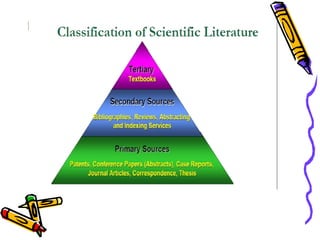
Primary sources
Primary sources are original materials
on which research is based
o represent original thinking
o report on Discoveries
o share new information
Primary sources
They are usually the first formal
appearance of results
• neither interpreted
• nor condensed
• nor evaluated by other writers.
examples of Primary
sources
Scientific journal articles
conferences and symposia
Dissertations
Secondary sources
• information reported in the
primary literature. Secondary
sources are works on it in one
or more steps
Secondary sources
• are those which review,
compare, contrast, repackage,
reorganize, interpret,
summarize, index or
otherwise “add value” to the
new
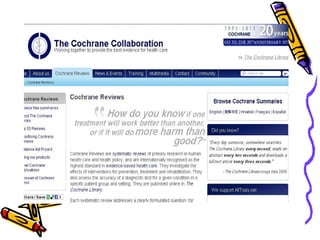
examples of Secondary
sources
• Reviewed articles
• Biographical works
• Monographs
Tertiary Sources
• is a specific subject area, or
materials in which the information
from secondary sources has been
"digested"
• reformatted and condensed, to put it
into a convenient, easy-to-read form.
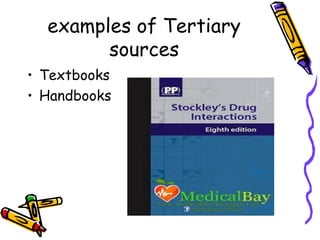
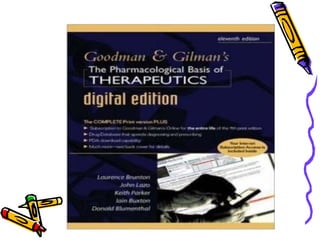
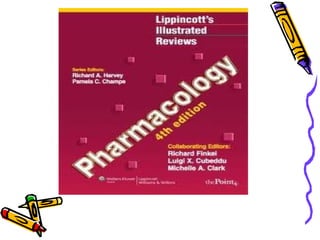
examples of Tertiary
sources
• Textbooks
• Handbooks
4. DEVELOPING
APPROPIATE SEARCH
STRATEGY
WHY DIC?
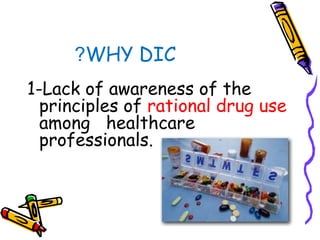
1-Lack of awareness of the
principles of rational drug use
among healthcare
professionals.
WHY DIC?
2-There are more than 20,000
biomedical journals available and
more than 6,000 articles published
everyday. It is not possible for a
person to have access to all the
information
WHY DIC?
3-Lack of adequate drug information
due to
 limited availability
lack of current literature
 poor documentation
poor funding available.
WHY DIC?
4-Lack of unbiased drug information
from the sources available
Objectives
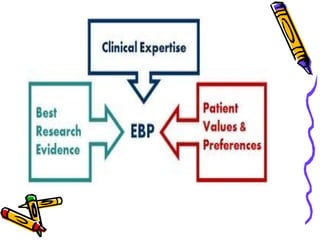
1. Promote evidence based practice.
Objectives
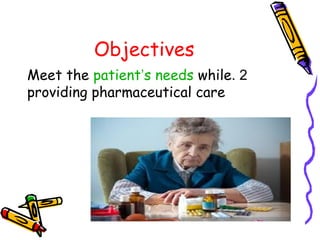
2.Meet the patient’s needs while
providing pharmaceutical care
Objectives
3.Improve the patient adherence (To
promote patient care through the
rational use of medicines(
Objectives
4.To provide accurate and unbiased
medicines information service to the
healthcare professionals
4.To provide accurate and unbiased
medicines information service to the
healthcare professionals
4.To provide accurate and unbiased
medicines information service to the
healthcare professionals
Objectives
5.To provide an organized database of
specialized information on medicines and
therapeutics
Services Offered
1. Answer any drug related
questions
 Drug Interactions.
 Product Availability.
 Drug-Induced Adverse Effects
 Pharmacokinetics
 Pregnancy/Lactation
 IV Compatibility
2.Drug information bulletins
 Transmission of information to the
members of health care team.
3.educate pharmacy students to serve
as an effective providers of
medicines information.
Drug  Information Center

Drug Information Center