Downloaded 65 times

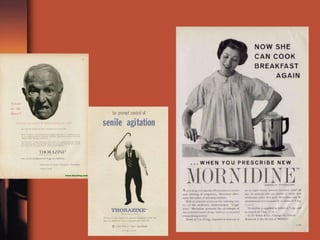
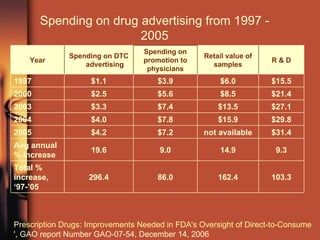
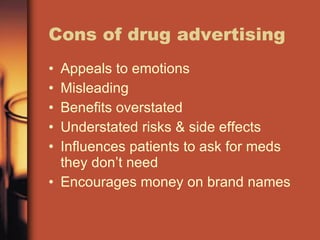
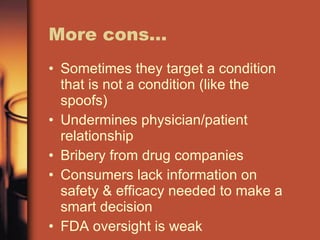
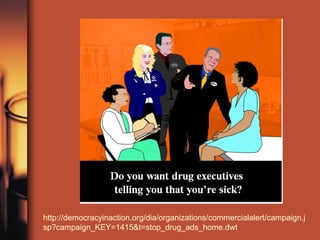

Spending on direct-to-consumer drug advertising in the United States increased dramatically from 1997 to 2005, rising 296.4% over that period compared to an 86% increase in promotional spending targeted at physicians. While proponents argue that drug ads educate patients and empower them to discuss health issues with doctors, critics counter that the ads often mislead consumers by overstating benefits and understating risks in order to inappropriately influence patients to request unnecessary or non-indicated drugs. Concerns also include the weak oversight of drug advertising by the FDA and the potential for drug company influence undermining the physician-patient relationship.


