Drug Addiction
Signs and Symptoms of Drug Addiction
Presented by: Anamika Mishra
Introduction
• Addiction is defined as a chronic, relapsing disorder characterized
by compulsive drug seeking and use despite adverse
consequences.
• It is considered a brain disorder, because it involves functional
changes to brain circuits involved in reward, stress, and self-
control.
• Addiction is a lot like other diseases, such as heart disease. Both
disrupt the normal, healthy functioning of an organ in the body,
both have serious harmful effects, and both are, in many cases,
preventable and treatable.
Signs and Symptoms
• Behavioral
• Emotional
• Physical
Behavioral
• Missing work, school, or other important events or engagements
• Social withdrawal, isolation, or secretiveness about whereabouts
and activities
• Changes in sleeping patterns
• Legal problems
• Increased interpersonal strife
• Sudden, unexplained spending habits or financial problems
Emotional
• Irritability and argumentativeness
• Loss of interest in activities, friends and family
• Acting inappropriate, or obnoxious and childish
• Appears easily confused
• When confronted, offers strange excuses, justifications, and
rationalizations for their behavior
• Blame-shifting and diversion
Physical
• Change in energy levels
• Dilated or constricted pupils and red eyes
• Weight loss
• Change of appetite
What kind of Drugs are being Abused?
• Drugs of abuse falls into 3 categories:
o Deperessants [Heroin, Barbiturates]
o Stimulants [Cocaine, crack, Amphetamines] &
o Hallucinogens [Marijuana, ecstasy, LSD1],
and are either ingested, inhaled, smoked, injected, or snorted.
Effects
• Drug can be harmful in a number of ways, through
both immediate effects and damage to health over
time.
• Even occasional use of marijuana affects cognitive
development and short – term memory.
• The effects of marijuana on perception, reaction and
coordination of movements can result in accidents.
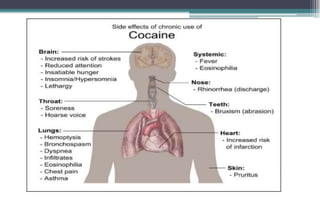
• Repeated use of stimulants can cause:
o Violent behavior
o Panic attacks
o Psychosis and mood swings
• People who abuse stimulants also have an
increased risk of heart attack or stroke.
Affects Sleep
Different drugs can affect your sleep pattern:
• Stimulants causes to stay awake much longer than
normal, but when you come down from your high,
you can be extremely fatigued.
• Depressants causes to feel drowsy, so you might
sleep more than normal when you take them.
• Opioids and hallucinogenic drugs also affects your
sleep pattern, but the reaction you have to the drug
determines whether you sleep more or less.
Health risks
• Physical and mental dependence
• Memory loss
• Violent behaviour, aggressive acts, and angry
feelings
• Headaches
• Nausea and/or vomiting
• Muscle weakness
• A drug tolerance
• Liver, lung, and kidney problems
• Brain damage
Drug addiction

Drug addiction

  • 1.
    Drug Addiction Signs andSymptoms of Drug Addiction Presented by: Anamika Mishra
  • 2.
    Introduction • Addiction isdefined as a chronic, relapsing disorder characterized by compulsive drug seeking and use despite adverse consequences. • It is considered a brain disorder, because it involves functional changes to brain circuits involved in reward, stress, and self- control. • Addiction is a lot like other diseases, such as heart disease. Both disrupt the normal, healthy functioning of an organ in the body, both have serious harmful effects, and both are, in many cases, preventable and treatable.
  • 3.
    Signs and Symptoms •Behavioral • Emotional • Physical
  • 4.
    Behavioral • Missing work,school, or other important events or engagements • Social withdrawal, isolation, or secretiveness about whereabouts and activities • Changes in sleeping patterns • Legal problems • Increased interpersonal strife • Sudden, unexplained spending habits or financial problems
  • 5.
    Emotional • Irritability andargumentativeness • Loss of interest in activities, friends and family • Acting inappropriate, or obnoxious and childish • Appears easily confused • When confronted, offers strange excuses, justifications, and rationalizations for their behavior • Blame-shifting and diversion
  • 6.
    Physical • Change inenergy levels • Dilated or constricted pupils and red eyes • Weight loss • Change of appetite
  • 8.
    What kind ofDrugs are being Abused? • Drugs of abuse falls into 3 categories: o Deperessants [Heroin, Barbiturates] o Stimulants [Cocaine, crack, Amphetamines] & o Hallucinogens [Marijuana, ecstasy, LSD1], and are either ingested, inhaled, smoked, injected, or snorted.
  • 9.
    Effects • Drug canbe harmful in a number of ways, through both immediate effects and damage to health over time. • Even occasional use of marijuana affects cognitive development and short – term memory. • The effects of marijuana on perception, reaction and coordination of movements can result in accidents.
  • 10.
    • Repeated useof stimulants can cause: o Violent behavior o Panic attacks o Psychosis and mood swings • People who abuse stimulants also have an increased risk of heart attack or stroke.
  • 11.
    Affects Sleep Different drugscan affect your sleep pattern: • Stimulants causes to stay awake much longer than normal, but when you come down from your high, you can be extremely fatigued. • Depressants causes to feel drowsy, so you might sleep more than normal when you take them. • Opioids and hallucinogenic drugs also affects your sleep pattern, but the reaction you have to the drug determines whether you sleep more or less.
  • 13.
    Health risks • Physicaland mental dependence • Memory loss • Violent behaviour, aggressive acts, and angry feelings • Headaches • Nausea and/or vomiting • Muscle weakness • A drug tolerance • Liver, lung, and kidney problems • Brain damage