Emergency Laparotomy
Collaborative:
Palliative Care & Shared Decision Making
Dr Catherine Hayle
24th January 2020
AIMS
•Shared decision making: how to approach
patients with advanced disease and
uncertain recovery.
•Malignant bowel obstruction (inoperable)
•When to consider parenteral nutrition
•Working with Palliative Care Teams
How do we reach decisions with patients?
• Paternalistic
• Informative
• Interpretive
Paternalistic
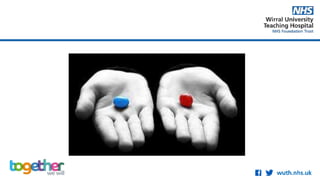
‘Take the red pill. It will be good for you.’ We might tell
you about the blue pill; but then again, we might
not. We tell you what we believe you need to know. We
have the critical knowledge and experience. We make
the critical choices.
Informative
‘Here’s what the red pill does, and here’s what the blue pill
does,’ we would say. ‘Which one do you want?’. It’s a retail
relationship. The doctor is the technical expert. The patient
is the consumer. The job of doctors is to supply up-to-date
knowledge and skills. The job of patients is to supply the
decisions.
Interpretive
‘What is most important to you? What are your
worries?’ Then, when I know your answers, I’ll tell you
about the red pill and the blue pill and which one
would most help you achieve your priorities.
Shared decision making
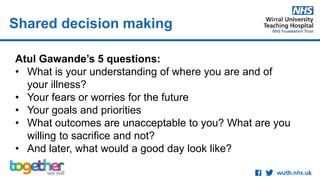
Atul Gawande’s 5 questions:
• What is your understanding of where you are and of
your illness?
• Your fears or worries for the future
• Your goals and priorities
• What outcomes are unacceptable to you? What are you
willing to sacrifice and not?
• And later, what would a good day look like?
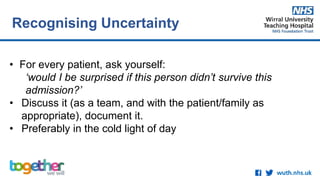
• For every patient, ask yourself:
‘would I be surprised if this person didn’t survive this
admission?’
• Discuss it (as a team, and with the patient/family as
appropriate), document it.
• Preferably in the cold light of day
Recognising Uncertainty
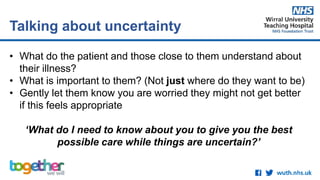
• What do the patient and those close to them understand about
their illness?
• What is important to them? (Not just where do they want to be)
• Gently let them know you are worried they might not get better
if this feels appropriate
‘What do I need to know about you to give you the best
possible care while things are uncertain?’
Talking about uncertainty
• Avoid black or white thinking (e.g. ‘treat with
48 hour of antibiotics, if no improvement….
palliate’)
• Active and palliative treatment can be used
hand in hand
• Use clear language, e.g. ‘recovery uncertain’
‘last days of life’ or ‘dying’
• Treatment escalation plan is crucial
Managing Uncertainty
‘Two weeks on ITU can save
you one hour of difficult
conversation’
Dr Will Cairns
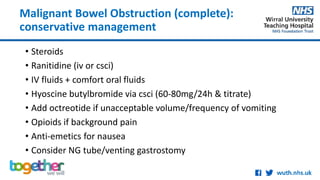
Malignant Bowel Obstruction (complete):
conservative management
• Steroids
• Ranitidine (iv or csci)
• IV fluids + comfort oral fluids
• Hyoscine butylbromide via csci (60-80mg/24h & titrate)
• Add octreotide if unacceptable volume/frequency of vomiting
• Opioids if background pain
• Anti-emetics for nausea
• Consider NG tube/venting gastrostomy
Inoperable MBO: when to offer PN?
• Non-functional GI tract.
• Consider functional status prior to MBO
• Benefits: improved symptoms (hunger, fatigue)
• Risks: increased LoS, increased medicalisation of EOL care (nursing
visits, equipment, readmissions), disturbed sleep, fluid overload, IV
line complications
• Multidisciplinary approach works best (include palliative care early)
• Withdrawal plan: e.g. no symptomatic benefit, ongoing deterioration
despite trial of PN, fluid overload, last days of life
Cancer-cachexia syndrome
“A multifactorial syndrome characterised by an ongoing loss of skeletal muscle mass
(with or without loss of fat mass) that cannot be fully reversed by conventional
nutritional support and leads to a progressive functional impairment”
• Sarcopenia and infiltration of fat in muscle mass
• Is a paraneoplastic syndrome
• Not just reduced oral intake but metabolic cascade too
• 80% of those with advanced cancer with develop anorexia
Fearon et al. 2011. Lancet Oncology: 12: 489-495
Does TPN impact survival?
• Naghibi et al. 2014. Clinical Nutrition, 34(5): 825-837
• Systematic review: 12 studies
• Meta-analysis of home PN patients with inoperable MBO (n=244)
• Median survival 83 days, 2% alive at one year
• £176587 per QALY
• Mean survival inoperable MBO (all groups) 4-5 weeks
Working with your Palliative Care
colleagues
• Get to know them!
• How are they resourced? Do they have inpatient beds?
• Consultant-consultant discussion for challenging cases
• Hospice size and ethos
• Symptom control guidelines/24h advice line: encourage your
juniors to use these
• Additional services: Chaplaincy, volunteers, AHPs,
accommodation, car park passes etc.
Questions?

Dr Catherine Hayle - Regional ELC - Complex decision making

  • 1.
    Emergency Laparotomy Collaborative: Palliative Care& Shared Decision Making Dr Catherine Hayle 24th January 2020
  • 2.
    AIMS •Shared decision making:how to approach patients with advanced disease and uncertain recovery. •Malignant bowel obstruction (inoperable) •When to consider parenteral nutrition •Working with Palliative Care Teams
  • 4.
    How do wereach decisions with patients? • Paternalistic • Informative • Interpretive
  • 5.
    Paternalistic ‘Take the redpill. It will be good for you.’ We might tell you about the blue pill; but then again, we might not. We tell you what we believe you need to know. We have the critical knowledge and experience. We make the critical choices.
  • 6.
    Informative ‘Here’s what thered pill does, and here’s what the blue pill does,’ we would say. ‘Which one do you want?’. It’s a retail relationship. The doctor is the technical expert. The patient is the consumer. The job of doctors is to supply up-to-date knowledge and skills. The job of patients is to supply the decisions.
  • 7.
    Interpretive ‘What is mostimportant to you? What are your worries?’ Then, when I know your answers, I’ll tell you about the red pill and the blue pill and which one would most help you achieve your priorities.
  • 9.
    Shared decision making AtulGawande’s 5 questions: • What is your understanding of where you are and of your illness? • Your fears or worries for the future • Your goals and priorities • What outcomes are unacceptable to you? What are you willing to sacrifice and not? • And later, what would a good day look like?
  • 11.
    • For everypatient, ask yourself: ‘would I be surprised if this person didn’t survive this admission?’ • Discuss it (as a team, and with the patient/family as appropriate), document it. • Preferably in the cold light of day Recognising Uncertainty
  • 12.
    • What dothe patient and those close to them understand about their illness? • What is important to them? (Not just where do they want to be) • Gently let them know you are worried they might not get better if this feels appropriate ‘What do I need to know about you to give you the best possible care while things are uncertain?’ Talking about uncertainty
  • 13.
    • Avoid blackor white thinking (e.g. ‘treat with 48 hour of antibiotics, if no improvement…. palliate’) • Active and palliative treatment can be used hand in hand • Use clear language, e.g. ‘recovery uncertain’ ‘last days of life’ or ‘dying’ • Treatment escalation plan is crucial Managing Uncertainty
  • 14.
    ‘Two weeks onITU can save you one hour of difficult conversation’ Dr Will Cairns
  • 15.
    Malignant Bowel Obstruction(complete): conservative management • Steroids • Ranitidine (iv or csci) • IV fluids + comfort oral fluids • Hyoscine butylbromide via csci (60-80mg/24h & titrate) • Add octreotide if unacceptable volume/frequency of vomiting • Opioids if background pain • Anti-emetics for nausea • Consider NG tube/venting gastrostomy
  • 16.
    Inoperable MBO: whento offer PN? • Non-functional GI tract. • Consider functional status prior to MBO • Benefits: improved symptoms (hunger, fatigue) • Risks: increased LoS, increased medicalisation of EOL care (nursing visits, equipment, readmissions), disturbed sleep, fluid overload, IV line complications • Multidisciplinary approach works best (include palliative care early) • Withdrawal plan: e.g. no symptomatic benefit, ongoing deterioration despite trial of PN, fluid overload, last days of life
  • 17.
    Cancer-cachexia syndrome “A multifactorialsyndrome characterised by an ongoing loss of skeletal muscle mass (with or without loss of fat mass) that cannot be fully reversed by conventional nutritional support and leads to a progressive functional impairment” • Sarcopenia and infiltration of fat in muscle mass • Is a paraneoplastic syndrome • Not just reduced oral intake but metabolic cascade too • 80% of those with advanced cancer with develop anorexia Fearon et al. 2011. Lancet Oncology: 12: 489-495
  • 18.
    Does TPN impactsurvival? • Naghibi et al. 2014. Clinical Nutrition, 34(5): 825-837 • Systematic review: 12 studies • Meta-analysis of home PN patients with inoperable MBO (n=244) • Median survival 83 days, 2% alive at one year • £176587 per QALY • Mean survival inoperable MBO (all groups) 4-5 weeks
  • 19.
    Working with yourPalliative Care colleagues • Get to know them! • How are they resourced? Do they have inpatient beds? • Consultant-consultant discussion for challenging cases • Hospice size and ethos • Symptom control guidelines/24h advice line: encourage your juniors to use these • Additional services: Chaplaincy, volunteers, AHPs, accommodation, car park passes etc.
  • 21.

Editor's Notes

  • #7 This is the increasingly common way for doctors to be, and it tends to drive us to become ever more specialized. We know less and less about our patients but more and more about our science.
  • #16 Steroids have a central antiemetic, anti-inflammatory, anti-secretory, analgesic and non-specific effect on general wellbeing when administered for MBO. They decrease gut wall edema, peritoneal inflammation and inflammation in proximity to the obstruction. They also decrease excretion of water and salt into the bowel lumen and thus indirectly decrease pain.