Art Literacy
Ninety-One School • Winter 2012


Dot...
    Dot...
       Seurat
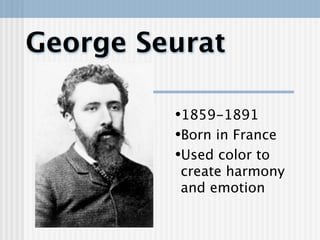
George Seurat

         •1859-1891
         •Born in France
         •Used color to
          create harmony
          and emotion
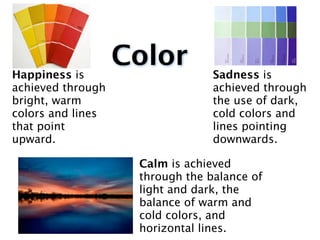
Happiness is
                   Color         Sadness is
achieved through                 achieved through
bright, warm                     the use of dark,
colors and lines                 cold colors and
that point                       lines pointing
upward.                          downwards.

                    Calm is achieved
                    through the balance of
                    light and dark, the
                    balance of warm and
                    cold colors, and
                    horizontal lines.
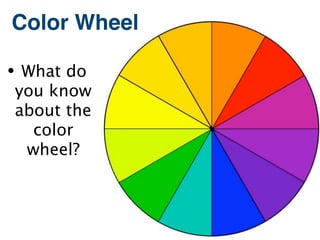
Color Wheel

• What do
you know
about the
  color
 wheel?
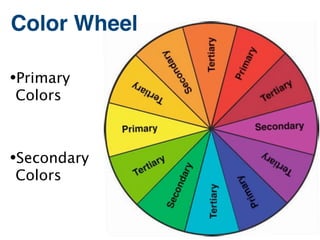
Color Wheel

•Primary
Colors


•Secondary
Colors
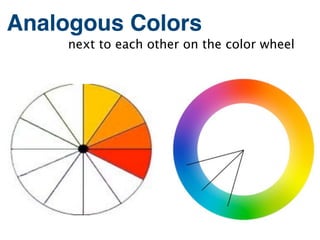
Analogous Colors
     next to each other on the color wheel
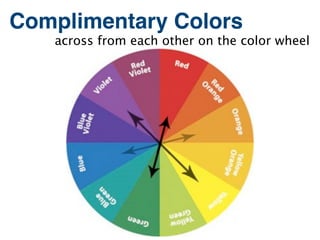
Complimentary Colors
   across from each other on the color wheel
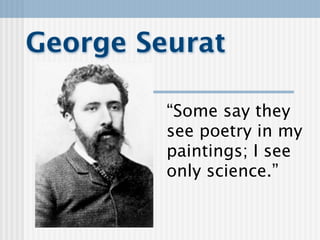
George Seurat

         “Some say they
         see poetry in my
         paintings; I see
         only science.”
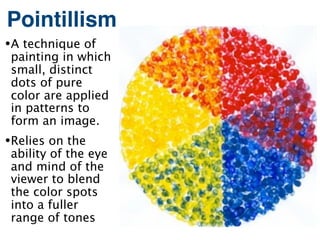
Pointillism
• A technique of
 painting in which
 small, distinct
 dots of pure
 color are applied
 in patterns to
 form an image.
• Relies on the
 ability of the eye
 and mind of the
 viewer to blend
 the color spots
 into a fuller
 range of tones
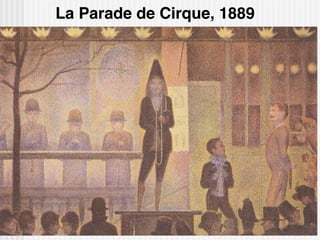
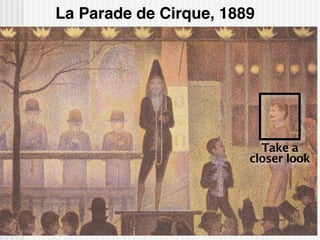
La Parade de Cirque, 1889


                          Take a
                        closer look
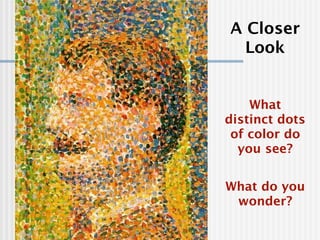
A Closer
  Look


    What
distinct dots
 of color do
  you see?


What do you
 wonder?
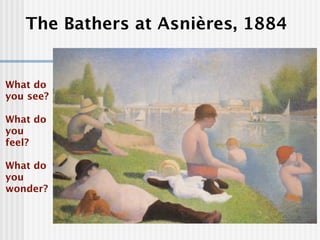
The Bathers at Asnières, 1884


What do
you see?

What do
you
feel?

What do
you
wonder?
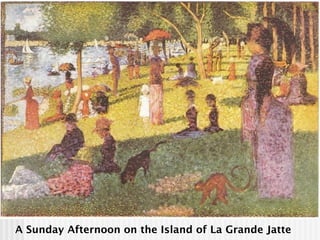
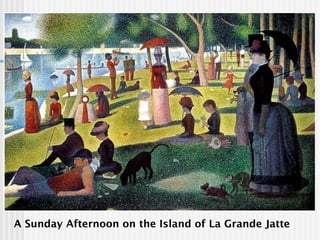
A Sunday Afternoon on the Island of La Grande Jatte
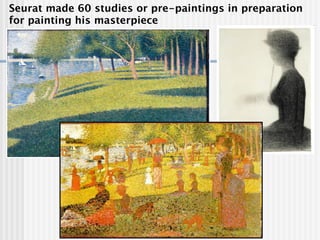
Seurat made 60 studies or pre-paintings in preparation
for painting his masterpiece
A Sunday Afternoon on the Island of La Grande Jatte
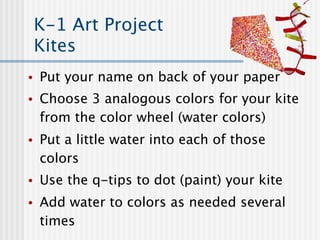
K-1 Art Project
    Kites
•   Put your name on back of your paper
•   Choose 3 analogous colors for your kite
    from the color wheel (water colors)
•   Put a little water into each of those
    colors
•   Use the q-tips to dot (paint) your kite
•   Add water to colors as needed several
    times
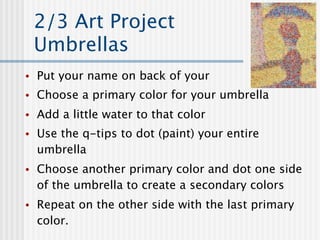
2/3 Art Project
    Umbrellas
•   Put your name on back of your          paper
•   Choose a primary color for your umbrella
•   Add a little water to that color
•   Use the q-tips to dot (paint) your entire
    umbrella
•   Choose another primary color and dot one side
    of the umbrella to create a secondary colors
•   Repeat on the other side with the last primary
    color.
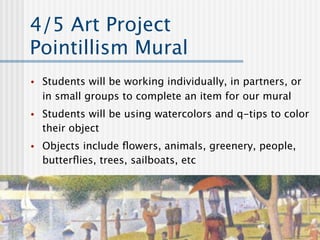
4/5 Art Project
Pointillism Mural
•   Students will be working individually, in partners, or
    in small groups to complete an item for our mural
•   Students will be using watercolors and q-tips to color
    their object
•   Objects include flowers, animals, greenery, people,
    butterflies, trees, sailboats, etc
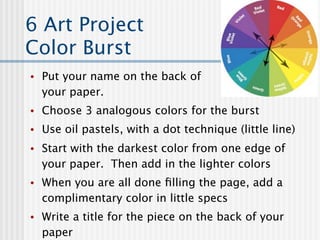
6 Art Project
Color Burst
•   Put your name on the back of
    your paper.
•   Choose 3 analogous colors for the burst
•   Use oil pastels, with a dot technique (little line)
•   Start with the darkest color from one edge of
    your paper. Then add in the lighter colors
•   When you are all done filling the page, add a
    complimentary color in little specs
•   Write a title for the piece on the back of your
    paper

Dot Dot George Seurat

  • 1.
    Art Literacy Ninety-One School• Winter 2012 Dot... Dot... Seurat
  • 2.
    George Seurat •1859-1891 •Born in France •Used color to create harmony and emotion
  • 3.
    Happiness is Color Sadness is achieved through achieved through bright, warm the use of dark, colors and lines cold colors and that point lines pointing upward. downwards. Calm is achieved through the balance of light and dark, the balance of warm and cold colors, and horizontal lines.
  • 4.
    Color Wheel • Whatdo you know about the color wheel?
  • 5.
  • 6.
    Analogous Colors next to each other on the color wheel
  • 7.
    Complimentary Colors across from each other on the color wheel
  • 8.
    George Seurat “Some say they see poetry in my paintings; I see only science.”
  • 9.
    Pointillism • A techniqueof painting in which small, distinct dots of pure color are applied in patterns to form an image. • Relies on the ability of the eye and mind of the viewer to blend the color spots into a fuller range of tones
  • 10.
    La Parade deCirque, 1889
  • 11.
    La Parade deCirque, 1889 Take a closer look
  • 12.
    A Closer Look What distinct dots of color do you see? What do you wonder?
  • 13.
    The Bathers atAsnières, 1884 What do you see? What do you feel? What do you wonder?
  • 14.
    A Sunday Afternoonon the Island of La Grande Jatte
  • 15.
    Seurat made 60studies or pre-paintings in preparation for painting his masterpiece
  • 16.
    A Sunday Afternoonon the Island of La Grande Jatte
  • 17.
    K-1 Art Project Kites • Put your name on back of your paper • Choose 3 analogous colors for your kite from the color wheel (water colors) • Put a little water into each of those colors • Use the q-tips to dot (paint) your kite • Add water to colors as needed several times
  • 18.
    2/3 Art Project Umbrellas • Put your name on back of your paper • Choose a primary color for your umbrella • Add a little water to that color • Use the q-tips to dot (paint) your entire umbrella • Choose another primary color and dot one side of the umbrella to create a secondary colors • Repeat on the other side with the last primary color.
  • 19.
    4/5 Art Project PointillismMural • Students will be working individually, in partners, or in small groups to complete an item for our mural • Students will be using watercolors and q-tips to color their object • Objects include flowers, animals, greenery, people, butterflies, trees, sailboats, etc
  • 20.
    6 Art Project ColorBurst • Put your name on the back of your paper. • Choose 3 analogous colors for the burst • Use oil pastels, with a dot technique (little line) • Start with the darkest color from one edge of your paper. Then add in the lighter colors • When you are all done filling the page, add a complimentary color in little specs • Write a title for the piece on the back of your paper