Don’t Be a Bystander:
How Paraeducators Can Support
Classroom Behavioral Intervention
Christina Cipriano
Tia N. Barnes
Lisa M. Flynn
Susan E. Rivers
Introductions
cc: quinn.anya - https://www.flickr.com/photos/53326337@N00
School
Current position
Biggest challenge in
behavior management
What you hope to
gain from this workshop
OBJECTIVES
Identify challenges to
behavior management
Learn best practices for
active support of
classroom behavioral
intervention
cc: Matthew McVickar - https://www.flickr.com/photos/51035706835@N01
WHAT IS THE CLIMATE IN YOUR CLASS?
3 words to describe current
classroom climate
3 words to describe ideal
classroom climate
Photo credit: Par Aronsson cc: SEDACMaps - https://www.flickr.com/photos/54545503@N04
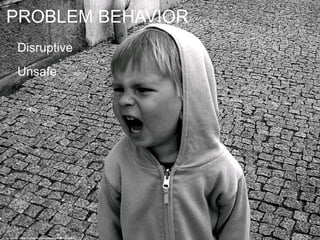
PROBLEM BEHAVIOR
Disruptive
Unsafe
cc: mdanys - https://www.flickr.com/photos/91883096@N00
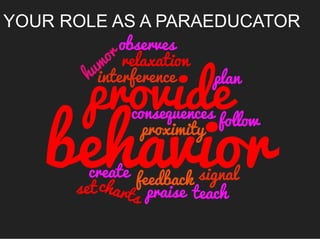
YOUR ROLE AS A PARAEDUCATOR
BARRIERS TO BEHAVIOR MANAGEMENT
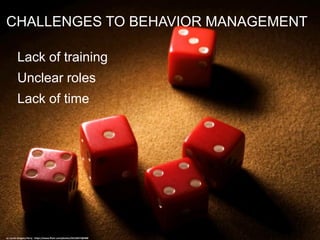
CHALLENGES TO BEHAVIOR MANAGEMENT
Lack of training
Unclear roles
Lack of time
cc: Curtis Gregory Perry - https://www.flickr.com/photos/33124677@N00
OVERVIEW OF THE RELATE PROJECT
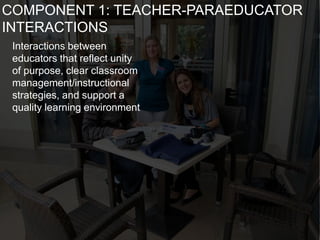
Interactions between
educators that reflect unity
of purpose, clear classroom
management/instructional
strategies, and support a
quality learning environment
COMPONENT 1: TEACHER-PARAEDUCATOR
INTERACTIONS
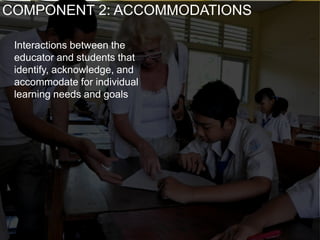
Interactions between the
educator and students that
identify, acknowledge, and
accommodate for individual
learning needs and goals
COMPONENT 2: ACCOMMODATIONS
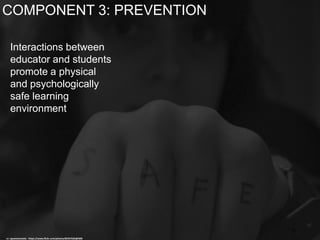
Interactions between
educator and students
promote a physical
and psychologically
safe learning
environment
COMPONENT 3: PREVENTION
cc: squeezeomatic - https://www.flickr.com/photos/82437626@N00
ELEMENTS OF PREVENTION
Monitoring
De-Escalation of
Disruptive or Unsafe
Behavior
Intervention
cc: KayVee.INC - https://www.flickr.com/photos/25678284@N03
MONITORING
Classroom Merit System
Communication about student behavior
Vigilance
cc: Vinícius E. M. - https://www.flickr.com/photos/55564207@N02
Classroom Reward Systems
cc: Pewari - https://www.flickr.com/photos/34887679@N00
What is the classroom merit system used in your
class?
cc: sean dreilinger - https://www.flickr.com/photos/43927576@N00
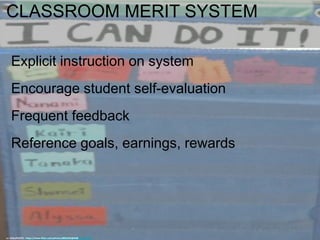
CLASSROOM MERIT SYSTEM
Explicit instruction on system
Encourage student self-evaluation
Frequent feedback
Reference goals, earnings, rewards
cc: billsoPHOTO - https://www.flickr.com/photos/8852942@N08
COMMUNICATION
Engage with class
team about student
progress
Prompt student
communication about
progress
cc: uniondocs - https://www.flickr.com/photos/8207752@N03
VIGILANCE
Get to know students
Continuously monitor
Intervene immediately
cc: uniondocs - https://www.flickr.com/photos/8207752@N03
DE-ESCALATION OF DISRUPTIVE
OR UNSAFE BEHAVIOR
Prompt and effective
Use of directives and
limits
Neutrality is key
cc: Trekking Rinjani - https://www.flickr.com/photos/30087136@N00
DE-ESCALATION
Reminders of
consequences
Adjustment of
classroom elements
cc: Dean Hochman - https://www.flickr.com/photos/17997843@N02
ACTIVITY
cc: Jeremy Brooks - https://www.flickr.com/photos/85853333@N00
DEBRIEFING QUESTIONS
cc: Jeremy Brooks - https://www.flickr.com/photos/85853333@N00
1. What was the experience of being the leader like for you?
2. What was the experience of being the follower like for you?
3. What was your experience like in the third round when there was no clear leader?
4. When did you experience discomfort? If so, how was your discomfort related to
cooperation?
5. Have you experienced a similar type of discomfort when trying to collaborate with
others in the real world? When?
6. How can this activity help you understand issues related to collaboration?
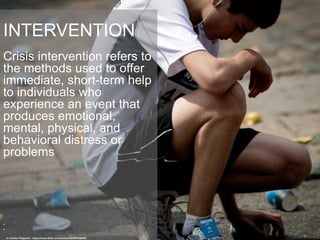
INTERVENTION
Crisis intervention refers to
the methods used to offer
immediate, short-term help
to individuals who
experience an event that
produces emotional,
mental, physical, and
behavioral distress or
problems
•
•
cc: Kristian Thøgersen - https://www.flickr.com/photos/92028474@N00
CRISIS INTERVENTION
cc: Damon | Photography - https://www.flickr.com/photos/9906699@N07
CRISIS INTERVENTION
Employ strategies as needed
Remove student if a danger to self or
others
Re-establish communication
cc: kenteegardin - https://www.flickr.com/photos/26373139@N08
QUESTION TIME
cc: Scott McLeod - https://www.flickr.com/photos/93393982@N00
Can You RELATE?
Dr. Christina Cipriano: christina.cipriano@umassd.edu
Dr. Tia N. Barnes: tia.barnes@yale.edu
Thank you to our amazing research team and to the teachers, parents, and
administrators who have participated in this work.
Research generously funded by a grant from the William T. Grant Foundation
(ID#180276)

Dont be a bystander: How Paraeducators Can support Classroom Behavioral Intervention

  • 1.
    Don’t Be aBystander: How Paraeducators Can Support Classroom Behavioral Intervention Christina Cipriano Tia N. Barnes Lisa M. Flynn Susan E. Rivers
  • 2.
    Introductions cc: quinn.anya -https://www.flickr.com/photos/53326337@N00 School Current position Biggest challenge in behavior management What you hope to gain from this workshop
  • 3.
    OBJECTIVES Identify challenges to behaviormanagement Learn best practices for active support of classroom behavioral intervention cc: Matthew McVickar - https://www.flickr.com/photos/51035706835@N01
  • 4.
    WHAT IS THECLIMATE IN YOUR CLASS? 3 words to describe current classroom climate 3 words to describe ideal classroom climate Photo credit: Par Aronsson cc: SEDACMaps - https://www.flickr.com/photos/54545503@N04
  • 5.
    PROBLEM BEHAVIOR Disruptive Unsafe cc: mdanys- https://www.flickr.com/photos/91883096@N00
  • 6.
    YOUR ROLE ASA PARAEDUCATOR
  • 7.
  • 8.
    CHALLENGES TO BEHAVIORMANAGEMENT Lack of training Unclear roles Lack of time cc: Curtis Gregory Perry - https://www.flickr.com/photos/33124677@N00
  • 9.
    OVERVIEW OF THERELATE PROJECT
  • 10.
    Interactions between educators thatreflect unity of purpose, clear classroom management/instructional strategies, and support a quality learning environment COMPONENT 1: TEACHER-PARAEDUCATOR INTERACTIONS
  • 11.
    Interactions between the educatorand students that identify, acknowledge, and accommodate for individual learning needs and goals COMPONENT 2: ACCOMMODATIONS
  • 12.
    Interactions between educator andstudents promote a physical and psychologically safe learning environment COMPONENT 3: PREVENTION cc: squeezeomatic - https://www.flickr.com/photos/82437626@N00
  • 13.
    ELEMENTS OF PREVENTION Monitoring De-Escalationof Disruptive or Unsafe Behavior Intervention cc: KayVee.INC - https://www.flickr.com/photos/25678284@N03
  • 14.
    MONITORING Classroom Merit System Communicationabout student behavior Vigilance cc: Vinícius E. M. - https://www.flickr.com/photos/55564207@N02
  • 15.
    Classroom Reward Systems cc:Pewari - https://www.flickr.com/photos/34887679@N00
  • 16.
    What is theclassroom merit system used in your class? cc: sean dreilinger - https://www.flickr.com/photos/43927576@N00
  • 17.
    CLASSROOM MERIT SYSTEM Explicitinstruction on system Encourage student self-evaluation Frequent feedback Reference goals, earnings, rewards cc: billsoPHOTO - https://www.flickr.com/photos/8852942@N08
  • 18.
    COMMUNICATION Engage with class teamabout student progress Prompt student communication about progress cc: uniondocs - https://www.flickr.com/photos/8207752@N03
  • 19.
    VIGILANCE Get to knowstudents Continuously monitor Intervene immediately cc: uniondocs - https://www.flickr.com/photos/8207752@N03
  • 20.
    DE-ESCALATION OF DISRUPTIVE ORUNSAFE BEHAVIOR Prompt and effective Use of directives and limits Neutrality is key cc: Trekking Rinjani - https://www.flickr.com/photos/30087136@N00
  • 21.
    DE-ESCALATION Reminders of consequences Adjustment of classroomelements cc: Dean Hochman - https://www.flickr.com/photos/17997843@N02
  • 22.
    ACTIVITY cc: Jeremy Brooks- https://www.flickr.com/photos/85853333@N00
  • 23.
    DEBRIEFING QUESTIONS cc: JeremyBrooks - https://www.flickr.com/photos/85853333@N00 1. What was the experience of being the leader like for you? 2. What was the experience of being the follower like for you? 3. What was your experience like in the third round when there was no clear leader? 4. When did you experience discomfort? If so, how was your discomfort related to cooperation? 5. Have you experienced a similar type of discomfort when trying to collaborate with others in the real world? When? 6. How can this activity help you understand issues related to collaboration?
  • 24.
    INTERVENTION Crisis intervention refersto the methods used to offer immediate, short-term help to individuals who experience an event that produces emotional, mental, physical, and behavioral distress or problems • • cc: Kristian Thøgersen - https://www.flickr.com/photos/92028474@N00
  • 25.
    CRISIS INTERVENTION cc: Damon| Photography - https://www.flickr.com/photos/9906699@N07
  • 26.
    CRISIS INTERVENTION Employ strategiesas needed Remove student if a danger to self or others Re-establish communication cc: kenteegardin - https://www.flickr.com/photos/26373139@N08
  • 27.
    QUESTION TIME cc: ScottMcLeod - https://www.flickr.com/photos/93393982@N00
  • 28.
    Can You RELATE? Dr.Christina Cipriano: christina.cipriano@umassd.edu Dr. Tia N. Barnes: tia.barnes@yale.edu Thank you to our amazing research team and to the teachers, parents, and administrators who have participated in this work. Research generously funded by a grant from the William T. Grant Foundation (ID#180276)