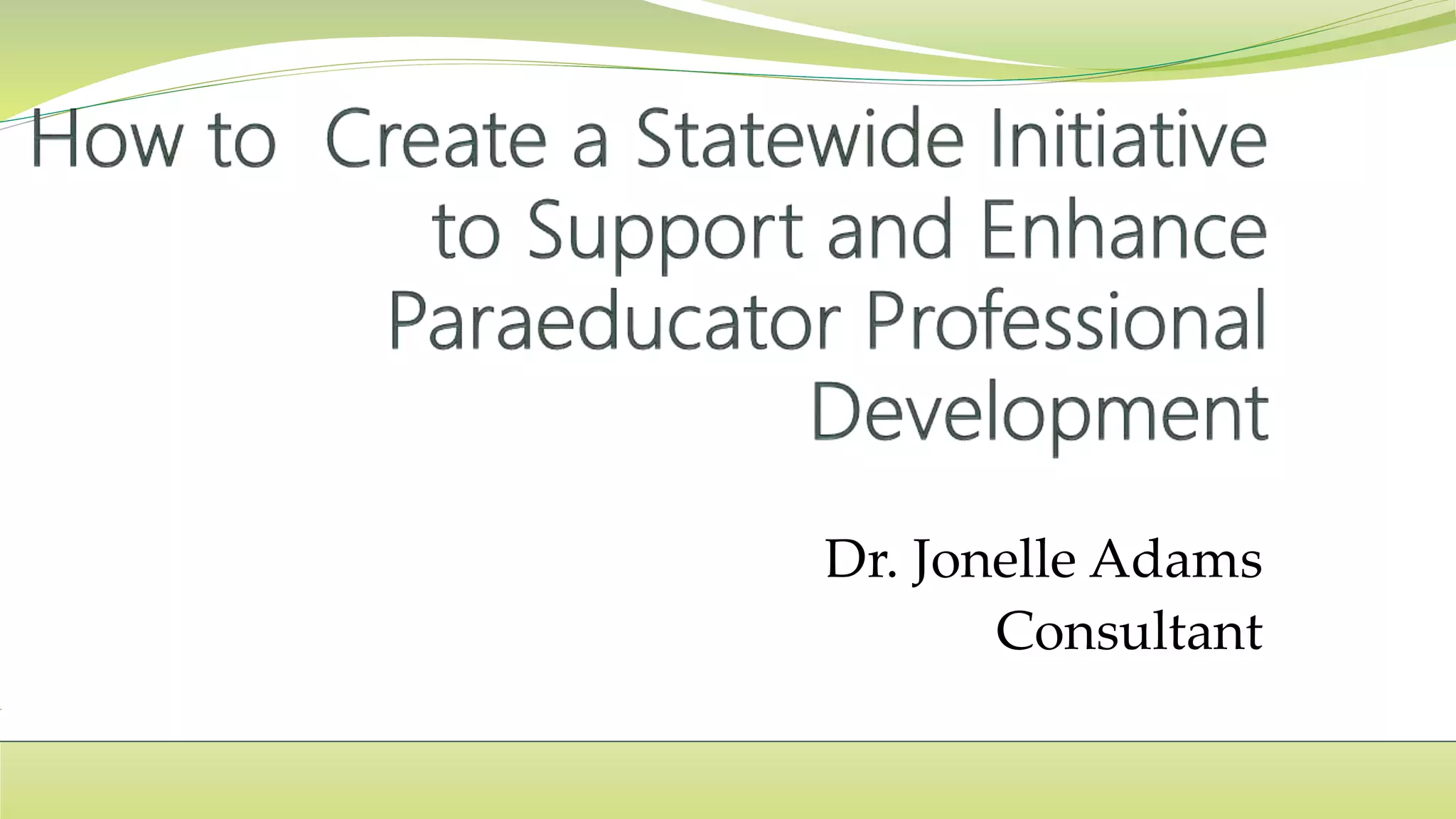
Dr. Jonelle Adams
Consultant
Panel Members:
 Doug Nelson, Public School Employees of Washington
 Lucinda Young, Washington Education Association
 Alexander Manuel, Executive Director, Professional
Educator Standards Board
 Cathy Smith, Paraeducator Board Chair, Professional
Educator Standards Board
Agenda
3:00- 3:45
 Workshop on the Five Strategic Steps
 Small Groups will work together to explore the Five Steps
3:45- 4:15
 Panel Discussion
4:15-4:30
 Open Question and Answer period
Beginning the Journey – How to start a
statewide initiative:
Exploring the five Strategic Steps:
 Step 1- Effectively defining the need for statewide initiative
 Step 2- Developing critical momentum and launching statewide
partnerships
 Step 3- Preparing the plan and outcomes to secure support and
buy-in
 Step 4- Making the ask and initiating legislation
 Step 5- Staying the course with collaboration and compromise
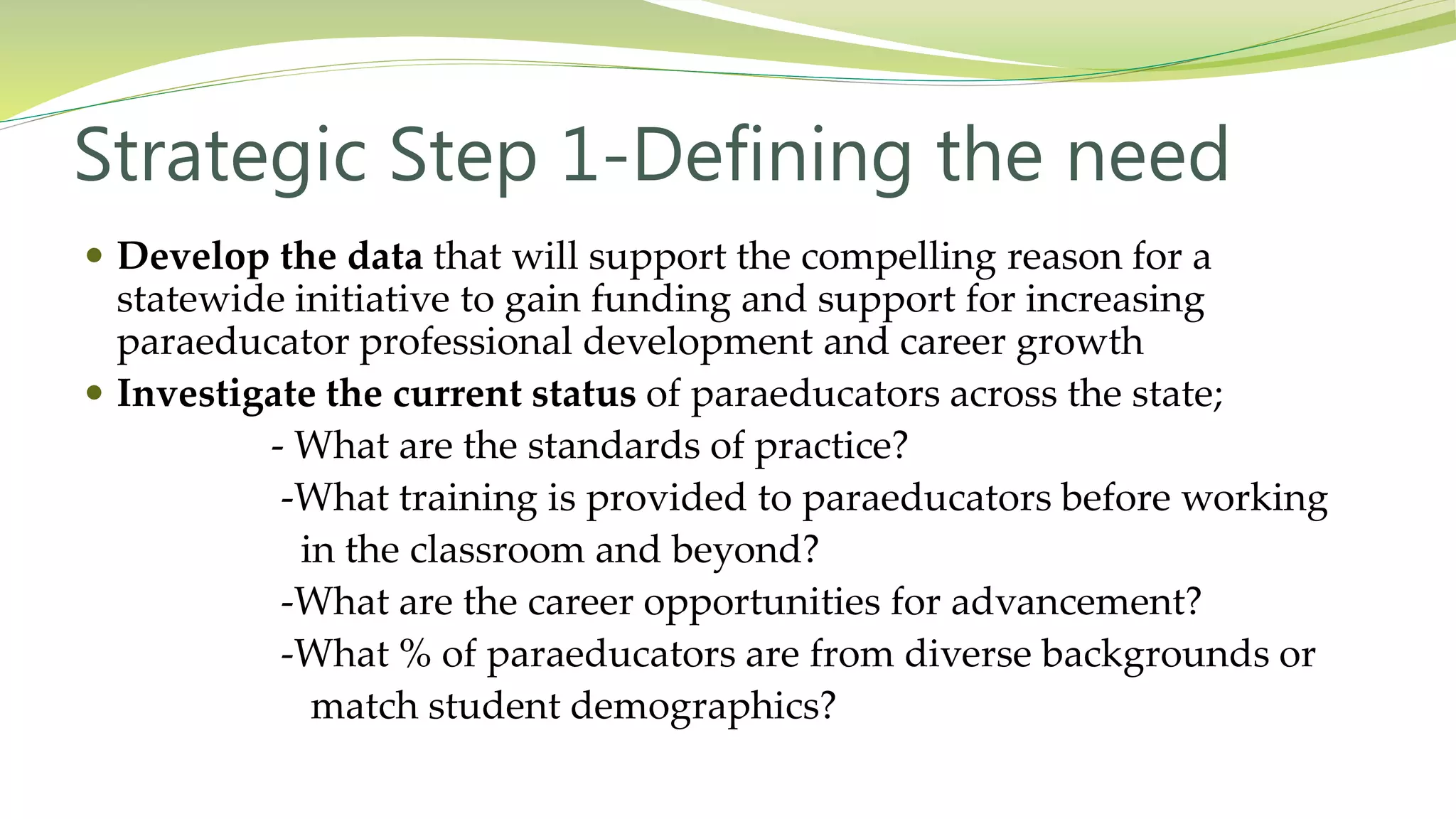
Strategic Step 1-Defining the need
 Develop the data that will support the compelling reason for a
statewide initiative to gain funding and support for increasing
paraeducator professional development and career growth
 Investigate the current status of paraeducators across the state;
- What are the standards of practice?
-What training is provided to paraeducators before working
in the classroom and beyond?
-What are the career opportunities for advancement?
-What % of paraeducators are from diverse backgrounds or
match student demographics?
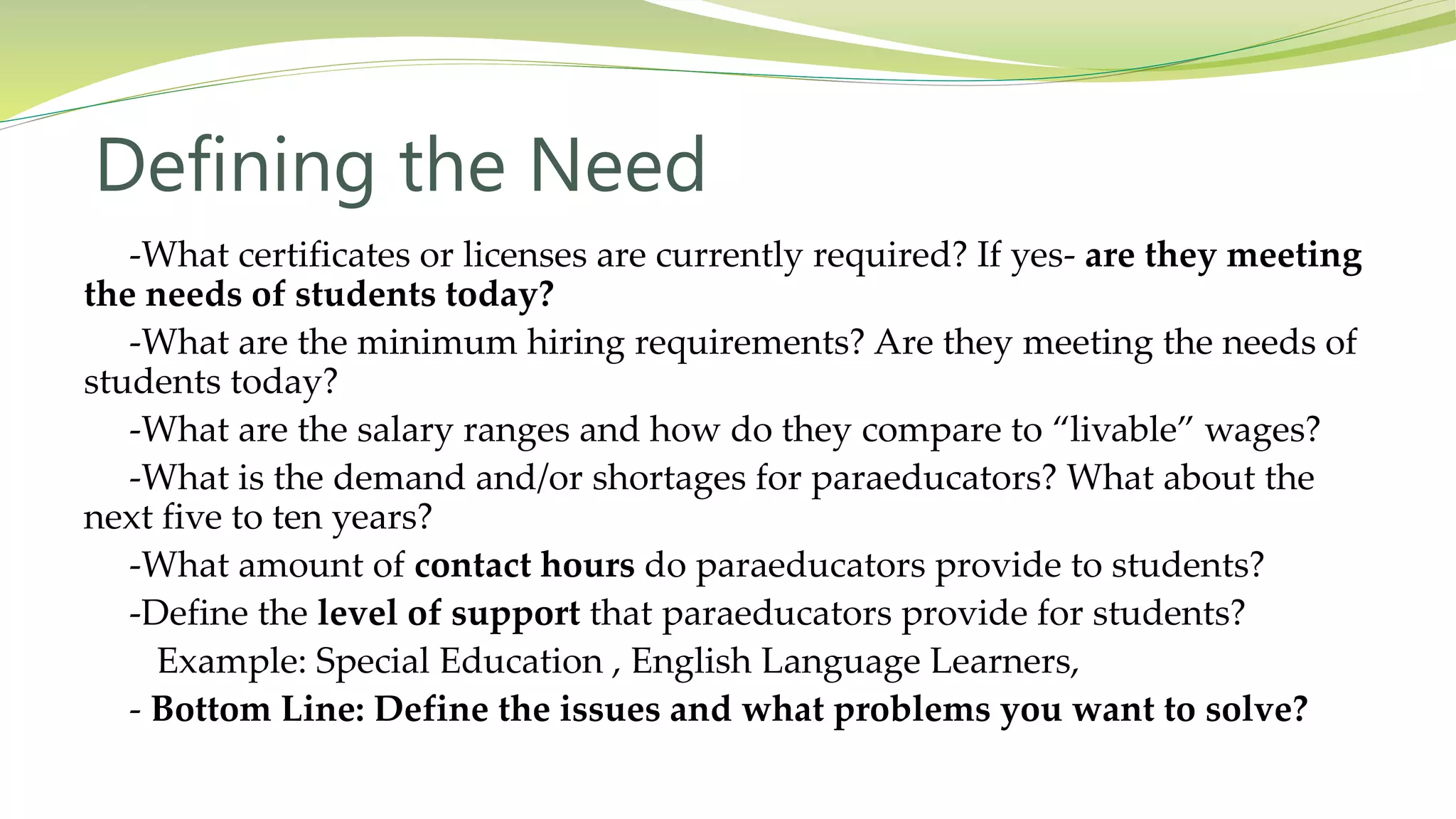
Defining the Need
-What certificates or licenses are currently required? If yes- are they meeting
the needs of students today?
-What are the minimum hiring requirements? Are they meeting the needs of
students today?
-What are the salary ranges and how do they compare to “livable” wages?
-What is the demand and/or shortages for paraeducators? What about the
next five to ten years?
-What amount of contact hours do paraeducators provide to students?
-Define the level of support that paraeducators provide for students?
Example: Special Education , English Language Learners,
- Bottom Line: Define the issues and what problems you want to solve?
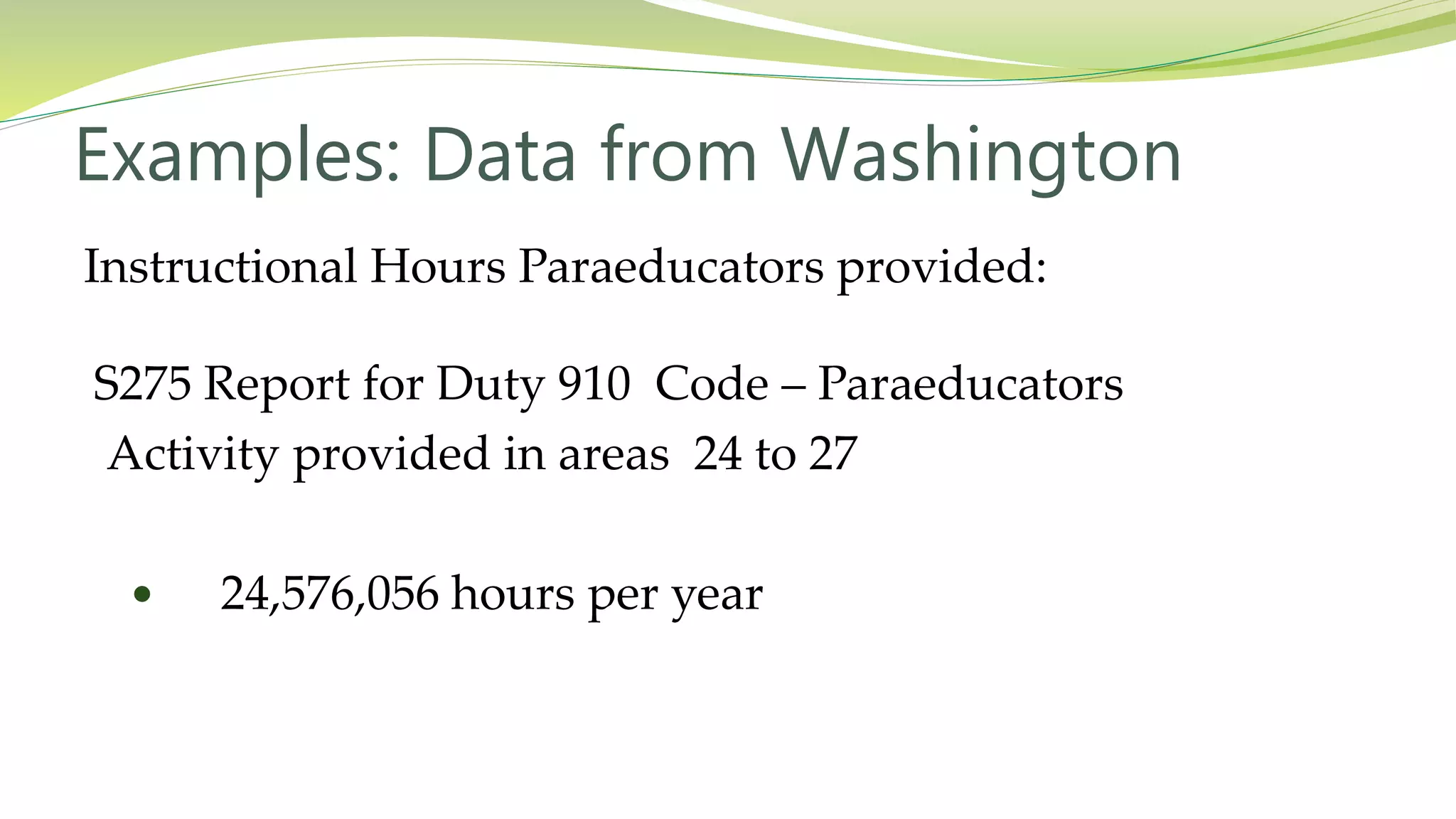
Examples: Data from Washington
Instructional Hours Paraeducators provided:
S275 Report for Duty 910 Code – Paraeducators
Activity provided in areas 24 to 27
 24,576,056 hours per year
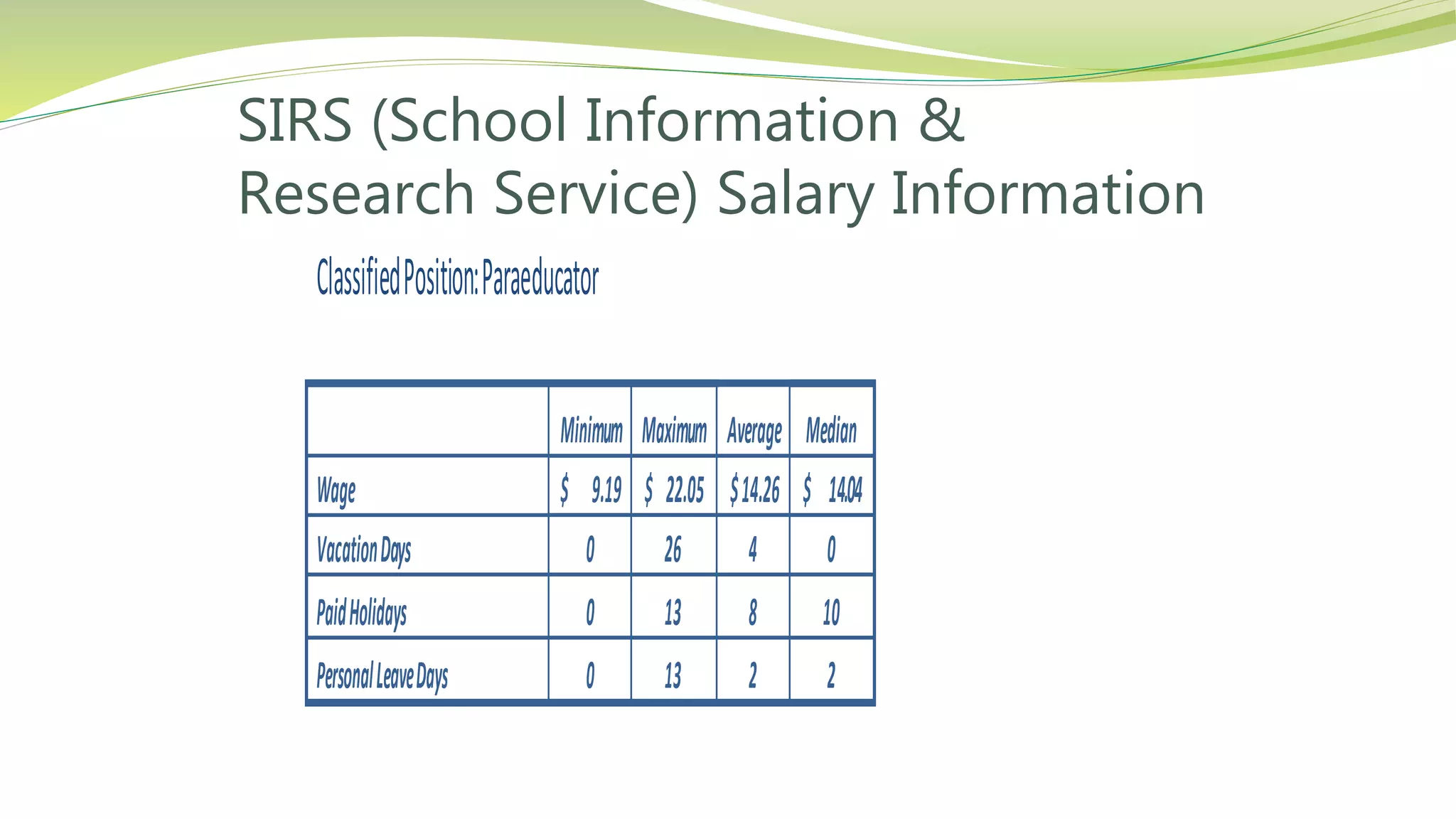
SIRS (School Information &
Research Service) Salary Information
ClassifiedPosition:Paraeducator
Minimum Maximum Average Median
Wage $ 9.19 $ 22.05 $14.26 $ 14.04
VacationDays 0 26 4 0
PaidHolidays 0 13 8 10
PersonalLeaveDays 0 13 2 2
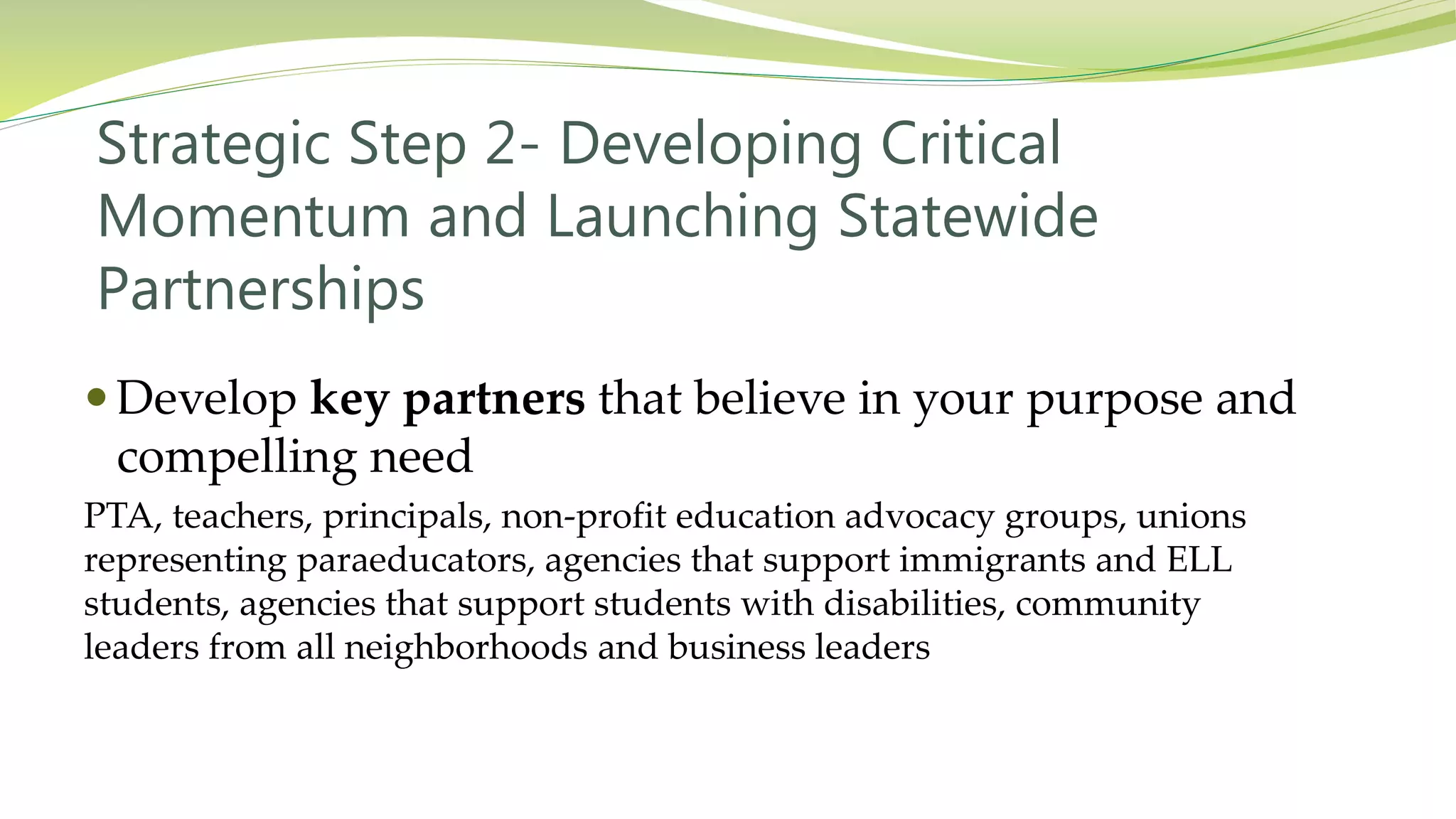
Strategic Step 2- Developing Critical
Momentum and Launching Statewide
Partnerships
 Develop key partners that believe in your purpose and
compelling need
PTA, teachers, principals, non-profit education advocacy groups, unions
representing paraeducators, agencies that support immigrants and ELL
students, agencies that support students with disabilities, community
leaders from all neighborhoods and business leaders
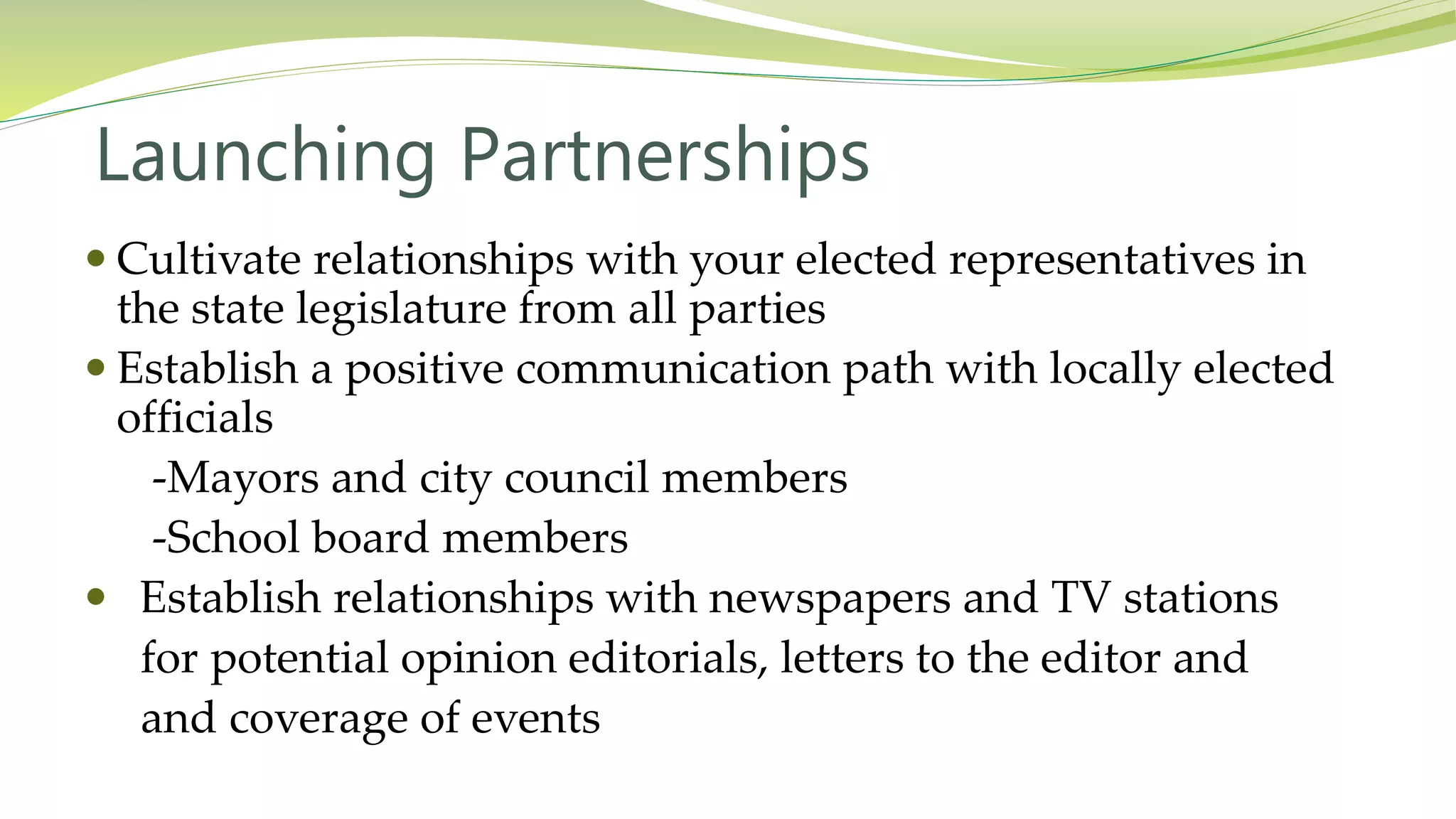
Launching Partnerships
 Cultivate relationships with your elected representatives in
the state legislature from all parties
 Establish a positive communication path with locally elected
officials
-Mayors and city council members
-School board members
 Establish relationships with newspapers and TV stations
for potential opinion editorials, letters to the editor and
and coverage of events
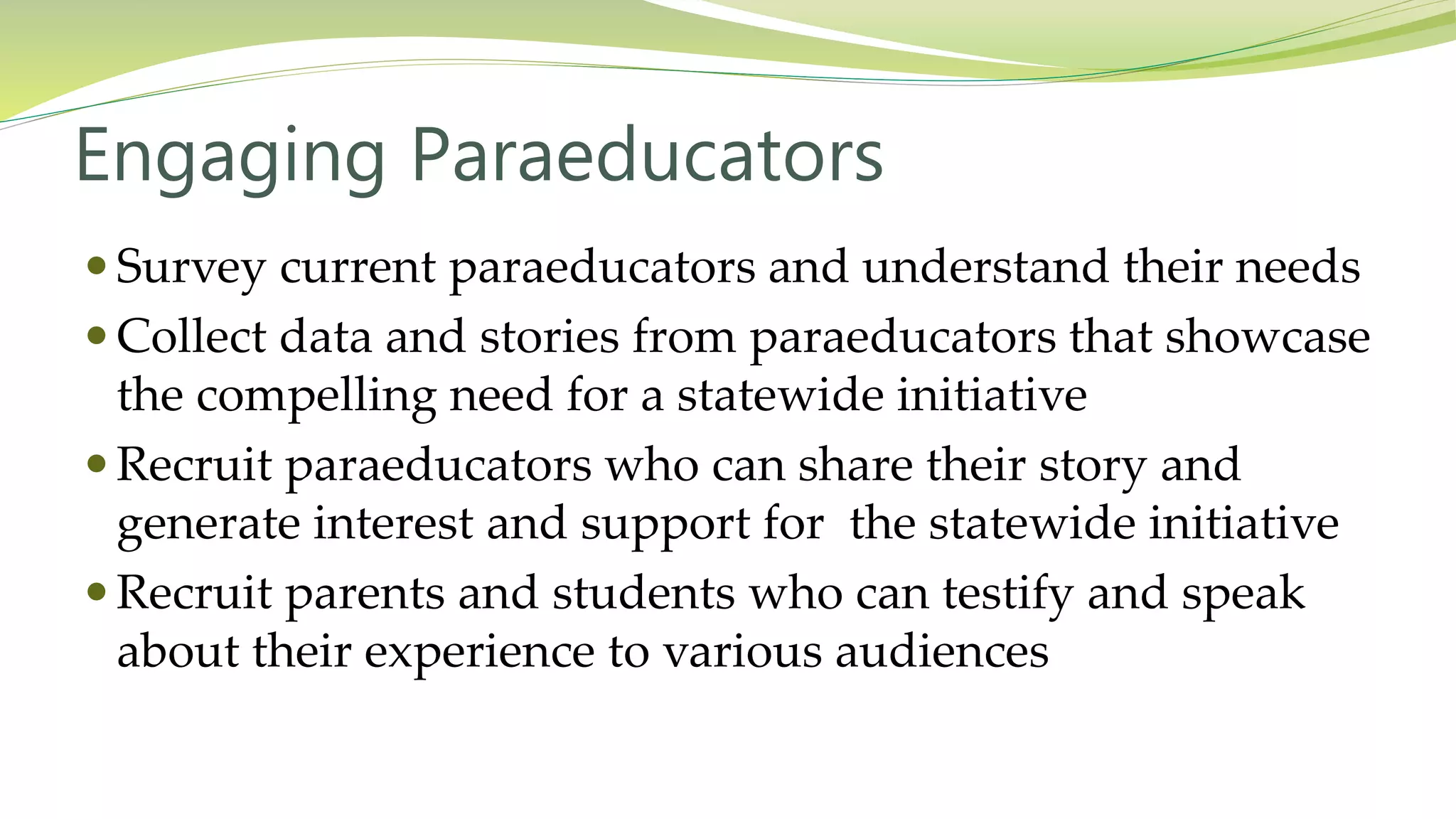
Engaging Paraeducators
 Survey current paraeducators and understand their needs
 Collect data and stories from paraeducators that showcase
the compelling need for a statewide initiative
 Recruit paraeducators who can share their story and
generate interest and support for the statewide initiative
 Recruit parents and students who can testify and speak
about their experience to various audiences
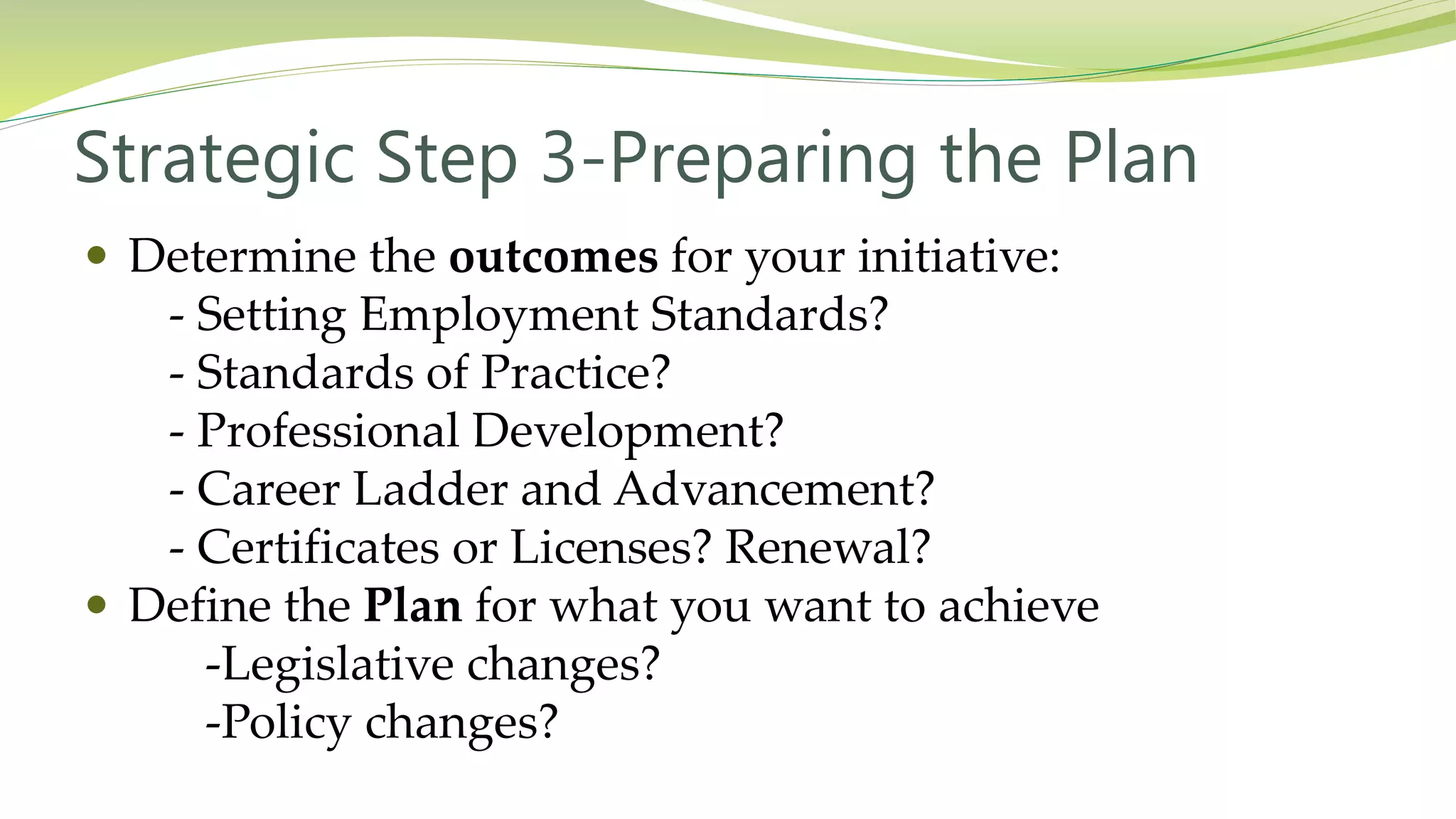
Strategic Step 3-Preparing the Plan
 Determine the outcomes for your initiative:
- Setting Employment Standards?
- Standards of Practice?
- Professional Development?
- Career Ladder and Advancement?
- Certificates or Licenses? Renewal?
 Define the Plan for what you want to achieve
-Legislative changes?
-Policy changes?
Washington State Plan
In 2014 Senate Bill 6129 directed PESB to convene a work group to
determine recommendations for the following components:
1) Specific minimum employment standards for paraeducators
who work in programs that assist in English language learners
programs, transitional bilingual instructional programs, federal
limited English proficiency programs, the learning assistance
program, Title I, Special Education and Basic Education Programs
Washington State Plan
2) Professional development and education opportunities that
support these standards,
3) A paraeducator career ladder that encourages paraeducators to
pursue advanced education, professional development and
increased instructional responsibility,
4) An articulated pathway for teacher preparation and
certification, and
5) Professional development for certificated employees that
focuses on maximizing the use of paraeducators in the classroom.
Washington State Plan
 Senate Bill 6129 funded two legislative reports with
recommendations from the Paraeducator Work Group
based on work from five subcommittees which involved
over 125 members representing the voices of
paraeducators, teachers, parents, administrators,
community-based organizations, representatives from
community and technical colleges and higher education.
HB 1115 was passed in 2016 to move forward on
these recommendations
Strategic Step 4: Making the Ask
 Decide on the appropriate “action” depending on your plan
 If you need legislative or government action– then who would be
the best champion for your statewide initiative?
-Governor? - Senator? - Representative?
 Shop around to several potential champions to see who is a
“good” fit
 Decide on who has the best chance of moving your initiative
forward
 Take into consideration their track record, their overall passion for
the initiative and the staying power to see it through the years
Making the Ask
Once your champion or champions are selected and agreement is
made to support the initiative and move forward:
 Ensure all stakeholders are onboard and working together to
communicate their support and buy in for the initiative
 Generate a “buzz” about the new initiative and get your partners
to generate public interest stories in various social media avenues
 Keep the momentum to “support the initiative” in the public eye
at least five times during your legislative session
Keep up the momentum
 Engage your partners to provide public testimony during legislative
session
 Create a writing campaign for paraeducators to communicate directly
to their legislative representatives about the urgent need
 Collaborate with media to provide articles and opinion editorials for
their newspapers or social media blogs
 Send weekly information articles to your partners and media people
 Visit your champion/s frequently and provide data and facts to help
them continuous gain wider support.
Strategic Step 5- Staying the Course
 During the course of the initiatives duration– expect
changes to occur
 Focus on how to collaborate and keep the “end in mind”
 Conflict will arise and partnerships may have different
opinions
 Be willing to compromise and “give a little to get a little”
Staying the Course
• Changes will be the norm and having an open mind
to compromise will lead to success
• Focus on providing updates to all paraeducators,
teachers, principals on progress– don’t let the rumor
mill build
• Communicate to all stakeholders and partners often
on your progress and ask for support
• Don’t loose faith in moving the initiative forward
Resources and Examples
 You can access reports and examples from the PESB website:
Links:
https://www.pesb.wa.gov/paraeducator-board/
Panel Discussion:
 Doug Nelson, Public School Employees of Washington
 Lucinda Young, Washington Education Association
 Alexander Manuel, Executive Director, Professional Educator
Standards Board
 Cathy Smith, Paraeducator Board Chair, Professional Educator
Standards Board
 Moderator: Dr. Jonelle Adams – Consultant
Panel Questions:
Given your role in helping support the Paraeducator Legislation, the
Paraeducator Work Group, and now the current the Paraeducator Board,
 1. What would you describe as the most critical components for dealing
with legislation and funding for a statewide initiative?
 2. What are the major "land minds" or "set-backs" that you need to be
prepared to watch out for and advice to avoid them?
 3. What do you see as the necessary professional development and
career support over the next decade?
 4. What words of encouragement would you have for any state
thinking about moving forward with a state wide?
Question and Answers
 What questions do you have for the panel?
 Please direct your question to a specific panel member
or open it up to the full panel
_____________________________________________________________
 Thank you for your interest today!
Jonelle Adams --- Contact information: email: jadams13444@live.com

Session #18: How to create a statewide initiative to support and Enhance Paraeducator Professional Development

  • 1.
  • 2.
    Panel Members:  DougNelson, Public School Employees of Washington  Lucinda Young, Washington Education Association  Alexander Manuel, Executive Director, Professional Educator Standards Board  Cathy Smith, Paraeducator Board Chair, Professional Educator Standards Board
  • 3.
    Agenda 3:00- 3:45  Workshopon the Five Strategic Steps  Small Groups will work together to explore the Five Steps 3:45- 4:15  Panel Discussion 4:15-4:30  Open Question and Answer period
  • 4.
    Beginning the Journey– How to start a statewide initiative: Exploring the five Strategic Steps:  Step 1- Effectively defining the need for statewide initiative  Step 2- Developing critical momentum and launching statewide partnerships  Step 3- Preparing the plan and outcomes to secure support and buy-in  Step 4- Making the ask and initiating legislation  Step 5- Staying the course with collaboration and compromise
  • 5.
    Strategic Step 1-Definingthe need  Develop the data that will support the compelling reason for a statewide initiative to gain funding and support for increasing paraeducator professional development and career growth  Investigate the current status of paraeducators across the state; - What are the standards of practice? -What training is provided to paraeducators before working in the classroom and beyond? -What are the career opportunities for advancement? -What % of paraeducators are from diverse backgrounds or match student demographics?
  • 6.
    Defining the Need -Whatcertificates or licenses are currently required? If yes- are they meeting the needs of students today? -What are the minimum hiring requirements? Are they meeting the needs of students today? -What are the salary ranges and how do they compare to “livable” wages? -What is the demand and/or shortages for paraeducators? What about the next five to ten years? -What amount of contact hours do paraeducators provide to students? -Define the level of support that paraeducators provide for students? Example: Special Education , English Language Learners, - Bottom Line: Define the issues and what problems you want to solve?
  • 7.
    Examples: Data fromWashington Instructional Hours Paraeducators provided: S275 Report for Duty 910 Code – Paraeducators Activity provided in areas 24 to 27  24,576,056 hours per year
  • 8.
    SIRS (School Information& Research Service) Salary Information ClassifiedPosition:Paraeducator Minimum Maximum Average Median Wage $ 9.19 $ 22.05 $14.26 $ 14.04 VacationDays 0 26 4 0 PaidHolidays 0 13 8 10 PersonalLeaveDays 0 13 2 2
  • 9.
    Strategic Step 2-Developing Critical Momentum and Launching Statewide Partnerships  Develop key partners that believe in your purpose and compelling need PTA, teachers, principals, non-profit education advocacy groups, unions representing paraeducators, agencies that support immigrants and ELL students, agencies that support students with disabilities, community leaders from all neighborhoods and business leaders
  • 10.
    Launching Partnerships  Cultivaterelationships with your elected representatives in the state legislature from all parties  Establish a positive communication path with locally elected officials -Mayors and city council members -School board members  Establish relationships with newspapers and TV stations for potential opinion editorials, letters to the editor and and coverage of events
  • 11.
    Engaging Paraeducators  Surveycurrent paraeducators and understand their needs  Collect data and stories from paraeducators that showcase the compelling need for a statewide initiative  Recruit paraeducators who can share their story and generate interest and support for the statewide initiative  Recruit parents and students who can testify and speak about their experience to various audiences
  • 12.
    Strategic Step 3-Preparingthe Plan  Determine the outcomes for your initiative: - Setting Employment Standards? - Standards of Practice? - Professional Development? - Career Ladder and Advancement? - Certificates or Licenses? Renewal?  Define the Plan for what you want to achieve -Legislative changes? -Policy changes?
  • 13.
    Washington State Plan In2014 Senate Bill 6129 directed PESB to convene a work group to determine recommendations for the following components: 1) Specific minimum employment standards for paraeducators who work in programs that assist in English language learners programs, transitional bilingual instructional programs, federal limited English proficiency programs, the learning assistance program, Title I, Special Education and Basic Education Programs
  • 14.
    Washington State Plan 2)Professional development and education opportunities that support these standards, 3) A paraeducator career ladder that encourages paraeducators to pursue advanced education, professional development and increased instructional responsibility, 4) An articulated pathway for teacher preparation and certification, and 5) Professional development for certificated employees that focuses on maximizing the use of paraeducators in the classroom.
  • 15.
    Washington State Plan Senate Bill 6129 funded two legislative reports with recommendations from the Paraeducator Work Group based on work from five subcommittees which involved over 125 members representing the voices of paraeducators, teachers, parents, administrators, community-based organizations, representatives from community and technical colleges and higher education. HB 1115 was passed in 2016 to move forward on these recommendations
  • 16.
    Strategic Step 4:Making the Ask  Decide on the appropriate “action” depending on your plan  If you need legislative or government action– then who would be the best champion for your statewide initiative? -Governor? - Senator? - Representative?  Shop around to several potential champions to see who is a “good” fit  Decide on who has the best chance of moving your initiative forward  Take into consideration their track record, their overall passion for the initiative and the staying power to see it through the years
  • 17.
    Making the Ask Onceyour champion or champions are selected and agreement is made to support the initiative and move forward:  Ensure all stakeholders are onboard and working together to communicate their support and buy in for the initiative  Generate a “buzz” about the new initiative and get your partners to generate public interest stories in various social media avenues  Keep the momentum to “support the initiative” in the public eye at least five times during your legislative session
  • 18.
    Keep up themomentum  Engage your partners to provide public testimony during legislative session  Create a writing campaign for paraeducators to communicate directly to their legislative representatives about the urgent need  Collaborate with media to provide articles and opinion editorials for their newspapers or social media blogs  Send weekly information articles to your partners and media people  Visit your champion/s frequently and provide data and facts to help them continuous gain wider support.
  • 19.
    Strategic Step 5-Staying the Course  During the course of the initiatives duration– expect changes to occur  Focus on how to collaborate and keep the “end in mind”  Conflict will arise and partnerships may have different opinions  Be willing to compromise and “give a little to get a little”
  • 20.
    Staying the Course •Changes will be the norm and having an open mind to compromise will lead to success • Focus on providing updates to all paraeducators, teachers, principals on progress– don’t let the rumor mill build • Communicate to all stakeholders and partners often on your progress and ask for support • Don’t loose faith in moving the initiative forward
  • 21.
    Resources and Examples You can access reports and examples from the PESB website: Links: https://www.pesb.wa.gov/paraeducator-board/
  • 22.
    Panel Discussion:  DougNelson, Public School Employees of Washington  Lucinda Young, Washington Education Association  Alexander Manuel, Executive Director, Professional Educator Standards Board  Cathy Smith, Paraeducator Board Chair, Professional Educator Standards Board  Moderator: Dr. Jonelle Adams – Consultant
  • 23.
    Panel Questions: Given yourrole in helping support the Paraeducator Legislation, the Paraeducator Work Group, and now the current the Paraeducator Board,  1. What would you describe as the most critical components for dealing with legislation and funding for a statewide initiative?  2. What are the major "land minds" or "set-backs" that you need to be prepared to watch out for and advice to avoid them?  3. What do you see as the necessary professional development and career support over the next decade?  4. What words of encouragement would you have for any state thinking about moving forward with a state wide?
  • 24.
    Question and Answers What questions do you have for the panel?  Please direct your question to a specific panel member or open it up to the full panel _____________________________________________________________  Thank you for your interest today! Jonelle Adams --- Contact information: email: jadams13444@live.com